With their horn-shaped cephalic fins and large, gaping mouths, manta rays have long been the source of mariners’ myths and legends. Today, we know much more about these curious creatures, although many features of their lives and behaviours remain a mystery.
Marine biologist and co-founder of the Manta Trust Guy Stevens has spent many years researching mantas in an effort to understand their lives and to promote conservation practices that will ensure their continued survival. In Manta he has joined forces with National Geographic photographer Thomas Peschak to create a visually stunning and informative tribute to these animals.
To coincide with the re-release of the book, we recently spoke to Guy about his work with Mantas and the conservation challenges that they face.
Your life as a researcher and CEO of the Manta Trust must be incredibly varied and exciting. I’m curious what a typical day in the life of Guy Stevens looks like. Or, if a ‘typical’ day is unheard of for you, can you describe a recent day for us?
My days tend to be dictated by where I am. When in the field I am usually diving or freediving with manta rays on a daily basis, collecting data or guiding tourist expeditions. However, increasingly the majority of my time is spent on my computer behind a desk responding to emails, having Skype calls, writing papers, applying for grants and managing an ever increasing manta team.
Setting up an NGO must require an immense amount of work and passion. What did you find most challenging about the process and, as an extension of this, what advice would you offer other conservationists who are hoping to travel a similar path?
The most challenging part of the process, which still remains the main challenge today, is ensuring there are funds to enable the charity to carry out its mission. My advice to anyone wishing to follow a similar path would be to ensure you diversify your revenue streams.
The work conducted by yourself and other researchers around the world has contributed a huge amount to the body of knowledge about manta rays. What do you think are the next big questions that need to be addressed and how do you think new technologies (e.g. satellite and acoustic tagging / genetic techniques) will contribute to these?
From a conservation perspective one of the next big focus areas is to try and quantify the extent and impact of bycatch fisheries on the high seas (such as purse seine tuna fisheries) to manta rays and their close relatives, the devil rays; how many are being caught, which species, where, when and how many survive release after capture? Using post-release mortality tags can help us to estimate how many of the rays are likely to survive being captured after release, while the implementation of better management practices can hopefully reduce bycatch.
It is clear from your book that the problems facing mantas are incredibly complex and, as such, will require complex solutions. The final message I took from your book, however, appears to be one of hope. What significant changes would you like (or hope!) to see happen within the next five years in the arena of manta ray conservation.
I would like to see a world shifting away from industrial fisheries which employ unsustainable fishing practices; such as drift nets, long-lines, gill nets, etc. The oceans are rapidly being depleted and we need to protect much greater areas of this common resource from fishing if we want to stand any chance of safeguarding the world’s charismatic species like manta rays from extinction in the next few decades.
Finally – and I appreciate that you must have hundreds to choose from – is there a single encounter with a manta ray that really stands out in your memory and that will stay in your heart forever?
Yes, certainly the encounter which stands out the most is the one I describe in the book with the manta Slice, who I rescued from fishing line back in 2008 in Hanifaru Bay….there are lots of detail on this encounter in the book and here’s a link to the story on our website (although it is a bit outdated now); http://www.mantatrust.org/amazing-experiences-entangled-manta-rescue/
On 6th November, a date that marks the 800th anniversary of the 1217 Charter of the Forest, a new Charter for Trees, Woods and People will be launched. Read on to find out more, including the 10 principles of the Tree Charter and information on how to get involved.
Image by Ted Rabbitts via Flickr Creative Commons (CC by 2.0)
What is the Tree Charter?
Led by the Woodland Trust, the Tree Charter brings together more than 70 organisations in a united effort to protect the rights of and relationships between trees and people in the UK.
The Charter will be launched on 6th November at Lincoln Castle. This date marks the 800th anniversary of the historic 1217 Charter of the Forest which set out the rights of the people to use the Royal Forests in England. Lincoln Castle is home to one of the only two surviving copies of this document, making the timing and location of the launch doubly momentous.
The new Tree Charter is intended to influence policy and practice by settings out the practical roles and responsibilities of individuals, businesses and government in the UK and will also provide a voice for the hundreds of thousands of people that it represents.
The Charter consists of 10 Principles which cover different aspects of protecting and celebrating our trees. During National Tree Week (beginning Saturday 25th November) ten Tree Charter poles – one for each of the 10 Principles of the Charter – will be unveiled across the UK.
The 10 principles can be read in detail below, along with the locations of the charter poles.
The 10 Principles of the Tree Charter (Reproduced from https://treecharter.uk)
1. Thriving habitats for diverse species (New Forest Visitor Centre) Urban and rural landscapes should have a rich diversity of trees, hedges and woods to provide homes, food and safe routes for our native wildlife. We want to make sure future generations can enjoy the animals, birds, insects, plants and fungi that depend upon diverse habitats.
2. Planting for the future (Burnhall, Durham) As the population of the UK expands, we need more forests, woods, street trees, hedges and individual trees across the landscape. We want all planting to be environmentally and economically sustainable with the future needs of local people and wildlife in mind. We need to use more timber in construction to build better quality homes faster and with a lower carbon footprint.
3. Celebrating the cultural impact of trees (Bute Park, Cardiff) Trees, woods and forests have shaped who we are. They are woven into our art, literature, folklore, place names and traditions. It’s our responsibility to preserve and nurture this rich heritage for future generations.
4. A thriving forestry sector that delivers for the UK (Sylva Wood Centre, Abingdon) We want forestry in the UK to be more visible, understood and supported so that it can achieve its huge potential and provide jobs, forest products, environmental benefits and economic opportunities for all.
Careers in woodland management, arboriculture and the timber supply chain should be attractive choices and provide development opportunities for individuals, communities and businesses.
5. Better protection for important trees and woods (Sherwood Forest, Nottingham) Ancient woodland covers just 2% of the UK and there are currently more than 700 individual woods under threat from planning applications because sufficient protection is not in place.
We want stronger legal protection for trees and woods that have special cultural, scientific or historic significance to prevent the loss of precious and irreplaceable ecosystems and living monuments.
6. Enhancing new developments with trees (Belvoir Wood, NI) We want new residential areas and developments to be balanced with green infrastructure, making space for trees. Planning regulations should support the inclusion of trees as natural solutions to drainage, cooling, air quality and water purification. Long term management should also be considered from the beginning to allow trees to mature safely in urban spaces.
7. Understanding and using the natural health benefits of trees (Alder Hey Children’s Hospital, Liverpool) Having trees nearby leads to improved childhood fitness, and evidence shows that people living in areas with high levels of greenery are 40% less likely to be overweight or obese. We believe that spending time among trees should be promoted as an essential part of a healthy physical and mental lifestyle and a key element of healthcare delivery.
8. Access to trees for everyone (City Forest Park, Manchester) Everyone should have access to trees irrespective of age, economic status, ethnicity or disability. Communities can be brought together in enjoying, celebrating and caring for the trees and woods in their neighbourhoods. Schoolchildren should be introduced to trees for learning, play and future careers.
9. Addressing threats to woods and trees through good management (Land Craigs) Good management of our woods and trees is essential to ensure healthy habitats and economic sustainability. We believe that more woods should be better managed and woodland plans should aim for long term sustainability and be based upon evidence of threats and the latest projections of climate change. Ongoing research into the causes of threats and solutions should be better promoted.
10. Strengthening landscapes with woods and trees (Grizedale Forest, Cumbria) Trees and woods capture carbon, lower flood risk, and supply us with timber, clean air, clean water, shade, shelter, recreation opportunities and homes for wildlife. We believe that the government must adopt policies and encourage new markets which reflect the value of these ecosystem services instead of taking them for granted.
How to get involved:
• Firstly and most importantly – sign the Tree Charter. By adding your signature you will show your support for the principles stated in the charter and will join the growing list of 1000s of people who want to see trees protected, shared and celebrated in the UK. The Woodland Trust will plant a tree for every signature on the list and will also use your contact details to keep you up to date with the campaign.
•Join a local Charter branch. Join an existing group or, if there isn’t one near to where you live, set up your own. Charters can apply for funding from the Woodland Trust and will receive free copies of the seasonal newspaper LEAF! As a charter branch you will also be able to apply for a Legacy Tree. 800 of these trees are being planted around the UK as a living reminder of the 800 years between the original 1217 Charter of the Forest and the 2017 Tree Charter. Each tree will be supplied with a commemorative plaque.
•Explore some of the locations on the Tree Charter Art and Heritage Trail. All locations are displayed on a beautifully illustrated map by Adam Dant, highlighting the role that trees have played in the culture and heritage of our country.
The Tree Charter Art & Heritage Trail – Illustrated by Adam Dant.
Kaleidoscope Pro is now available as an annual subscription, providing an economical way to access the excellent analysis features of this software.
A discounted package is also available for students or academics who buy a subscription using an official university purchase order.
Each subscription will give you access to the software for 366 days and an automated email will remind you to renew at the beginning of the month that your current subscription is due to expire.
For customers who have purchased a copy of Kaleidoscope Pro in 2017, Wildlife Acoustics are offering you the chance to convert this to an annual subscription. Depending on when your software was purchased, you will be entitled to a one, two or three-year subscription (see the table below). This offer is valid until the 31st January 2018.
To take advantage of this offer: When Kaleidoscope Pro 4.5 is launched, you will receive a popup window notifying you of the conversion offer. You will be able to accept or decline at this time. If you choose to accept, your permanent license will be deleted.
Saltmarsh is the 5th and latest addition to the British Wildlife Collection. In this passionate and eloquent book, Clive Chatters celebrates some of our most beautiful and exceptional saltmarshes, bringing to life this mysterious and ever-changing habitat. To celebrate its publication, we recently chatted to Clive about the book and about conservation of saltmarshes in the UK.
Author, Clive Chatters
Your book is incredibly well-researched and is packed with fascinating details on the history, ecology and management of saltmarshes in the UK. However, if you were to be faced with an audience of people who know absolutely nothing about saltmarshes, their beauty or their value – what are the key things you would tell them to inspire and pique their interest?
Talking about Saltmarshes is no substitute to joining the audience on a short walk and experiencing the landscape first-hand. In a modest stroll one can share the reek of the mud and the companionable cry of waders. The breeze will bring minute particles of brine to our lips, a piquant introduction to a habitat so alien from our own. I would hope that such a stroll would leave people wanting more.
Some of the most enjoyable parts of the book for me were the historical accounts of the saltmarshes; finding out how both common people and nobles, together with the shifting political framework throughout the ages, influenced the landscape of our country. Is history a particular passion of yours and do you think that an understanding of a region’s history is important for current and future conservation decisions?
Our encounters with wildlife are just snatched insights into the lives of countless other species. Britain’s landscape has co-evolved with people, we are a part of our nation’s native fauna. By understanding how that relationship has developed we can better understand our place in the world and so appreciate our responsibility for the consequences of our actions.
To quote from the end of your book, “all habitats and landscapes are subject to change”. However, saltmarshes are arguably under the influence of a greater range of factors in comparison to many other habitat types; with short- and long-term fluctuations in tides, sea level rise and land subsidence in addition to the inevitable human impacts of agriculture and land development. For these reasons, do you think that saltmarshes are uniquely difficult to provide a conservation plan for?
Nature conservationists are asked to master a host of interactive challenges. There are common themes covering all habitats and species that focus on safeguarding interconnected landscapes and securing the wherewithal to allow ecological processes to progress unimpeded. In saltmarshes this usually means making spaces for tides and sediments to move and for the vegetation to develop in the presence of large grazing animals. Saltmarshes are particularly demanding as they shift across the landscape at a rate that can outpace our ability to manage change. If we fail then human life and property are at risk and the diversity of the natural world is diminished.
As a long-term naturalist with a rich and varied career, what do you think (or hope) will be your most important legacy to conservation?
All any of us can do is hope to leave Britain’s wildlife in better heart than when we first grew to know it. To me success is measured by rejuvenating conditions in which wildlife can cope with whatever changes are yet to come.
The research and writing of Saltmarsh must have been an immense undertaking. I’m curious what is next for you? Are there plans afoot for further books?
I enjoy writing as it helps to marshal the results of my curiosity into a semblance of order. If others enjoy what I’ve written then there are many more stories to tell.
Saltmarsh was published as part of the British Wildlife Collection; a series of books, each covering an individual aspect of British natural history. From the first publication in 2012, they have covered such diverse topics as mushrooms, meadows and mountain flowers, and books have been written by some of Britain’s finest writers and experts in their field. Filled with beautiful images, these wide-ranging and well-researched titles are a joy for any naturalist who is passionate about British wildlife and landscapes.
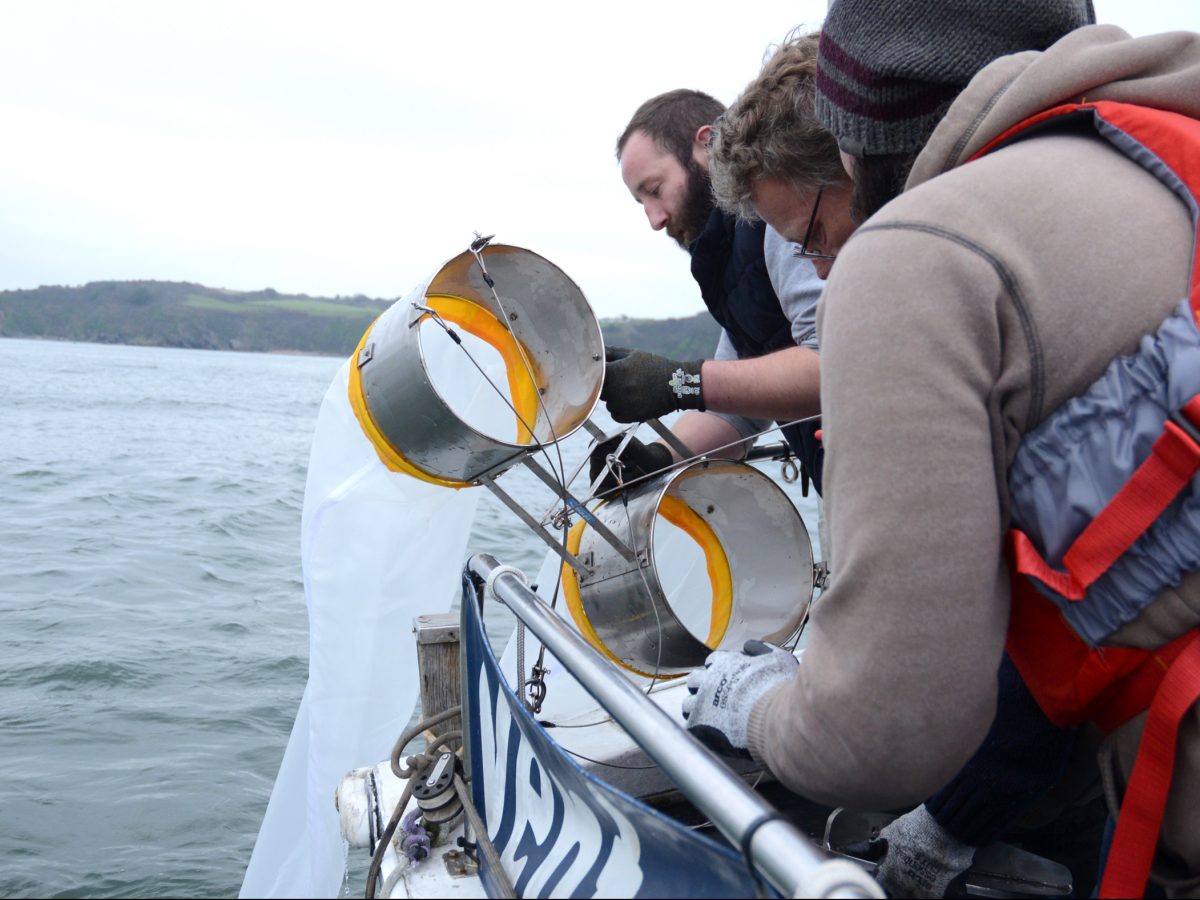
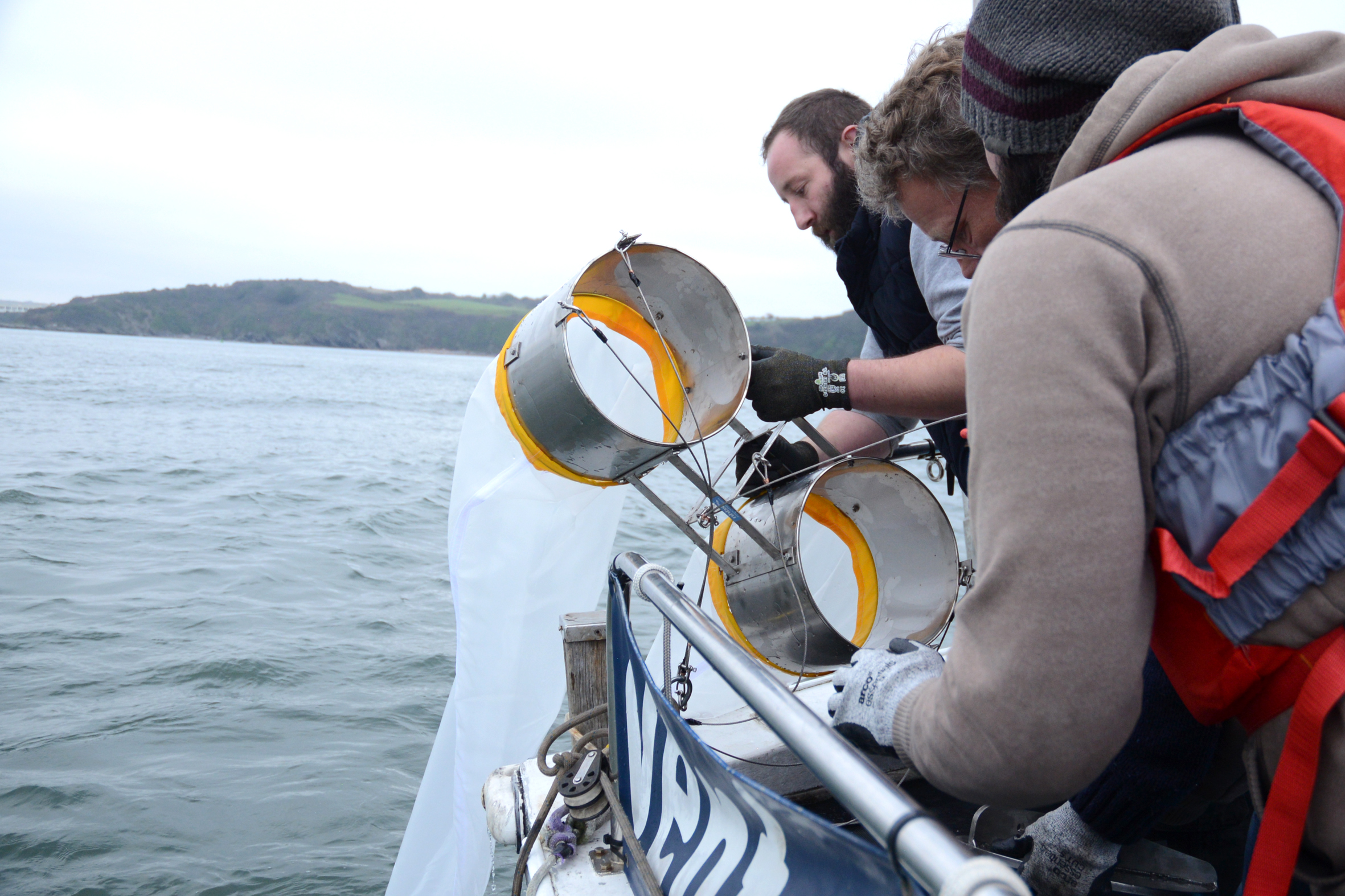
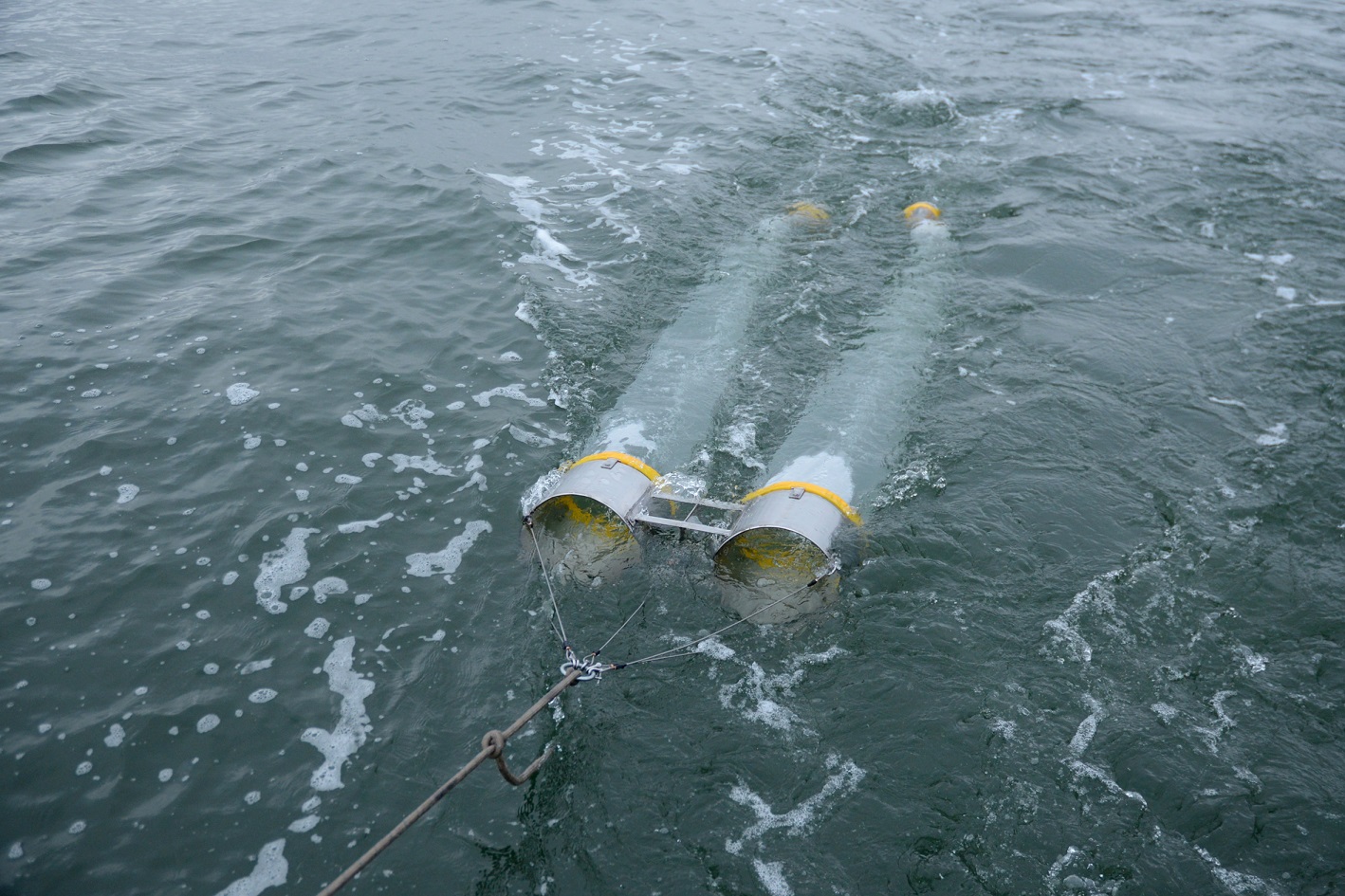
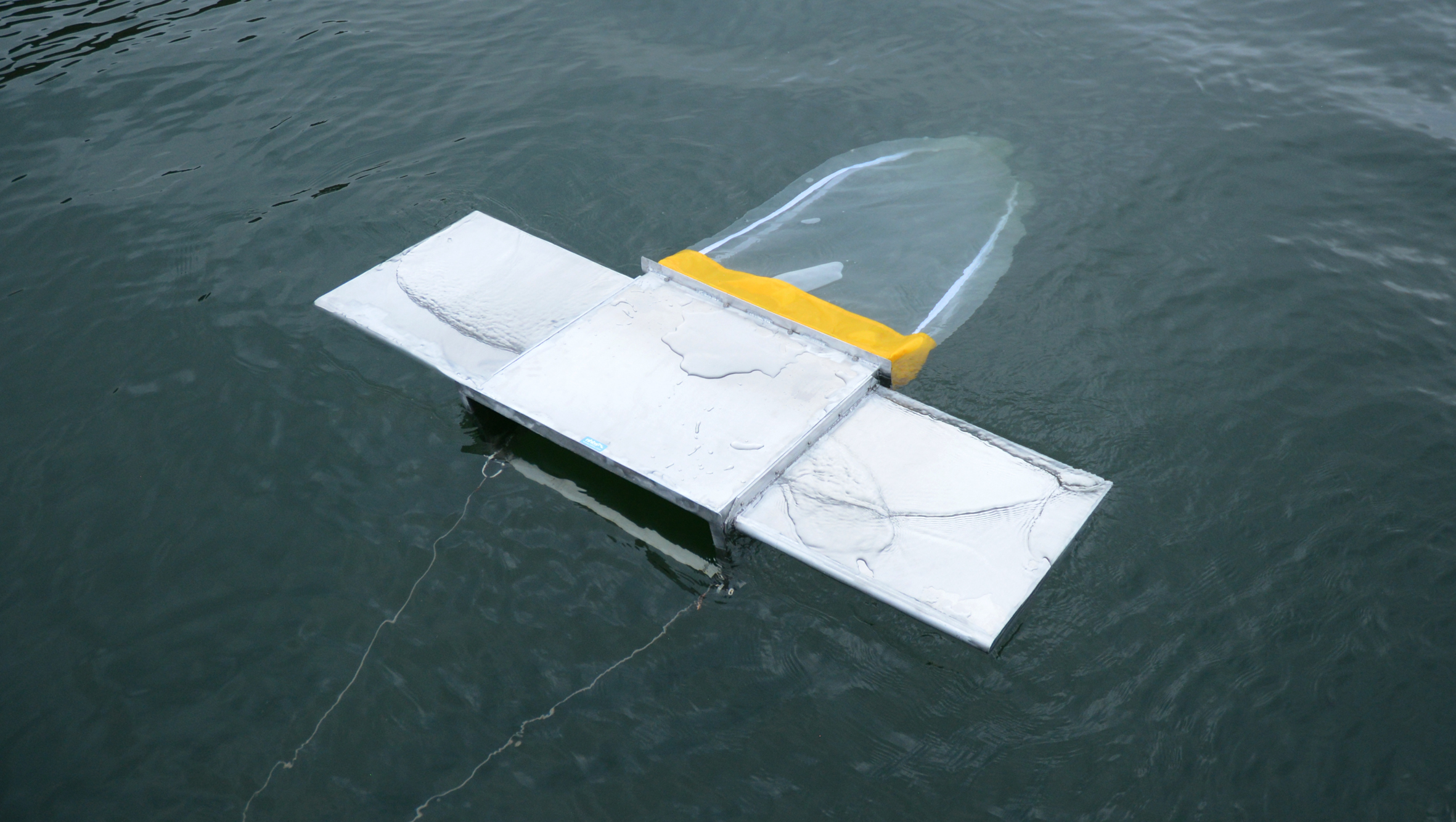
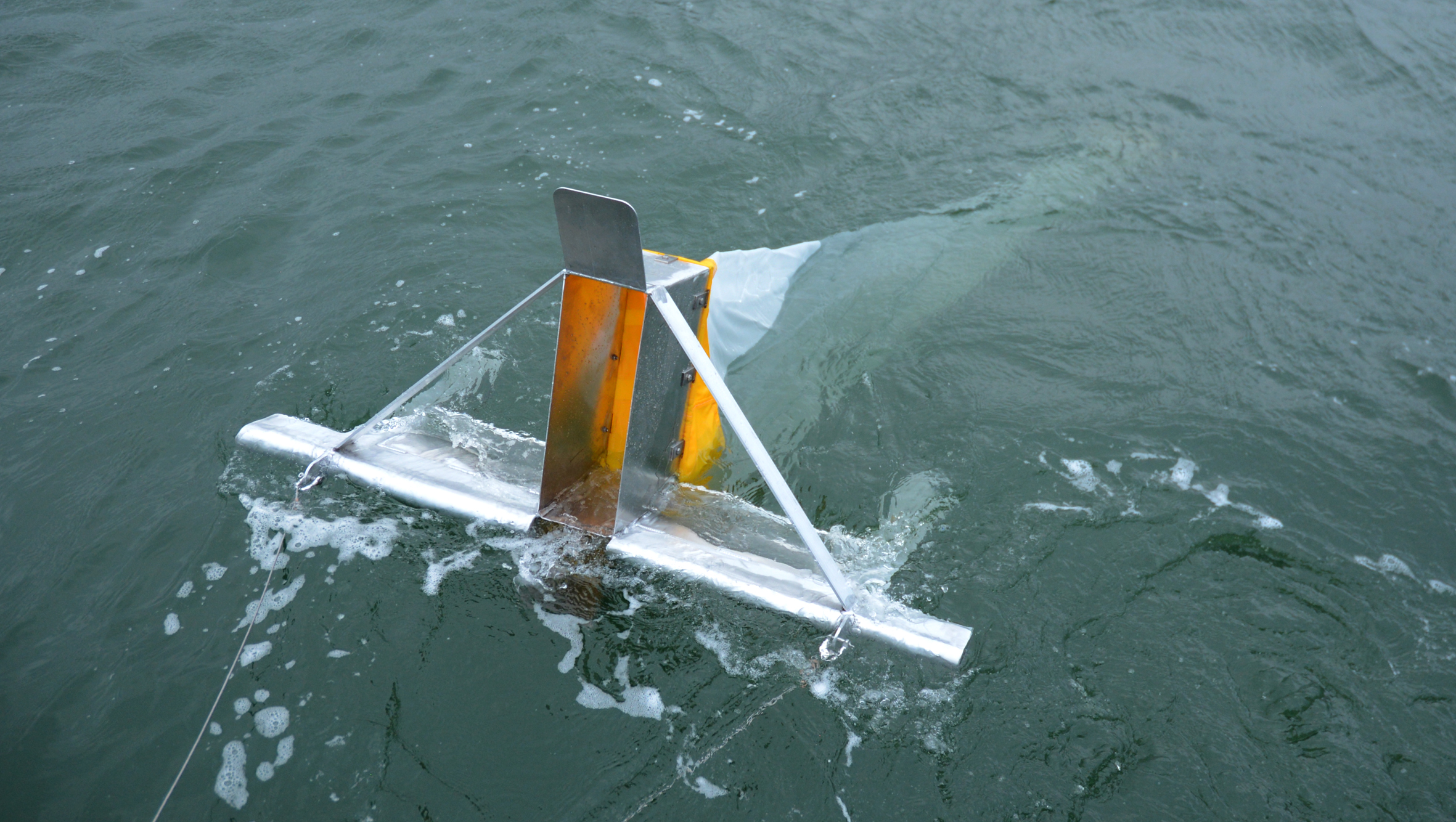
These bespoke nets, made by NHBS, are being used by ZSL in an ongoing project to monitor juvenile and larval fish populations in the Thames.
The Ichthyoplankton Net
Earlier this year we were contacted by the Zoological Society of London (ZSL) who were interested in working with us to make a bespoke aquatic survey net.
Their specifications required the net to have a square frame with a four point bridle and connections for a flow meter. It also needed to have a diving vane which would ensure that it could be towed stably at a set depth, and a screw on cod end with a bag made from 53µm and 250µm mesh. Following these guidelines, our engineer and seamstress got to work and within a couple of weeks a detailed specification was agreed. The nets were then manufactured and two were sent to ZSL in February.
First draft of the net design
Several months later we were delighted to receive some photos from Anna Cucknell, who manages ZSL’s work on fish conservation in the Thames, showing the nets in use.
“It was great to work with NHBS, who listened to our specific needs to design bespoke sampling nets for juvenile fish, and used their experience to adapt our designs to fit our needs. Our juvenile fish surveys on the Thames are the first of their kind, in scale and resolution and we hope the results from which will be applicable in the Thames and further afield to help drive conservation and better management of our estuaries for all fish species”. Anna Cucknell, Thames Project Manager, Zoological Society of London
Nets are towed both at the surface and at a depth of two metres. Combined with data from seine and intertidal nets, these surveys provide a comprehensive picture of larval and juvenile fish populations.
Fish Conservation in the Thames
The nets we made for ZSL are being used for an ongoing project to monitor the use of the Thames by juvenile fish.
The Tidal Thames is home to more than 100 fish species including many that are commercially important such as Dover sole and European seabass. It also provides critically important habitat for rarer species, including European smelt and European eel.
Like most estuaries, the Thames provides invaluable spawning, migratory and nursery grounds but, despite this, the region is poorly studied. The ZSL project hopes to remedy this by providing essential information about the health of fish populations in the estuary, and to assess how these are affected by water quality and local developments.
Boat-based sampling for juvenile fish
The project, funded by Tideway, involves both boat-based and foreshore sampling and, excitingly, also provides an opportunity for volunteers to get involved via its citizen science scheme. Volunteers can help with a variety of tasks including measuring, identifying and counting the fish.
For more information about the Tidal Thames fish conservation project, head over to the ZSL website.
Interested in getting involved? Sign up here to volunteer.
Have a bespoke project in mind? Contact our Wildlife Equipment Specialist team on 01803 865913 or via email at customer.services@nhbs.com.
Bowland Beth dramatises the short life of an English hen harrier between 2011 and 2012 and immerses the reader in the day-to-day regimen of her life. Interweaved with her story is the larger tale of the species fight for survival under the constant threat of persecution. In this article our book specialist, Nigel Jones, talks to the author, David Cobham, about the plight of the hen harrier and his hopes for the future of this glorious bird.
The Author of Bowland Beth, David Cobham.
There are numerous organisations and NGOs in the book who want the same outcome for the hen harrier, but who seem to be in conflict as to how to achieve their aims. What strategy do you think would enable all these groups to speak with one voice; do you think this would help when confronting powerful lobby groups such as the landowners and their connections in government?
The problem lies in some organisations wanting an outright ban on driven grouse shooting. That is not going to happen as has already been demonstrated. What we all have to work for is a system of licensing driven grouse moor shooting. Controlled by DEFRA a driven grouse moor would be licensed to operate and granted the subsidies that are substantial. If a case of illegal killing was proven in court the license for driven grouse shooting would be revoked for 3 years. I believe this would get a majority backing.
The hen harrier in your book is named Beth. I encounter some people who disapprove of naming animals, they claim this is anthropomorphism and inappropriate to conservation. What would you say to those people?
Mark Avery in his review of my book saw exactly what I was trying to do. Ring numbers or tag numbers are impersonal. By giving them names it makes us feel closer to the birds. The news that Bowland Beth has died is much more heart wrenching than that 834759 has died.
Sadly, I have never seen a hen harrier. Your description of them is written with such a passion akin to awe that I am now determined to see one of these birds for myself. What chance does an everyday person like myself have of seeing a hen harrier in the wild?
A survey last year reported that there were 4 breeding pairs of hen harriers in England – none of them on grouse moors. The best time to see hen harriers is in the winter when there is a considerable influx of hen harriers from the Scandinavian countries. They pitch up from October on the east of England and can be seen as they come into roost in reed beds on the coast or in damp areas with shelter from silver birches inland. They return north to breed in mid-March.
The landowners say they need to make an income from the moors, and driven grouse shooting is the only way they can do this. They will put the case for local employment and, like the debate around foxhunting, accuse opponents of not understanding ‘the countryside.’ Do you think a ban on driven grouse shooting is the only way to force the landowners hand, or do you think working alongside landowners to assist with techniques such as brood management and diversionary feeding is the best way to proceed?
Brood management is just one of six measures in DEFRA’s save the hen harrier project. It is a concession to the grouse moor owners. This is how it will work. First, when a nest is found on a grouse moor, diversionary feeding must be tried. This involves feeding day old chicks during the six week period when hen harriers take grouse chicks. They are placed on a plank supported by trestles about 30 metres from the nest. Trials at Langholm showed that this method reduces chick predation by 86%. If another hen harrier nests within 10 km of the original nest then brood management comes into play. The clutch of eggs is removed and hatched in an incubator. They are taught to feed. When they can feed themselves they are placed in an aviary out on the moor. Monitored by experts they will be given a “soft” release and continue to be fed until they are self sustaining.
If the trial is shown to fail due to illegal killing it will cease immediately.
I’m quite cynical about this. I think a lot gamekeepers won’t allow a hen harrier to nest on their moor and furthermore there are not enough hen harriers breeding on grouse moors in England to justify this procedure.
There are some conservationists that advocate adopting a more laissez-faire approach to extinction, moving priorities to bio-abundance rather than biodiversity and accepting that extinction and invasive species are part of the evolutionary process. What are your thought regarding this way of thinking?
I quote directly from my book. An extract from The Diversity of Life by Professor Edward O. Wilson: “We should not knowingly allow any species or race to go extinct. There can be no purpose more enspiriting than to begin the ages of restoration, reweaving the wondrous diversity of life that still surrounds us”. The hen harrier was extinct as a breeding bird in England in 2013. Its fate lies in our hands now.

Despite the hen harrier being a totem and emblematic of a battle between conservationists and those wishing to preserve a ‘rural way of life;’ a quick straw-poll I conducted indicated little knowledge of the bird. However, with more knowledge, I believe the majority would care about the hen harrier. How can the plight of the hen harrier compete in a media blizzard of often superficial and meaningless content?
When Bowland Beth was shot we believe she had just found a mate. Her femur was fractured, six of her tail feathers cut through and her femoral artery nicked. She picked herself up and flew unsteadily off, streaming blood behind her. Her vision blurred and she crashed into heather. Don’t tell me that birds don’t feel pain. She must have been in exquisite pain. I know about pain. I broke my femur last October, and lay there for six hours before I was found. That is the bond I have with Bowland Beth.
Do you believe satellite tagging is a good way to monitor hen harriers, and if so why?
Illegal killing of hen harriers continues. There is an arms race – sophisticated satellite tagging versus state of the art weaponry. Since 2007 36 hen harriers satellite tagged by Natural England have “disappeared”. Bowland Beth was one of them. The Hawk and Owl Trust satellite tagged two hen harriers last year. The male, Rowan, was shot last October in the north of England. His leg was smashed and he was able to fly some distance before collapsing in the heather. Sorrel, a female, is alive and well and flourishing in Scotland.
Protecting the hen harrier requires dedication, passion and commitment to the cause of conservation, often from volunteers working long hours in all weathers. What would you say to inspire a future generation of conservationist to take up the baton?
To watch a young hen harrier successfully fledge from her nest and set out into the unknown is the start of a Great Adventure. Sharing this knowledge with other weary volunteers who have probably not seen anything all day re-invigorates them, gives them the impetus to go out again and search for that elusive V-shaped image of a hen harrier, searching up and down, for its favourite prey, short-tailed field voles.
Bowland Beth: The Life of an English Hen Harrier, written by David Cobham and illustrated by Dan Powell, is published by William Collins and is available in hardback.
Looking for a bat box but don’t know which one to buy? This article is the third in a three part series designed to help you to make the right choice. Here you will find our top 10 boxes for incorporating into the masonry of a new build or development. The previous two posts feature the best boxes for trees and woodland and for walls and fences.
For each box listed you will also find helpful information such as its dimensions and weight and the box type (e.g. whether it is for summer use, for hibernation or for access into an existing roost space).
The Glossary below provides a guide to the key terms used in the descriptions.
• Woodcrete/WoodStone: A blend of wood, concrete and clay which is very durable. It is also breathable and helps to maintain a stable temperature inside the box. • Summer: Summer boxes are suitable for the warmer months but are less likely to be used over the winter. • Hibernation: Designed to be larger and better insulated, hibernation boxes will provide a safe and warm space for bats over the winter. • Maternity: Suitable for the formation of colonies and raising of young. • Access: Provides an entrance to an existing roof space such as a wall cavity or loft. • Crevice: Provides one or more narrow roost spaces. Species which prefer this type of box include common, soprano and Nathusius pipistrelle, Brandt’s and whiskered bats. • Cavity: Provides a more spacious roost space. Bats such as brown long-eared, Daubenton’s and Natterer’s bats prefer cavity boxes. • Large cavity: These boxes allow space for flight within the roost which is preferred by brown long-eared bats in particular.
This guide is designed to help you choose the best bird box, based on the species of bird that you are hoping to attract, or that you know can be found in your garden or other outdoor space. Species are organised alphabetically by common name, and for each one we have included information about the preferred type of box and siting location. You will also find a handy list of suitable boxes available from NHBS.
• Box type: Large box with entrance hole measuring at least 150 x 200mm. An exercise platform for young owls is also beneficial. • Siting guidelines: At least 4m high in an undisturbed area, away from roads. Boxes can be installed inside a barn if there is a clear flight path to the entrance. • Suitable boxes: Barn Owl Nest Box Eco Barn Owl Nest Box Triangular Barn Owl Nest Box Flat-Pack Barn Owl Nest Box
Blackbird – Turdus merula
• Box type: Medium box with platform-style front. • Siting Guidelines: At least 1.5m high and preferably within a bush or shrub. • Suitable boxes: Blackbird FSC Nest Box
• Box type – Small box with 25mm entrance hole. Will also use boxes with a larger hole if there isn’t competition from larger birds. • Siting guidelines – Trees and walls in gardens and woodland. 1-5m in height with a clear flight path. Avoid direct sunlight and busy areas of the garden.
• Box type: Small box with 28mm entrance hole. Will also use boxes with a larger hole if there isn’t competition from larger birds. • Siting guidelines: Trees and walls in garden or woodland. 1-5m in height with a clear flight path. There is some evidence to suggest that crested tits will only utilise boxes if they are filled with sawdust or wood shavings. • Suitable boxes: Vivara Pro Seville 28mm WoodStone Nest Box Small Bird Nest Box with 28mm Hole Apex Bird Box with 28mm Hole
• Box type: Medium box with 50mm entrance hole. • Siting guidelines: On a tree at a height of 3 – 5m. Boxes should be stuffed with soft material such as rotten wood or bark. • Suitable boxes: Woodpecker/Starling Nest Box Woodpecker Box
• Box type: Medium box with 60mm entrance hole. • Siting guidelines: On a tree at a height of 3 – 5m. Boxes should be filled with soft material such as rotten wood or bark. • Suitable boxes: Large Bird Nest Box
• Box type: Small box with 32mm entrance hole. • Siting guidelines: On trees or buildings at a height of 2m or above. House sparrows are colonial nesters so multiple boxes can be sited near to each other, or terraced boxes used.
• Box type: Large box with 150mm entrance hole. • Siting guidelines: As high as possible on a building or tree (minimum 3m). Jackdaws are colonial nesters so several boxes may be placed close together. • Suitable boxes: Tawny Owl, Jackdaw and Stock Dove Nest Box
• Box type: Large box with open front. • Siting guidelines: On a tree or building at a minimum height of 5m with a clear flight path to the entrance. • Suitable boxes: Kestrel Nest Box Kestrel Open Nest Box
• Box type: Tunnel with rear nesting chamber. • Siting guidelines: Buried in a vertical bank beside a slow-moving river or lake. Only the entrance should be visible and it should be at least one metre above the maximum water level. Filling the tunnel with sand will improve the chances of occupation. If possible, two tunnels should be placed together, at least 70cm apart. • Suitable boxes: Vivara Pro WoodStone Kingfisher Tunnel
Little Owl – Athene noctua
• Box type: Tubular box with a 70mm entrance hole and internal baffle to reduce light. • Siting guidelines: On a horizontal branch at a minimum height of 3m. • Suitable boxes: Little Owl Apex Nest Box
• Box type: Small box with 28mm entrance hole. • Siting guidelines: In a woodland, preferably overlooking a glade. Boxes should be installed at a height of 2-4m. If competition with earlier nesting tits is a problem, the holes of several boxes may be blocked up until the flycatchers arrive. • Suitable boxes: Vivara Pro Seville 28mm WoodStone Nest Box Small Bird Nest Box with 28mm Hole Apex Bird Box with 28mm Hole
• Box type: Tunnel, approximately 100mm in diameter • Siting guidelines: Tunnels should be filled with sand and buried into an artificial or natural sandbank. (Banks should be vertical or slightly overhanging). • Suitable boxes: Sand Martin Nest Box
• Box type: Small box with open front. Front panel should be fairly low. • Siting guidelines: On a tree at a height of 2-4m and with a clear outlook (e.g. next to a lawn or woodland clearing). Alternatively on a building, nestled within ivy or other climbing plants. • Suitable boxes: Flatpack Bird Box – Open Front Robin Nest Box
Starling – Sturnus vulgaris
• Box type: Medium box with 45mm entrance hole. • Siting guidelines: On a tree or building at a minimum height of 2.5m. Starlings nest colonially so several boxes may be placed close together. • Suitable boxes: Woodpecker/Starling Nest Box Large Bird Nest Box Woodpecker Box
• Box type: Large box with 150mm entrance hole. • Siting guidelines: At least 3m high on a tree overlooking open fields or in an open barn. • Suitable boxes: Tawny Owl, Jackdaw and Stock Dove Nest Box
• Box type: Large box or chimney-style box with 150mm entrance hole.
• Siting guidelines: On a tree at a height of at least 2.5m with a clear flight path (particularly below the box).
• Suitable boxes: Tawny Owl Nest Box Tawny Owl, Jackdaw and Stock Dove Nest Box
Looking for a bat box but don’t know which one to buy? This article is the second in a three part series designed to help you to make the right choice.
For each box you will also find helpful information such as its dimensions and weight and the box type (e.g. whether it is for summer use, for hibernation or for access into an existing roost space).
The Glossary below provides a guide to the key terms used in the descriptions.
• Woodcrete/WoodStone: A blend of wood, concrete and clay which is very durable. It is also breathable and helps to maintain a stable temperature inside the box. • Summer: Summer boxes are suitable for the warmer months but are less likely to be used over the winter. • Hibernation: Designed to be larger and better insulated, hibernation boxes will provide a safe and warm space for bats over the winter. • Maternity: Suitable for the formation of colonies and raising of young. • Access: Provides an entrance to an existing roof space such as a wall cavity or loft. • Crevice: Provides one or more narrow roost spaces. Species which prefer this type of box include common, soprano and Nathusius pipistrelle, Brandt’s and whiskered bats. • Cavity: Provides a more spacious roost space. Bats such as brown long-eared, Daubenton’s and Natterer’s bats prefer cavity boxes. • Large cavity: These boxes allow space for flight within the roost which is preferred by brown long-eared bats in particular.
Here you will find our top 10 boxes for installing on a tree, in a garden, park or woodland. For each box you will also find helpful information such as its dimensions and weight and the box type (e.g. whether it is for summer use, for hibernation or for access into an existing roost space).
The Glossary below provides a guide to the key terms used in the descriptions.
• Woodcrete/WoodStone: A blend of wood, concrete and clay which is very durable. It is also breathable and helps to maintain a stable temperature inside the box. • Summer: Summer boxes are suitable for the warmer months but are less likely to be used over the winter. • Hibernation: Designed to be larger and better insulated, hibernation boxes will provide a safe and warm space for bats over the winter. • Maternity: Suitable for the formation of colonies and raising of young. • Access: Provides an entrance to an existing roof space such as a wall cavity or loft. • Crevice: Provides one or more narrow roost spaces. Species which prefer this type of box include common, soprano and Nathusius pipistrelle, Brandt’s and whiskered bats. • Cavity: Provides a more spacious roost space. Bats such as brown long-eared, Daubenton’s and Natterer’s bats prefer cavity boxes. • Large cavity: These boxes allow space for flight within the roost which is preferred by brown long-eared bats in particular.