A Spotlight on the Deadly Mushrooms of Britain

The UK boasts a rich and diverse fungal kingdom, from spongy puffballs to otherworldly slime moulds and foul-smelling stinkhorns – among these edible treasures lurk several deadly species, capable of causing serious illness and even death. In this blog, we will explore some of the most notorious poisonous mushrooms in the UK. 

This blog is for educational purposes only and should not be considered a definitive guide to mushroom identification. Always consult with a professional before consuming any wild mushrooms. 


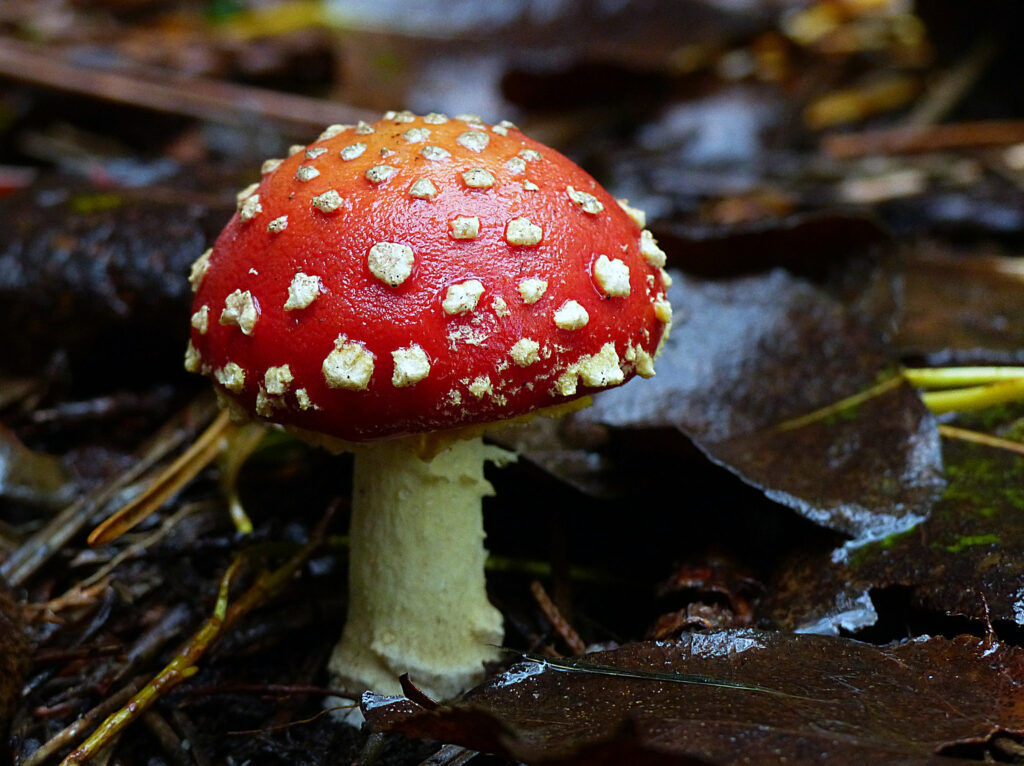
Fly Agaric (Amanita muscaria), also known as Fly Amanita 
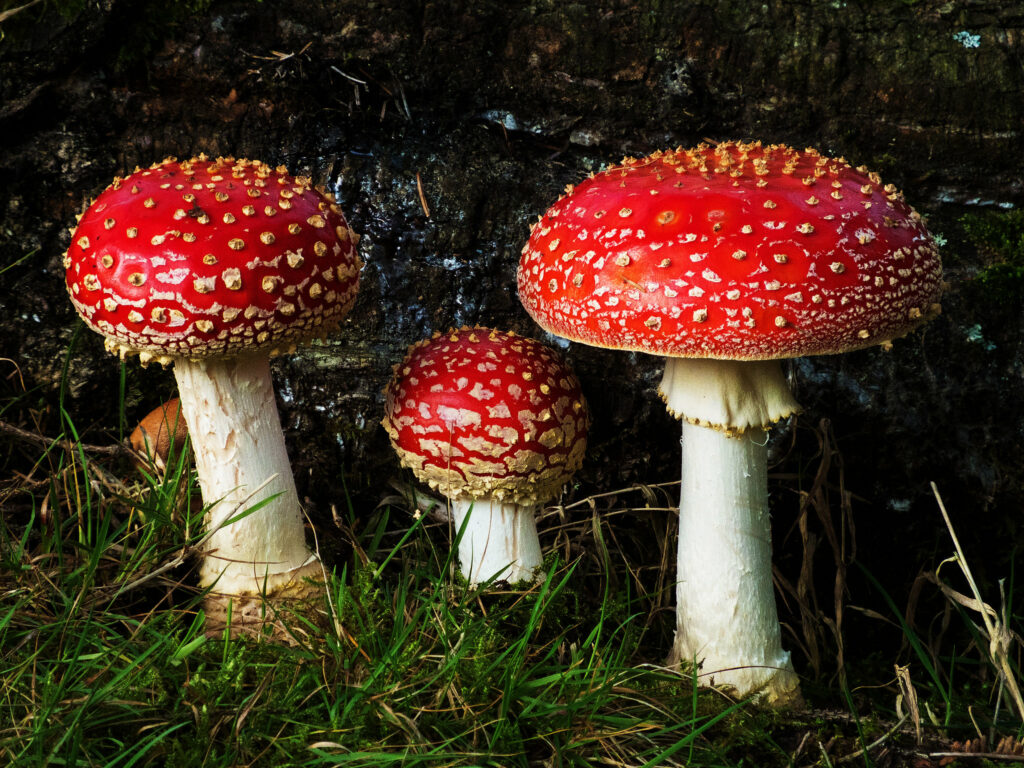
fly agaric
Image by Steve Herring via Flickr

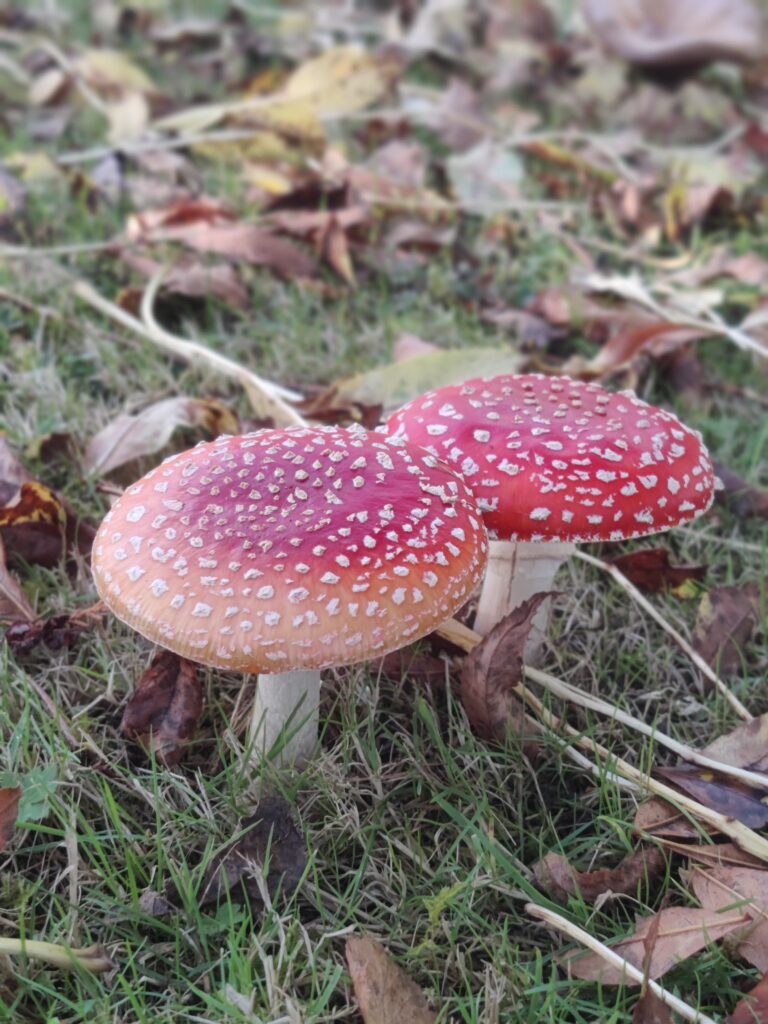
Commonly depicted in fairy tales, artwork and film, Fly Agaric is a familiar image that comes to mind when one thinks of fungi.  

Identification: These common mushrooms are most readily identified by their contrasting bright red (or in some cases, orange) cap and white flesh. The cap can reach 20cm across, is initially hemispherical in shape before opening flat as the mushroom matures and is often accompanied by white spots or ‘warts’ that can be washed off with rain – a remnant of the ‘egg’ covering. On the underside, the gills are closely packed together and are not joined at the stipe – a brittle, bright white stalk. The stipe features a large white skirt that may have yellowed edges, and at its base is a bulbous volva (a cup-like structure) covered with shaggy, scaled rings. Spores are oval and white. Fly Agaric are widely distributed across heathland and moorland from August to December, and show a preference for light soils among birch, pine or spruce trees with which they form mycorrhizal associations. 

Toxicity: Reported symptoms of Fly Agaric poisoning can vary greatly, but primarily, this mushroom causes hallucinations, psychosis, diarrhoea and digestive upset. It can be mistaken for the Blusher (Amanita rubescens), an Amanita which has a similar shape, and a pale red-brown cap with cream spots.  

Fungi fact: This species was traditionally used as an insecticide – where the name Fly Agaric originated. Ibotenic acid within the toadstool attracts flies and subsequently kills them, which led to its use as a medieval fly trap, where it would be broken up and sprinkled into milk.  It has also been used in Siberian civilisations, where it has been consumed for religious and recreational purposes for millennia. 


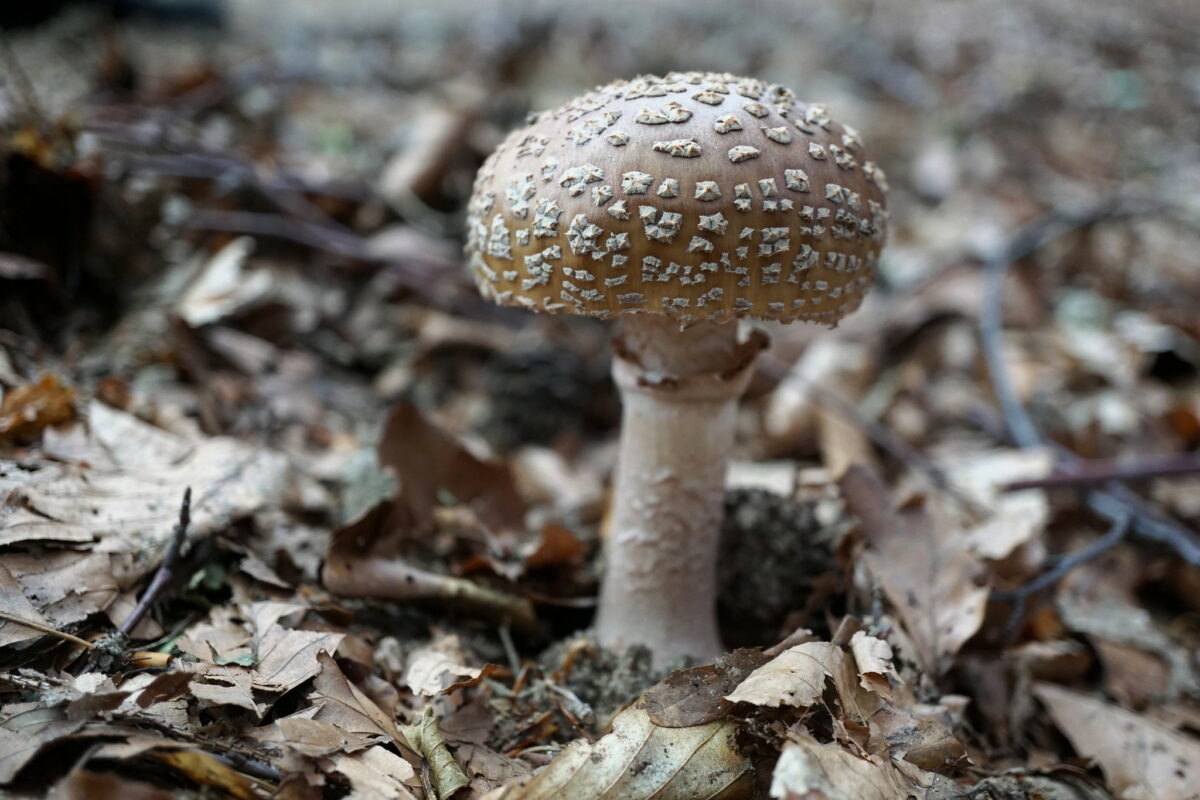
Panthercap (Amanita pantherina) 
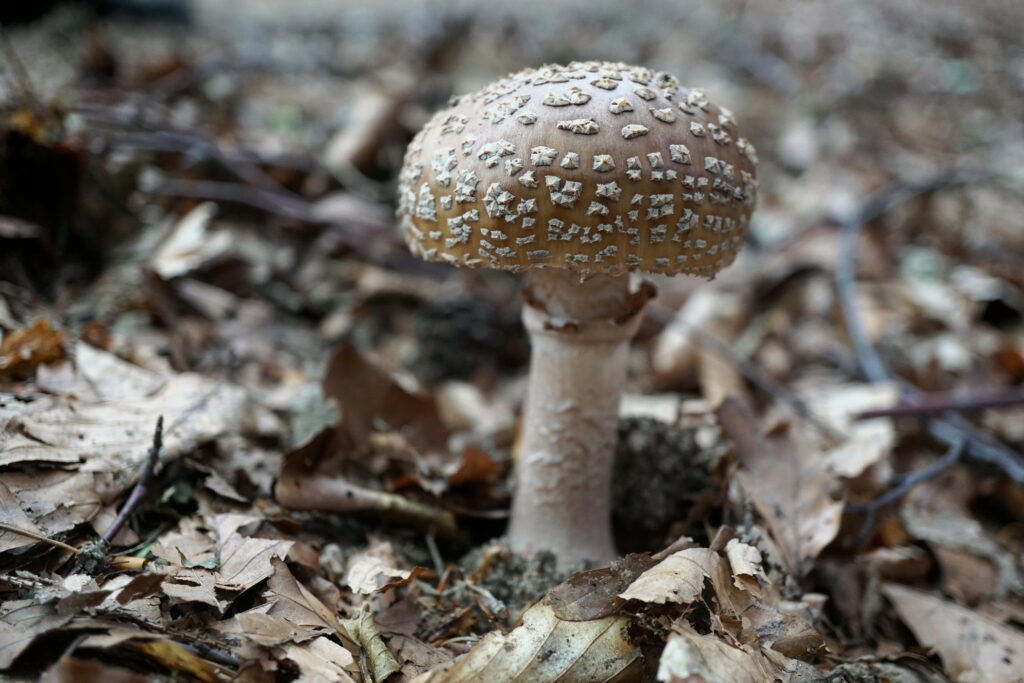
Amanita pantherina
Image by xulescu_g via Flickr

The Panthercap is another distinctive member of the Amanita family, and is strikingly similar to its vibrant cousin, Fly Agaric.  

Identification: This poisonous toadstool is not particularly common in Britain, but can be found from July to November in broadleaved woodland, where it forms ectomycorrhizal relationships with beech and oak trees. It can grow up to 14cm in height, with a cap width of around 12cm for mature specimens. The cap itself flattens with age, appears dark brown to slightly red in colour, and is usually covered with thick white ‘warts’ or spots. Underneath the cap, the crowded white gills are free from the stipe and produce white spores that are broadly ovate in shape. The white stipe typically appears smoother towards the top and shaggier under the skirt, which is generally smooth and white. The flesh inside the stipe and cap is hollow and white.  

Toxicity: Panthercaps toxins can result in suppression of the central nervous system, involuntary muscle movement, hallucinations, gastrointestinal upset and an increased heart rate. These toadstools may be mistaken for the Blusher, as well as the Grey Spotted Amanita (Amanita excelsa) which can be distinguished by striations on the upper surface of the skirt.  


Funeral Bell (Galerina marginata) 
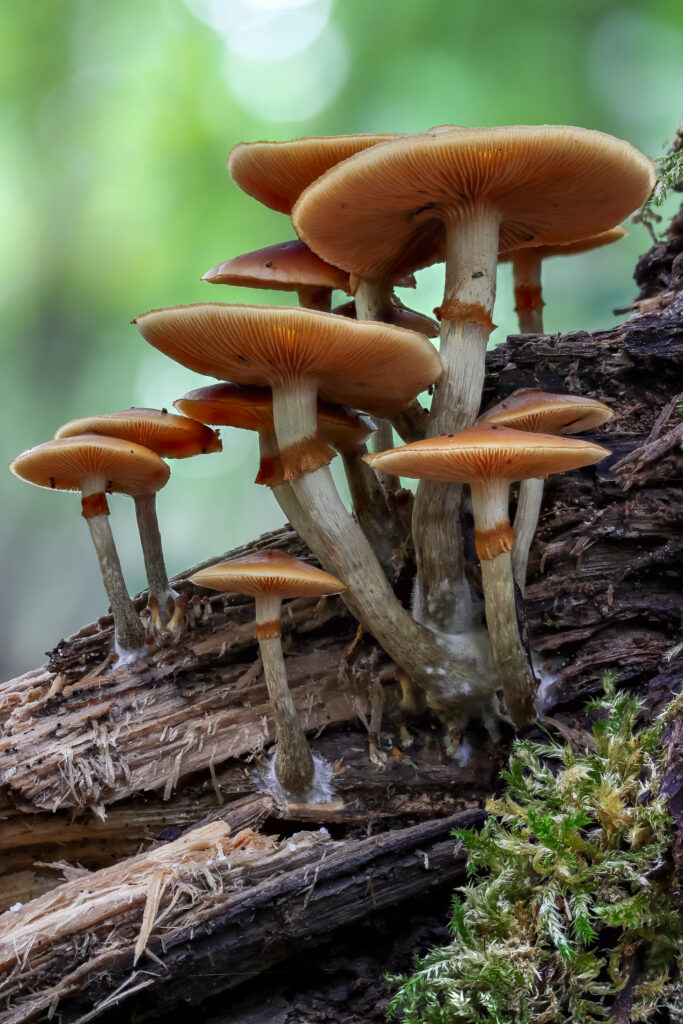
Funeral bell mushroom
Image by Andre De Kesel via Flickr

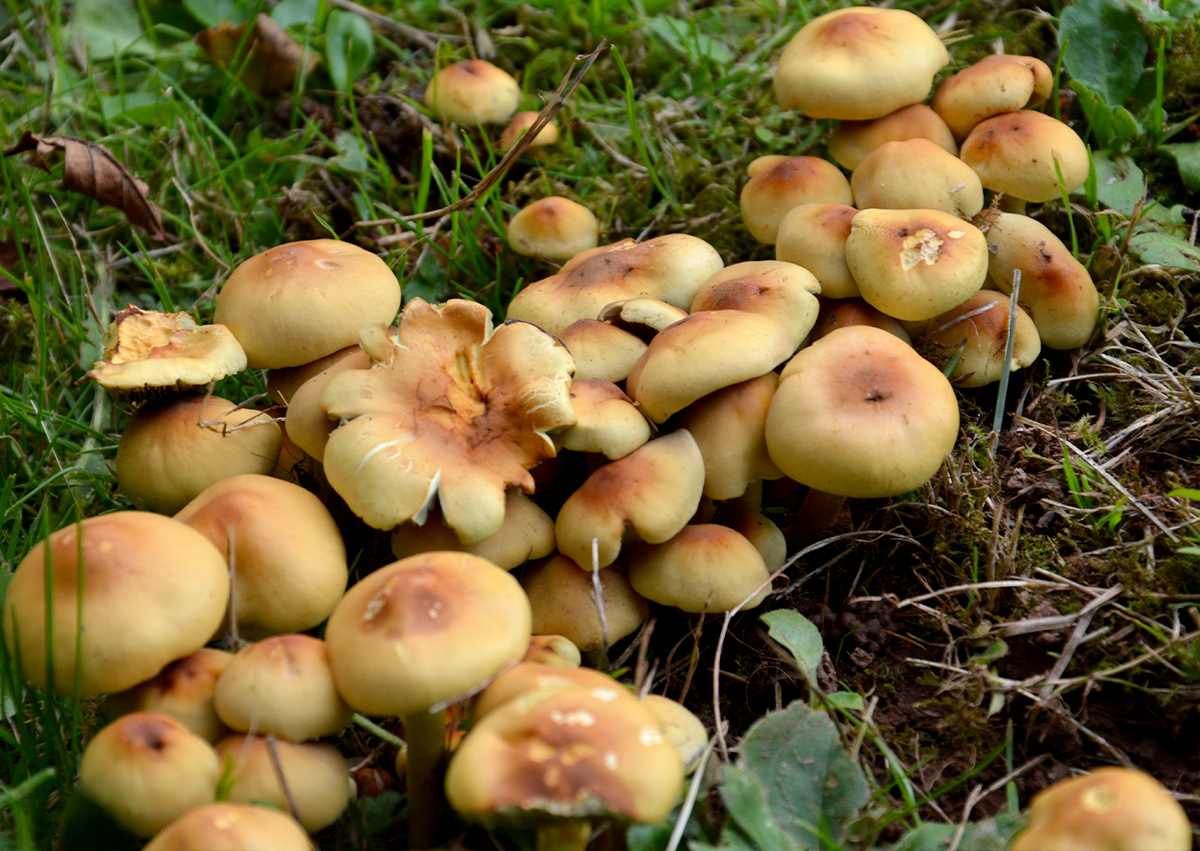
A highly toxic little brown mushroom, the Funeral Bell can quite easily be mistaken for other edible species. It can be found fruiting in clusters on woodchips, dead rotted wood and coniferous/deciduous tree stumps from August to November. 

Identification: Funeral Bells can grow up to 7cm in height, with a cap diameter of approximately 6cm. The cap can be pale yellow or brown in colour, or orange in some cases, and the edges are usually lighter than the centre. Pale tan to red/brown gills on the underside of the cap are relatively crowded and are broadly attached to the stipe, occasionally running down it slightly. The fibrous stipe can be found in varying colours, from pale tan to dark brown, which depends largely on maturity, and it has a small membranous skirt, with pale, thin flesh that darkens as the fruit matures. Spores are brown in colour.  

Toxicity: Funeral Bells have the same toxins as Death Caps and Destroying Angels – when ingested, these compounds cause gastrointestinal upset within 24 hours, before suddenly resolving. Symptoms return shortly after this and quickly progress into organ failure and eventual death. The Funeral Bell can be easily mistaken for other little brown mushrooms and has been mistaken for Velvet Shank in the past – easily distinguished by a black velvety stem and the absence of a skirt.  

Fungi fact: One single mushroom contains enough toxin to kill an adult human.  


Deadly Webcap (Cortinarius rubellus) 
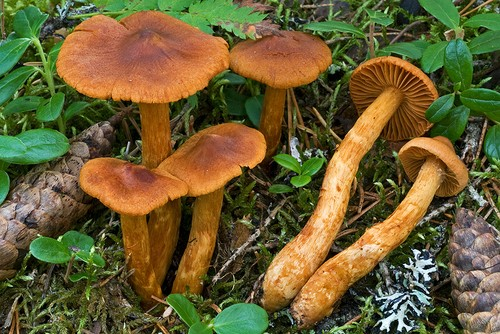
Cortinarius rubellus
Image by Federico Calledda via iNaturalist UK

Although rare in the UK, Deadly Webcaps can be found in coniferous pine and spruce woodland, growing among heather or bilberry from August to November.  

Identification: On average, these mushrooms grow to 8cm in height, with a cap width of up to 6cm. Young caps start with a convex shape, before maturing into an umbonate form with a raised and slightly pointed centre. The cap colour can range from reddish brown to orange and the surface may appear hairy or scaly. On the underside, gills can be orange, brown or red, often appearing paler on immature toadstools, and spore prints of this species are typically rusty brown. The gills themselves are fairly widely spaced and emarginate, joined to the stipe with a slight notch and younger specimens may have a pale, slightly orange, cortina (or veil with a cobweb-like structure) that cover them. The stipe can vary in colour and has a slightly bulbous lower half, tapering towards the base.  

Toxicity: Following ingestion, symptoms can take up to two weeks to develop, manifesting as digestive upset and interruptions of the central nervous system, soon followed by kidney and liver failure.  

Fungi fact: Deadly Webcaps are reported to have a scent reminiscent of radish. 


Death Cap (Amanita phalloides) 
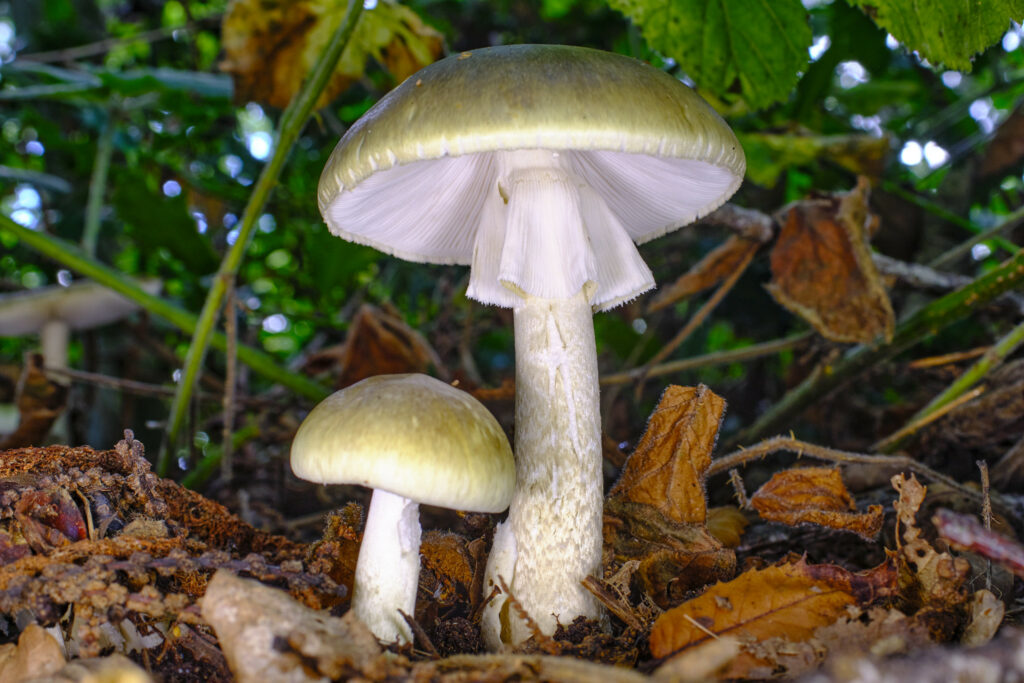
Amanita phalloides
Image by Lukas Large via Flickr

Death Caps are fairly common in broadleaved and mixed deciduous woodland with oak and beech trees, where they can be found in widely spaced groups from July to November.  

Identification: On average, these mushrooms grow to around 15cm in height. They begin with a convex cap that flattens as it matures and can be olive yellow to green-bronze in colour – depending on the age of the fruit, a white cap may also be observed. The cap is often darker in the middle and has radiating fibres that give a streaked appearance. Underneath, the gills are broadly spaced and are free of the stipe, appearing white, cream or pink in colour, which changes as the fungus matures. The stalk is generally off-white in colour with a clearly striated skirt and an obvious deep volva. Death Cap spores are white and elliptical in shape. 

Toxicity: Death Cap poisoning starts with gastrointestinal symptoms several hours after ingestion. These symptoms can last for days before a brief recovery, after which the liver and kidneys fail resulting in death in most cases. This deadly mushroom can easily be mistaken for a number of edible varieties but can easily be distinguished by a sickly-sweet smell.  

Fungi fact: Death Caps have caused the most fatalities from mushroom poisoning in the UK and are known as the world’s most deadly fungus. It has been used as a murder weapon for millennia, and there is no known antidote to its toxins.  


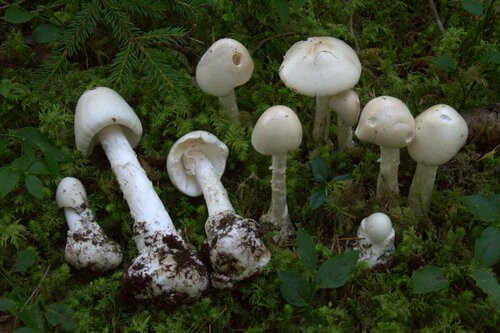
Destroying Angel (Amanita virosa) 
AMANITA VIROSA
Image by matteo_bevilacqua via iNaturalist UK

Destroying Angels are relatively uncommon in the UK but can be found in broadleaved and mixed deciduous woodland, especially those with Birch trees, from July to November. 

Identification: Destroying Angels stand up to 14cm in height, with a cap width of 11cm. They are pure white in colour and start with a convex cap, before maturing to a conical shape and eventually lying flat. Underneath, the white gills are crowded and free of the stem, which has fibrous skin and a bulbous volva at the base. Destroying Angels have a skirt on the upper half of the stipe, which is fragile and may be missing or small in size – it is not striated and is also white in colour. The flesh inside the mushroom is pure white, and the spores are white globose. It is has an unpleasant sickly-sweet smell.  

Toxicity: Symptoms – vomiting, diarrhoea and abdominal pain – begin several hours after ingestion and can last for several days before easing into a false recovery and eventual organ failure. Destroying Angels may be mistaken for edible Wood Mushrooms (Agaricus silbicola), which can be distinguished by the smell of aniseed and brown spores. 

Fungi fact: Small mammals, including rabbits and squirrels, are known to consume Destroying Angels with no ill effect.  
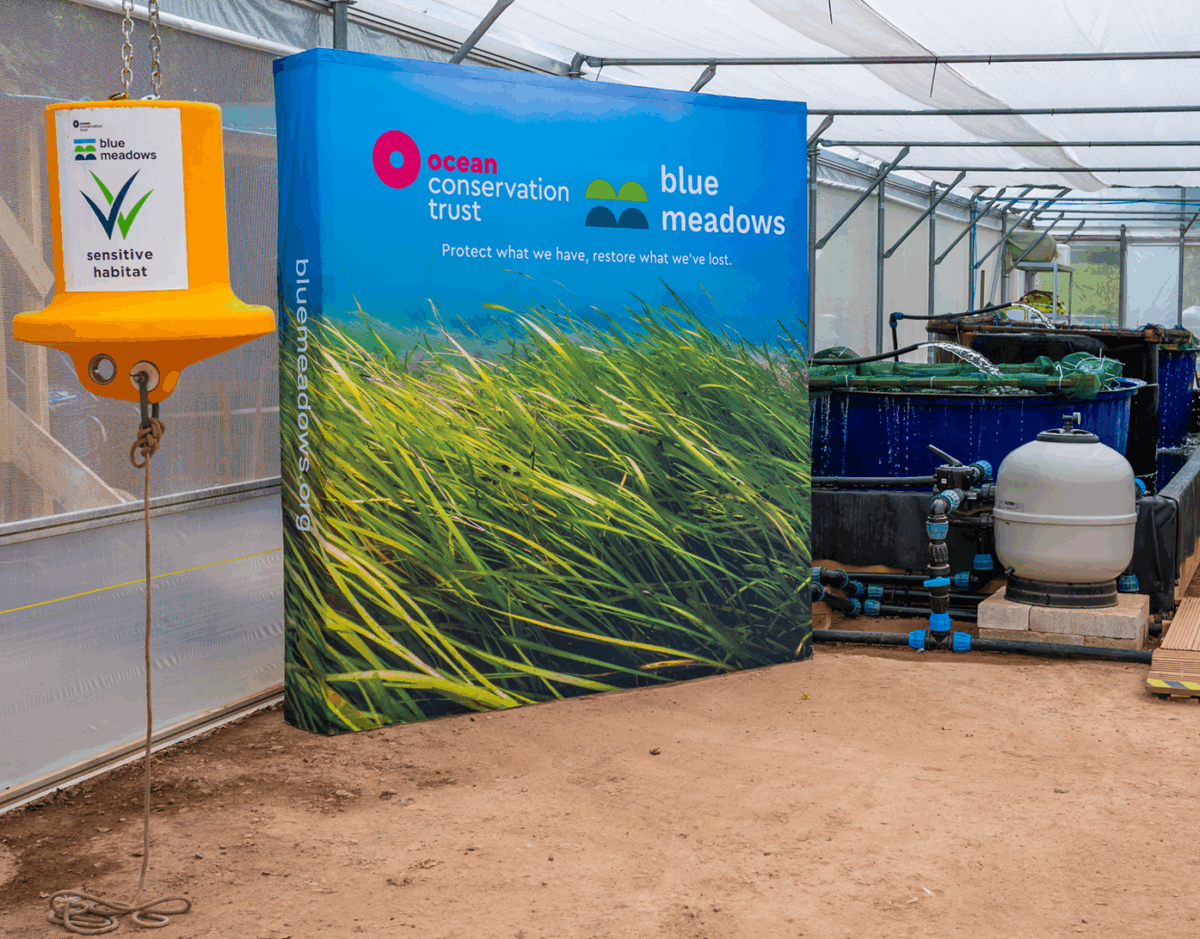
 

Ocean Conservation Trust: National Seagrass Nursery Launch

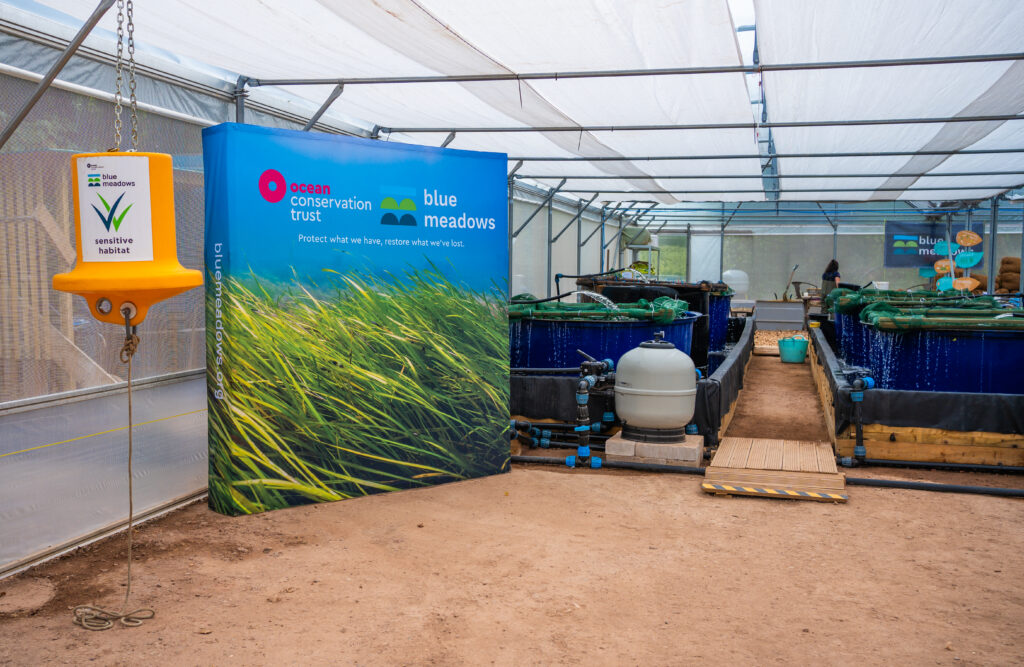
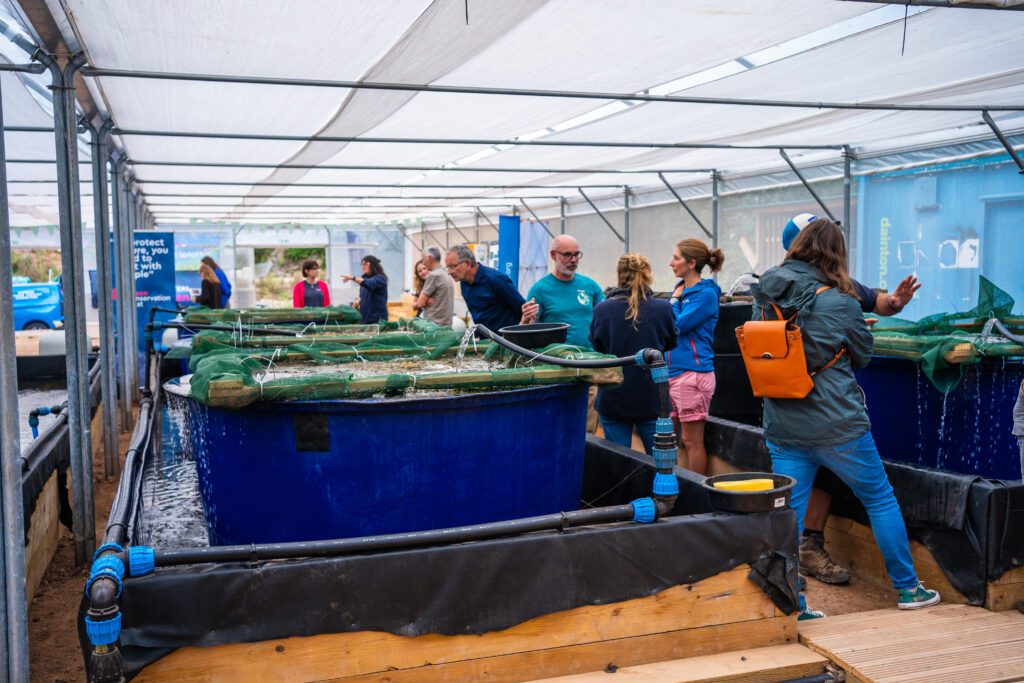
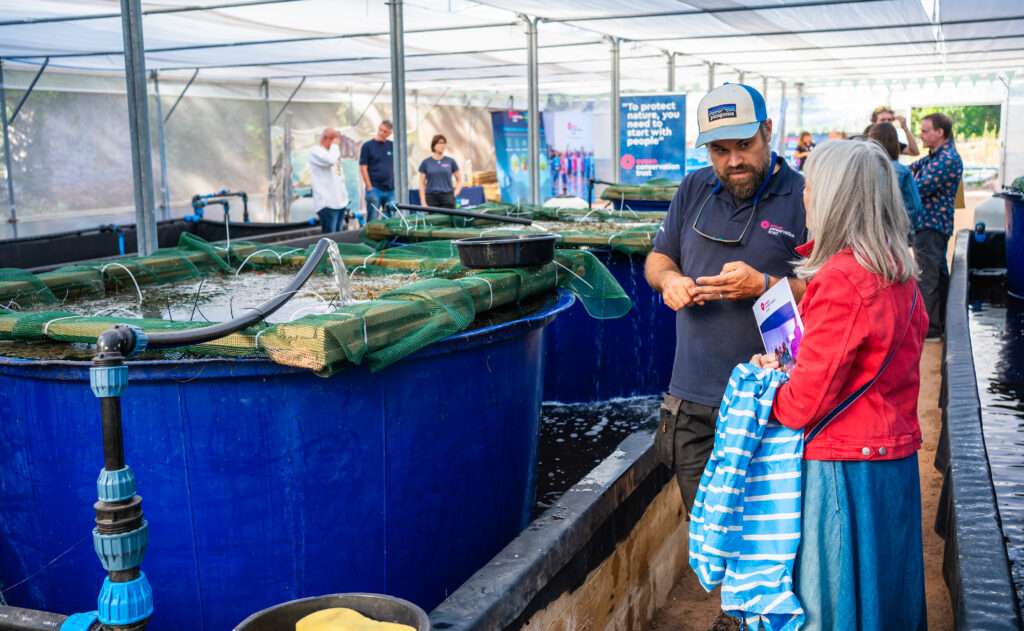
I recently had the opportunity to attend the official launch of the UK’s National Seagrass Nursery, held by the Ocean Conservation Trust (OCT) as part of its Blue Meadows project. Based on the River Dart, in Devon, the National Seagrass Nursery spans 400 square metres, making it the largest of its kind in the UK. This exciting launch event brought together a variety of national and local stakeholders, all with a vested interest in safeguarding and restoring our seagrass meadows.

Seagrass plays a vital role in marine ecosystems, with a single hectare capable of supporting 80,000 fish and 100 million small invertebrates. These marine meadows are also important carbon stores, absorbing carbon up to 35 times more efficiently than tropical rainforests. Unfortunately, since the 1930s the UK has lost around 90% of its seagrass beds, with the decline driven by a combination of disturbance, disease and pollution.

The OCT’s Blue Meadows project is working to combat this decline, aiming to protect 10% of all UK seagrass meadows and restore 50ha of seagrass over the next decade. The National Seagrass Nursery is a key component of realising these ambitions, and I was lucky enough to enjoy a guided tour of the facility.

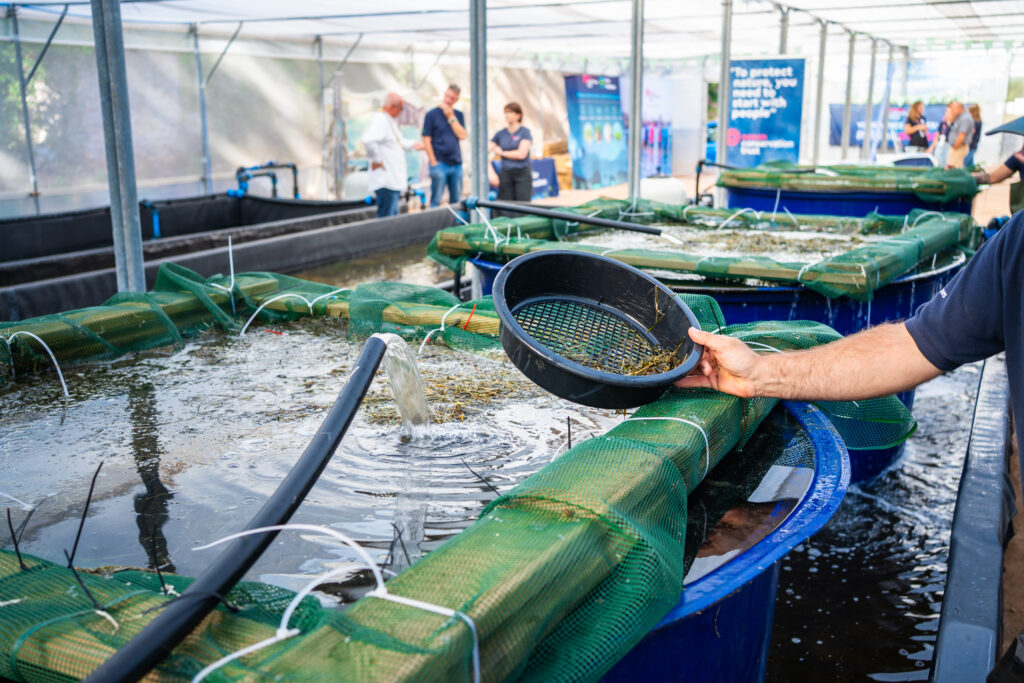
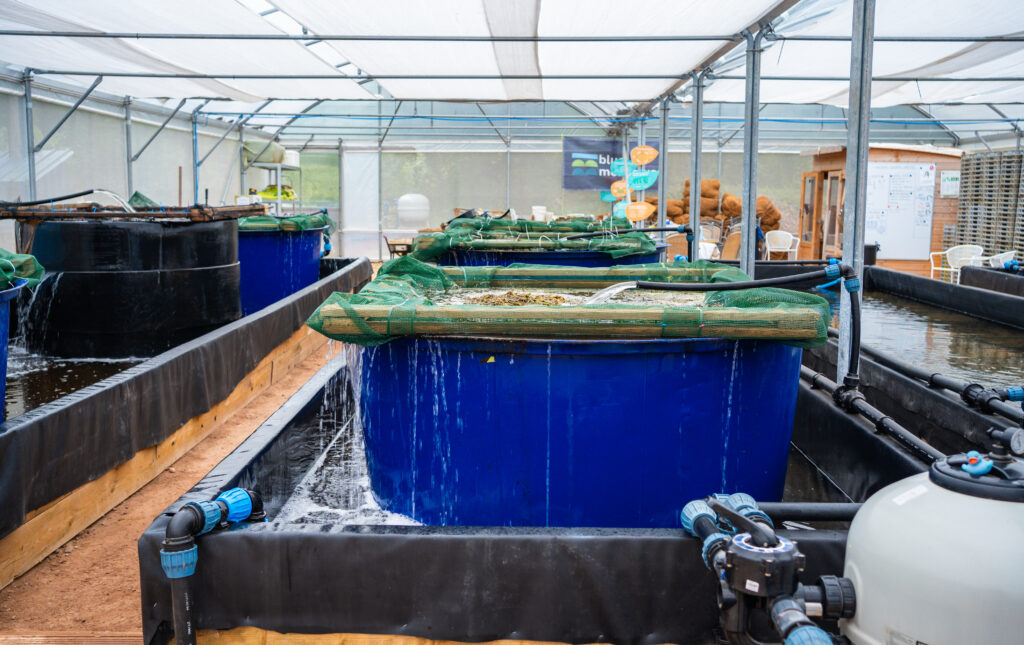
In recent years, the OCT has developed a two-pronged approach to subtidal seagrass restoration, using hydro marine seeding and seagrass mat technology in combination. Reflecting this dual approach, the nursery is divided into two sections. One side of the facility is dedicated to processing seagrass seeds that have been harvested from donor sites along the coast of the South West. These seeds are stored in large tanks and, over time, the organic matter that holds them against the flowering stem rots away, allowing the seeds to sink to the bottom. Some of these seeds will be planted directly into the seabed using the HMS OCToPUS, an innovative injection device reminiscent of a large caulking gun. Others will be taken to the other side of the nursery and planted into sand on hessian mats. These mats are then placed into shallow tanks of fresh seawater, which is pumped in from the nearby estuary. Here, they will grow into plantlets, and after 4–6 months they will be ready for planting into the seabed. The mats are then taken to the chosen restoration site and carefully pegged in place by divers.

Despite the innovative facilities and technology on display at this event, what I was most impressed by was the knowledge and dedication of the team. OCT and its supporters have worked incredibly hard and have already seen some early success with 208ha of seagrass currently protected and 3ha restored. The launch of the National Seagrass Nursery represents an exciting step in UK seagrass restoration, and I am looking forward to seeing what the future holds for this initiative. You can learn more about the Blue Meadows project here.

An interview with the British Mycological Society: A celebration of all things Fungi

UK Fungus Day is an annual celebration of all things fungi, organised by the British Mycological Society. The day invites people to get involved and learn more about the world of fungi through interactive events, online resources and institutions. We were lucky to speak to Professor Mark Ramsdale, about what makes UK Fungus Day and UK mycology so important.

Mark is chair of the BMS Fungal Education and Outreach Committee and head of training at the Medical Research Council Centre for Medical Mycology at the University of Exeter.


Can you tell us how the British Mycological Society began and what its mission is today?
The British Mycological Society was first active in the late 1800s, when small groups of naturalists began organising “forays among the funguses” to explore and record fungi. What began as a shared passion soon became a learned society, dedicated to advancing fungal biology, supporting research, and encouraging collaboration between scientists and enthusiasts. Today, the BMS is a community for professional and amateur mycologists and enthusiasts. It is one of the major mycological societies in the world, committed to promoting cutting-edge scientific research, fungal conservation and species recording and the provision of educational resources.

Read more about the history of BMS here

And about the society’s current strategic aims here

UK Fungus Day has been running for over a decade. What impact have you seen it make so far, and where would you like to see it go next?

UK Fungus Day has had a huge impact over the past decade, both in raising public awareness and in shaping how fungi are perceived. When it began, fungi were often seen as a niche interest. Now, thanks to the coordinated outreach, school activities, citizen science projects, and media coverage that UK Fungus Day generates each year, there’s a much greater recognition of the vital role of fungi in ecosystems, climate regulation, and even human health.

One of the biggest shifts I’ve noticed is how fungi (funga) are now being celebrated alongside plants (flora) and animals (fauna) and included in biodiversity conversations. More schools, community groups, and nature reserves are running fungus-focused events, and citizen scientists are contributing valuable records that inform policy development and strengthen fungal conservation efforts. The event has also helped inspire the next generation of mycologists by making fungi approachable, fascinating, and fun to learn about.

Looking ahead, I’d like to see UK Fungus Day expand its reach even further, engaging even more with sectors such as food, medicine, art, sustainability and technology – to show just how interconnected fungi are with our lives, and why fungal research is so important.

What are the best ways for people to get involved with UK Fungus Day and mycology as a whole?

There’s so much going on! Whether you’re a complete beginner or an experienced mycologist, you can join local fungus walks and forays, take part in citizen science projects like “Find-a-Fungus” on iNaturalist, or explore fungi creatively through school and community initiatives such as “Fungi Connect”. There are also talks, festivals, workshops, and exhibitions, taking place all over the UK.  Or, you can simply head outdoors to photograph and learn about fungi in your own neighbourhood. The UK Fungus Day website features blogs on a range of fungus-focused topics; there’s also poetry and videos of past talks and presentations on YouTube @BritmycolsocOrgUk.  However you take part, UK Fungus Day is all about discovery, and helping to grow our understanding of the fungal world.

Explore everything on offer here

Mycology appears to be gaining greater appreciation in popular science with more media, books and ID guides being written each year. Some even reaching best seller status. Why do you think this is, and do you hope to see even more coming from the discipline?

Fungi are certainly receiving more attention in popular science media now, and I think this is down to several converging factors. For a long time, fungi were a “forgotten kingdom” compared with plants and animals so they have not been on people’s radars, yet they clearly underpin many key processes.  Increasingly, public interest in climate change, biodiversity loss, and sustainability has brought fungi into the spotlight because they are powerful agents of change.

Fungi have always inspired creative artists, and it is not hard to see why. Their biology is full of surprising and often unfamiliar elements: hidden mycelial networks that connect life underground, fruitbodies that mysteriously appear overnight, and species that can adapt their shapes in response to their environment.  So, in terms of both popular science and science fiction, their unusual strategies of growth, survival, and reproduction lend fungi an aura of mystery that fuels the imagination. For many, they offer metaphors hinting at hidden connections, transformation, resilience, renewal and decay – concepts that resonate throughout storytelling and art.

It may also simply be that the extraordinary colours, forms and versatility makes them visually compelling subjects. Writers, filmmakers, and field biologists have all recognised this, producing books, documentaries, and field guides.

This cultural shift and growing awareness translate into greater public engagement, fuelling a desire for people to join fungal forays, learn identification skills, and contribute to citizen science recording schemes. As a professional mycologist, it is hugely encouraging: broader awareness of fungi feeds into conservation priorities, medical and agricultural research, and a deeper appreciation of biodiversity as a whole. I absolutely hope the momentum continues. Mycology still has countless stories to tell, and the public appetite is clearly there for more inspiring works.

What developments in mycology are you most excited about right now, and what are your hopes for the field in the future?

I’m particularly excited by the growing recognition of fungi in conservation. In the UK, species such as Waxcaps and wood-decay fungi are finally being acknowledged for their global importance, especially in ancient grasslands and forests. Protecting these ecosystems means protecting the fungi that underpin them.

At the same time, research is giving us unprecedented insight into the fundamental biology of fungi. We are beginning to unravel the molecular mechanisms that control fungal growth and development, yet there are still huge gaps in our knowledge – especially around how fungi interact with one another and how they organise into complex multicellular structures.

From a medical perspective, advances in our understanding of how fungi interact with the immune system are particularly exciting. We now know that the immune response to fungi is much more dynamic and nuanced than previously thought, and that we can use this to our advantage in treatment patients with fungal infections.  On top of this, the recent discovery that some fungi host intracellular bacterial parasites which can alter their susceptibility to antifungal drugs opens up entirely new avenues for treatment of human fungal diseases.

What books would you recommend for someone just starting out in mycology? Similarly, what would you suggest for readers wanting to explore the subject further?

There are many excellent books to choose from and different reasons to look at them…

For field identification

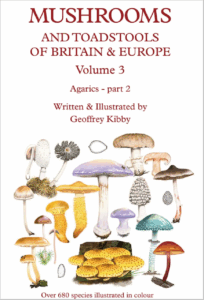
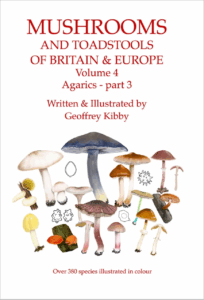
Geoffrey Kibby (2017-2024): Mushrooms and Toadstools of Britain & Europe (Vols 1 to 4)

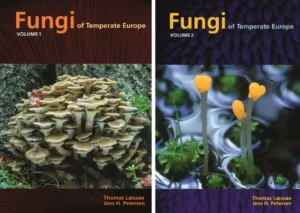
Thomas Laessoe and Jens Petersen (2019): Fungi of Temperate Europe (Vol 1 and 2)

For stories and insights into fungal biology

Jassy Drakulic (2024): Fungi for Gardeners (RHS)

Merlin Sheldrake (2020) Entangled Life: How Fungi Make Our Worlds, Change Our Minds and Shape Our Futures

Nicholas Money (2024): Molds, Mushrooms and Medicines

Richard Fortey (2024): Close Encounters of the Fungal Kind – In Pursuit of Remarkable Mushrooms

Pat O’Reilly (2011): Fascinated by Fungi. Exploring the History, Mystery, Facts and Fiction of the Underworld Kingdom of Mushrooms

For younger readers with curiosity

Lynne Boddy and Ali Ashby (2023): Fungi – Discover the Science and Secrets Behind the World of Mushrooms

William Brown (2023-2025): Fungalphabet – The ABC’s of Fungi (and the more recent books in this series).

Conservation Volunteering at RSPB Ynys Lawd/South Stack

As part of our ongoing commitment to support wildlife and conservation, all NHBS staff members can apply for up to three days of paid time during each calendar year to spend on conservation projects of their choice. One of our Technical Advisors, Laura, recently spent a week working at RSPB Ynys Lawd / South Stack, in Anglesey. You can read all about her experience below:


Early in 2025, I applied to be a residential volunteer at RSPB Ynys Lawd / South Stack, Anglesey. I was lucky enough to be accepted and spent an incredible week, in early August, on the reserve.


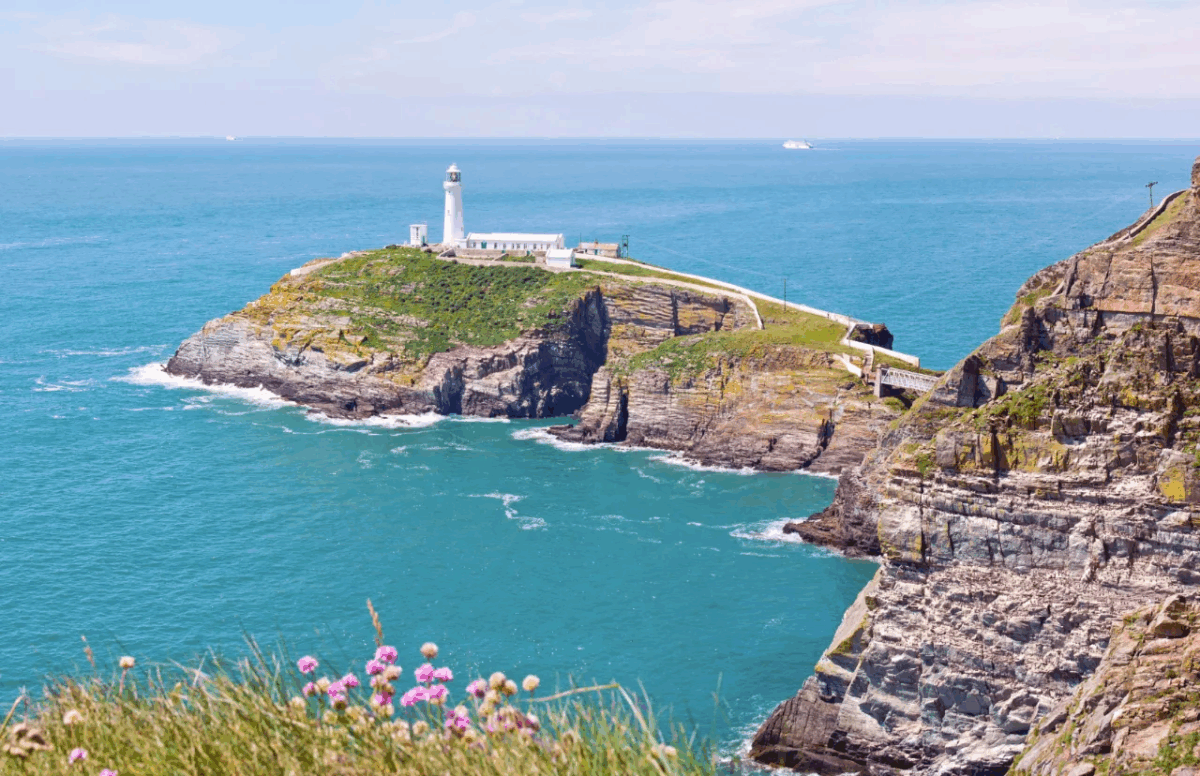
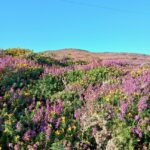
RSPB Ynys Lawd / South Stack is an incredible reserve with swathes of heathland and farmland covering the rugged hills, eventually giving way to rocky sea cliffs. During springtime, large seabird colonies, including Razorbills, Guillemots, Puffins, Fulmars and Kittiwakes, nest in the cliffsides. Choughs and Ravens also call the reserve home, often dancing on the strong sea winds. All three types of Heather can be found there alongside Gorse and the South Stack Fleawort, thought to be endemic to the reserve. Cetaceans journey through the adjoining Irish Sea, with the most common visitors being Risso’s Dolphins, Common Dolphins and Harbour Porpoises.


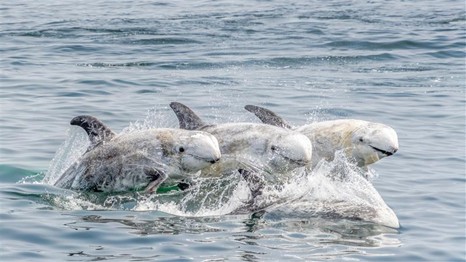
I participated in the National Whale and Dolphin Watch 2025, run by the Sea Watch Foundation. This nine day citizen science event collects data on the distribution of whales, dolphins and porpoises around the UK. From the iconic Ellin’s Tower, we watched the seascape for an hour and noted any cetaceans that came past. The most memorable sighting was a pod of five Risso’s Dolphins with a calf! These distinctive dolphins are among the largest dolphin species, with some adult males growing up to 3.8 m long. Mature Risso’s Dolphins have unique bodily scarring patterns or ‘rake marks’, caused by members of their own species during social interactions, making them easier to individually identify. They’re also amazing acrobats, as we observed when we were lucky enough to spot a lone male doing backflips in the water! If you want to learn more about these enigmatic creatures, you can read our latest issue of British Wildlife.

Douglas Croft: NOAA Office of National Marine Sanctuaries on Flickr

A lot of my time was spent engaging with visitors and discussing the array of wildlife that inhabits the reserve. From Ellin’s Tower, alongside cetaceans, I observed Grey Seals and seabirds. By August, most of the nesting seabirds had already left, however, the cliffs were by no means deserted. Kittiwakes, Herring Gulls, and Greater Black-backed Gulls were still populating the rocks. Gannets sailed past in the mornings, diving and emerging triumphantly with beaks full of fish. My personal favourite sighting was a juvenile Peregrine Falcon which swooped past the cliffs, honing its hunting skills with impressive dives and turns. Choughs are year-round residents, often announcing their presence with their distinctive “Chee-ow” call and playing in the strong sea winds.

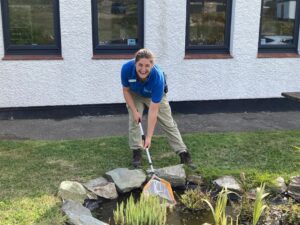
Other days were taken up by roaming the reserve and ensuring it remained clean and free of litter. Handily, they had one of our old-style pond nets, which made it easy to ensure that the wildlife pond was kept free of rubbish.

All in all, I had a wonderful week, thanks in part to the beautiful surroundings and wildlife but also to the lovely staff and other volunteers who made me feel so welcome. It’s an experience I would heartily recommend.

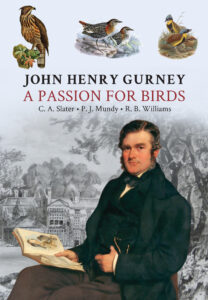
Author Q&A: Clive Slater, Peter Mundy, and Ray Williams – John Henry Gurney: a passion for birds

Many books have been written about notable names in the world of natural history, with the likes of Darwin and Wallace being the first that come to mind. Digging a little deeper in areas such as ornithology will uncover names that aren’t as well known and yet still made significant contributions to the field. Uncovering almost 30 species of birds that were previously unknown to science, John Henry Gurney was a founding member of the British Ornithologists’ Union in 1859, while focusing on the identification of birds of prey. Large collections of letters written by Gurney to Alfred Newton are held by Norfolk County Council in the Norfolk Archive Centre, and others to his family members are in the Library of the Society of Friends in Euston, London. Now a deeply researched biography about the man, his personal life and his contributions to cataloguing nature is being published by John Beaufoy Publishing.

NHBS managed to bring the co-authors together to answer a few questions about the book and uncovering the history of a man seemingly forgotten by the world of ornithology. 

Clive Slater, Peter Mundy and Ray Williams

How did you first come across John Henry Gurney, and why did you decide to write this biography?

As co-authors of this biography, we (Clive Slater, Peter Mundy and Ray Williams) have combined our three quite different perspectives of John Henry Gurney. Almost 50 years ago, Ray commenced research on a bio-bibliography of the Victorian publisher John Van Voorst (1804-1898) and has published many accounts of the books that Van Voorst produced. One of them, in 2008, concerned Gurney’s Descriptive Catalogue of the Raptorial Birds in the Norfolk and Norwich Museum Part I. Discovering that Gurney was occupied from 1857 to 1864 in producing Part I but that he never completed the project prompted the obvious question of “why?” Further investigations revealed his misfortunes of the 1860s, including his wife’s elopement, an inevitable divorce, and his entanglement in the notorious financial crash of Overend & Gurney for which the directors were tried for fraud (but acquitted).

When Peter was studying vulture specimens in the bird collection at the Natural History Museum at Tring for his PhD, he noticed some with Norwich Castle Museum labels. Then, much later, having bought a copy of Gurney’s 1884 account of raptors in the Norfolk and Norwich Museum, he realised what a huge collection it must have once been. He asked Clive, his ornithologist friend from university days in the 1960s and now a Norwich resident, to investigate. Apparently, none of the original specimens were present, which sparked their quest to discover more about Gurney and the fate of his remarkable collection. Since so little of his work seemed to have been remembered, Peter and Clive decided that it deserved wider recognition and so set about writing a biography. Since Ray’s 2008 paper on Gurney’s Descriptive Catalogue of the Raptorial Birds had come to Clive’s attention, contact was made, and thus came about our decision to join forces, Clive and Peter contributing as ornithologists, and Ray as a historian and bibliographer.

For those unfamiliar with Gurney, could you briefly tell us a bit about him and his work?

Gurney was born in 1819 and raised among the famous Norfolk family of wealthy Quaker bankers, also well known as philanthropists or promulgators of the Quaker faith, not only in Britain, but also in America. After education at a Quaker school, he entered the family bank in Norwich. He had started collecting bird specimens from an early age and this interest developed into journal publications. From 1853, he made collecting and writing about raptors his speciality. Simultaneously, he was receiving and publishing on bird specimens supplied by collectors in southern Africa. These two threads dominated his life’s ornithological work. However, John Henry fell for a cousin, Mary Jary Gurney who was an Anglican, and he was therefore, upon his marriage to her, disowned by his co-religionists, as was the current Quaker convention.

Nevertheless, he did not abandon the principles of his upbringing and was assiduous in his commitments to his banking career, his public service as an MP and JP and his philanthropy. Though his additional personal ornithological research resulted in a constant and considerable workload, what is truly astonishing is his determination and strength of mind in continuing his bird work throughout a series of tragic misfortunes during the 1860s. His research procedures were constant throughout his life, meticulously documenting external morphology of as many specimens as possible, while accurately recording geographical distributions. He was not a theorist, however, and dealt only in facts as he recorded them. Although best known for his studies of the world’s birds of prey, Gurney’s wide zoological interests also embraced the birds, fishes, amphibians, reptiles, mammals and marine invertebrates of his home county of Norfolk, which he supplemented with fascinating accounts of historical manuscripts.

What were the greatest challenges you faced when writing this biography?

The research itself was, of course, naturally difficult and time consuming, involving numerous visits to libraries, archives and museums by all of us. The access to archival material in private and public collections of books and specimens in the UK and southern Africa was challenging and required much logistic planning. Covid lockdowns hampered access to libraries and museum collections. On several occasions when reviewing progress, we found that the vast amount of information gleaned had to be severely edited in order to keep below the agreed word limit.

A significant challenge, therefore, was not any difficulty in finding enough information, but was how to select the most important facts and to present them in the most succinct fashion. Moreover, information had to be continually assessed and corroborated, which additionally involved the interpretation and explanation of events, extending in the end to nine years since we decided in 2016 to combine resources. However, the major issue was Peter’s deteriorating health, leading to his death in February 2023. Nevertheless, his determination to continue contributing to our work despite his serious illness was inspirational and we vowed to finish the book as a testament to his courage (the book is also dedicated to him).

This book covers the intriguing twists and turns of Gurney’s life in impressive detail. Were there any discoveries that surprised you when researching this book?

Much taxonomic information was encountered, though that is practically certain to arise in any biography of a Victorian naturalist. It is significant, however, how deeply respected he was in the ornithological circles of his day – many others across the world would often seek his help and advice in their studies. But perhaps the most surprising revelations concern Gurney’s private life and how he miraculously managed to continue his ornithological research in the face of so much adversity and personal tragedy, all of which became intertwined with other misfortunes of his wider Norfolk family. These discoveries provided the answers that Ray sought to explain the slow progress of the Descriptive Catalogue of the Raptorial Birds and the failure to complete it. Whilst the Overend & Gurney affair has been known about for some years, we were able to add some more detail. Most startling of all was the story of Gurney’s wife’s elopement and its tragic impact not only on his own life, but his whole family, and British and American Quakers in general.

The American newspaper press was gleeful in their cruel and unjustifiable use of the unfortunate event for their own political purposes. Gurney must have been deeply embarrassed by the public exposure of these events, hence his self-exile from Norfolk for five years. However, the care he bestowed on his sickly younger son was exemplary and his ability to continue his bird studies whilst living out of a suitcase for years was quite extraordinary. Equally impressive was his memory of details of his specimens at that time, even when he could not access them. He apparently never saw his recalcitrant wife again, but as it happened, she possessed huge financial resources of her own and thus Mary Jary and her lover were ultimately able, after their marriage, to re-establish themselves in society with very little trouble. However, their family also was to be visited again by tragedy when Mary died of cancer, aged 43, and their daughter died of a brain disease, aged 31.

I was surprised to learn that although Gurney donated 1,300 foreign bird specimens to the Lynn Museum, sadly, none of them remain. What specimens would you have been most interested in seeing?

Of course, all the specimens were valuable historically but most exciting would have been a view of the collection from Alfred Russel Wallace’s travels in the Malay Archipelago, as these would have been special and we do not even know what they were! Also intriguing would have been sight of the central displays of birds of paradise and hummingbirds that must have been striking but we have no idea what they looked like.

There are currently seven recognised bird species named in Gurney’s honour. Do you have a personal favourite?

Yes, a great favourite of Clive’s is Gurney’s Eagle, Aquila gurneyi 1860. More than 160 years after George Robert Gray honoured Gurney with its name we still know very little about the biology of this species – nobody has reported even finding a nest! An attempt to see it in Halmahera in 2017 was frustrating for the only fleeting, distant views. For such a large, imposing eagle to be so elusive and little known is quite remarkable.

Despite his vast contributions, including describing 29 birds, 21 of which are still recognised today, John Henry Gurney seems to be somewhat forgotten by modern ornithology. Why do you think this is?

Since Victorian times, momentous scientific advances have been made and the world’s environment is rapidly changing beyond all recognition. In the biosciences, there has been for a century or more an increasing trend for research to become focused on ecology, biodiversity, migration, physiology, biochemistry, genetics and climatology, all of which are now crucial for understanding and combatting the threats of global warming and habitat destruction. Whilst taxonomy must underpin these trends, so that biologists are able to confidently identify whole organisms of animals and plants of importance, the emphasis on taxonomy per se has shifted from the Victorian obsession with finding and naming new species for its own sake. Thus, Gurney is only one of many hundreds of naturalists of his period now unknown to modern biologists in general.

Even Peter, a modern authority on raptors and southern African birds, was baffled as to why for so long he knew little about Gurney, who published nothing about himself and only one very small booklet aimed at the public to serve as a guide to his raptorial collection. Difficult to trace were his letters and other manuscripts, widely scattered among collections in the Natural History Museum in Tring, the Castle Museum in Norwich, the Barclays Group Archives in Manchester, and the Society of Friends’ Library in London. Perhaps if his planned book of raptor paintings by Joseph Wolf had come to fruition he would have become better known. But it seems strange that most world birders and conservationists are so familiar with his name via the beautiful but near-extinct Gurney’s Pitta.

How would you describe Gurney’s impact on ornithology?

Gurney helped lay the foundations of modern ornithology in Victorian times by supporting the fledgling British Ornithologists’ Union and their journal, Ibis, in which he published his papers on raptors and southern African birds, embellished by Joseph Wolf’s illustrations. By his descriptions of new raptorial species and records of worldwide geographical distribution of many species he contributed crucial information to the difficult study of raptors, still a perplexing group. We should also recognise the lasting value of his specimens to modern scholars and the support that he provided to other ornithologists in his day.

What are you working on next? Do you have any more writing projects lined up?

Clive continues researching the history of the bird collections that were once held at Norwich Castle Museum but were dispersed in the 1950s, at the same time as Gurney’s raptorial collection. Thousands of bird specimens were sold, loaned or given to other institutions. Some of them emanated from important expeditions and notable naturalists, so why were these collections at Norwich in the first place, what went where, and why?

Now that Ray’s work on Gurney is finished, he is returning to his project of the bio-bibliography of John Van Voorst, and after that, a similar study is envisaged of the life of Thomas Alan Stephenson (1898-1961), a sea-anemone taxonomist and expert on marine intertidal zonation, as well as a superb botanical and zoological artist whose beautifully accurate paintings give the impression of being colour photographs.

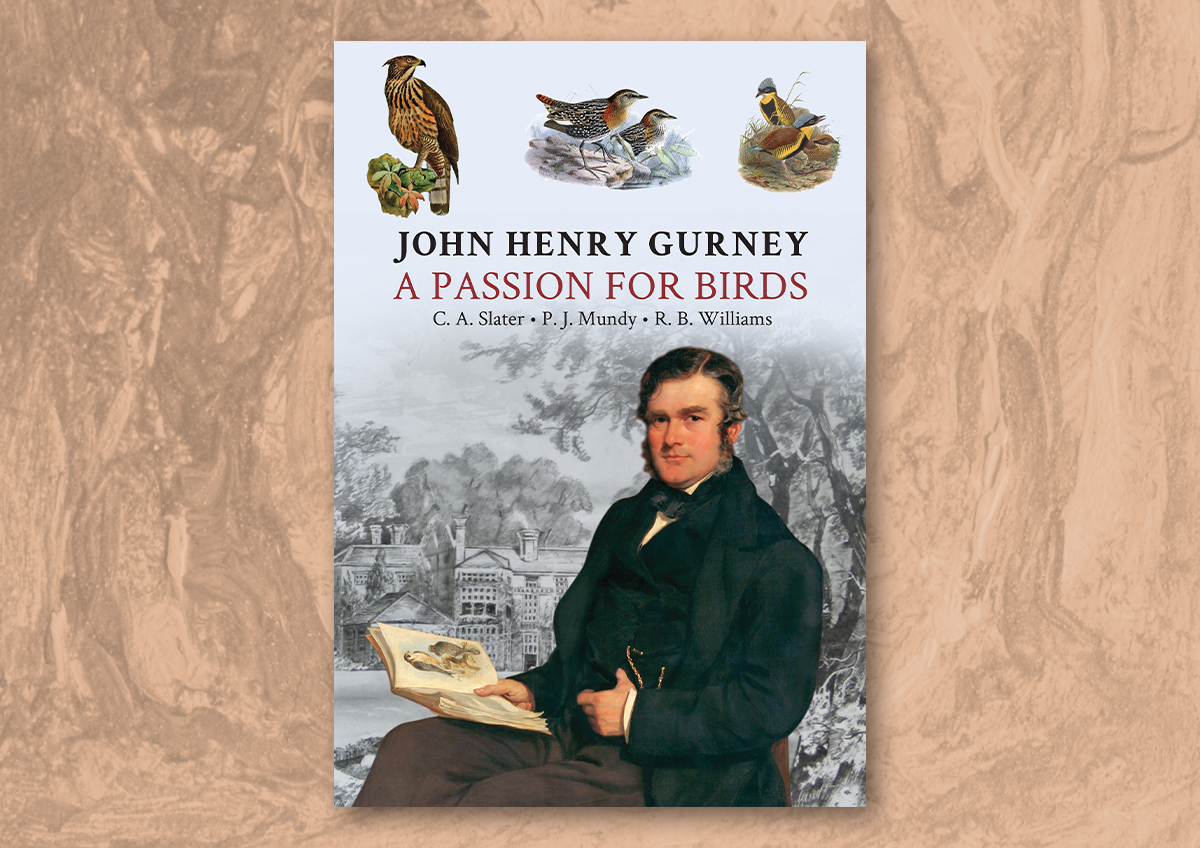
John Henry Gurney – A Passion for Birds is published by John Beaufoy Publishing in association with the British Ornithologists’ Club, and is available in hardback from NHBS here. 

An Introduction to The Fungal Kingdom

Members of the fungal kingdom come in a remarkably diverse variety of shapes, sizes and colours. This blog provides an introduction to several captivating and commonly encountered fungal genera, highlighting their key characteristics, applications and identification tips.

We hope that this guide serves as a useful starting point to help recognise a few of the broad groups of mushrooms commonly encountered in the UK, but it should not be used for foraging purposes. There are around 15,000 species of fungi in Britain and identification can be extremely challenging, often requiring microscopic examination. Even in popular edible groups there are species or lookalikes that can cause serious illness, so it is vitally important to never collect or consume mushrooms unless you are absolutely certain of the identification.  


Amanita 

A red and white fly agaric mushroom on leaf litter
Image by Bernard Spragg via Flickr

There are around 600 species in the Amanita genus across the globe. This fascinating group exhibit great diversity but are best known for Fly Agarics and their distinctive crimson cap which features in mythology, folklore, art and media. While some members of this genus are edible, Amanitas are better known for their poisonous qualities and hallucinogenic properties. There are roughly fifty Amanita species that can be found within the UK. Around fifteen species are common and can be readily found near the base of trees, and five of these individuals are considered poisonous. Despite containing some edible species, the genus is generally avoided and are not considered safe for the novice forager. 

Key Characteristics: Amanita’s form a mycorrhizal symbiotic relationship with trees – where they release enzymes and other organic acids to break down organic matter, making the nutrition in the soil more bioavailable. In turn, trees will provide Amanitas with nutrition synthesised through photosynthesis. These mushrooms can be characterised by white (or off-white) gills, that are closely spaced and free from the stipe and they are often seen with irregular patches, or ‘warts’ on the cap, which are fragments of the veil – a membrane that enclosed the young mushroom.  

Uses or Applications: Research has shown potential for Aminata species in healthcare, particularly for their anti-inflammatory and neuroprotective properties. Historically, Fly Agarics have also been used as an insecticide, where they were broken up into milk and used to trap flies. 

Species Examples: Death Cap (Amanita phalloides), Destroying Angel (Amanita virosa), Fly Agaric (Amanita muscaria), Panther Cap (Amanita pantherina)  

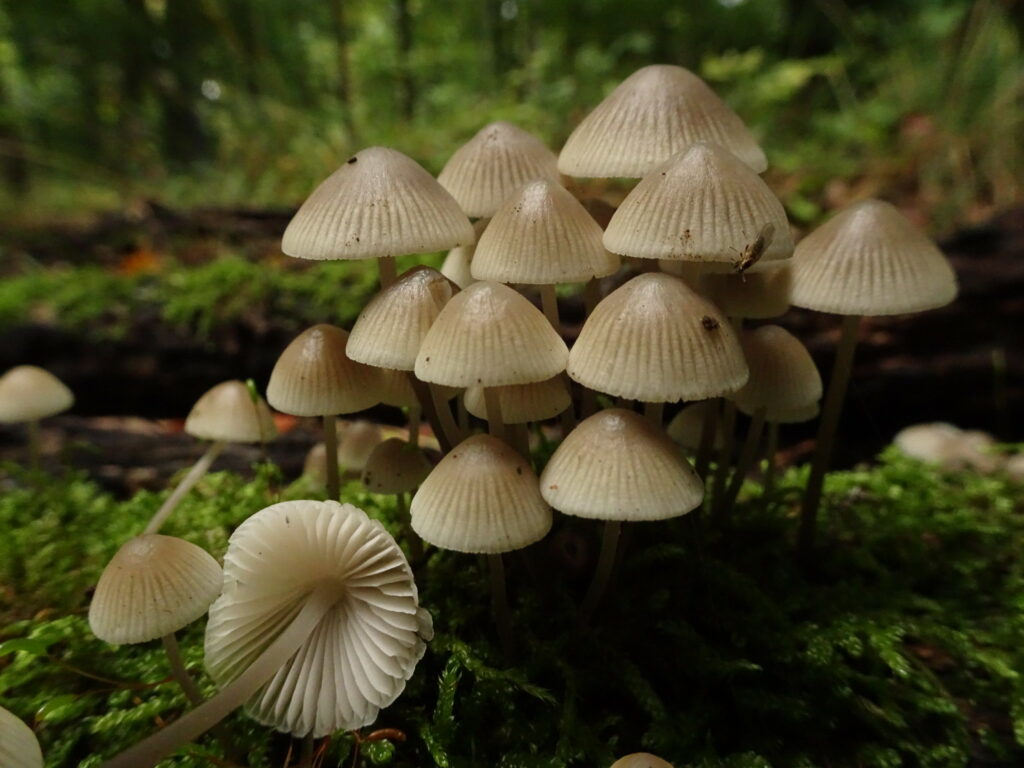
Mycena 

mycena species on a forest floor
Image by Dr. Hans-Gunter Wagner via Flickr

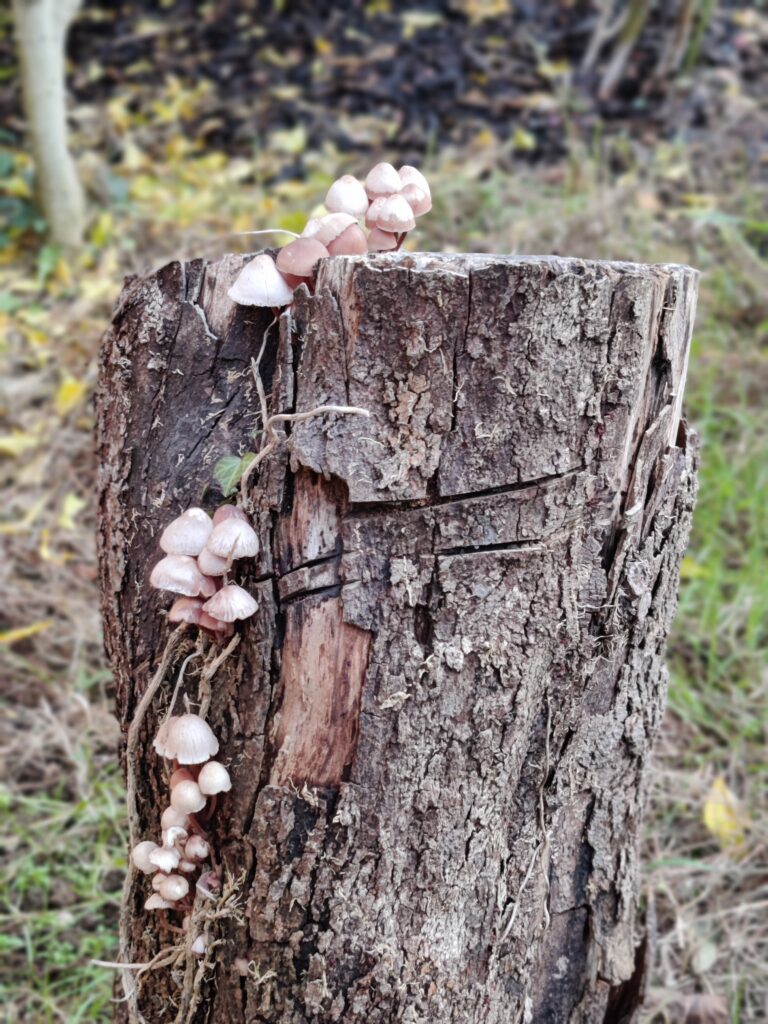
Introduction: More than 100 Mycena species can be found throughout Britain and Ireland, although less than half of these are considered common or widespread in distribution. They are often referred to as ‘bonnets’ and consist of small, delicate toadstools with fragile stems and a number of these species are known to be bioluminescent, caused by a chemical reaction within the tissue cells.  

Key Characteristics: A small conical or bell-shaped mushroom with a thin stem. Mycena caps can be translucent or may have light striations and on the underside, gills are attached to the stipe and produce white spores. Due to their small size (caps from 0.5 – 15cm), some species may only be identified through microscopic examination and spore sampling.  

Uses or Applications: Due to their small size, Mycena are not considered edible – some species within the genus are poisonous, and since the group are difficult to identify, they are generally regarded as unsuitable for foraging.  

Species Examples: Common Bonnet (Mycena galericulata), Rosy Bonnet (Mycena rosea), Lilac Bonnet (Mycena pura) 

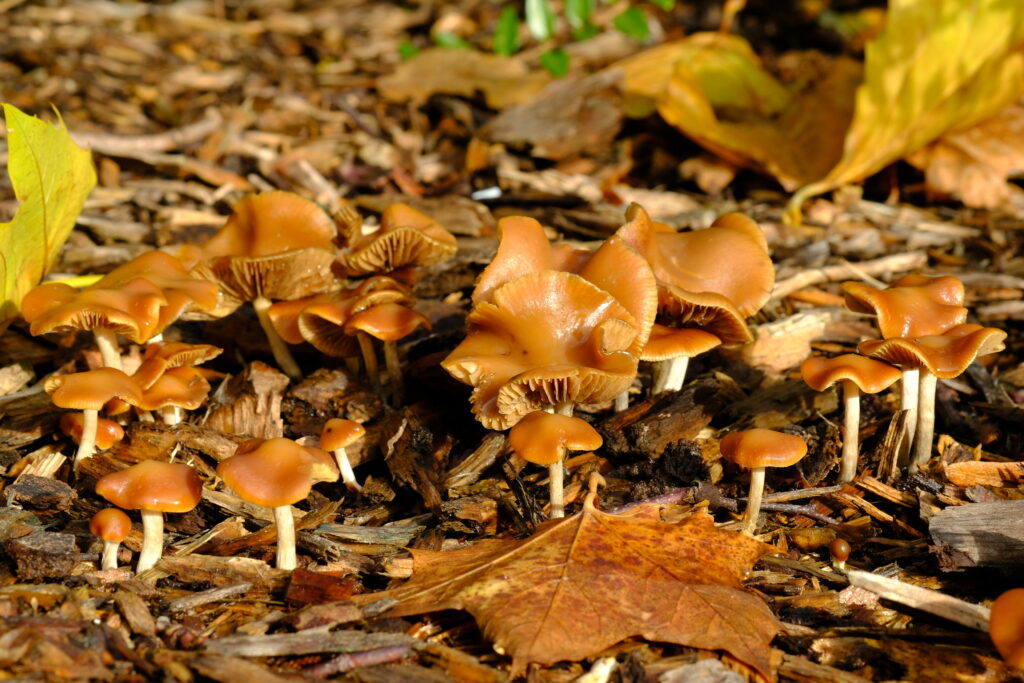
Psilocybes 

Image by Lukas Large via Flickr

Introduction: The Psyilocybe genus is a widespread group of mushrooms, some of which are well known for their psychoactive properties. They are found across the globe in a range of nutrient rich habitats, and can be found growing in clusters in mossy, grassy or forested areas in the UK. The genus is split into two clades, one of which is comprised of hallucinogenic species that have a blue staining reaction when bruised (however it is worth noting that not all blue-staining fungal species contain psilocybin). 

Key Characteristics: Psilocybes fall into the ‘little brown mushroom’ category – a non-descript, brown to yellow coloured mushroom that is small to medium in size. These gilled toadstools typically produce a dark spore print, have a slender stipe and a hygrophanous cap that changes colour as moisture levels change in the mushroom tissue.  

Uses or Applications: Psilocybes are often referred to as ‘magic mushrooms’ for their psychoactive properties. Species in this genus can contain compounds such as psilocybin, which induce hallucination and changes in perception for those who have ingested the compound and has been historically used to treat some psychiatric conditions. 

Species Examples: Liberty Cap (Psilocybe semilanceata), Wavy Cap (Psilocybe cyanescens).  

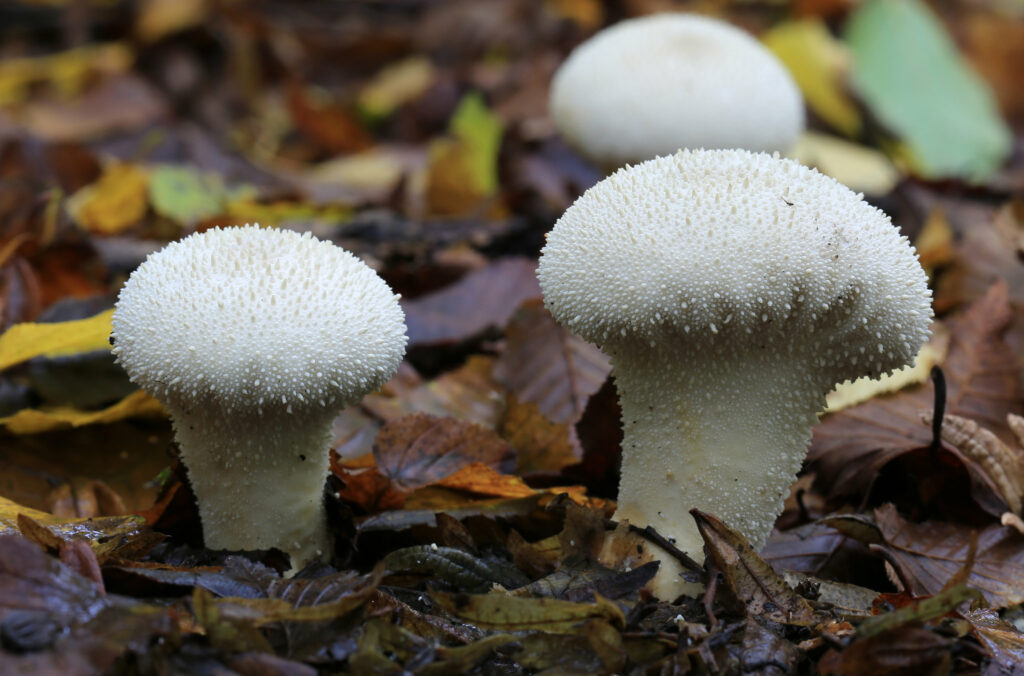
Lycoperdon 

Puffballs on a leafy floor
Image by Stu’s Images via Flickr

Introduction: A genus of puffball mushrooms with approximately fifty species across the globe. These instantly recognisable fungi are common and widespread around the UK and can be found on the ground in woodland and pasture with plenty of leaf litter, where they decompose organic matter. 

Key Characteristics: Lycoperdon species have a distinctive set of characteristics that allow for easy identification. These small-medium sized balls do not have gills or spores and have no cap. They tend not to have a stipe, but some species do have a small one that can appear thicker. Some species have a tough outer skin, and inside, the mushroom should have white, spongy flesh that turns yellow or brown as the spores mature. Members of this genus are basidiomycetes – they produce spores within the basidia (a microscopic spore-producing structure) which are located inside the fruiting body, releasing a cloud of spores when squeezed. 

Uses or Applications: Most species in the Lycoperdon genus are edible. They are said to have a mild taste and smell, making them choice edibles for many foragers. Although they have a tendency to become slimy once cooked, puffballs are a common substitute in various vegetarian dishes.  

Historically, puffballs have been used in medicine for their hemostatic properties which stop or slow the flow of blood, and blacksmiths in particular are known to have kept puffballs in the forge for these properties, as well as their ability to aid in the healing of burns. 

Species Examples: Common Puffball (Lycoperdon perlatum), Pestle Puffball (Lycoperdon excipuliforme), Stump Puffball (Lycoperdon pyriforme) 

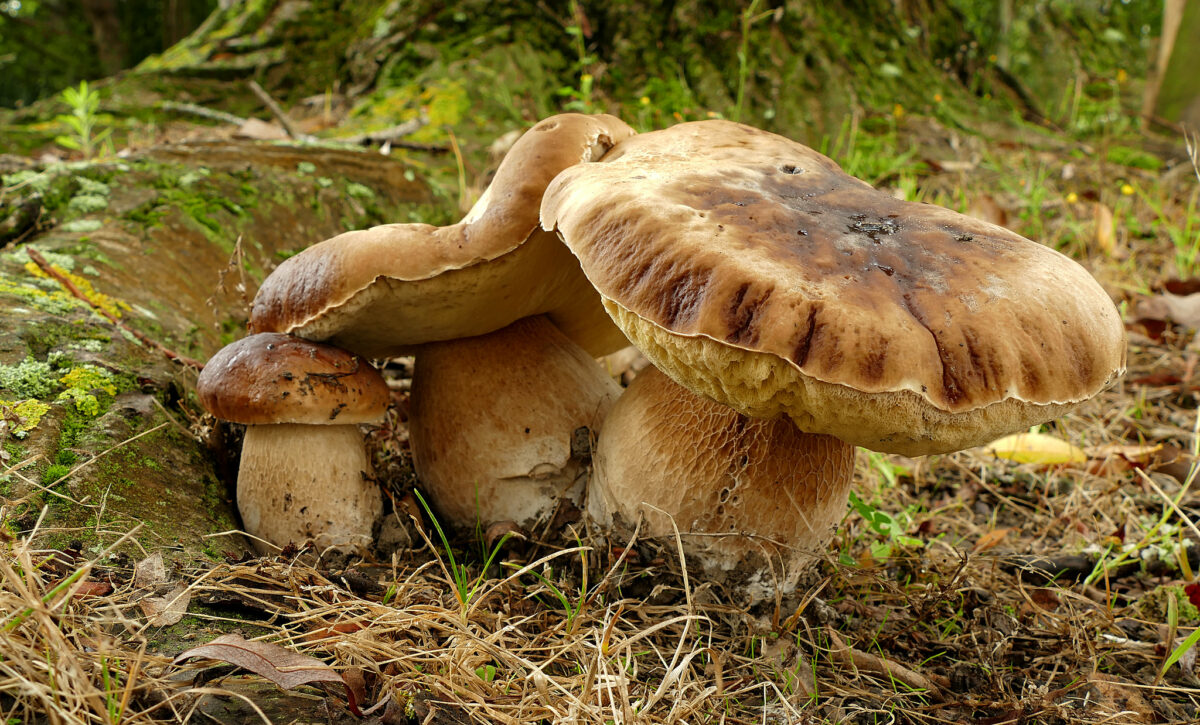
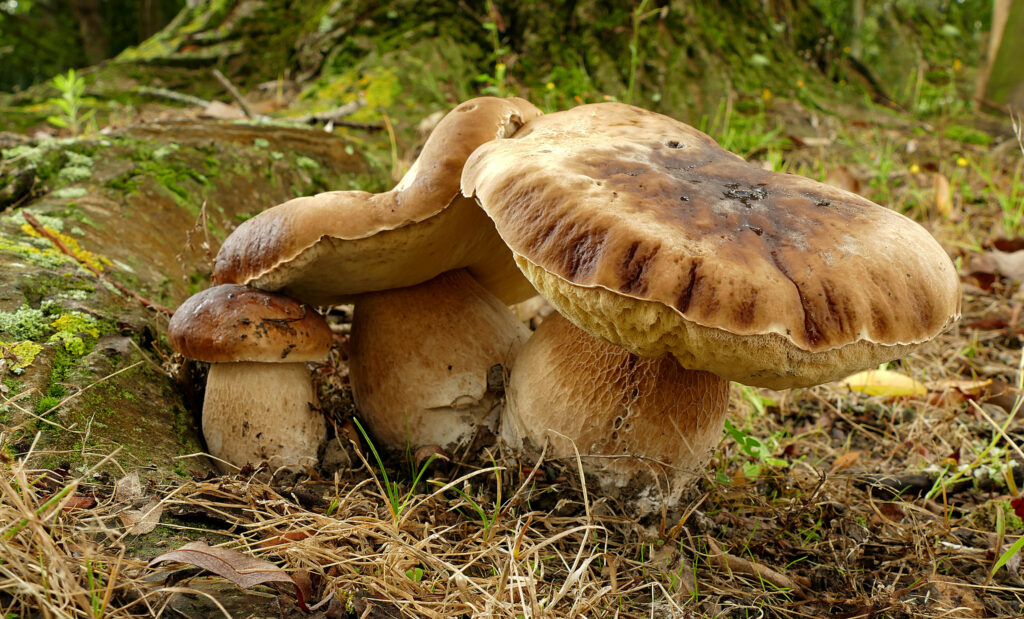
Boletus 

boletus edulis on a forest floor
Image by Bernard Spragg via Flickr

Introduction: There are around 250 Boletus species worldwide, which until recently, were divided into smaller families and have since combined to form a larger genus. There are approximately 80 species of Bolete within the family Boletaceae in the UK, and many of these are choice edible species for foragers. As a largely mycorrhizal group, Boletes are commonly found in woodland or forest but may also be found in grassland habitats. Boletes can be found in a variety of shapes, sizes and colours –appearing quite large with thick, meaty fruiting bodies or smaller in size with more delicate features. Species in this group are basidiomycetes – instead of gills, these mushrooms have spongy, pore-filled masses on the underside of the cap which release spores.  

Key Characteristics: Boletes are usually large, fleshy mushrooms with a thick stipe,  characterised by spore-bearing structures on the underside of the cap, called tubes. The group is basidiomycetes, which feature a spongy mass containing pores that disperse white to yellow spores into the air. A large number of Boletes are also known to form mycorrhizal relationships with trees, and can often be found under broadleaf and coniferous trees.  

Uses or Applications: A number of Bolete species are edible, including the King Bolete, and are considered some of the most versatile edible fungi.  

Species Examples: King/Cep/Porcini/Penny Bun Bolete (Boletus edulis), Summer Bolete (Boletus reticulatus), Bronze Bolete (Boletus aereus) 


If you’d like to delve deeper into the world of fungi and attempt to identify the mushrooms species you come across, here are our top picks to get you started:  


From waste, to resource – an interview with Waterhaul


NHBS is delighted to be working with Waterhaul, a company turning harmful marine debris into valuable resources. Their commitment to tackling ocean plastic and promoting sustainable practices aligns closely with our own mission to protect wildlife and the natural environment.
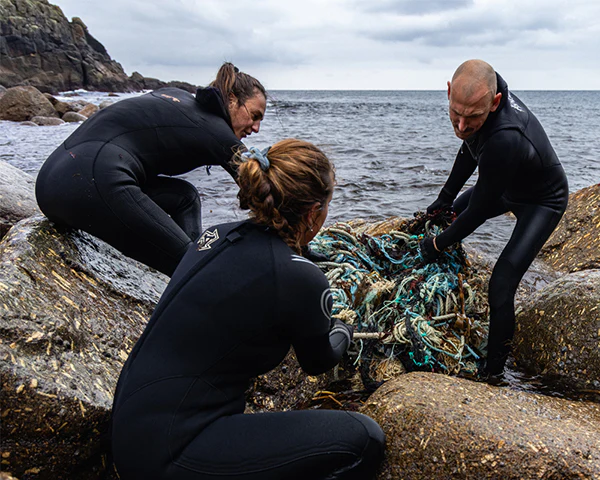
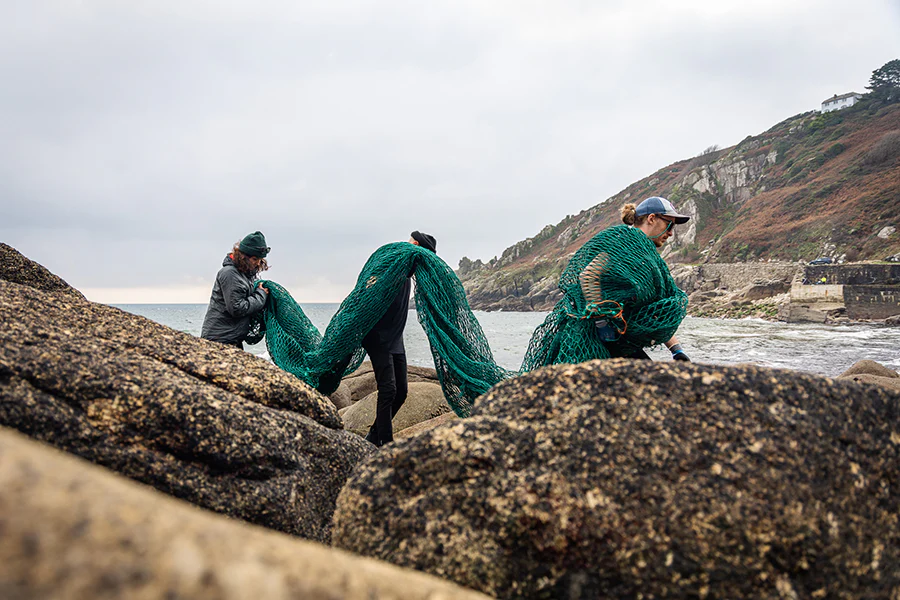
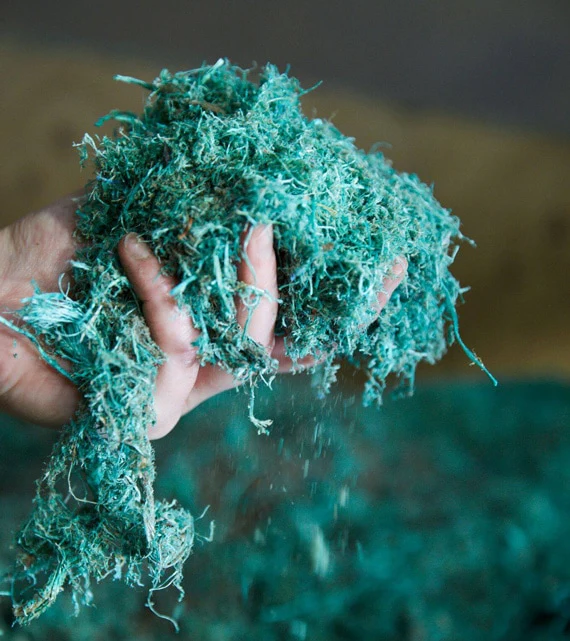
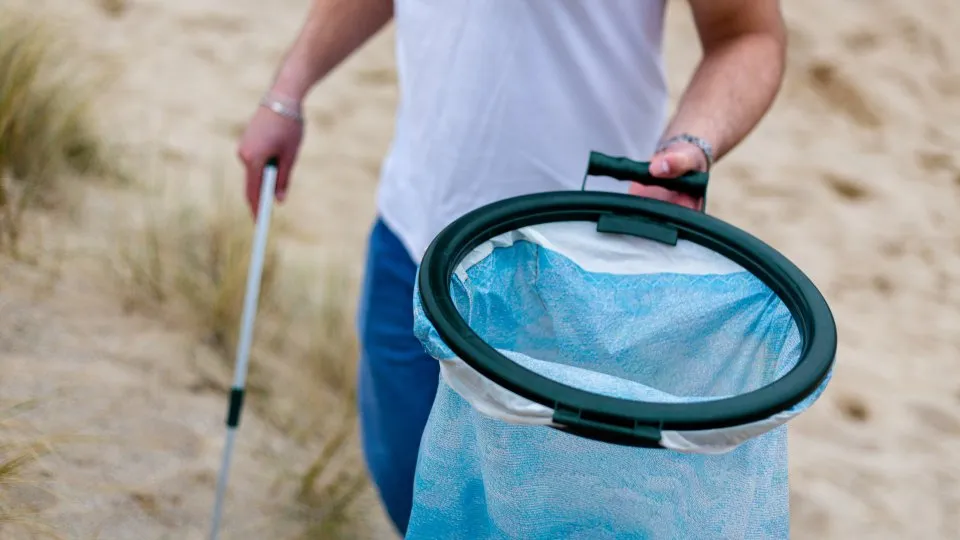
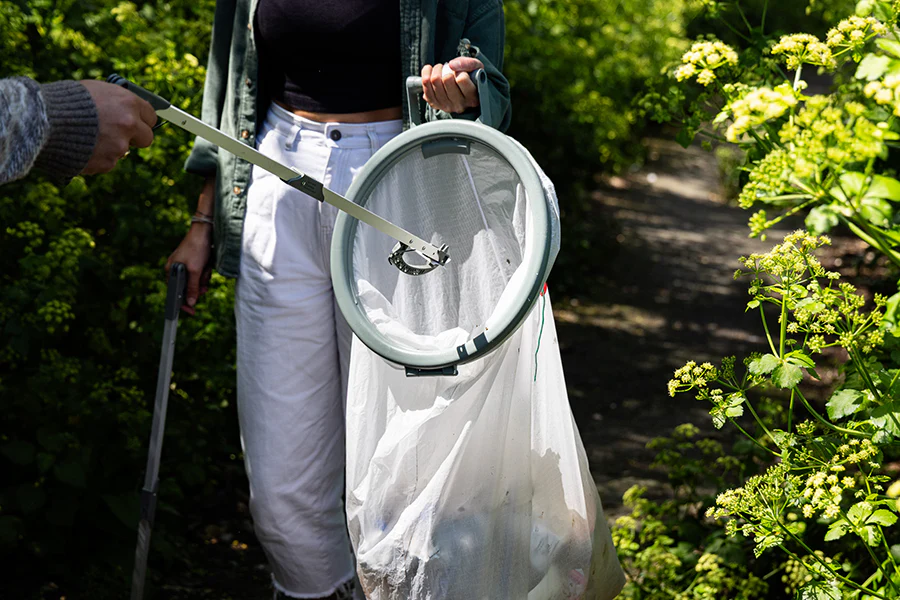
Earlier this year, NHBS arranged a beach clean using Waterhaul products, giving us first-hand insight into their quality and effectiveness. After seeing them in action, we’re excited to now offer Waterhaul’s beach cleaning range through NHBS.

To learn more about the inspiring work behind the brand, we spoke with Jon Green at Waterhaul and asked a few questions about their mission, processes, and impact.


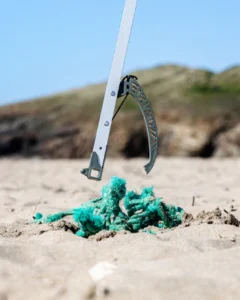
Waterhaul collecting “ghost gear” from across the UK coastline. Photo credit: Waterhaul

You primarily create your products from recycled “ghost gear”. What is ghost gear? and have you set your sights on any other forms of marine pollutants for future projects?

‘Ghost gear’ refers to any fishing gear that has been abandoned, lost, or discarded in the ocean. Once separated from fishing vessels, this gear continues to drift in the ocean, entangling marine life and damaging habitats. Ghost gear is a subset of marine litter but is particularly harmful due to it being designed specifically to trap and kill marine animals, combined with its extreme durability.

Unfortunately, around 640 000 tonnes of lost or discarded fishing gear end up in our oceans every single year, making it the most harmful and abundant plastic – there is certainly enough of it to keep us busy! That being said, in the past we have worked with other forms of plastic, for example our ‘ReTask The Mask’ campaign where we recycled PPE from the NHS post-COVID-19 into litter picking components.

How and where do you find the nets needed to supply your products?

Being a team of ocean users all passionate about protecting what we love, we often can be found out and around the Cornish coastline physically collecting reported ghost gear ourselves; from remote corners requiring boats, paddling or swimming to in plain sight on some of our busiest beaches following storms.

As well as collecting ourselves, we have a dedicated Impact & Recycling team who have established strong relationships and partnerships with local fishermen, harbours, organizations and waste management companies such as Biffa, providing an end-of-life solution and preventing the gear ending up in landfill.

Waterhaul collecting “ghost gear” from across the UK coastline. Photo credit: Waterhaul

We often hear stories of plastic packaging that has lasted for an age in our waters, only to wash up in recent times. Is there a particular piece of netting that stands out from your time working with marine plastic? 

The most prominent one/example that comes to mind happened on September 21st 2023 where the Raggy Charters crew spotted a juvenile humpback whale in Algoa Bay, South Africa, exhausted and entangled in fishing gear and fighting for its life.

The whale was struggling under the weight of heavy plastic ropes cutting into its flesh as well as two large orange buoys, a small yellow buoy, and a huge amount of 20-mm nylon cable wrapped around its caudal fin.

A rescue operation, led by the South African Whale Disentanglement Network took hours of painstaking effort involving multiple rescue boats and a coordinated team where they were able to free the whale who swam away, shattered but alive.

The ghost gear that ensnared the humpback was recovered and through collaborative links with the World Cetacean Alliance (WCA), made its way to us, where we saw an opportunity to create something unique and share this near-tragedy as part of our ‘Rescue to Recycle’ Campaign. An initiative that transforms harmful marine debris into products that drive change and supports ongoing conservation efforts.

Gathered plastic marine debris is recycled for manufacturing. Photo credit: Waterhaul

What percentage of your total product is made from ocean-reclaimed materials?

100% of all plastic components across our entire product range are made from Traceable Marine Plastic (TMP), our material feedstock derived from lost, abandoned and discarded fishing gear.  Our eyewear frames are also made 100% from TMP.

Do you partner with any marine conservation or environmental organizations?

Waterhaul was founded with a background in and ethos of marine conservation and environmental direct impact, ultimately initiating the mission we are on. We are incredibly proud to be supported by and have partnered with organizations such as Surfers Against Sewage, The Wave project, Sea Shepherd, The RNLI, Cornwall Wildlife Trust, Canal and River Trust, and many more.

Can you explain the process of transforming ocean plastic into your final products?

Every single piece of ghost gear, whether collected by ourselves or the end-of-life fishing gear we have received from the source, is taken to our processing unit here in Cornwall.

The gear is then separated by polymer type and recycled in the UK through a mechanical process of shredding and washing. The plastic is then extruded into pellets and becomes our fully traceable raw material, Traceable Marine Plastic (TMP).

We then injection mould this plastic into our range of purposeful products. This is the stage where we give new value to plastic ‘waste’. Our impact is driven further by our extensive network of partners, from stockists to product partners and more.

What’s the best way for someone to get involved in helping your mission, any tips for how everyone can make a difference?

Aside from the conscious purchasing of products that make a direct impact and questioning the materials of where our products come from, getting out there is the most efficient way of making a difference. Grab a litter picker and whether it’s a 2-minute beach clean, a litter pick around your nearest green area or picking up rubbish you pass on the street, it all makes a huge difference in protecting our planet’s ecosystem and wildlife! Spending a few extra minutes to sort out recycling from domestic waste will also play a huge role. Finally, talking about and sharing stories on this often-overlooked topic will also spark conversations and inspire others to go out and do the same thing!

Waterhaul ocean friendly litter picking kit made from recycled marine debris. Photo credit: Waterhaul

Browse the Waterhaul products available through NHBS here

Visit the Waterhaul website to learn more about their work here

Interview with RSPB: A Night of Nature

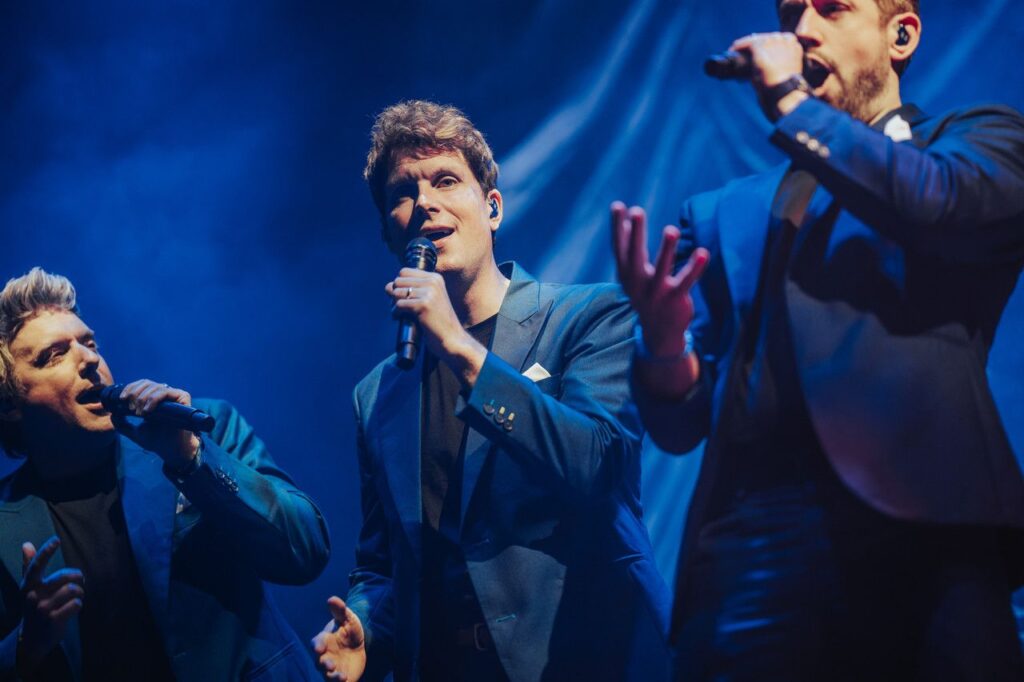
In a first for Europe’s largest conservation charity, the RSPB (Royal Society for the Protection of Birds) is bringing the spectacle of the natural world to the big screen. Coming to London’s Troxy on 6th September, ‘A Night of Nature’ will blend cinema with the immediacy of a concert, thanks to live music synched to stunning footage of natural habitats and species, performed by string quartet Vesper and multi-million selling vocal group G4.

Ahead of the event, NHBS colleague Laura had a chat with Emma Marsh, the Executive Director for Digital Technology and Communications for the RSPB. In our interview, Emma shared details about this one-off live event, including its importance, what it represents and what she hopes people will take home and remember long after the concert is over. She also offered insights on her role, as well as the priorities and challenges for the charity.


Firstly, can you tell us a little bit about yourself and your role at the RSPB?

I was brought up on a farm in the Midlands (of England, UK) where my dad was a farm worker. I spent my childhood days exploring the fields, hedges and trees. I remember such a sense of freedom and the abundance of nature. That all changed as I grew older. Agricultural practices intensified and I watched the depletion of wildlife in front of me. That feeling of loss stayed with me and has driven my passion for conservation ever since.

My route into a conservation career was definitely not ‘standard’. My parents wanted me to be the first member of our extended family to go to university and a degree in International Relations, including the international politics of the environment, was my next step. I then navigated a route through the public sector, the commercial world in technology and finally landed in charity. I spent ten years in the waste and recycling sector, focusing on delivering behaviour change around food waste, which led to where I wanted and needed to be – in nature conservation and the incredible RSPB.

Emma Marsh

I joined RSPB in early 2016 as the Director for the Midlands, overseeing our network of landscapes, reserves, fundraising and comms, moving to be Director for the whole of England in 2019. In late 2022 I was able to bring together all of the experience I’d gained over the years, from Technology, to campaigning, to conservation, becoming the Executive Director for Digital Technology and Communications, sitting on the Executive Board.

Every day is different. One day I can be immersed in helping my team gear up our technology and media to deliver big events (such as Big Garden Bird Watch), the next pivoting and scaling up our comms and campaigning to unexpected legislative threats to nature, to speaking on the Radio 4 Today programme or R5Live about the incredible successes our teams have had with bringing threatened species like the Crane back from the brink of extinction. Another day I’ll be deeply immersed in developing the RSPBs strategy and reporting impact against it, the next working with Trustees, and when I’m really lucky it will be spent at one of our incredible 200+ nature reserves, seeing the spectacular conservation delivery and engagement that our teams do so well. It’s such a varied, dynamic and interesting role leading and working with some brilliant people – I’m incredibly lucky.

The RSPB has been around since 1889, and over the years it has developed and grown significantly. What would you say are its current priorities for nature, and where do you see the organisation going?

Emily Williamson, Etta Lemon and Eliza Phillips started the RSPB in the late 19th century, and the campaign they ran to ban the plumage trade (which was putting 60 bird species at risk of extinction) took three decades before it bore fruition. The tenacity and determination they demonstrated, when societal norms were stacked against them, was inspirational. When they started their campaign, women didn’t even have the vote, but they were convinced they could put an end to the trade, and they did. For me this determination and tenacity runs through the RSPB to this day. They used every tool at their disposal, just as we do today, campaigning with the public to drive awareness and support, engaging with politicians to drive legislative change and using science to gain credibility.

Our world-leading research allows us to take a bird’s eye view of the overarching problems facing nature and then pinpoint solutions that make a real difference. The world around us and the threats to birds and wildlife has changed significantly since the RSPB was created and so we have had to constantly evolve and change. Today we’re the UK’s largest nature conservation charity, with nearly 1.2 million members. We manage more than 200 nature reserves across all four countries of the UK, covering an area the size of 250,000 football pitches, making us the UK’s 5th largest landowner. Across those landscapes over 18,700 different species have been recorded. 85% of our workforce are volunteers, spending 1 million hours acting for nature every year. And we now have over 130 local groups spread right across the UK, connecting people and progressing conservation projects. We want to grow the number of people engaging with us as members, supporters, donors, volunteers, all taking action so that we can achieve a shared world where wildlife, wild places and all people thrive together. To do that we need to protect and restore habitats and landscapes, save species, help end the nature crisis, and inspire others to do the same. That’s a big ask but if anyone can do it, we can.

In particular in the UK our priorities are around demonstrating the art of the possible in terms of conservation on our nature reserves, and influencing nature-positive management at scale through partnerships in our Priority Landscapes; Internationally working with and through the BirdLife International partnership to deliver significant positive conservation impacts around the world; working to reduce the harmful impacts of selected fisheries around the world and marine development in the UK; getting the most important places protected through strengthened policy, and tackling threats to priority species; working tirelessly to secure the future of threatened species; working in partnership with the farming community across the UK, providing evidence-based advice to farmers, Governments and businesses, demonstrating good practice and developing and promoting policy frameworks that would enable a fair transition to nature-friendly farming; advocating for new income streams for nature so more can be invested in species and habitat recovery; and continuing to engage and empower more, and more diverse, people to take meaningful action alongside us to achieve all this. Ultimately, just like back in 1889, we think and act big. We deliver conservation you can see from space.

The Night of Nature concert seems like a new and exciting direction for RSPB engagement events. What inspired you to branch out?

Whilst Night of Nature is a bit of a first of its kind event for the RSPB, we nonetheless have a rich history of collaborating with voices from across the arts in order to bring nature to ever wider audiences. Back in 2022 we worked with international choreographer Sadeck Waff and agency 89up to create a ‘human murmuration’– a choreographed performance inspired by the stunning display birds put on as they flock together in a dance-like movement, emphasising the importance of working together to create impact. The murmuration was shown at COP15 where the Global Biodiversity Framework was agreed at the 11th hour. One of our current conservation milestones is the 50th anniversary of the re-introduction of White-tailed Eagles to the UK. To celebrate this achievement, we’ve partnered with acclaimed musician and sound artist Alice Boyd, who has just released a new track ‘Return of the White-Tailed Eagle’ (now streaming here) in tribute to the species. Alice also features – alongside RSPB ambassadors Dave Sexton and Nadeem Perera – in a forthcoming RSPB short film, ‘Return’, which documents the decades of conservation work by RSPB and our partners to bring the species back from the brink of extinction. ‘Return’ will release on August 29, with the trailer now streaming here.

We know just how important the voices of the creative community are to articulating the stories that drive our conservation work, and we’re thrilled to develop this relationship even further with Night of Nature.

Can you tell us a bit about the concert and what people can look forward to?

Night of Nature will blend live music with a cinematic celebration of nature. Stunning footage of the incredible species and habitats that we’re working to safeguard will be showcased on the Troxy’s big screen, synched to performances from #1-charting vocal group G4 and the Vesper string quartet. The evening will be hosted by RSPB Ambassador, actor/director Samuel West.

Think of this as a red-carpet experience—without the red-carpet price tag. With tickets starting at just £28, guests can enjoy an unforgettable show, mingle with our team, and even pose for a photo on the red carpet. It’s excitement, and entertainment—all within reach.

You have some exciting names attached to this event, how did they come to be involved?

G4 was a natural choice for Night of Nature. With their stunning harmonies and emotive performances, they bring a powerful sense of atmosphere to every stage they grace. But beyond the music, what really drew us to G4 was their genuine appreciation for the natural world. That really matters to us.

As a group that tours extensively across the UK and Ireland, G4 have had the chance to experience some of the country’s most breathtaking landscapes—from the dramatic coastlines of Scotland to the peaceful beaches of Devon, the wild beauty of Ireland, and the rolling hills of Yorkshire. Along the way, they make a point of pausing to soak in the scenery and observe the wildlife around them—often sharing these moments and photos with their fans on social media. It’s a window into the quieter, more reflective side of life on tour, and a reminder of how closely nature and creativity are intertwined.

With families of their own, the band feel a deepening responsibility to protect these places—not just for today, but for the generations that follow. When invited to take part in Night of Nature, they were immediately drawn to the idea of using music to celebrate the beauty of our world and support the vital work of the RSPB. For G4, this event is more than a performance—it’s a chance to help inspire others to cherish and protect the natural world.

Samuel West is an actor (currently playing Siegfried Farnon in All Creatures Great and Small on Channel 5) and director, and a keen birder for nearly twenty years. Speaking about his connection to RSPB and its work, Samuel says; “Until birds get their act together and organise their own pressure groups, I suppose we’ll just have to do it for them. With nature under unprecedented attack, the RSPB shows those in power what a huge and vocal nature lobby can do to change things. Our two young daughters love nature, and watching birds in particular. But the world they’ll inherit is in trouble. Half of all bird species worldwide are in decline. Biodiversity isn’t just a nice thing to have, it’s essential for the survival of humanity and the planet.”

Accessibility and connection to nature appear to be key inspirations for this event. What are you hoping to achieve with the Night of Nature concert?

In essence, Night of Nature is our way of saying a very heartfelt ‘thank you’ to all our members and supporters for their backing, without which we wouldn’t be able to deliver the vital work needed to protect and maintain the stunning array of species and habitats you’ll experience up on the Troxy’s big screen.

But we also know that we need more people to join us in taking action for nature. So we hope this also inspires even more people to come along and be a part of something bigger. Whatever you do – big or small – matters. It all joins up to create real and lasting change. Furthermore, research also demonstrates that connection to nature is in turn good for our own mental & physical well-being. Good for people and good for nature.

It’s our hope that Night of Nature galvanises even more of us to join the fight against biodiversity loss and work to tackle the climate crisis, as we strive towards a shared world, where wildlife, wild places and people all thrive alongside each other.

Tickets are on-sale now via Dice: A Night of Nature Tickets | From £28 | Sep 6 @ Troxy, London | DICE.

Author interview with Seán Ronayne: Nature Boy 

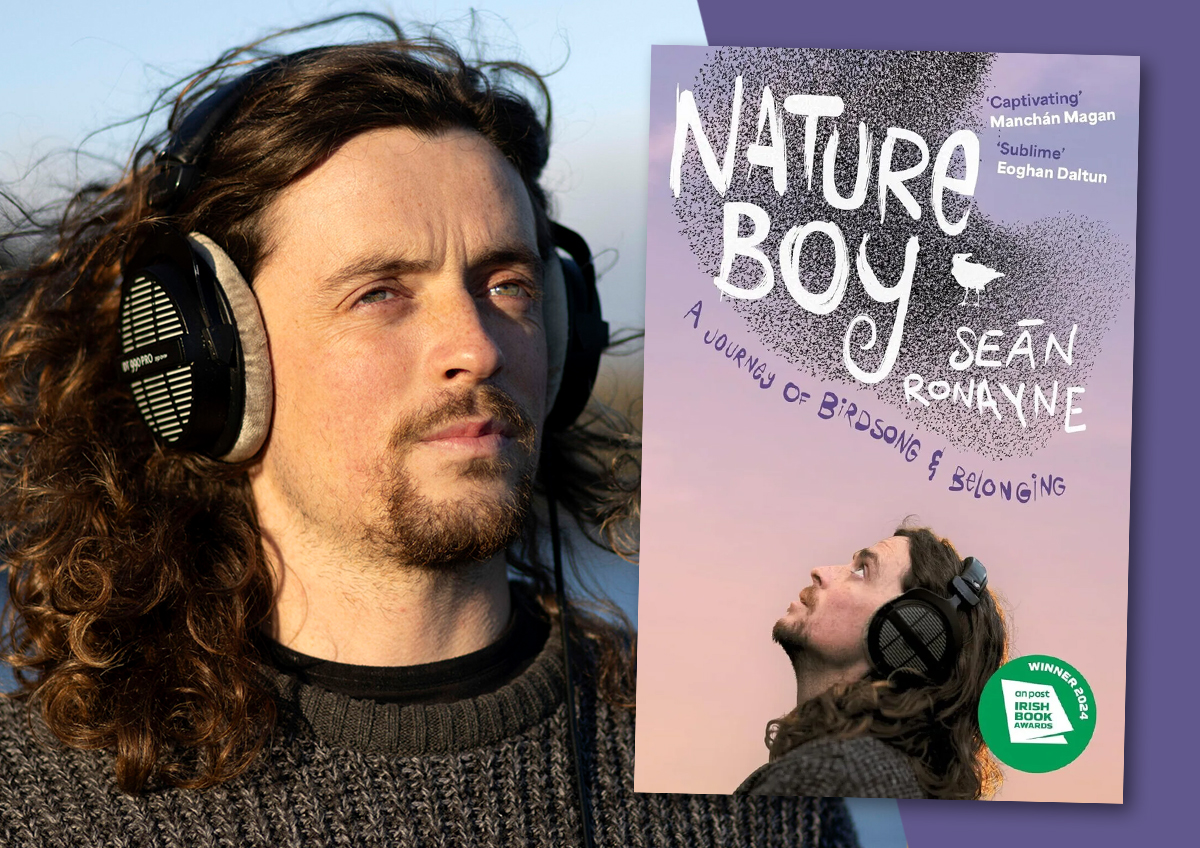
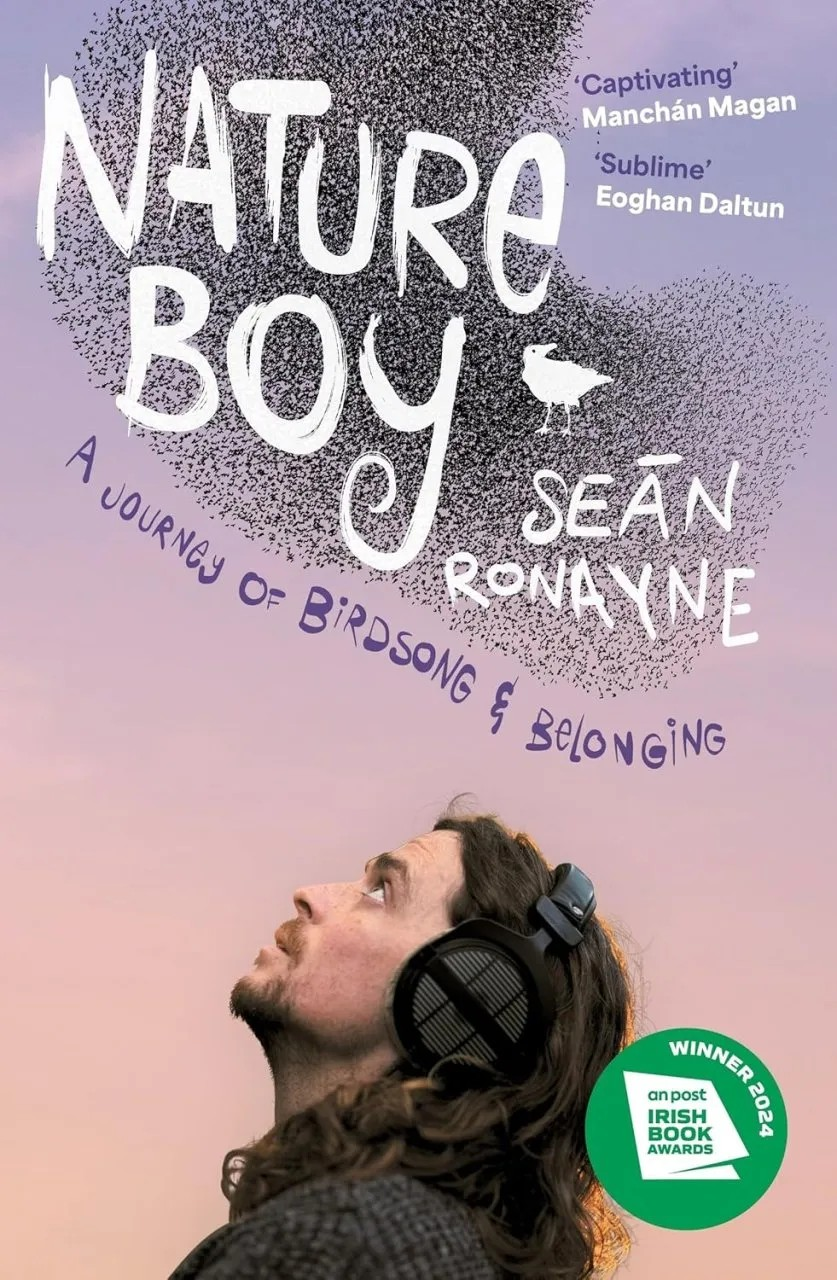
Nature Boy book cover.An inspiring story of love, connection and the healing power of nature, author Seán Ronayne recounts his journey to record all the regularly occurring species of birds in Ireland. He also tells the stories of his adventures across the Sahara Desert, the jungles of Nepal, and the streets of Thailand, revealing the wonders of the natural world.
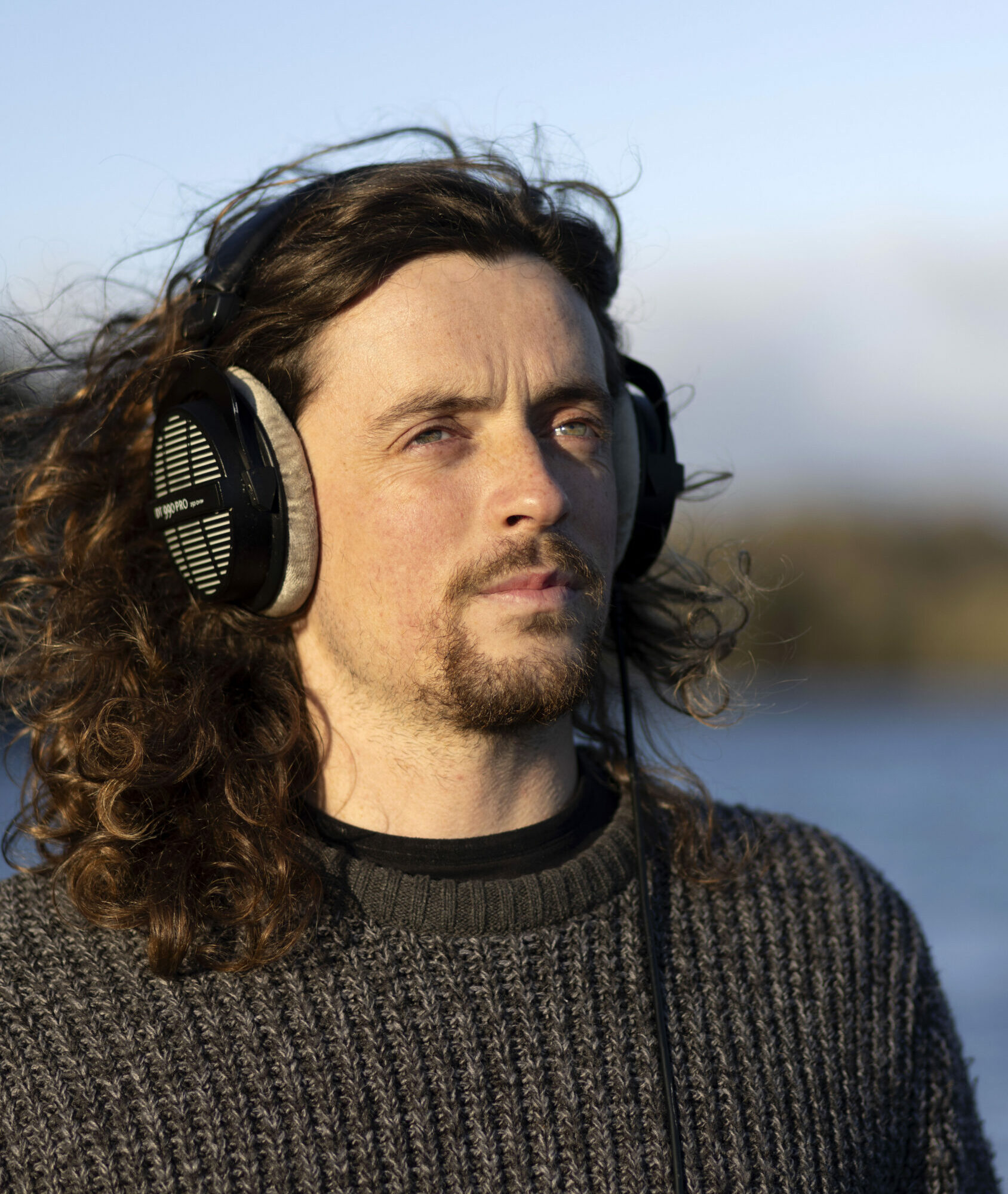
Sean Ronayne, by Chris Maddaloni

Seán Ronayne is an ornithologist and naturalist who was born in Cork, Ireland. He spent his childhood exploring the fields and woodlands around his hometown, before studying Zoology at University College Cork, followed by a Master’s in Marine Biology. He secured his first ornithology role in 2017, before relocating to Barcelona with his partner where he began recording local wildlife and birds in earnest. Upon their return to Ireland in 2020, Seán embarked on a project to record all of Ireland’s birds, some of which are on the cusp of extinction, and he now has only three species left to record. 

We recently had the opportunity to speak to Seán about Nature Boy, including what first sparked his interest in nature, which equipment he uses for sound recording and more.


In your book, you talk about how nature has been a constant source of comfort and curiosity for you. Do you remember when the natural world first began to resonate with you? Was there a key event which sparked your interest?

Yes! I have two standout moments, both of which are particularly special in different ways. I was a very active child, and I really mean that. I was always on the go, and if I couldn’t be on the go, I was wriggling, squirming, and crying – longing to be free. My father quickly learned that a foray into nature was the cure. He would take me to our local nature reserve and imitate the sounds of all the wildlife around us. I would belly laugh at his attempts and give him my best guess. It was a great game to me, but it was also an education in disguise – Dad was teaching me to listen to nature, and to get to know my neighbours by ear.  

The other is my first memory of a bird. I was very young, around 2 years old off the top of my head, and the bird was pointed out to me by my Dad’s father – Pops. He loved birds too. I’ll never forget that first view of a magpie, with its regal pied plumage, draping long tail, and green and purple shimmying iridescence. Pops died not long after. I did not understand, but today, every time I see a magpie I see Pops, smile and thank him for the journey he sent me on.

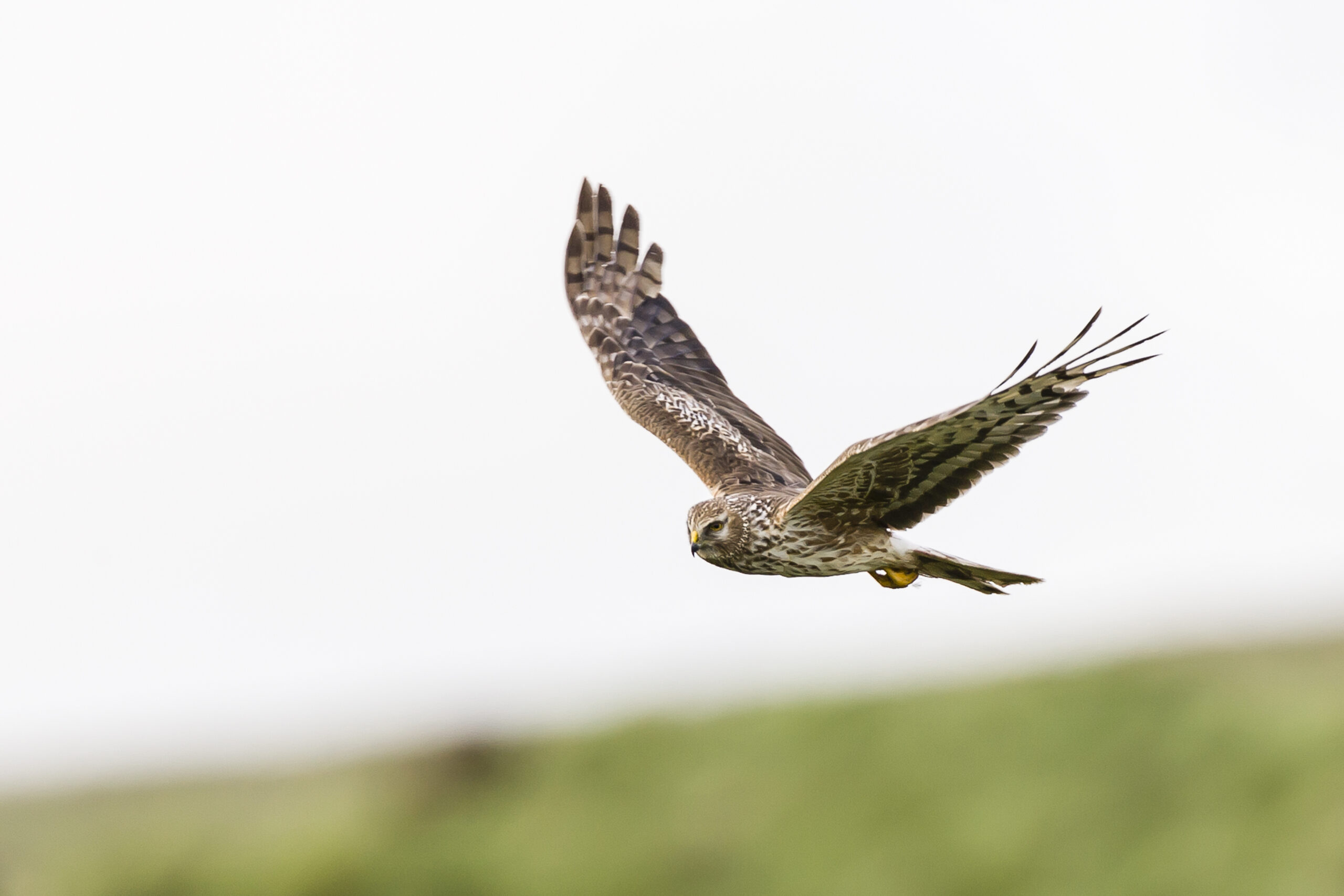
Hen harrier by Mike Brown

Can you share with us what equipment you use for recording and what your decision process was for selecting it?  

I am not a technical sound-recordist. I follow my ears, and my heart, and then I record the sounds that call to me with whatever tools I have at my disposal. I learned my skills through trial and error (mostly through error), but you know the phrase – even a broken-down clock is right twice a day! For isolating birds and getting a close intricate recording, I use a Dodotronic Hi-Sound parabolic reflector, paired with a second-hand Olympus LS-12 recorder – the Nokia 3210 of the sound recording world. To capture really intimate moments, or for longer, all weather deployments, I used a Song Meter Mini II. The sound is superb, and the device can be hidden easily, allowing birds to approach close and whisper into the mics unbeknownst to themselves. This provides intimate chitter-chatter I’d never otherwise get the opportunity to capture, and the Song Meter runs for weeks and can survive all manner of weather conditions! I guess these two pieces are my go-to tools.

Bioacoustics is one of the fastest-growing industries in the ecological sector. Are there any technological advances you’d like to see in this field?

I am really happy with where it’s at, to be honest! I can see that AI software to auto-identify birds is being worked on, but I don’t really care for that. I absolutely adore pouring through raw audio with a fine-tooth comb myself. In doing so, I enter that world, and I learn so much – a fast summary response kills the magic and learning for me. Perhaps others will disagree with me, but for my needs I am happy with where the technology is at, and the constant need for ‘progress’ in today’s world has a lot to answer for in terms of ecological, climate, and planetary degradation, after all.

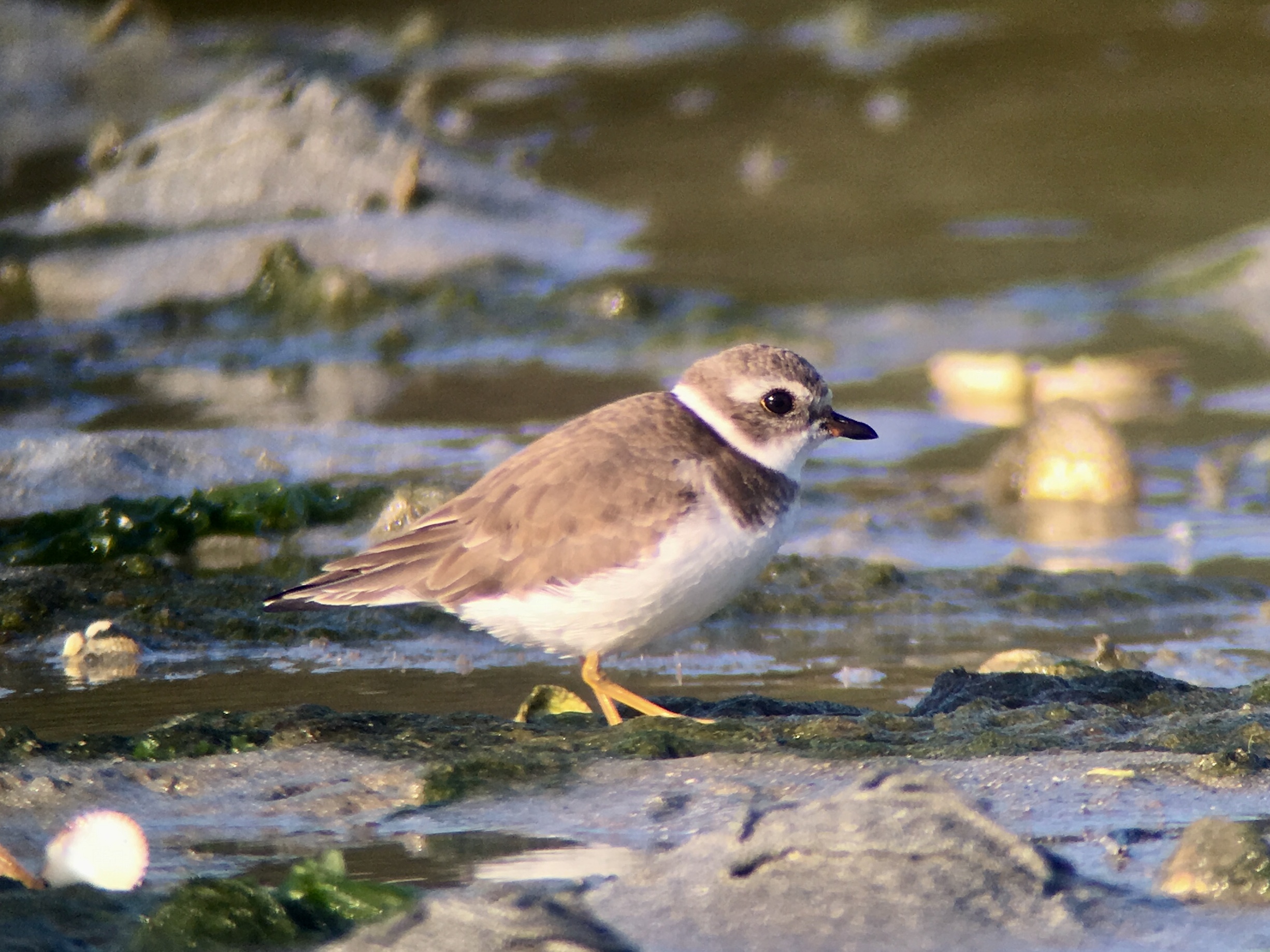
Semipalmated Plover by Brian McCloskey

While watching your documentary, I was very moved by your recording of the last known pair of Ring Ouzels in Ireland. Can you describe what it felt like to capture that moment, knowing you were recording a piece of history?

It was utterly devastating, and highly stressful. We’re talking about a bird that has been visiting our uplands each summer for hundreds, even thousands of years, wiped out in a heartbeat, with the majority of people not even knowing it existed at all. The stress came into the equation because I felt a strong desire, responsibility even, to capture its voice to show people the sonic beauty of what we are erasing, and what we need to stand up and fight for. With just one known pair remaining I was unsure if I had time to give this bird a voice, and if I didn’t capture it I’d have been doubly devastated – I’d have felt like I left it down, leaving it to die out in silence, unheard and forgotten. That did not happen though, at least.

Birdsong seems to have the ability to engage and move people in a way that perhaps other facets of nature don’t. Why do you think this is? 

Well, I think it’s hard not to love it, isn’t it? Birdsong is nature’s melody! The dawn chorus is nature’s orchestra. It’s always there, it’s such a treat to listen to and it’s completely free. We have evolved in tandem with it. We hear birdsong, and everything is right with the world…we don’t hear birdsong, and something has gone terribly wrong. Right? A forest has been felled, a river has been covered, a bog has been drained, a city has enveloped, a motorway has drowned it out. 

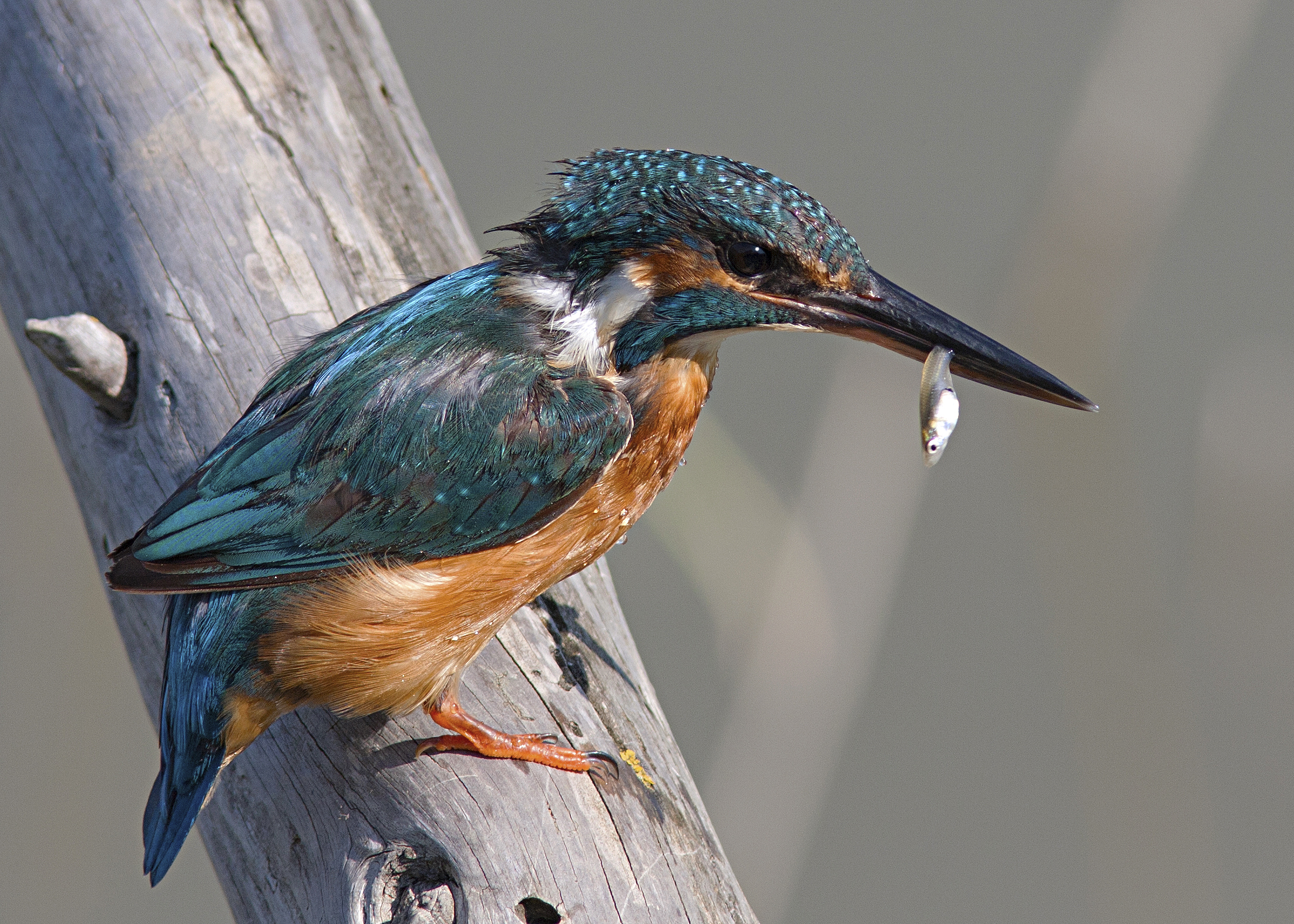
Kingfisher, Llobregat

In your book, you talk about the importance you placed on your first bird ID guide as a child. Do you have any go-to books for bird identification?

This is easy – the Collins Bird Guide (the bible), and of course the legendary Sound Approach collection.

With your recent book, tour and documentary, you’ve made a real push to engage with the public and remind them of the natural world. What do you hope people take from your work?

I just hope that people realise how inexplicably beautiful, educational, nourishing, wondrous, and ever-giving nature is. But I also need them to know that it’s in freefall. Because of our own very actions. And inactions. My work is a call to arms, with hope and beauty being my primary weapons – with a brief but sharp slap of loss and despair. The latter is necessary, but it is my secondary weapon. Love and hope outgun loss and despair always.  

You currently only have 3 species left to record to complete your mission to record every Irish bird. Do you have any plans for afterwards?

Of course. I will be on this journey for as long as I’m gifted time on this earth. Recording all of these birds was never intended to be a tick and run exercise. Every time I listen to a given species or individual I learn something new. I capture a new voice. The more I listen, the more I realise how little I know. And that’s gorgeous, isn’t it!? This is what I mean when I say that nature is ever-giving. And to answer you in more direct terms, I fully intend to write more, and to work on more film projects. I’ll also tour my talks, stories and sounds until people have had enough of me, which I hope never happens (haha)! 

Nature Boy book cover.Nature Boy: A Memoir of Birdsong and Belonging by Seán Ronayne is published by Hachette Books Ireland in Trade Paperback and is available from nhbs here.

This Week in Biodiversity News – 2nd June 2025

Wildlife 

Poole Harbour’s osprey pair have hatched their fourth chick of the year. The only breeding pair of ospreys on the South Coast have laid a clutch of four eggs for the second year running, and the Birds of Poole Harbour charity has announced that the final chick successfully hatched in the past week. In 2022, female CJ7 and male 002 became the first nesting pair on the south coast in 180 years as part of a reintroduction scheme.

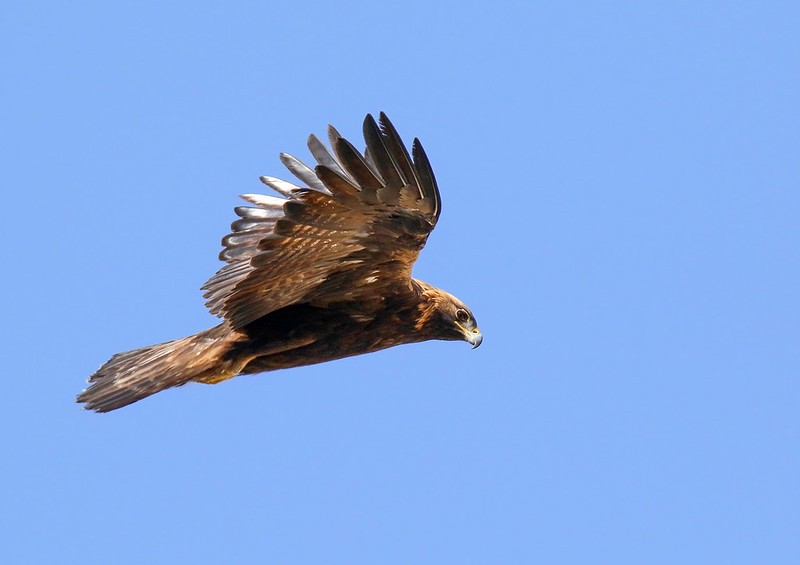
Golden Eagle (Aquila chrysaetos) by Birds of Gilgit-Baltistan, via flickr.

Golden Eagles are spreading their range from southern Scotland into England. Around 50 Golden Eagles have been translocated across Scotland since 2018 in an attempt to save this species amidst major population decline. In the past 7 years, South of Scotland Golden Eagle Project (SSGEP) have successfully translocated 28 juveniles and 15 sub-adult golden eagles from the Scottish Highlands to the Scottish borders. Satellite tagging has revealed that a number of birds are beginning to venture into Northumberland, the North Pennines, the Lake District and even as far south as Lancashire and Yorkshire, offering hope for the future reintroduction of Golden Eagles into England.

Environment 

Reservoir projects fast-tracked in an attempt to secure England’s water supplies. Two major new reservoirs in East Anglia and south Lincolnshire have been fast-tracked through the planning process as they are now declared as ‘nationally significant.’ As such, the final decisions for these projects will be taken by Environment Secretary Steve Reed, rather than at a local level, with the aim of securing water supplies for future generations. These stores would provide resilience to future droughts in particularly dry areas of the country where water demand is high, and may be completed by 2036 and 2040 respectively. The water industry has welcomed this announcement, but some communities are concerned about increased bills, as well as the potential clearing of homes and farmland to make way for the necessary infrastructure.

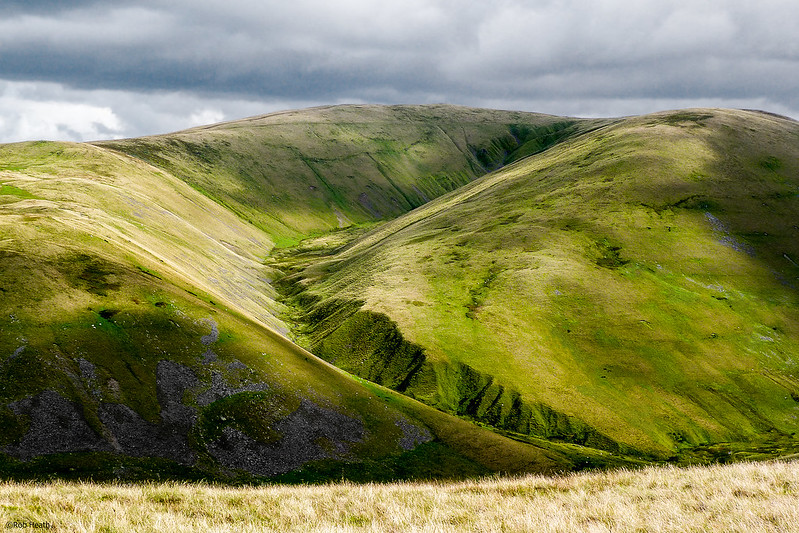
Howgill Fells by Robert J Heath, via flickr.

Areas of common ground in the Yorkshire Dales are being restored to their ancient glory. A groundbreaking tree-planting programme is uniting farmers and rewilders alike to bring species back to ‘ghost woodlands’. Howgill Fells had been heavily grazed for hundreds of years, but in just over a decade, an extensive rewilding project has planted 300,000 native trees across common land in 64 acres of sheep-free enclosures. Ecologist Mike Douglas recently conducted his first of four annual surveys monitoring birds in the enclosures. His results have revealed the presence of 11 new breeding bird species since his original survey in the early stages of the project in 2016, and numbers continue to increase year on year. 

Policy 

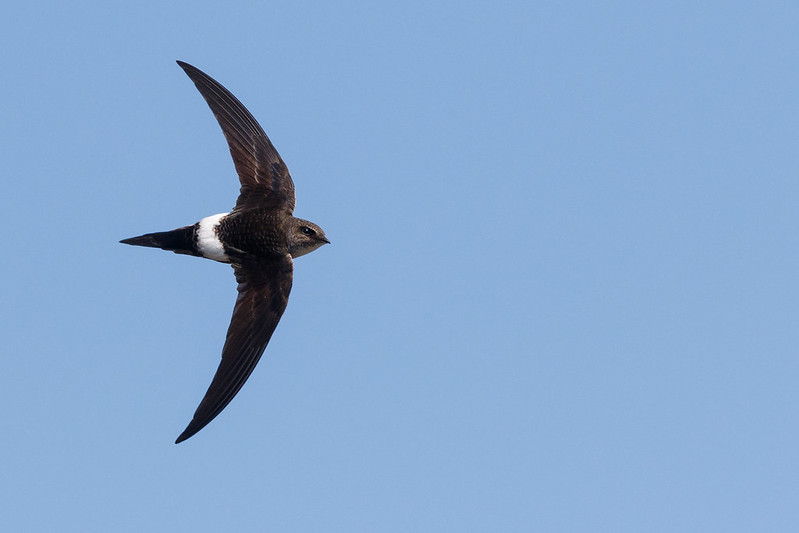
Labour have rejected a proposal to provide every new home with at least one swift brick to help endangered cavity-nesting birds. The proposed amendment to the governments Planning and Infrastructure bill requested that every developer provides a single £35 hollow brick for swifts, house martins, sparrows and starlings in every new build home. This was previously supported when it was tabled on Conversative government legislation in 2023, however the current Labour-dominated committee have now stated they are not convinced it is the right approach. A petition calling for these bricks to become mandatory has now reached 80,000, demonstrating the public’s concern on the matter.

Pacific Swift by Stuart Price, via flickr.

Nature-friendly farming fund to be cut in UK spending review. Labour initially promised £5 billion over two years for the post-Brexit farming fund, which will be honoured until 2026, however in the years following it will be slashed in line with wide-scale budget cuts. This nature-friendly initiative replaced the EU’s Common Agricultural Policy and rewards farmers for stewarding nature, soil, and other public goods, rather than solely for land ownership and cultivation. While DEFRA have stated they are planning a new scheme aimed at smaller farms, many larger-scale ones will miss out on these incentives.