We are delighted to announce Independent Alliance as our Publisher of the Month for July: a chance in these challenging times to immerse yourself in eloquent, knowledgeable and thought-provoking writing.
We have price-offers on our top fifty Independent Alliance titles and have showcased our top ten below:
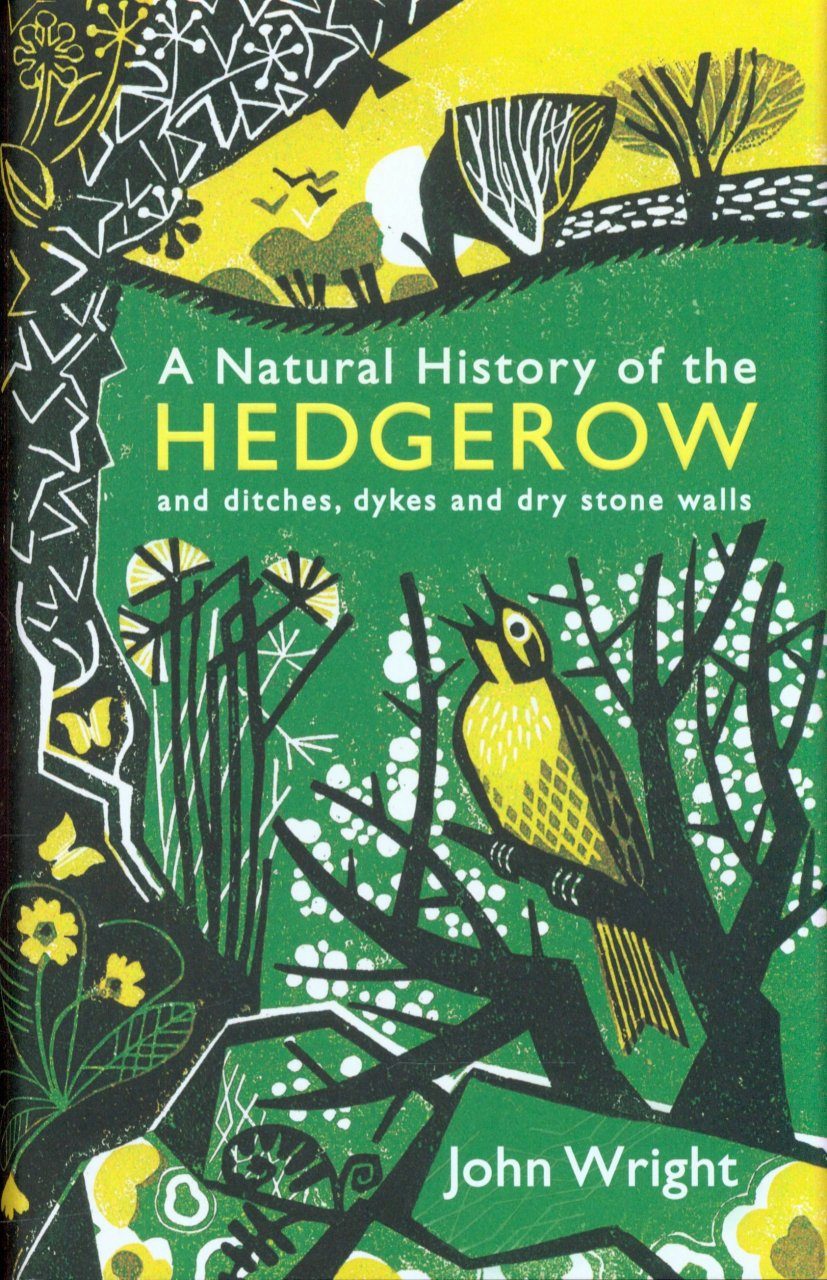
A Natural History of the Hedgerow: and Ditches, Dykes and Dry Stone Walls
By: John Wright
Paperback| May 2017| £8.99£11.99
Tells the story of hedgerows past and present, encompassing their long significance in the life of the countryside.
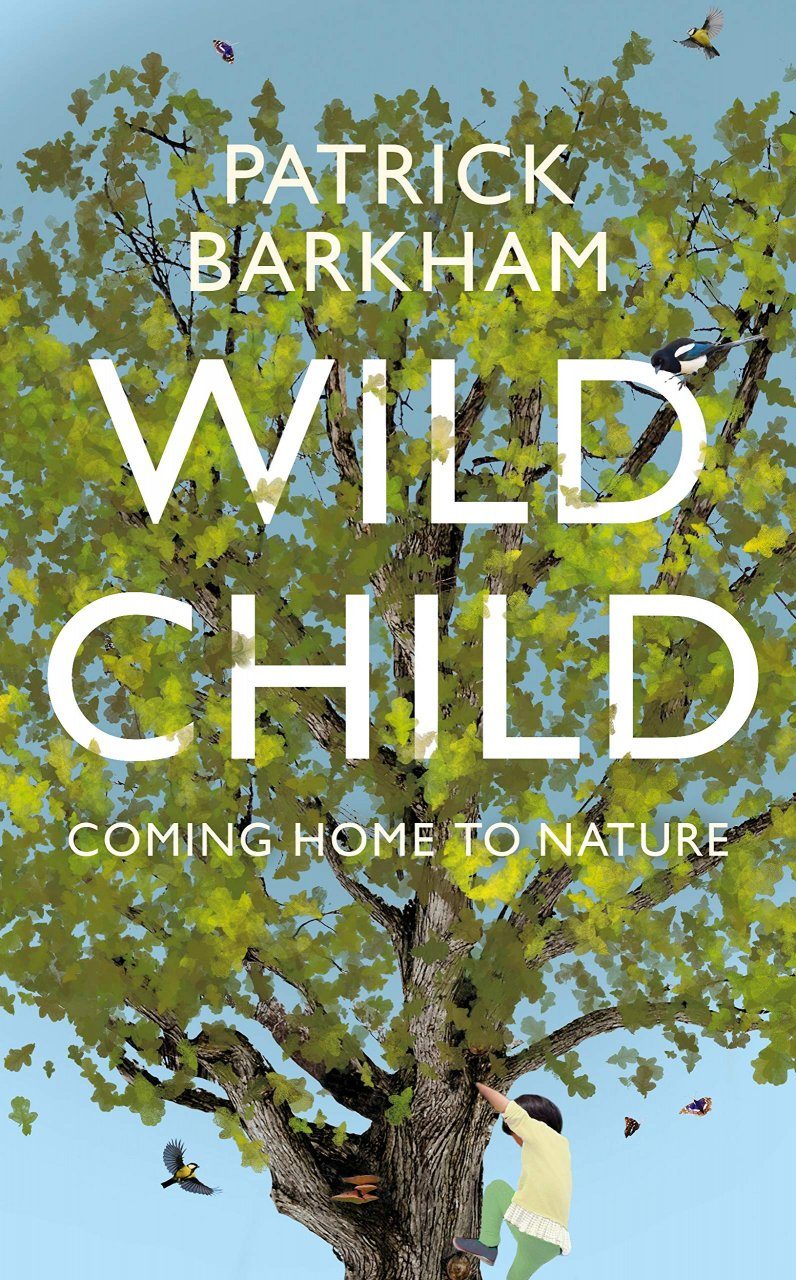
Wild Child: Coming Home to Nature
By: Patrick Barkham
Hardback | May 2020| £13.99£16.99
Patrick Barkham explores the relationship between children and nature.
The Accidental Countryside: Hidden Havens for Britain’s Wildlife
By: Stephen Moss
Hardback | February 2020| £13.99£16.99
Stephen Moss journeys the length and breadth of Britain to find the wildlife that is thriving amidst our urban landscape.Read our author interview here.
The Cabaret of Plants: Botany and the Imagination
By: Richard Mabey
Paperback | Oct 2016| £8.99£10.99
Mabey puts plants centre stage, and reveals a true botanical cabaret: a world of tricksters, shape-shifters and inspired problem-solvers.
The Vital Question: Why is Life the Way it is?
By: Nick Lane
Paperback | April 2016| £8.99£10.99
Why is life the way it is? If life evolved on other planets, would it be the same or completely different…
The OrchidHunter: A Young Botanist’s Search for Happiness
By: Leif Bersweden
Paperback | April 2018| £6.99£8.99
In the summer after leaving school, a young botanist sets out to fulfil a childhood dream – to find every species of orchid native to the British Isles.
Notes from an Apocalypse: A Personal Journey to the End of the World and Back
By: Mark O’Connell
Hardback | April 2020 | £11.99£14.99
Where environmentalists who fear the ravages of climate change and billionaire entrepreneurs dreaming of life on Mars find common ground…
Becoming Wild: How Animals Learn to be Animals
By: Carl Safina
Hardback | April 2020 | £14.99£18.99
Safina demonstrates that the better we understand the animals with whom we share this planet, the less different from us they seem.
Darwin’s Most Wonderful Plants: Darwin’s Botany Today By: Ken Thompson
Paperback | July 2019 | £6.99£8.99
Ken Thompson establishes Darwin as a pioneering botanist, whose close observations of plants were crucial to his theories of evolution
Gods of the Morning: A Bird’s Eye View of a Highland Year By: Sir John Lister-Kaye
Paperback | Oct 2019 | £8.99£10.99 Sir John Lister-Kaye follows a year through the seasons at Aigas and the Highland animals, and in particular the birds – his ‘gods of the morning’ – for whom he has nourished a lifelong passion.
Trees are a vital part of our ecosystems and essential to all life. As well as providing homes and food for a wide range of wildlife, they also provide us with oxygen and clean air, and they help to conserve water and stabilise the surrounding soil. As such, trees are invaluable both to our environment and for human well-being.
In the UK there are more than 60 native tree species, each with its own distinctive features that can help with identification. In this blog we will focus on ten of our most common native trees and provide you with the key characteristics you need to look out for – soon you’ll be confident in recognising oak from elder and silver birch from ash.
How to identify a tree:
The best time to identify a tree is when it is in leaf. By looking at the size and shape of the leaves/needles, the structure of the bark, and any other features present such as seeds, berries or flowers, you have a great chance of working out what the species is. It can be a bit more tricky if you’re looking in winter when the tree is bare, but there are several good books that will help you out (take a look at our recommended reading list at the bottom of this post for our top suggestions).
Ten common British trees and how to identify them:
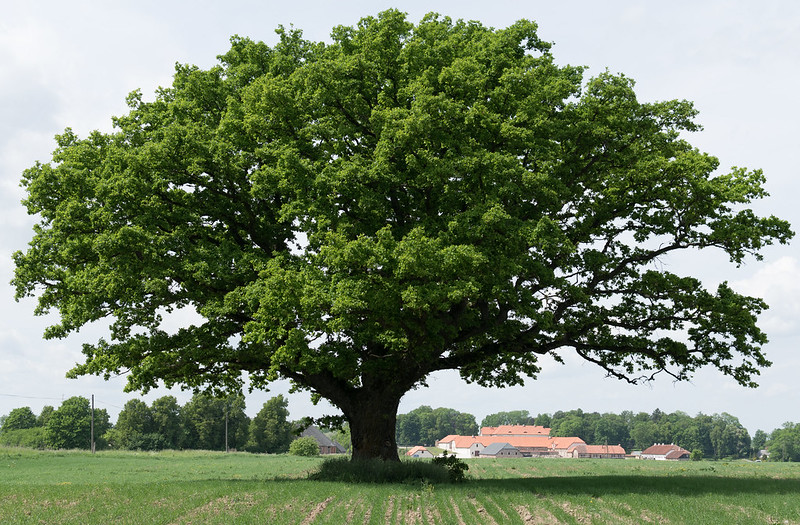
1. Pedunculate oak (Quercus robur)
Oak by Gedomaru via Flickr
Where to find: Also known as common or English oak, this ancient tree is one of Britain’s most iconic species, standing tall for hundreds of years. It can be found across the country in both urban and rural areas. (Not to be confused with the sessile oak which is our other native species of oak – see below for tips on distinguishing between the two).
How to identify: The pedunculate oak is a large deciduous tree growing up to 40m tall. It has grey bark when young which becomes darker brown and develops long vertical fissures as it ages. Leaves have familiar deep-lobed margins with smooth edges. Acorns hang from the tree on long stalks.
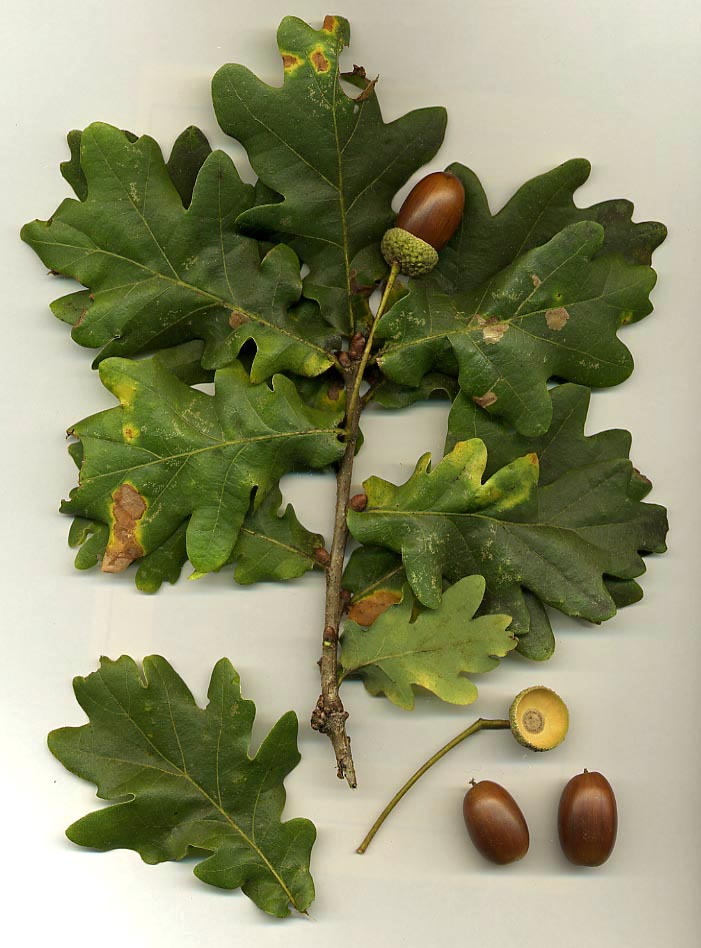
Pedunculate oak leaves have smooth-lobed edges and acorns grow singly at the end of long stems. Image via Wikimedia Commons.
Look out for: If you aren’t sure whether you’re looking at a pedunculate oak or a sessile oak, there are a couple of things you can check for. Pedunculate oak leaves have quite a short stem and more pronounced lobes at the bottom of the leaf. Acorns grow singly at the end of a long stem. Sessile oak leaves have a shorter stem and do not have lobes near the stem. Their acorns grow in clusters that are attached directly to the outer twigs.
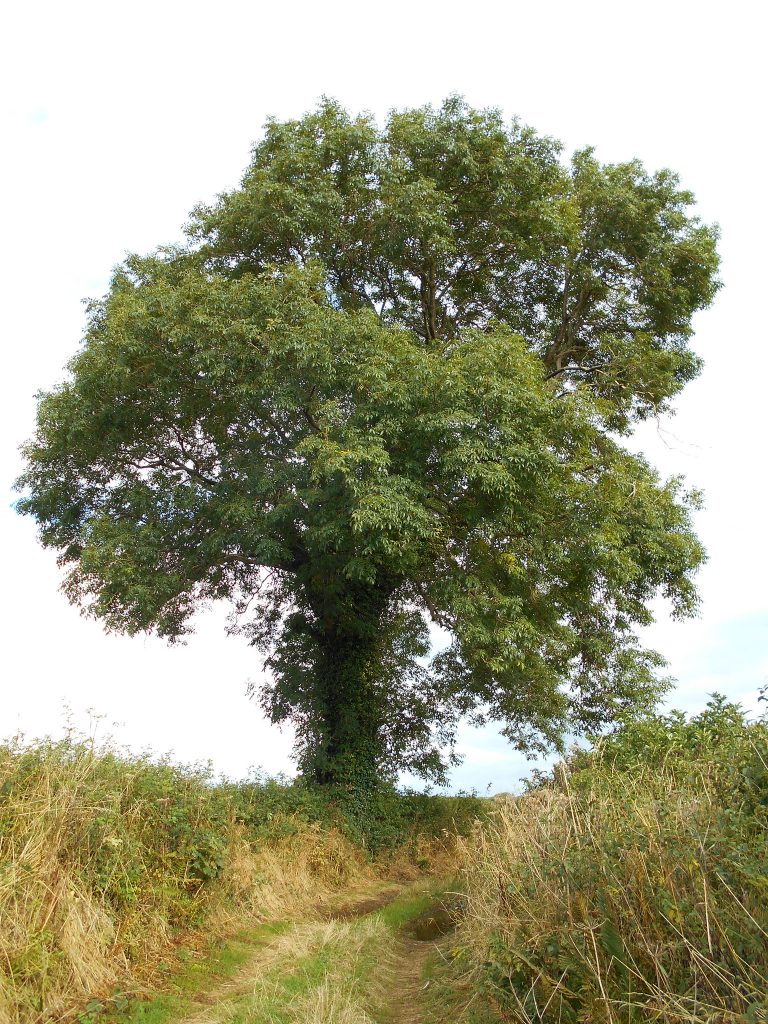
2. Ash (Fraxinusexcelsior)
Ash tree by David Radcliffe via Flickr
Where to find: Ash is a common, widespread tree often found among British hedgerows and in many mixed deciduous woods in the UK.
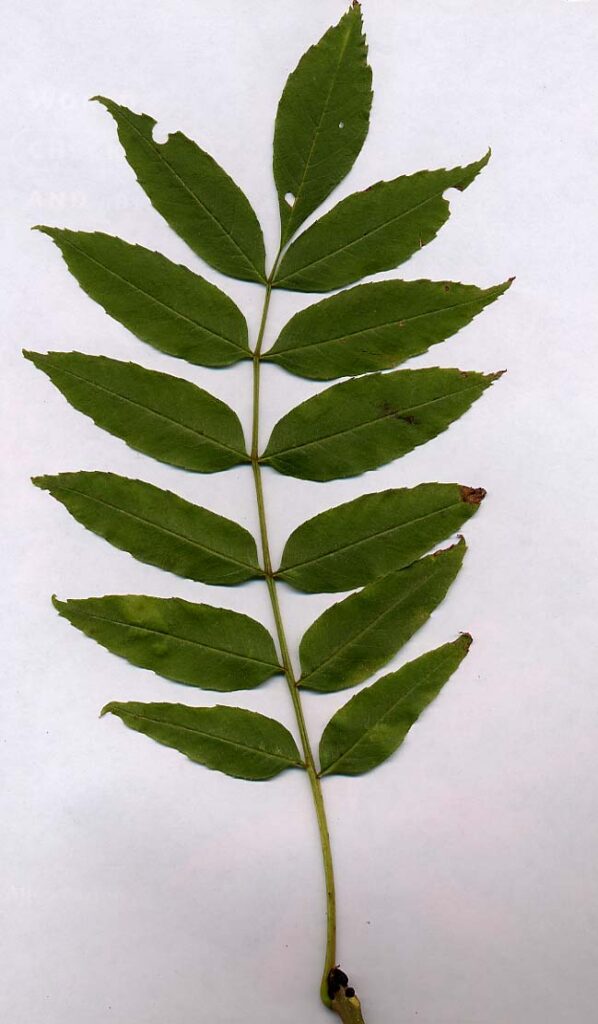
How to identify:Ash grows up to a height of 30–40m. The bark is pale brown and fissures as the tree ages. Leaves are pinnately compound, usually comprising three to six opposite pairs of light green, oval leaflets. The buds are a sooty black with upturned grey shoots.
Ash leaves showing a small black bud at the base. Image via Wikimedia Commons.
Look out for: Sadly, ash is also identified by a serious disease called ash dieback (or chalara) that is a substantial threat to the species. The fungus appears as black blotches on the leaves and affected trees usually die within a couple of years.
3. Common Lime (Tilia x europaea)
Lime tree by louis.quinzexv via Flickr
Where to find: The sweet smelling lime is native to much of Europe. Although rare in the wild, it is commonly found in parks and along residential streets.
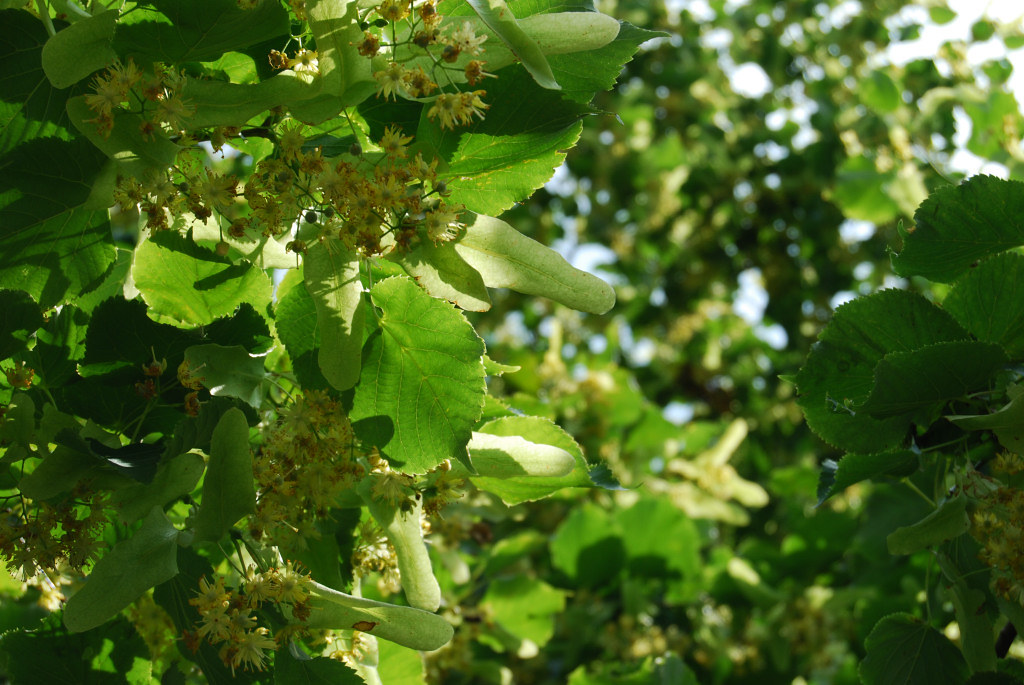
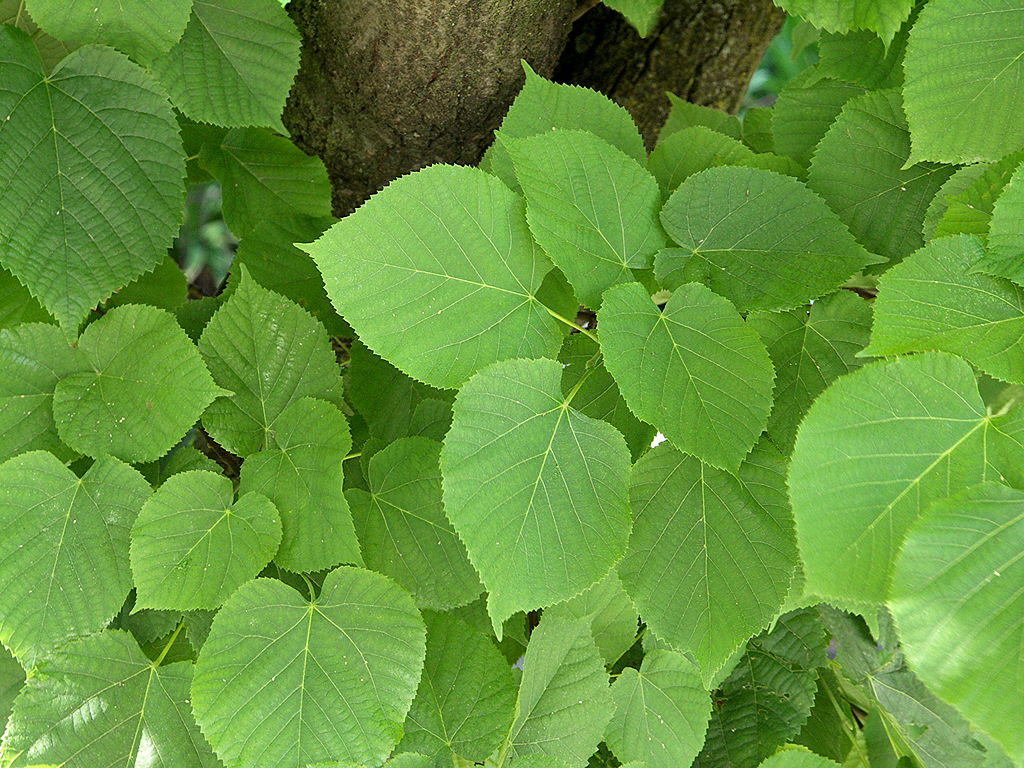
How to identify: Common lime is a tall, broadleaf tree with dark green heart-shaped leaves which are are mostly hairless, except for cream or white hairs on the underside of the leaf between the joints of the veins. It is known for its sweet smelling white-yellow flowers, that hang in clusters of two to five and that develop into round, oval fruits with pointed tips.
Lime leaves are heart shaped and delicate. Image via Wikimedia Commons.
Look out for: The common lime can be distinguished from other lime varieties by the tufts of white hair at the end of its twigs (in small-leaved lime hairs are red, and large-leaved lime has them all over the underside).
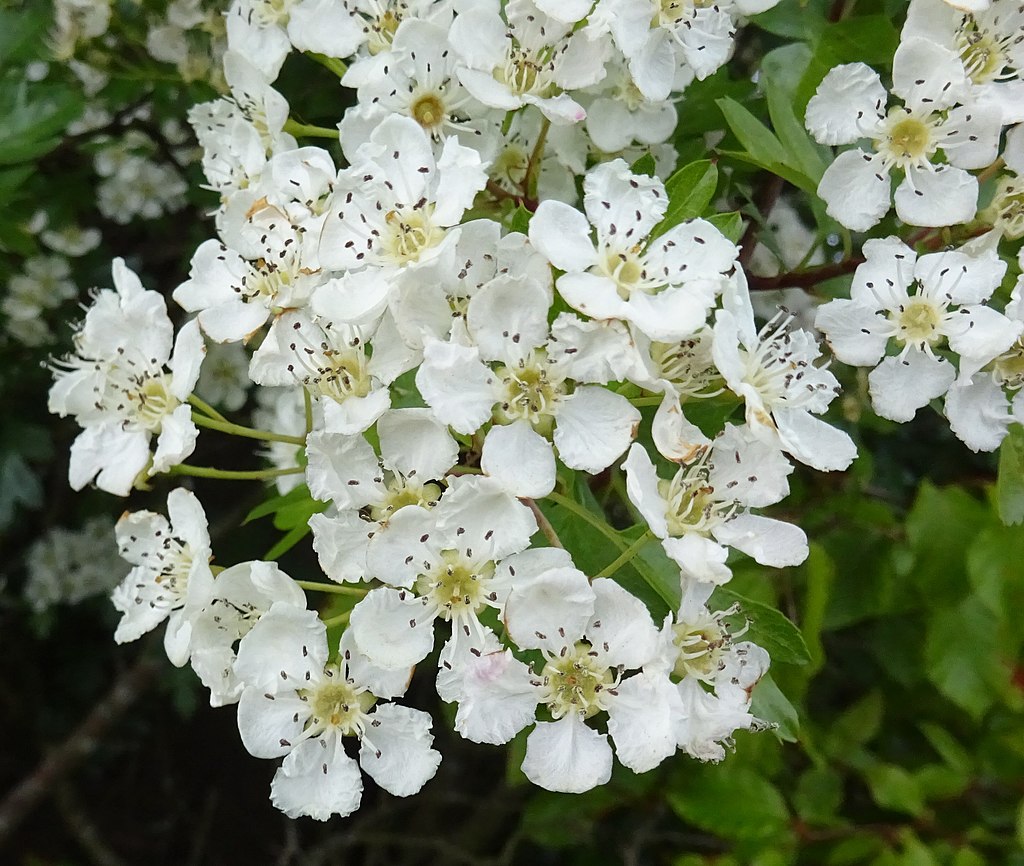
4. Hawthorn (Crataegus monogyna)
Hawthorn by David Lee via Flickr
Where to find: An ancient tree steeped in mythology and folklore, hawthorn is most commonly found growing in hedgerows, woodland and scrub.
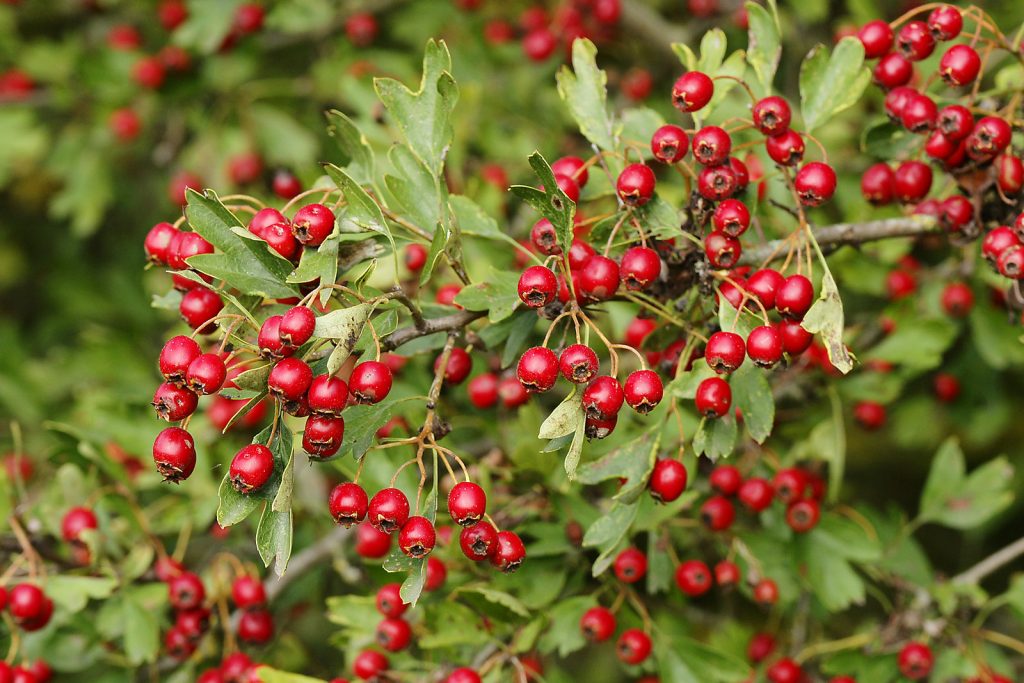
How to identify: Hawthorn has dense, thorny foliage and, if left to fully mature, can grow to a height of 15m. The shiny lobed leaves are among the first to appear in spring. It’s five-petalled flowers are white or pink and grow in flat topped clusters. In autumn and winter, trees are covered in deep red fruits known as haws.
Hawthorn flowers have five petals and are white or pale pink. Image via Wikimedia Commons.
Look out for: This species often hybridises with the UK’s other native hawthorn, Midland hawthorn (Crataegus laevigata). They look very similar and can be hard to tell apart.
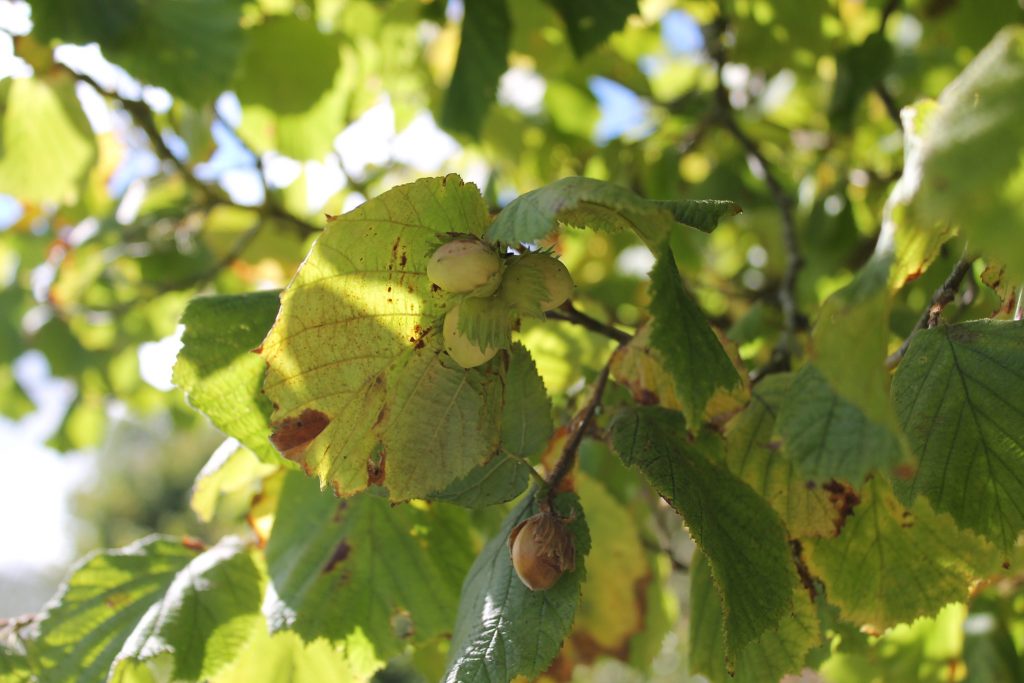
5. Hazel (Corylus avellana)
Hazel by Stoutcob via Flickr
Where to find: Used regularly for coppicing, hazel can be found in a range of habitats, including woodlands, gardens and grasslands.
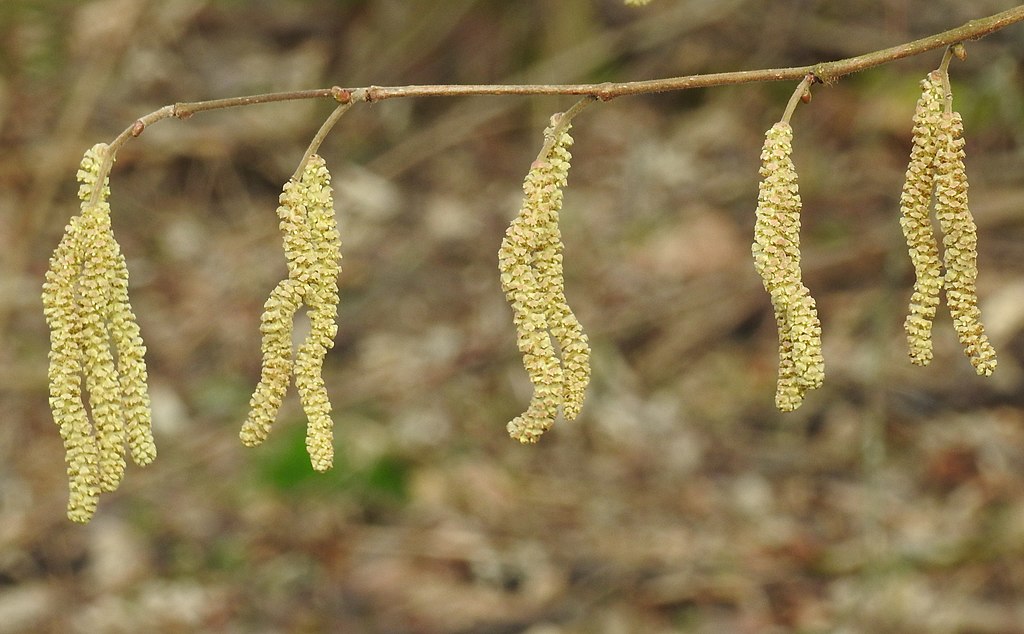
How to identify: A small shrubby tree with smooth, grey-brown bark, hazel can reach up to 12m in height if left uncoppiced. Its leaves are oval, toothed, and have soft hairs on their underside. In late winter, before the leaves have grown, it produces long yellow catkins that hang in clusters. These later develop into hazelnuts.
Hazel produces long yellow catkins which hang in small clusters. Image via Wikimedia Commons.
Look out for: Easily confused with English elm, they can be distinguished by the shape and feel of the leaves. Elm leaves have an asymmetric base and have rough feeling hairs. Hazel leaves are symmetrical at the base and feel soft and downy.
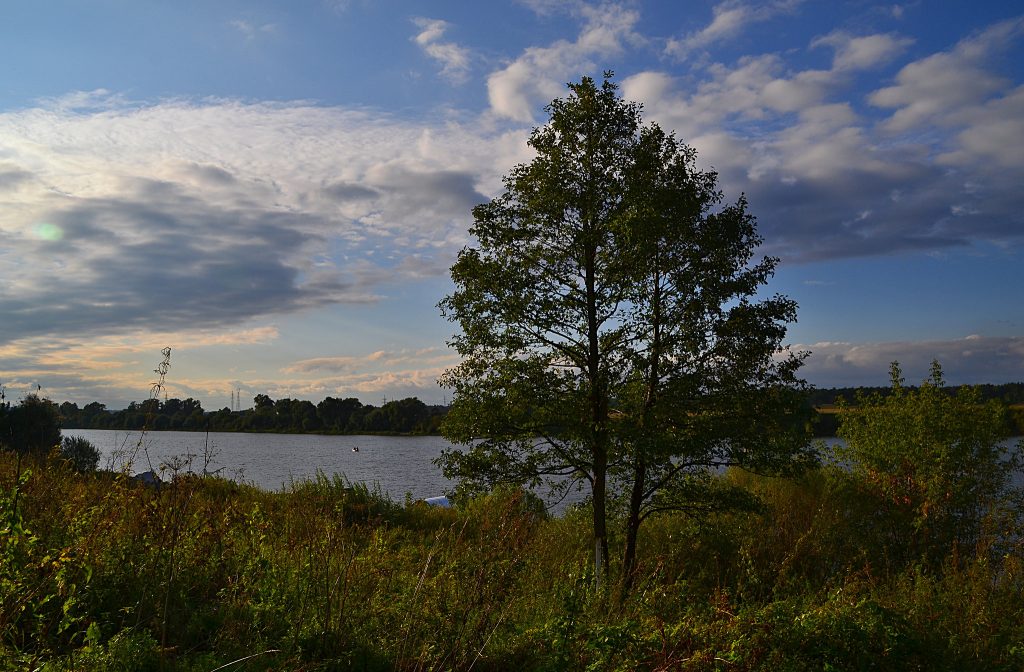
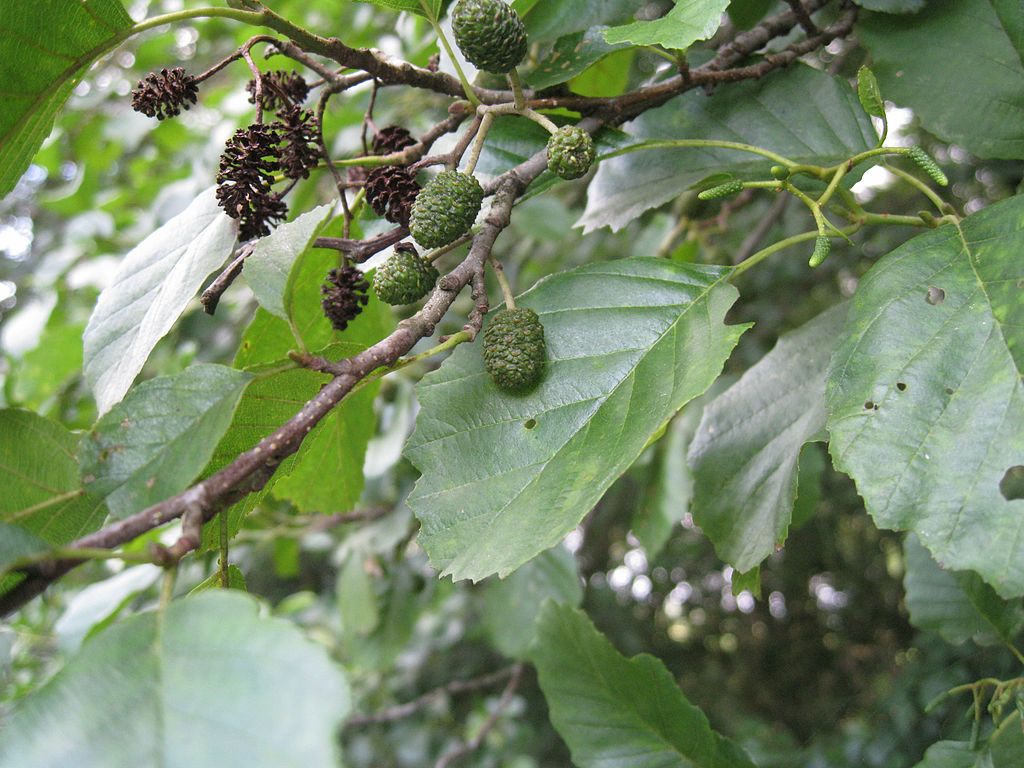
6. Common Alder (Alnus glutinosa)
Alder via Flickr
Where to find: Common alder enjoys moist ground and so can be found along riversides, fens and wet woodlands, often providing shelter to fish. Interestingly, alder wood does not rot when it becomes wet, but instead becomes stronger and harder.
How to identify: Alder is a deciduous tree that grows to 25m. It is broadly conical in shape, and the bark is dark and fissured. Leaves are racquet-shaped and tough. Female catkins are present on the tree all year round and look like small green or brown cones. Male catkins also appear on the same tree and are longer and thinner. Alder can also be recognised by its purple buds and purple twigs with orange markings in winter.
Female catkins become woody and cone-like towards the winter when they open up to release their seeds. Image via Wikimedia Commons.
Look out for: Can be confused with hazel – they can be told apart by the appearance of the leaves which are shiny and leathery in comparison to the soft downy leaves of the hazel.
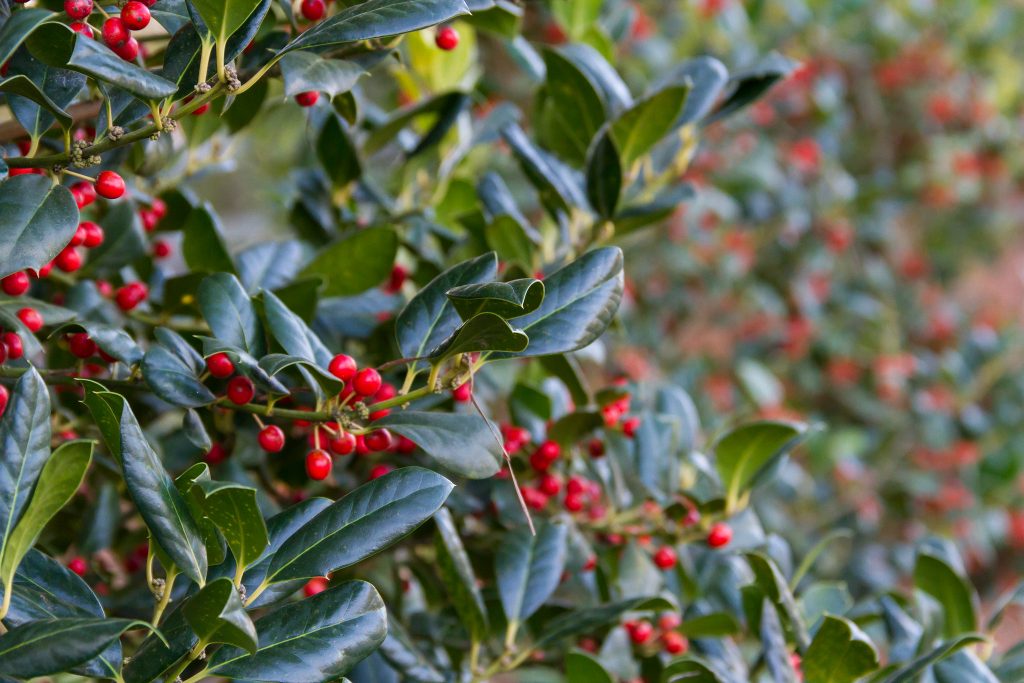
7. Holly (Ilex aquifolium)
Holly by Douglas Cox via Flickr
Where to find: A favourite in Christmas decorations, holly is widespread and found commonly in woodland, scrub and hedgerows.
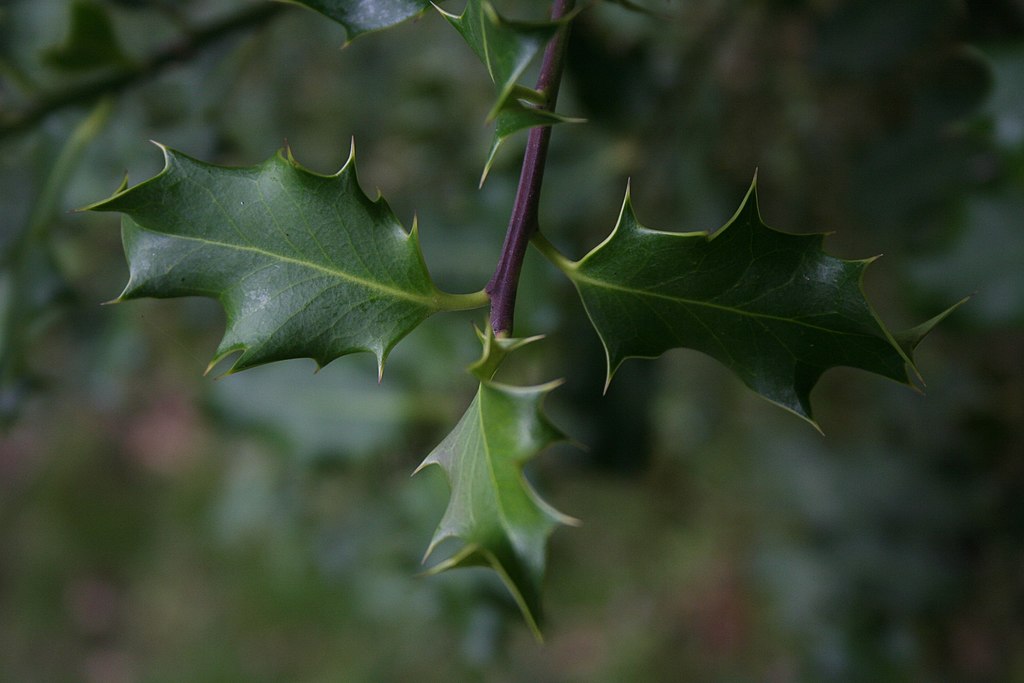
How to identify: This easy-to-recognise evergreen tree has smooth bark with small warts and dark brown stems. Its shiny, leathery leaves usually have prickles along the edges, but can also be smooth in older trees. It can grow up to 15m in height and produces scarlet berries that remain on the plant throughout the winter.
Holly leaves on younger trees have sharp prickles around the edge of their tough, leathery leaves. Image via Wikimedia Commons.
Look out for: Although holly leaves usually have prickles, those on older trees or that are on the upper parts of the plant often have smoother edges.
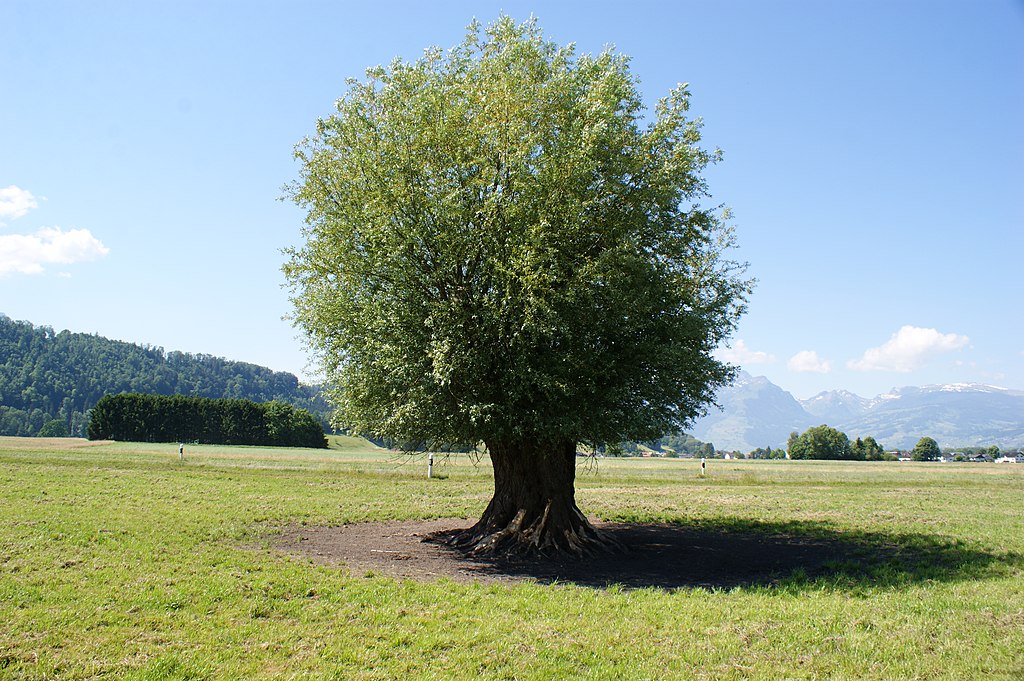
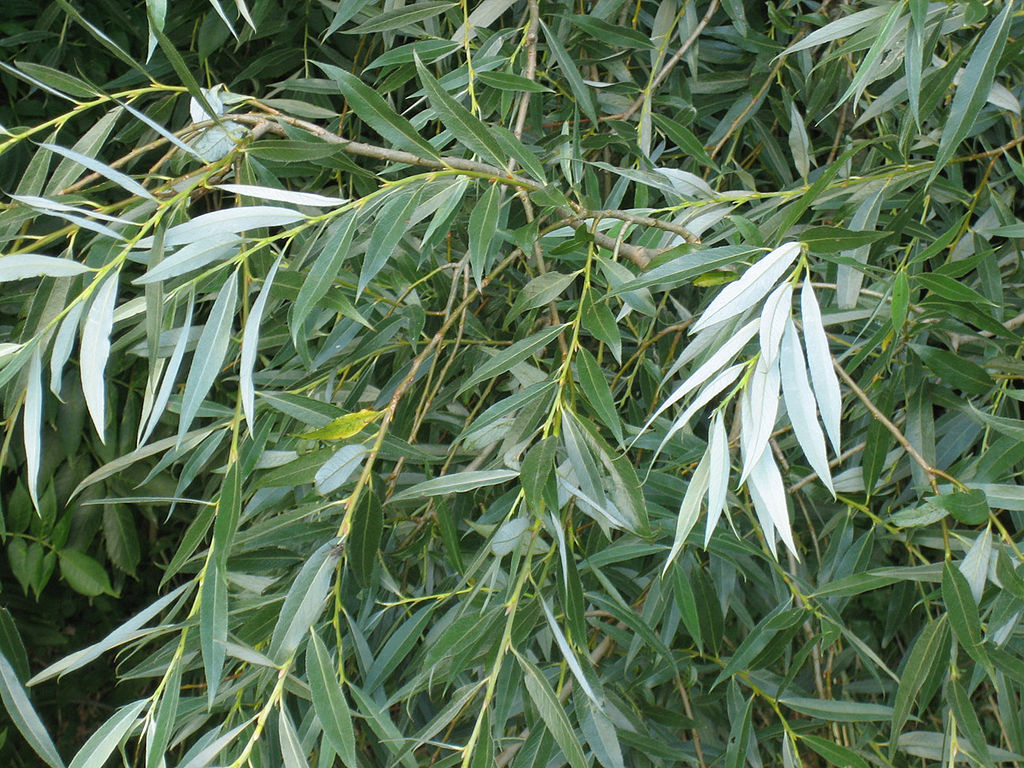
Where to find: The weeping, romantic willow can be spotted growing in wet ground, often along riverbanks and around lakes where it trails its branches into the water.
How to identify:White willow is a the largest species of willow in the UK, growing up to 25m with an irregular, leaning crown. Its foliage appears silvery due to its pale, oval leaves that carry silky, white hairs on the underside. In early spring look out for its long yellow catkins and in winter try to spot the green-yellow narrow buds that grow close to the twig.
White willow leaves appear silvery due to the downy hairs on the underside. Image via Wikimedia Commons.
Look out for: There are several species of willow in the UK, including white willow, grey willow, weeping willow, goat willow and crack willow. These often hybridise in the wild.
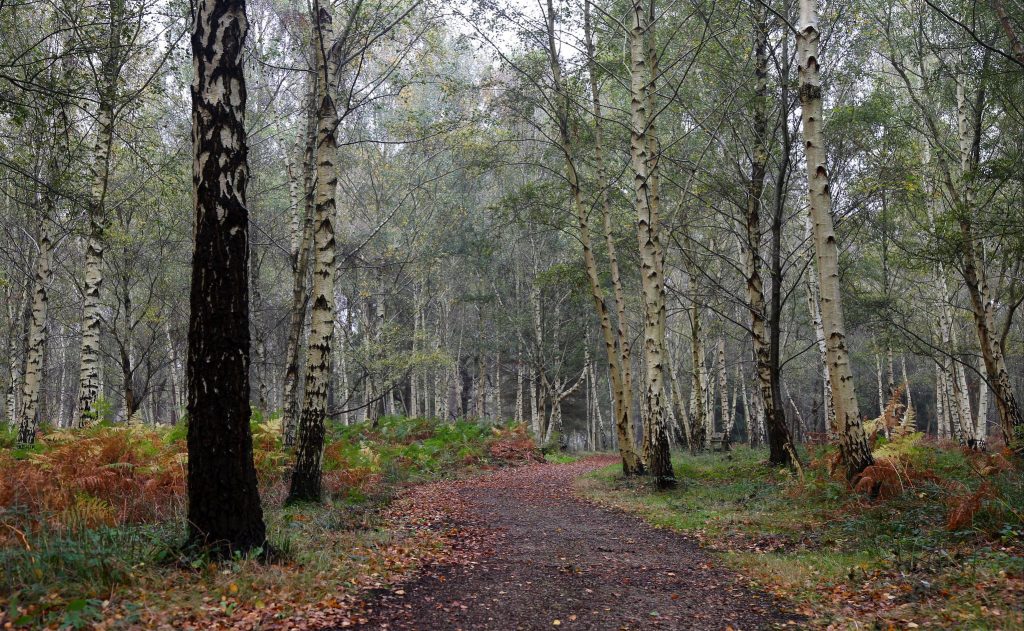
9. Silver Birch (Betula pendula)
Silver Birch by Jan Roles via Flickr
Where to find: A pioneer species, silver birch is a popular garden tree, and thrives in moorlands, heathland and dry and sandy soils.
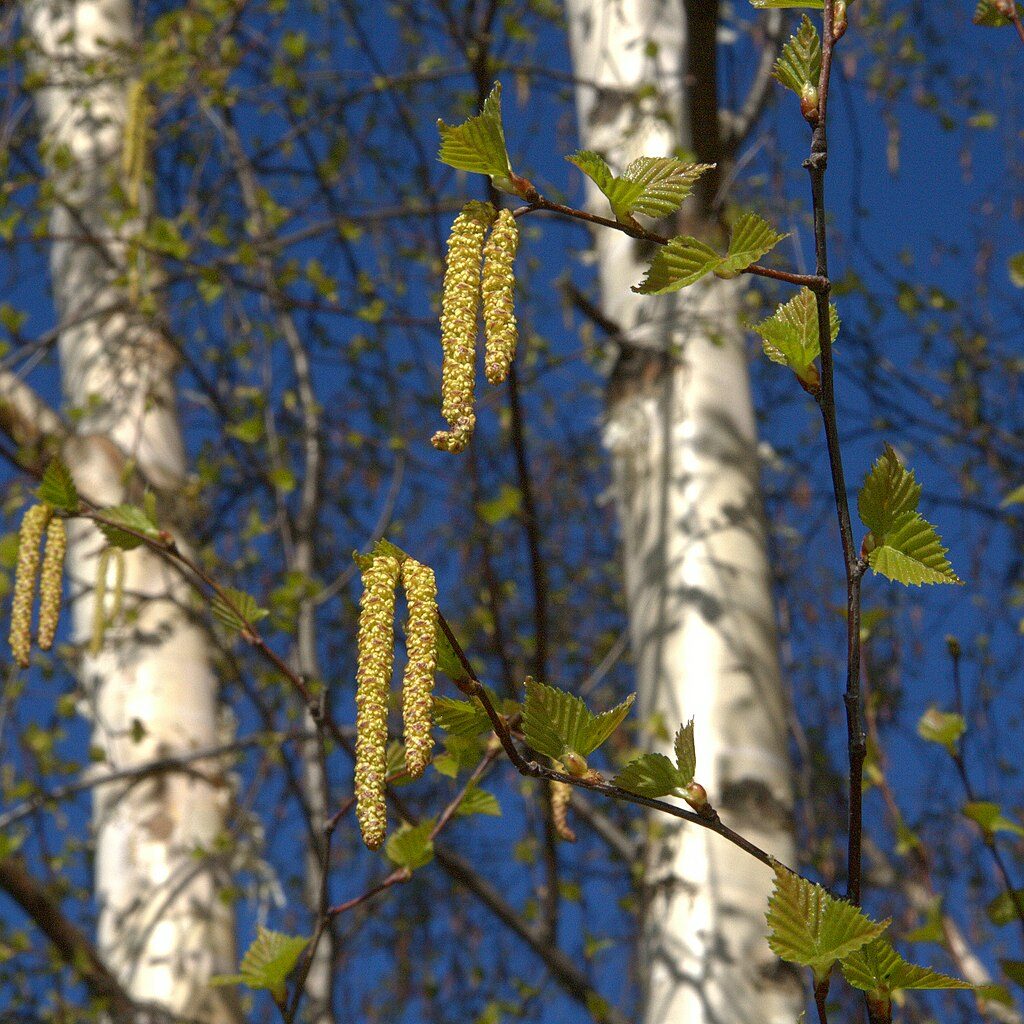
How to identify: Silver birch can be easily recognised by its silver, papery bark which sheds like tissue paper. It has drooping branches and can reach 30m in height. Leaves are triangular-shaped with toothed edges and grow from hairless leaf stalks. In spring, flowers appear as yellow-brown catkins that hang in groups. Once pollinated, female catkins thicken and darken to a crimson colour.
Birch catkins are often described as ‘lambs tails’. Image via Wikimedia Commons.
Look out for: Silver birch is monoecious, meaning that both male and female catkins are found on the same tree. In April and May, try to distinguish the long yellow-brown male catkins from the short, erect green females ones.
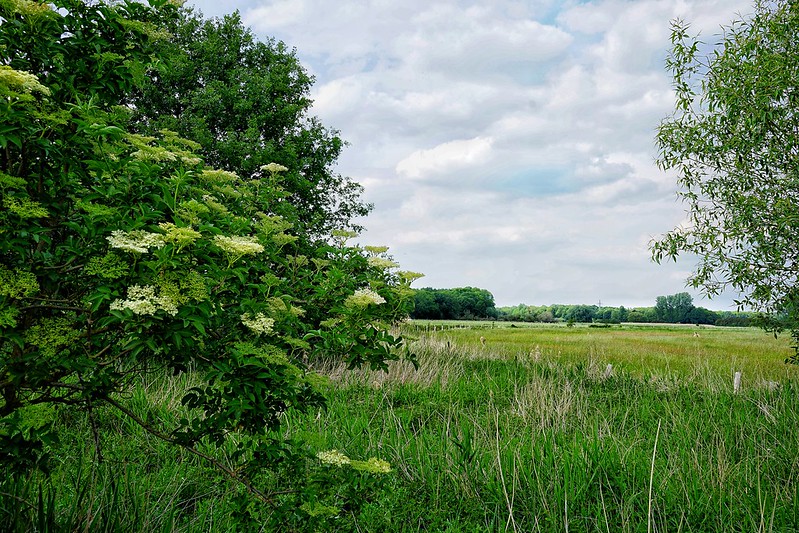
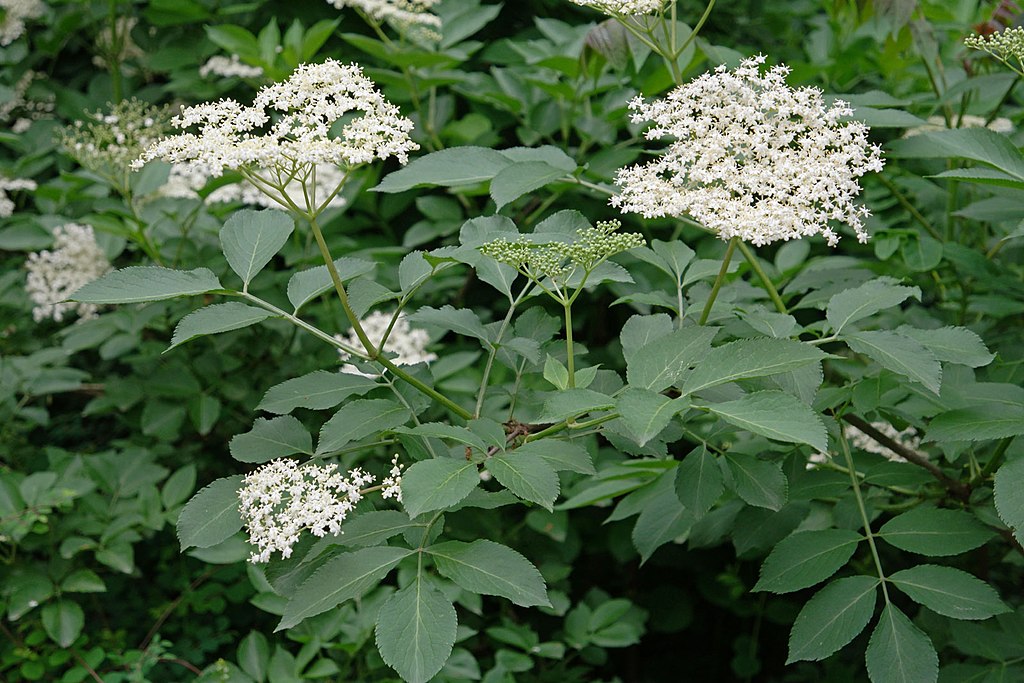
10. Elder (Sambucus nigra)
Elder by Rüdiger Heiß via Flickr
Where to find: Historically known for its magical properties and hugely favoured by foragers, elder appears in hedges, scrub, woodland, waste and cultivated ground.
How to identify:Elder can grow to around 15m and has a short, greyish-brown trunk that develops deep creases as it ages. It has compound leaves; each leaf divided into five to seven leaflets. In summer, elder is recognised by its creamy, sweet-smelling white flowers that hang in sprays. In the autumn these develop into bunches of deep, purple berries.
In the spring the elder tree features sprays of fragrant white flowers. Image via Wikimedia Commons.
Look out for: In winter, elder twigs are green and have an unpleasant smell. They have a white soft pith inside.
Recommended reading and guides:
Collins Tree Guide: The Most Complete Field Guide to the Trees of Britain and Europe
An essential, definitive guide to the trees of Britain and non-Mediterranean Europe. Containing some of the finest original tree illustrations ever produced, this is one of the most important tree guides to have appeared in the last 20 years.
The Tree Name Trail: A Key to Common Trees
This 12-page laminated fold-out chart contains a full-colour illustrated key to the leaves, twigs, fruits and seeds of the commonest broadleaved and coniferous trees of Britain and Ireland.
Tree-Spotting: A Simple Guide to Britain’s Trees
A beautiful and captivating insight into the wonderful world of trees, Tree-Spotting burrows down into the history and hidden secrets of each species. It explores how our relationship with trees can be very personal, and hopes to bring you closer to the natural world around you.
RSPB First Book of Trees
Through beautiful full-page illustrations accompanied by key information about each tree, the First Book of Trees is designed to encourage young children’s interest in the outside world and the trees they encounter during their adventures.
Tree Story: The History of the World Written in Trees
A dendrochronological delight, the beautifully written and illustrated Tree Story reveals the utterly fascinating world of tree-ring research and how it matters to archaeology, palaeoclimatology and environmental history.
Winter Trees: A Photographic Guide to Common Trees and Shrubs
This AIDGAP guide covers 36 of the common broad-leaved deciduous species, or groups of species, that are most likely to be found in the UK, as well as a few rarer trees. It provides all the information you need to begin identifying trees in winter from their buds, bark, size and habitat.
Identification of Trees and Shrubs in Winter using Buds and Twigs
A practical guide to identifying trees and shrubs in winter. Comprehensive and easy to use, it contains over 700 species identifiable via their winter buds and twigs. The illustrated identification keys are easy to use, and a summary set of keys are provided as an appendix.
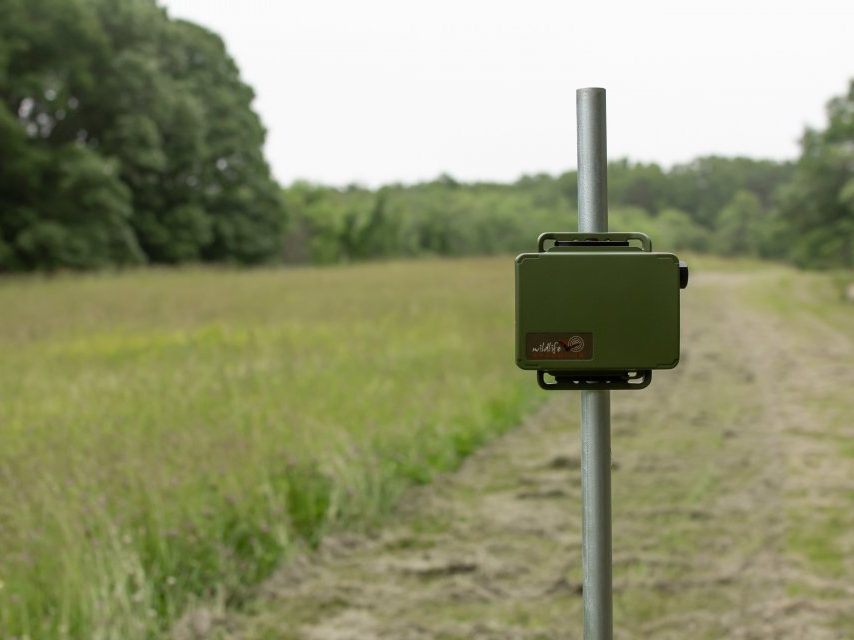
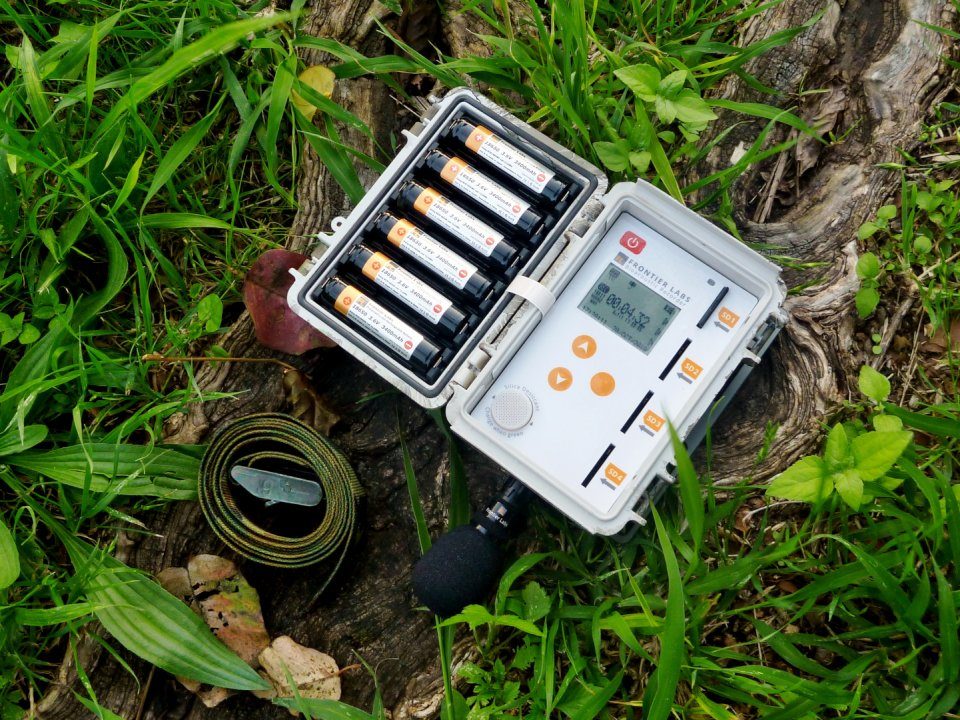
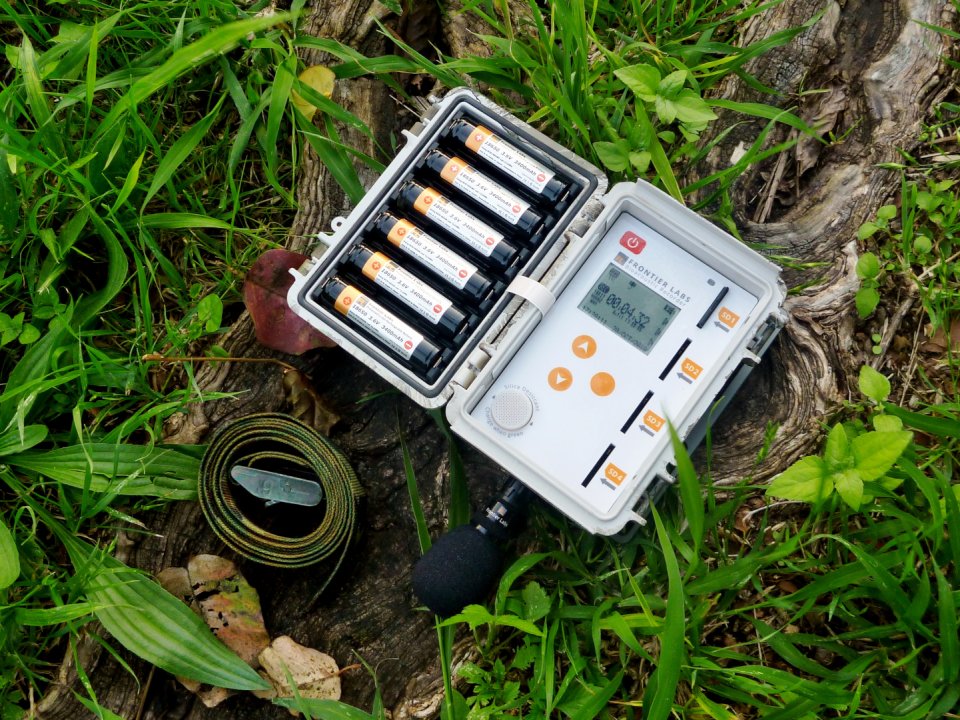
The BAR-LT is a bioacoustic recorder manufactured by Frontier Labs. The recorder is designed to be deployed in the field over extended periods and can be programmed to record for set times. This type of acoustic recorder is ideal for monitoring bird song, frog calls, or even wolves. This kind of monitoring is often referred to as passive acoustic monitoring (PAM) and is becoming increasingly popular in biodiversity studies across the globe. Not only are these growing libraries of soundscapes important for current research and survey, but they also provide invaluable references for future research into both global and local scale biodiversity change.
The BAR-LT is a professional two-channel audio recorder designed specifically for long-term autonomous field deployments. It comes in a waterproof, lockable enclosure made from tough UV resistant plastic. It has space for four SD cards, each with up to 512GB storage capacity, meaning vast amounts of data can be recorded over one deployment. It is powered by 1-6 rechargeable 18650 batteries, providing 100-600 hours of recording time, and can also be powered using an external 6V or 12V power input. There are two microphone configuration options available: Standard (two-channels; one mic pointing left, one pointing downwards) and Left/Right. The omnidirectional microphones are highly sensitive and ultra-low noise, producing clear, crisp recordings.
We took the standard BAR-LT out to the field to record the dawn chorus.
How We Tested
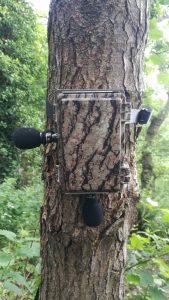
We loaded the BAR-LT with a single memory card and four rechargeable 18650 batteries. We set a simple sunrise-based schedule, asking the recorder to record from an hour before sunrise to an hour after. The recorder then did the rest, using its in-built GPS to determine where in the world we were and therefore what time the sunrise was, basing start and stop times on this. We took the recorder to a nearby spot of woodland and fixed it to a tree using the included strap and a python cable lock (available separately) looped through the metal mounting plate at the back of the recorder.
What We Found
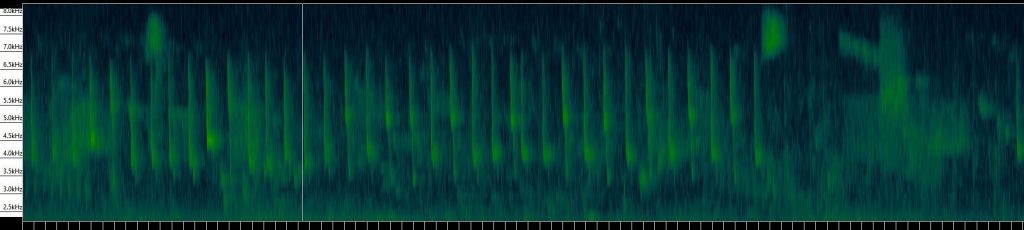
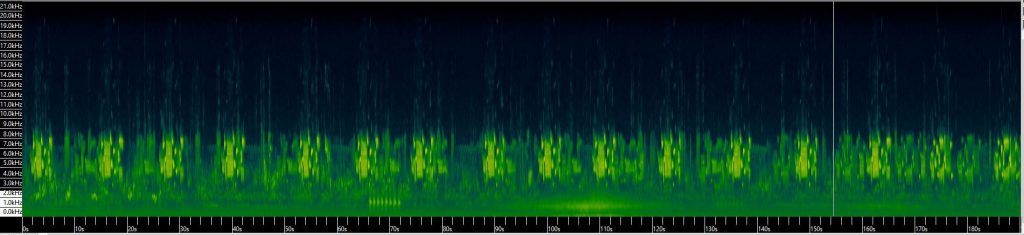
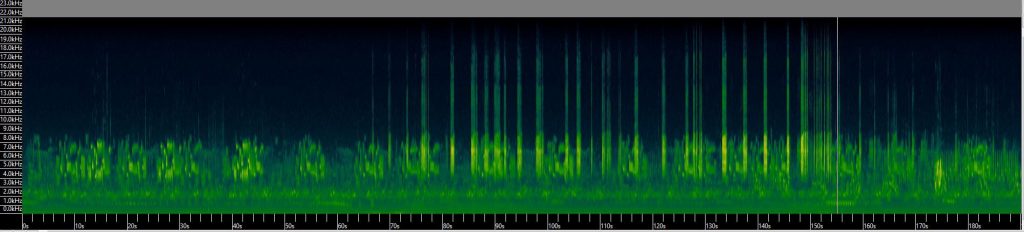
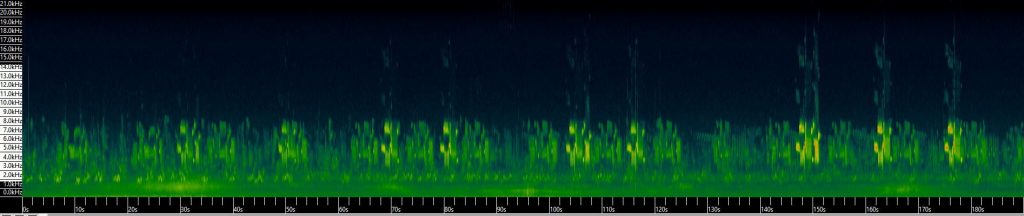
Although we could have left the BAR-LT out for an extended period of time, we only left it out for a single night on this occasion. When we collected it, the two-hour recording had successfully been completed, with minimal battery or memory drain. Upon listening to the dawn chorus, the audio was wonderfully clear, and the microphones were very sensitive. Some examples of audio and sonograms are below.
ChiffchaffLow frequency crow call over robin callsBlackbird alarm callCall and answer
Our Opinion
The BAR-LT was very simple to set up and, although the scheduling capabilities are powerful, the settings are logical and easy to navigate. The battery life and memory capacity were outstanding, making the unit a really great piece of kit for any long-term deployments or for use in very remote locations where access is infrequent. We were also particularly impressed with the handy battery removal tool that came with the kit – it saved a lot of time fiddling with the batteries and also demonstrated how well-thought-out the kit is. The only part of the design that we weren’t so keen on was the metal backplate for mounting the unit, which is slightly larger than the unit itself and doesn’t have any grip teeth like most trail cameras do. The tree we were mounting the unit to was relatively small, meaning the backplate got in the way a bit, and only just fit a python padlock after a bit of a squeeze.
The recordings that the BAR-LT produced provided a wonderful soundscape and we were impressed with the quality of the recordings. There was very little ‘noise’ and the clarity of the recordings was evident, both when listening to the audio and when viewing the sonogram. The microphones picked up the sounds of the road surprisingly well, even though we thought we were far enough away to exclude them, demonstrating their impressive sensitivity.
We feel that the BAR-LT would be a great detector for conservationists and researchers who are looking to capture soundscapes for both current and future research. It performed well for bird song, but we think it would be equally as valuable to those wishing to record any terrestrial call. If you are interested in recording aquatic or low-frequency calls with the BAR-LT, please get in touch with us on customer.services@nhbs.com.
To view our full range of sound recorders and microphones, visit www.nhbs.com. If you have any questions on wildlife recording or would like some advice on the microphone for you then please contact us via email at customer.services@nhbs.com or phone on 01803 865913
Small mammals are charismatic animals, but often elusive. They are rarely seen as more than a passing glimpse of a small scurrying creature. Although sadly often viewed as pests, small mammals are an important part of our ecosystems.
In this blog we will focus on some of the most common, native species of rodent and insectivore in the UK, providing key characteristics that will help you to identify them in the field.
Mice
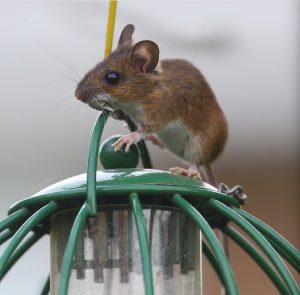
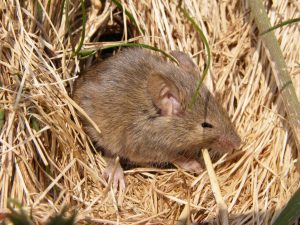
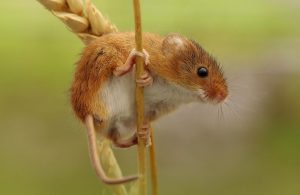
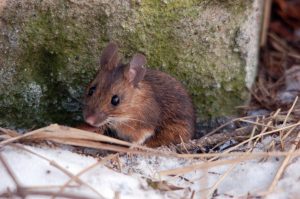
There are four species of mice in the UK. All have relatively large eyes and ears and long scaly tails with little or no hair.
Identification: The wood mouse is a ‘stereotypical’ mouse in terms of appearance and has a chestnut-brown back and white belly. Long tail, large ears and big eyes. Moves quickly by hopping/jumping.
Size: 8-10cm with a very long tail of up to 10cm.
Habitat: Often found in woodland and fields but also common in a variety of other habitats. Generally the most often caught in small mammal surveys.
Identification: Grey–brown all over including the undersides.
Size: 7-9cm with a tail of up to 10cm.
Habitat: Commonly associated with houses, buildings and barns, although also found in the countryside. This species is one of the more commonly spotted due to its cohabitation with humans.
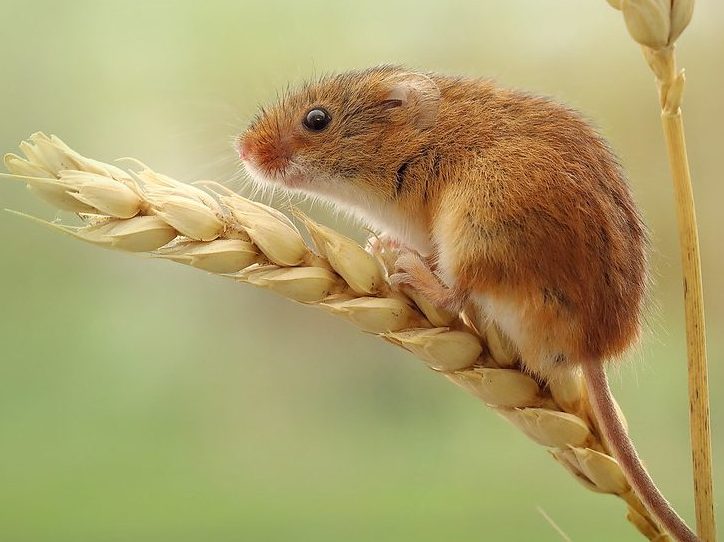
Identification: A very small mouse with golden fur and white undersides. Its long tail is prehensile and can be used as an extra ‘limb’ to hold onto vegetation as it climbs.
Size: The UK’s smallest rodent; roughly 5-7cm in length.
Habitat: Lives in long vegetation such as reed beds, marshes and roadside verges. Builds small, round nests made of intertwined grass stalks.
Did you know? The average adult harvest mouse weighs roughly the same as a two pence piece!
Identification: This species looks almost the same as the wood mouse in appearance, except that the yellow-brown colouration on its back continues around in a band across the neck.
Size: 9.5-12cm, very slightly larger than the wood mouse. Tail 8-12cm in length.
Habitat: Woodland, hedgerows and gardens; range is restricted mainly to southern Britain.
Voles
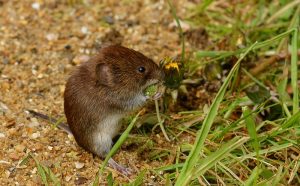
In comparison to mice, voles have much shorter and more rounded snouts. They also tend to have smaller ears and eyes in proportion to their body size. There are three species of vole native to mainland UK: two of these species – the bank and field vole – appear very similar and are easily confused.
Identification: Red-brown upper coat with a pale cream/grey underside. The bank vole’s tail is about half the length of its body. This is an important distinguishing factor for comparison with the field vole which has a proportionately shorter tail.
Size: 9-11cm, tail length 3-7cm.
Habitat: The bank vole is often found in hedgerows, heathland, grassland and woodland, as well as in more urban areas.
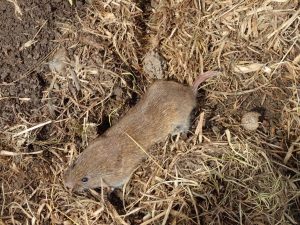
Identification: The fur of the field vole is more yellow-brown than the bank vole. It is often described as ‘cooler’ in colour. The underside is creamy-grey. Its tail is about a third of the length of its body (shorter proportionately when compared to the bank vole). For this reason it is also known as the short-tailed field vole.
Size: 9-12 cm in length (not including tail).
Habitat: Ungrazed grasslands and areas of tussock are the preferred habitat, although this adaptable mammal will find a home wherever grass is available.
Did you know? The field vole is estimated to be the most abundant mammal in the UK, although it is rarely seen. Look out for small round tunnels in areas of long grass. You may even find a ‘lawn’ at the entrance with shortened grass and piles of grass cuttings.
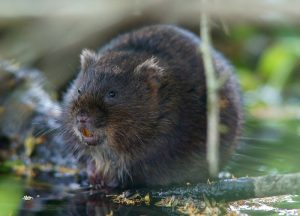
Identification: Dark brown fur and a hairy tail which is about half the length of the head and body. Characteristic bright yellow teeth.
Size: Up to 22cm in length excluding the tail. Roughly rat-sized (double the size of the field and bank voles).
Habitat: As the name suggests, this vole spends much of its life in the water. They live in burrows alongside river canals and are most often spotted swimming.
Did you know? When startled, water voles dive into the water making a characteristic ‘plop’ sound. So, be sure to keep an ear out when walking alongside rivers.
Shrews
There are four species of shrew native to the UK, although only three are found on the mainland. The other – the greater white-toothed shrew – is found only on islands such as Guernsey, Alderney and Herm.
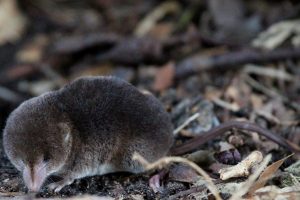
Shrews tend to be smaller than most other species of small mammal found in the UK, and have a distinctive long pointed snout and very small eyes and ears.
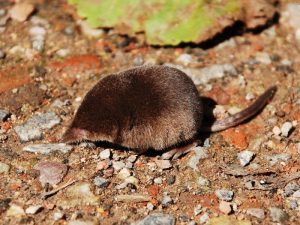
Identification: Fur is three-toned, transitioning from dark brown on the back to paler brown to white on its undersides. The common shrew has a tail which is roughly half the length of the body; this is shorter, proportionally, than that of the pygmy shrew.
Size: 4-8cm in length, tail 2.5-4.5cm.
Habitat Widespread across a variety of habitats including gardens, hedgerows, grassland and woodland.
Did you know? Common shrews have a very high metabolism and must eat every 2-3 hours in order to survive.
Identification Two-toned fur going from a grey-brown upper to an off-white belly. The pygmy shrew has a longer and wider tail in proportion to its body when compared with the common shrew; roughly two-thirds of its body length.
Size: 4-6cm in length, tail 3-5cm.
Habitat: Widespread across a variety of habitats including hedgerows, grassland and woodland.
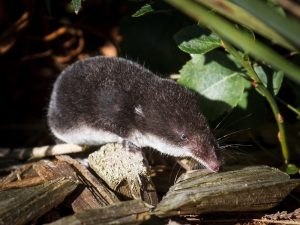
Water Shrew – Neomys fodiens
Water shrew by Ulrike & Jörg via Flickr
Identification: Black/dark brown fur on top, with a very contrasting pale grey underside. Often have little silver ear tufts and white hairs around the eyes.
Size: 6-10cm, the UK’s largest shrew species. Tail 4.5-7.5cm.
Habitat: Usually found near streams and wetlands. If you see a shrew swimming, it is most likely this species! They even swim underwater to hunt for prey.
Did you know? The water shrew is a venomous mammal. Its saliva can paralyse even larger prey such as frogs and newts.
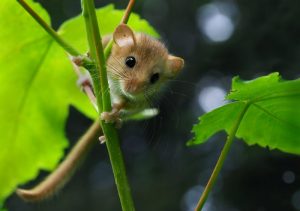
Identification: Golden fur, big ears and eyes. The most characteristic feature is their incredibly fluffy tail. This means that they are sometimes mistaken for a young squirrel.
Size: 6-9cm, tail 5.5-7cm.
Habitat: Dormice are arboreal, meaning that they spend most of their lives in trees, although they return to the ground to hibernate during winter. Despite their name, hazel trees are not a habitat requirement – although they are often preferred. Found in coniferous, deciduous and mixed woodland.
Did you know? The hazel dormouse is not technically a true mouse. They are related to both mice and squirrels but are classified in their own separate family.
Provides a solid grounding in mammal identification skills. Includes excellent illustrations of mammals, their tracks and signs and also discusses survey methods using the latest techniques and technologies.
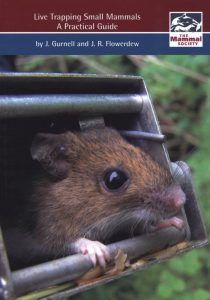
Live Trapping Small Mammals: A Practical Guide #248012
Provides practical advice on trapping small mammals.
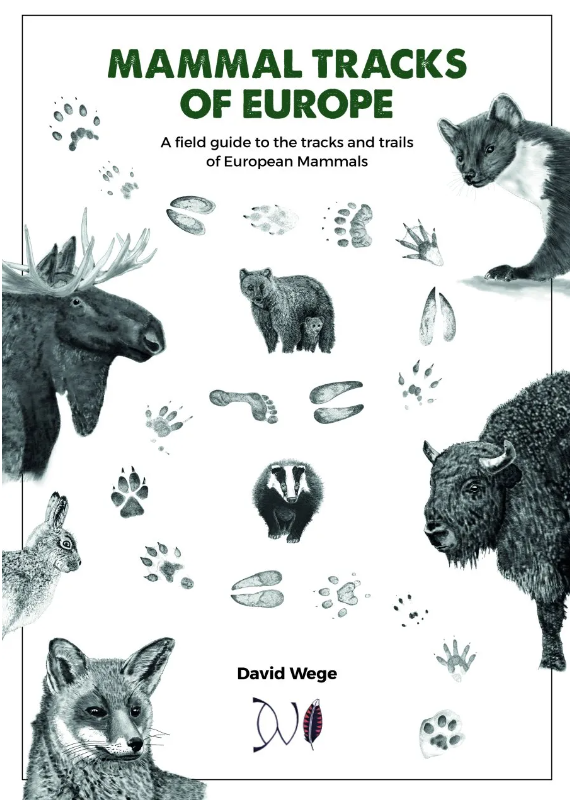
Mammal Tracks of Europe: A Field Guide to the Tracks and Trails of European Mammals#264590
This essential field companion covers the tracks and trails of 72 European mammal species and includes detailed life-size drawings by the author.
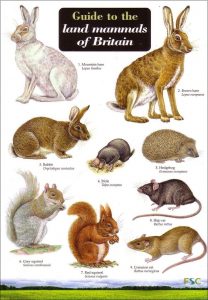
This laminated pamphlet is produced by the Field Studies Council and contains images of all of Britain’s land-based mammals. Provides a useful overview and aid to identification.
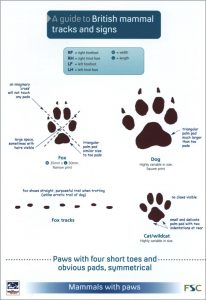
A Guide to British Mammal Tracks and Signs #128853
This Field Studies Council guide is the perfect solution to identifying the presence of mammals from their tracks and signs. Footprints, dropping and feeding remains are all included in this helpful laminated pamphlet.
WILDGuides publish a wide array of practical, durable and authoritative natural history titles. Ranging from photographic field guides that cover the wildlife of Britain and Ireland, to visitor’s guides and reference works on wildlife regions around the world.
With a prodigious amount of new and forthcoming titles published this year and all at fantastic prices, now is a great opportunity to discover WILDGuides comprehensive and authoritative publications.
Bestsellers and new titles
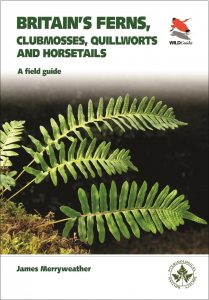
Britain’s Ferns: A Field Guide to the Clubmosses, Quillworts, Horsetails and Ferns of Great Britain and Ireland
By: James Merryweather
Flexibound | Just Published! May 2020| £14.99£19.99
A comprehensive, lavishly illustrated and user-friendly photographic field guide to all the pteridophytes of Britain.
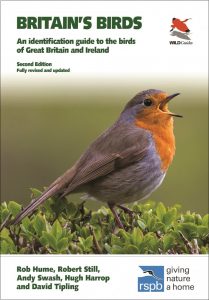
Britain’s Birds: An Identification Guide to the Birds of Great Britain and Ireland
By: Rob Hume, Robert Still, Andy Swash, Hugh Harrop and David Tipling
Flexibound | Just Published! May 2020| £14.99£19.99
Four years after the successful first edition, Britain’s Birds returns in a second edition.
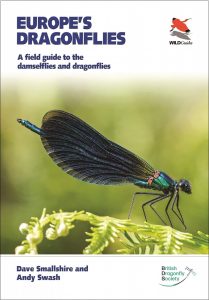
Europe’s Dragonflies: A Field Guide to the Damselflies and Dragonflies
By: Dave Smallshire and Andy Swash
Flexibound | Just Published! May 2020| £19.99£24.99
With over 1200 colour photos, Europe’s dragonfly fauna is given the WILDGuides treatment.
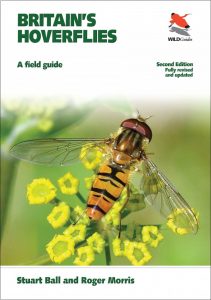
Britain’s Hoverflies: A Field Guide
By: Stuart Ball and Roger Morris
Flexbound | April 2015| £19.99£24.99
A beautifully illustrated photographic field guide to the hoverflies of Britain
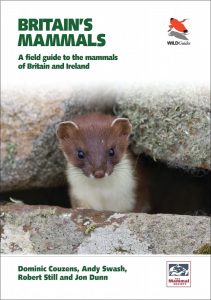
Britain’s Mammals: A Field Guide to the Mammals of Britain and Ireland
By: Dominic Couzens, Andy Swash, Robert Still and Jon Dunn
Flexibound | April 2017| £13.99£17.99
A comprehensive field guide to all the mammals recorded in Britain and Ireland.
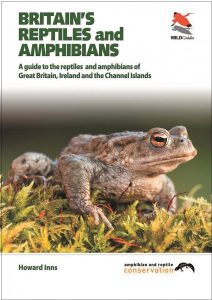
Britain’s Reptiles and Amphibians: A Guide to the Reptiles and Amphibians of Great Britain, Ireland and the Channel Islands
By: Howard Inns
Flexibound | July 2009| £13.99£17.99
A detailed guide to the reptiles and amphibians of Britain, Ireland and the Channel Island.
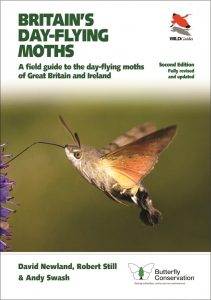
Britain’s Day-Flying Moths: A Field Guide to the Day-Flying Moths of Great Britain and Ireland
By: David E Newland, Robert Still and Andy Swash
Flexibound | July 2019| £13.99£17.99
A photographic guide to the moths you are most likely to see during the day.
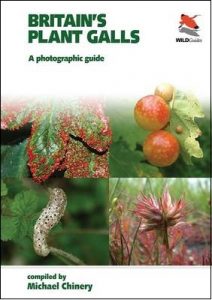
Britain’s Plant Galls: A Photographic Guide
By: Michael Chineryh
Flexibound | Sept 2011| £12.99£16.99
Aims to help both beginners and experts alike to learn more about the galls and what causes them in the first place.
Forthcoming
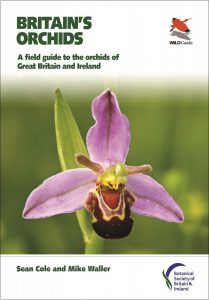
Britain’s Orchids: A Field Guide to the Orchids of Great Britain and Ireland
By: Sean Cole and Michael Waller, Sarah Stribbling (illustrator)
Flexibound | Due August 2020| £15.99£19.99
Combines nearly 100 illustrative plates with over 1000 colour photos
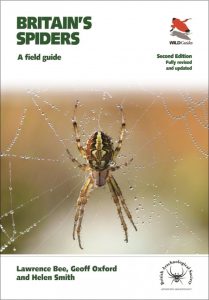
Britain’s Spiders: A Field Guide
By: Lawrence Bee, Geoff Oxford and Helen Smith
Flexibound | Due September 2020| £19.99£24.99
This fantastic photographic guide is coming as a second edition, with nine more species and updated information
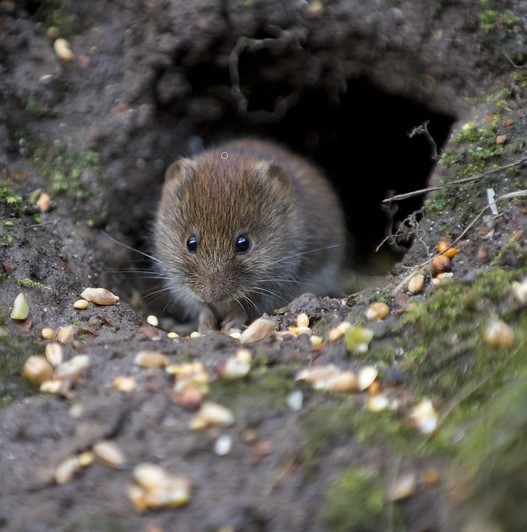
Bank Vole (Myodes glareolus) – Photo: Claire Spelling (www.flickr.com)
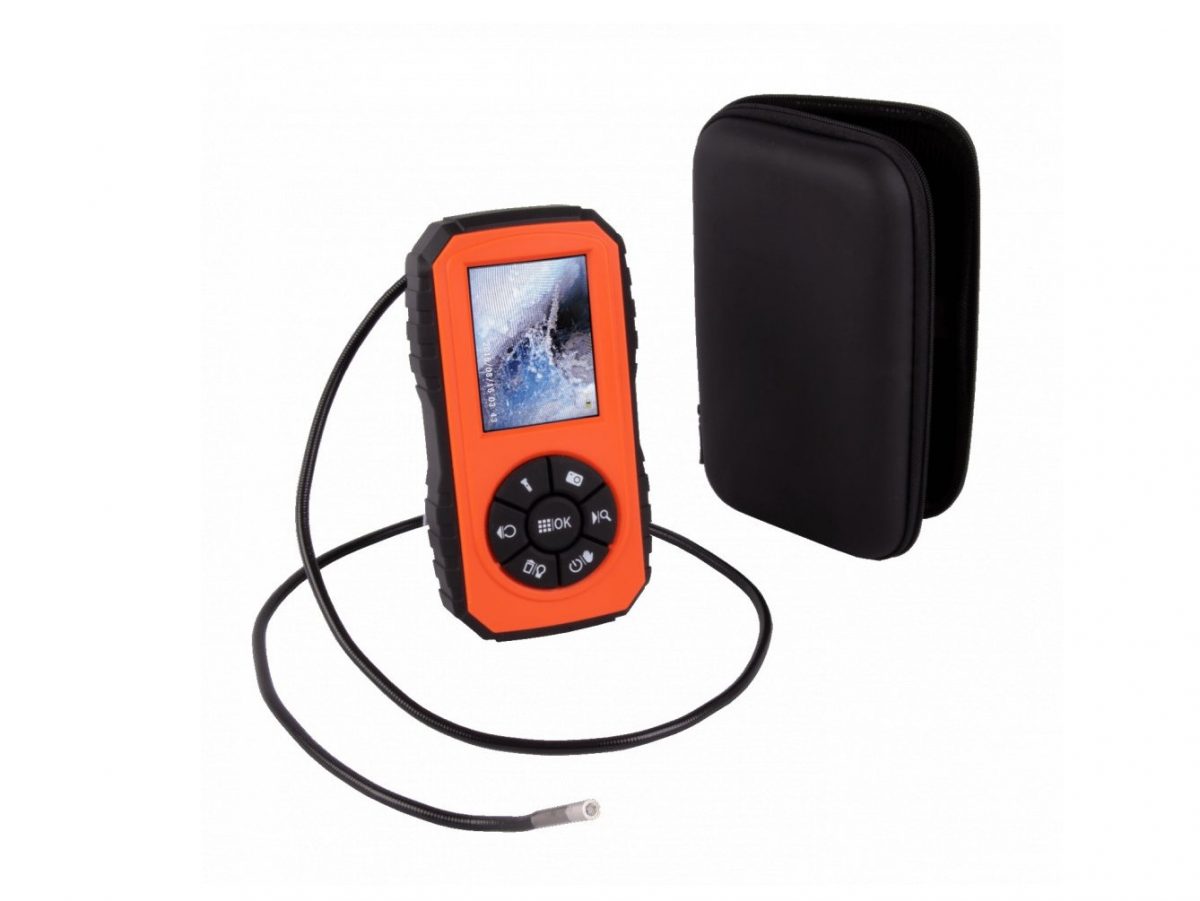
An endoscope (or more correctly a borescope) is an optical device with an eyepiece or display at one end and an objective lens or camera at the other end, linked by an optical or electrical cable that relays the images. They have a broad range of applications, from medical investigations to drain inspections and are fantastically useful for ecologists as they give visibility of inaccessible places such as mammal burrows and bat roosts (for licensed bat workers only). They have the added advantage of minimising disturbance by being less intrusive than visual inspections and many handheld units can now capture still images and video footage for a permanent record.
Video Endoscope
The innovative Video Endoscope is a pocket-sized inspection camera that is ideal for examining crevices, cavities, burrows and nests. It is very ergonomic with a clear, user friendly interface and durable design. The semi-flexible 1m camera tube neatly coils into a cleverly designed groove at the back of the device and it has a protective carry case, making it very portable. The 3″ screen has an HD resolution with 720P and the camera has six LEDs with adjustable brightness control and digital 2x zoom, to ensure the picture is clear. This endoscope records still images and video on to a MicroSD card and is powered by 4 x AA batteries. We took the endoscope out to field test it in a pond to look for tadpoles and to examine nests in nest boxes.
How We Tested
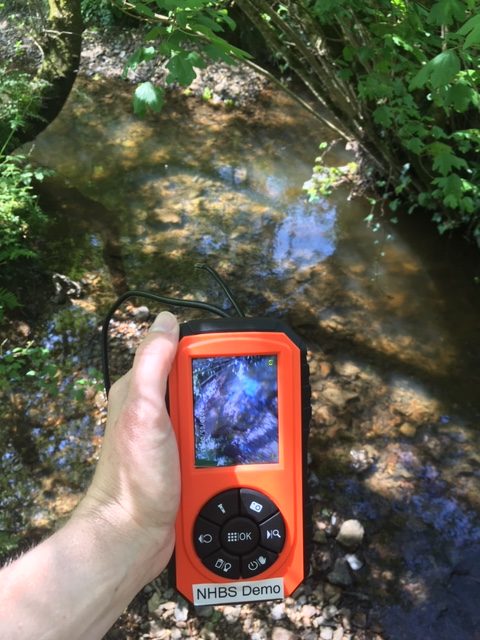
The Video Endoscope camera is IP67 water resistant so we wanted to test its performance when recording underwater. It also has adjustable LED brightness so we wanted to test it in dark conditions. We chose a pond on a farm in West Dorset known to have some tadpoles and selected some nest boxes in a nearby area to examine for nesting activity. We used a 16GB microSD card and 4 x new AA alkaline batteries.
What We Found
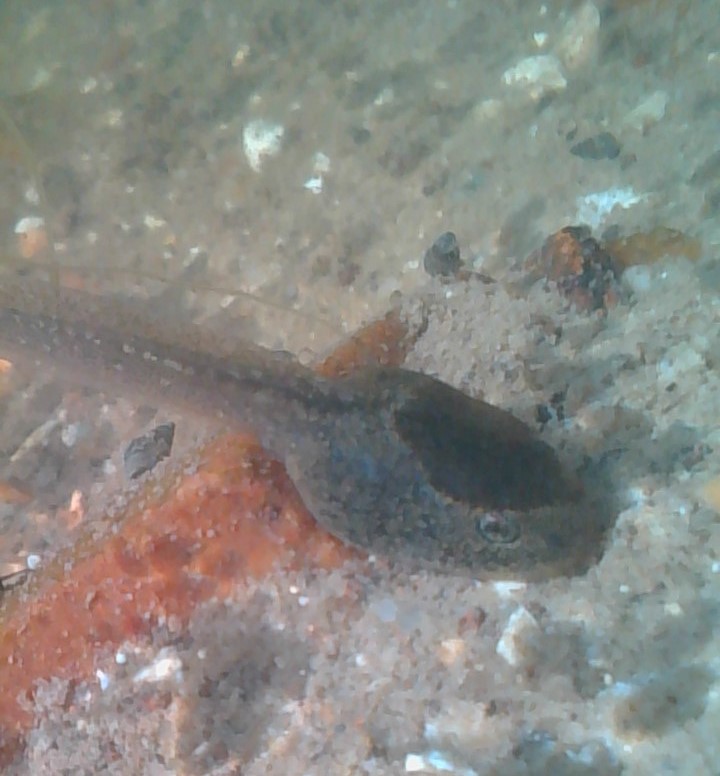
Tadpole – image captured by Video Endoscope
The Video Endoscope was really easy to set up and use. The controls are clear and the menus are simple to navigate. It was simple to switch between photo and video mode and to control the LED brightness and zoom. This meant that our attention was focused on capturing the best possible footage in the field. The images and videos we recorded underwater were clear and sharp, in spite of the debris in the pond and we got some good footage of tadpoles.
It is quite difficult to control the full length of the cable as it is flexible, so we found it was necessary for the observer to be stood quite still. This was particularly evident when trying to use the endoscope in nest boxes. This is shown by the difference between the two videos below – in the first one you can just glimpse some eggs but we didn’t manage to count them properly and it was hard to capture them in subsequent videos.
However for checking quickly in a nest box to see if it was occupied it performed excellently. The adjustable LED brightness was particularly useful when checking the nest boxes and looking under rocks.
We edited the videos using Microsoft Video Editor, which meant that we could flip the image when it was recorded upside down, as it is quite difficult to keep the image the right way up when the camera cable is fully extended. The endoscope does have an image flip function, which is very handy when you have the camera positioned well but the image is inverted.
Our Opinion
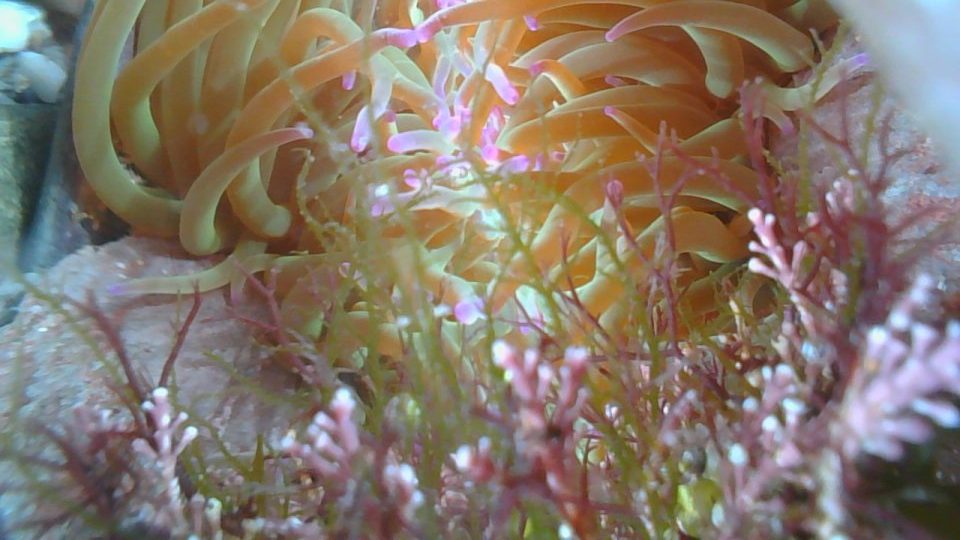
Snakelocks anemone (Anemonia viridis) – photo captured by Video Endoscope
The Video Endoscope is a fantastic, versatile piece of field equipment that could be useful in many different survey scenarios. It is particularly impressive when used underwater as the photos we took in a rockpool survey last year demonstrate. It is very portable because the cable coils neatly into the body of the endoscope and the controls are simple to use. The quality of the still images and the video footage are fantastic, and the adjustable LEDs mean that you can get decent images from quite dark spaces. For more information, or to purchase a Video Endoscope, please visit our website or contact us.
In this wonderful new book, Patrick Barkham draws on his own experience as a parent, a forest school volunteer and from his own childhood spent roaming outdoors to explore the positive effects rekindling children’s relationship with nature can have.
Patrick has kindly answered our questions about his new book and provided a limited number of signed bookplates, which will be included with this book on a first come first served basis.
1. What made you decide to write Wild Child
Having children is obviously a life-changing moment for every parent and I found myself suddenly fascinated by children and newly keen to write about them. I was aware of all the anxiety around children being on screens all the time but I hadn’t actually fully considered this historic moment in western child-rearing. We have become an indoor species in the blink of an eye, and I wanted to explore the implications of that, and how we as parents, grandparents, teachers and guardians might give children the gift of more time outdoors. I also wanted to celebrate “ordinary” neighbourhood nature of the kind we can all encounter.
2. What do you see as the main difference between your childhood and your children’s?
I grew up in the countryside in the 1980s and roamed freely with friends on quiet country lanes and the local common. When my twins became eight, it suddenly struck me that they had never been off on their own, in the countryside, without adults in view or close by. What’s more, almost no parent would regard this as strange. In fact, allowing eight-year-olds to roam without adult supervision would be seen as a dereliction of duty, according to the values of modern parenting.
My experience is pretty universal – studies confirm that children’s “home range” has shrank to their private space – their house and garden (if they have one). Childhood is now tightly regulated by adults. This has benefits – it’s never been safer for a child – but also grave drawbacks, including a loss of creativity and a loss of opportunities for children to form their own bonds with wild nature. Our lives are much poorer without intimate relationships with other species. We are also less likely to take action to tackle the biodiversity crisis if we have no direct experience of, and feeling for, other forms of life whether plant, animal or fungi!
3. What do you think children most gain from being close to nature?
Joy, excitement, fun, ceaseless stimulation, sensitivity, companionship, solace, comfort, peace – all the things we get from it too. There’s a huge body of scientific evidence now showing the mental and physical benefits of time in green spaces, and increasing evidence that the more “wild” or biodiverse those spaces, the better they are for us. We need nature, and of course as the dominant species on the planet we need to learn to appreciate, value and protect it.
4. Are you hopeful your children will be part of a new culture where nature is part of everyone’s life, not just seen as a town and country or even a ‘class’ divide?
We have to hope, but I’m also realistic. British society is becoming increasingly urbanised. Traffic – a major and rational obstacle to children playing freely outside – is still growing. Consumption shows little sign of slowing. And yet without any real government backing, there is a newly vibrant movement to add more nature to people’s lives – the rise of the forest school movement for instance. Wildlife charities are doing heroic education work too. But we still need massive, societal changes to reconfigure our species’ relationship with nature. We need a new kind of schooling, new (government) support for urban wild spaces, and far more wildlife-friendly planning rules for new housing.
Just on class – debates about children and nature are seen as a middle-class concern, and they tend to be because poorer families are too focused on putting food on the table. But we need to give all people better access to nature and wild spaces – this is a free source of good health (and occasionally even food) and it benefits poorer people more than the wealthy who can purchase wild experiences.
5. I was fascinated to read how resistance to pathogens can be enhanced by exposure to more biodiversity; can you precis that a little here?
We are only beginning to scientifically understand the influence of billions of micro-organisms, or microbiota on our lives. We have more bacteria in our guts than human cells in our bodies. Most are harmless, some are useful and a few may be dangerous pathogens. Our immune system is rather like a computer with hardware and software but no data. Early in life, it must rapidly collect data from diverse microbial sources, learning which are harmful and which are beneficial. If our body encounters a diverse range of different bacteria, particularly when young, we are more likely to recognise and respond to novel viruses.
This is not the popular but mistaken idea that we’ve become “too clean”. Hygiene is vital for good health. But, rather, urban living does not deliver us the diversity of microbes that we need. So we’re witnessing an explosion of allergies such as hay fever and illnesses related to failing immunity or inappropriate inflammatory responses such as Crohn’s disease.
Studies have shown that people living in “traditional” ways – in the countryside, more closely with animals – have fewer such illnesses. Microbiologists’ prescriptions for healthier children include a varied diet including a far wider range of vegetables but also more exposure to diverse green space. Scientists have proven the benefits of exposure to soil organisms in mice but this has yet to be fully explored for humans. It is a fair hypothesis, however, to expect that more biodiverse places contain a wider range of microbiota, and be better for us than manicured monocultures.
6. Although of little comfort to the thousands of people terribly affected by COVID – 19, do you think the forced change of pace and restrictions on movement has presented any opportunities for the appreciation of nature?
For those of us lucky enough to have gardens or easy access to green space, lockdown has been a wonderful moment to enjoy wildlife. Without traffic noise, the spring dawn chorus has been sensational! Lockdown has also revealed that poorer and ethnic minority communities have less access to green space. So this is an incredible moment of revelation and opportunity. Why can’t we have monthly Sundays when we all vow not to use our cars? Why can’t a new generation of urban parks and wild spaces be part of the post-coronavirus settlement, just as National Parks were introduced after the Second World War? We can now see, hear and taste a post-peak oil world, where we consume less, travel less, and live more. It could be so beautiful.
7. Do all your friends and colleagues share your enthusiasm for forest school?
No they don’t, and this is great because it means I have to win them over! Forest School is a concept imported from Denmark in the 1990s, we have a Forest Schools Association charity, and the idea is based around principles of child-led games and education in a woodland setting, with a camp fire. But there is also a growth in other forms of equally good outdoor learning.
All these different kinds of forest school are seen as playing in the woods – nice, but hardly essential to young people’s lives, or equipping them for the global race. It is up to people like me – and hopefully you – to show them some of the evidence that children are more creative, more resilient, with improved concentration and show better attainment in conventional schooling if they are given more free play outside, and in wild spaces.
8. Would you encourage people with the time to get involved with forest school, and if so, how would it benefit them?
I began volunteering at an outdoor nursery where my children went, and I was astounded by how well I felt after a day outdoors. It delivered the kind of sustained high you get after a day walking in the mountains or really hard gardening. Most of us office-workers aren’t familiar with outdoor labour!
I still volunteer most weeks at the forest school session run by my local state primary school (despite financial challenges, many state schools are now offering pupils some forest schooling). Children are the nicest workmates – they are so honest and enthusiastic, and they respond to the outside almost universally with something like unconfined joy.
In three years volunteering at forest schools I have honestly only twice encountered seriously unhappy children, and that’s usually because they aren’t wearing enough and are cold. I would urge anyone with time on their hands to give it a try – what’s more important than educating our children? And I think you will love it!
9. I like the ‘Things to Do with Children Outdoors’ appendix at the back of the book; was there one or two favourite pastimes that were the most accessible and rewarding that you could recommend?
I’d just like to declare a basic principle: children don’t need leading, or teaching – what they most require is for us adults to facilitate free play outdoors. They need to experience wildlife themselves, without too many rules, without too much moralising, without being told “don’t touch – it’s rare/delicate/about to become extinct”. Obviously a bit of guidance is good but let them choose their own adventure. And they will.
Apart from that, my children love different things. I enjoy going nest-hunting and butterfly-hunting with Esme, collecting shells and conkers with Milly and making dens with Ted. As we play outside, we keep an eye on what’s happening around us, and something exciting – the flash of a sparrowhawk, the scuttle of a rabbit – always unfolds.
10. Are you working on any new projects you can tell us about?
I am very excited to be writing the official biography of Roger Deakin, the nature writer and author of Waterlog and Wildwood. Most of us writers lead incredibly boring lives but Roger didn’t. I’m also researching a book for a TV series about wildlife and editing an anthology of British nature writing called The Wild Isles, which will be published next spring. It has been agonising having to choose between so many gorgeous and important pieces of writing!
Wild Child: Coming Home to Nature
Hardback, May 2020, £13.99£16.99
Patrick Barkham draws on his own experience as a parent and a forest school volunteer to explore the relationship between children and nature.
Patrick Barkham was born in 1975 in Norfolk and educated at Cambridge University. His first book, The Butterfly Isles, was shortlisted for the 2011 Royal Society of Literature Ondaatje prize. His next book Badgerlands, was hailed by Chris Packham as “a must read for all Britain’s naturalists” and was shortlisted for both the 2014 RSL Ondaatje Prize and the inaugural Wainwright Prize for Nature and Travel Writing.
We are delighted to announce VINTAGE as our Publisher of the Month for May: a chance in these challenging times to immerse yourself in eloquent, knowledgeable and thought-provoking writing.
We have price-offers on our top fifty VINTAGE titles and have showcased below our top ten across their range:
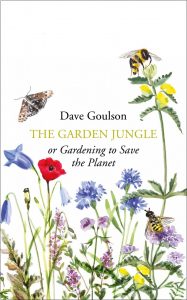
The Garden Jungle: Or Gardening to Save the Planet
By: Dave Goulson
Paperback| April 2020| £7.99£9.99
Dave Goulson reveals how, with small changes, gardens could become wildlife havens.
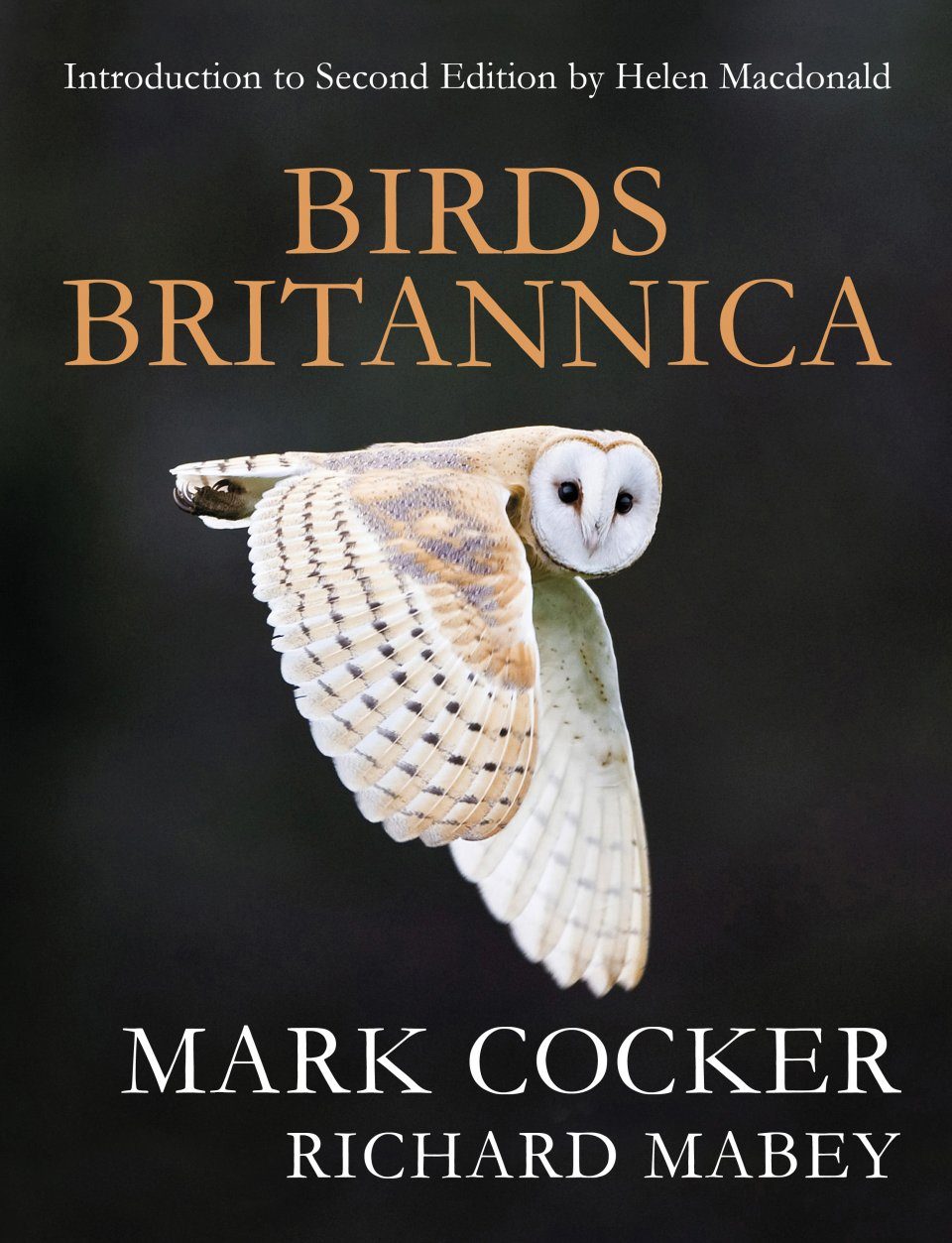
Birds Britannica
By: Mark Cocker & Richard Mabey
Hardback | April 2020| £39.99£49.99
Fifteen years after the very successful first edition: this second edition, pays homage to the strong bond the British have with birds.
Greenery: Journeys in Springtime
By: Tim Dee
Hardback | March 2020| £15.99£18.99
Spring moves north at about walking pace. In his latest writing, author Tim Dee follows its moving front and tells of the animals and people he encounters on the way.Read our author interview here.
Entangled Life: How Fungi Make Our Worlds, Change Our Minds and Shape Our Futures
By: Merlin Sheldrake
Hardback | Due Sept 2020| £16.99£19.99
An immersive trip into the largely unknown world of fungi, which we at NHBS are particularly excited to read.
Chasing the Ghost: My Search for All the Wild Flowers of Britain
By: Peter Marren
Paperback | March 2019| £7.99£9.99
Join renowned naturalist Peter Marren on an exciting quest to find every species of wild plant native to Britain.
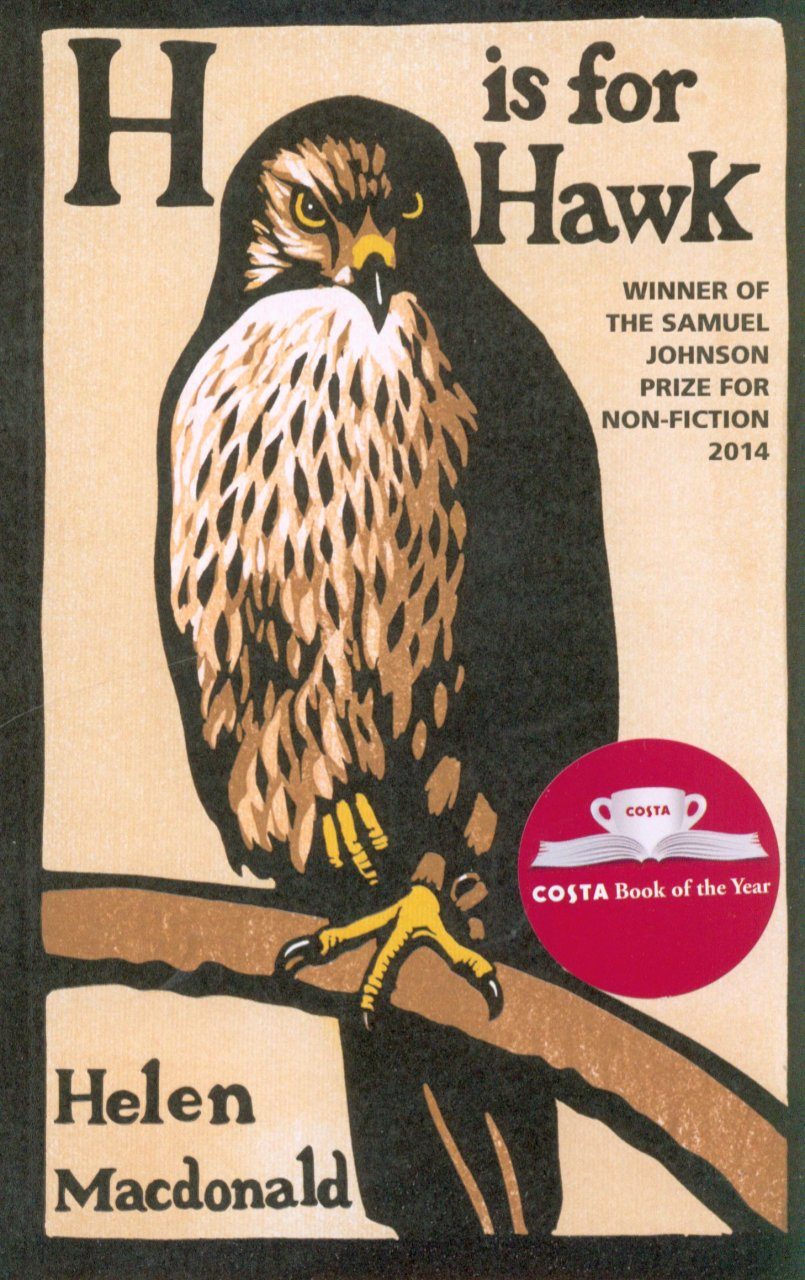
H is for Hawk
By: Helen Macdonald
Paperback | Feb 2015| £7.99£9.99
An unflinchingly honest account of Macdonald’s struggle with grief expressed through the trials of training a goshawk.
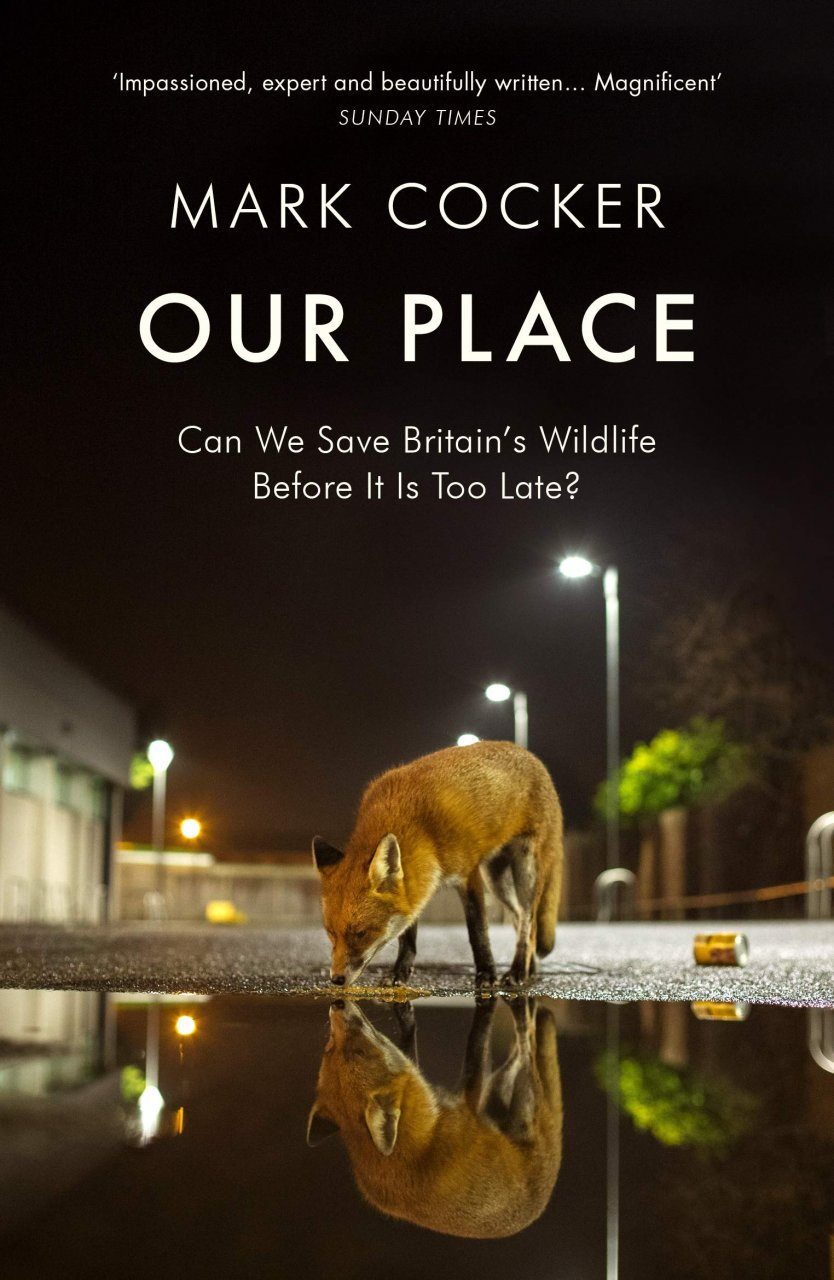
Our Place: Can We Save Britain’s Wildlife Before It Is Too Late?
By: Mark Cocker
Paperback | April 2019 | £7.99£9.99
Mark Cocker attempts to solve a puzzle: why do the British love their countryside, yet have reduced it to one of the most denatured landscapes on Earth.
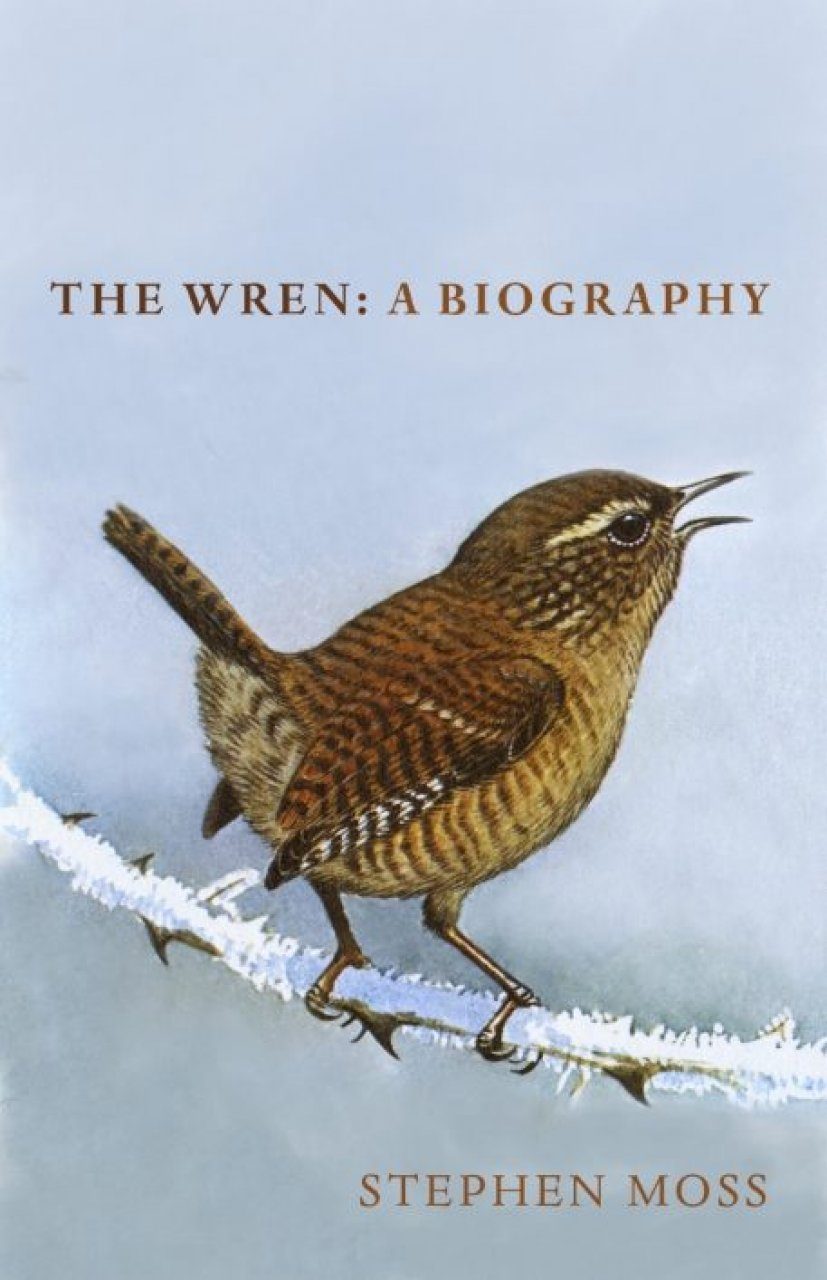
The Wren: A Biography
By: Stephen Moss
Hardback | April 2019 | £9.99£12.99
With beautiful illustrations throughout, this captivating year-in-the-life biography reveals the hidden secrets of this fascinating bird that lives right on our doorstep.
Sapiens: A Brief History of Humankind By: Yuval Noah Harari
Paperback | Sept 2016 | £8.99 £10.99
Bold, wide-ranging and provocative, Sapiens challenges everything we thought we knew about being human: our thoughts, our actions, our power …and our future.
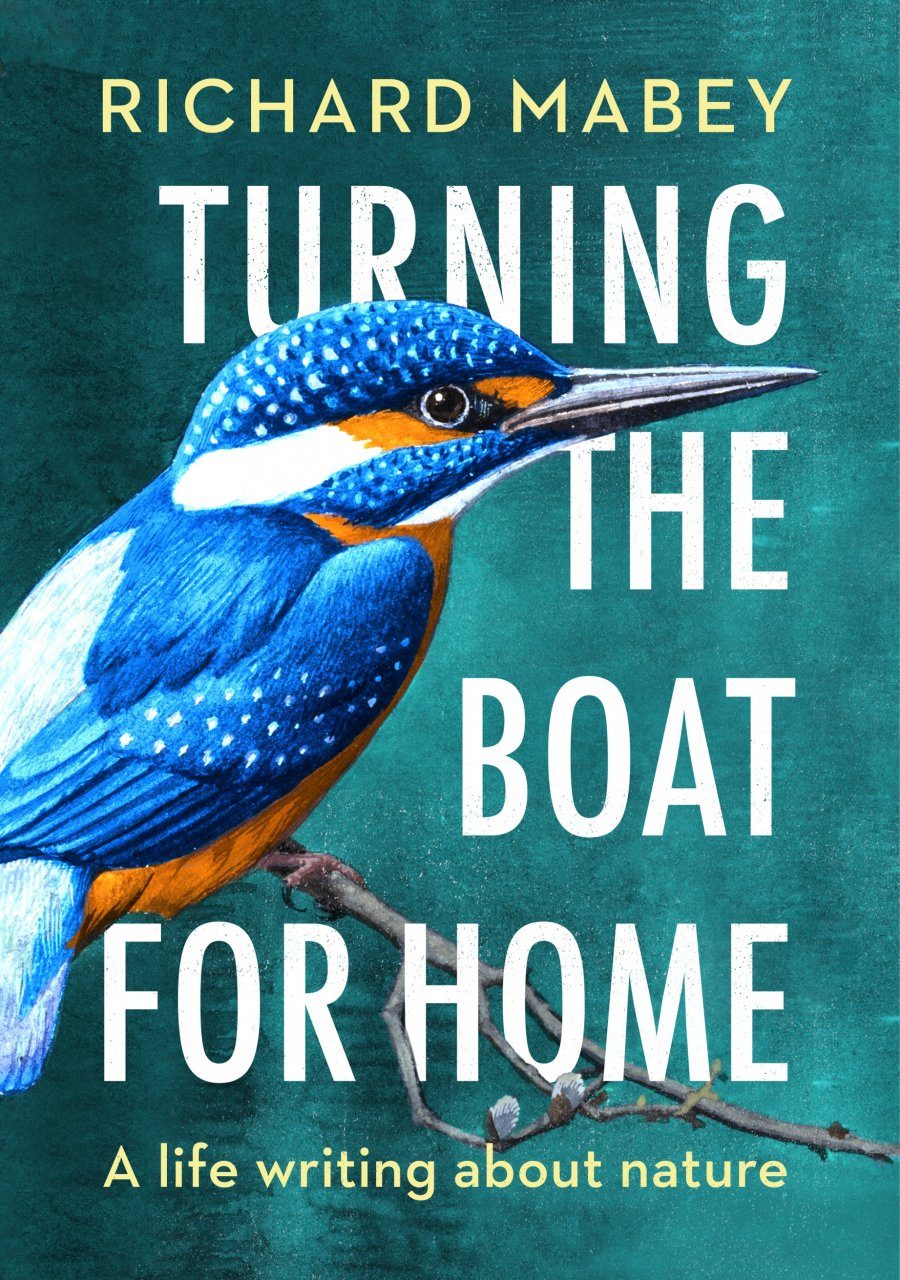
Turning the Boat for Home: A Life Writing about Nature By: Richard Mabey
Hardback | Oct 2019 | £13.99 £18.99 Richard Mabey is often referred to as ‘the father of modern nature writing.’ We currently have a limited number of signed, first editions.Read our author interview
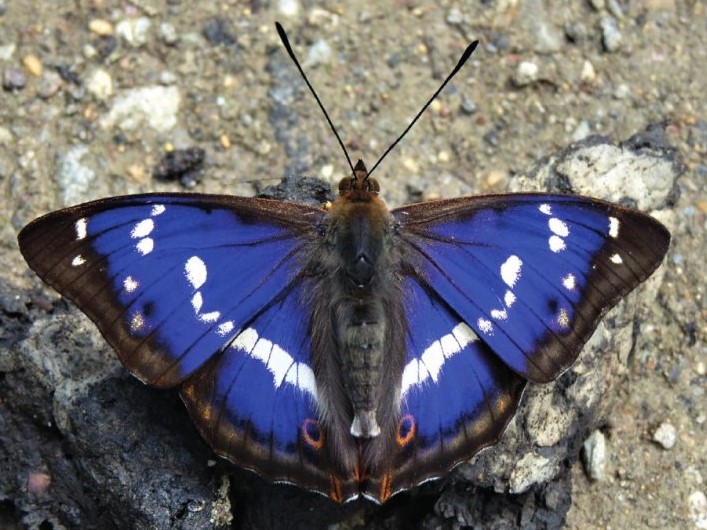
Matthew Oates has spent fifty years trying to unravel the ‘Emperor’s’ secrets and with His Imperial Majesty: A Natural History of the Purple Emperor, due to be published in June, he has written an accessible account of one of Britain’s most beloved butterflies; the majestic Purple Emperor.
Matthew Oates has taken time to answer our questions about his book and about the beautiful and elusive butterfly, that if lucky enough, we can glimpse through fissures in its tree top world
You describe the Purple Emperor as the most ‘cherished prize’ among Victorian butterfly collectors, while you personally have chosen to devote much of your life to studying this species. What is it about this butterfly that makes it so alluring?
This butterfly is all about mystique. It exists within a different dimension to us, but one which we desire to experience and understand. It is a unique being, capable of doing anything – which means it is unpredictable and utterly captivating. Make no mistake, the Purple Emperor is addictive – but this is a positive addiction, which provides depth of experience tinged with great humour. No one forgets their first Purple Emperor, the experience leaves you wanting more.
2. How has our understanding of the Purple Emperor changed in the half century since your first encounter with ‘his imperial majesty’?
Much of our so-called knowledge was actually mythology and assumption. Oh, the power of assumption, even in ecology! So much of what was considered true, and real, has proven to be utterly wrong; not least because the Purple Emperor, and nature more generally, continually moves the goalposts. Nothing is ever static in nature, perhaps especially with insects.
3. You tell of some of the remarkable lengths that butterfly enthusiasts have gone to in pursuit of the Purple Emperor. What is the most unusual technique you have used when searching for this species?
There is a long history of extreme endeavour here. This is the one butterfly the Victorian collectors most assiduously sought, to form the centrepiece of their precious collections. The Purple Emperor has generated some of the most extreme eccentric behaviour in human history. Collectors used to obtain specimens of this canopy-dwelling butterfly by means of the ‘high net’, a butterfly net attached to a pole often ten metres long. There is a long history of baiting Purple Emperors too, exploiting the male’s attraction to festering messes – the juices of dung, offal, and worse. I helped develop the practice of baiting for Purple Emperors using (relatively inoffensive) shrimp paste, and also pioneered The Emperor’s Breakfast (as shown on TV, several times).
4. It is heartening to read of a species whose populations are on the increase. Can the story of the Purple Emperor offer any lessons for the conservation of other wildlife in Britain?
Yes, definitely! This is proving to be a highly mobile species with good powers of colonisation and, in consequence, recovery. It is becoming a suburban species, and is certainly not the ancient forest inhabitant we once thought it was. Above all, the Purple Emperor is a good news story, at a time of horrific loss and adverse change. It provides hope at a time when we need hope.
5. What do you plan next in your studies of the Purple Emperor? Are there mysteries that you are still hoping to solve?
The journey is by no means over. My book is merely the launching pad towards proper ecological understanding. I sincerely hope it generates the necessary detailed scientific research, and have suggested areas where that need to be conducted. I’ve merely done the spade work. My job now is to help landowners and others to give this magnificent butterfly the future it deserves.
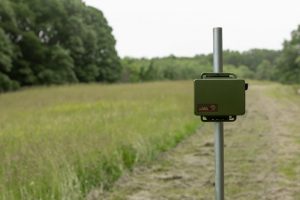
The SM Mini Bat is the latest addition to the ultrasonic range of acoustic recorders produced by Wildlife Acoustics. This passive bat detector offers comparable versatility and quality to the highly successful SM4 Bat but at a much lower cost and a smaller size of only 12cm x 13cm. These impressive detectors also feature an easy to use configuration mode through your smartphone or tablet over Bluetooth.
In mid-March we deployed an SM Mini in a rural location in South Devon to record any emerging bats, as the spring season got underway. Our aim was to find out how easy setup is when using the Mini Configurator app and to get an example of its recording quality. Originally our plan was to retrieve the detector after a period of three weeks, however the developments around Covid-19 meant that it was unsafe to do so. Therefore in this blog we will cover our experiences with setting up and deploying an SM Mini. Once social distancing rules are lifted we will provide a follow on update with our recordings.
We used a 32 GB SDHC card, however the SM Mini Bat can support SDXC cards of up to 1TB. The SM Mini Bat comes with a built-in microphone and when powered using 4x lithium-ion AA batteries it will record for up to 30 ten-hour nights. You can add an additional acoustic microphone to record birds, amphibians and other species when not using the ultrasonic microphone.
Setting Up
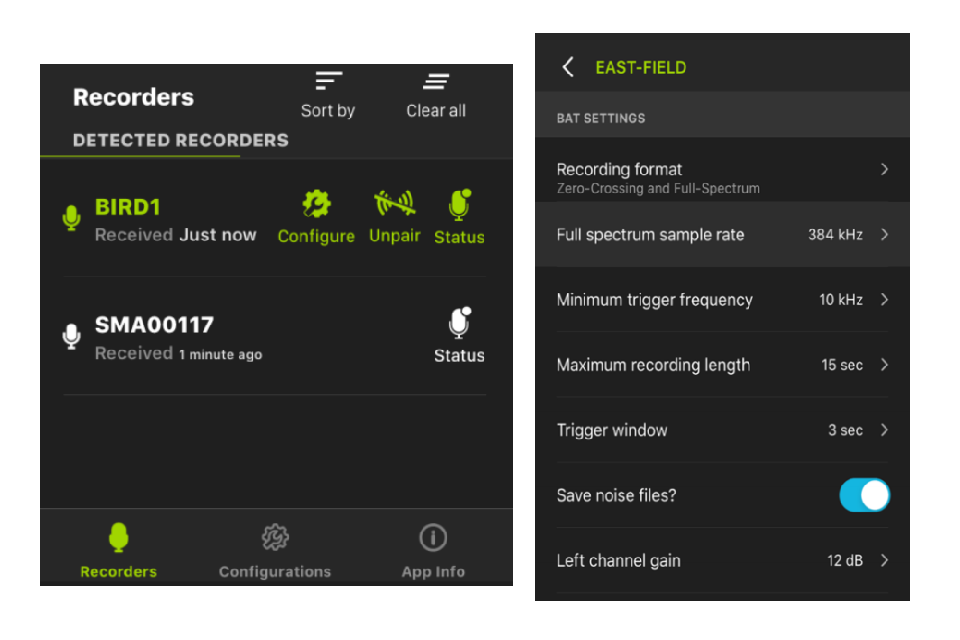
The SM Mini is designed to be used with a companion app called Mini Configurator. This free app allows you to easily configure the SM Mini’s recording settings before deployment as well as check the status of your detector while it’s in the field.
When powered on the SM Mini Bat emits a constant Bluetooth beacon, and when you are within range of this beacon the Configurator app will automatically detect the recorder and display it in the recorders screen of the app. You can now press the status icon on the app and view the current status of the detector, including SD card capacity, battery life, recording mode and number of recordings taken.
To set up or edit an SM Mini’s recording schedule you must pair the detector with the app. The first step in this process is to hold down the PAIR button on the SM Mini for three seconds, which prepares the device to be paired (indicated by the green flashing Bluetooth light). On the Mini Configurator app a ‘pair’ icon will then appear next to the detector’s name, and once pressed the app will be paired with this detector. Once paired the SM Mini synchronises its time and date to your location and a new ‘configure’ icon will appear next to the detector, which grants access to the SM Mini’s recording settings. These settings include the recording schedule (e.g. an hour before sunset through to sunrise), recording format (zero crossing or full spectrum), minimum trigger frequency and recording length.
What we found
Setting up an SM Mini and getting to grips with the Configurator app can seem daunting at first, but with the quick starter guide and Wildlife Acoustics’ helpful online tutorial videos, we found it to be a relatively straight forward process. The app has a simple user interface with clear graphics and together this really helps make navigating the app easy. This was a welcome change when compared to the issues that new users can have when navigating the older style LCD menus on previous detectors.
The beacon status system has also proved incredibly useful whilst we have had the detector deployed. Since the social distancing restrictions came into place, we have been unable to access the detector. However we were able to guide the owners of the land where the detector is deployed, through the process of installing the app and checking its status for us. This has been incredibly helpful as we can see whether we have recorded any bats in its current location, as well as whether the batteries need to be replaced.
Despite its small size we were still able to run a python lock around the detector, however as our location was a private residential area we were not concerned about theft and so opted for using a few cable ties to secure the detector in place.
Our Opinion….so far
The SM Mini Bat offers a user-friendly passive bat detector building on previous iterations in the Song Meter bat detector range. Its small size means it’s much easier to store and transport, and it is much more discreet when deployed in the field, compared with other detectors. Being unable to add an additional external microphone is a limitation to keep in mind, however for us this wasn’t an issue.
We will post a follow up blog once we are able to retrieve our detector and access our recordings.
The Song Meter Mini Bat Detector is available to order from the NHBS website. For assistance with any queries regarding our range of bat detectors, please do not hesitate to contact our team of Wildlife Equipment Specialists on 01803 865913 or equipment@nhbs.com.



 A Natural History of the Hedgerow: and Ditches, Dykes and Dry Stone Walls
 Wild Child: Coming Home to Nature
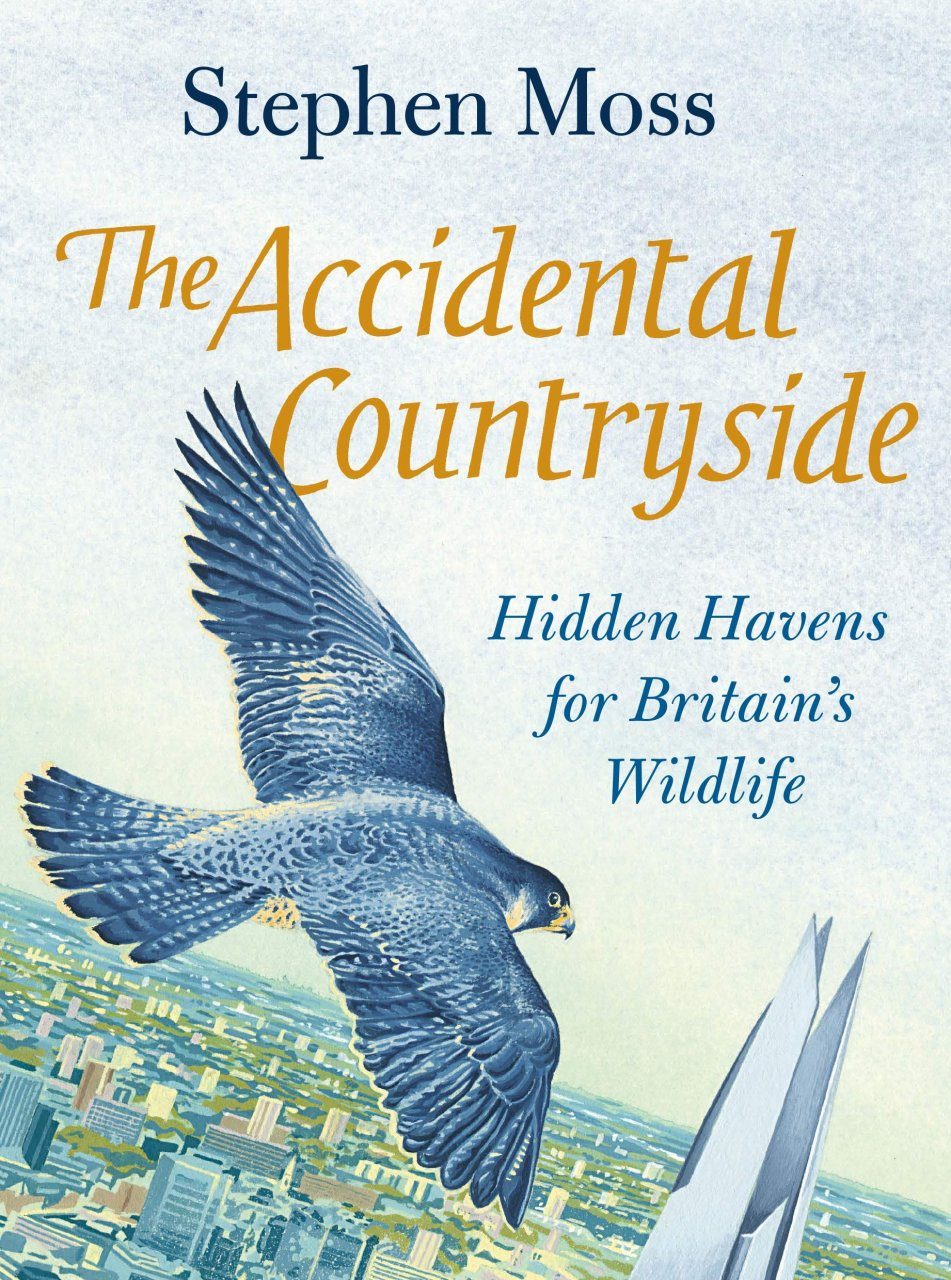 The Accidental Countryside: Hidden Havens for Britain’s Wildlife
 The Cabaret of Plants: Botany and the Imagination
 The Vital Question: Why is Life the Way it is?
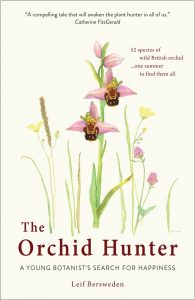 The Orchid Hunter: A Young Botanist’s Search for Happiness
 Notes from an Apocalypse: A Personal Journey to the End of the World and Back
 Becoming Wild: How Animals Learn to be Animals
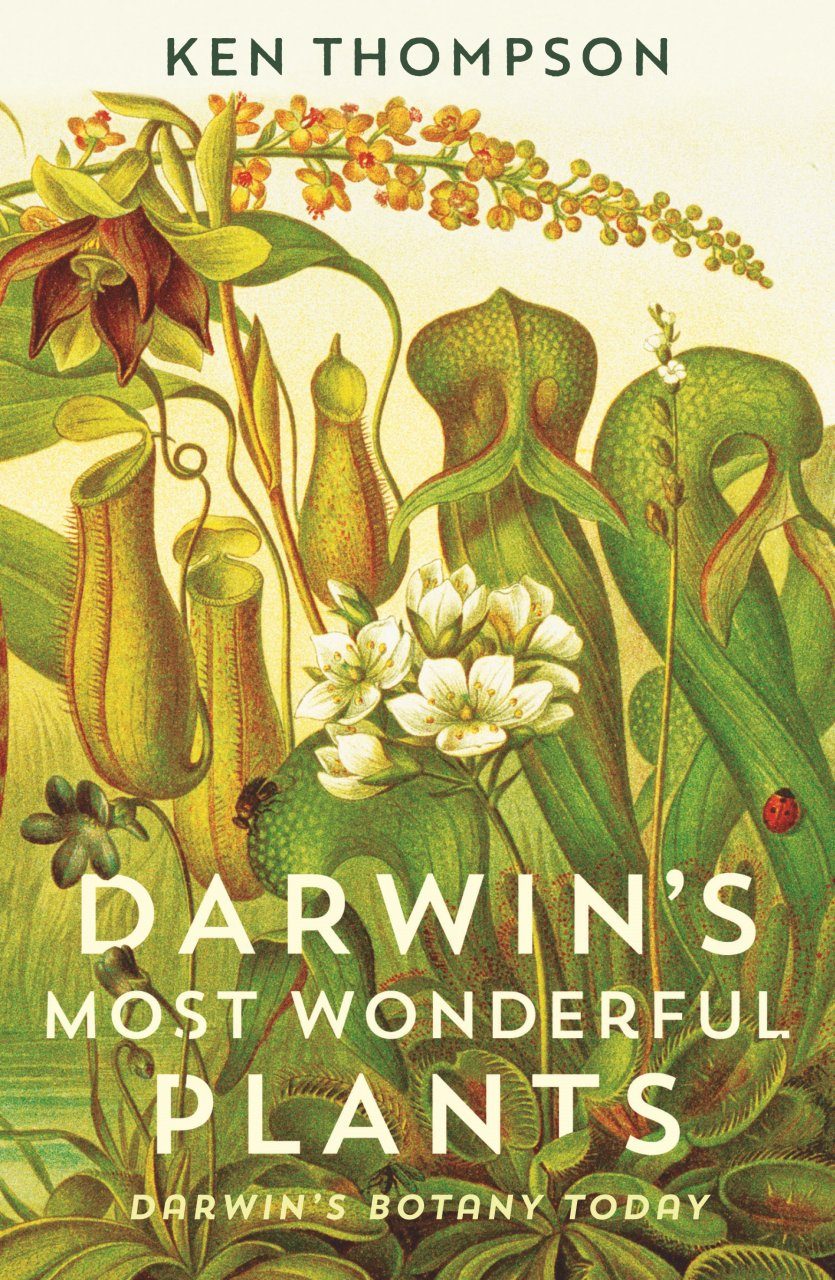 Darwin’s Most Wonderful Plants: Darwin’s Botany Today
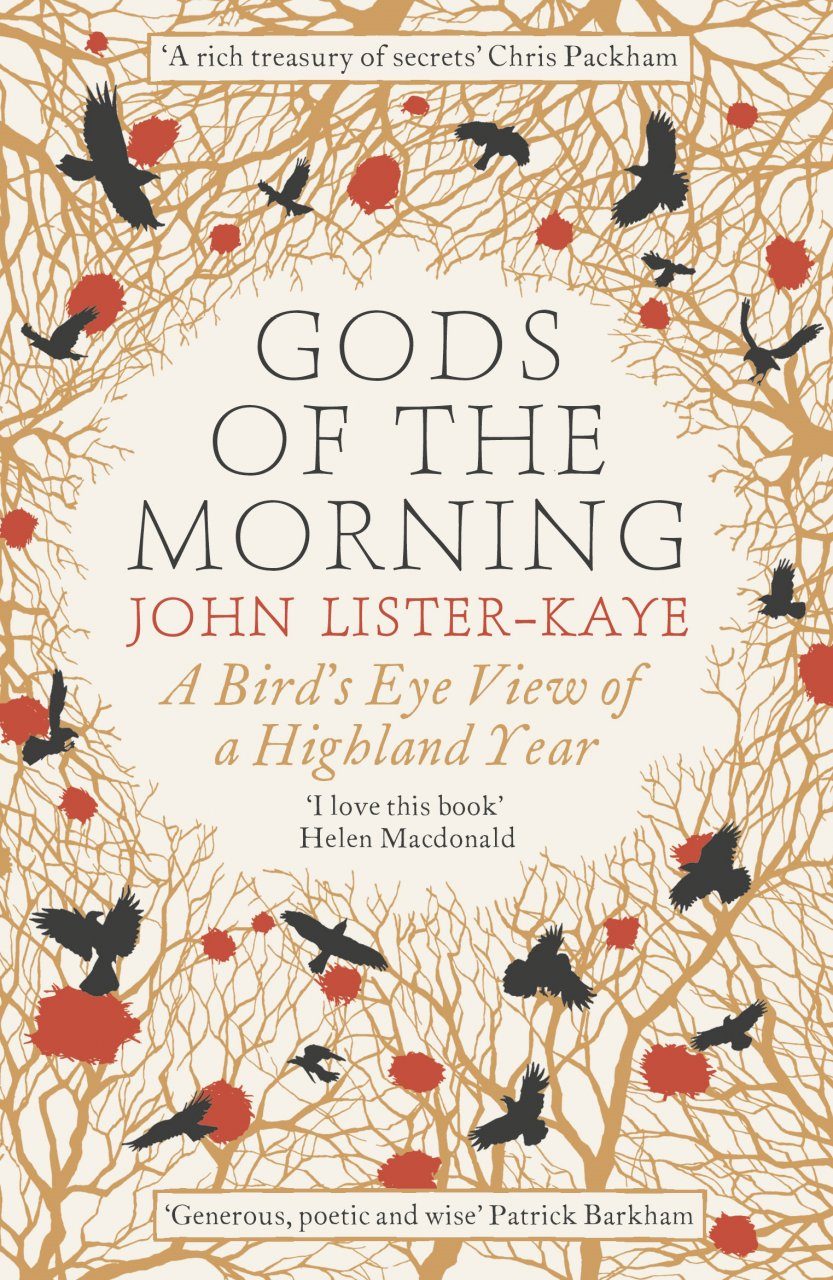 Gods of the Morning: A Bird’s Eye View of a Highland Year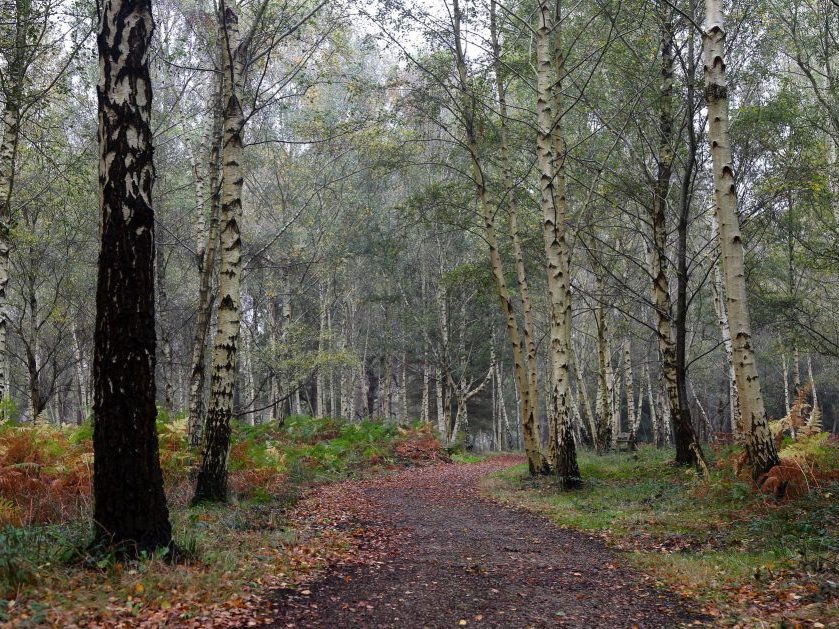









 The Video Endoscope camera is IP67 water resistant so we wanted to test its performance when recording underwater. It also has adjustable LED brightness so we wanted to test it in dark conditions. We chose a pond on a farm in West Dorset known to have some tadpoles and selected some nest boxes in a nearby area to examine for nesting activity. We used a 16GB microSD card and 4 x new AA alkaline batteries.