Ecology gifts raise money for key UK conservation charities

Creature Candy mugsLizzie Barker is a working ecological consultant, and the creator of gift and homeware design company, Creature Candy. This newly-launched enterprise produces quality British-made products featuring hand-drawn illustrations of wildlife. As well as raising profits for the Bat Conservation Trust, the Bumblebee Conservation Trust, and Butterfly Conservation, Creature Candy also intends to raise awareness around the conservation of our endangered and protected wildlife. We asked Lizzie how it all came about:

What are your background and current interests as an ecologist?

I studied Zoology between 2007 and 2010 at Aberystwyth University and graduated with a first degree. I then went on to work at Darwin Ecology in September 2010 as a consultant ecologist and have been there ever since. It’s a great company to work for and my job is very varied, although I specialise in bats. I hold a Natural England bat and great crested newt survey licence, but I also survey for dormice, badgers and reptiles. I love the spring and summer months so I can get outdoors and explore the English countryside for wildlife.

Creature Candy printsWhat’s the story behind Creature Candy?

I wanted to take more of a proactive role in wildlife conservation and raise money for the charities that I work so closely with as a consultant. Two years ago (whilst sitting on my sun lounger in Portugal) I came up with the idea of Creature Candy. I not only wanted to raise money for the charities, but also raise awareness of Britain’s declining & protected wildlife species, and to inspire people to take active roles in conservation. It was also incredibly important to me to change perceptions of bats, which is why my first design was a beautiful, charismatic brown long-eared bat illustrated in its true form, not a typical black silhouette with red eyes and fangs! It was also a priority to produce all our products with a “Made in England” stamp on them, which I think is very appealing in today’s market dominated by mass produced imported products.

How do you find the time to be an ecologist and an entrepreneur?

It’s a very hard balance to achieve. On a typical day, I switch off from the ecological consultancy world at 5pm, make myself a cup of tea and re-enter my office as the Director of Creature Candy. I then usually work for a few hours each night on marketing, processing orders and accounting, before spending some time with my husband before bed. It’s very important to find time for a social life and to relax, and I’m sometime guilty of over-working. However my husband is very supportive and I couldn’t manage the business without that support.

Can you tell us more about the artwork, and what’s to come for the range?

Our illustrations are hand drawn by my friend Jo Medlicott. Jo is a very talented artist and draws inspiration for our designs from photography and the natural world. Our next design is likely to be a red squirrel or a bird and we would like to introduce aprons and fine bone china jugs into the product range. The rest is top secret!Creature Candy moth tea towel

Browse Creature Candy products at NHBS

How we moved 27 people, 1 km of shelving, 140,000 stock units and an inflatable dolphin to our new warehouse

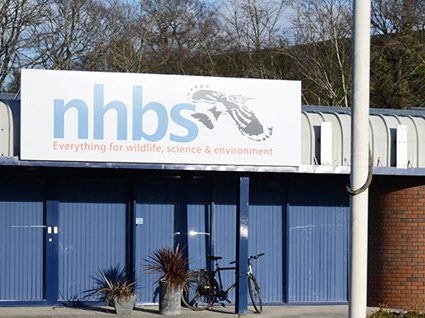
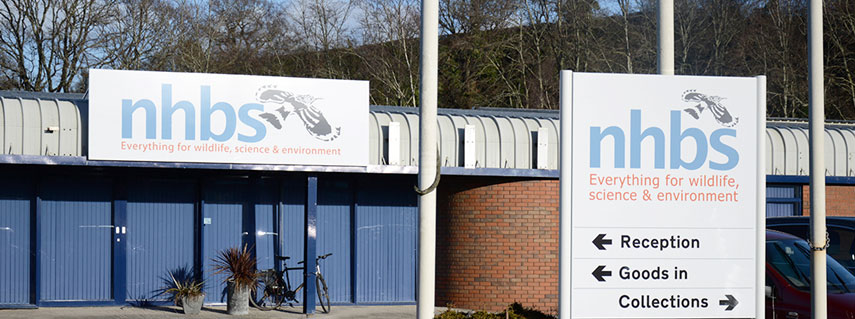
NHBS has been based in Wills Road and Burke Road (named for the explorers of the 1860 Burke and Wills expedition in Australia) in the Devon town of Totnes since 1986. We had long outgrown these warehouse and office premises and had been keeping an eye open for a new building for several years. In January 2014 an ideal building became available and the best news was that it’s just around the corner at 1-6 The Stables in Ford Road (the area that now comprises Totnes’ trading estate was once a racecourse, hence ‘The Stables’).

The new NHBS presmises

A photo gallery of move-related images is available on our Facebook page.

This new building more than doubles our storage space to in excess of 1,200 sq m (13,000 sq ft). We’ve outfitted a purpose-built office area, meeting rooms, shower facilities for the dedicated cyclists/runners, a faster data connection, a staff room and kitchen, 600 m of new shelving, a more efficient heating system and a large pallet racking zone for >100 pallets of bulk stock.

After three months of building work the move to this premises was concluded just before Christmas. We had lots of extra NHBS staff on hand and remained fully operational, delivering thousands of gifts during the holiday period.

Here is some extra information if you’re interested:

How did you do this while remaining fully operational in the run up to Christmas? That is a good question…

  • We spent six weeks having the site converted from a factory/warehouse complex into a warehouse/office.
  • New heating, electrics, security, fire safety and CCTV systems were installed.
  • Data cabling for desk areas, servers and high-speed wifi were set-up.
  • On the first weekend of November we moved the office and office staff into the new premises. From then on all Customer Services and other office functions were operating from The Stables (albeit with a lot of running back-and-forth).
  • We moved a significant proportion of NHBS stock from its shelves in the warehouse onto super-organised temporary shelving in the old office area including lots of makeshift storage locations.
  • The Goods Inward and Dispatch Team put away stock and picked/packed orders from the temporary storage locations. Mild chaos ensued but almost nothing went missing.
  • An external warehouse (Unit 1) at our new site was fitted-out with pallet racking for 100 pallets. Training began on the Mini Bendi forklift.
  • The warehouse shelving was taken apart where possible and large sections were carried from the old warehouse to the new in pyramid-building style.
  • 600 m of new shelving was assembled and placed alongside reconfigured existing shelves.
  • Bulk stock was moved on pallets to Unit 1.
  • Over several epic weekends NHBS staff (earning 370.75 hours of overtime) moved stock from our old location onto shelves at The Stables. All stock was scanned into storage locations with new handheld barcode scanners so the database knows exactly where every single item is.
  • By mid-December all NHBS staff were working from The Stables.
  • A vast number of remaining shelf units, stock items, and odds & ends were shuttled across in the last two weeks of 2014.

Why didn’t you move at a quieter time of year?
Surveys and the legal bits took ages. Besides, we have quite a few peak periods throughout the year so there was never going to be a ‘good’ time to do the move.

How far are your new premises from the old building?
140 m as the crow flies (300 m if you can’t fly).

What’s the new address?
NHBS, 1-6 The Stables, Ford Road, Totnes, Devon, TQ9 5LE, UK.

Does NHBS’ phone number or email address change?
Our phone number (+44 1803 865913) and email address (customer.services@nhbs.com) are the same.

How does it affect customers?
We’ll have more stock, more efficient picking/packing and even happier colleagues.

How many stock items have been moved?
Depends how you count the small things like test tubes and sampling pots, and components of sets etc. The number we mostly refer to is 140,000 items.

What’s a Mini Bendi?
It’s a species of forklift truck (there a photo of the Bendi in our Facebook Gallery) – we bought one for the move and have two members of staff trained to use it. It means we can make more use of pallet racking to store bulk stock.

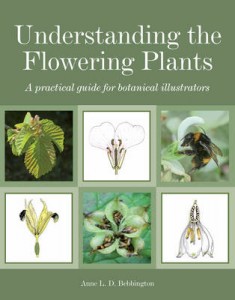
Anne Bebbington on botanical illustration and her new book, Understanding the Flowering Plants

Dr. Anne Bebbington trained as a botanist and worked for over 30 years for the Field Studies Council and as an environmental educator. Also an outstanding botanical illustrator, her career has traced a path between the two complementary fields, and she is a past President of the Institute of Analytical Plant Illustration.  Her new book is a testament to this dual expertise.

What came first for you, botany or illustration – and how have the two interwoven throughout your career?

From an early age natural history, drawing and painting were always my favourite occupations. At university I was lucky to be able to study both botany and zoology and found that drawing the plants and animals we studied was for me the best way of describing and understanding them. After specializing in plant ecology I joined the Field Studies Council. As well as teaching environmental studies at all levels from primary pupils to undergraduates, I tutored many wild flower courses for adults both in Britain and further afield in Europe, Canada and Australia. My interest and expertise in illustration always formed an important part of my work, particularly in producing handouts and identification aids, and running short botanical illustration courses. In retirement I work as a freelance natural history illustrator but also continue to share my enthusiasm for plants running workshops and giving talks to both natural history groups and garden clubs.

You are a founder member and past President of the Institute for Analytical Plant Illustration. Tell us more about this organization?

The Institute of Analytical Plant Illustration (IAPI) promotes interest in the diversity and understanding of plants through illustration. It was founded in 2004 by the late Michael Hickey, an excellent teacher, botanist and skilled analytical illustrator. Its aim is to encourage and facilitate collaboration between botanists and artists by organizing talks, running workshops and field meetings, and setting up projects which members can contribute to.

In 2010, with IAPI support, I got together with Mary Brewin, a skilled artist, to provide a course of ten workshops combining botanical tuition with an opportunity to develop and practice appropriate illustration techniques. We hoped it would help members to:

  • gain a better understanding of plants to inform their practice of the art of botanical illustration.
  • develop and refine illustration techniques appropriate to different botanical subjects.
  • encourage enthusiastic beginners to gain botanical knowledge and some basic art skills.

This course was very successful and raised great interest and in the last four years has resulted in the running of further courses and workshops both for IAPI and other groups and organizations.

What is the place of botanical illustration in scientific research?

Botanical illustration both in the form of photography but also drawings and painting is integral to all aspects of scientific research.

Are there any botanical subjects that you are particularly inspired to work from?

I am particularly interested in the way that plants interact with their environment and how the intricacy of their structure plays a part in their success and survival. I frequently work with my husband, a zoologist and photographer, investigating the interactions between plants and animals, particularly insects. Close observation and drawing plants out in the field is also something I really enjoy.

What are you currently engaged with in terms of your botanical illustration career?

I am currently looking at the detailed internal structure of flowers in relation to their pollination mechanisms by producing illustrations in the form of half flowers.

It’s a beautiful book and a wonderful resource for botanical information – who is the book written for?

The book should be accessible to anyone, even those with little or no scientific background. It was written for:

  • botanical artists and photographers  who wish to gain a better understanding of the Flowering Plants to inform their practice of the art of botanical illustration.
  • anyone who works with or just enjoys plants and wants to know more about them.

Understanding the Flowering Plants: A Practical Guide for Botanical Illustrators is published by Crowood Press and is available now.

Available now

Brock Fenton on the mystery and science of bats

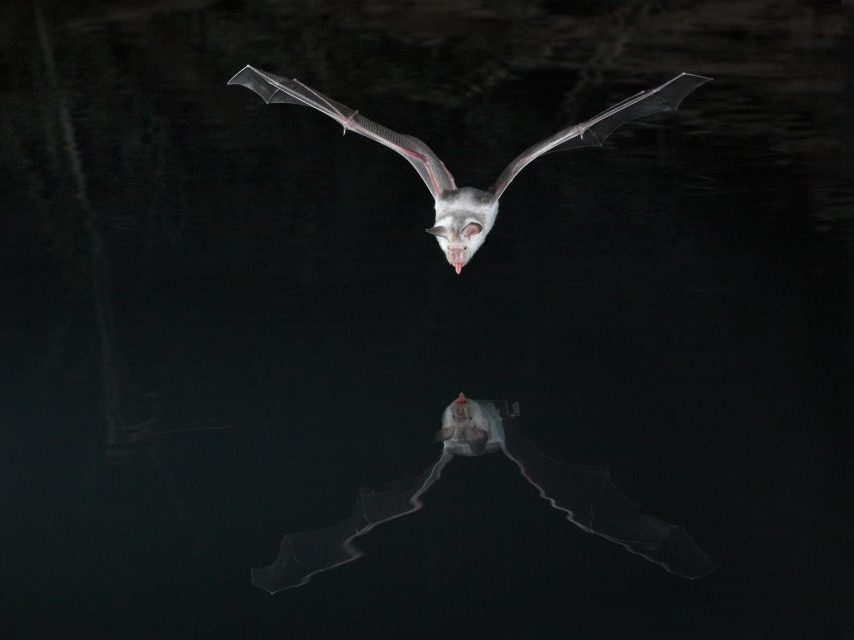
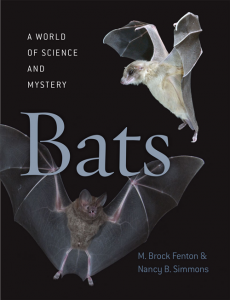
Bats: A World of Science and MysteryBrock Fenton is Professor Emeritus in the Department of Biology, Western University, Ontario, Canada. His research programme involves using bats to explore the interfaces between animal behaviour, ecology and evolution. As co-author of the exciting new book, Bats: A World of Science and Mystery, we thought it would be interesting to pose him a few bat-related questions:

How did you become involved with bat research as a career?

As an undergraduate student I was attracted to bats by the abundance of things to learn about them. Part of this I experienced by looking in caves for hibernating bats that had been banded elsewhere. The other part was the library, books about bats (Bats by G.M. Allen; Nerve Cells and Insect Behaviour by Kenneth D. Roeder) and articles in journals. My main research focus now is on bat evolution, behaviour and echolocation.

In evolutionary terms, what is a bat, and how have they come to represent around 20% of all mammal species?

Bats are mammals capable of powered flight. Flight gives them mobility and their small size makes them inconspicuous. Bats fill a variety of trophic roles as consumers of insects, plant products, as well as other animals (from fish to other bats and birds), and even blood. I suspect that a combination of mobility, small size and flexibility is responsible for their evolutionary success. The blood-feeding vampire bats are among the best examples of this success.

Is it possible to define the character of a bat, and a typical day in the life?

I had not thought of “character”. Bats are mainly nocturnal, so operation at night is a key characteristic. They are long-lived (some species over 30 years in the wild), and high energy, requiring large quantities of food to fuel their activities. Although bats typically emerge (from their daytime roosts or hiding places) at dusk, they probably come and go from their roosts during the night. In the northern hemisphere and some other temperate parts of the world, bats use delayed fertilization to ensure that young are born when food is abundant.

The title of the book includes the word ‘mystery’ – what do we remain in the dark about regarding these nocturnal creatures?

There are about 1260 species of living bats. The largest weigh about 1500 grams, but most species are under 50 grams.  Bats survive because they are hard to find by day. The combination of secretive and small size makes most species of bats hard to study. This means that people who study bats regularly make astonishing discoveries about them. In spite of some concerns about the possible role of bats in public health, most species have no direct impact on humans. Lack of direct connection to humans means that bats are sidelined when it comes to some main stream areas of interest, particularly those relating to human health.

What are the world conservation priorities for bats at the moment, and can you highlight any projects that are doing interesting work?

Bats are “typical” wildlife, mainly negatively effected by the habitat consequences of expanding human populations and demand for resources. In Northeastern North America, White-nosed Syndrome has killed literally millions of bats. Around the world turbines at “wind farms” also kill bats, but not on the scale of WNS. Research into White-nosed Syndrome and bats’ responses to turbines are important for the future of bats. Other research into the role that bats may play as reservoirs for diseases also is important for the image of bats. The last part of the book speaks about some of the unanswered questions about bats that appeal to the authors.

Who is this book aimed at?

We hope that this book will appeal to anyone interested in biodiversity and natural history. This could be the person interested in evolution or echolocation, conservation or social behaviour. We also hope that it appeals to those intrigued by flight, by where bats live and what they eat. It is not intended to be a text book about bats.

Bats: A World of Science and Mystery is published in November 2014

Order now


Collecting visual evidence of bats at roost entrances

Aim
Recording bats and their behaviour around roost entrances can be extremely useful for a number of reasons: as evidence to present to a client, to demonstrate or test for a change in behaviour during or after mitigation, and as a back-up system to record the presence of the quieter bats like the brown long-eared. We tested two night vision systems at a lesser horseshoe maternity roost.

Yukon Stringer 5 x 50 Night Vision MonocularPulsar Quantum S Series Thermal Imaging Scope

Methods

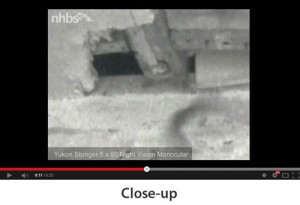
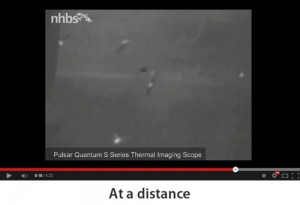
We set up two very different night vision video recorders on tripods near the entrance of a large lesser horseshoe roost near Totnes, Devon. The first was the Yukon Stringer 5 x 50 Night Vision Monocular, a very reasonably priced Generation One night vision device with a built-in video recorder. The second was the Pulsar Quantum HD38S Thermal Imaging Scope, a thermal imaging camera with a 30 Hz refresh rate coupled with a Yukon MPR Mobile Player / Recorder. Both were used to film bats as they emerged from the roost entrance and as they flew around the garage within which the roost entrance is sited.

Results
The two videos below demonstrate close-up and distance footage from both the Yukon Stringer and the Pulsar Quantum:

Video: Surveying a bat maternity roost - Close upVideo: Surveying a bat maternity roost - At a distance

Discussion

Image Quality: The Pulsar Quantum produced some very high quality video that was clear and easy to interpret. The results from the Yukon Stringer are slightly less clear but are still of sufficiently high quality for most purposes.

Usability: The Yukon Stringer does have a much narrower depth of field and due to the fixed zoom it proved very hard to get any decent footage of the bats flying around within the garage space.

Battery Life: The only drawback was the short battery life of both the Quantum and the Yukon MPR Mobile Recorder. To get round this we used the EPS5 External Battery on the Pulsar Quantum and changed the batteries of the Yukon MPR regularly – not the ideal solution but the cheapest way we know of to get some really impressive thermal imaging video.

Six eponymous bird name facts

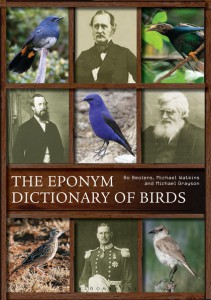
The Eponym Dictionary of BirdsThis month sees the publication of Bo Beolens’, Michael Watkins’ and Michael Grayson’s The Eponym Dictionary of Birds – a major publication with over 4,000 entries to fascinate the curious-minded birder. Each entry explains the biography behind the people commemorated in bird names, from lesser-known but dedicated collectors to officers, dignitaries and royals. Such as:

Passerini’s Tanager and Salmon’s Jacamar

Professor Carlo Passerini (1793-1857), an Italian entomologist and an early enthusiast of scientific photography, and Colonel Thomas Knight Salmon (1840-1878), a British railway engineer whose lung disease forced him into retirement and to opening a naturalist’s shop, are perfect examples of the hundreds of entries concerning those dedicated relative unknowns whose efforts have added rich threads to the natural history of birds and beyond. Salmon’s health deteriorated and he travelled to Colombia for the better climate where he spent seven years. He died in England leaving a collection of 3,500 bird skins.

Adelie Penguin

This entry exemplifies a theme of dedicating the naming to one’s spouse, in this instance Adelie Dumont d’Urville (1798-1842), the wife of Admiral Jules-Sebastien-Cesar Dumont d’Urville, who first found this penguin. Various places in and around Antarctica were similarly honoured, including the Adelie Coast.

It is not only the eponymous common names that are included. So many latin names contain dedications too, for instance:

The Red-headed ParrotfinchErythrura cyaneovirens gaughrani was named after American waterpolo player Dr James ‘Jim’ Alan Gaughran – who, apart from appearing at the 1956 Olympic Games and acting as head coach of Stanford University’s waterpolo team from 1969-1973 – was with duPont on the 1970 expedition to Western Samoa during which the parrotfinch holotype was collected.

Dig around and it won’t be long before you discover some familiar territory:

Lewis’s Woodpecker is named after Captain Merriweather Lewis (1774-1809), one half of famous explorers, Lewis and Clarke. Their expedition of over 4,000 miles across the North American continent was rich in discoveries, not least the collection of the holotype of this woodpecker. It was collected in near Helena, Montana, and is now in Harvard, perhaps the only bird specimen left from the expedition.

Finally, it must be worth mentioning that the Great Egret has been known as Queen Victoria’s Egret. Victoria was opposed to the feather trade and ordered her regiments to stop wearing plumes in their uniform, giving her a royal place in bird conservation.

The Eponym Dictionary of Birds


Micro photography with the Dino-Lite digital microscope

A digital USB microscope is a fantastic way to view and capture images of specimens and has many applications in the classroom, laboratory or at home. The Dino-Lite range of USB microscopes provides a large variety of models ranging from affordable microscopes for the amateur user to extremely high resolution, feature-packed options designed for the professional market. Dino-Lite USB microscopes can even be used as a standard webcam with applications such as MSN Messenger and Skype, a handy feature which allows remote users to collectively view and discuss the microscope output.

Watch the AM4113T Dino-Lite Pro in action

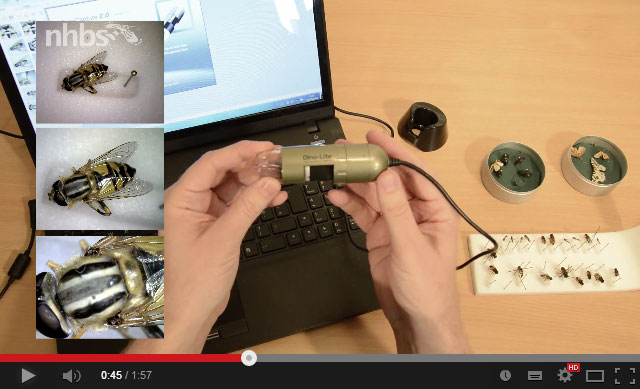
Video: Overview of a Dino-Lite digital microscope

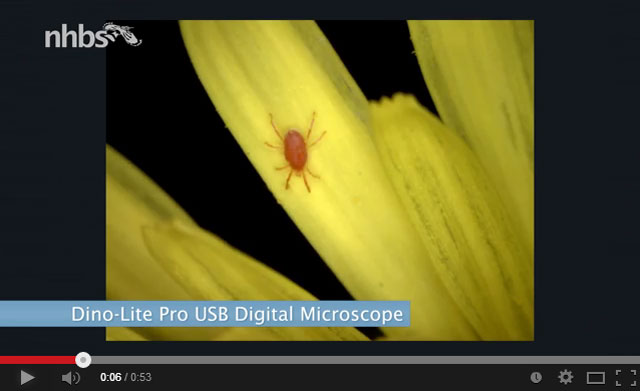
The Dino-Lite AM4113T is a professional digital microscope which provides 10x – 50x magnification with an additional 200x setting when the microscope is directly above the object being observed. A 1.3M pixel image sensor provides sharp, high resolution images with a large field of view. The AM4113T comes complete with DinoCapture software (or DinoXcope for Mac) which enables you to capture images and videos, annotate them and also use measurement features.

AM4113T Dino-Lite Pro USB Digital Microscope


Watch high-res micro photography from the AM4113T

Video: Micro photography with the Dino-Lite digital microscope

Other Dino-Lite Products

Entry level: AM2111

AM2111 Dino-Lite USB Digital Microscopegreen tickIdeal for educational use and Bioblitz events
green tick640 x 480p resolution
green tick10x – 70x and 200x magnification
green tickImage capture software included

AM2111 Dino-Lite USB Digital Microscope


Advanced features: AM4815T Edge

Dino-Lite AM4815T Edge USB Digital Microscopegreen tick20x – 220x magnification
green tickInterchangeable end caps
green tickExtended Dynamic Range and Extended Depth of Field
green tickPolariser option available

Dino-Lite AM4815T Edge USB Digital Microscope


For professional presentations: AM7013MT 5M pixel

AM7013MT Dino-Lite 5M pixel USB Digital Microscopegreen tick5M pixel (up to 2595 x 1944p)
green tickMagnification of up to 400x
green tickRobust metal housing
green tickPolariser option available

AM7013MT Dino-Lite 5M pixel USB Digital Microscope


Birds and Climate Change – authors James Pearce-Higgins & Rhys E. Green discuss the impacts and responses

Birds and Climate Change: Impacts and Conservation Responses has just been published by Cambridge University Press. This key topic is given a broad critical review by James Pearce-Higgins, a Principal Ecologist at the British Trust for Ornithology, and Rhys E. Green, Principal Research Biologist at The Royal Society for the Protection of Birds and Honorary Professor of Conservation Science at the University of Cambridge. We asked them a few questions about the priorities and processes involved.
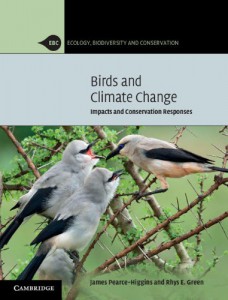
Birds and Climate Change: Impacts and Conservation ResponsesGiven this is such a vast subject, is it possible to summarize what we know currently about the impacts of climate change on birds – and also how we know it?

There has been an increasing wealth of scientific information published in recent decades, documenting the impacts that climate change has had on birds, which we review in the first part of the book. One of the best documented impacts is that the timing of spring migration and breeding outside of the tropics has become earlier in response to warming. There is also strong evidence that the abundance within bird populations has changed in response to changes in climatic variables through time. This has occurred through a range of different mechanisms. In response to climate change, these processes have led to significant changes in the composition of bird communities through time, and to shifts in species’ distributions, which have tended to move poleward by an average of over 7 km per decade.

The precise impacts of climate change vary across the globe, with changes in temperature being much more important in temperate and higher latitudes, whilst variation in rainfall is the most important cause of change in the tropics, and to long-distance migrants. Although there is a burgeoning evidence base about climate change impacts on birds, much of this research is from Europe and North America. We show in a key graph how little research effort there has been in the tropics, where we have shown the ecological processes are different, and where the majority of bird species are found. Long-term monitoring of bird populations, breeding and migration are an important resource for climate change studies. These studies have been done both by volunteer enthusiasts and academics, but mostly in the Northern Hemisphere and outside the tropics. Addressing this monitoring and research gap should be a high priority.

Much of the long-term monitoring data required to study the impacts of climate change upon birds is necessarily collected by volunteers (citizen scientists) because this ensures that the data are sufficiently extensive and sustainable in the long-term. Thus, information about the changes in the timing of migration and breeding is collected through bird observatories and schemes like the BTO’s nest record scheme, whilst large-scale information about bird populations and distributions is collected by standardised monitoring by volunteer birdwatchers, such as through annual breeding bird surveys and periodic atlases. Ringing (banding) and nest record schemes provide information about birth and death rates, which can help identify the processes behind these changes. These data are complemented by professional studies which are often more intensive and particularly have helped to understand the ecological mechanisms of change.

What sort of conservation responses are available?

The second part of the book examines potential conservation responses to climate change. The first step in this is to predict the future impacts of climate change on birds, which is covered by its own chapter. Here we link projected range changes and extinction risk to the amount of climate change, and show that increasing amounts of climate change will threaten an increasing number of species. We then review the options for adapting conservation action to climate change, building on a range of tools already used by conservationists. These include deciding which species and places are priorities for conservation, the protection and management of a network of core sites, habitat protection and creation to enhance connectivity, management of the wider landscape to reduce other threats and more intensive methods such as translocations. We believe that it is important to build on the foundations of existing conservation management, so that the threat of climate change does not divert resources away from existing and important conservation action. Reducing the impact of other threats on species will increase their ability to cope with a changing climate and may be sufficient, in some cases, to compensate for the negative effects of climate change.

Maintaining and extending the existing protected area network, alongside initiatives to improve the management of sites in that network, will be vital in helping species adapt to climate change. For example, protected areas can provide opportunities for colonisation of areas where the climate has become suitable for a species because of climate change. However, we recognize that with increasing magnitude of climate change, this adaptation challenge will become more difficult, and require more radical solutions. The final chapter in this section also considers the additional complication that the ways in which greenhouse gas emissions are reduced, and other climate change mitigation, will also have a significant impact on bird conservation. Some renewable energy options are likely to have negative impacts on birds, whereas prevention of the release of carbon stored in forests and bogs because of inappropriate land use change, such as deforestation and drainage, is likely to be beneficial for the bird species which inhabit those habitats.

Can you give some specific examples of responses underway, and what sort of levels of success these are demonstrating?

There has been recent criticism that because climate change will result in shifts in where species are found, that a static network of protected areas will no longer be useful. However, a number of recent studies are reviewed which demonstrate that by protecting large areas of extensive semi-natural habitat, protected areas in fact ensure the existence of suitable areas of habitat for species to move into. This has been particularly demonstrated for wetland and heathland nature reserves in the UK. There has also been much discussion about the potential for the creation of stepping stones and corridors to help create more connected landscapes through which species may move more easily. This literature is also discussed, which demonstrates that these interventions may benefit 30% of bird species studied, or fewer. Indeed, for the most sensitive habitat-specialists, such as tropical forest specialists, about 50% of a landscape may need to remain forested to ensure connectivity. Evidence is also building for the potential to manage sites appropriately to increase their resilience to climate change. In particular, the blocking of drainage ditches in the UK uplands may raise water levels and reduce the vulnerability of peatland ecosystems to summer drought, which will benefit a range of upland bird species, such as the golden plover.

Global change demands global responsiveness – how much agreement is there over the priorities?

Priority setting will be an important aspect of conservation responses to climate change, and a range of different ways in which priorities may be assessed exist. We review a number of these in the book, as well as suggesting a number of ecological traits likely to be associated with species vulnerability to climate change. Whilst there are an increasing number of examples of these being applied to particular regions or countries, there remains a lack of consensus over priorities across continents or biogeographical areas. The need to address this is recognized, and as discussed in the chapter on conservation in a changing climate, there is potential to use existing policy instruments, such as intergovernmental agreements, to achieve this. Given the potential threat that human responses to climate change may also pose to birds, whether the impacts of renewable energy generation, or other potential changes in land-use and other sectors discussed briefly in the final chapter of the book, this consensus needs to extend to other areas in order to be effective.

What future developments are on the horizon in extinction risk assessment, and are you positive about the potential impact of conservation responses overall?

One of the most significant chapters in the book reviews the literature predicting the effects of climate change on birds, and provides guidance for how this should be used. There is considerable potential to extend these to include information about population size, rather than just occurrence, and to make them more process-based, incorporating information about demographic rates and the mechanisms by which climate change may affect the species of interest. This has been achieved in a small number of cases, producing models which may be useful to inform future decision making about conservation responses to climate change. Such development will be particularly valuable, because it will help to assess the likely potential impact of conservation responses, relative to the likely magnitude of future climate change. However, this detail comes at a cost, and will not be feasible for most, or even many species.

Birds and Climate Change: Impacts and Conservation Responses


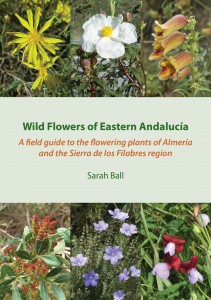
Wild Flowers of Eastern Andalucia reviewed by Plant Talk

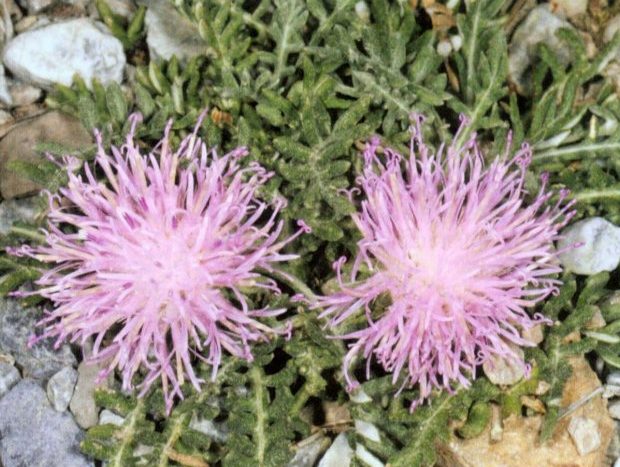
Wild Flowers of Eastern Andalucía jacket imageThis excellent field guide to the flowering plants of Almeria and the Sierra de los Filabres region covers an area of southern Spain with a particularly rich and varied flora. The book is beautifully illustrated with stunning colour photographs, and botanist Sarah Ball describes a good representative selection of the most frequent and characteristic flowering plants to be found, from the Sunshine Coast to the beautiful mountainous area inland, spanning 2000m in altitude. Aromatic thymes and colourful brooms dominate, along with other Mediterranean vegetation types, and Sarah has used the botanical collections of the University of Reading extensively to check her plant identifications and to further discover the distribution and variation of the species she describes.

Wild Flowers of Eastern Andalucía contains background information on geology, habitats, vegetation types and classification, and descriptions of 625 plant species, with 575 illustrated by colour photographs. A comprehensive glossary will help novice users to understand the necessary botanical terms, and the text is also supplemented by information on traditional plant uses that bring the descriptions to life. There is an introductory account for each plant family and each species account includes the English and local Spanish names where known.

I think this book will appeal to local residents and holidaymakers, visiting botanists and students, and anyone with an interest in wild flowers, planning to visit the area. I travelled to this region of Spain in 2004 with groups from the Eden Project and the University of Reading, to study both wild and cultivated plants, and this book would have been invaluable… and small enough to carry easily in a rucksack!

Review by Shirley Walker at Plant Talk

Wild Flowers of Eastern Andalucía is distributed by NHBS

Wild Flowers of Eastern Andalucía jacket image

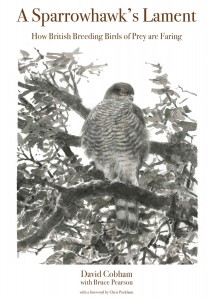
A Sparrowhawk’s Lament author David Cobham interviewed by NHBS

A Sparrowhawk's Lament jacket imageOur readers may be familiar with you as the director of the 1979 film, Tarka the Otter, so your conservation credentials go back a long way. What first stirred you to get involved with the plight of our wildlife?

In the late sixties I made several films for the Midland Bank showing the advice they gave to farmers enabling them to reorganize their farms, specialize and make them more profitable. This always involved pulling out hedgerows, filling in ponds and knocking down old barns. Not very good for wildlife. I tried to get them to make a conservation film but they were not interested. In 1970 I met Henry Williamson, who wrote Tarka the Otter, and asked him if he’d be interested in writing a film for the BBC Natural History Unit called “The Vanishing Hedgerows”. The film would be based on his experience of farming in Norfolk between 1936 and 1946. Farming with horsepower initially, then the first tractor and finally pesticides. Running through the film was the story of the plight of the Grey Partridge. The film was a great success and won a conservation prize at the Montreux film festival.

Your new book, A Sparrowhawk’s Lament, explores the state of Britain’s birds of prey. How are they getting on, and what are the main threats to their survival?

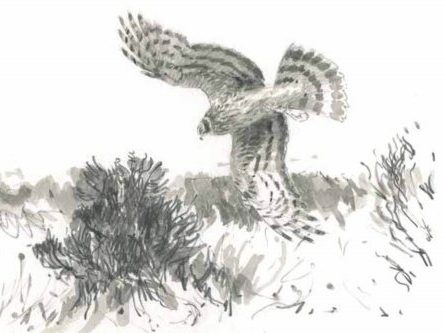
The Hen Harrier’s existence as a British breeding bird of prey hangs in the balance. The main threat is persecution by gamekeepers on grouse moors. It is coordinated throughout the Pennine chain. All predators, not only Hen Harriers, are exterminated. As a result there was no successful breeding in 2013. There is a chance that prospects may improve in 2014. Nevertheless this spectacular bird must not be allowed to become extinct as a British breeding bird. It is estimated that there is territory for up to 300 pairs of Hen Harriers on the Pennine chain. Poisoning of birds of prey is still prevalent throughout the British Isles. Red Kites, Golden Eagles and Common Buzzards are the main targets.

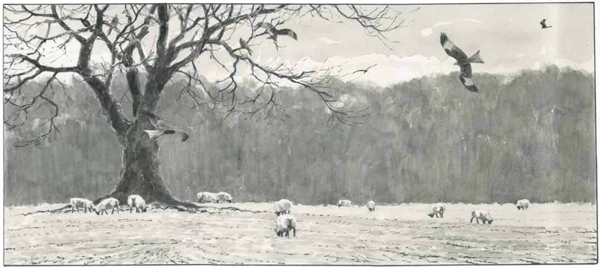
Illustration by Bruce Pearson
Did you spend much time roaming the countryside encountering these magnificent birds during the research process of the book? You must have met some interesting human characters too on your travels?

I spent three years researching and writing A Sparrowhawk’s Lament. Some of it came out of films I had made for the BBC and Channel 4. For instance I made 3 films on the Peregrine Falcon: one in Scotland, two in Cornwall. On them I worked with two experts, Roy Dennis in Scotland, and the late Dick Treleaven in Cornwall. I did travel to Scotland to meet up with Roy Dennis and glean some of his vast experience with Ospreys and Golden Eagles and I went to Mull to talk to Dave Sexton about the successful re-introduction of the White-tailed Eagles in Scotland. In the North of England I saw Merlin and Honey Buzzards and I talked to my cousin George Winn Darley who owns a grouse moor. Stephen Murphy of Natural England showed me round the Forest of Bowland which was once the stronghold of breeding Hen Harriers. There I was priviledged to hear his first hand account of the death of Bowland Betty. In the Midlands I met Tim Mackrill who took over the Osprey re-introduction at Rutland Water. Nearby at Rockingham I spent time with Steve Thornton and Derek Holman who’d been involved with the Red Kite release on the Forestry Comission land there. They also showed me nesting Hobbys at Lilford Hall. In Norfolk there was plenty of opportunity on our Hawk and Owl Trust reserve to see Marsh Harriers, Goshawks and Sparrowhawks. David Lyles showed me where to watch nesting Montagu’s Harriers on his land. On Salisbury Plain I met up with Nigel Lewis and watched him ringing young Kestrels and in the West Country Robin Prytherch took me round his Common Buzzard study area in the Gordano Valley near Bristol. Finally, Steve Roberts blew away some of the mysteries surrounding that extraordinary bird, the Honey Buzzard.

I also talked to a great number of wildlife cameramen. Mike Richards, Hugh Miles, John Aitchison, Simon King, Chris Knights, Martin Hayward Smith and Manny Hinge shared their often gruelling experiences with me.

Finally, there were many enthusiasts, amateur and professional who took time to talk to me and impart their knowledge. In particular, I must mention the late Derek Ratcliffe, Robert Kenward and Ian Newton.

What is the significance of the title A Sparrowhawk’s Lament?

As a film maker I was always keen to find a hook to catch the audience’s attention. If you didn’t they had the easy option of switching off. So before I wrote a word I knew I had to have a hook. Quite by chance I found my hook while I was in hospital for an operation. I was literally waiting to go down to the theatre when my wife came in with an armful of books for me to read. One of them was the Penguin Book of Bird Poetry. My wife left and I flicked through the pages. To my amazement I found an anonymous fifteenth century poem in which a male Sparrowhawk was complaining that the fear of death worried him. In the fifteenth century Sparrowhawks were protected – they were the hawks that a holywater clerk was allowed to fly. Did the Sparrowhawk have a crystal ball to forsee the future – persecution and pesticides? So that was the hook and the first chapter is a detective story seeking out from what it was that the male Sparrowhawk was fearful of dying.

How has our relationship with birds of prey changed in this country over the centuries?
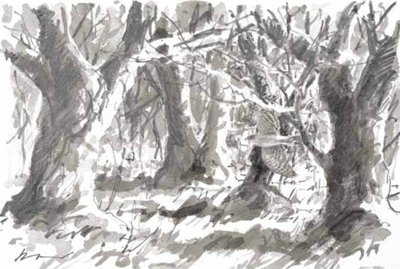
Illustration by Bruce Pearson

For over three thousand years Man trained birds of prey to put food on the table. With the introduction of the double barrelled shotgun that relationship was severed. The 1831 Game Act let loose a period of persecution beyond belief. By 1916 five birds of prey were extinct in the British Isles – the Goshawk, Marsh Harrier, Osprey, Honey Buzzard and White-tailed Sea Eagle. Gradually, the swell of public opinion, nauseated by this senseless, selfish slaughter, held sway. The Royal Society for the Protection of Birds was formed and the Wildlife and Countryside Act of 1981 afforded  full protection for all British birds of prey. In recent years the BBC TV programmes, Springwatch and Autumnwatch, have gone to great lengths to champion the role of birds of prey in our environment and to show in a sympathetic way the difficulties they experience  in finding a mate, nesting, providing enough food for their offspring and finally in migrating to their winter quarters.

What are the current priorities now for conservation of our birds of prey, and how might this book inspire people to get involved?

The top priority at the moment is to ensure that the Hen Harrier does not become extinct as a breeding bird in England. It is on a knife-edge at the moment. Publicise the horrific cruelty of pole traps and poisoning. We need more Wildlife Crime Police Officers. We need to strengthen the law so that landowners are made to accept the responsibility for any crime against birds of prey that occurs on their land.

The Sparrowhawk’s fear of death in that fifteenth century poem, which I have called A Sparrowhawk’s Lament, inspired me to find out the true state of British breeding birds of prey, exactly how they were faring. I hope that some of the experiences that I have had will influence young and old to revere our birds of prey and join an organisation such as the Hawk and Owl Trust which are dedicated to the conservation of all birds of prey. They are thrilling birds. Whether you  revel in the sky splitting stoop of the Peregrine or the ground hugging dash of the Sparrowhawk the world would be a poorer place without them.

A Sparrowhawk's Lament: How British Breeding Birds of Prey are Faring