Cold Blood author Richard Kerridge on reptiles and amphibians, and the ‘new nature writing’

Cold Blood jacket imageTell us about where you grew up and what inspired your early adventures with reptiles and amphibians.

I grew up in the south London suburbs, and some of my earliest memories involve images of animals – on television, in books and on the little picture cards I collected from tea packets. The wild animals of Africa and India fascinated me. I loved natural history books and stories about expeditions to find tigers and elephants. One of my fantasies was that I had a pet tiger, a huge male who would leap out and scare away boys who were trying to bully me. In my daydreams, as I walked home from school, the tiger would pad along beside me, out of sight behind the hedges.

But what could I actually encounter? Did England have any exciting animals to match the elephants and tigers? I read about otters, badgers and hawks, but they were far from my suburban experience, with its garden ponds and overgrown corners and strips. Foxes were elusive twilight animals. Reptiles and amphibians, however, were dramatic wild animals that could be found near my home. If I scaled down, the tangles of pondweed and banks of gorse and heather became forest and savannah, and the newts and lizards formidable megafauna. The theatricality of suddenly seeing one of these animals was important – the thrill, the intensity, of trying to edge closer without scaring away what at that moment always seemed to be the most vivid lizard yet, or the deepest-black newt. For me the animals represented the wildness that I felt was all around me, all around London, and all around Britain. They were emissaries from all the lakes, heaths, streams, scrubland, grassland and forest of the world.

Do you still have a bath tub full of lizards, frogs and snakes in your back garden?

For decades I didn’t keep any, after coming to feel in late adolescence that our hobby had been cruel and clumsy. By this time I was preoccupied with literature and politics, and teenage social and sexual life. And then I went to university to study literature, and was moving house every year. Throughout all this, the reptiles and amphibians still lived in brackeny parts of my mind, and I was always glad to see a real one.

After the contract had been secured for the book, I made an exception, and acquired some captive-bred hatchling European Green Lizards, which I keep in the garden, not in a bath but a large vivarium made of special Perspex that does not block UV light. The impulse to get them was part of the spirit of starting the book. And I do love having them. I always liked this species, which used to be sold commonly in British pet shops and lives wild on mainland Britain in one feral colony. They are an extraordinary powdery green. The young ones I have are beginning to come into adult colours.

How did your investigations develop? Since 1996 you have been Course Director of the MA in Creative Writing at Bath Spa University – were you ever tempted to go into biology as a career?

I couldn’t have. At fourteen, when I had to choose my O-Level subjects, it was either Biology or History. You couldn’t do both, and History and English were my best subjects. I wasn’t good at sciences, and in those days people were mostly identified at about that age as either artists or scientists. If you were good at one, you didn’t have to worry about the other – that was the message.

My strongest interest, anyway, is in the emotional significance that wild nature has in people’s lives. Our conventional ways of talking and writing about natural history have in recent decades been rather shy of sophisticated emotional language. A split between scientific and artistic ways of thinking has occurred in popular natural history too, since the middle of the twentieth century. The ‘new nature writing’ is attempting, among other things, to bridge that gap, and to explore the ways in which the love of wild nature relates to other life experiences and to shared culture.

For those less keen on the reptile and amphibian fauna, could you share some fascinating facts that might break the ice?

The horror and fear that these animals arouse, snakes especially, is part of their glamour. They provoke strong reactions and feature regularly in thrillers when some sort of eerie spine-tingling villain is required. The fear is fascination. But, to break the ice, I would ask people to see the beauty of each animal’s relationship to its environment – the exquisite way in which a snake or lizard acquires and concentrates the subtle colours of heather, sand and bracken, and receives on its tongue the changing chemical information in the air. They are spirits of their places.

What prompted you to write the book, and do you think nature writing has a place in reorientating people’s attitudes towards wildlife, and the environmental and ecological concerns of our time?

The book has been inside me since childhood. At last – with support from my agent and editor, and inspired by seeing many students do it – I found the confidence to let the writing come. Nature writing has a part to play, I hope. There is a surge of this kind of writing in Britain at present. We are in what has been called ‘the nature writing moment’, and I don’t think the timing is accidental. It seems likely to me that people’s renewed interest in this genre comes from unease about environmental problems and the failure of our political system to respond to them – climate change most obviously, but other disturbing trends also, such as collapsing bird and fish populations and the prospect of a new industrialization of farming. People who read these books may be looking to find out what is happening to wild nature now, and what sort of meaning it can have in our lives. What happened over the proposed sell-off of public forests a couple of years ago was another sign. Politicians had forgotten that people cared about such things. Nature writing is no longer escapist, if that was ever a fair accusation. It is a genre that confronts some of our most important and contemporary challenges.

What advice would you share with amateur naturalists keen to explore the cold blooded inhabitants of their local patch?

Have a look at the Reptiles and Amphibians of the UK website and the Amphibian and Reptile Conservation Trust website. Make an online search pairing the name of your region with the name of the species you want to see. Or go out to any wetland or heathery heath near your home. For reptiles, choose a sunny day before 10.00 am or after 4.00 pm. Approach banks and verges quietly, watching for movements. When you get your eye in, you see animals you would not previously have noticed. Look under logs and pieces of wood, and especially flat pieces of metal. Slow worms often hide there, and sometimes snakes and toads. Shine a torch into ponds after dark. Expect surprises.

Cold Blood: Adventures with Reptiles and Amphibians


Unboxing the new AnaBat Express bat detector

Introducing the new AnaBat Express bat detector from Titley Scientific. Watch the unboxing video below, and read on for our quick guide to the key functionality.

AnaBat Express overview

green tickWeatherproof bat detector for passive recording
green tickProgrammable recording schedule
green tickCompact and discreet design
green tickIntegrated GPS receiver
green tickOne-touch unit configuration

AnaBat Express Bat Detector


Monitoring with the AnaBat Express

The AnaBat Express Bat Detector is an exciting new weatherproof detector that is designed to be rapidly deployed for recording bat calls for species identification or activity monitoring. Based on the AnaBat frequency division technology, it records calls in zero crossing format on to an SD card, ready for analysis with the free downloadable software (AnaBat Toolbox and AnalookW). Customised recording schedules can be programmed on to an SD card using a PC and then uploaded to the AnaBat Express using the card.

AnaBat Express Internal DiagramFeatures and components

The AnaBat Express has an integrated GPS receiver that automatically sets the clock, calculates sunset and sunrise times and records the location of the device. The unit also has a ‘one-touch’ configuration capability, where you can programme it to record automatically from sunset to sunrise every night (based on GPS coordinates) just from one touch of the ‘Mode’ button, without having to use a PC for configuration. It is camouflaged and compact, with a weatherproof box and omni-directional weatherproof microphone, and it can be used with the AnaBat Express five metre microphone extension cable so that you can position the microphone away from the unit.

AnaBat Express Bat DetectorPowered by 4 x AA batteries; the unit should record for around 14 nights on one set of batteries and up to 30 nights with high quality lithium batteries. Supplied with padded case, wrist strap, 4GB SDHC card, 4 x AA batteries, a magnet for status checking and USB cable.

AnaBat Express Bat Detector

Tim Birkhead on Ten Thousand Birds, and his top five ornithology classics

Tim Birkhead is a professor of zoology at the University of Sheffield. A researcher and educator he regularly gives public talks, is a distinguished columnist, and has written many books including The Wisdom of Birds and Bird Sense. His new book Ten Thousand Birds: Ornithology Since Darwin is out now.

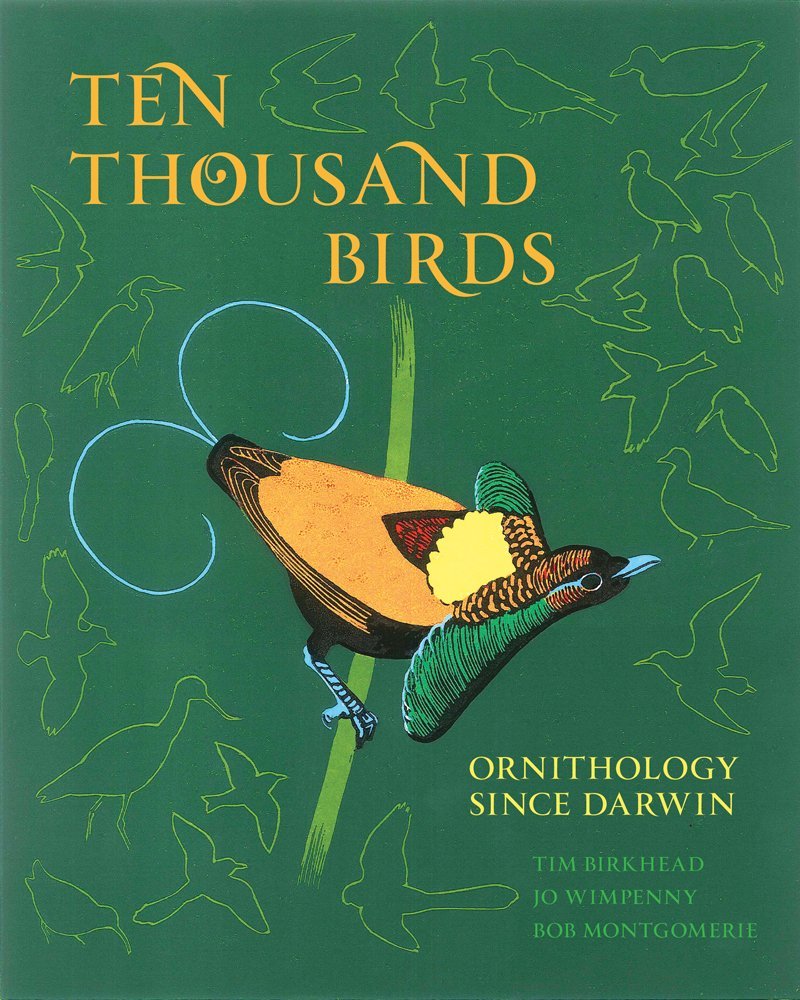
Ten Thousand Birds jacket imageHow did you first become interested in ornithology?

My father was a bird watcher, so I became interested from an early age. I can remember looking at a song thrush nest at the age of about three, bird watching from about the age five, and finally getting a pair of binoculars when I was about twelve. That was a breakthrough! I often marvel at my persistence at bird watching without binoculars, but I know that several of my ornithological colleagues did the same.

Could you introduce your new book Ten Thousand Birds: Ornithology Since Darwin, and describe what the publication of the book means to you?

The study of the history of twentieth-century ornithology has clearly seemed like a daunting task to the handful of ornithologists who have written about the history of ornithology as a whole. There’s just so much information. I decided it must be possible, although having made that decision, it took me a further year to decide how to tackle it, both in terms of reviewing what has been done, and writing about it in a way that was engaging.

It could have been done through the most eminent ornithologists, but the book would then have been little more than a succession of biographies. It could also have been done decade by decade – describing major discoveries in chronological order, but so many great ornithologists spanned several decades that that would have been messy and dull. As a biologist I liked the idea of biological themes: migration, song, population ecology and so on. Themes was what we went with. It meant writing a historical review of each topic – which my co-authors and I found both entertaining and educational. We learned a lot writing this book.

Our emphasis throughout is try to bring history to life by telling stories about the wonderful, extraordinary, sometimes crazily driven individuals that have contributed to our ever expanding knowledge about birds. Have a look at our website myriadbirds.com.

Ten Thousand Birds internal image
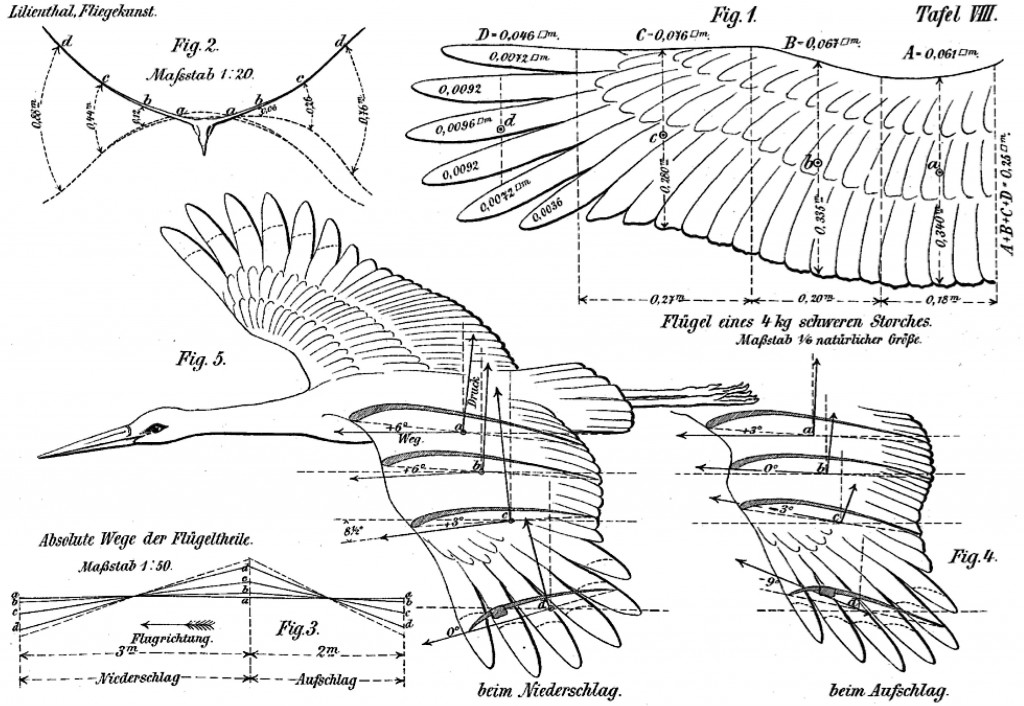
Otto Lilienthal’s analysis of the aerodynamically important dimensions of storks.


Any favourite stories from the book?

This is hard – ornithologists were (are) so idiosyncratic there are many great stories. I suppose one iconic story that I grew up with was the intellectual battle between David Lack (Oxford) and Vero Wynne-Edwards (Aberdeen) about the way bird populations are regulated. Wynne-Edwards thought that populations were controlled by their own behaviour and showed restraint – by laying fewer eggs or not breeding at all – when food was short, for the good of the population or species. Lack on the other hand promoted an individual selection point of view and suggested that when food was short those that bred successfully left more copies of their genes in future generations. Lack of course won. What was remarkable about Wynne-Edwards was how convinced he was by his own idea… and so wrong! By being wrong however, he stimulated other biologists to focus very sharply on the way natural selection worked, and that lead to a new and very productive way of thinking, described in the chapter on behavioural ecology.

A second story: I like the idea that in the 1940s biologists and ornithologists were utterly convinced that no organism had a magnetic sense. Yet within 20 or 30 years the fact that birds used the earth’s magnetic field to find their way around became one of the hottest topics in ornithology – and still is thanks to the development of geolocators and GPS devices for tracking birds and exemplified by the BTO’s wonderful and highly publicized studies of migration by Common Cuckoos. The revolution in bird migration studies is tremendously exciting and the discoveries of some of the long-distance, non-stop migrations are breath-taking.

Ten Thousand Birds internal image
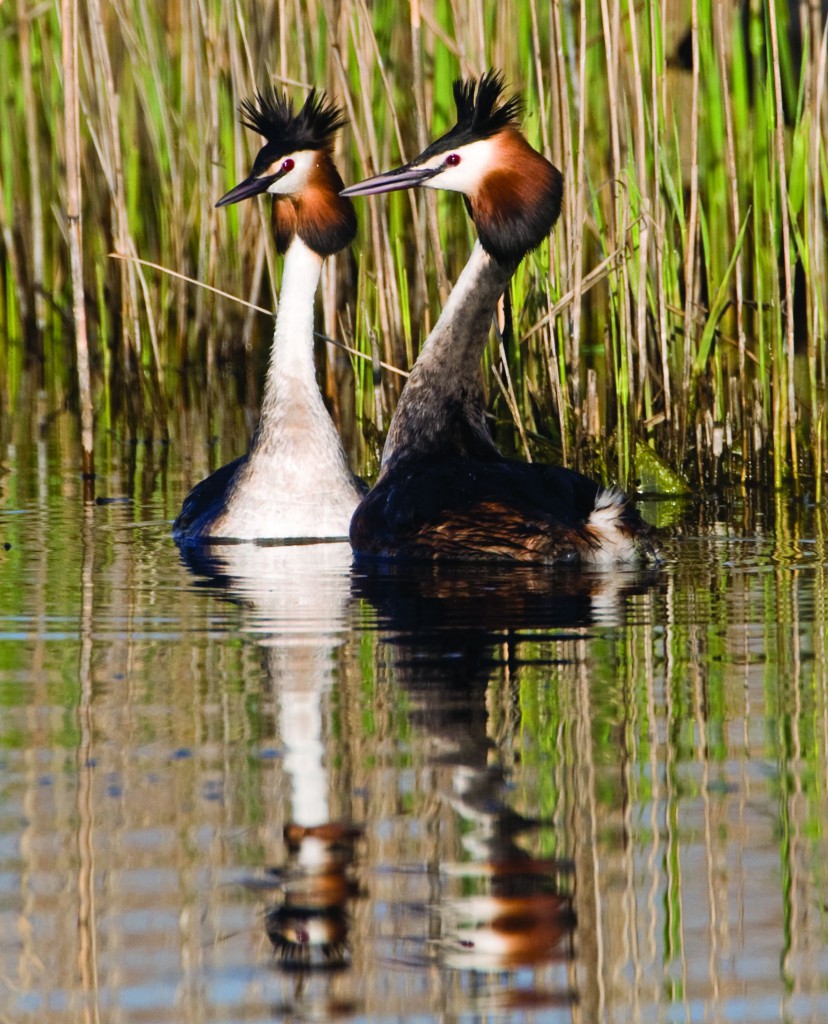
A pair of Great Crested Grebes displaying.
From within your personal interest in ornithology, is there an area that particularly appeals, species-, or geozone-wise?

I have studied Common Guillemots on Skomer Island, Wales since 1972, over 40 years now: they’d be disappointed if I didn’t name them my absolute favourite. I know them better than any other species. But I also love hummingbirds and the oilbird is among the most bizarre of birds I’ve ever encountered, like something out a Harry Potter novel and with super senses too. But top of my list is the Eurasian Bullfinch: its mental abilities (rarely apparent except in captivity) are truly extraordinary, and it has the most unbird-like sperm of any bird I’ve ever studied.

Ten Thousand Birds available now


Tim Birkhead’s Top 5 ornithology classics:

(Please note these classic texts, with the exception of the Handbook of the Birds of the World, are out of print and not available from NHBS (try antiquarian book dealers or the website abebooks.com) – but we think this list makes interesting reading!)

Lack, D. 1968. Ecological Adaptations for Breeding in Birds. Methuen.
Arguably the most inspiring ornithology book and written by the most inspiring ornithologist of the 20th-century. I read it as an undergraduate and was mesmerized. Inspired by John Hurrell Crook’s comparative study of weaverbirds, David Lack used Crook’s novel approach to produce an inspirational synthesis of all that was known about the ecology and behaviour of birds. The result is a clear, engaging, insightful overview of bird biology up until 1968, further enhanced by Robert Gillmor’s superb drawings. When we were writing Ten Thousand Birds and we asked senior ornithologists which ornithology book they most valued, it was this one, and another written by David Lack.

Snow, D. W. 1985. The Web of Adaptation. Cornell University Press.
David and Barbara Snow worked in South America and at the Asa Wright Centre on Trinidad studying manakins, cotingas and the bellbird. The Asa Wright is a magical place and well worth a visit. David Snow writes beautifully, and this book discusses how a diet of easily acquired fruit fosters a sexually liberated, lekking lifestyle. This wonderful little book has not enjoyed the recognition it deserved.

Del Hoyo, J;  Elliott, A;  Sargatal, J. 1992-2013. Handbook of the Birds of the World. Lynx Edicions.
One of the first encyclopedias of ornithology, and certainly the first scientific one, was written by John Ray and Francis Willughby and published in 1676 (in Latin) and in 1678 (in English). The most recent encyclopedia of ornithology, the absolutely magnificent Handbook of the Birds of the World, is remarkably similar, despite an interval of over 300 years. This tells us a lot about how smart Ray and Willughby were about communicating their knowledge, but also that despite massive changes in publishing, readers still value clear writing, superb images, and comprehensive coverage. The major difference of course is that Williughby and Ray thought there might only be about 500 species of birds in the world in 1660, and we now know that there are around 10,000. Inevitably, 10,000 birds requires more text, but in addition, we know so much more about birds today. When we wrote Ten Thousand Birds: Ornitholgy Since Darwin, we estimated the number of publications on birds there had been since Darwin’s day – the answer is a staggering 400,000.  del Hoyo et al have done a magnificent job in summarising much of that information in this landmark publication.

Thomson, A. L. 1964. New Dictionary of Birds. Nelson: London.
I discovered this book when I was as an undergraduate in Newcastle in 1971. It seemed shockingly expensive at the time, but what an investment! I used it as the (unofficial) course text book throughout my entire zoology undergraduate degree because it provided excellent concise accounts of all major topics: genetics, ecology, behaviour.

Heinrich, B. 1989. Ravens in Winter. Summit Books: New Milford.
No other book so evocatively captures the masochistic rigours of fieldwork. This is a celebration of both field ornithology and the ultimate corvid. Heinrich himself was extraordinary: a professional biologist who was still running marathons in his 70s and who writes accessibly and engaging about birds.

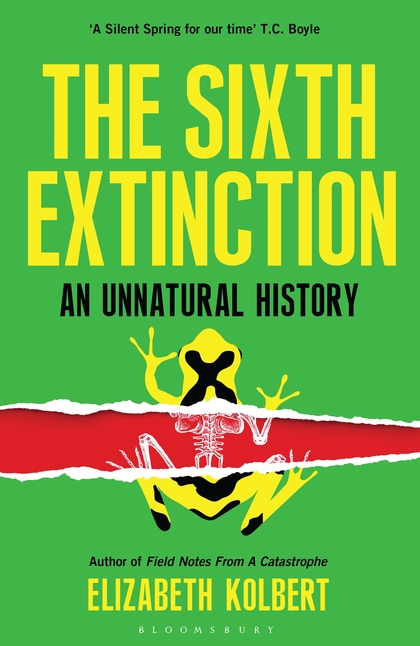
What the reviewers say about Elizabeth Kolbert’s The Sixth Extinction

“A Silent Spring of our time” – T.C. Boyle

“…a cogent overview of a harrowing biological challenge.” – Barry Lopez, author of Arctic Dreams

“A remarkable addition to the literature of our haunted epoch” – Bill McKibben, author of The End of Nature and Eaarth: Making a Life on a Tough New Planet

“I tore through Elizabeth Kolbert’s The Sixth Extinction with a mix of awe and terror.” – Dava Sobel, author of Longitude and A More Perfect Heaven

“…an important book full of love and loss” – David Quammen, author of Spillover

The Sixth Extinction will be published in February 2014


The Sixth Extinction jacket image


How to photograph a grass snake with a Bushnell X-8 trail camera

This summer, NHBS customer Professor Graham Martin tested the functionality of his Bushnell X-8 trail camera, a great entry-level trail camera for anyone interested in capturing footage of their local wildlife. Trail cameras aren’t just for night snaps – they work night and day using either the trigger function (1 sec for the Bushnell X-8), where the movement of the animal activates the camera’s trigger, or with a time lapse function, where it takes photos at a defined interval (from 1 – 60 minutes).

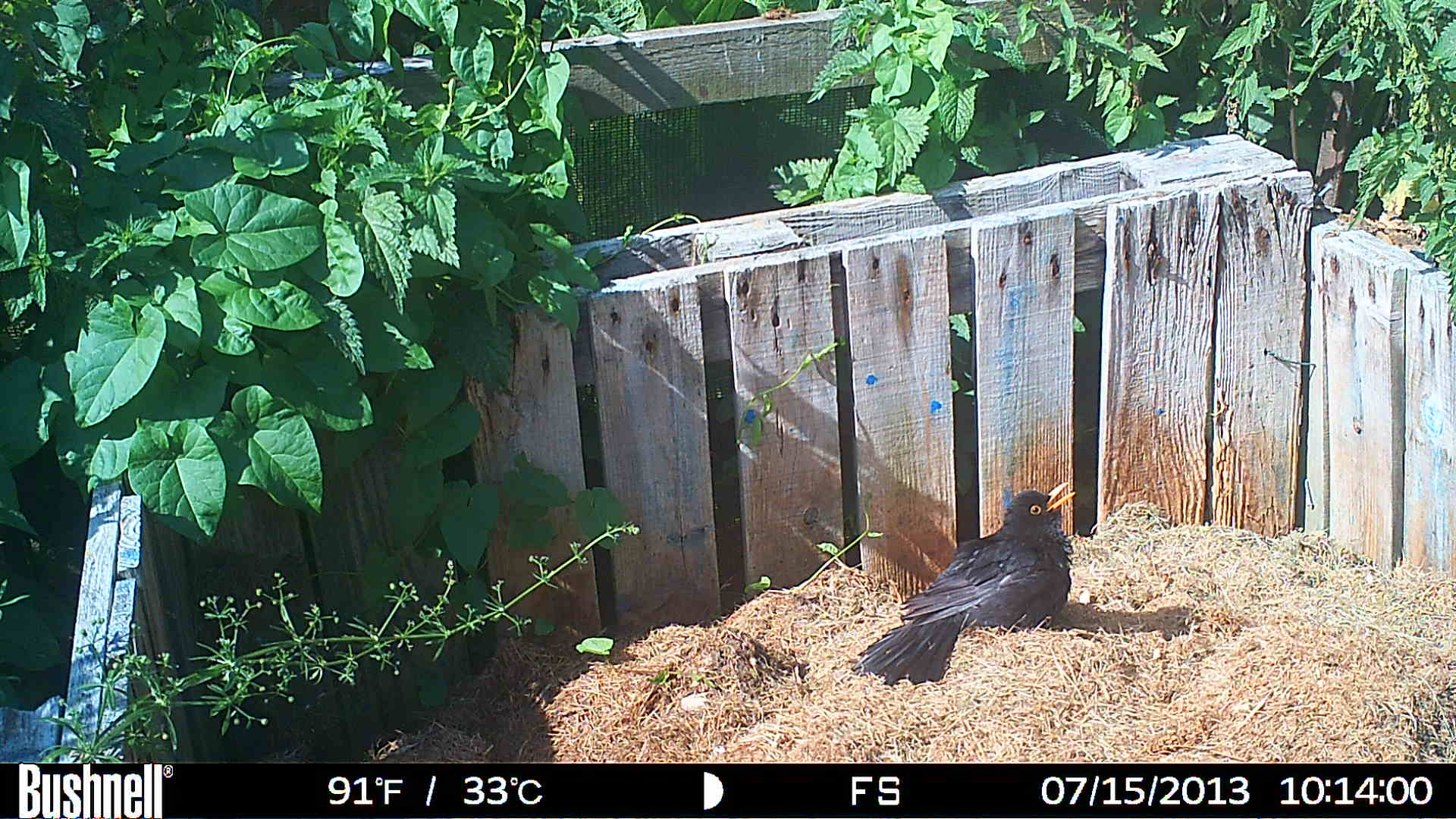
Bushnell X-8 Trail CameraGraham has a very warm compost heap which is where these two photos were taken, and he had spotted the grass snake basking – it was too quick for the trigger (0.7 seconds), but he managed to snap it using the time lapse.

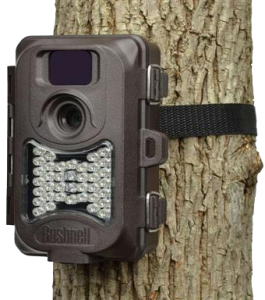
The Bushnell X-8 can take video or still images, has a 36 LED 15m night vision flash, day/night autosensor and a temperature recorder, plus many more great features – the only thing missing is that it doesn’t record sound, so you can only make silent movies. If you want to hear what sort of noises your subjects make as they pass, audio record functionality exists on other cameras in the Bushnell range, like the Bushnell NatureView.

We were particularly impressed with these photos, they really show the diversity of wild animals you can photograph with an entry-level trail camera.

Blackbird - taken by Professor Graham Martin with a Bushnell X-8 trail camera


Check out NHBS’ range of Bushnell Trail Cameras


Ten Summer Holiday Reads from NHBS

These ten books should see you through even the longest flight or a prolonged lounge on the beach. I’m taking Narwhals and Darwin’s Ghosts on holiday and can’t wait to get started. I hope you enjoy reading this list as much as I enjoyed making it. Leave a comment with your own suggestions for summer holiday reads.

Feral jacket image

Feral: Searching for Enchantment on the Frontiers of Rewilding

Read this if you think we all need a deeper connection to wilderness and bears roaming our woodlands.


Darwin's Ghosts jacket imageDarwin’s Ghosts: In Search of the First Evolutionists

Brave biologists whose early theories hinted at evolution by natural selection.


Gifts of the Crow jacket imageGifts of the Crow: How Perception, Emotion, and Thought Allow Smart Birds to Behave Like Humans

The incredibly intelligent corvids – read this if you need some help with your holiday sudoku.


52 Wildlife Weekends jacket image52 Wildlife Weekends: A Year of British Wildlife-Watching Breaks

If you haven’t booked all your holiday yet and need some inspiration.


The Species Seekers jacket imageThe Species Seekers: Heroes, Fools, and the Mad Pursuit of Life on Earth

The globe-trotting kleptomaniac naturalists whose collections laid the foundations for much of our understanding of biodiversity.


The Nature Tracker's Handbook jacket imageThe Nature Tracker’s Handbook

Involve all the family in identifying the wildlife tracks and signs you encounter on your travels.


Narwhals jacket imageNarwhals: Arctic Whales in a Melting World

Meet the mysterious narwhal; creature of myth and legend.


A Sting in the Tale jacket imageA Sting in the Tale

A passionate story of the bumblebee and inspiring efforts to understand and protect them.


Wild Hares & Hummingbirds jacket imageWild Hares & Hummingbirds: The Natural History of an English Village

An intimate book about the magic of immersing yourself in the annual cycle of your local wildlife.


How to Draw & Paint Birds jacket imageHow to Draw & Paint Birds: Learn to Draw a Variety of Amazing Birds Step by Step

Wouldn’t your field notebook look better with illustrations?

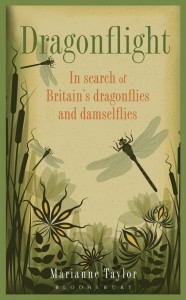
In search of Odonata: an interview with ‘Dragonflight’ author Marianne Taylor

National Dragonfly Week is fast approaching, so in our quest for things Odonata-related we interviewed Marianne Taylor – author of Dragonflight: In Search of Britain’s Dragonflies and Damselflies. The book documents the author’s adventures around Britain over two summers, in search of as many species as possible…

Dragonflight: In Search of Britain's Dragonflies and Damselflies jacket imageAs a keen wildlife watcher from an early age, what drew you in particular to the passion for dragonflies which led to the writing of this book?

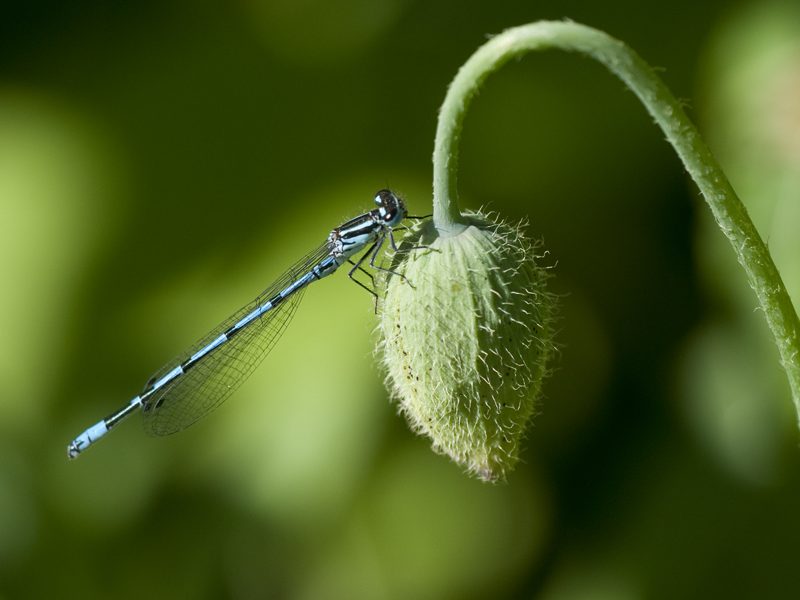
I have always enjoyed seeing dragonflies and damselflies when I was out birdwatching, but it wasn’t until I began taking wildlife photographs seriously, in 2009-2010, that I started to really appreciate Odonata. Photography has made me want to look at all wildlife in new ways, and I found the forms of dragons and damsels very appealing. I also quickly developed an interest in taking flight photographs – initially of birds but that quickly expanded to include everything that flies. As relatively large targets, dragonflies make challenging but very satisfying subjects for flight photography. And my geeky need to catalogue all my images correctly forced me to take on the challenge of properly identifying every dragon and damsel that I photographed. Learning about identification went hand-in-hand with learning distribution, behaviour and other aspects of their ecology.

You have spent two summers immersed in dragonfly and damselfly-spotting – and have encountered the majority of established British species.  How has such a dedicated involvement over a set period added to your knowledge of the natural history of your subject? Any surprising discoveries? There must be nothing like prolonged in-the-field focus for gaining an intimate appreciation of their behaviour…

I’d certainly not say I’m any expert, but I have learned a huge amount in the last two years, both from books as I ‘revised’ my subject, and from first-hand observation. I can now answer most questions put to me about Odonata by interested laypeople. What has surprised me most is the complexity of their behaviour, in particular territorial and courtship behaviour. I was also absolutely fascinated to see damselflies apparently ‘mobbing’ large dragonflies – if that’s really what it was, that is a sophisticated response to a  dangerous predator that I would never have expected to see from an insect. I would love to learn more about Odonata intelligence. I am quite convinced that they have some awareness of, and interest in, humans! I would also love to know more about their behaviour prior to adulthood.

Do you have a favourite, or stand-out, Odonata encounter from the book?

The morning spent at Strumpshaw Fen is what comes to mind – the Norfolk Hawker (see gallery – below) that finally gave itself up after a very long search, quickly followed by the utterly charming female Scarce Chaser that was, hands down, my favourite individual dragonfly from the whole two years. Two new species in the space of half an hour, both of them allowing prolonged and close-range observation. I was also really impressed by the damselflies (I only mentioned one in the book but there were several) which I picked out of spiders’ webs – it was great to have the opportunity to study them very closely and watch how deftly they cleaned the spider silk from themselves before going on their way.

Have you continued your search this year?

I have continued to watch and enjoy Odonata on my local patch and elsewhere when weather has permitted. I was also lucky enough to visit Sri Lanka in April, where I photographed and identified as many of the amazingly diverse local Odonata as I could. I have not sought out any new species in Britain so far this year, but that may be about to change as a new colony of Red-veined Darters has been found not far from home, and I’m hoping to pay them a visit next week. I am also very much hoping that RSPB Rainham Marshes will draw in another Southern Migrant Hawker this summer/autumn and that I’ll get to see it this time!

And finally what would be your top tips for aspiring dragon/damsel enthusiasts who want to encounter more of these magnificent beasts for themselves?

Establish a garden pond – even a small one may well be used by the commoner damsels. Always walk slowly and check low-level waterside vegetation – this is where resting and newly emerged dragons and damsels may be found, and they will let you look at them much more closely than the more mature and lively ones will. Try to spend a couple of hours at least at a site, as most species behave differently at different times of day – for example, many only engage in courtship behaviour during the warmest hours of the day. Remember that the chaser, skimmer and darter dragons in particular are creatures of habit and like to visit the same perching spots again and again, so if you disturb one from its perch, just loiter nearby and it will probably come back. To improve your chances of seeing scarcer species, regularly check the sightings pages at the British Dragonfly Society’s website to check where and when they are being seen. Take photographs! It helps greatly with identification to have a static image you can study at length, and you can get excellent macro images from most point-and-shoot digital cameras these days.

Dragonflight available now from NHBS

Check out our recommended kit and field guides for successful dragonfly-spotting

Visit Marianne Taylor’s photography and wildlife blog, The Wild Side

Gallery of images from Dragonflight, taken by Marianne Taylor:

The birding ID guide revolutionary Richard Crossley, interviewed by NHBS

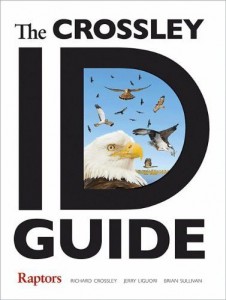
The Crossley ID Guide: Raptors jacket imageThe Crossley ID Guide series hit the market in 2011 with the guide to Eastern Birds, marking a revolution in identification guides. The plates of birds, scenically arranged in their natural context, are photographic composites and show a variety of angles. They cover plumage, sex, and age variations, and situate the birds among other species for comparison, and in perspectives unusual for an ID guide.  

With publication of the Raptor guide imminent, we asked ID guide mastermind Richard Crossley about the concept, and how well it’s working so far…

It has been two years since the first Crossley Guide hit the market. It’s a great design – context is often critical when trying to identify birds. How has the Crossley concept been received?

I think it has been received really well. It has been interesting to watch all the different reactions to something that was totally different from anything people had seen before. It has been the biggest hit with beginners and kids because it helps them to understand the ‘big picture’ of how a bird’s appearance and behaviour is linked to where it lives. It makes sense to them and they are generally not biased by any preconceived ideas of what a bird book should look like.

Adapting to this new approach may be harder for long-time birders who have used side-on, white backgrounds with arrows pointing to specific features. It has been interesting to see that many people are slowly but surely coming around, and may be now finding it tougher to look at traditional guides. Particularly inspiring for me are the number of kids who love the ‘discovery’ aspect of the plates. Today, they are taught at school to work things out for themselves by seeing patterns and repetition. This ‘discovery’ within each plate is just like being outdoors, but a lot easier. My dream is that this style of imagery will encourage more people, young and old, to go outdoors and have a better grasp of what they are looking at. That is the biggest compliment for me!
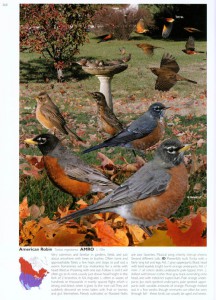
The Crossley ID Guide: Eastern Birds - plateHow would you sell the concept to the average birder who hasn’t been initiated?

I believe that birding is about the voyage of discovery and that learning how to look is the key. At school there are some teachers who make you learn by memorizing the answers parrot-fashion. The second type of teacher helps you to understand how to work the answer out for yourself. They also make it as fun and realistic as possible with lots of examples to practice on and build confidence. Practice still makes perfect! My books are intended to be the second one.

The intention is for the viewer to enjoy looking at the birds in their habitat, behaving as they do in their world so that birds’ personalities can be understood. Everything is connected so it is logical to show all the dots – the viewer can put them together. Today, we now know how the brain works much better than before and this is the better way to inspire all ages. I suppose the Crossley concept can be described as somewhere between traditional guides and reality.

How did you come to have such a passion for birding, and how did the road lead to the Crossley ID Guide concept?

My teacher, Mr. Sutton, introduced me to birding when I was 10 years old. Remarkably, I lived in Whykeham Forest just down the road from the now famous Honey Buzzard raptor watch site. I had collected eggs since I was 7 years old. I just loved it right away. I think there are lots of reasons why. I feel I have had an incredible life because I have seen and experienced so much in my quest to see birds. Birding has quite simply shaped my life.

Funnily enough, I am not a book person and rarely look at them. My favourite is the Collins Bird Guide, in large part because of Killian Mullarney’s and Dan Zetterstrom’s beautiful vignettes. It seemed logical to make books even more lifelike and create one scene. Digital photography and Photoshop came along just as we started the original edition of The Shorebird Guide. I soon became fascinated with book design. The backbone of The Shorebird Guide was the comparative wader shots and making every image as different as possible from the last one – to keep people interested. Ironically, we couldn’t get the comparative images needed and this was the catalyst for me buying a big ‘fancy’ lens and taking up photography. I soon became hooked. Amazing how things come about! Towards the end of making the The Shorebird Guide there was a simple question. How do you take 5 pages, about 15 photos and put all this information in to one image and make it lifelike?

So what goes into the making of a Crossley ID Guide? Do you do all the photography leg-work?

It is scary just thinking about what goes in to these books. The learning curve in the early days was brutal with so many things to work out. In hindsight, many seem quite obvious now. The close-up section of the backgrounds is the most difficult thing to create. There are so many decisions to make and then you have to try to piece it all together. If you don’t have a large selection of images to choose from, it can seem overpowering at times. It’s like a big jigsaw that can be frustrating but ultimately very rewarding.

I set myself the goal of taking all the images for The Crossley ID Guide: Eastern Birds (I consider over 99 per cent to be good enough). I live with multiple, constantly updated, ‘want lists’ of crazy things. They include certain behaviours, different plumages, habitat shots and flight shots – back then nobody took flight shots of warblers, sparrows etc. I hand-held my big lenses for speed, didn’t use flash and moved quickly – this was not in vogue back then. I didn’t tell people what I was doing for some time because it seemed far-fetched and I didn’t think any one would believe it was possible. Technology has changed a lot in just a few years and now it is possible to get just about any image. How things have changed!

The Eastern guide had over 10,000 photos in it, took 5 years and more money than I care to remember. Most plates have dozens of layers of extracted images and require an intimate knowledge of both Photoshop and understanding what a camera can do. Like everything, practice makes perfect, and I feel like the learning curve is still fairly steep. Perhaps that is why it is still fun.
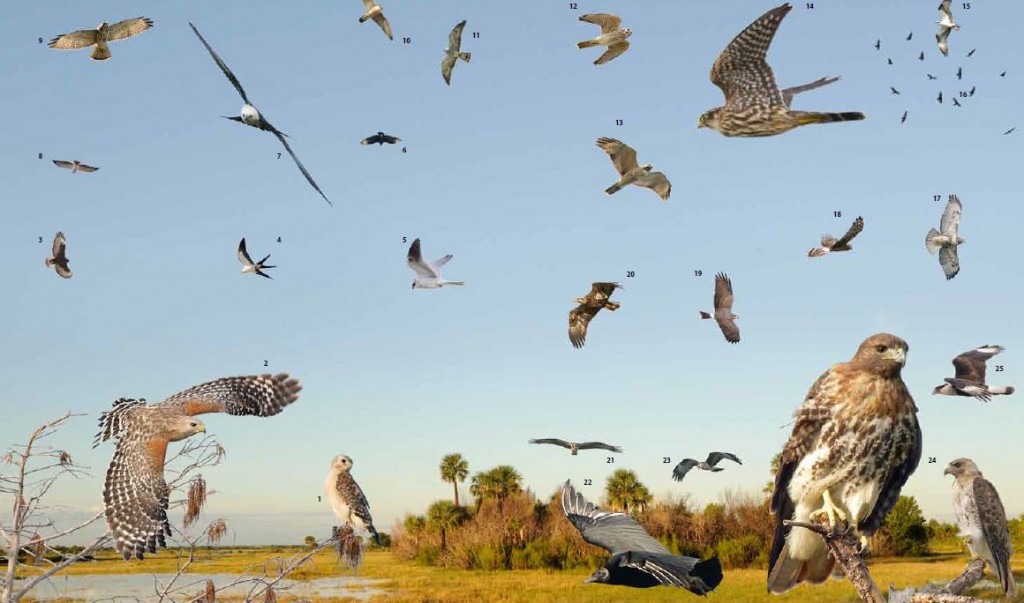
The Crossley ID Guide: Raptors - plateThe new book covers raptors in North America – does the chronicling of different kinds of birds in their natural environments present different kinds of challenges to the photographer?

Not really. It is all a challenge but that is the fun. It comes down to creating a mental image of what you want to create like any artist. Going to the right places makes life a lot easier. My paint brush is a camera and Photoshop. It is amazing what you can ‘paint’ these days with a few pixels and some time!
The Crossley ID Guide: Raptors only covers 34 species so it certainly gives you room to express yourself differently from a book covering hundreds of species. That was fun. It is always a challenge to think of new ways to capture people’s interest with new kinds of imagery that bring about a better understanding.
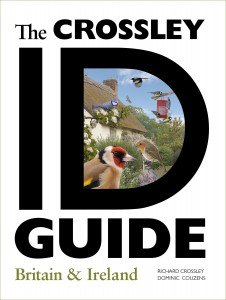
The Crossley Guide: Britain & Ireland - jacketWe are eagerly anticipating the Britain and Ireland guide later this year. Dominic Couzens is providing the text. Where next for the Crossley crusade?

The Crossley ID Guide: Britain and Ireland is just about finished. Dominic has been great to work with and I love his engaging writing style. I believe we are very much in sync.

Of course, it was a great excuse to spend a lot of time travelling to get all the photos I needed. Britain and Ireland are so photogenic and I really hope I have captured the essence in the book.

In many ways, this book is for my Dad. He is a very casual birder who loves his backyard and going for a stroll down by the river. Many of the bird books are written for Europe, which he finds a bit overpowering. He is an artist and likes things done right. The true test will be to see if my Dad puts his other books away!

We have lots of other projects going on. Hopefully we can get The Crossley ID Guide: Waterfowl finished in the next six months. We are also just finishing up The Crossley ID Guide: Western Birds. We have a couple more books on the go but I need to get out of the forest before thinking about those.

I am also the co-founder of a new global birding initiative called Pledge to Fledge. The goal is to encourage birders to introduce a non-birder to the outdoors and so fledging a birder. We have 2 weekends a year set aside for this; the next one is April 26-29. Eric Dempsey heads up Ireland and Alan Davies & Ruth Miller Britain (keep an eye on the Biggest Twitch website for more information about events in the UK). This campaign takes up a lot of time but hopefully we can have an impact, particularly in countries where birding is not currently so popular.

And finally, I couldn’t resist: what’s your favourite bird?

Oh come on, hard core birders don’t have favourite birds! Okay, here is your answer. There is one bird I like a lot, and more importantly, we have a lot in common. It is the Sanderling. We are both sort of chunky, always on the run, love the beach and tend to be in photogenic places. Although we both superficially have many colours, if you see past this, we are remarkably consistent in our shape and behaviour. We both travel the world a lot and are approachable – if you can catch up with us. I think Sanderlings are great!

Buy a copy of The Crossley ID Guide: Raptors

Available Now from NHBS

The Crossley ID Guide: Britain & Ireland – out November 2013

Pre-order The Crossley ID Guide: Britain & Ireland


The World’s Rarest Birds: an interview with author and birder Erik Hirschfeld

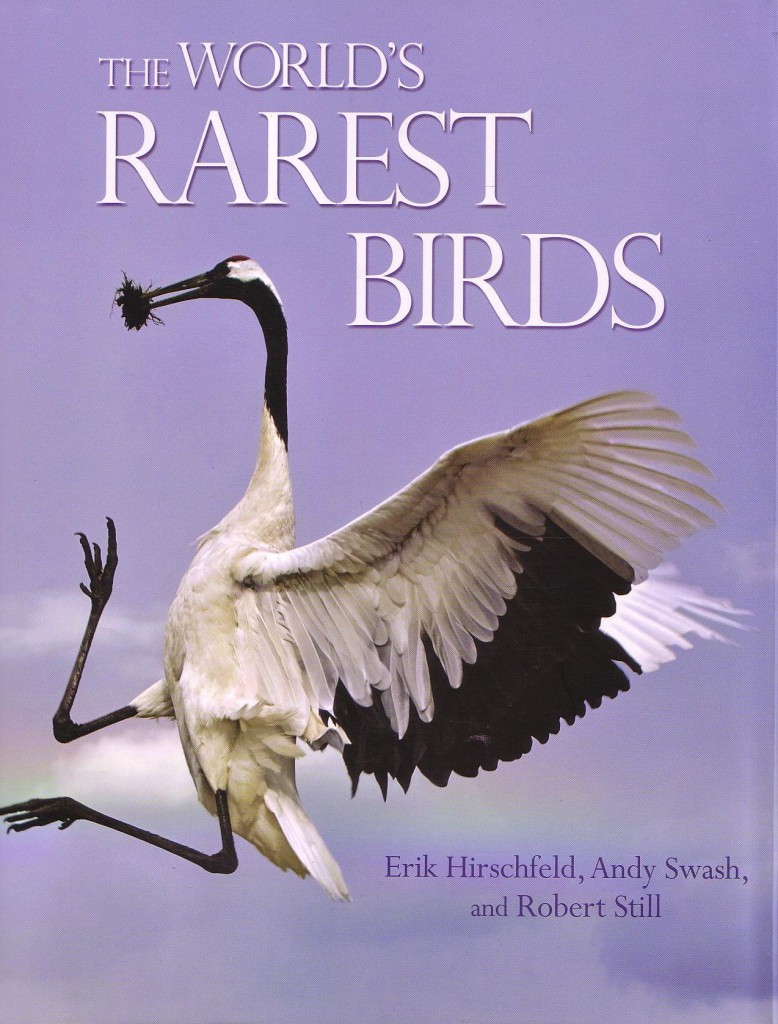
The World's Rarest Birds jacket imageThe World’s Rarest Birds is a sumptuous visual treat for birders, featuring a gallery of competition-winning bird photos from around the world. But it is more than that: Erik Hirschfeld – and collaborators Andy Swash and Rob Still – want everyone to be engaged with the plight of the rarest bird species. Here’s what he has to say about the book:

The World’s Rarest Birds compiles information from many different sources and represents a great conservation collaboration. What were your aims in writing the book?

I wanted to give the term “bird conservation” a more recognizable face. In order to evoke feelings, funds, and engagement for a cause, it is essential to make the cause recognizable. By presenting each one of the world’s rarest species in text and image, and sorting them in a geographical context, there is a bird for everyone: regardless of where you live, it should be easy to find the birds in your vicinity. I work much with beginners to birding, as a guide and lecturer, and the taxonomic order does not make sense to them. I think it is important to convince these newcomers about the conservation needs. It does not matter if you are a beginner or expert, Swede or Polynesian – there is a bird in the book that everyone can feel for in conservation terms. And that was my aim, as I think it is extremely important to spread knowledge about endangered birds.
Could you tell us a little about how you became a fully fledged conservation author?

My professional career is in an unrelated sector but I am basically a birder, and was heavily involved on the Swedish twitching scene in my early birding years. Over time my interest in birds has widened – I hardly keep lists any more, and I appreciate the birds’ context in nature more, as well as my own personal experiences of them. I am right now enjoying watching Rooks doing clever things on my street more than twitching a Yellow-nosed Albatross at my local patch (although I did twitch it…). I have always written: identification papers in the eighties, in British journals, and much about migration and faunistics. With the maturing of my interest it was quite obvious I should do something on conservation. I have been a staunch supporter of BirdLife International for 20 years, and am very happy that I could make them benefit from this book. It is important to remember though that the book is a team effort by Andy Swash, Rob Still and myself.

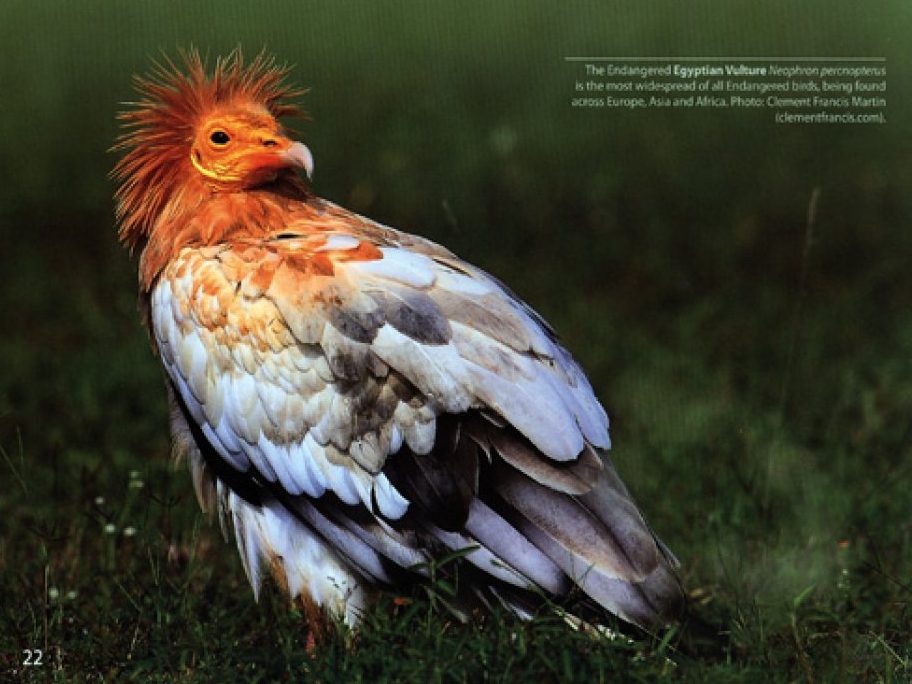
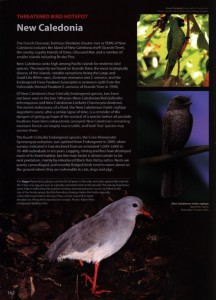
New Caledonia - The World's Rarest Birds page detailThere are some beautiful and striking images in the book, which we loved. Do you feel that the images are an essential way of engaging people with the species?

Yes, as I touched on in the first question. It is a matter of applying simple marketing principles from commercial contexts also in conservation and the NGO world, to make people aware of the birds. You know the old saying: a picture means more than a thousand words.

Some of the image contributions were from winners of an international photographic competition – did you get a good response?

Absolutely, I had tried it out with the Rare Birds Yearbooks so we knew it was going to be a success. The timing has also been good. With the digital photography boom, many people can take decent pictures, and you see much more camera equipment in the field now than 30 years ago when you had to wait a couple of weeks to get your films back. And we are very grateful to the photographers who submitted their images.

The World’s Rarest Birds is quite different in format and content from your previous series The Rare Birds Yearbook, did you also have a different audience in mind?

No, actually not, I thought that basically the same people would buy them. Andy Swash and Rob Still have been instrumental in the evolution to The World’s Rarest Birds and I was convinced by them from the beginning this was the way to go. I remember Ade Long at BirdLife suggesting already after the first edition of the Rare Birds Yearbooks that I should go more for photos and less for texts.

The East Asian-Australasian Flyway - The World's Rarest Birds page detailThe purchase of this book contributes towards supporting the BirdLife International Preventing Extinctions Programme which is a fantastic cause. Could you tell us about any notable conservation success stories that you have seen since your involvement with the project started?
Several. The Madagascar Pochard project in which the species population recently has quadrupled. The Spoon-billed Sandpiper project with artificial hatching and building up a captive population. The project that established a breeding centre for Spix’s Macaw, and now will release birds into the wild this summer. The banning of diclofenac in the Indian subcontinent which, slowly, helps vultures. Even if they are not saved yet, it is not all gloomy! And the many dedicated people and organizations behind these and other positive trends are success stories in themselves.
Buy a copy of The World’s Rarest Birds

Available Now from NHBS

The Cambrian Explosion: an interview with paleobiologist and author Douglas H. Erwin

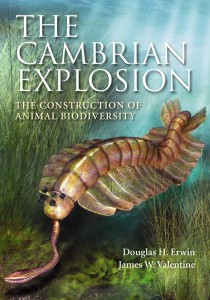
The Cambrian Explosion jacket imageThe Cambrian Explosion: The Construction of Animal Biodiversity synthesises latest research about this massively siginificant moment in evolutionary history. Author Douglas H. Erwin introduces himself, the subject and some of the life forms that emerged.

Could you please provide a brief evolutionary history of Douglas Erwin as a paleobiologist.

I expected to be a biologist when I was in high school (or a doctor). But when I arrived at Colgate University as an undergraduate I discovered that geology was much more fun than biology (no pre-med students, for one thing). My teacher and mentor, Bob Linsley, was a fantastic teacher – Steve Gould used to claim that he was the best undergraduate paleo teacher in the US. Bob got me hooked on paleo, on evolution, and on Paleozoic snails (my systematic speciality, and Bob’s). Then I was off to UC Santa Barbara to study with Jim Valentine for my Ph.D. Although my Ph.D was on Permian snails from the SW US and the Permo-Triassic mass extinction, I was quite interested then in the Cambrian explosion, and Jim and I wrote several papers on it. I have been at the National Museum of Natural History since 1990, working on aspects of Paleozoic gastropods, the causes and consequences of end-Permian mass extinction and on aspects of macroevolution, particularly the Cambrian. I have been fortunate to have been able to visit many of the critical Ediacaran and Cambrian localities, and to have had wonderful colleagues on associated projects, including a bunch of colleagues associated with NASA’s Astrobiology Institute at Harvard and MIT, and developmental biologist Eric Davidson on the evolution of gene regulatory networks, which features prominently in the later stages of The Cambrian Explosion.

What is the importance of the Cambrian explosion in evolutionary history?

It is one of the critical major evolutionary transitions in the history of life, an episode where virtually every aspect of life on the Earth changed, with impacts on everything from the chemistry of the oceans and atmosphere to the nature of sediments in the ocean. So understanding not just the new fossils but the larger context of the interactions between changes in the physical environment, ecology and evolution is key to understanding what happened. For evolutionary theory, the Cambrian explosion raises some really interesting challenges to how we understand these events. Jim and I argue that it is only by looking at changes in the physical environment, ecological opportunities, and developmental novelties, that we can begin to understand the mechanisms involved, and moreover, that some of the processes force us to extend some traditional approaches to evolution.

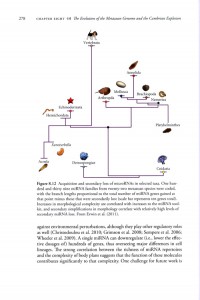
The Cambrian Explosion internal imageCould you briefly introduce one or two of the specific species that came into being so we have some context – I imagine we are not talking about life as we know it?

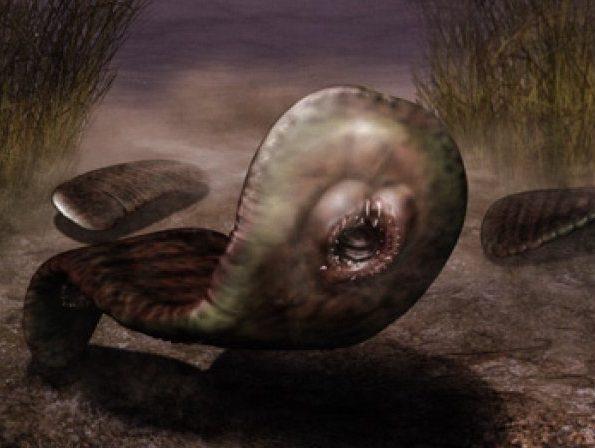
No, the world of the Ediacaran and Cambrian was a much different place from our world today, and indeed the Ediacaran and Cambrian periods were themselves much different from each other. Rangea is a representative of one of the oldest Ediacaran lineages, the Rangeamorphs. These are found in a variety of frond-like morphologies, and have a fractal structure, so that as you zoom in the frondlets have the same form as the overall frond, as do the petals that make up each frondlet. Opabinia, the beast that graces the cover, is one of my favourite of the Cambrian animals, and one that also illustrates the transformation of our understanding of these animals since Stephen Jay Gould wrote Wonderful Life. In 1989 Opabinia, with five stalked eyes and the long proboscis, was one of the ‘weird wonders’. Thanks to more study and phylogenetic methods of reconstructing evolutionary history we now understand that Opabinia is part of the panarthropod diversification, and is positioned on an evolutionary tree between the Cambrian lobopods and the true arthropods. But these two illustrate something else – whereas Rangea probably fed by adsorbing [not absorbing!] dissolved organic nutrients and lacks any discernible gut, eyes, etc., Opabinia was a mobile, predatory animal, with those great five eyes, appendages, and a gut. The contrast between these two illustrates something of the complexity of the ecological and developmental changes between the Ediacaran organisms and those of the Cambrian.

The book contains reconstructions by illustrator Quade Paul. Paleo art must be quite an intriguing process. What was the nature of your collaboration, and how do you come to settle on a ‘final’ representation of each creature?

Doing illustrations with an artist is always an interesting experience, particularly since I probably have not just zero artistic ability but actually negative artistic ability (sucking it out of those who do). But Quade was great to work with. He is the first artist I have worked closely with who used a lot of the new digital tools, and that was quite a learning experience for me. Jim and I selected the animals we wanted to illustrate, and sent Quade copies of illustrations from the scientific literature, or previous reconstructions, and in many cases copies of the original scientific papers. For a couple of the commonly reconstructed animals of the Burgess Shale we had to steer Quade away from some of the reconstructions found on the web. Then there was considerable back and forth between us getting the details of the critter right, refining the pose and the background details. Artists always want to know about colours, but of course fossils aren’t any help, so we had to infer these from studying modern marine animals. The quality of Quade’s work speaks for itself I think.

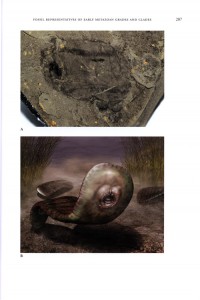
The Cambrian Explosion page detailIn what ways might the latest research about Earth’s evolutionary past affect current conceptions about biodiversity?

Many people often think of biodiversity in terms of the number of species, in part I think because species are easy to count. But there are many other components of biodiversity – ecological function, morphologic disparity, phylogenetic history, etc. One of the themes of this book is that to understand evolutionary history we often have to look as much at these other aspects of biodiversity. Similarly, as we confront the challenges of the current biodiversity crisis, I am among those biologists who feel that we have to consider conservation priorities in a broader context in order to maximize the amount of evolutionary history that we preserve for future generations.

Do you have any more books in the pipeline?

The Cambrian Explosion was the beginning of a new project on evolutionary innovation that I expect will extend over the next decade. Part of the project involves a book that will involve a much more comprehensive look at evolutionary innovations and major evolutionary transitions through the history of life, from the origin of life to aspects of innovation in humans. This will be a pretty big book, but much different from (and much less illustrated than) The Cambrian Explosion. And one always has other ideas…

Buy a copy of The Cambrian Explosion: The Construction of Animal Biodiversity

Available Now from NHBS