NHBS: In The Field – Pulsar Helion XP50 Thermal Imaging Scope

Pulsar Helion XP50 Thermal Imaging Scope

Thermal imaging technology has become an invaluable tool for researchers and ecologists studying nocturnal, crepuscular, cryptic or reclusive species. Thermal imaging devices work by using an electronic detector to convert heat emitted by the subject into a visible colour pattern. They have a distinct advantage over other night vision technologies in that you can use them during the day and in foggy conditions, as well as in total darkness. This means that they are ideal for surveying bat roosts, detecting nocturnal foraging animals, spotting birds in cover and even nest finding.
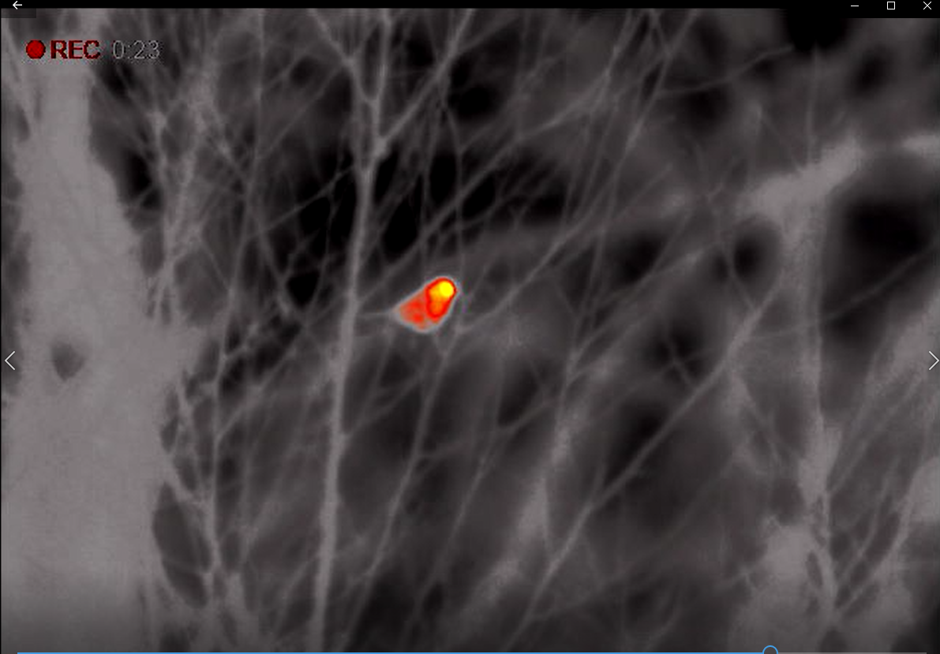
Daytime image of a Blue tit (5x magnification)

We tested the Pulsar Helion XP50 Thermal Imaging Scope at night time and in daylight. Our aim was to see if it enhanced our ability to detect and observe animals. We also wanted to examine the quality of the footage it produced. 
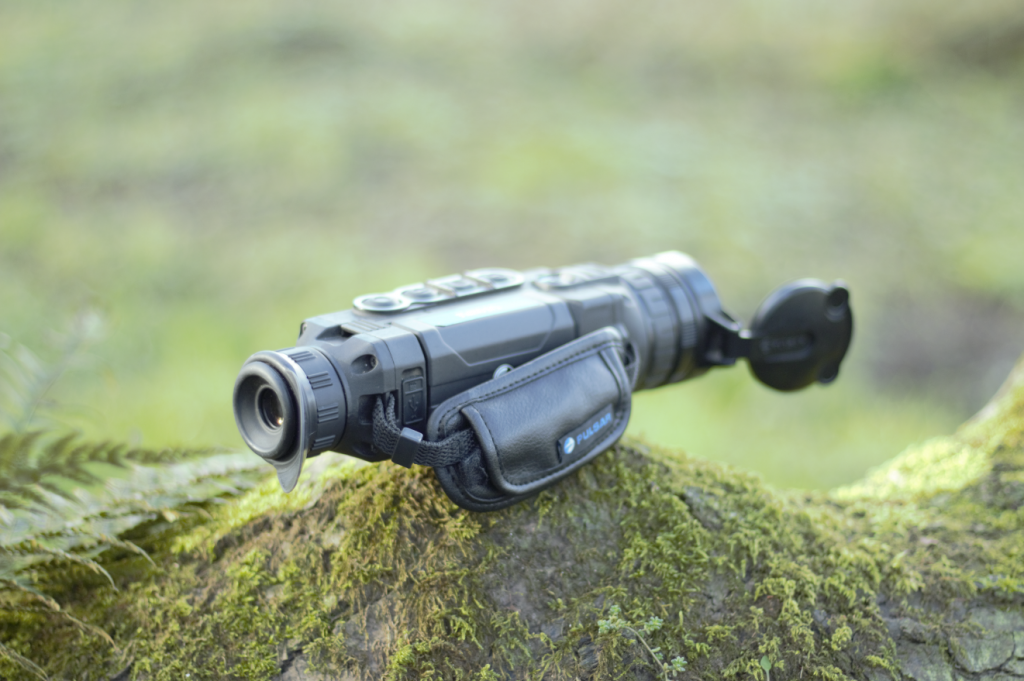
Pulsar Helion XP50

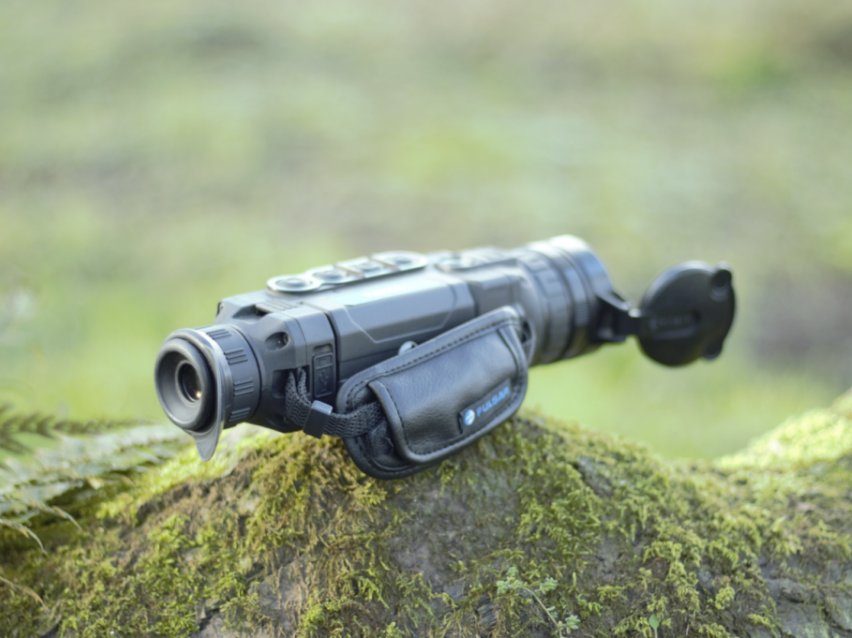
The Pulsar Helion XP50 is a powerful thermal imaging scope with 640 x 480 resolution and a detection range of up to 1800m. With a 50Hz frame rate it is great for observing even fast moving animals such as bats. The XP50 has inbuilt memory for storing video and still images, which can then be downloaded later via USB. Alternatively you can live stream, record and store images and video on a smartphone or tablet via the Stream Vision app.

How We Tested

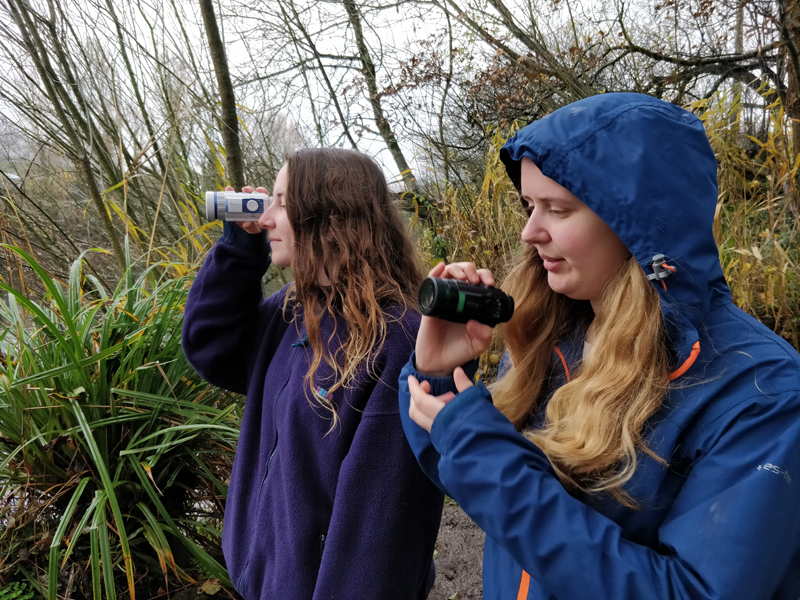
We took the Pulsar Helion XP50 out a few times during daylight and night time to test its capabilities in as many conditions as possible. Steve went out searching for Lesser spotted woodpeckers on Dartmoor, Simone took the scope out to get some night footage of woodcock and we tested the daytime recording functionality again near the NHBS head office. 
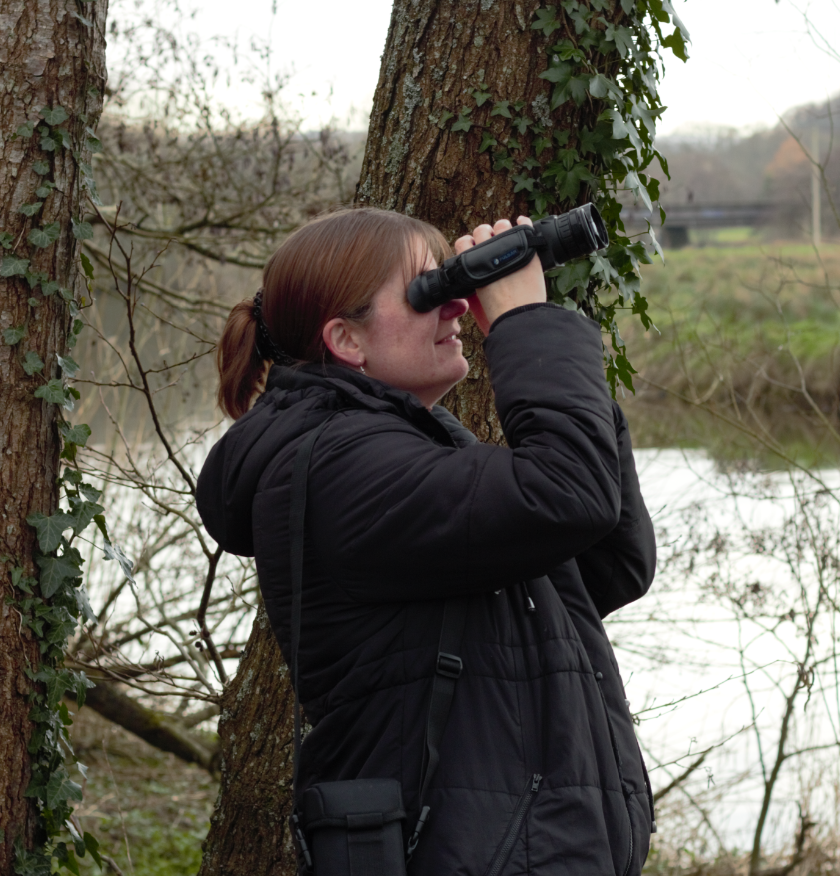
To get night time footage we tested the XP50 on a very drizzly, foggy evening in January, on agricultural land in Dorset that is managed organically. We knew this was a good area for overwintering woodcock and hoped to spot some foraging along with other wildlife. The scope is an all-in-one unit, so we just took it in its case and didn’t need any other accessories.

What We Found

We found the scope easy to use one-handed, particularly due to the strap and the design of the button interface. It was simple to switch magnification zoom setting, take still images or videos, change colour palette and look at the stadiametric rangefinder one handed, meaning we could maintain our focus on the wildlife in front of us. All of the menu options appear on the screen and on recordings so you know what settings you had when you took the footage. The detection range was impressive and we easily spotted larger animals such as deer and hares when scanning the fields in the dark.
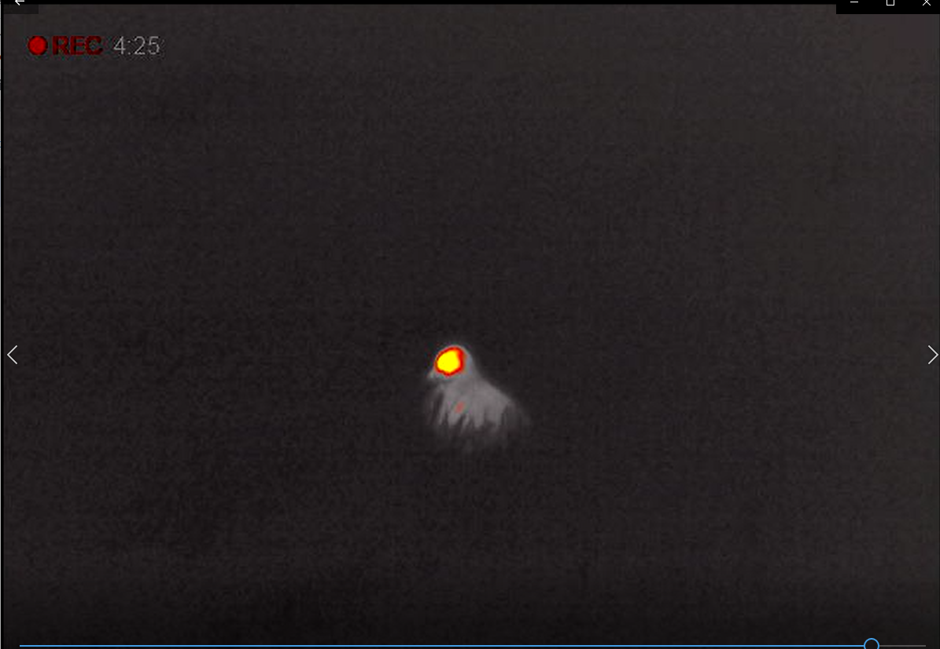
Night time image of a woodcock (5x magnification)

The WiFi streaming was exceptionally easy to set up and a fantastically useful tool to allow other people to view what was happening through the camera. It also allows you to control the camera and record footage. Downloading images from the internal camera memory via USB was very simple afterwards.

Daytime use

We obtained good daytime footage of squirrels and passerines such as blue tits, robins and blackbirds, with the scope making it very easy to pick out birds moving through the leafless tree canopy. The mallards on the river near NHBS head office were easy to spot without the scope but it did help us find a hidden teal and a moorhen that we would have missed otherwise. 

Night time use
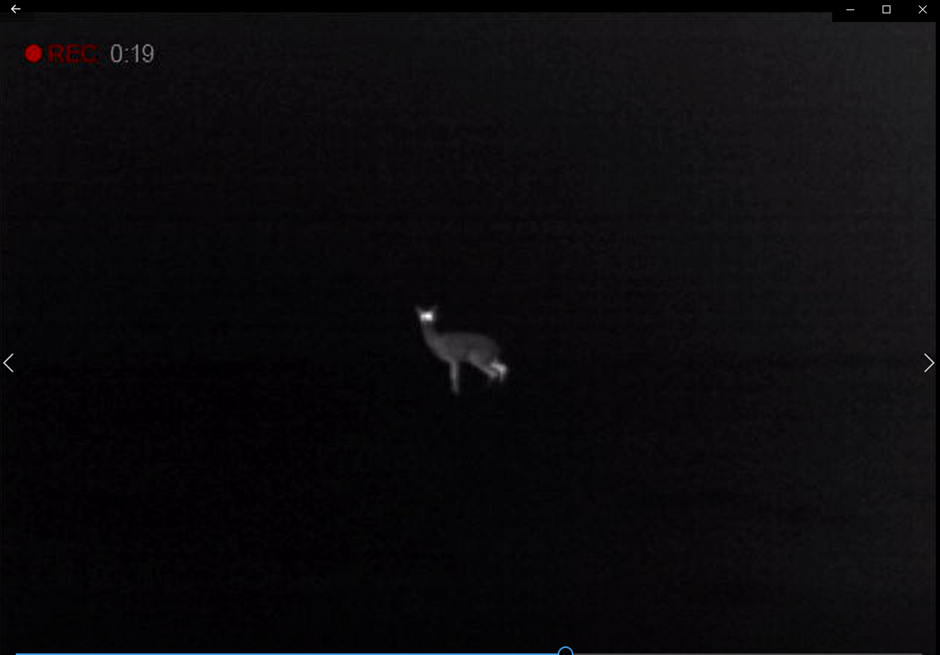
Night time image of standing deer (5x magnification)

The XP50 came into its own at night and we picked up many animals that were missed when we surveyed the area with a lamp, even small animals such as mice and meadow pipits. We detected animals through the fog, drizzle and some ground cover with ease. We spotted roe deer, hares, rabbits, mice, meadow pipits, woodcock and a barn owl. The bird species were easy to follow when flying and provided smooth video footage due to the fast frame rate.

Our Opinion

We think that the Pulsar Helion XP50 is an absolutely fantastic thermal imaging scope and would be a great addition to any researcher or ecologist’s survey equipment collection. The standout features are the detection range, the one handed operation and the streaming function. We would advise users to memorise the shortcut buttons before you go out as it can be difficult to remember how to switch modes in the field. The magnification zoom was useful if animals were fairly close but the footage became very blurry if they were further away so we tended to stick to 2.5x or 5x. Camera shake also becomes a real problem at the higher magnifications and a tripod would have improved our recorded footage quite dramatically. Thermal imaging technology opens up a world of possibilities for night time wildlife watching, bird ringing and surveying and we think this is an excellent scope for all of these purposes.
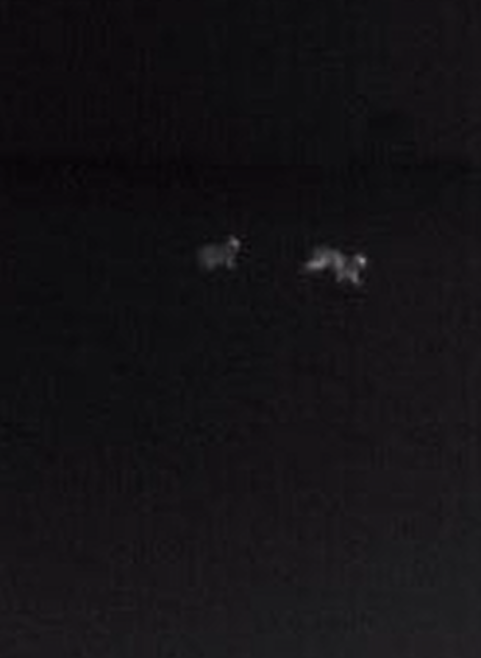
Night time footage of hares (5x magnification)

For more information on night vision technologies and the NHBS range, please see our blog post
NHBS Guide to Night Vision and Thermal Optics.

The Pulsar Helion XP50 is available from the NHBS website. For assistance with any queries regarding our range of thermal imaging cameras, please do not hesitate to contact our team of Wildlife Equipment Specialists.
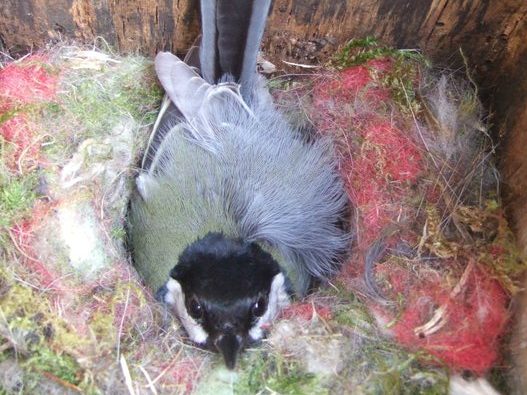
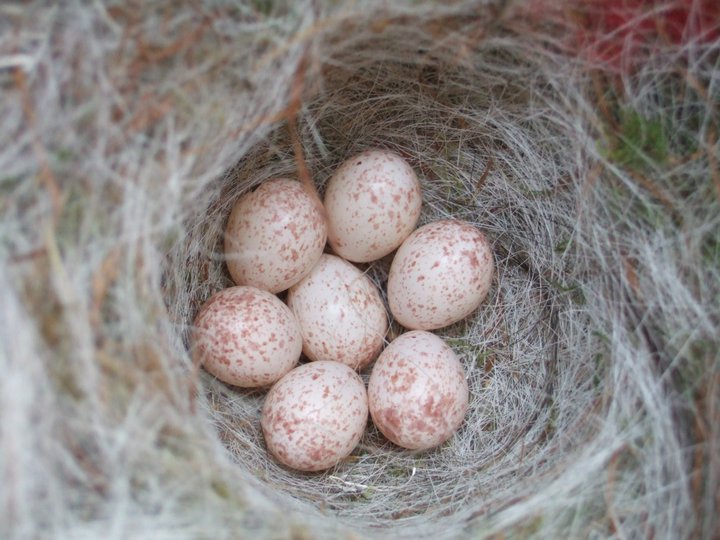
Installing nest box cameras at NHBS

Now is the time of year when many bird species are starting to defend territories more noisily and to look for suitable nest sites. To coincide with National Nest Box Week (14th to 21st February), we have been busy selecting our favourite nest boxes, updating our advisory blog posts on where to site nest boxes and how to put them up, and installing our own nest box cameras at our warehouse in Devon.

Great tit eggs – Photo: S. Webber

At this time of year, the birds will currently be exploring nest sites and should start bringing nesting material into the boxes in the next couple of weeks. 

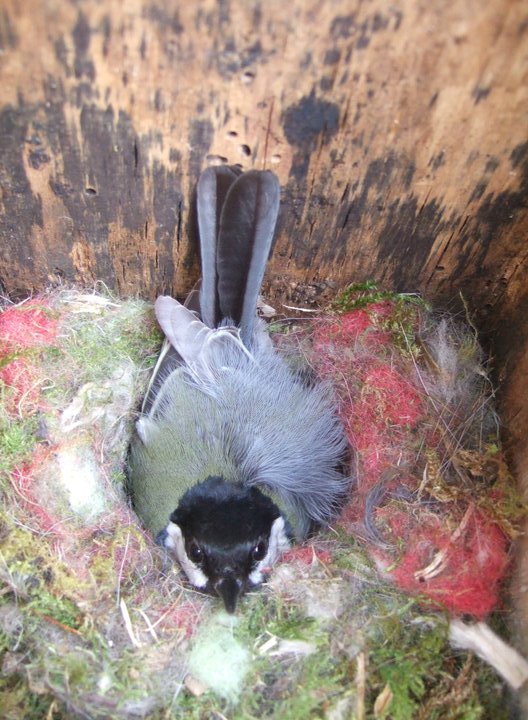
Incubating great tit female – Photo: S. Webber

Given that it has been a mild winter, the breeding season should start earlier this year, but we still would not expect the first eggs to appear until April. This means that there is still time to get a nest box up in your garden to provide much needed nesting space for birds. You could even consider enjoying this amazing spring spectacle up close with a nest box camera.


Choosing the nest boxes and cameras

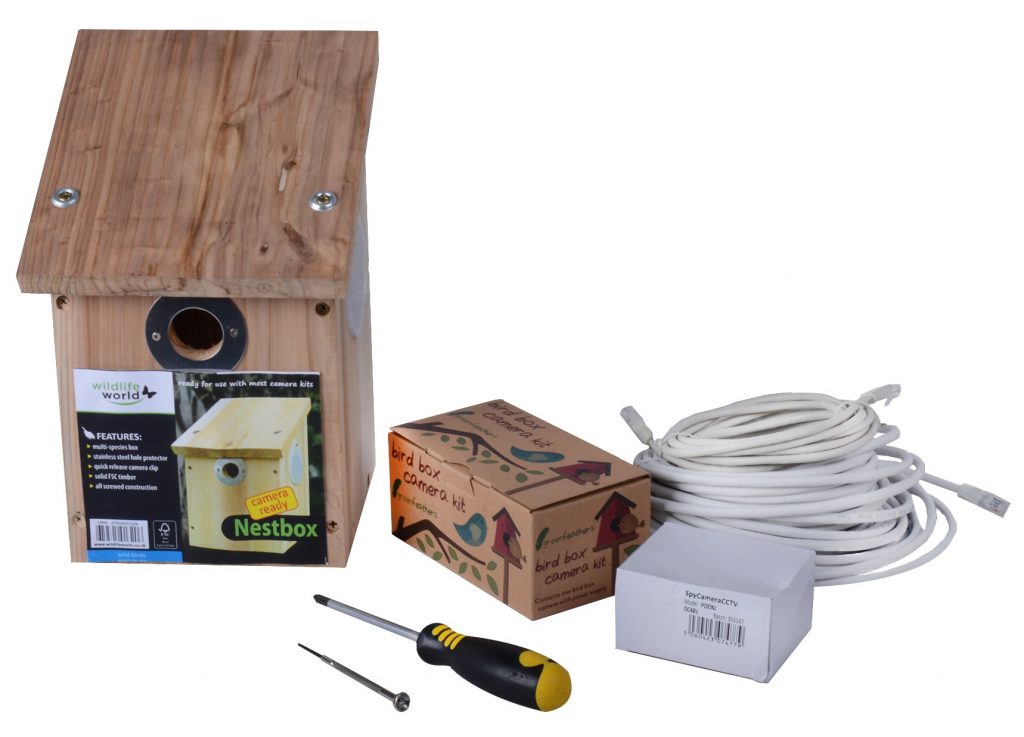
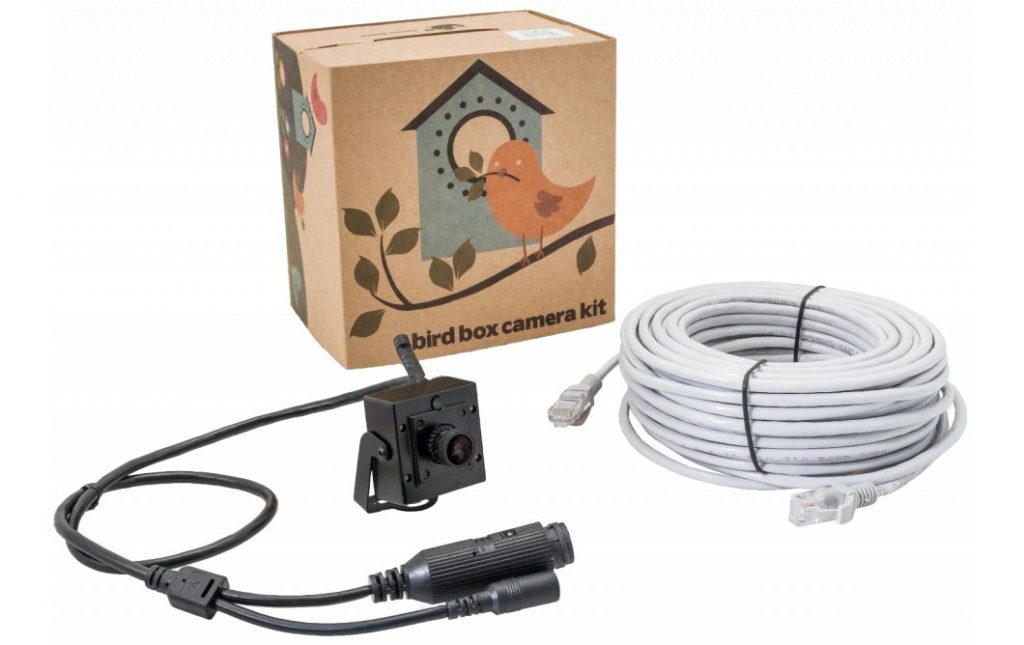
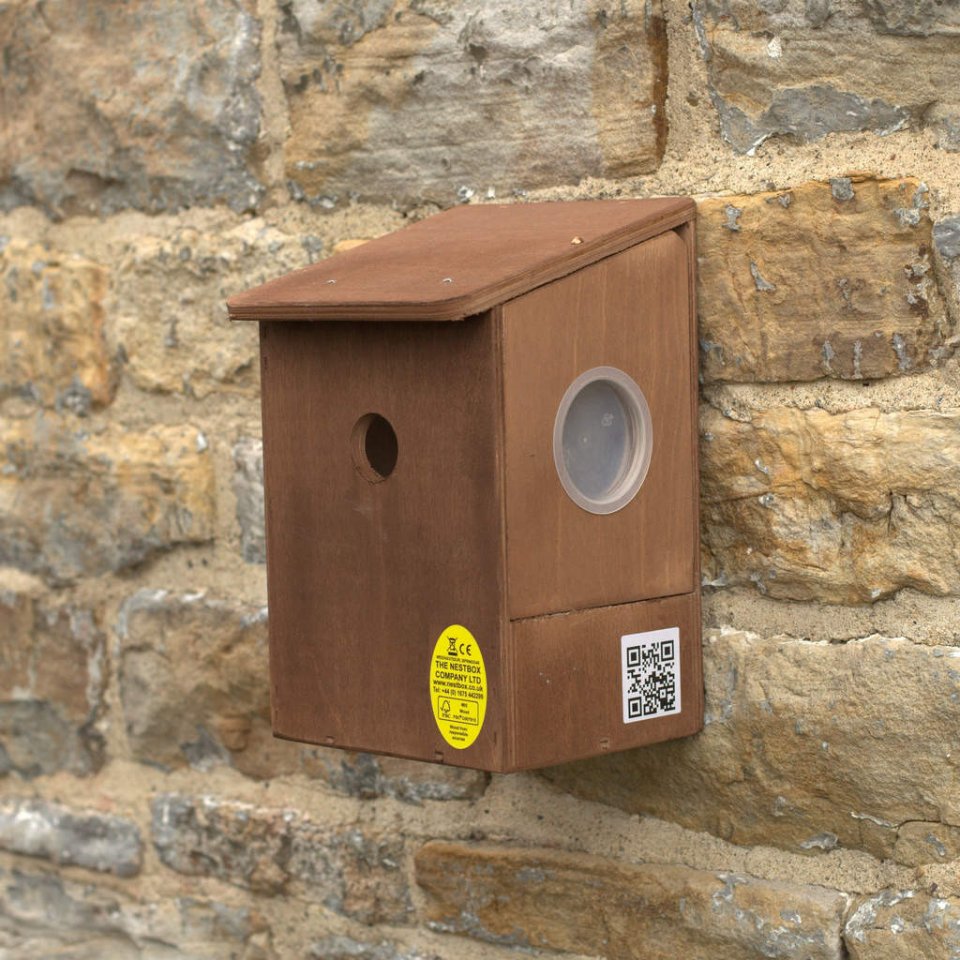
We chose two of our Camera Ready Nest Boxes because they have a perspex panel in the side to let in extra light, which gives better daytime images in colour, and a camera clip on the lid. We then selected two of our most popular cameras, the WiFi Nest Box Camera, which can stream footage directly to a smartphone or tablet, and the IP Nest Box Camera, which can provide a live stream to a website. There are many options available when it comes to selecting a nest box camera, and our blog post on Watching Wildlife – How to choose the right Nest Box Camera can help you decide between the different options.

The Camera Ready Nest Box and IP Nest Box Camera

How to install the camera in the nest box

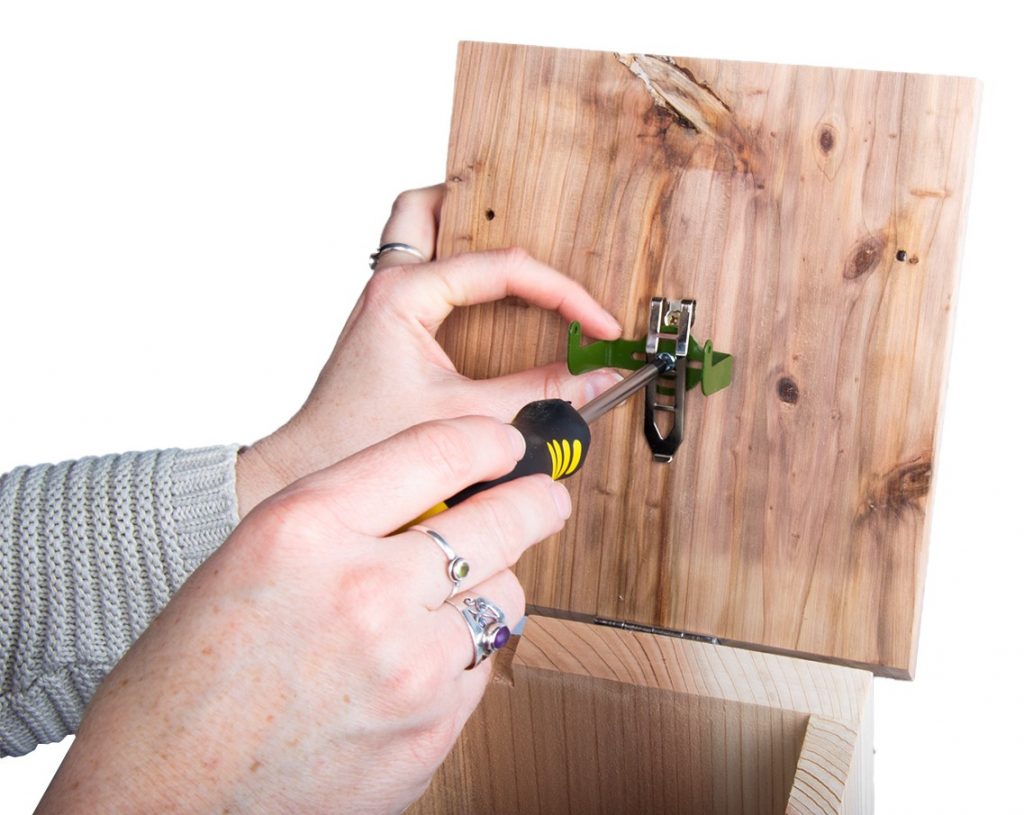
The procedure for attaching the camera to the lid was the same for the WiFi and IP cameras. We found that the easiest way of installing the camera into the box lid was to attach the camera bracket to the lid first and then to attach the camera to its bracket afterwards. We unscrewed the camera clip with a large Phillips screwdriver, slid the camera bracket underneath the clip on the inside of the lid and then tightened the clip screw back up again. 

Unscrewing the camera clip and attaching the bracket

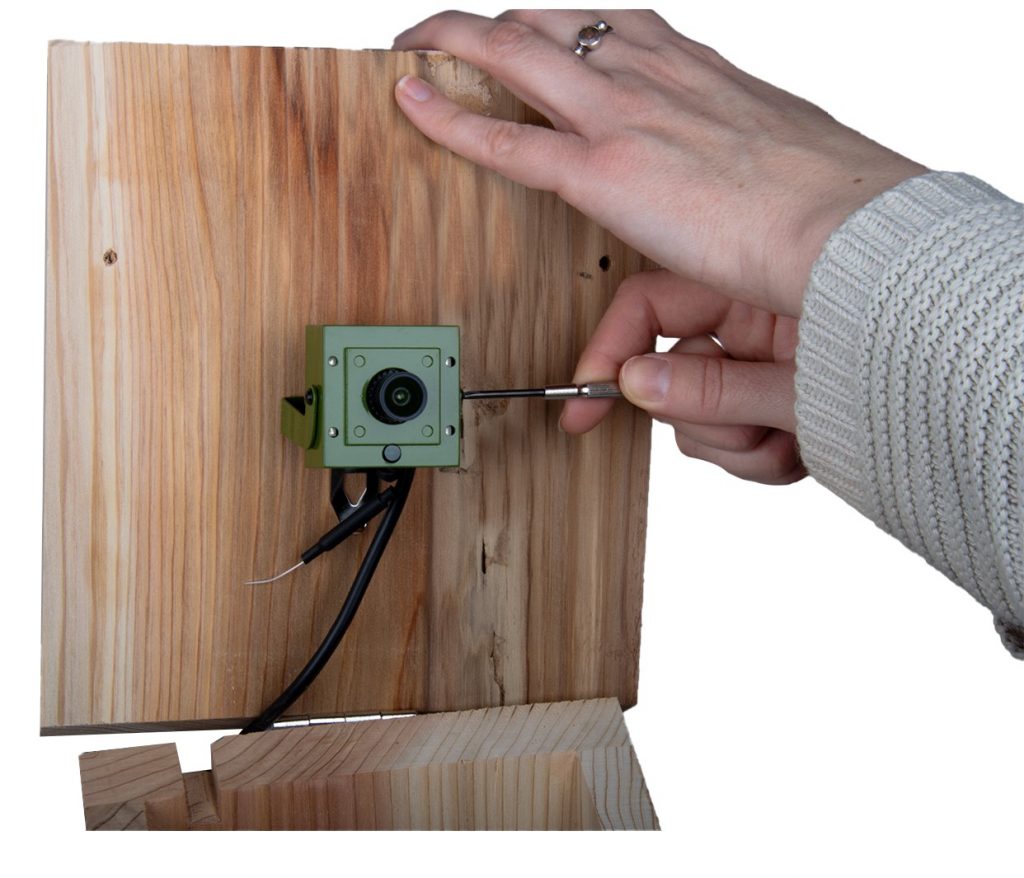
Then we attached the camera onto its bracket using a very small Phillips screwdriver. 

Attaching the WiFi camera to its bracket

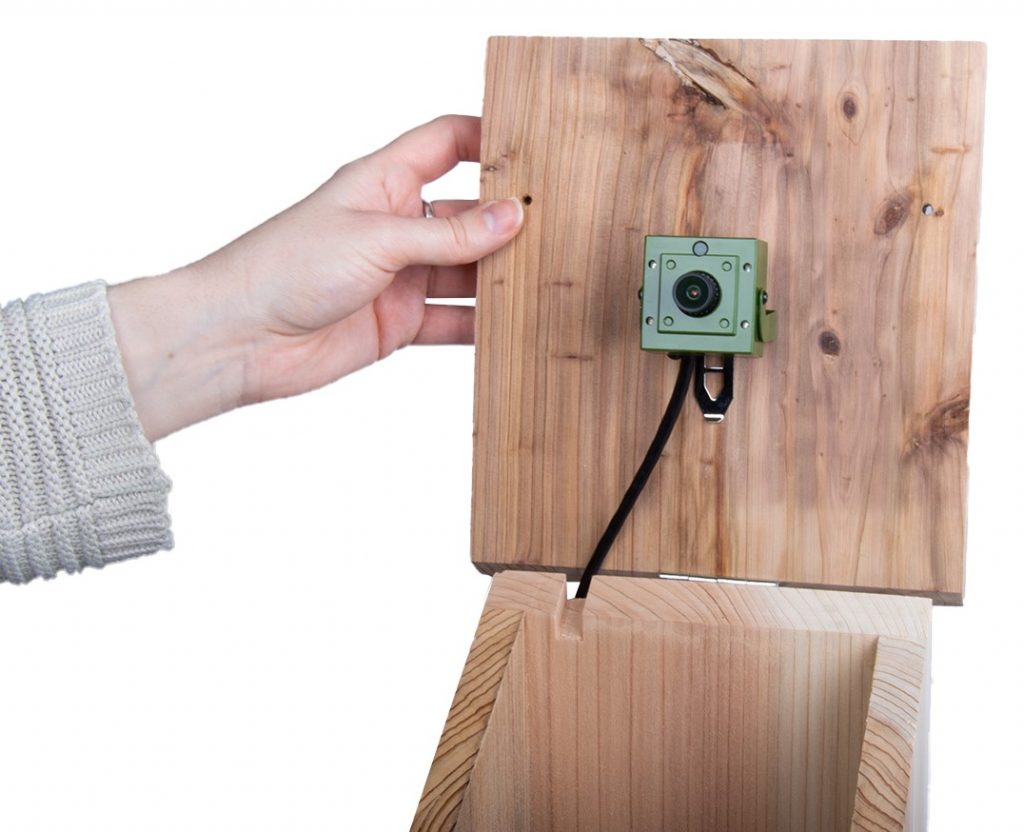
With the WiFi camera we found that it was best to point the aerial downwards because our nest box roof was sloping. You can check the angle of the camera through the perspex panel on the side – it is best to have it pointing directly downwards and not angled. Ensure that the camera cable is running out of the notch on the back of the box so that the lid fits down snugly.

IP Nest Box Camera in position

Putting up the nest boxes

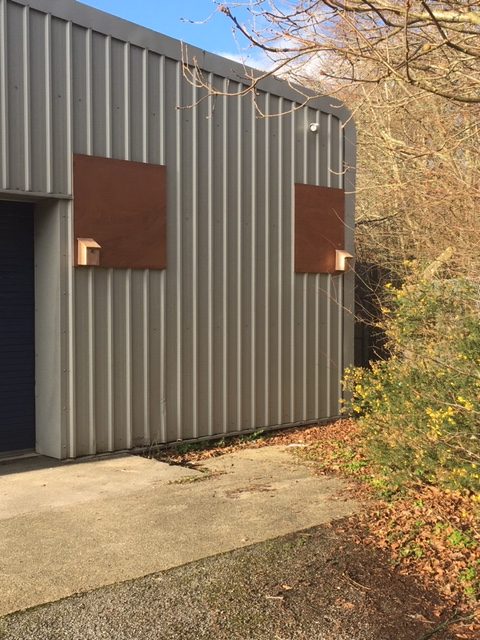
We sited the nest boxes on the eastern side of the building close to the tree cover along the river. To maximise the chances of occupation, it is advisable to site boxes for cavity nesting birds such as blue and great tits away from prevailing winds, and with a direct flight path to some tree cover. We attached them securely to the wall, approximately 2m off the ground – this is high enough to prevent interference but close enough to reach for monitoring and maintenance. We have put them as far apart as possible from each other and out of the sight of our bird feeder around the corner. We think that it may be unlikely that tit species would nest that closely to each other but if the boxes are occupied by house sparrows then these two boxes could form the start of a colony.

Connecting up the cameras

The IP Nest Box Camera connects via Ethernet cable directly into a router, hub or switch and then you need to choose software to allow you to access the camera feed and live stream to a website. We are currently trialling Anycam.iO. If there is no WiFi network, the WiFi camera can be used as a standalone WiFi source that you connect to directly with your smartphone or tablet. Alternatively you can tether the WiFi camera to your existing WiFi network and access it as a node on the network. The WiFi camera is viewed via an app on your smartphone or tablet and we are currently trialling ICSee Pro.

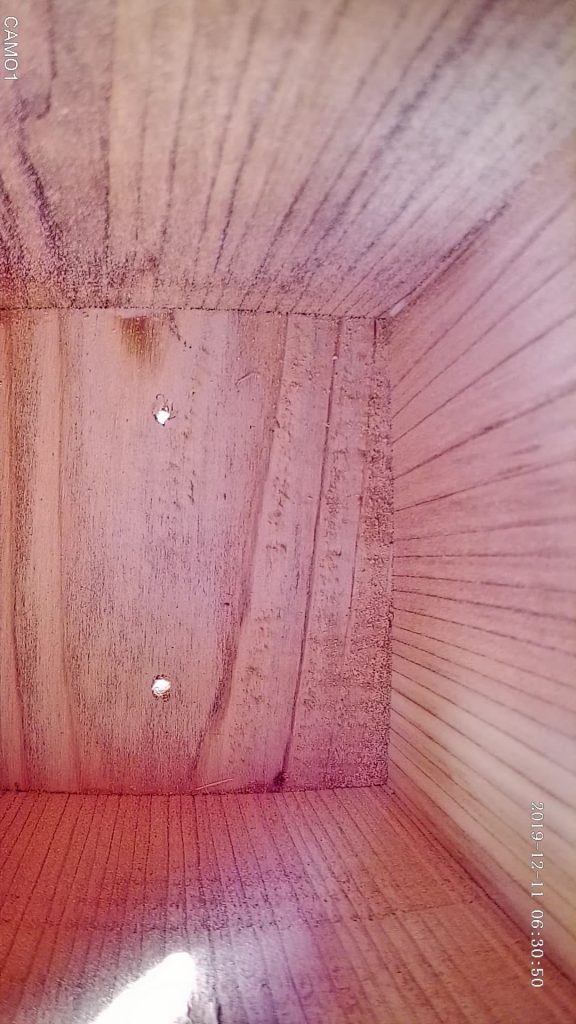
The current view in the IP camera nest box


Now we just have to wait and hope that the local birds decide that these are desirable nesting sites! For further advice on nest boxes and cameras, please do not hesitate to contact our team of Wildlife Equipment Specialists.


Recommended reading


Nestboxes
Your Complete Guide
£10.95


A Field Guide to Monitoring Nests
£24.99


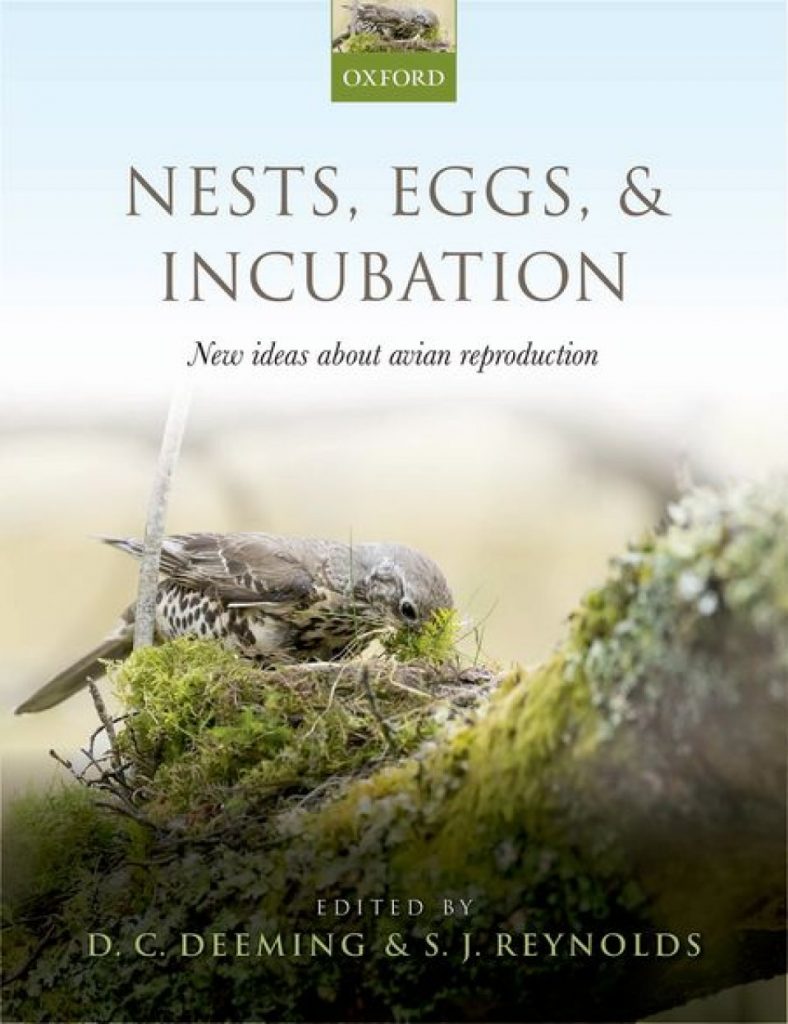
Nests, Eggs & Incubation
£23.99  £40.99


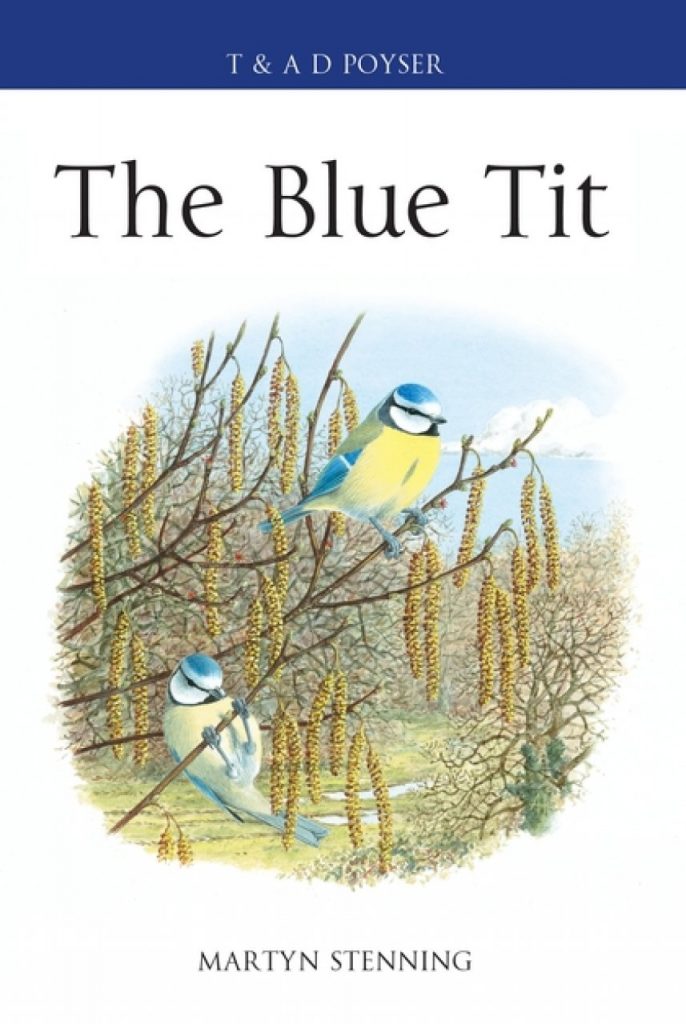
The Blue Tit
£49.99


Recommended Products

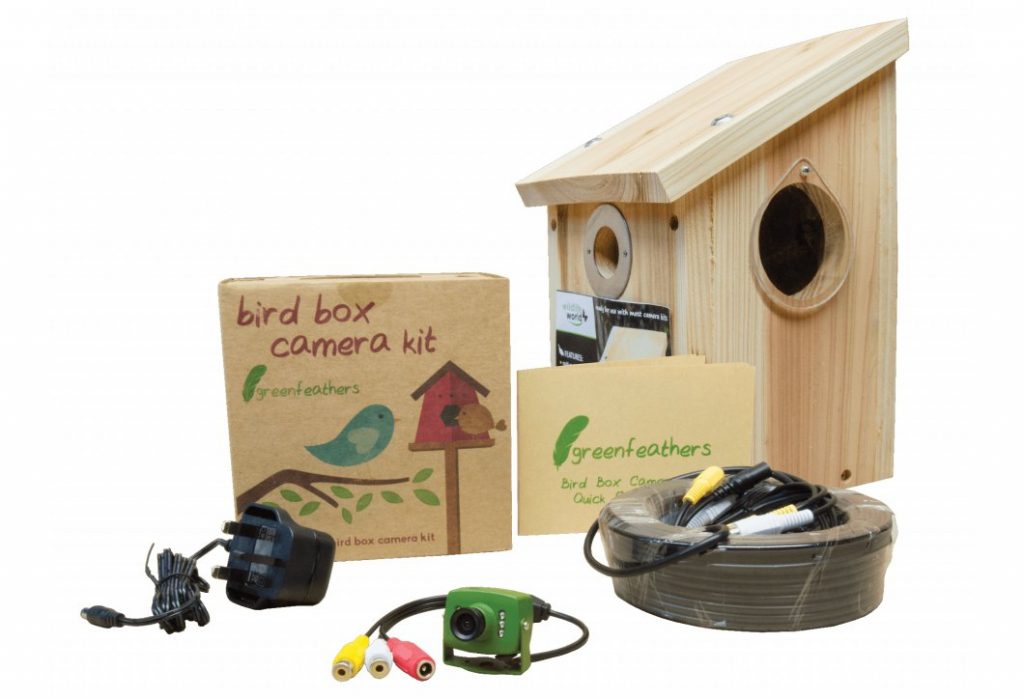
Nest Box Camera Kit
From £58.99


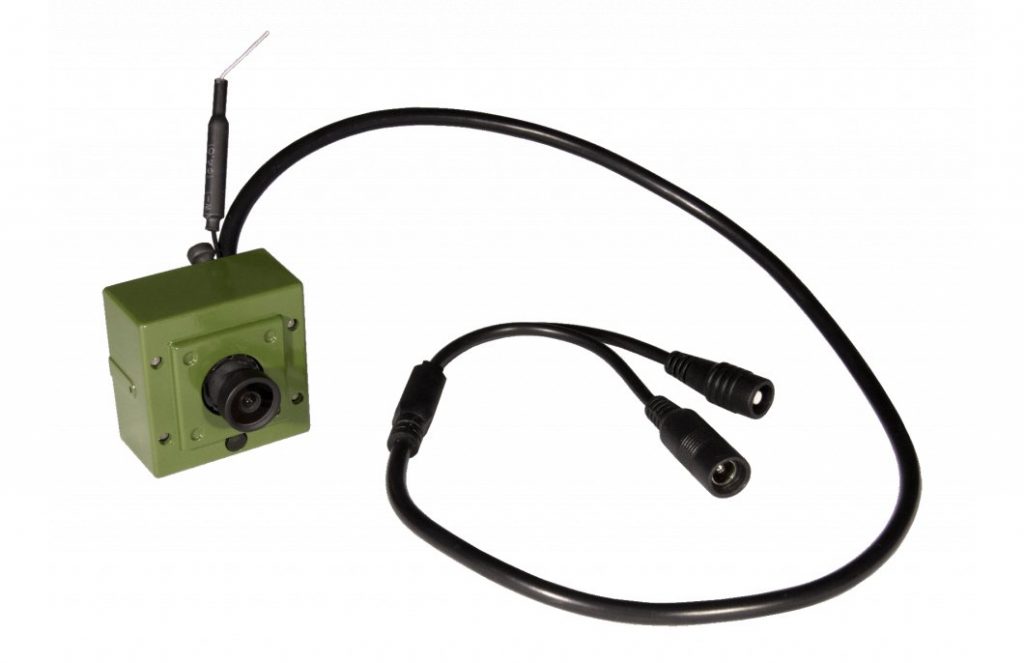
WiFi Nest Box Camera
£109.00  £129.00


IP Nest Box Camera
£100.00


Side Opening Nest Box
£29.95

Red Sixty Seven: A Collection of Words and Art Inspired by Britain’s Most Vulnerable Birds

Red Sixty Seven features our most vulnerable bird species, beautifully illustrated by some amazing wildlife artists. All of the publishers profits from the sale of this book will be donated to BTO and RSPB to further their work on red listed birds.

Contributors include Chris Packham, Ann Cleeves, David Lindo,  and Patrick Barkham.

This book should not exist.

In an ideal world this book, and the official Red List of the most vulnerable birds in the UK it is based on, would not be needed. But the world is far from ideal and our bird populations are declining at an alarming rate. In the past few years alone the once widespread Wryneck has ceased breeding in the UK altogether and has dropped off the list completely. Which species will be next?

Editor, Kit Jewitt has taken some time to answer a few questions about the Red Sixty Seven book project and the list itself.

Hen Harrier: Jane Smith

Of all the birds on the Red List which do you think is most vulnerable?

If I had to choose one, it would be the Hen Harrier. Not only do they have to deal with all of the natural challenges they face, they also have to contend with persecution from criminals within the grouse shooting industry, which evidence now suggests is the main cause of their decline in numbers. The fact that 72% of tagged Hen Harriers are confirmed or considered likely to have been illegally killed is a national disgrace. However, in terms of the recent rate of decline I would also suggest Turtle Dove is a species of highest concern.

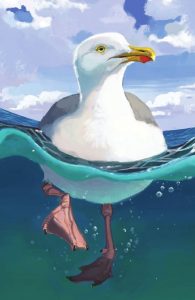
Herring Gull: Crow Artist

Many people will be surprised to see herring gull on the list, could you expand on how this seemingly ubiquitous bird has made the list?

Herring Gull populations in coastal areas have dropped by over 50% in my lifetime. This is largely due to the lack of food at coastal sites, with overfishing of UK coastal waters and warming seas caused by climate change likely to be the main reasons for the reduced amount of food available to gulls and other seabirds. They are adaptable, intelligent birds though, so moving to inland areas, or areas where humans create waste for them to eat has been a way for some populations to survive.

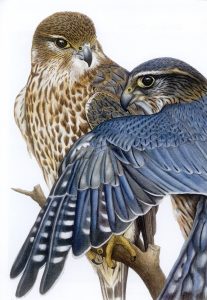
Merlin: Natalie Toms

Have any birds managed to move away from the Red List to Amber over the last year or so, and which birds are the most recent additions?

Nineteen species were added to the red list for the first time when it was last updated in 2015, and one species, Merlin, moved back onto the list. Breeding seabirds, such as Puffin, Kittiwake and Shag are now included, and with the additions of species such as Woodcock, Nightingale and Pied Flycatcher there are now more woodland birds on the list than any other habitat. Two species, Bittern and Nightjar, have moved from the red to amber lists thanks to the creation and management of suitable habitat, stimulated by species action plans.

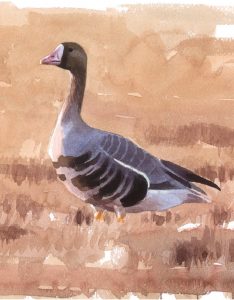
White Fronted Goose: Szabolcs Kokay

We know how we as individuals can help garden birds, but the list contains a high proportion of iconic water birds. How can we as individuals help preserve the many waders and ducks that are on the list?

Many projects being conducted by BTO, RSPB WWT and others help waders, seabirds and ducks, so fundraising for these is vitally important. My main motivation behind the Red Sixty Seven project was to do something to help these declining birds, by spreading the word and raising money for conservationists on the ground. By highlighting the red list far and wide, more people will care and will then hopefully start their own fundraising for BTO’s Operation Wader or Curlew appeal, or WWTs Black-tailed Godwits appeal, or whichever scheme chimes with them. I can’t run marathons or undertake extreme endurance like my friend Jonny Rankin, who has raised over £19,000 for Turtle Doves, so I had to think of a different way of fundraising!

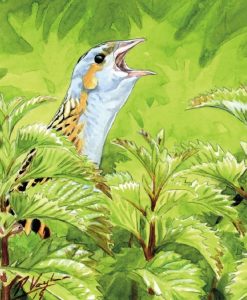
Corncrake: Robert Vaughan

Farmland bird species also make up a large part of the list. Can you see any hope for securing the future of our most rapidly declining farmland species?

The change in farming and land management practices over the last 40 years, including the use of pesticides and changes in crops grown have ultimately reduced the amount of appropriate habitat, and food sources for our farmland birds. Post Brexit, there is an opportunity for the government to make changes to policy to help our farmland wildlife. I just hope they take full advantage of it.

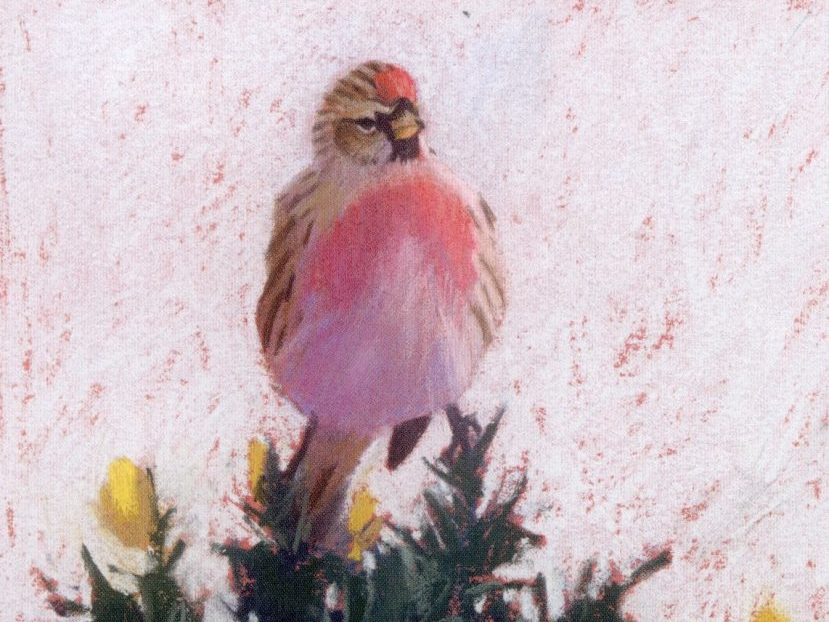
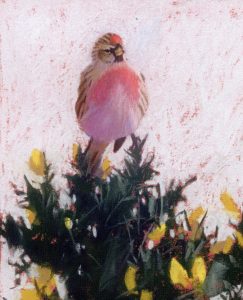
Lesser Redpole: John Threlfall

We love the idea of using the power of beautiful words and paintings to deliver a conservation message. Do you think that engaging the reader emotionally can result in more concrete conservation actions being taken?

I hope so! As well as raising funds for crucial work to help red-listed species, I hope Red Sixty Seven brings the list and the plight of these birds to a wider audience, inspiring other people to take action themselves, whatever that might be. The artwork and stories within the book bring home the message in a very accessible way, and you are left under no illusion that we must do something. There is a poignant sting in the tale at the end of the book; an ‘In Memoriam’ section devoted to the birds we have lost as breeding species in recent years. This book is a call-to-arms.

All of the publisher’s profits from the sale of this book will be donated to BTO and RSPB to further their work on red listed birds.

Red Sixty Seven: A Collection of Words and Art Inspired by Britain’s Most Vulnerable Birds
Hardback,  published February 2020              £19.99

Red Sixty Seven is 67 love letters to our most vulnerable species, each beautifully illustrated by some of the best wildlife artists around.


BIAZA Field Conservation and Native Species Conference at Chester Zoo

Greeted by the trumpeting of elephants across the otherwise silent car park, we arrived at Chester Zoo. With a quick glimpse into the rhino enclosure, we turned away from the main entrance and headed towards the lecture theatre (passing an impressive and colourful bug hotel) for the start of the BIAZA conference. The theme for this event was to be rewilding – an extremely topical and exciting subject in the current world of conservation.
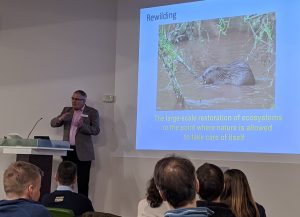
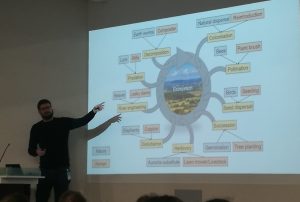
Professor Alastair Driver

It seemed fitting that the event began with a talk by the highly esteemed conservationist Professor Alastair Driver, who is also the director of Rewilding Britain. It was amazing to hear how much popularity the concept of rewilding has gained, with many landowners now approaching Rewilding Britain, searching for advice on how best to rewild their own land. Dr Daniel Hayhow, the main author of the State of Nature report published in October 2019, followed with a discussion of the key findings of this pivotal report to paint a picture of how nature is faring in the UK. Jo Kennedy with the Manchester Mossland project brought the first session of the day to an end, demonstrating how collaborations such as the one that exists with themselves and Chester Zoo have been a vital aspect of captive bred reintroduction projects. The successful reintroduction of the Large Heath butterfly to the Manchester Mosslands Special Area of Conservation is a great example of this.

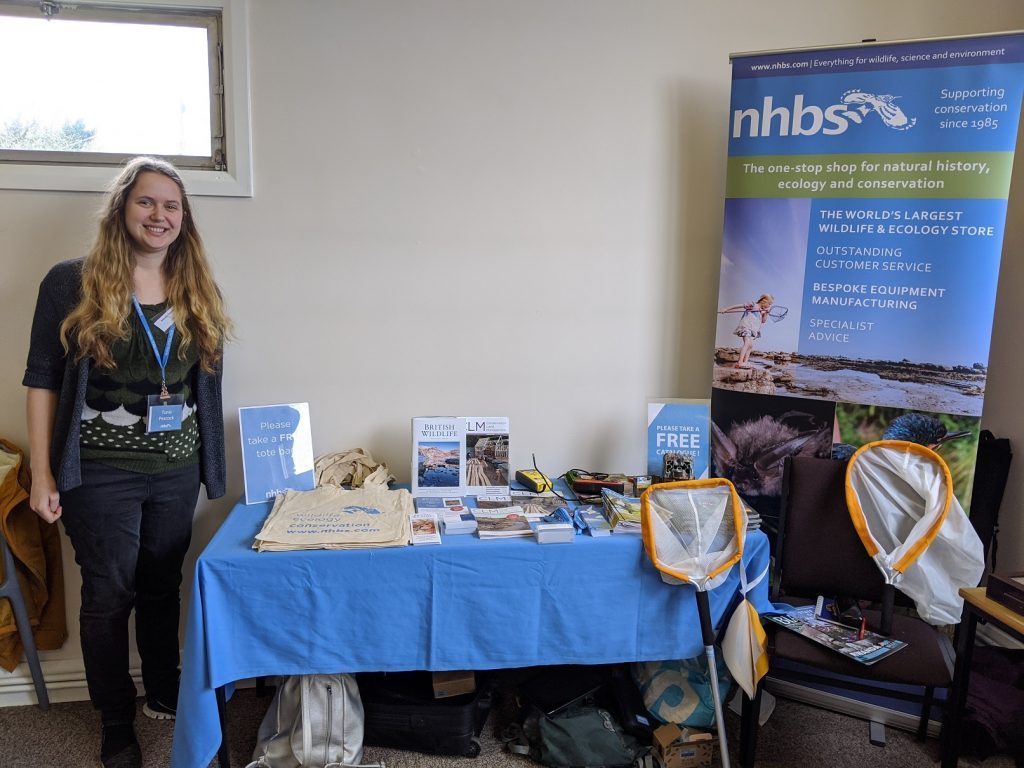
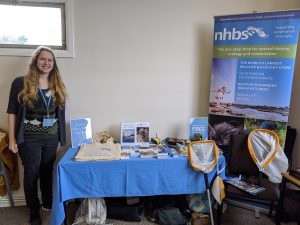
Toni on the NHBS stand

As the attendees patiently queued for their cups of tea and bourbon biscuits, we stationed ourselves in the adjoining room by the NHBS stand. We had brought with us various pieces of kit that are used for species surveys and monitoring, an important aspect of assessing the success of rewilding projects. Our selection of trail cameras were a popular talking point in particular, attracting interest from keen naturalists eager to investigate the wildlife in their back garden, to professional researchers and conservationists in charge of species reintroductions.

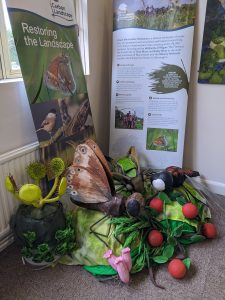
Manchester Mossland project display

In the same room you could also marvel at the amazing models on the Manchester Mossland project display that show the species that they are working with at their sites. Or perhaps explore the insect collection brought by the Tanyptera Project, who seek to promote the study of invertebrates in Lancashire, Merseyside, Cheshire and Great Manchester. There was also a raffle where a lucky winner had the opportunity to win a NHBS voucher or a British Wildlife gift subscription!

The next session featured a rather lively talk from Philip Turvil of Kew Gardens, who told us how 4 million people have been engaged by the Grow Wild mission, and certainly entertained all of us with a ‘Wildflower rap’ video (not performed by Philip I hasten to add!). BIAZA also used this opportunity to launch ‘Grab that Gap’, an initiative to encourage BIAZA members to transform a section of their site (the edge of a car park for example) into a wildlife haven and calls for participants to use social media to share their story #GrabthatGap2020.

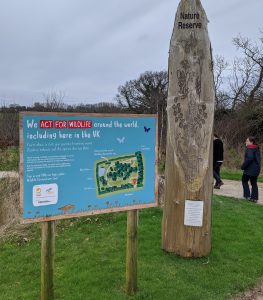
Chester Zoo’s nature reserve

After lunch we were all taken outside to explore Chester Zoo’s very own nature reserve. We were taken through the history of the reserve, the types of species to be found (14 species of dragonfly at the last count, and over 20 butterfly species) and management techniques in place. It struck us how much vandalism occurs at the site; many Malaise traps had been destroyed and there was evidence of graffiti. But the staff at Chester Zoo are extremely dedicated and have big visions for the future.

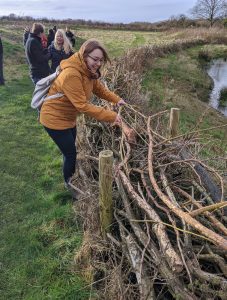
Catherine, hedge laying

We were also given an opportunity to pitch in and help. Dead hedges are used not only to stop the little ones from running down the hill and straight into the pond, but also to provide a habitat for invertebrates and birds as the hedge starts to rot down. Our job was to top up these hedges with new branches (and to not slip down the muddy hill of course).


Then back to the warmth with an interesting line up of talks to finish the day. This session had a species reintroduction theme covering mammals, birds and insects, starting with the reintroduction of Pine Martens to the Forest of Dean. It was fascinating to hear of all the measures involved to ensure that there is a genetically diverse reintroduced population, minimal stress to the animals and the prevention of the spread of disease. The focus was shifted to a rare invertebrate, the Pine Hoverfly Blera fallax – the adults of which have not been seen in the wild for seven years. Dr Helen Taylor from RZSS discussed the captive breeding programme put in place to ensure there is a viable population for future reintroductions and the associated challenges with this approach.

Chris Sandom

Next we heard about the Red-billed Chough, the flagship species for the Birds On The Edge project, and their reintroduction to Jersey following a successful captive-breeding programme at Jersey Zoo. The session was drawn to a close with the final two talks of the day, the first of which reviewed the native bat species recorded at Knowsley Estate and their habitat use, followed by Will Mallard describing his PhD research project on the Barberry Carpet Moth.

The take home message? Rewilding is a step in the right direction to restore ecosystems and habitats to a state where nature can take care of itself. It isn’t just about wolves and bears.

With each day we were all generously given a free ticket to enter Chester Zoo, so of course we had to nip in before we left!

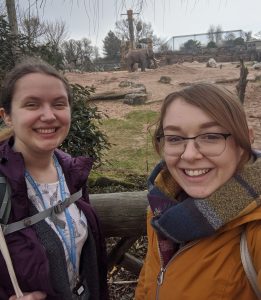
Toni and Catherine at Chester Zoo


NHBS: In The Field – Hi-Sound Stereo Parabolic Microphone

Hi-Sound Stereo Parabolic Microphone

Parabolic microphone dishes are a great tool for wildlife recording. They offer directional recording by isolating and amplifying sounds within a narrow band (in front of the microphone) without the addition of excessive self-noise (the noise created by the microphone when sounds are artificially amplified). This means that even very quiet sounds can be heard clearly from a distance. These systems are particularly popular for pinpointing birdsong and producing clear and sharp recordings, although they can be used to record any wildlife.

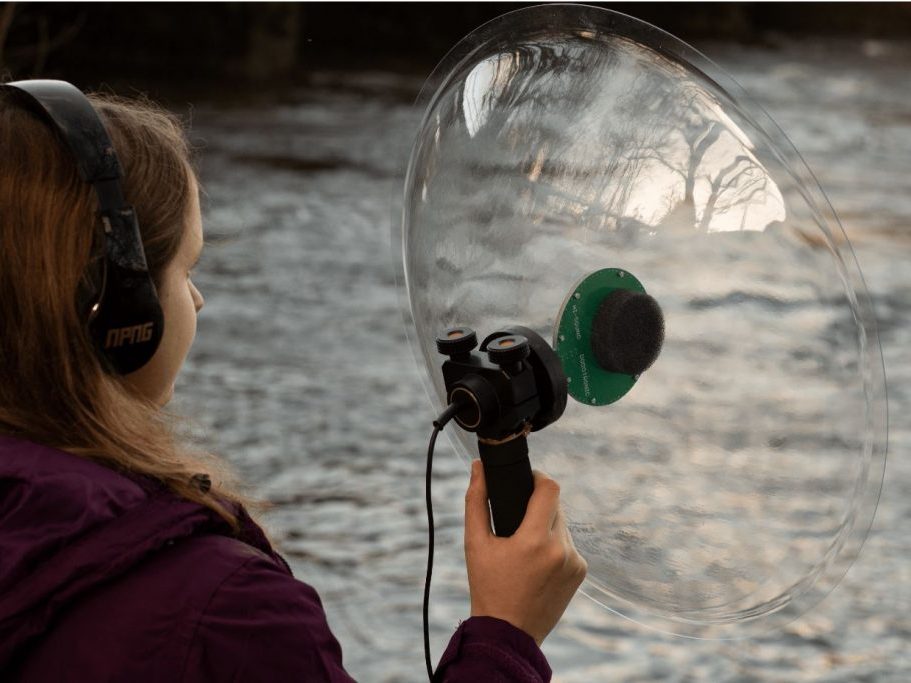
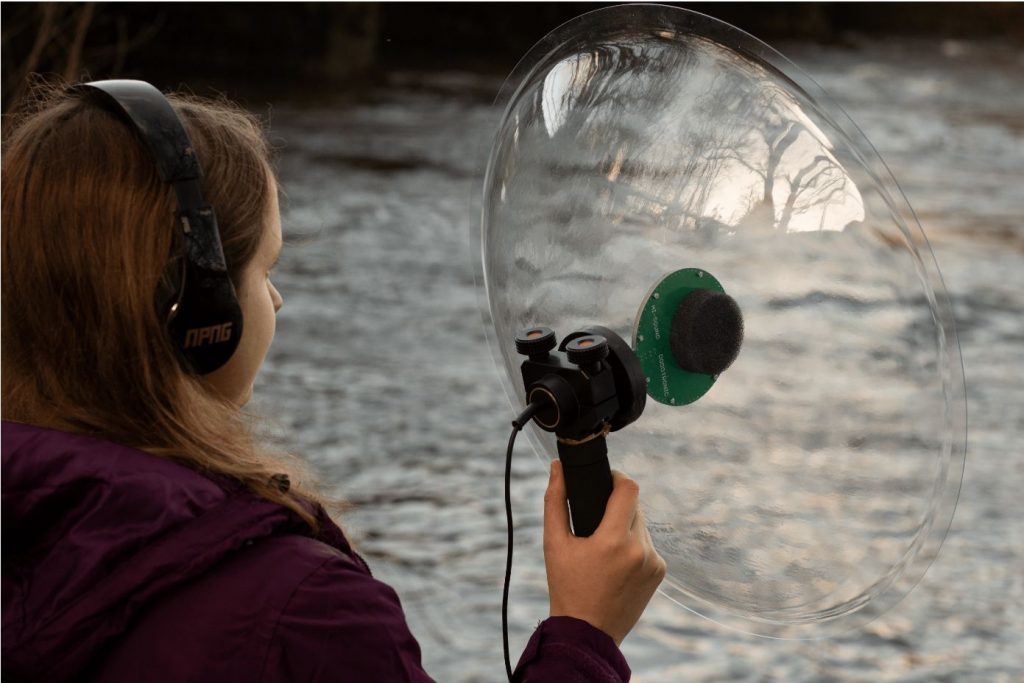
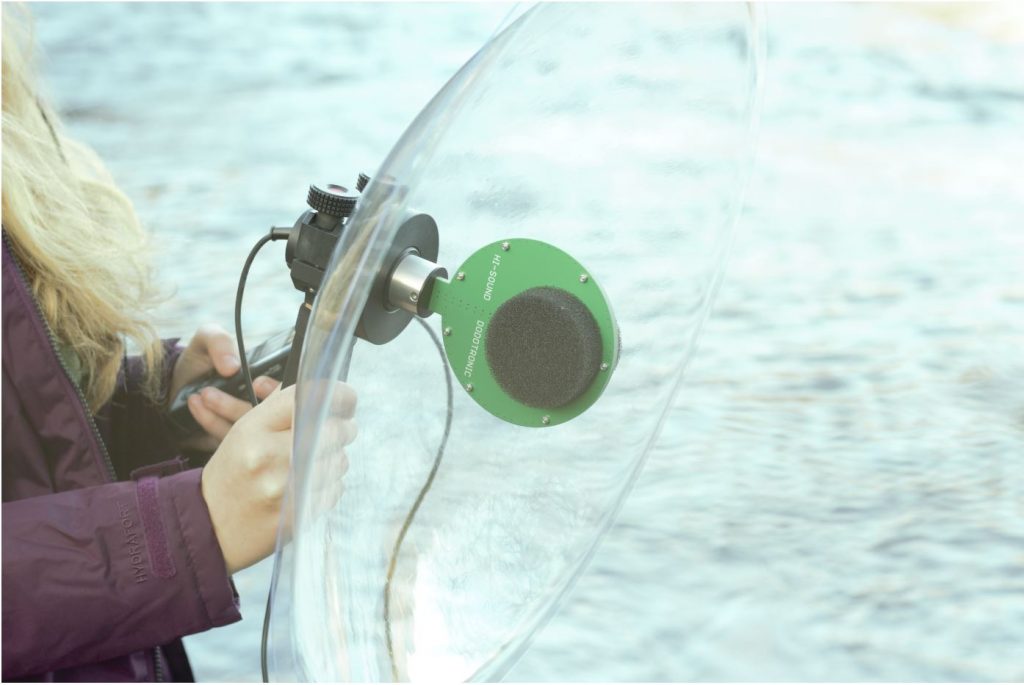
The Hi-Sound is a parabolic dish ideal for wildlife recording

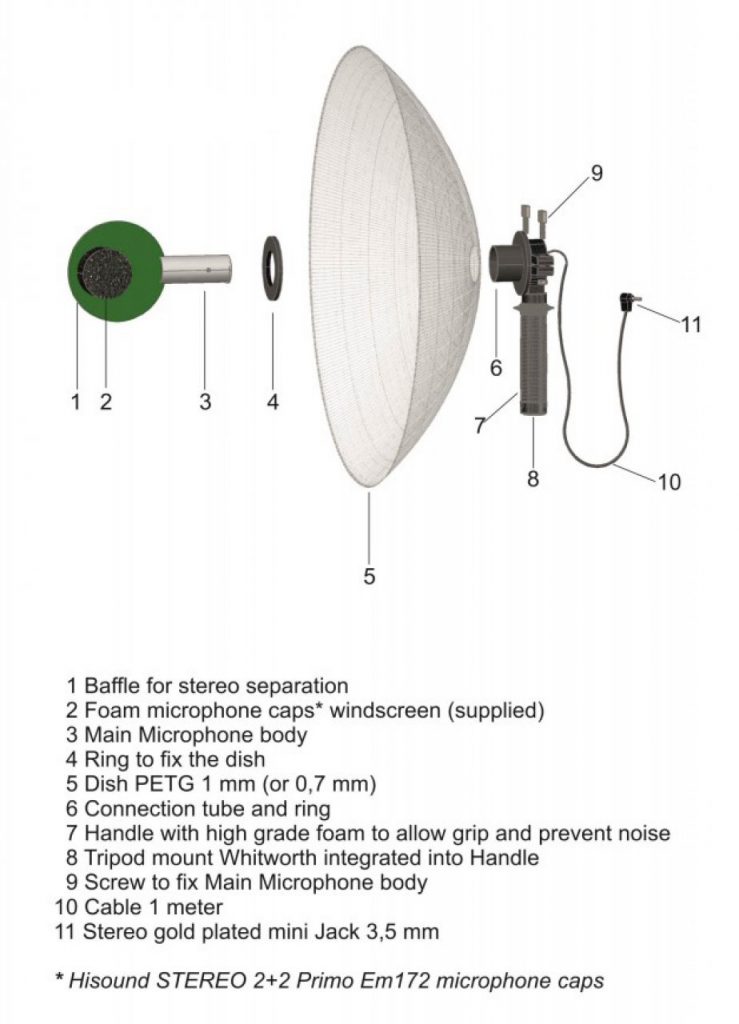
We tested the Hi-Sound Stereo Parabolic Microphone which features a set microphone sensors separated by a baffle to create stereo recordings. Stereo recordings are more immersive and realistic than mono recordings as they accurately reproduce sounds coming from different directions. Each microphone sensor has excellent performance and increases the gain (volume) of recordings whilst keeping the self-noise low, meaning your recordings will remain clean and crisp.

Hi-Sound setup diagram

Setting Up

The Hi-Sound is easy to put together and is powered through plug-in-power (where the power is supplied through an attached recording device). We paired the Hi-Sound with the Tascam DR-05X portable handheld recorder and a pair of standard, good quality headphones. Our settings on the Tascam were:

Mic Power: On (very important! If your recording device does not detect the microphone, double-check this setting is on)

Low Cut: 80Hz (this removes some of the inherent noise at the lower frequencies)

Pre Rec: Off (you may want this on if you are recording wildlife that you might miss. When on, the Tascam will record the previous two seconds before ‘record’ was pressed)

Auto Tone: Off

We chose a still, dry day to test this microphone. For optimal recording, it is useful to go somewhere away from roads or background noise. For example, we took the Hi-Sound into a bird hide and although it picked up a wader call beautifully, it also picked up the floorboard creaks, coat ruffles and binocular case velcro from everybody else in the hide. You’ll be amazed at how much background sound there is in what you thought was a quiet setting!

We tested the Hi-Sound along a riverside walk to record the sounds of the water and how different noises could be pinpointed by aiming the parabolic dish. We also went to some quieter locations to record birdsong and compared recordings between using the Hi-Sound and just using the inbuilt Tascam microphone showing the benefits of this parabolic dish.

What we found

The Hi-Sound produced much cleaner, crisper sound and made recording specific bird calls a lot easier. Aiming the parabolic dish correctly took a bit of practice but once mastered, it was incredibly useful for pinpointing a bird, even if we weren’t able to see it. The clear plastic dish helped with this as without it, most of our view would have been obstructed. The stereo aspect of the recordings also made it a lot easier to track birds if they moved. 

It was fascinating to aim the Hi-sound at different points along a river in order to pinpoint different sounds. This demonstrated how good the dish was at isolating sounds from the narrow band in front of the microphone.

Our Opinion

The Hi-Sound is a fantastic piece of kit for wildlife recording. Although the cost of a parabolic microphone can be a significant leap from a standard handheld recorder, their performance and ability to isolate calls and sounds make the investment well worth it.

The Hi-Sound was particularly good at amplifying very quiet calls or calls from a long distance away without adding noise or compromising on recording quality. This is something that the Tascam just wasn’t able to do by itself. The microphone is easy to use, although perhaps not as easy to transport due to its size and shape. 

We feel that the Hi-Sound will impress both the wildlife recording beginner and the entry-level professional.  The Hi-Sound completely transforms a walk through nature, providing a whole new element to bird watching. If you have never thought about wildlife recording before, I would urge you strongly to do so. It is a rewarding and captivating hobby that is definitely enhanced with the use of a parabolic microphone such as the Hi-Sound. If you are a professional who regularly records, then the Hi-Sound would be valuable to refine your recordings and produce excellent quality audio.


The Hi-Sound Stereo Parabolic Microphone is available through the NHBS website.

To view our full range of sound recorders and microphones, visit www.nhbs.com. If you have any questions on wildlife recording or would like some advice on the microphone for you then please contact us via email at customer.services@nhbs.com or phone on 01803 865913

The Vegetative Key to the British Flora: an interview with author John Poland

With re-written keys, additional species, phenology and  many new identification characters, this second edition of The Vegetative Key to the British Flora will be an essential tool for anyone wishing to identify plants when no flowers or fruits are available.

Author John Poland has taken time to answer a few question about the making of this eagerly waited update.


John Poland at Hazelslack, Silverdale

Could you tell us a little about your background and how you got interested in botany?

I grew up in urban Lancashire but luckily nature and ‘weeds’ are everywhere. The Lake District was a weekend camping haunt as a child so my curiosity of the natural world never disappeared.
I think the i-spy/Find 50 books that adorned bookshops at the time fostered this interest as I was always hunting for the rarities, sometimes even successfully! Later, local natural history societies and national societies such as the BSBI and Wild Flower Society were great at mentoring and developing more advanced ID skills.
My day job is in ecological consultancy which combines a passion for the natural world with protecting it for others to enjoy. Botany doesn’t always get the prominence it deserves but it plays such an important role in our environment.

Why did you consider producing a second edition of The Vegetative Key to the British Flora and how long has it been in preparation?
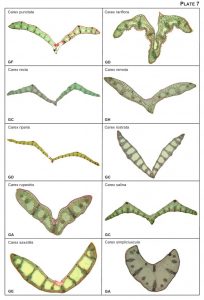
The second edition was started the day the first edition was in my hands in 2009! It was a good first attempt, but there is always much to learn and many diagnostic characters were overlooked. This volume aims to correct this by evolving a more definitive ID guide based on 10 years of extensive testing by many botanists. Writing The Field Key to Winter Twigs gave me a new perspective on key-designing concepts so some of these have been applied to the new Veg Key to make it easier for users.

Can you advise on the best ways to use this book?

Always read the keys and never try to pre-empt a question! In this edition, every key has been revised to make ID easier and more accurate.

What kit or equipment can you recommend to aid identification of plants in the vegetative state?

It’s mostly very basic (and inexpensive). A x20 hand lens is best in the field and an x15 LED magnifier is great when working indoors. A measuring loupe is a handy tool and easier to use than a microscrope for fine measurements.

Is there one easy mistake that can be made when identifying plants in their vegetative state?

Perhaps overlooking hair type or presence/absence of latex and stomata. These need careful interpretation but it gets much easier with practice, honest! The key works using obvious characters to start with before getting down to the nitty-gritty. I try to give both simple and technical characters to give the user confidence of getting a correct answer.

Have you got any future projects planned that you can tell us about?

There is always plenty to do in botany. I’m already working on including the entire British Flora. Neophytes are hitching a ride all the time and hortal plants constantly jumping over the garden wall. Perhaps a book on evergreen trees and shrubs would be useful for winter botany but I’m only on the bare bones of that key at the moment…


The Vegetative Key to the British Flora: A New Approach to Plant Identification
Paperback,  published January 2020                £24.99 

The second edition of this go-to identification guide is much revised, with re-written keys, additional species, phenology, and many new identification characters.


The Field Key to Winter Twigs: A Guide to Native and Planted Deciduous Trees, Shrubs and Woody Climbers (Xylophytes) found in the British Isles
Paperback,  published November 2019             £19.99

A unique identification guide to winter twigs, allowing for rapid species identification.


Helm: Publisher of the Month

Christopher Helm’s name has adorned some of the most cherished and authoritative bird books to have appeared anywhere in the world. Starting with the now out-of-print  Seabirds in 1983, a revolution in ornithology publishing began. The Helm stable has since grown into a series of groundbreaking identification guides.  As well as the justly famous Helm Identification Guides, the Helm imprint has expanded to include the Helm Field Guides, Helm Photographic Guides, and Where to Watch Birds series.

With three more fantastic books published in January, we are delighted to name Helm as our Publisher of the Month.


Over thirty years of ornithology publishing

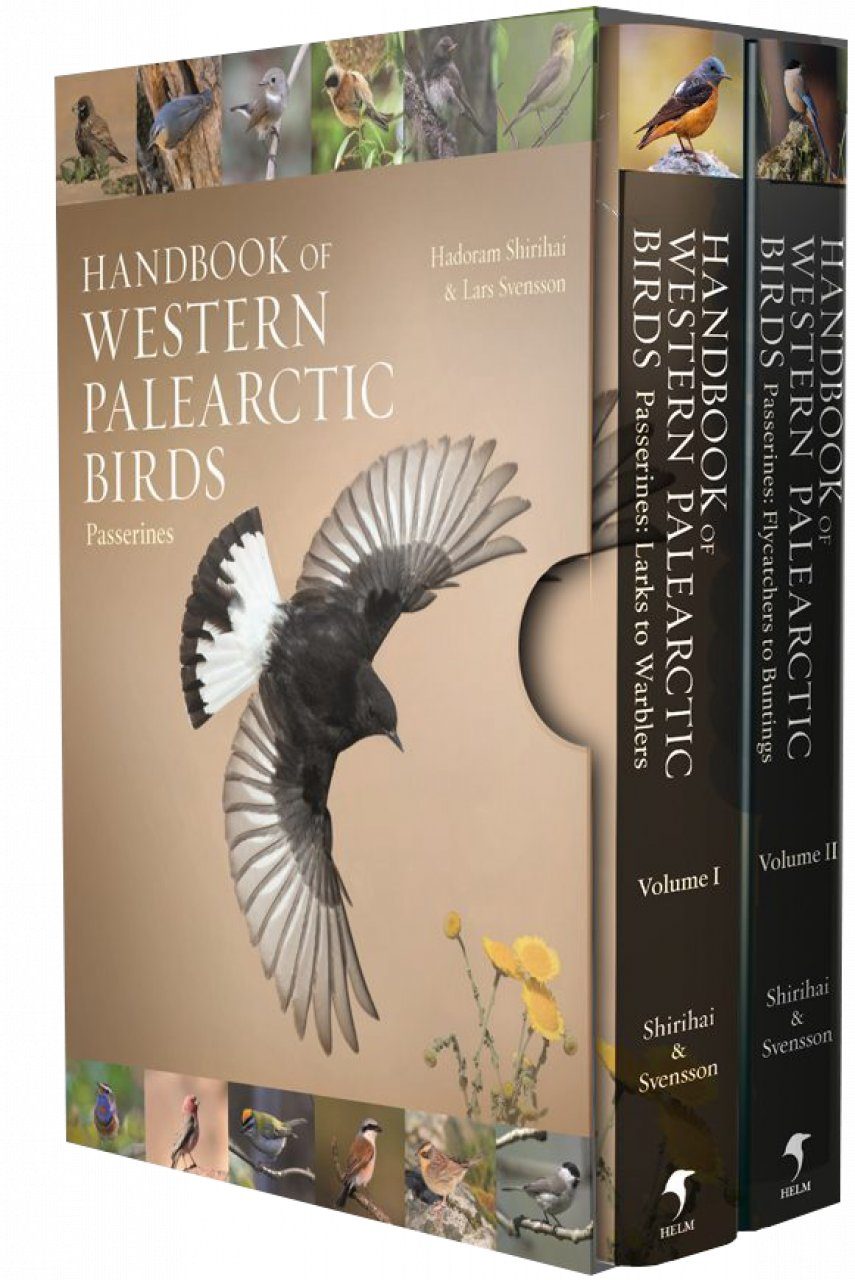
Handbook of Western Palearctic Birds: Passerines (2-Volume Set)
Hardback| July 2018| £115.99 £150.00
In 2018 Helm published this long awaited 2-Volume Set  which has been among our bestsellers ever since.

We’ve selected more highlights from Helm’s illustrious publishing history below:


Birds of Costa Rica                                                                     Paperback| 2014| £16.99 £24.99
The detailed full-colour illustrations exemplify the high standards of Helm’s field guides


Flight Identification of European Seabirds
Paperback| 2007| £23.99 £39.99
Essential field guide for watching seabirds, whether it be from land or at sea.


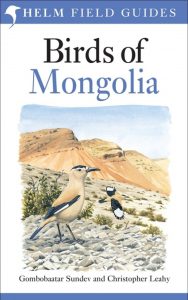
Birds of Mongolia
Paperback| Aug 2019| £21.99 £29.99
With a guide to Argentina avifauna planned for late 2020, Helm’s field guides continue to cover increasingly popular destinations for birders, such as Mongolia


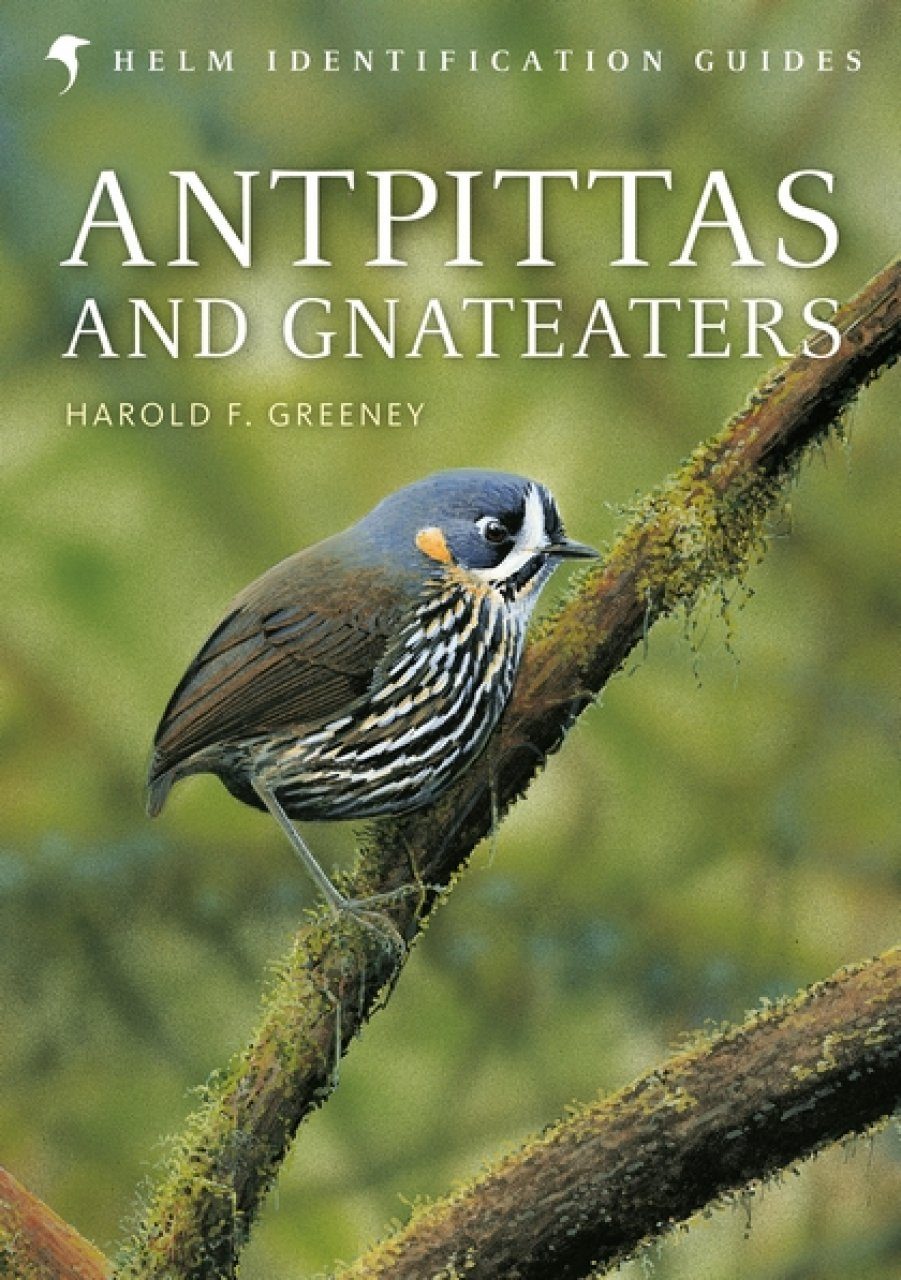
Antpittas and Gnateaters
Hardback| 2018| £33.99 £49.99
The ultimate reference on these remarkable and beautiful birds and a recent addition to Helm’s authoritative Identification Guide series.  With Birds of Paradise and Bowerbirds and Larks of the World to be published in 2020.


Gulls of Europe, Asia and North America
Hardback| 2004 | £32.99 £49.99
The book that that made accurate identification of gulls a realistic possibility for the first time. Still the standard text on the identification of the northern hemisphere’s gulls.


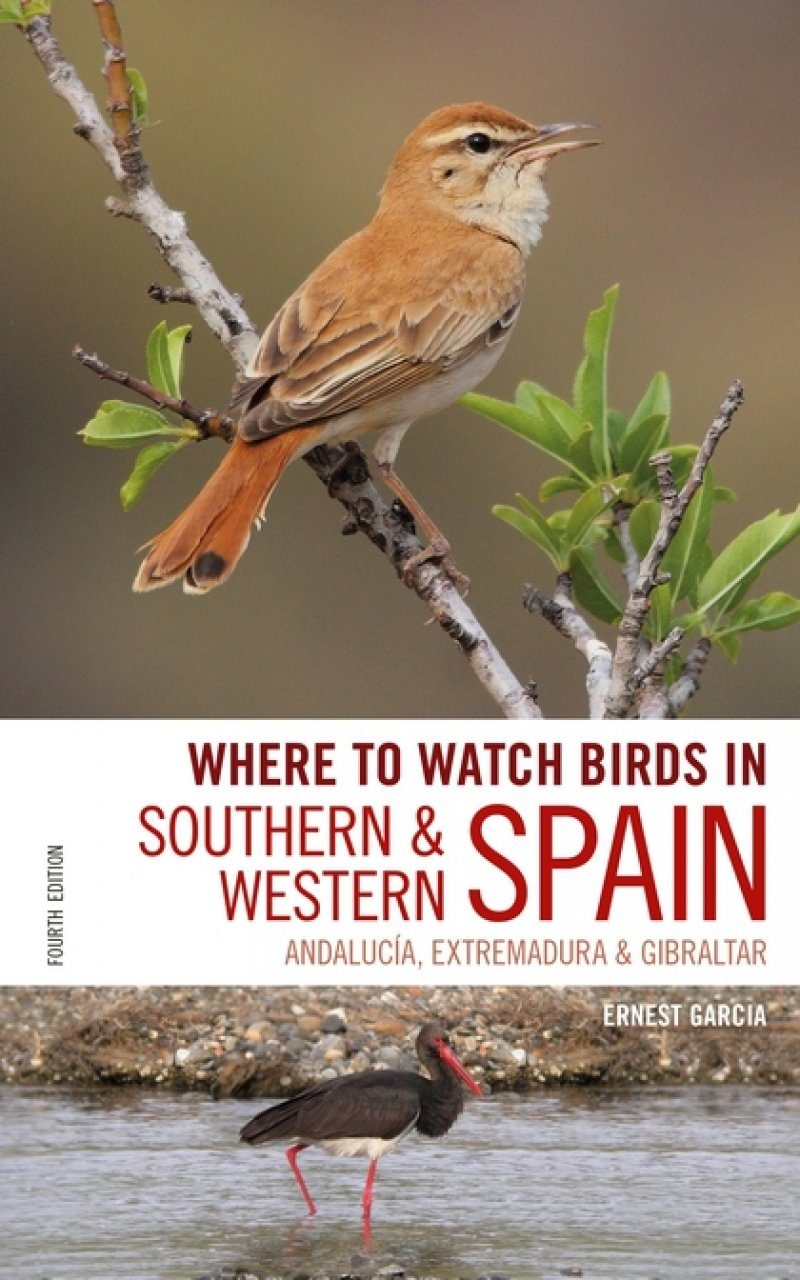
Where to Watch Birds in Southern & Western Spain
Paperback| July 2019| £16.99 £24.99
The birding hotspot of Southern Iberia gets an update for this fourth edition in the Where to Watch Birds in Britain and Europe  series


The Helm Guide to Bird Identification
Paperback| April 2018| £19.99 £29.99
A supplement to regular field guides for the more experienced birdwatcher, focusing on look-a-likes and other confusing species


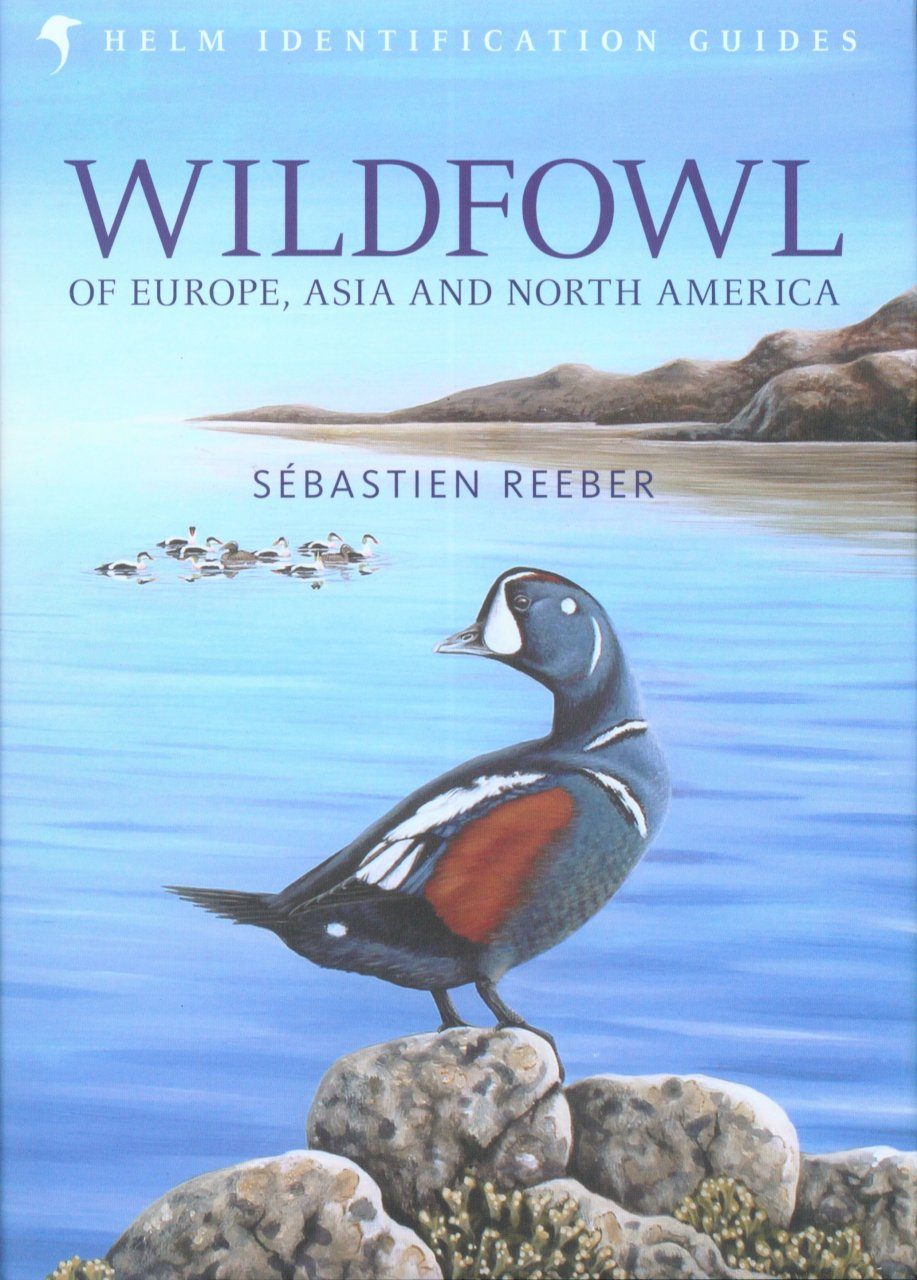
Wildfowl of Europe, Asia and North America
Hardback| 2015| £23.99 £34.99
An essential reference for anyone interested in the ducks, geese and swans of Eurasia and North America


Owls of the World: A Photographic Guide
Hardback| 2013| £26.99 £39.99
An ever popular title in the Helm Photographic Guide Series, the photos are accompanied by concise text on the identification, habitat, food, distribution and voice of these charismatic birds.

To celebrate Helm as NHBS’ Publisher of the Month, we are offering up to 30% off selected Helm books. Browse all Helm books here


All price promotion valid until Feb 1st 2020


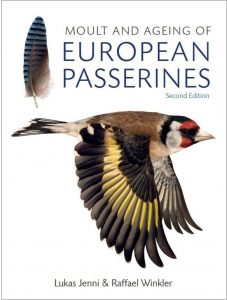
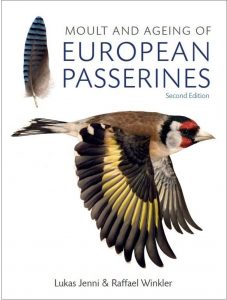
Author Interview: Lukas Jenni & Raffael Winkler, Moult and Ageing of European Passerines

The legendary Moult and Ageing of European Passerines returns in a completely revised second edition. This is the must-have reference for bird ringers, ornithologists, and anyone fascinated by feathers.

Bloomsbury’s publisher, Jim Martin has asked the authors Lukas Jenni and Raffael Winkler to share their thoughts about this eagerly awaited second edition.


How did the two of you first come to be interested in ageing birds?

Back in the seventies, Raffael was collecting data on skull pneumatization of live birds at the ringing station Col de Bretolet in the Swiss Alps as part of his PhD thesis, and Lukas was a young birder and wannabe ringer. We met at the Basel Ornithological Society, and began to collaborate. At that time ‘skulling’ was a new ageing method; we found as we worked that several plumage ageing criteria were either unreliable or simply wrong. We then started to record more precisely the extent of the post-juvenile moult.

What drove you to keep up your work in counting the moulted and unmoulted feathers of thousands of birds?

We were both fascinated by the large variation in the extent of moult we found, both between species and between individual birds of a species. We wanted to discover the reasons for this variability. And we also wanted to tackle the ‘either/or’ criteria that prevailed for ageing birds at the time – for example, tail feathers might be recorded as either pointed or rounded, but if a young bird had moulted some tail feathers they would have some of each. Ringers were using fixed ‘recipes’ for ageing that did not account for the moult process and its variability.

When did you decide to collate your findings into a book?

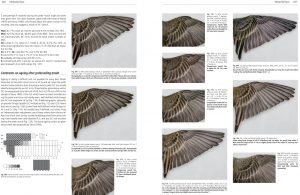
Lukas became head of the Swiss Ringing Scheme in 1979, and we both held many ageing courses for ringers, and produced numerous fact-sheets for them. The basis of these was Lars Svensson’s famous Identification Guide to European Passerines; each new edition of this formidable work was eagerly awaited. However, we realised that explaining verbalised differences – for example, such as between buffish-grey and greyish-buff – was a little difficult. It was much easier to teach ringers with the help of wing preparations and skins from the Natural History Museum, Basel. Finally, we decided to take photographs of these elements, with a view to producing a guide to ageing. This eventually became the first edition of Moult and Ageing of European Passerines, which was published in 1994.

The new second edition is publishing in January 2020. This book is more than an ageing guide. What made you develop the sections on moult strategies?

During our work on moult, we realised how complex the moults of passerines are and how incomplete our understanding of moult still is. We felt that a full review is needed for two reasons. First to demonstrate how important moult is in the life of a bird and how moult interacts with other events of the annual cycle. Second to enhance the understanding of the plumage ageing criteria, and to enable ringers to discover new ones.

This will be expanded on in your follow-up book, The Biology of Moult in Birds, which will be coming out in the summer. For Moult and Ageing, how did you take the many excellent photographs of the wings of live birds?

We developed a simple system of a camera with a ring-flash mounted on a tripod, and put the wing of the bird on an oblique grey board, fixed at the wrist with double-sided adhesive tape (we should add that the birds were completely unharmed by the process). This sounds simple, but the tedious part was to put all the feathers and feather vanes in a perfect order, one that satisfied our sense of aesthetic perfection! We then realised that we needed help, and we employed several people over the years to operate as ‘feather beautician’ and photographer.

Physically, it’s quite a big book, and not easy to use in the field. What was the thinking behind that?

We pondered for a long time about this. We finally decided on such a large format so that the reader can see many photographs on one page for direct comparison. A smaller format would have entailed smaller photographs, or continuously turning pages, or both.

How do you think this book will be received?

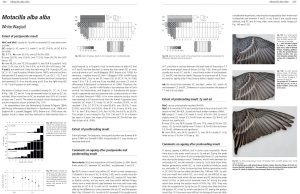
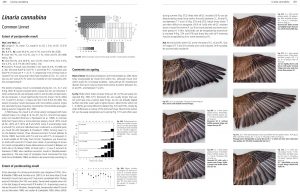
We were really surprised at the reception for the first edition, how quickly it sold out, and the enormous price second-hand copies went on to fetch. We therefore decided to do a second edition long ago, but it has taken us many years of research, and so has materialised only now. We thoroughly revised the first part of the book about the moult strategies, we’ve included a schematic table of the moults of all European passerines and added pictorial schemes of the various moult strategies, and we have also added 16 new species to the species accounts. The book was printed in Switzerland, so we could supervise the printing. We are glad that the quality of the photographs is now ’pretty good’ (complying with English understatement) or ‘phenomenal’ (following American usage), and we hope that readers will feel the same.

Thank you Lukas and Raffael, and good luck with the new book.

Jim Martin: Bloomsbury Publishing


Moult and Ageing of European Passerines
Hardback,  published 9th January 2020,  *£82.99 £94.99

A brand-new, completely revised second edition of Jenni and Winkler’s classic guide, updated and improved for the next generation of ringers and professional ornithologists.


*Offer price is only valid for a limited period


Staff Picks 2019

Welcome to our annual round-up of the books and equipment we have enjoyed reading and using this year, all chosen by members of the NHBS team. Here are our choices for 2019!

Browning Recon Force Advantage

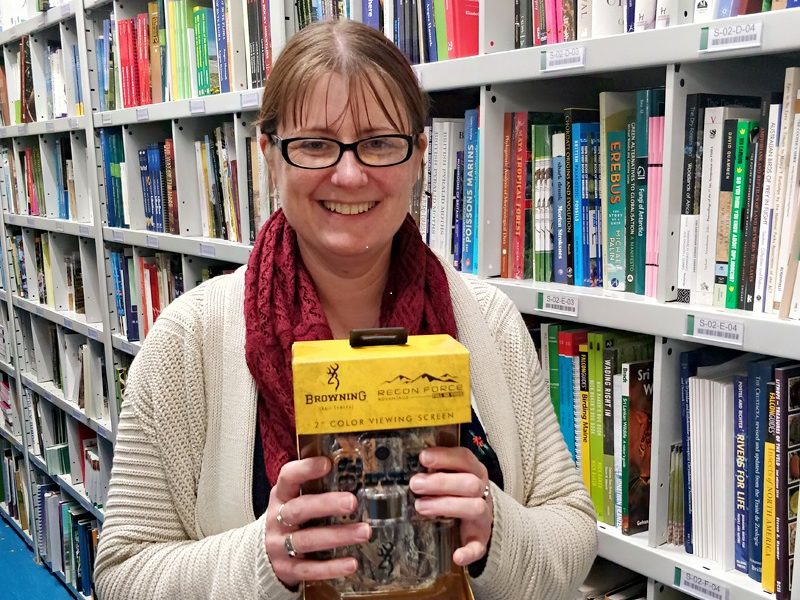
I have chosen the Browning Recon Force Advantage as my staff pick as it is my favourite trail camera of 2019. We added the Browning cameras to our range in early 2019 and we have been really impressed with the quality of the cameras and the footage they produce. The Recon Force Advantage records 20MP still images and amazingly smooth HD video at 60 fps, with the night time videos in particular offering a step up in terms of definition. This really transforms trail camera footage and broadens the potential for using them in detailed behavioural observations.
Simone – Senior Wildlife Equipment Specialist

The Seafarers: A Journey Among Birds

This account of Stephen Rutts travels to know the seabirds of the British coastline makes for a rather special debut book, dealing in turn with different species of seabird that call Britain home for a spell of their seafaring year. This book lyrically weaves between autobiographical accounts of wild encounters and cultural and historical insight of our ongoing relationship with these birds, whose fascinating communities rely heavily on our actions. Seafarers at its heart, is a journey of deep re-connection with wild beings and wild places and is a mesmerising, witty and often deeply profound portrait of seabirds.
Oli – Graphic Designer

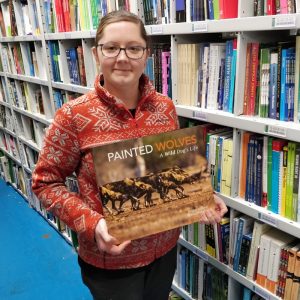
Painted Wolves: A Wild Dog’s life

This book is an epic, beautiful ode to Painted wolves (though you may know them as African wild dogs or Hunting dogs). Using twenty years of experience in the field, this book introduces us to the wolves of the wild Zambezi Valley and discusses conservation challenges and solutions. Throughout are incredible images, encapsulating the lives of these magnificent animals.
Natt – Sales & Marketing Manager

NHBS Moth Trap

My favourite item has to be the NHBS Moth trap, its super light and very easy to assemble. I have been in love with moths for a long time and been lucky enough to publish a paper on the diversity of moths. However, I was not a fan of the big and bulky traps that were very heavy and hard to transport (especially if you have to fit it in your suitcase!).
This trap has been tested by experts from Butterfly Conservation and is handmade in Totnes, Devon. The NHBS Moth trap also has a very high capture rate, as many moths seem to stay in the trap rather than flying out. Another added plus is that 10% of each sale goes directly to Butterfly Conservation!
Angeline – Key Account Manager (Trainee)

Colourful Creatures Memory Game By Shanti Sparrow

I bought this for my 7 year old niece and she loves it. The illustrations are so beautiful and the bright colours really help with remembering the different animals and maintaining attention. She really liked the fact that there is a little booklet of facts about the different animals and the fact that they have names makes them more relatable. The fact we played this game non-stop for a whole afternoon, at her request, is the best review I can give.
Lizzie- Customer Service Manager

Green and Prosperous Land: A Blueprint for Rescuing the British Countryside

Can restoring nature, increasing biodiversity and enhancing the environment go hand-in-hand with economic prosperity? Economist, Dieter Helm gives a resounding ‘yes.’  In fact, he would maintain protecting the environment is ‘essential’ to economic prosperity. He pulls no punches and may ruffle some feathers in his assessment of who is accountable for the decline of nature and what needs to be done to put Britain on a greener and more prosperous path.
Nigel – Books and Publications

A Cloud a Day

Following the success of the Cloud Appreciation Society’s ‘Cloud-a-Day’ subscription service, this book collects a year’s worth of entries. As always with anything produced by CAS, the collection pulls together science, art and philosophy – from explanations of fascinating cloud formations; to historical diagrams from early cloudwatchers; to wistful excerpts of poetry. Many of the photographs featured come from CAS members themselves, and Pretor-Pinney and his odd little community of cloud enthusiasts (of which I myself am a member – no. 28,360) encourage you to take a minute’s mindfulness each day, contemplating the exquisite detail of nature’s most egalitarian of displays: “Look up, marvel at the ephemeral beauty, and always remember to live life with your head in the clouds!”
Rachel- Deputy Customer Service Manager

Hi-Sound Stereo Parabolic Microphone

I have recently been able to test Dodotronic’s Hi-Sound Stereo Parabolic Microphone and I was so impressed by it, it just had to be my staff pick this year! My regular walk in the woods was completely transformed by listening to and recording the birdsong around me. The 53cm diameter parabolic dish is excellent at picking up even the most subtle of sounds and is easy to use, meaning it is perfect for both the budding or experienced wildlife recorder. It pairs perfectly with a Tascam DR-05X for recording and a pair of headphones or earphones for listening in the field. I would strongly recommend the Hi-Sound to anyone with an interest in wildlife recording.
Antonia- Senior Wildlife Equipment Specialist

The Outlaw Ocean: Crime and Survival in the Last Untamed Frontier

“Only one?” Picking favourites has become very hard, but if I have to pick one it would be Ian Urbina’s The Outlaw Ocean. From overfishing and smuggling to piracy and slavery, The Outlaw Ocean is an exceptional reportage that encompasses almost every conceivable form of misconduct playing out on the high seas. The book is shocking, urgent, and in places gut-wrenching. Impossible to put down, it left a deep and lasting impression on me.
Leon- Catalogue Editor

Growth: From Microorganisms to Megacities

This is as ambitious in scope as Smil’s previous title Energy and Civilization, with few illustrations and many references, and combines two fascinating (to me) subjects: systems in nature and systems in society, and ultimately how we came to be where we are today. I admit I haven’t read this yet, but I have been looking forward to immersing myself over the Christmas days.
Anneli – Head of Finance and Operations

NHBS: In The Field – SiOnyx Aurora and Aurora SPORT

SiOnyx Aurora

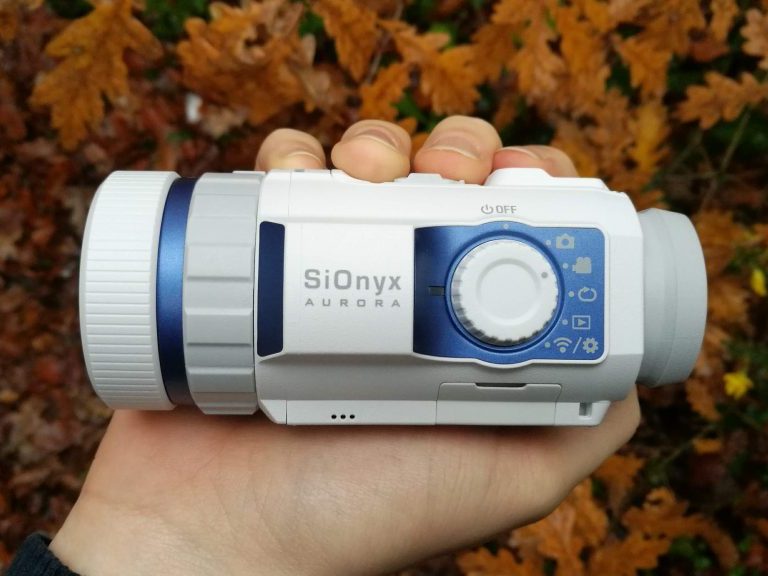
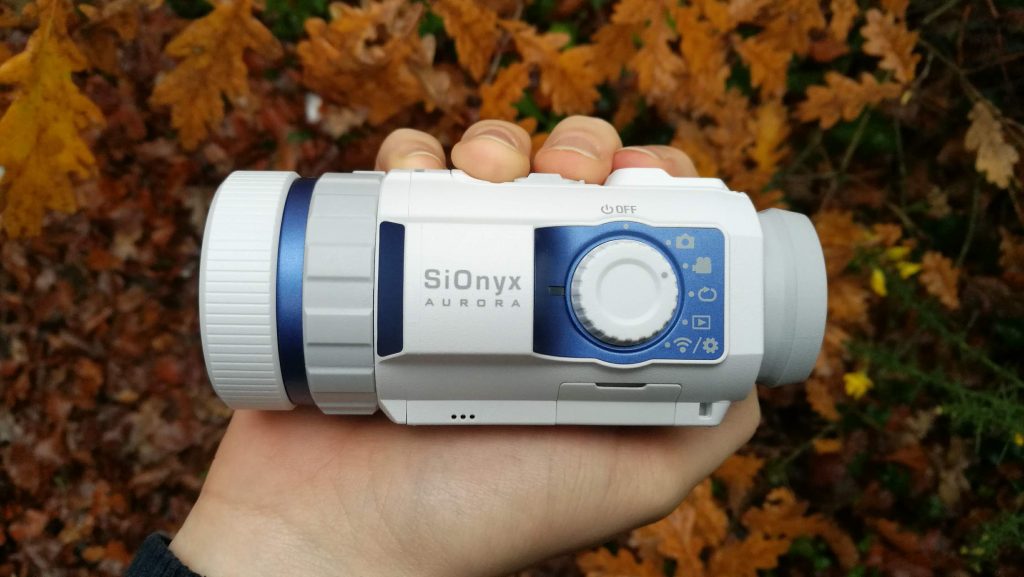
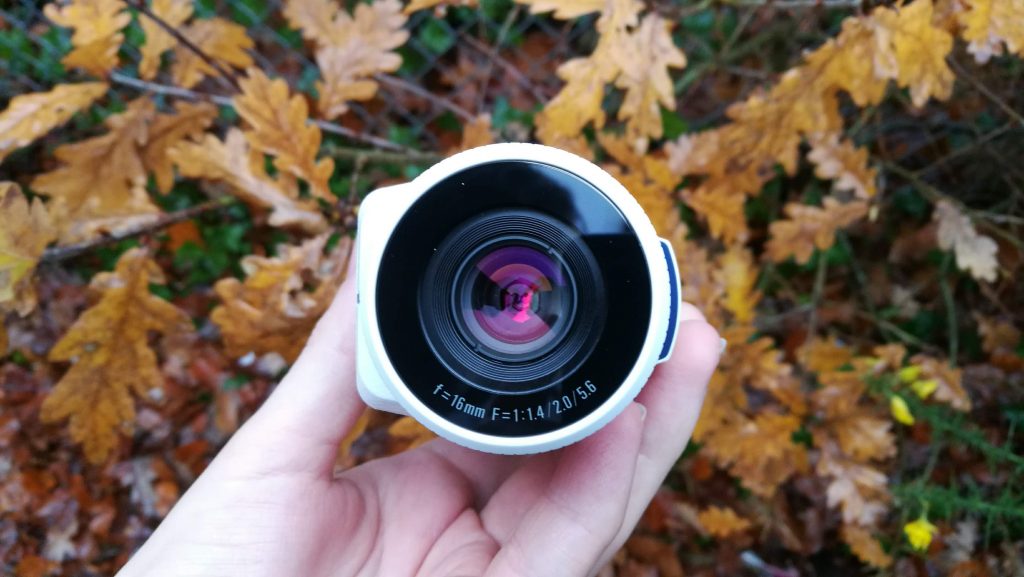
The SiOnyx Aurora and Aurora Sport are two new night vision monoculars that offer ‘colour night vision’ – something new to night vision technology. A night vision scope is a handy tool for both the professional ecologist and the keen naturalist, especially at this time of year as the evenings draw in and the light levels fall. We wanted to test the Aurora’s night vision capabilities, along with the other features it offered to see if it lived up to expectations.

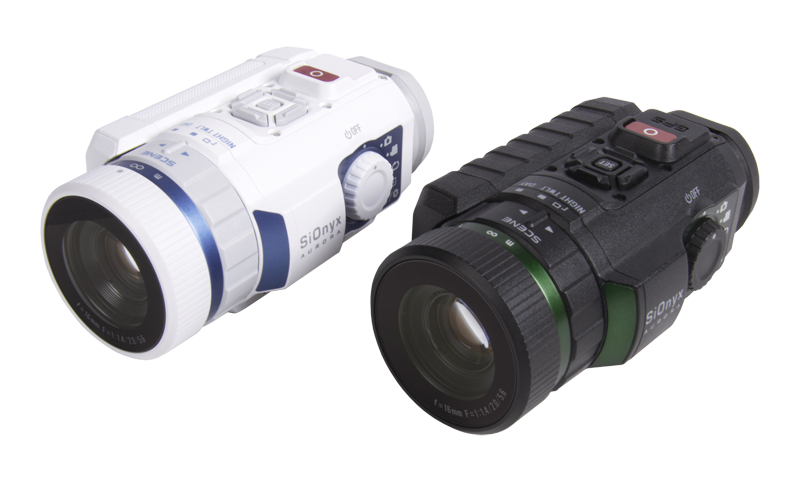
We tested the Aurora and the Aurora Sport. Both use an Ultra Low-Light CMOS sensor and should perform the same in low light settings. The main difference between the two models is that the Aurora has a built-in GPS, accelerometer and compass, and comes with an extra year warranty, whereas the Aurora SPORT is a budget version without these features and a 1 year warranty. Both cameras have up to 2 hours of battery life on a fully charged internal battery and records in 60 frames per second in either 360p or 720p resolution. The cameras also have a host of extra features including burst mode, time-lapse, panoramic view, self-timer, loop mode, slow-mo (shutter control) and HDR (High Dynamic Range) mode.

The SiOnyx Aurora SPORT (pictured left) and the SiOnyx Aurora (pictured right)

Setting Up

We ventured out to test the Aurora in daylight, twilight, and night conditions to see how the camera performed. The Aurora was very simple to use with each setting requiring a simple twist of a dial. Even the accompanying smartphone app was intuitive and quick to set up, allowing multiple users to easily view and record footage without needing to look through the device itself. The camera also had a tripod mount thread which was useful when wanting steady shots.
What we found

The Aurora was most impressive at dusk. Even at light levels when a phone or digital camera is no longer any use, the Aurora’s Day Mode footage is still surprisingly bright, if a bit noisy. Once switching to Twilight mode, the reduction in visual noise and clarity of bright footage was outstanding and is where we think this camera really excels.

The night mode would have been more useful if used with an IR illuminator, something that we would recommend if you are looking to use this camera in complete darkness, but it is still a very useful tool for when your own low-light vision starts to fail you. For example when watching deer, only a slight silhouette of a single deer could be made out by our own eyesight, and it was only with the use of the Aurora that we were alerted to the presence of the rest of the herd.

Our Opinion

The SiOnyx Aurora and Aurora Sport are two great night vision cameras. We were surprised at how easy the camera was to use and we were impressed by its low-light capabilities. The video and photo quality is at a lower level than most camera technology currently, but it is respectable for a night vision recorder. It is also worth noting that when viewed through the view-finder, the footage looked clear and crisp.

The app was a great feature when walking with other people as it meant everyone could see what the camera could view without fumbling around to pass the camera amongst each other in the dark. For watching more timid wildlife, the app was too bright and the camera’s start-up chime needed to be turned off avoid spooking animals.

Our favourite mode was definitely Twilight Mode. This was especially useful when we could see subjects with our own eyes, but details were hard to make out and ordinary spotting scopes or cameras were struggling. The night mode was best when our eyesight began to fail and the camera highlighted subjects we would otherwise have missed. Without using an illuminator, the camera was ineffective as it became completely dark. An illuminator would greatly improve the performance of the scope in Night Mode and we would highly recommend one if you are thinking of using the camera as both a low light and night vision camera.


The SiOnyx Aurora and the SiOnyx Aurora Sport are available through the NHBS website.

To view our full range of night vision and thermal cameras, visit www.nhbs.com. If you have any questions on night vision or would like some advice on the best camera/scope for you then please contact us via email at customer.services@nhbs.com or phone on 01803 865913