CIEEM (the Chartered Institute of Ecology and Environmental Management) is the leading professional membership body in the UK, representing and also supporting ecologists and environmental managers. Here at NHBS, our core purpose is to support those who strive to understand, protect, and conserve the natural environment. And so, we are thrilled to partner with CIEEM and to support the 2020 CIEEM Awards.
The CIEEM Awards is a wonderful celebration of those working tirelessly within the environmental sector, and this is a fantastic opportunity for the individuals, projects, businesses and organisations making significant contributions to the natural world to be rightfully recognised for their efforts.
Image by CIEEM
As a supplier and manufacturer of wildlife, ecology and conservation equipment and books, we are proud to be sponsoring two categories: Small-Scale Nature Conservation and Large-Scale Nature Conservation. We recognise the value of both small-scale initiatives as well as regional and national projects for studying and improving all aspects of the natural world. Other categories include Project Mitigation (Large-Scale and Small-Scale), Stakeholder Engagement, Member of the Year, NGO Impact, and many more. You can find out more about each Award here.
“We are delighted to have NHBS sponsoring our ‘Best practice’ award for our 2020 awards event. We at CIEEM are extremely grateful for the ongoing support that NHBS provide and look forward to continuing to work with them in the future.” – CIEEM
Congratulations to all the individuals and organisations nominated for this year’s CIEEM Awards – we wish you all the best of luck with your endeavours during 2021.
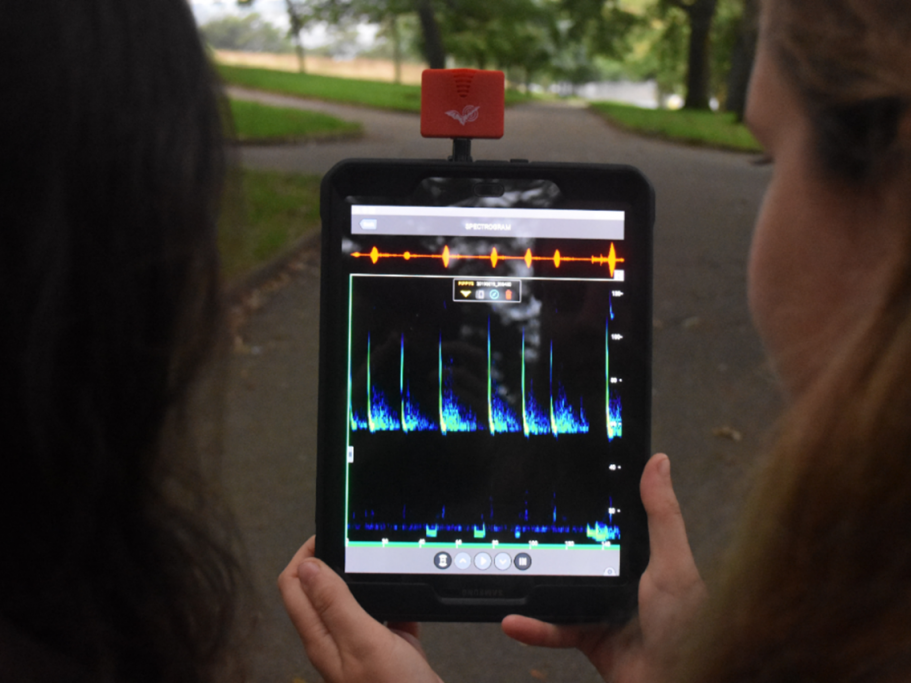
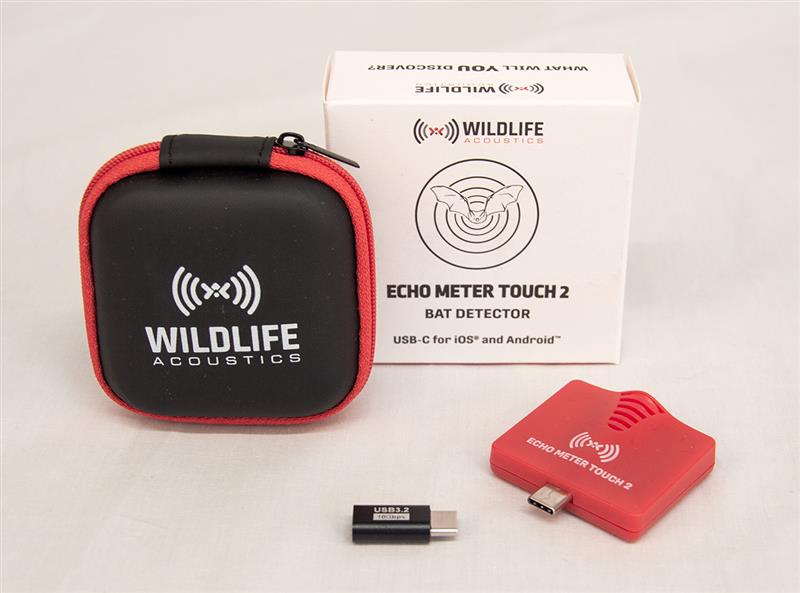
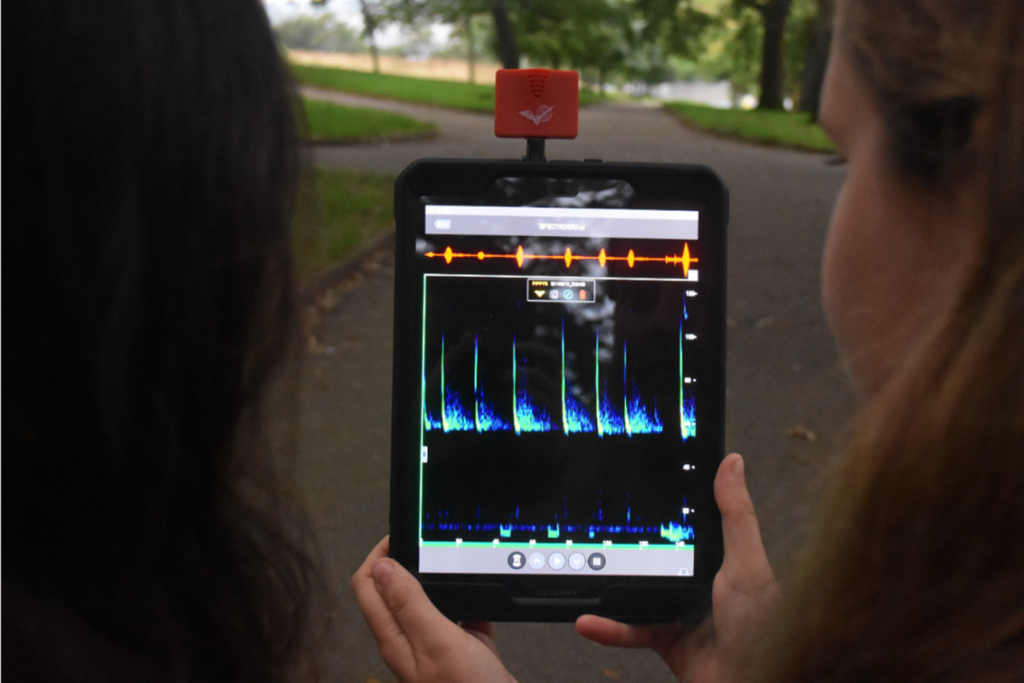
First released in 2017, the Echo Meter Touch 2 (EMT2) and Echo Meter Touch 2 Pro (EMT2 Pro) from Wildlife Acoustics are highly popular bat detectors for naturalists and professionals alike. By plugging the units directly into your phone or tablet, your device is transformed into a fully functional, full spectrum bat detector. The free Echo Meter app (available on the App Store and Google Play Store) allows the user to watch live, real-time sonograms as bats pass above.
The EMT2 Pro and the EMT2 require an IOS or Android device with a USB-C port. We highly recommended checking the list of compatible devices on the Wildlife Acoustics website before purchasing your EMT2 (see compatibility of phones and tablets here for Android). This list is not exhaustive and is continually updated as further models are tested.
The EMT2 Pro is very similar to its counterpart, however additional features and a higher quality microphone make this option more suitable for professional ecological surveys and acoustic analysis. Adjustable gain (Low -12dB, Medium or High +12dB) is one particularly helpful addition. For a full break down of the differences between the EMT2 and the EMT2 Pro please see Wildlife Acoustics’ comparison page.
On this occasion we only tested the EMT2 – but the set up and use is fundamentally similar for both models.
How we tested
During August 2020 we took several EMT2 units to a nearby woodland to survey for the presence of bats. The Android units were used in conjunction with a Samsung Galaxy Tab S3 (requiring the micro-USB to USB-C adapter) and the iOS units used with an iPhone SE 2020. (2025 update: The EMT2 and EMT2 Pro are now unified into single models, each compatible with both Android and iOS devices via USB-C.Please check the list of compatible devices on EMT2 Device Compatibility | Wildlife Acoustics.)
The EMT2 is incredibly lightweight and small, weighing just 20g and measuring 48 x 35mm. Supplied in a small pouch, the detector is perfectly pocket-sized.
Set-up was incredibly easy; we simply downloaded the free application, plugged in the device and immediately began recording. It is worth noting that, when plugging the EMT2 into the phones without an adapter, the phone cases had to be removed to allow proper connection.
We made sure that the Trigger Minimum Frequency was set to 12kHz, the level recommended by Wildlife Acoustics to stop noise recordings while not missing any species of bat. On the ‘Auto ID Selection’ tab we chose the correct region and country, allowing the impressive auto-ID feature for UK bat species to be enabled (see video below on how to change these settings).
The EMT2 then automatically recorded any bat activity detected above 12kHz and applied a suggested species identification based on the waveform and frequency. The app offers several ways to share these recordings, but we chose to directly plug our phones/tablets into a computer to transfer the files directly.
What we found
The Echo Meter is incredibly intuitive and easy to use, so certainly suitable for beginners and professionals alike. Any questions or issues can easily be resolved via the User Manual, found under the Information tab on the app and offered in English, French and German. Personally, we preferred this digital option rather than having to flick through a paper copy during a dark evening survey. However, copies of the user manuals can be found here, for those who would prefer to print a hard copy.
The on-screen live sonograms were particularly impressive and allow surveyors to get an idea of the potential species present while still in the field. While waiting for the bats to emerge, we enjoyed watching the calls of birds and crickets (see our blog post here on monitoring Orthoptera using bat detectors) – an unexpected advantage of the EMT2. It is certainly understandable why the EMT2 is so often used for community engagement at bat walks and BioBlitzs around the country.
We found that, for the species common in our area, such as Common Pipistrelle (Pipistrellus pipistrellus), Soprano Pipistrelle (Pipistrellus pygmaeus) and the Noctule (Nyctalus noctule), the auto-ID feature appeared mostly accurate. Although, on one occasion before dusk we found that a bird call triggered a Common Pipistrelle identification. It is important to note that no Auto-ID feature can be 100% accurate, and Wildlife Acoustics make it clear that users should always manually verify the identification.
The automatic triggered recording worked very smoothly and did not appear to miss any bat activity. Despite this, it was reassuring to know if we noticed something we wanted to record, we also had the option to manually trigger recording – another feature that would be useful if wanting to listen to non-bat species. Each recording was GPS tagged, a neat feature that tracked our transect throughout the evening. When sorting through recordings, the option to sort by species was helpful to move noise and ‘No ID’ audio clips.
The only limitation we found with the EMT2 is how quickly our batteries drained. This is of course not a fault with the EMT2 itself and is to be expected with continual recording, but it is worth considering your phone or tablet’s battery life may impact your use of this detector.
Overall, the Echo Meter Touch 2 is a fantastic detector that is very affordably priced for the number of features it offers. The free app is continuously updated, and newly developed species classifiers added.
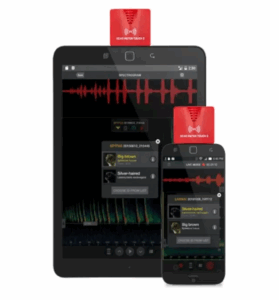
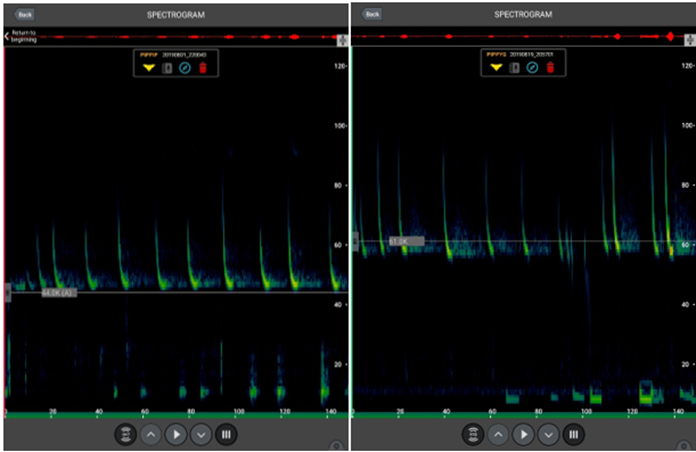
Common Pipistrelle (left) and Soprano Pipistrelle (right) recorded and identified on the Echo Meter app.
The Echo Meter Touch 2 and Echo Meter Touch 2 Pro are available from the NHBS website.
Visit nhbs.com to view our full range of bat detectors. If you have any questions about our range or would like some advice on the right product for you, then please contact us via email at customer.services@nhbs.com or phone on 01803 865913.
The Species Recovery Trust is devoted to preventing the loss of some of the rarest plant, insect and animal species in the UK, with their primary aim being to remove 50 species from the edge of extinction by 2050. With a team of highly skilled conservationists and passionate volunteers, the Species Recovery Trust has been doing targeted recovery work for the past 10 years, and many species are now showing an increase in their population numbers for the first time in decades.
Dominic Price
We spoke to Dominic Price at the Species Recovery Trust about how the trust is working to save some of the most endangered species in the UK, some of their success stories, the challenges they face as a charity with COVID-19 and how you can get involved and support their work.
Could you introduce the Species Recovery Trust to us and summarise your main goals as a charity?
The Species Recovery Trust was founded in 2012 with the goal of saving some of the UK’s most endangered species. We cover a small number of species but base our work on a 30-year workplan, allowing us to plan work decades ahead, and start these species on the long and often slow road to full recovery. Our broader goal has been to develop the most cost effective way of doing this long term work, generating as much of our funds as possible through our own commercial activities (training and consultancy) which would allow us to de-couple from the larger funding streams and sustain the work, however bleak the funding climate may become.
One of your main aims is to remove 50 species from the edge of extinction in the UK by the year 2050. How did you choose which of the 900+ UK species that are currently under threat were the most critical to focus on?
With some difficulty! In essence we started with the IUCN red list and worked our way down from the top. It soon became clear that with certain species, like Atlantic Halibut, we were unlikely to be able to do much from our bases in the English countryside, so we started to focus in on terrestrial species with a limited distribution, and by researching the ecology for those we could see which species were likely to respond well to the sort of onsite habitat restoration work we specialise in. There was obviously a fairly significant political element, in not wanting to tread on any toes of people who were already carrying out established work. So there was much dialogue with other small NGOs and from there discovering the main species that have fallen through the gaps of others work. We currently work on 22 species and have three in development, so still have vacancies for another 25!
There were times when it can be deeply depressing looking at the Red List, with the sheer amount on there, but we knew we would always be a small player and it was just a case of picking a handful and then making sure we did the best possible job to save them, while trying not to feel too despondent about the current mass extinction and the number of species likely to be caught up in that.
What key environmental policy changes do you think would have the biggest impact on preventing species extinctions in the UK?
After 20 years of working in the sector I’m not the biggest fan on policy changes. When I started, the Biodiversity Action Plan (UKBAP) was the big driver. Borne out of the 1992 Rio Earth Summit it was an ambitious and hugely exciting bit of work to be involved in. It then started to become clear that the vast majority of targets would be missed, but instead of examining why this happened and putting more resources into it, it was left to quietly die a death, and over the years has been replaced by a whole new raft of policies and goals. I know there’s people doing amazing work in Whitehall to keep lobbying and campaigning for better policies, but I feel for us as a charity the most meaningful work we do tends to be out in the field, with either a quadrat or a pair of loppers. It’s important to keep your eye on the bigger picture, but sometimes the best place to be is very much on the coalface in the exact location where these species are dying out. This has been also been a personal decision for the members of the team, as we all feel we’re at our best doing fieldwork and not stuck behind a computer!
The work of the Species Recovery Trust is obviously ongoing, but what would you consider to be your biggest success story so far?
Heath Lobelia Site
When we started working on Starved Wood-sedge there were just 32 plants at two sites left in the wild. I had previously been involved with this species through Plantlife’s Back from the Brink programme and knew how perilously close we were to losing this plant from the UK (it went extinct in Ireland in the 1990s and is not faring too well in Europe). After eight years we now have four sites, and over 330 plants – it is still not ‘saved’ but it’s well away from the brink of extinction. Another great moment was when we took on the management of the last known site in Hampshire for Heath Lobelia. We spent three days with work groups clearing scrub off the site, thinking the most likely scenario was to repair the habitat with a view of one day re-introducing plants, and the following summer 660 plants came up where the seedbank had been regenerated. Sadly, following this disturbance the population has dropped back down to 40, reminding us that a species conservationist’s work is rarely done!
The Covid-19 pandemic has affected individuals, communities and organisations in a myriad of unforeseen ways. How have you been challenged this year and how have you coped with these challenges?
One of our strengths as a charity has been that we draw over half our funding from running training courses. It’s the best money as we can spend it on what we want when we want with no deadlines or funding reports, and if you book onto one of our courses your booking fee could be put to use within a week hiring contractors to manage a site, or paying the mileage for a volunteer to monitor a network of sites. We did have a contingency fund in case one year we couldn’t run as many courses, but never predicated a scenario where we had to cancel every single one of them, so this has obviously hit us hard. However, we are extremely lucky in that when we set the charity up we always tried to keep our running costs to virtually zero; we already all work from home and all of us do other jobs alongside our work for the trust, so in 2020 we were able to effectively batten down the hatches and with the additional help of the amazing furlough scheme we have managed to stay afloat. We’ve also had some incredible support from charitable trusts like the Halpin Trust and Hennock Law Trust, which has been a lifeline in these difficult times. But at this time no one is sure if training courses will be able to happen in 2021, and there are now so many charities desperately competing for the remaining funding sources, so uncertain times lie ahead.
Are there different ways that people can get involved with and support the Species Recovery Trust? (e.g. options for those with spare money but little time and vice versa).
We are always looking for species monitors – people who take on a site, preferably close to where they live or go on holiday and can do species counts for us each year, and lots of people gain a huge amount of satisfaction of being the person to keep these sites going. If you purchase a copy of the Field Guide to Grasses, Sedges and Rushes (and the hopefully forthcoming Field Guide to Bryophytes) 100% of the profit goes directly to our work. Alternatively, if you’re feeling generous you can sign up as a paid supporter (there’s a free option too) and you’ll get updates of all our work, as well as knowing your money is going straight to saving some of our rarest plants and animals.
You can find out more about the Species Recovery Trust from their website and by following them on Facebook and Twitter.
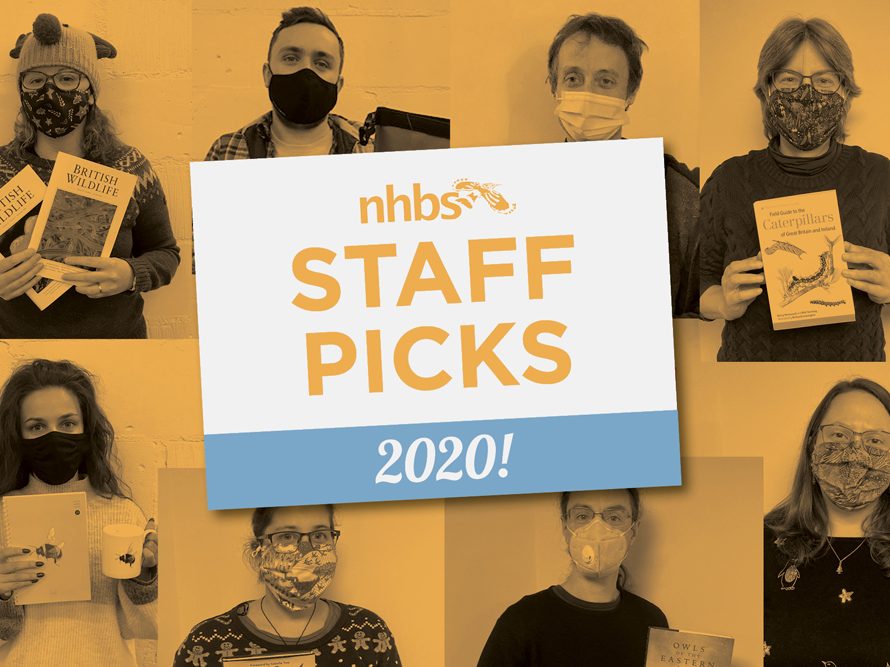
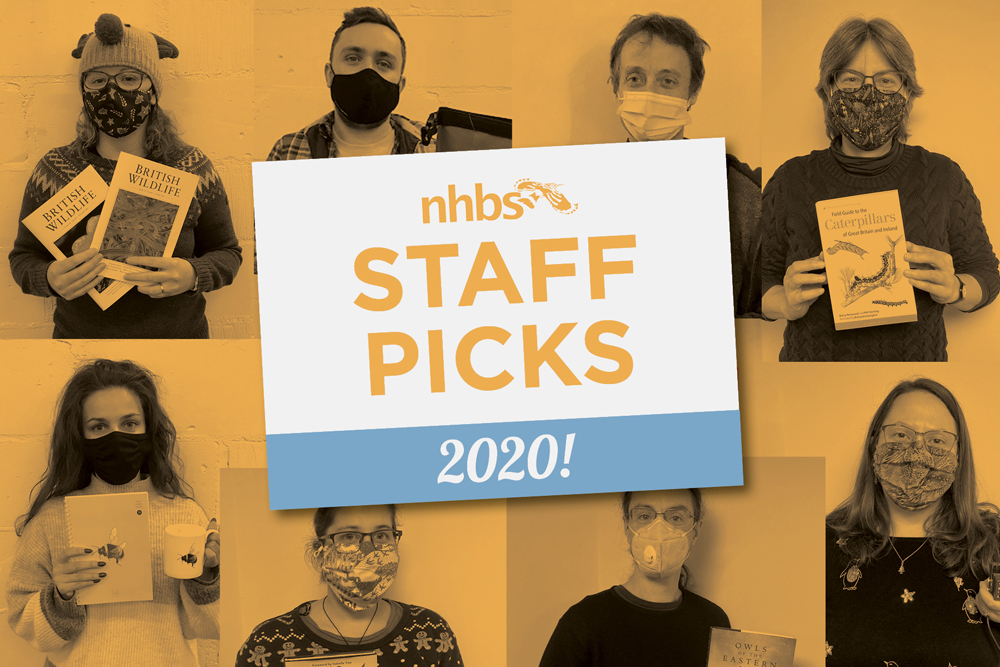
Welcome to our annual round-up of the books and equipment we have enjoyed reading and using this year, all chosen by members of the NHBS team. Here are our choices for 2020!
The new Browning Patriot has really impressed me this year. It is very competitively priced for a top of the range camera and produces fantastic quality photos and videos. The standout features are the 0.15s trigger speed and 0.35s recovery time between pictures ensuring you catch even the fastest moving of animals. I would highly recommend this camera for professionals and naturalists alike. Gemma – Wildlife Equipment Specialist
Orchards have been a traditional component of the British landscape for many centuries and their value for wildlife has long been underestimated. This passionate eulogy observes over a single year the abundant wildlife in one of the few traditional orchards left in Britain. It is a brilliantly written and informative insight into the ecological niche traditional orchards can provide and the benefit they can have for the larger ecosystems around them. Unfortunately, as in so much of the UK’s agricultural landscape, modern orchards are often deserts of biodiversity: depending on expensive machinery, pesticide controls and extensive pruning to keep competitive. However the authors make an excellent case for working with nature rather than against it, to control pests and maintain productivity that is both commercially viable and provides a haven for nature. I enjoyed this book immensely and it has inspired me to plant a couple of apple trees in my tiny back garden. Nigel – Books and Publications
This recent addition to the Bloomsbury Nature Guides was published in March. All throughout the first UK lockdown, I spent a considerable amount of time in the NHBS warehouse, and the book’s popularity was very visible: spotting the bright orange spine on the book trolleys and the packing benches always cheered me. This field guide is very accessible with a comprehensive introduction, a lot of detail in the species accounts, and outstanding illustrations. It’s perfect for both the novice with a little curiosity, like myself, and for experienced naturalists. Anneli – Head of Finance and Operations
I’ve loved reading British Wildlife this year, particularly the wildlife reports and columns. There’s been some amazing articles, including a recent Patrick Barkham article ‘Crisis point for the conservation sector’. Natt – Head of Sales and Marketing
After having a previous life as a beaver researcher and seeing Derek Gow in action, Bringing Back the Beaver had to be my staff pick of 2020. Derek’s passion for beavers and nature in general really comes across and I was entertained from the first page to the last whilst being educated along the way. Hannah – Operations Assistant
I bought this mug and notebook as gifts for my Mum who, as a trainee beekeeper, adored them! Both products are high quality, adorable and have some lovely words about the bumblebee on it. The hand-drawn bumblebee image is detailed, lifelike and adds to the charisma of the products.
In addition to this, for every sale made, a donation is given to the Bumblebee Conservation Trust! If you are a bee lover and would like to help make a difference to conserving this enchanting species, then I highly recommend these items. Holly – Customer Services
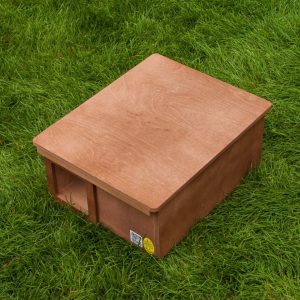
My pick this year is the hedgehog nest box. When an underweight and sick hedgehog had to be rescued from outside our offices this year, we were advised to place a hedgehog box out for the hedgehog’s return once she had recovered. The Hedgehog Nest Box was an obvious choice, being sturdy, well-designed and tested extensively by the Hedgehog Preservation Society. The in-built tunnel ensures inhabitants are kept safe from draughts and any unwanted visitors, and the removable lid meant we could fit a nestbox camera inside the nesting chamber to keep an eye on the recently recovered hog. Antonia – Deputy Wildlife Equipment Manager
I love being able to see the wildlife in my garden but never want to scare any of it away and this little camera is a great solution to that problem. It allows you to live stream footage in full HD straight to your TV or monitor, day and night. It is small enough to fit into a nest box and watch the “behind the scenes” of the start of garden birds’ lives, or the comings and goings of hedgehogs from their daytime refuge in a hedgehog box. But on top of that, with this camera’s completely weatherproof casing, it can be used outside of nest box season to watch feeders in the garden or small mammal highways with no additional protection. Beth – Wildlife Equipment Specialist
Despite having only a ten minute walking commute to the office here in Totnes, the inclement winter weather means I have to be well prepared if I want to arrive dry and warm! That’s why my pick this year is the Aquapac Trailproof Daysack. Its all-welded construction and roll top seal make it a thoroughly reliable waterproof pack. I’ve used it for a variety of purposes, from wet weather running and hiking and even loading it with groceries! It’s 500d vinyl construction makes it a very rugged pack for day hikes and the padded straps mean it can hold a surprising amount of weight whilst remaining comfortable. If you’re looking for a versatile hard-wearing dry pack then this is it! Johnny – Wildlife Equipment Specialist
Owls of the Eastern Ice is a spellbinding memoir of determination and obsession with safeguarding the future of this bird of prey that firmly hooked its talons in me and did not let go. Leon – Catalogue Editor
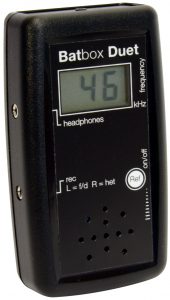
Having worked as a freelance bat surveyor for a couple of years now, I can say that the BatBox Duet is by far my favourite entry/mid-level bat detector on the market. The main reason for this is that it enables me to simultaneously monitor calls via frequency division – meaning that a bat calling at any pitch will be heard in real time – and heterodyne feeds, affording me a rough idea of which species I’m listening to. It is robust and easy to use, and comes with BatScan pro, a comprehensive analysis program that allows recorded calls to be studied later. With an affordable price to boot, this detector is always an easy recommendation for those looking to advance their bat knowledge. Josh – Wildlife Equipment Specialist
Winter migrant season is in full swing, and birders across the country are enjoying the spectacle of the ducks and geese that each year visit our shores. For the birder, no piece of equipment is more important than a good pair of binoculars, and this month we see two new additions to our range in Kite’s Ursus and Falco models.
Kite have been a powerful name in the crowded binocular market, producing high quality optical equipment for decades, and we were excited to see their new, beginner friendly binocular model land last month.
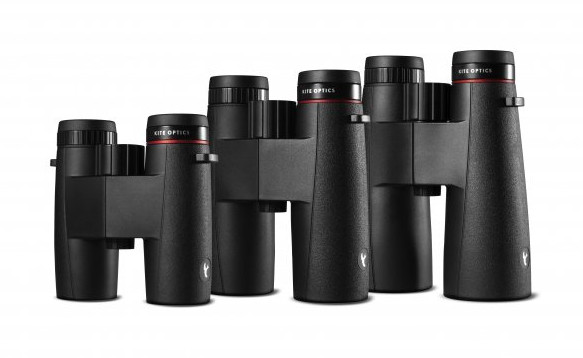
The Ursus is an entry level range, aimed at providing a quality experience for an affordable price. Easy to use and robustly built, boasting a waterproof coating, nitrogen filled interior to prevent condensation and rubber coating to protect the inner workings from impact, they are well-placed for the beginner or for a birder on a budget. There are four models, the 8×32, 8×42, 10×42 and 10×50. Generally speaking, birders will find binoculars with 8x magnification best for their needs, while a lens diameter of 42mm is generally the optimal trade off between being small and light enough to carry conveniently and allowing enough light through to provide a sharp, clear image. More information on choosing the right pair of binoculars for you can be found on a previous blog post, How to Choose a Pair of Binoculars.
Joining the Ursus, the mid-range Falcos are also new to NHBS, with the same selection of models. These are something of an update to the older Kite Toucans, an excellent set of optics in their own right, so we were curious to see how the new model measures up.
With all this in in mind, we were excited to take our new additions into the field and put them through their paces.
How We Tested
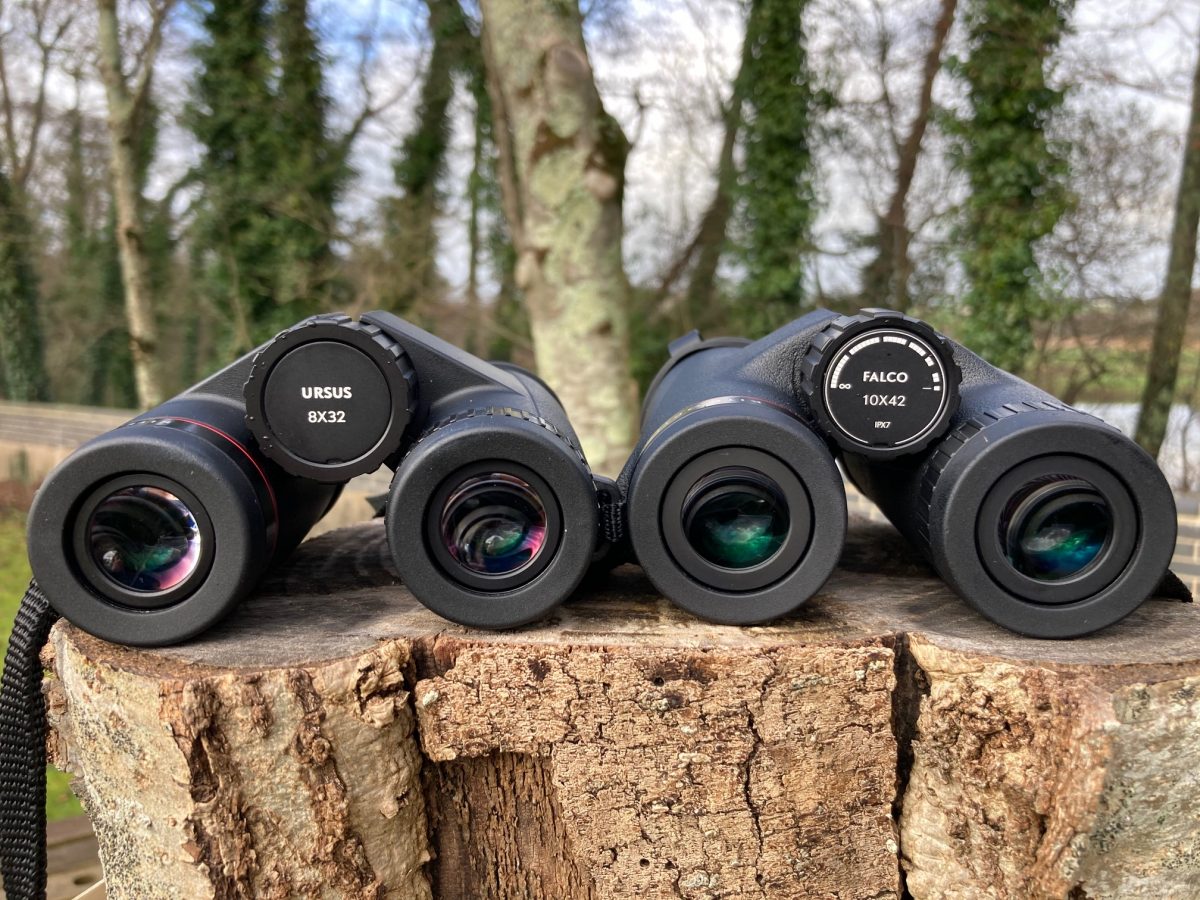
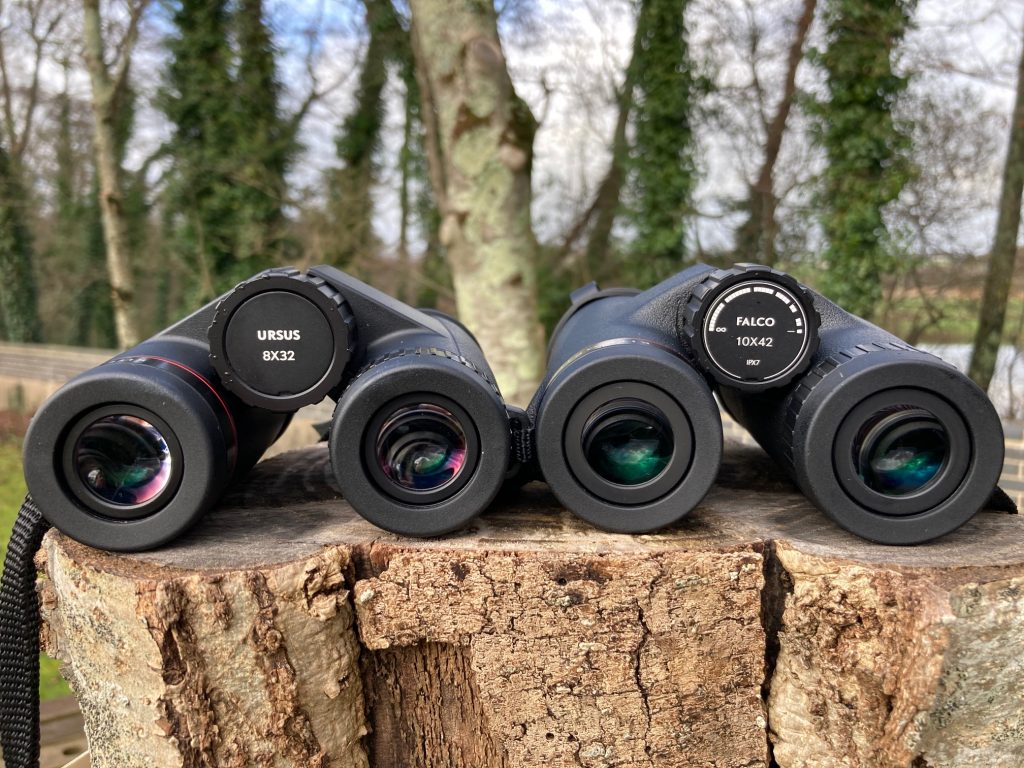
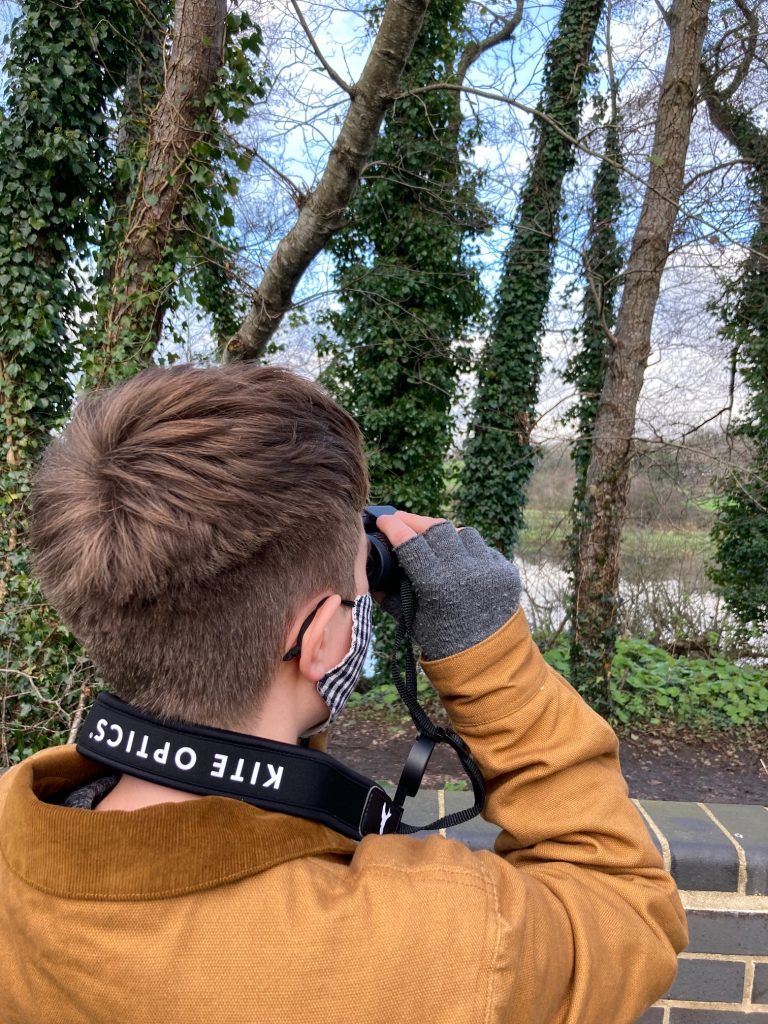
On a cold winter morning we headed down to the banks of the River Dart, loaded with the Kite Ursus 8×32 and more mid-range but equally new Kite Falco 10×42, to see how they measure up against each other. In addition to the irresistible delight of birding, we chose to focus the binoculars on a range of static objects at different distances and in different light conditions, including a buoy on the reflective surface of the river, a dead tree with the darker background of riverside foliage, and a flag set against the sky. The intention was to test how well the different models stand up against one and other at different distances and in different light conditions, hoping to pick up any lateral colour fringing or similar issues that might arise in specific conditions.
Back in the office we examined the pair closely, comparing them to other models across a diverse range of prices. It is important that portable binoculars balance a large enough lens to allow sufficient light for a good sharp image with a convenient weight for long periods around the neck or in a backpack. Comfort while holding is also important, as are practical concerns such as the quality of the waterproofing finish.
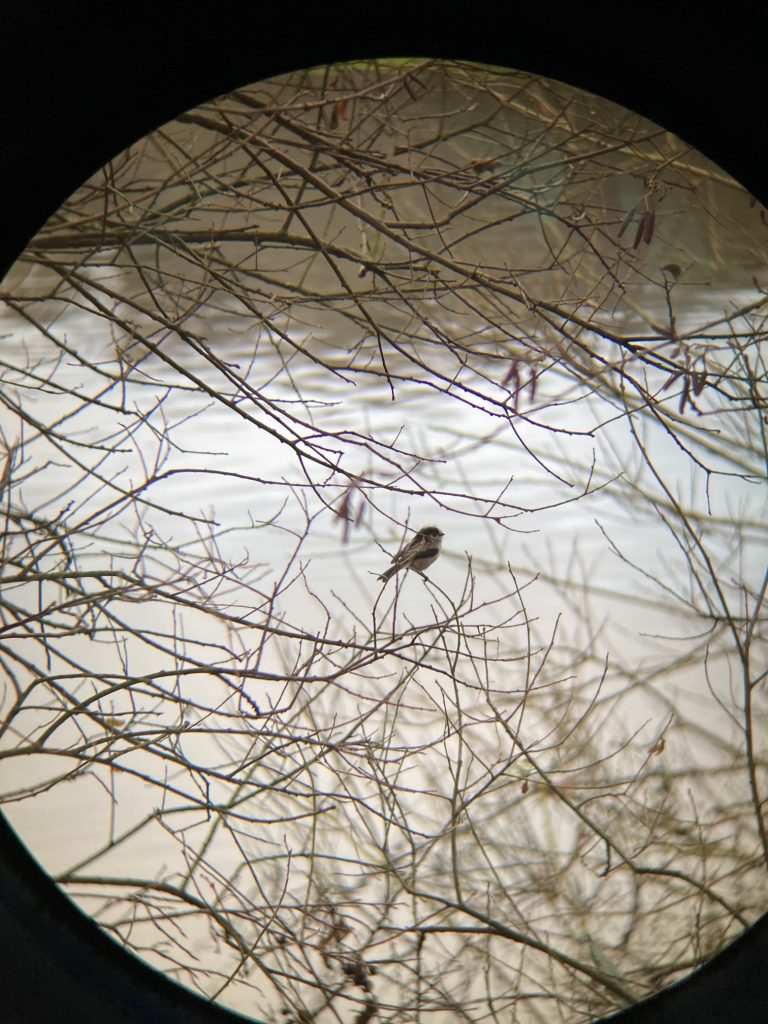
Long-Tailed Tit, viewed through the Kite Ursus
What We Found
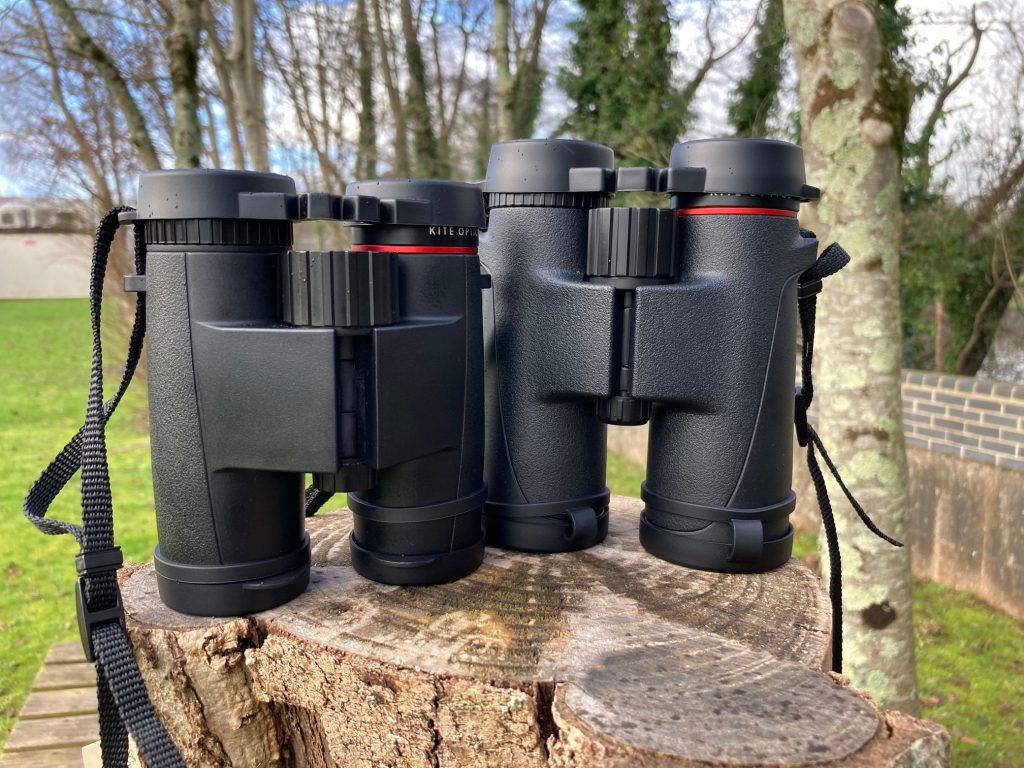
First, the basics. The exterior of the Ursus and Falco models are quite similar, finished with the same textured soft-touch rubber to a conserved, simple design. The texturing makes them easy to grip, a particularly helpful feature in damp weather. The two-tone finish of the Falco is particularly comfortable and shows a marked improvement over older Kite models in my mind. While it may be a little unyielding for some tastes, I found that the finish on the binoculars was just as pleasant to hold as considerably more expensive brands and quite superior to the rubbery coating used by some. While the shallow thumb imprints on both models have a limited impact on the overall feel of the binoculars, they do provide a useful indication of where to place your thumbs to keep them well balanced.
As with all Kite binoculars, the finishing is meticulous. The waterproofing – IPX7 standard, indicating that an item can be submerged up to 1m, although I wasn’t brave enough to try it – means that they can be confidently used in any conditions that naturalists or star gazers are likely to encounter.
The newer Kite models are denoted by a red ring beneath the right eye cup. This is an entirely superficial but very smart feature that lends the brand a distinct identity.
Impressions of the mechanics were equally positive. The focus wheel moves smoothly and is not too stiff on either model. The hinges are a little more stubborn, particularly on the Ursus, but this is likely to become less noticeable with a bit of use and helps keep the binoculars at a comfortable width. It is worth noting that, although the Kite blurb describes the adjustable eyecups as 4 stage, they appear only to have three positions. This has no real impact on performance.
Undoubtedly the most important factor when it comes to binocular choice, the images provided by the Ursus and Falco certainly match up to Kite’s reputation of quality. Both are bright and crisp, Kite’s own brand of ‘MHR’ coating providing exceptional clarity. The Falco in particular combines a bright image with a spectacular field of view. While the clarity of the Ursus’ image did become noticeably distorted around the edges, this did not overly impact the experience and the centre of the image, where the user is likely to be focussing, was nice and clear.
We found that the Ursus performs best at medium to long distance while the Falcos are consistently impressive even at short range, and both models provide a clear view even in lower light. The Ursus do start to drop off a little earlier as the light fades, especially in shadowy areas.
We found the Falcos’ close focus to be particularly noteworthy. The 10x magnification of the pair I tested makes them a little unwieldy for this purpose but might also be advantageous when it comes to observing insects such as dragonflies. We have noted that other Kite models, such as the Lynx, excel at short distances and were pleased that this pair continue that trend. Unfortunately, the Ursus suffer a little here, providing an image that is noticeably less clear than their sister model and not focussing so close, but still perform well for their lower price bracket.
One fairly common issue among binoculars, from the most entry level models to pairs costing thousands, is lateral colour-fringing (chromatic aberration), a phenomenon in which objects, particularly dark shapes against a light background, appear with a small corona of distorted colour. This is generally a minor annoyance at worst, but I was pleased to discover that I could not spot its occurrence in the centre of either model’s image, even in dark birds set against pale clouds in the middle of the day. While fringing will inevitably crop up sometimes, the fact that it is not obvious in these conditions really does say good things about the quality of the ‘MHR’ coating.
Conclusions
The Kite Ursus are a standout contender among entry-level binoculars. While no optics in this price range are going to be perfect, the clear image and sturdy yet lightweight design create a convenient and very enjoyable user experience. I was able to spot and identify small birds at a range that I would really have struggled with when using some competitors, and their performance in lower light levels is a welcome bonus. The included neck strap is good quality, secure and extremely comfortable, well padded, and easy to attach. I would note that people planning to take them into hot environments may wish to go for something without rubber padding, but for use in the UK I’ve seldom seen better.
The intermediate Falcos join a selection of Kite binoculars that stand out positively in a crowded market. They are a marked improvement on the already quite impressive Kite Toucan, which they replace, with an improved field of view and more comfortable grip. A combination of excellent image quality, robust, distinctive design and consistently strong performance whether used at short or long range makes for an easy recommendation.
The Kite range has been respected among birders as a reasonably priced mid-level selection of good quality, robust optics. Indeed, they are so confident in the quality of their optics that they offer a staggering 30-year guarantee. The Ursus represent the welcome addition of a beginner-friendly pair that balance the lower price bracket with the quality that has become synonymous with the brand, while the Falco continues their long tradition of exceptional, reasonably priced mid-range optics that balance a robust, modern design with a surprisingly lightweight body. Whether you’re a beginner, an improver or a veteran, Kite have a model that will suit your needs.
Kite Ursus and Falco binoculars are available from the NHBS website.
To view our full range of binoculars, visit nhbs.com. If you have any questions about our range or would like some advice on the right product for you then please contact us via email at customer.services@nhbs.com or phone on 01803 865913.
CIEEM’s “Time to Change: Putting the Environment at the Heart of Social and Economic Wellbeing” conference was accessed remotely, like so many of our gatherings this year. The virtual platform was used with great ease, allowing many people to access the talks which seamlessly focused on the various key speakers. The day also included live Q&As and breakout rooms, with all sessions ending in lively panel discussions. The conference took place over three days and focused on six different sub-topics. The general theme was ‘The Future’; how best to arm ourselves and the importance of collaboration, including people from all sectors and the general public.
At NHBS, we were particularly interested in the ‘New Tools and Technology Advancing Professional Practice’ session that was held on the final afternoon. This session covered Artificial Intelligence (AI), remote sensing and soundscape ecology, and explored the best methods of using the information that these technologies provide us with.
Tom August (UK Centre of Ecology and Hydrology) took us through how AI can learn when being used for species identification. It can also be a great tool for involving the public in research and an aid to improving our own identification skills. He discussed how we can help encourage technology learning by making positively identified photographs attached to species ecology widely available. He also assured us that AI is continually learning and improving: for example in 2014 AI could identify species to the same level as an average skilled person, whereas by 2017 it could function to just below the level of a species expert.
Jonny Miller and Joshua Aves (WSP) then took us through a working example of using drones and camera footage alongside GIS to improve survey and analysis efficiency (in this example up 70%). They explained that this can be great for creating baseline information and can help with safety when surveying more dangerous areas such as roadsides. They anticipate that the use of this technology will increase due to new needs to demonstrate biodiversity net gain.
Oliver Metcalf (Manchester Metropolitan University) demonstrated the use of audio recording devices to survey for various species and the benefits thereof. These benefits included removal of the surveyor effect on the target species’ behaviour as well as being able to analyse the same recording multiple times, in different ways and by different people – this helps to reduce error and increase the number of target species. When used in areas with reduced sight it can also be more productive than traditional visual surveys. His talk covered the drawbacks of the method, for example, there is no rule book around this technology, and if there is a loss of data then it is a big loss. At the moment, the technology is biased towards birds, and although large amounts of data are produced (which in itself has its benefits and challenges) there is not yet a wide database for all species. However, automated functions such as species identification and identifying false positives are continually improving. Oliver went on to explain that the use of acoustic indices does not require a high level of skill and has a huge variety of applications such as habitat type prediction (which maps well onto wilderness perception), variation in sound bar correlating to species richness, and detection of temporal trends.
As the use of all of these technologies result in large databases, Gregory Slack and Matthew Whittle (Jacobs UK Ltd) took us through a working example of how much data to collect at a site survey for bats and how to analyse it. They explained that there is a need to collect data with deeper analysis reporting more than means and medians (and believe this will be reflected in new guidelines) but that with use of acoustic recorders and statistical software such as R, minimal added survey effort does not add much when it comes to analysis, as this can be automated. Analysis like this can also be used throughout the study rather than only at the end.
The overarching takeaway from this session was that we should embrace the use of new technologies and that we all have a part to play in helping to develop them. There were discussions as to whether these new technologies would replace us (ecologists) but all speakers were reassuring that they would only make our lives easier. There was emphasis that their use should be carried out by (or at least alongside) ecologically trained professionals to provide meaningful data.
All of the talks from this inspiring session left me excited for the beneficial impacts of new technology.
Buglife is the only organisation in Europe devoted to the conservation of all invertebrates. Invertebrates are currently facing an extinction crisis.
Today, thousands of invertebrate species are declining and many are heading towards extinction. Worldwide 150,000 species could be gone by 2050 if we do nothing. We spoke to Paul Hetherington at Buglife about the work they are doing to stop the extinction of invertebrates.
Can you tell us a little bit about the history of Buglife and what you consider to be your main goals?
The conservation movement grew during the 1990s, but there was no organisation specialising in invertebrates. This was brought sharply into focus by the creation of the UK Biodiversity Action Plan in 1994, when no organisation existed to fly the flag for invertebrates – to make sure their conservation needs were being looked after. A Feasibility Committee was established to look at the details of setting up an invertebrate conservation body, and ‘A Statement of Need for a New Organisation’ was produced. Twenty of the leading conservation organisations (including the RSPB and Wildlife Trusts) acknowledged that the conservation movement lacked a major spokesman for invertebrate conservation, and welcomed the establishment of one. The result was the foundation of Buglife in 2000, the only organisation in Europe devoted to the conservation of all invertebrates.
Buglife’s aim is to halt the extinction of invertebrate species and to achieve sustainable populations of invertebrates.
We are working hard to achieve this through:
– Promoting the environmental importance of invertebrates and raising awareness about the challenges to their survival.
– Assisting in the development of legislation and policy that will ensure the conservation of invertebrates.
– Developing and disseminating knowledge about how to conserve invertebrates.
– Encouraging and supporting invertebrate conservation initiatives by other organisations in the UK, Europe and worldwide.
– Undertaking practical conservation projects that will contribute to achieving our aim.
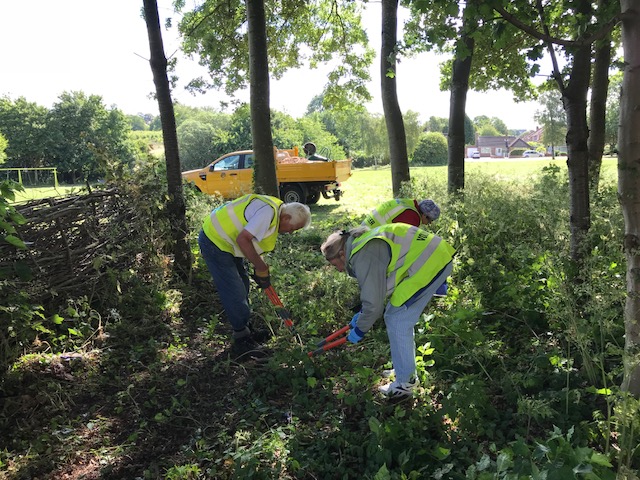
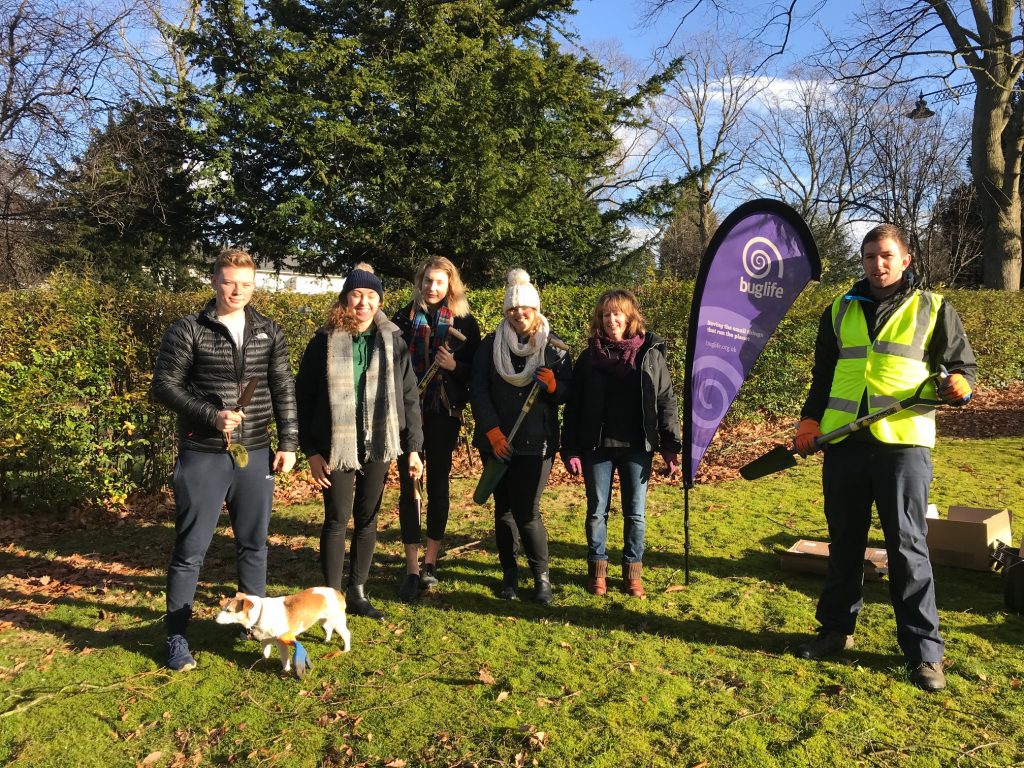
Woodland bulb planting event
In an ideal world where funding for conservation was limitless, what would be your top priorities for ensuring the survival of invertebrates and rectifying the damage that has been done to their populations and habitats?
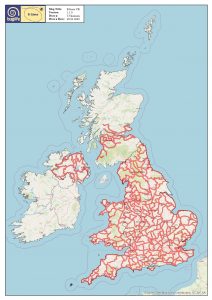
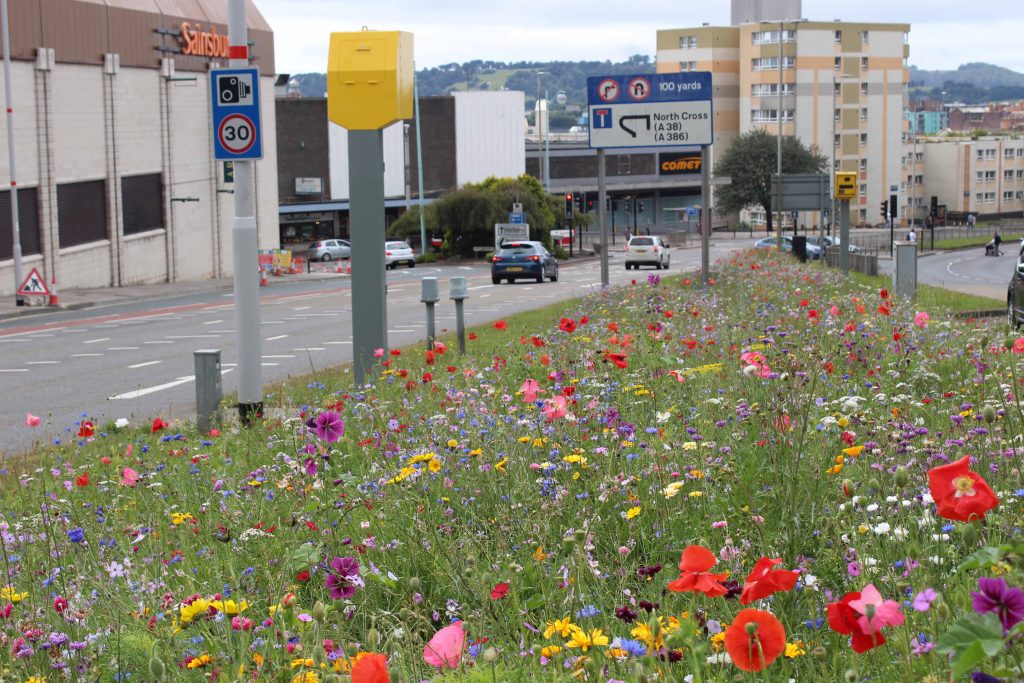
Putting connectivity back into the landscape. Invertebrates are suffering from a plethora of issues: habitat loss, pesticides and herbicides, climate change, isolation of habitat. Connecting up the remaining good habitat is the single most important change for invertebrates as they can escape natural or human made disaster where they live and can migrate to avoid extreme climate change. This is the principle behind Buglife’s B-Lines project that has plotted a route for connectivity between the best remaining invertebrate habitats across the UK.
B-Lines mapping
On your website you feature the famous quote by David Attenborough that concludes with the terrifying line: “…if the invertebrates were to disappear, the world’s ecosystems would collapse.” Do you think that in general we still place too much emphasis on saving what is often referred to as the ‘charismatic megafauna’ and do not value the smaller animals and plants that are the backbone and life support of our world?
A look at how money is invested in saving species reveals that larger mammals are by far the biggest beneficiaries at over £60 per species whilst invertebrates the worst funded at under 6 pence per species. A sad reflection on how humans fail to understand that if we don’t look after the small creatures the big ones will disappear too, bottom-up conservation has far more likelihood of long term sustainability. Yes, tigers and similar have cute cuddly eyes but without invertebrates the food chains that they depend on would collapse and with them the megafauna would go too. Too often we take the invertebrates for granted as something that is just there, small and ‘insignificant’ forgetting that in reality they are small but irreplaceable foundations for the whole web of life that supports the megafauna and people too.
2020 has been an extremely challenging year for most individuals and organisations. How has the pandemic affected Buglife and the work that you are doing?
The Covid pandemic has had a massive impact upon all of us and Buglife have had to be extremely careful with project organisation and financial controls, to ensure that vital conservation work has been delivered safely and that our staff resource has been retained in gainful employment. Ways of working have changed with the closure of offices and a shift to home working for all made possible through recent investment in new IT systems. Most engagement activities have shifted from face to face to online platforms as have meetings to influence policy and media. Some of these enforced changes are likely to have a long term beneficial outcome in reducing our organisational carbon footprint and finding new ways of delivering training and engagement that can reach larger audiences. A few of the impacts have meant works being delayed a year such as surveys for specific invertebrates that are only around for short periods. It should also be recognised that new ways of working can place extra burden on staffing resources as meetings flow on without breaks so we have also looked to bring in external supports for staff when needed. The biggest negative impact has been the closure of most project funders to new applications over the pandemic, making it impossible to establish all the new projects hoped for in 2021.
What would you consider to be your greatest success as a charity?
This is a really tough question as over the last 20 years Buglife has achieved saving many sites for invertebrates from developments, banning extremely harmful chemicals, persuading governments to adopt pollinator strategies, but for sheer scale, B-Lines mapping completed across the entire UK has got to be the number one achievement, as there is now a route map for future interventions to ensure the long term survival of the small things that run the planet.
Finally, for anyone inspired to get involved in invertebrate conservation, how would you recommend that they do this?
Practical experience of conservation work is as important as qualifications, a sound knowledge of a few groups of invertebrates is a great extra to have but equally important is experience of public engagement, volunteer leadership and above all else an ability to multitask.
You can find out more about Buglife and the work they do from their website and by following them on Facebook and on Twitter
Footprint tunnels are a useful, cost-effective, non-invasive tool for presence/absence surveying of small mammals. Food left in the centre of the tunnel encourages passing animals to walk over the ink pads, leaving their footprints on the tracking paper. With the use of a guide, the mammal in question can then be identified from the footprints left behind.
There are a number of benefits of using footprint tunnels. As they are non-invasive, the tunnel can be set up and left without fear of harming animals and are a good way to assess a site prior to in-depth species studies. They are also quick to check compared to other methods. For example, although camera traps are also useful for presence/absence studies, it can be time consuming to sift through captured images and videos.
As is useful for any piece of equipment, footprint tunnels (and their replacement materials) are very light (55g), and so are easy to take out into the field. However, as they are quite long (119.5cm) they can be cumbersome to transport. Despite this, transportation is made easier due to their ability to be flat packed – their plastic construction allows for them to be folded easily.
The NHBS Mammal Footprint Tunnel comes flat packed with helpful assembly instructions. When assembled, the tunnel is wide enough to fit a full sheet of A4, saving you the trouble of cutting paper to size to use in the tunnel, and is large enough to allow access to animals such as hedgehogs but not larger mammals, such as foxes or badgers.
In addition to the kit you will need eight paperclips per trap, masking tape, some vegetable oil to mix with the included charcoal to make the ink, and some bait (chopped unsalted peanuts or dog/cat food is recommended).
Our work building is situated alongside the river Dart, only separated from the riverbank by a small wall and we wanted to find out what mammal species we have in the vicinity of our building. So we field tested a single NHBS Mammal Footprint Tunnel and here we share what we found and our thoughts on the tunnel.
How We Tested
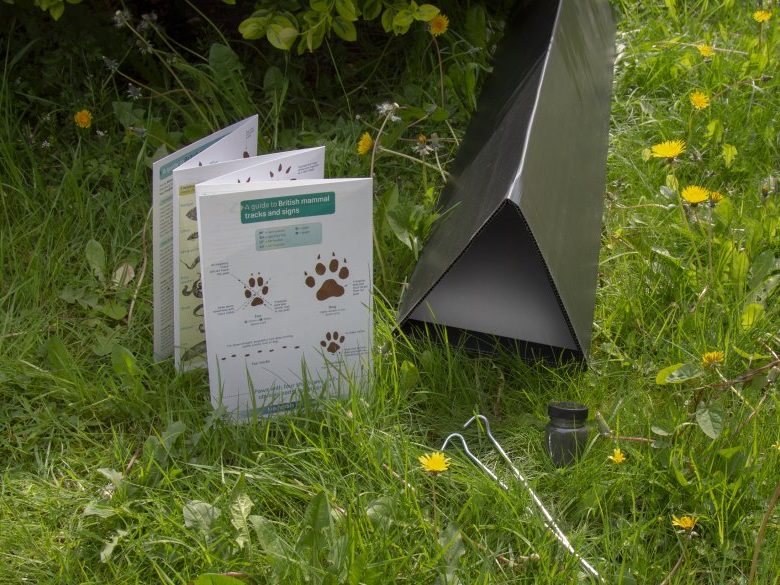
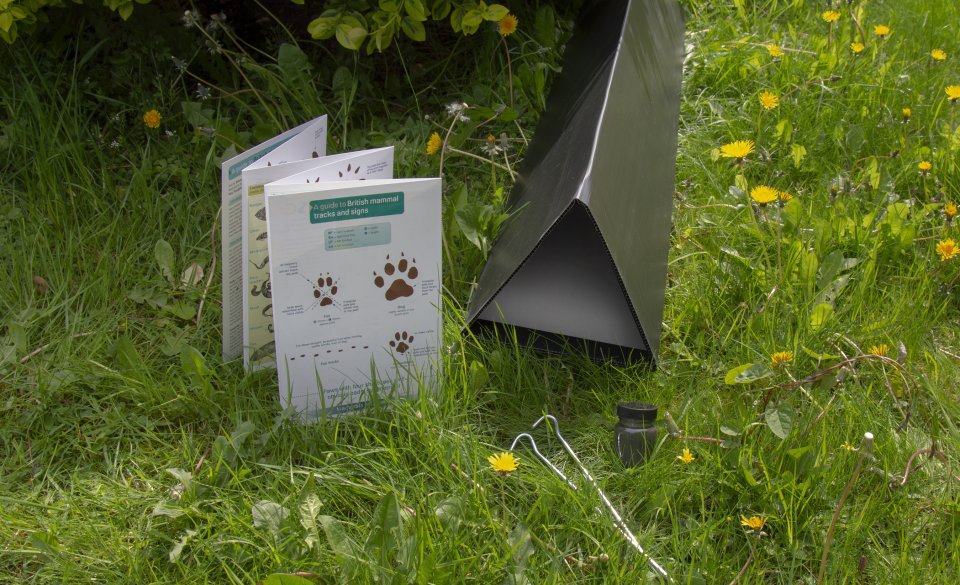
The above image shows the kit contents: to the left is the tracking plate and on the right is the flattened prism that forms the tunnel. In the top right corner are the pins that secure the tunnel to the ground, charcoal, paper and masking tape (please note, paper, masking tape and vegetable oil are not included in the kit).
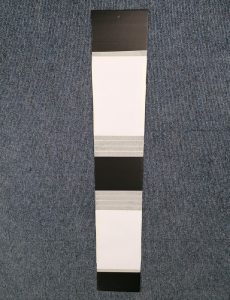
To set up the tracking plate, a sheet of A4 paper is placed at each end and secured with tape (ordinarily the paper would be secured with paper clips as is suggested in the instructions). Then we put several strips of masking tape across the centre of the tracking plate to create a large area of tape. The ink (a mixture of charcoal and oil) was painted on the two grey strips across the centre and bait was placed in the central area between the two ink pads.
Pictured is the tracking plate with the paper and masking tape attached.
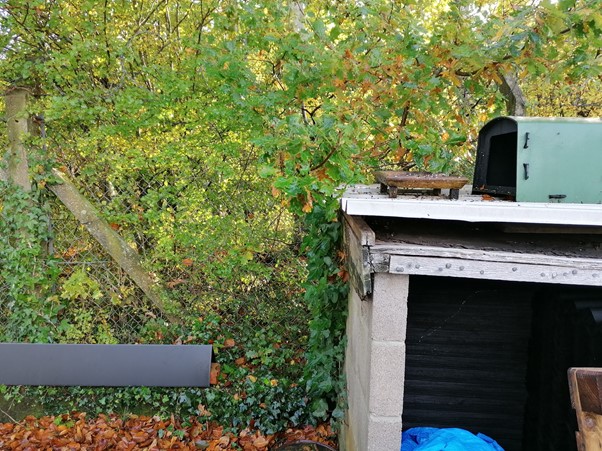
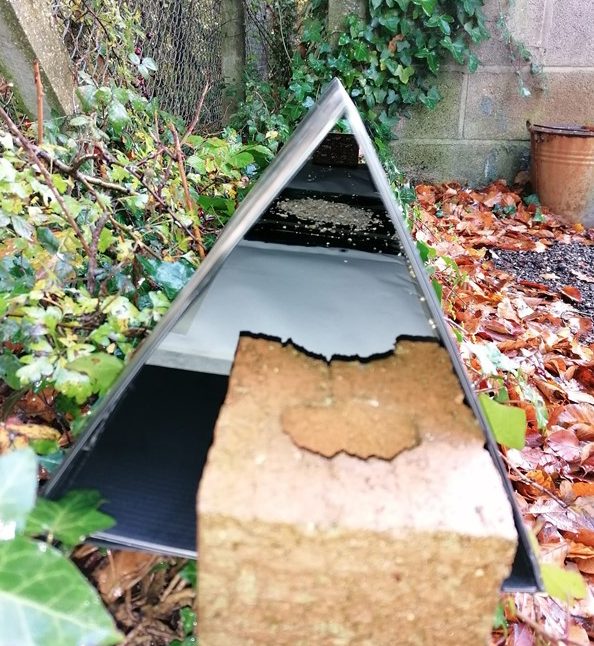
We first set up the trap next to a bird feeding station – we already knew that the feeder is visited by voles and squirrels, and so would be an ideal place for us to put the footprint tunnel to the test! Although the feeder is raised, we opted to put the tunnel on the floor so that it was accessible to small mammals. As the tunnel was not placed on soft ground, bricks were used to secure the tunnel in place rather than the metal pins included in the kit. For bait we used bird seed as this is what the animals are used to eating at this particular location. The trap was left here for one (wet) night.
The first location that the tunnel was set was next to a bird feeder known to be visited by squirrels and voles.The first tunnel set up, secured by bricks.
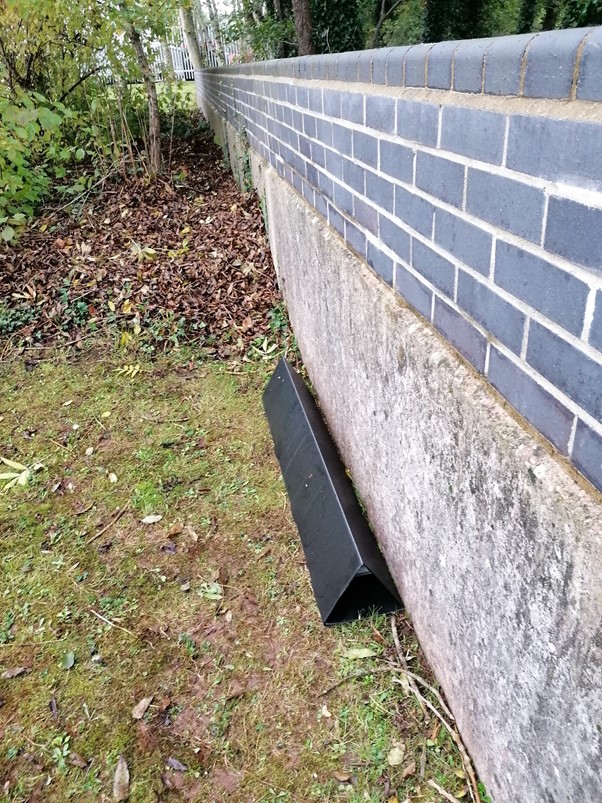
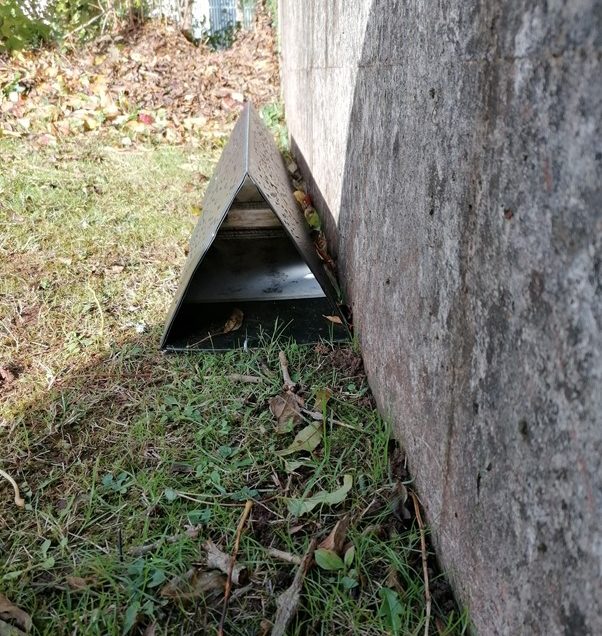
The second set up was just outside of our office alongside the wall that bordered the river. We hoped that this area would be patrolled by a number of small mammals, particularly hedgehogs as they have been seen here before. We baited the tunnel with cat food and the trap was left for three nights over the weekend – being outside office hours, we hoped disturbance would be minimal during this time.
The second placement of the tunnel
What We Found
The inner tracking plate was slightly fiddly to insert into the assembled prism tunnel, and we found that it was much easier to assemble the (pre-bent) prism round the tracking plate rather than sliding the tracking plate in. We used masking tape to secure the paper rather than paper clips as is suggested; this was beneficial when trying to get the tracking plate inside the tunnel as it was more secure than using paper clips.
In order for the bait to stay in place in the centre of the tracking plate the bait needed to be inserted after the tunnel was assembled. And so, because of the length of the tunnel, placing the bait into the tunnel was a little awkward. We found using a trowel to insert the bait made access easier, especially when trying not to disturb the ink.
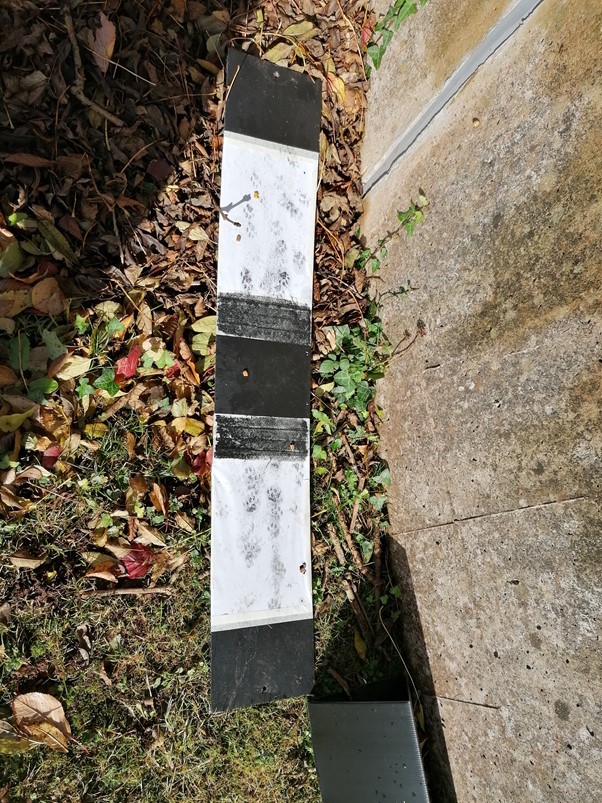
In the first set up we were pleased to see that a vole had visited our tunnel and that the recording paper had stayed relatively dry despite the very wet weather. Sadly for our second attempt our bait of cat food was eaten by a cat!
Vole footprint tracks from first sighting. The photo is taken to scale of an A4 paper (the page filled the photo).
Cat footprints from second set up.
Cat tracks within tunnel.
Our Opinion
The Mammal Footprint Tunnel is an easy-to-use, lightweight monitoring device and a great tool for many small mammal presence/absence studies. Due to its simplicity and low cost, it is ideal for students or for those involved in public engagement.
Despite its light weight, its size makes it a bit of an awkward shape to carry, both when assembled and when flat packed. However, its ability to be flat packed allows for multiple tunnels to be transported without any additional difficulties. Placing ink on the outer edges of the paper may result in more footprints- in our experience something seemed to enjoy munching on the paper before getting to the actual bait. Getting the ink to the right consistency takes some trial and error, but we would recommend using less oil to achieve a thicker ink so that any footprints left behind are as dark as possible so that they are easier to identify.
The pins were sufficient in securing the tunnel and saved it from being blown away by the wind, but a medium-sized mammal (a cat in our case!) could move the trap when secured in soft soil, so this is something to bear in mind when situating your trap.
Overall this is a very easy-to-use, affordable tool and we would highly recommend it as an effective presence/absence surveying method for small mammals.
To view our full range of mammal surveying equipment, visit nhbs.com. If you have any questions about our range or would like some advice on the right product for you then please contact us via email at customer.services@nhbs.com or phone on 01803 865913.
British Wildlife’s Assistant Editor Catherine Mitson joins the supporters of the Amphibian and Reptile Conservation Trust (ARC) for their annual Friends’ Day. With exclusive site visits and Q&A sessions on the agenda, this year’s Friends’ Day was set to be a great event. Here, Catherine shares with us some of the highlights.
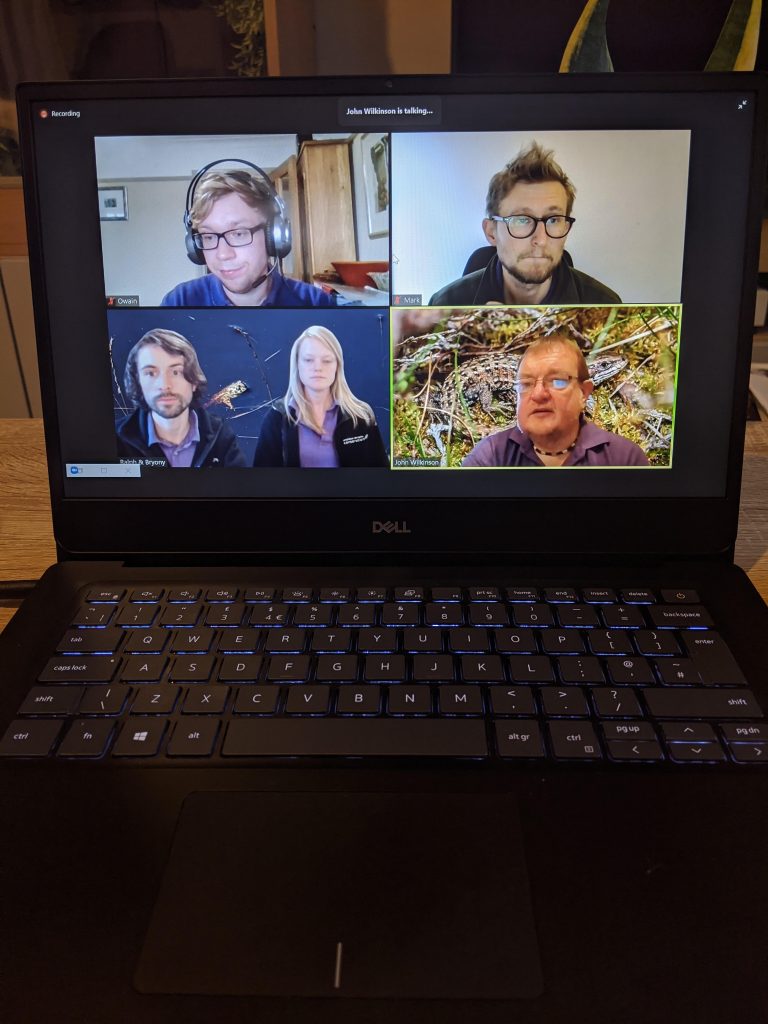
Thankfully, with the existence of Zoom, the ARC Friends’ Day 2020 could go ahead, albeit not its usual format. The Amphibian and Reptile Conservation Trust planned a jam-packed Saturday afternoon to give their supporters the opportunity to see what ARC has been up to and to learn more about Britain’s native reptile and amphibian species.
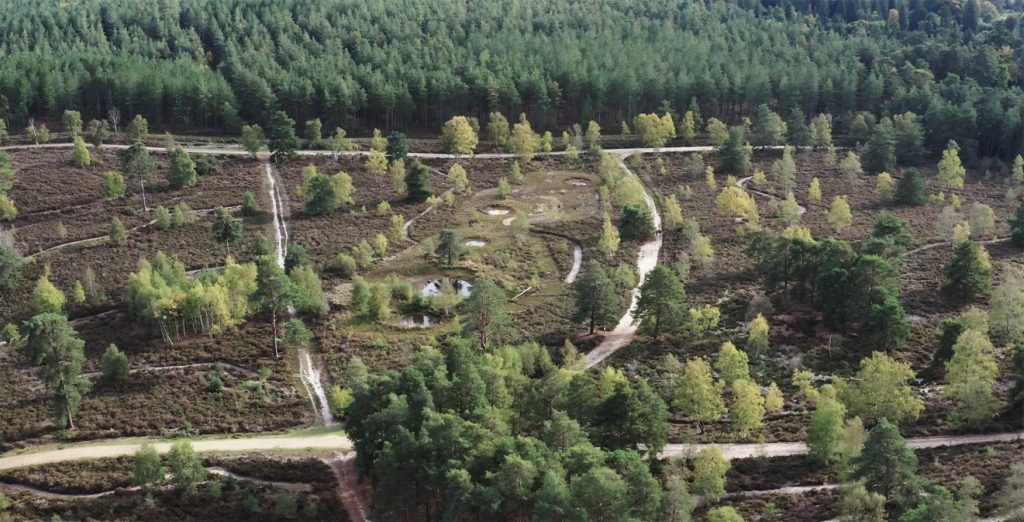
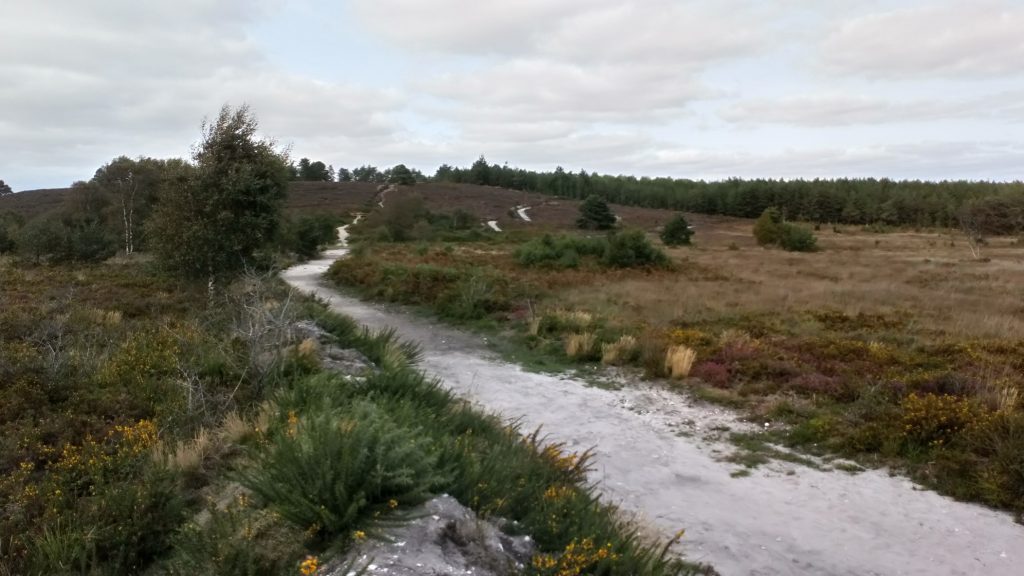
Woolmer Forest is one of the most extensive and diverse lowland heathlands in Hampshire and home to 12 out of our 13 native reptile and amphibian species, including the rare Smooth Snake and Sand Lizard. Excitingly Blackmoor Heath, a 20ha site in Woolmer Forest, has become ARC’s newest nature reserve after a year-long fundraising appeal. Once introduced to the ARC team (most of whom were sporting fun animal-themed virtual backgrounds) the first video began, and we were taken on a virtual tour of the new reserve.
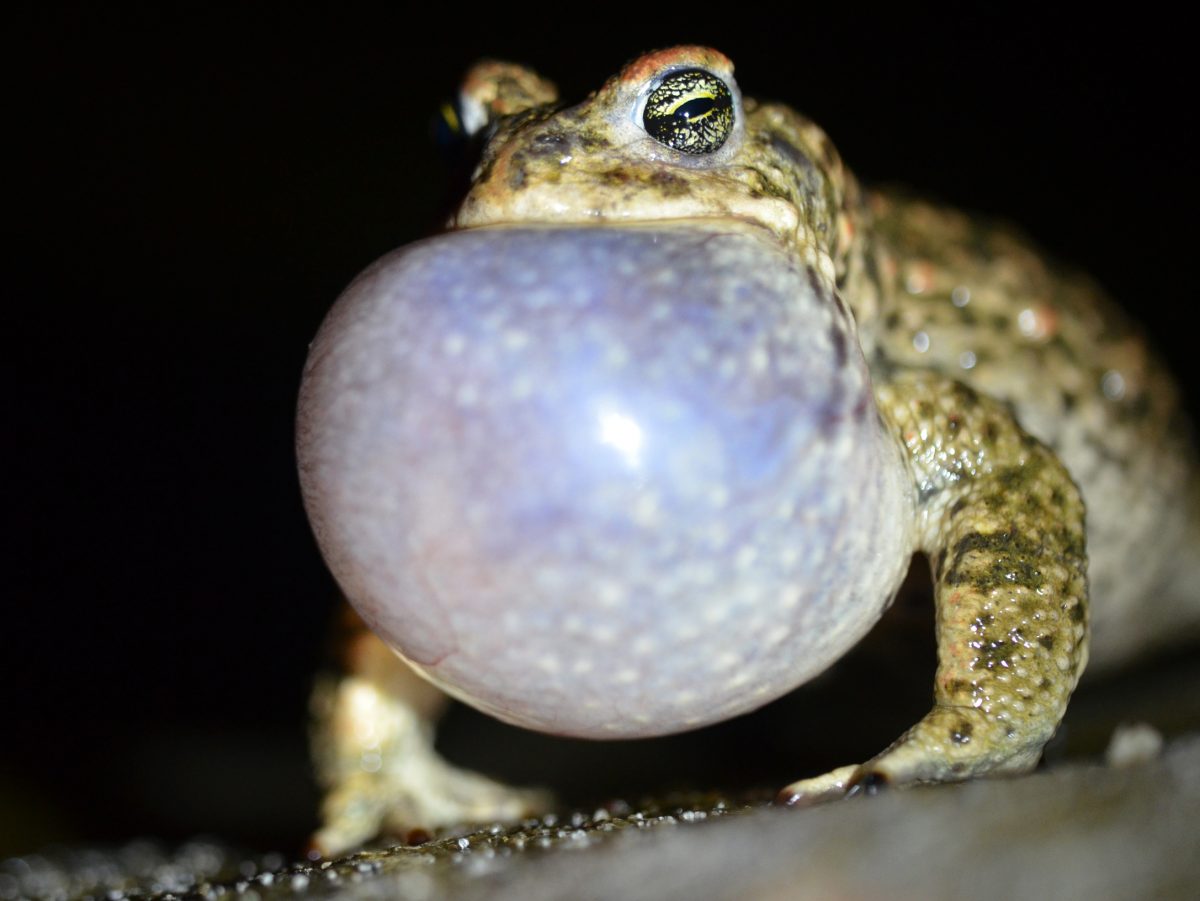
A priority at Blackmoor Heath is to reintroduce the Natterjack Toad, extending its range in Hampshire. Reducing tree cover and creating ponds are a few examples of the work being undertaken here to support a reintroduced population of Natterjacks. Not only is this vital management for Natterjacks and many other heathland species, this has also led to the exposure of bronze age barrows, or burial mounds – Blackmoor Heath is not only important for wildlife, but historically too.
Blackmoor – by the Amphibian and Reptile Conservation Trust
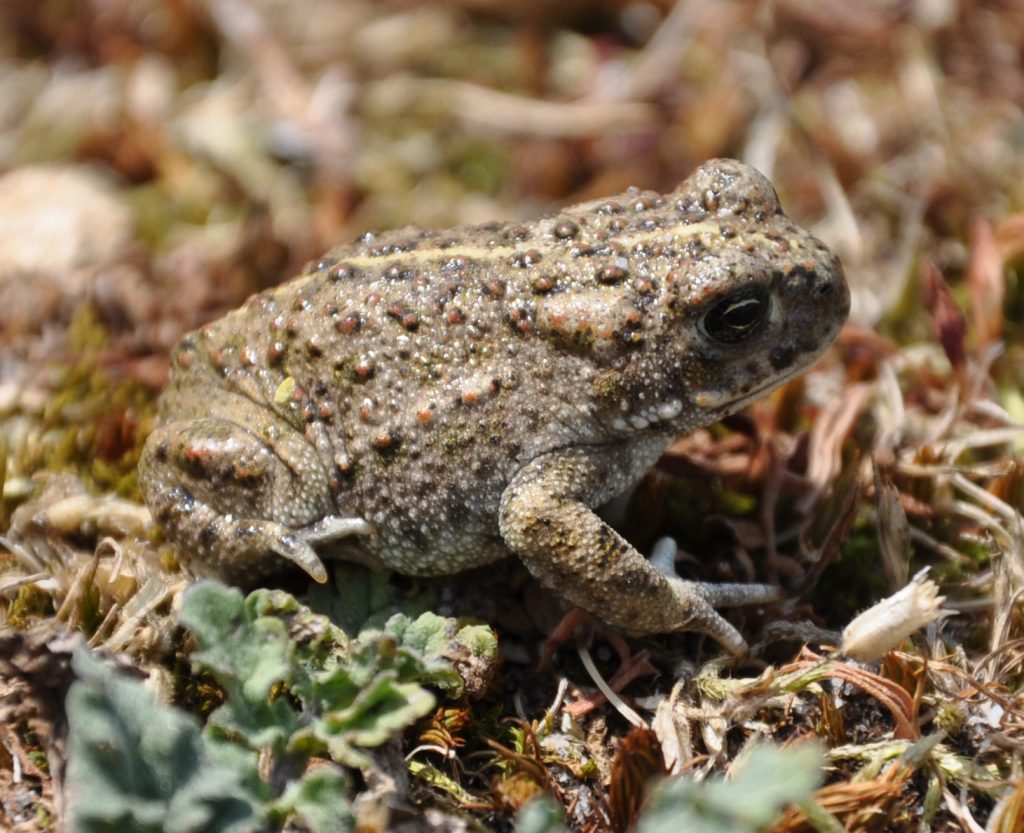
Next, Field Officers Ralph and Bryony took us to Crooksbury Common in Surrey, an important breeding site for Natterjack Toads. Bordered by a pine plantation, one of the major tasks here is to prevent the encroachment of pine trees, which if left unmanaged, would soon smother valuable heathland habitat. In the hope to restore good numbers of Natterjack Toads, the ARC team are also busy creating and maintaining large shallow ponds, critical for Natterjack breeding and egg-laying, as well as providing shelter for Natterjack adults during the cold winter months. We were also shown key Natterjack identification features, such as the distinctive yellow stripe that runs down the middle of their back.
Natterjack – by Chris Dresh
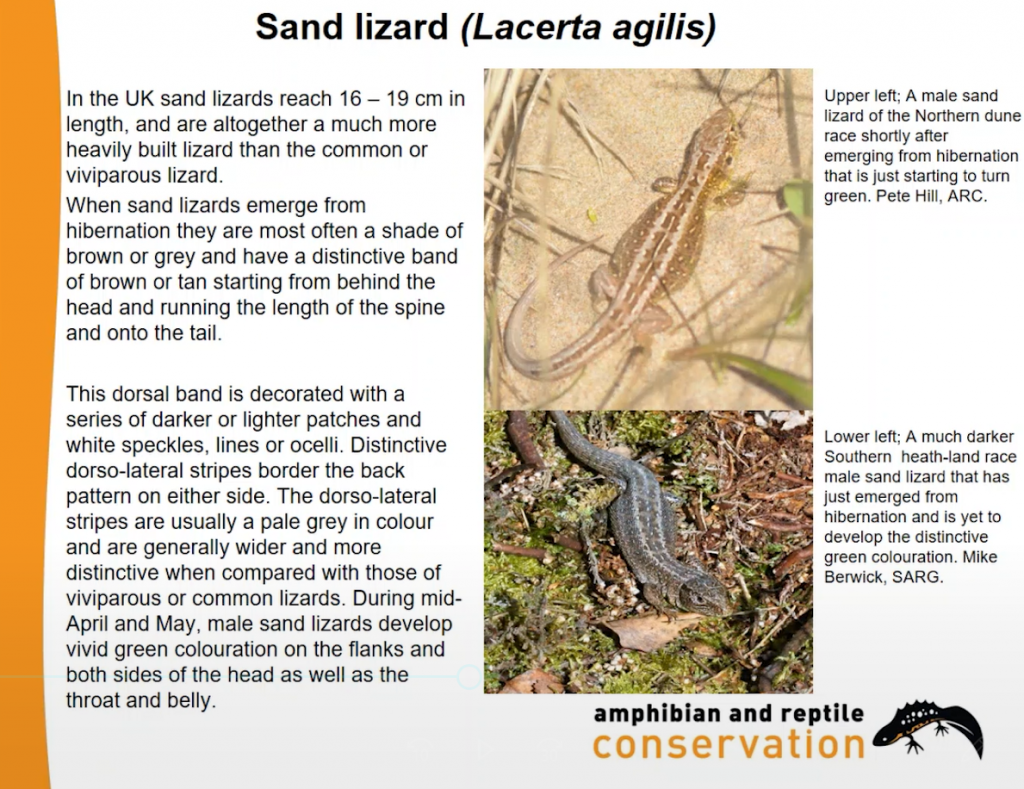
Moving away from heathlands, we suddenly found ourselves on the dunes of Aberdovey, Wales to discover all about the Connecting the Dragons project. ARC staff and volunteers have been working hard to create exposed sand patches on the dunes here (socially distanced of course) to provide the reintroduced population of Sand Lizards with basking spots and egg-laying sites, as well as making next year’s surveying much easier!
Perhaps not common knowledge to many, there are actually two races of Sand Lizard: the Northern dune race and the Southern heathland race. The morphological differences between the two races were described, highlighting the distinctive identification features. For instance, the males of the Northern dune race tend to be much lighter when they first emerge from hibernation compared to those of the Southern heathland race.
Image by the Amphibian and Reptile Conservation Trust
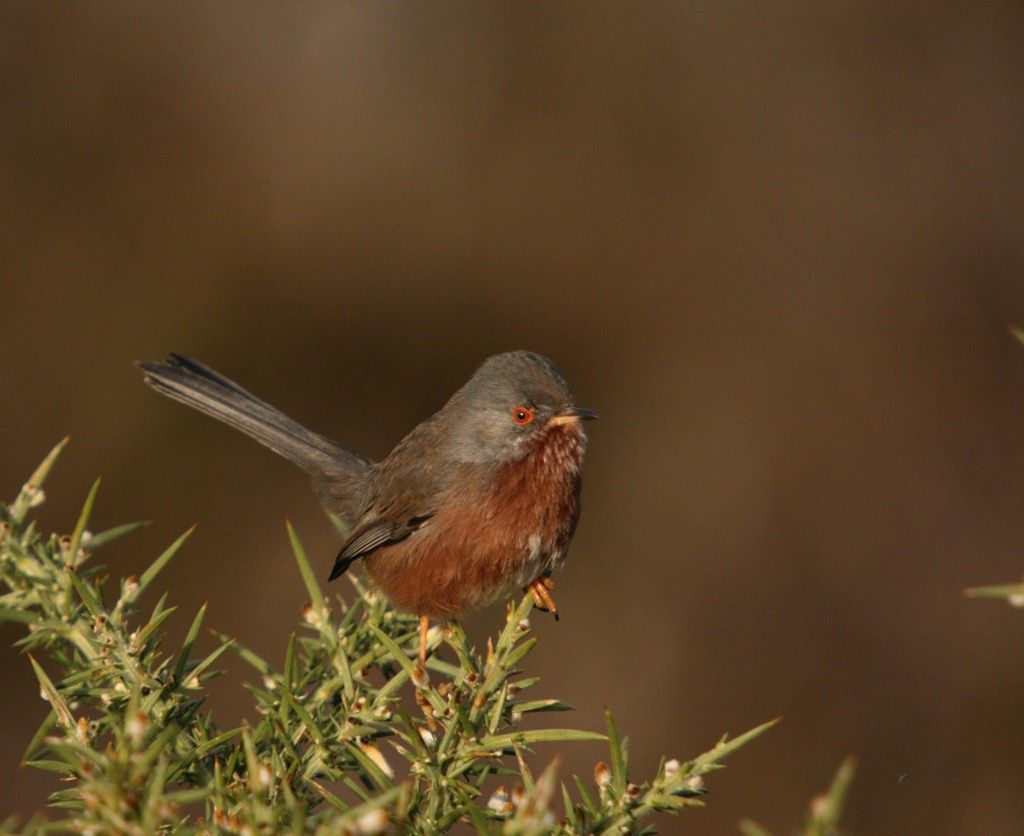
The final site visit video took us to Dorset. Designated as a Special Area for Conservation and a SSSI, Great Ovens, an ARC nature reserve in Wareham Forest since 1996, is a truly special site. Similarly to Crooksbury Common, a surrounding pine plantation and the threat of scrub invasion means that a sensitive management programme is necessary to maintain the important mix of wet and dry heathland. This is not only beneficial for the amphibians and reptiles on the site, including Adders, Smooth Snakes and Sand Lizards, but also for other species such as Dartford Warbler, Silver-studded Blue, and Scarce Chaser. This was a common theme – habitat management for reptiles and amphibians will have a positive knock-on effect for other species, particularly in declining heathland habitats.
Dartford Warbler – by Guy FreemanGreat Ovens – by the Amphibian and Reptile Conservation Trust
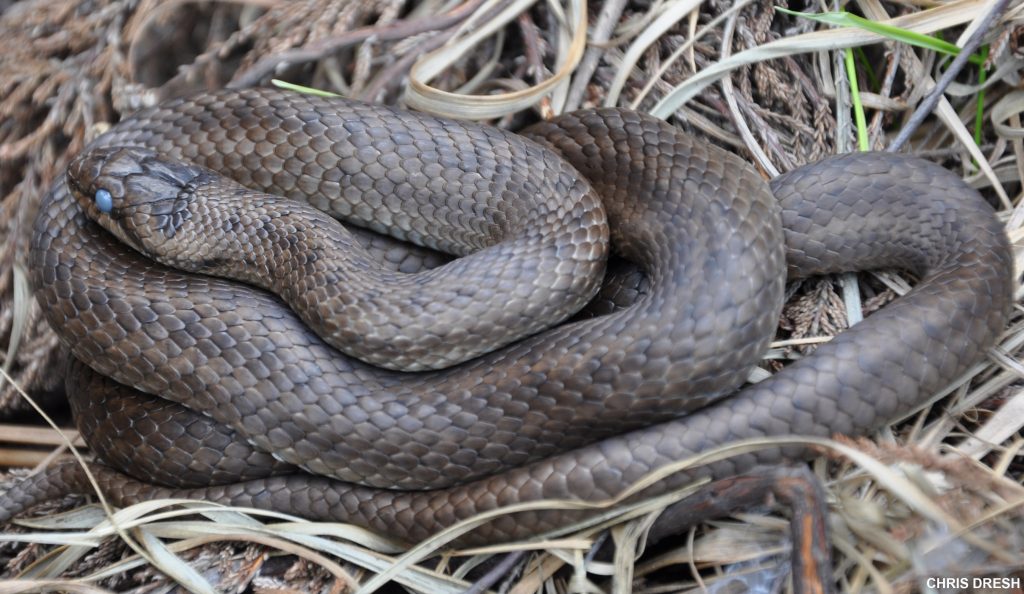
Finally, Public Engagement Officer Owain took us out to find the rare Smooth Snake. Owain was successful in his search, and was able to show us a male Smooth Snake curled up safely underneath refugia (note that a license is required to monitor or handle this species). Owain went on to describe ARC’s ambitious four-year long Snake in the Heather project. Working in partnership with landowners, site managers and wildlife conservation charities, Snakes in the Heather endeavours to conserve the Smooth Snake across its range in southern England, as well as the lowland heathland habitat on which it, and many other species, depends.
Smooth Snake – by Chris Dresh
Throughout the Friends’ Day there were many opportunities for questions during the Q&A panel sessions; we learnt even more about ongoing ARC projects, the management of ARC’s nature reserves and the ecology of UK reptile and amphibian species. Many of the attendees were keen to know what they could do to help Britain’s reptiles and amphibian species and the ARC team enthusiastically provided us with information on how to get involved.
The ARC team – by Catherine Mitson
If you’re interested in becoming an ARC volunteer, or would like to become an ARC Friend to support their fantastic conservation work, you can find out more on their website.
Throughout November we will have special offers on all WNP titles, giving you the perfect opportunity to explore their books: below we have selected some highlights, or you can browse their whole range here.
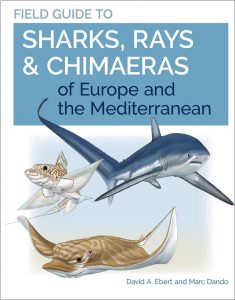
Field Guide to Sharks, Rays and Chimaeras of Europe and the Mediterranean
By: David A Ebert and Marc Dando
Paperback | Due Nov 2020 | £21.99£27.99 Illustrated key guides enable the reader to identify down to species and comparison plates of similar species and plates of teeth also aid identification.
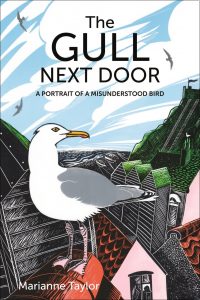
The Gull Next Door: A Portrait of a Misunderstood Bird
By: Marianne Taylor
Hardback | October 2020 | £17.99£21.99 Reveals deeper truths to these remarkable birds. They are thinkers and innovators, devoted partners and parents. They lead long lives and often indulge their powerful drive to explore and travel.
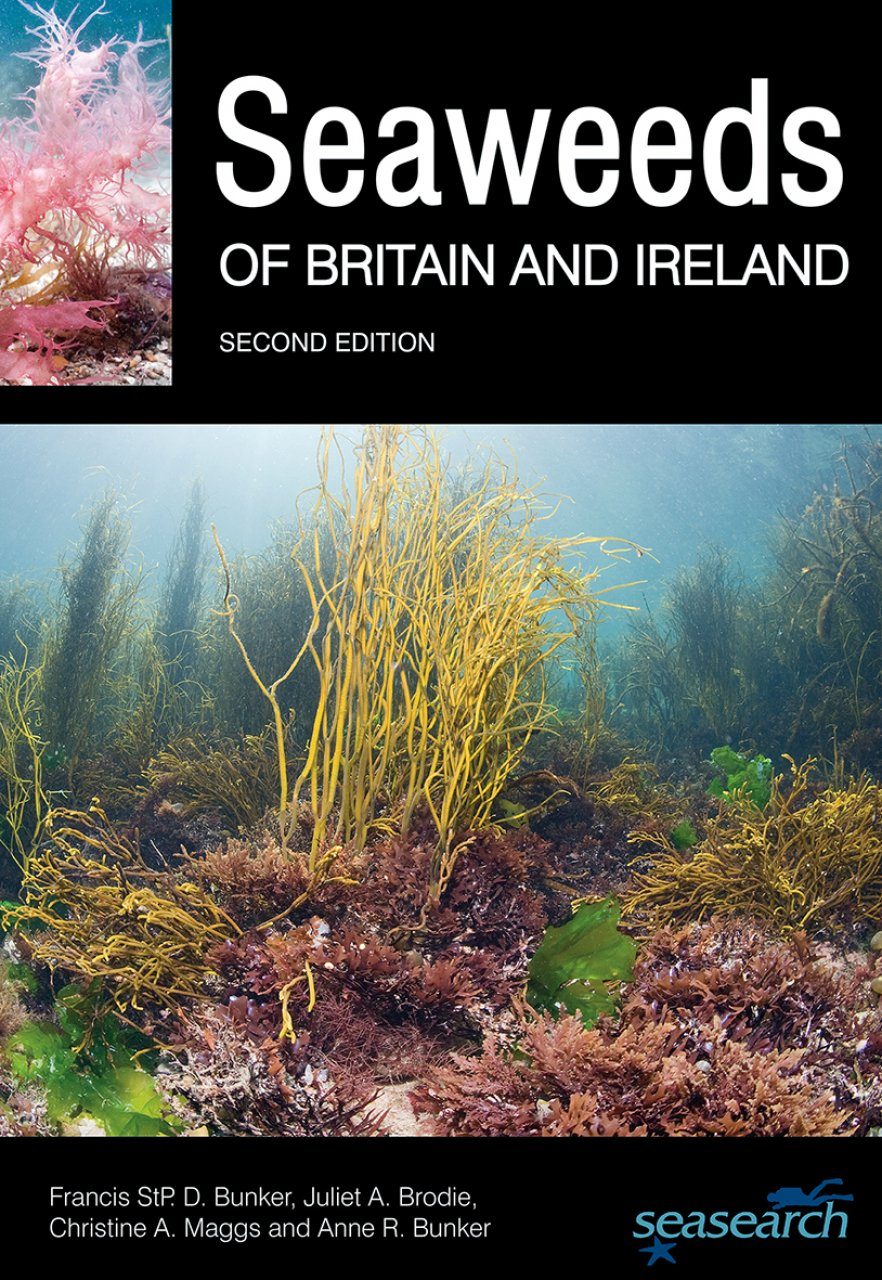
Seaweeds of Britain and Ireland
By: Frances StP D Bunker, Juliet A Brodie, Christine A Maggs and Anne R Bunker
Paperback | June 2017 | £15.50£19.50
British and Irish shallow seas contain an astonishing 6% of the world’s seaweed species, more than 600 different seaweeds: this books enables divers, snorkelers and rock-poolers to identify them.
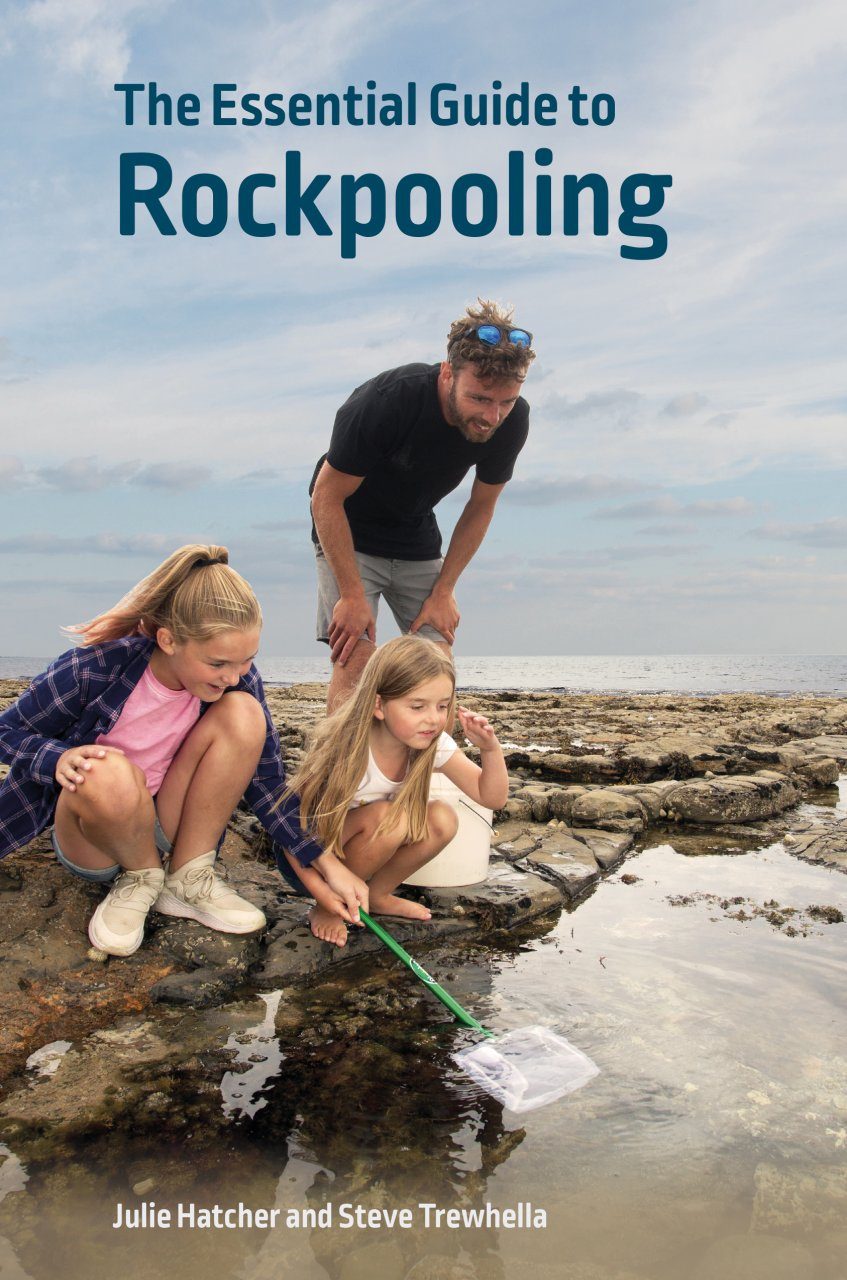
The Essential Guide to Rockpooling
By: Julie Hatcher and Steve Trewhella
Paperback | May 2019 | £12.75£16.99
Whether you are an individual or family visiting the seaside, or a naturalist wishing to expand your knowledge, this guide shows you how to discover the astonishing diversity of coastal wildlife with nothing more than a net and a bucket.
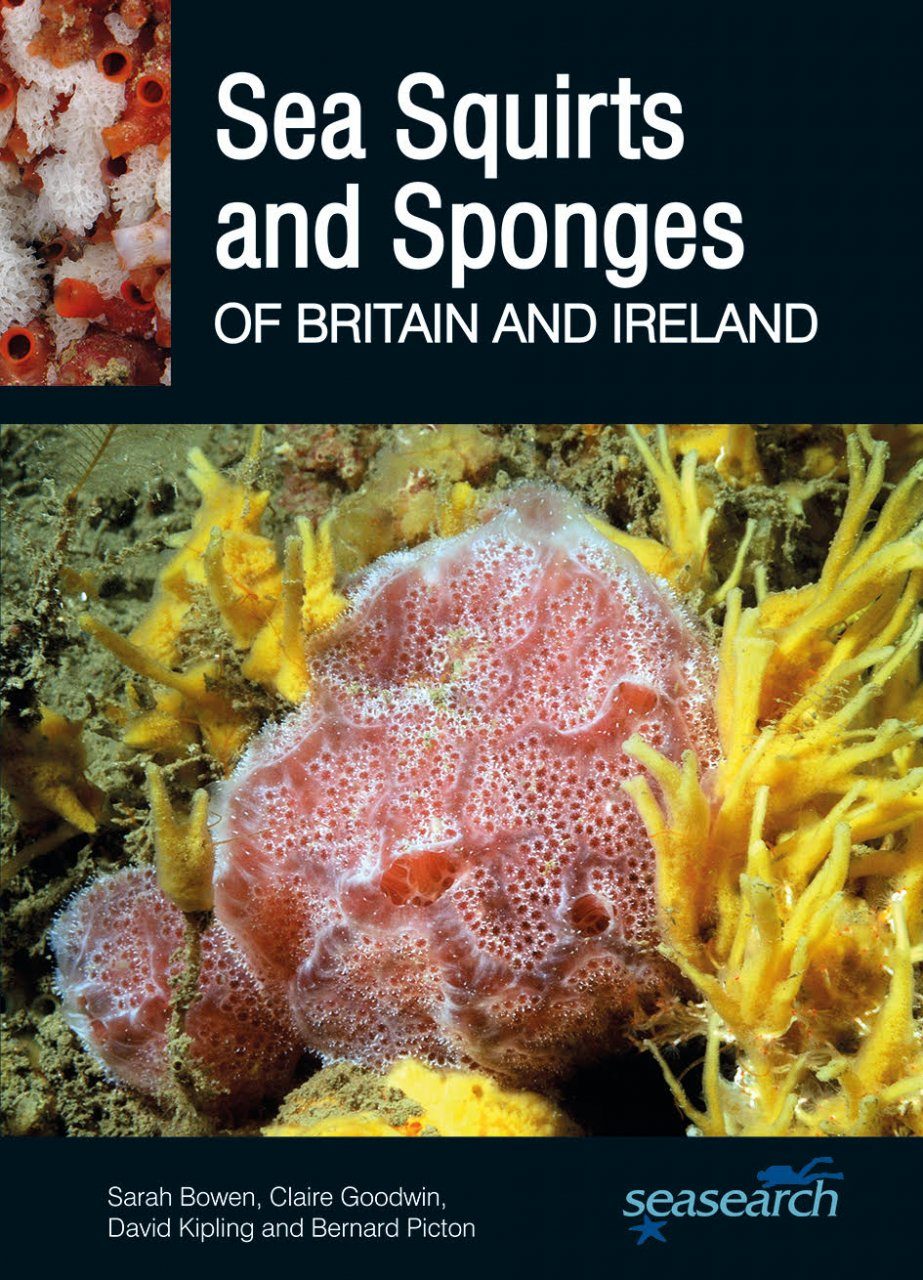
Sea Squirts and Sponges of Britain and Ireland
By: Sarah Bowen, Claire Goodwin, David Kipling and Bernard E Picton
Paperback | July 2018 | £13.50£17.99
Includes sea squirts found in Britain and Ireland’s shallow waters and most recognised sponges. Whether you are a student, a diver, a rock-pooler or simply an enthusiast, this is an essential companion.
Sharks of the World: A Fully Illustrated Guide
By: David A Ebert, Sarah Fowler and Marc Dando
Hardback | Due Feb 2021 | £34.99£41.99
Packed with unique colour illustrations, line drawings and photographs that are well-presented and easy to use, Sharks of the World is the only single guide to cover over 500 of the world’s shark species
 CIEEM (the Chartered Institute of Ecology and Environmental Management) is the leading professional membership body in the UK, representing and also supporting ecologists and environmental managers. Here at NHBS, our core purpose is to support those who strive to understand, protect, and conserve the natural environment. And so, we are thrilled to partner with CIEEM and to support the 2020 CIEEM Awards.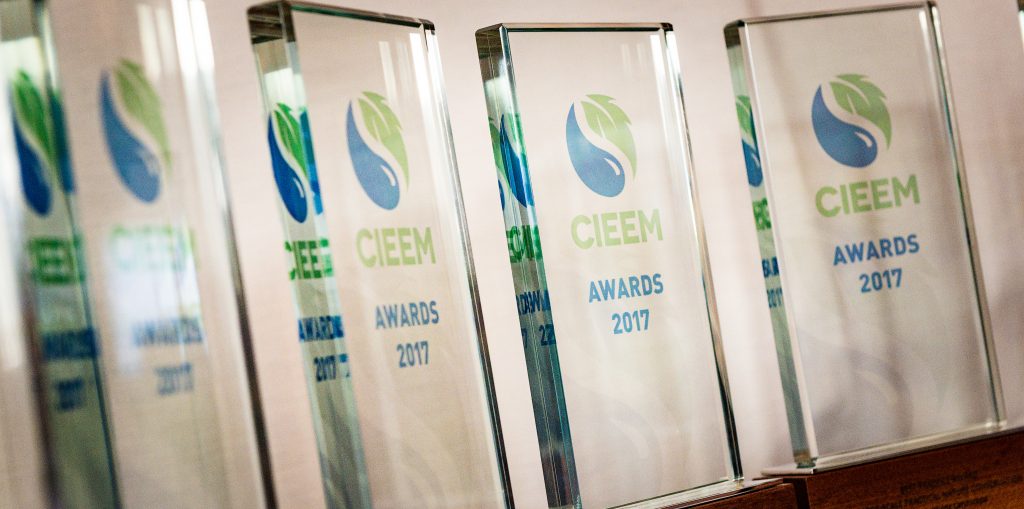




 Field Guide to the Caterpillars of Great Britain and Ireland