NHBS In the Field – Motic SMZ-140

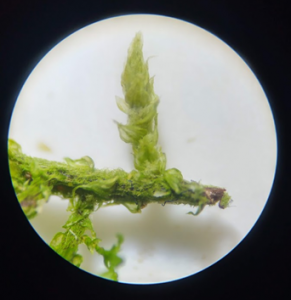
There is something wonderful about microscopy – the examination of tiny insects and fungal spores feels like peering into another world that we seldom have the privilege to observe. For some naturalists, a stereo microscope might seem like an unnecessary extravagance but for many who work with tiny subjects like invertebrates, lichenous fruiting bodies or bryophyte spores they can shed a light on fascinating diagnostic features that a hand lens simply doesn’t have the power to show.

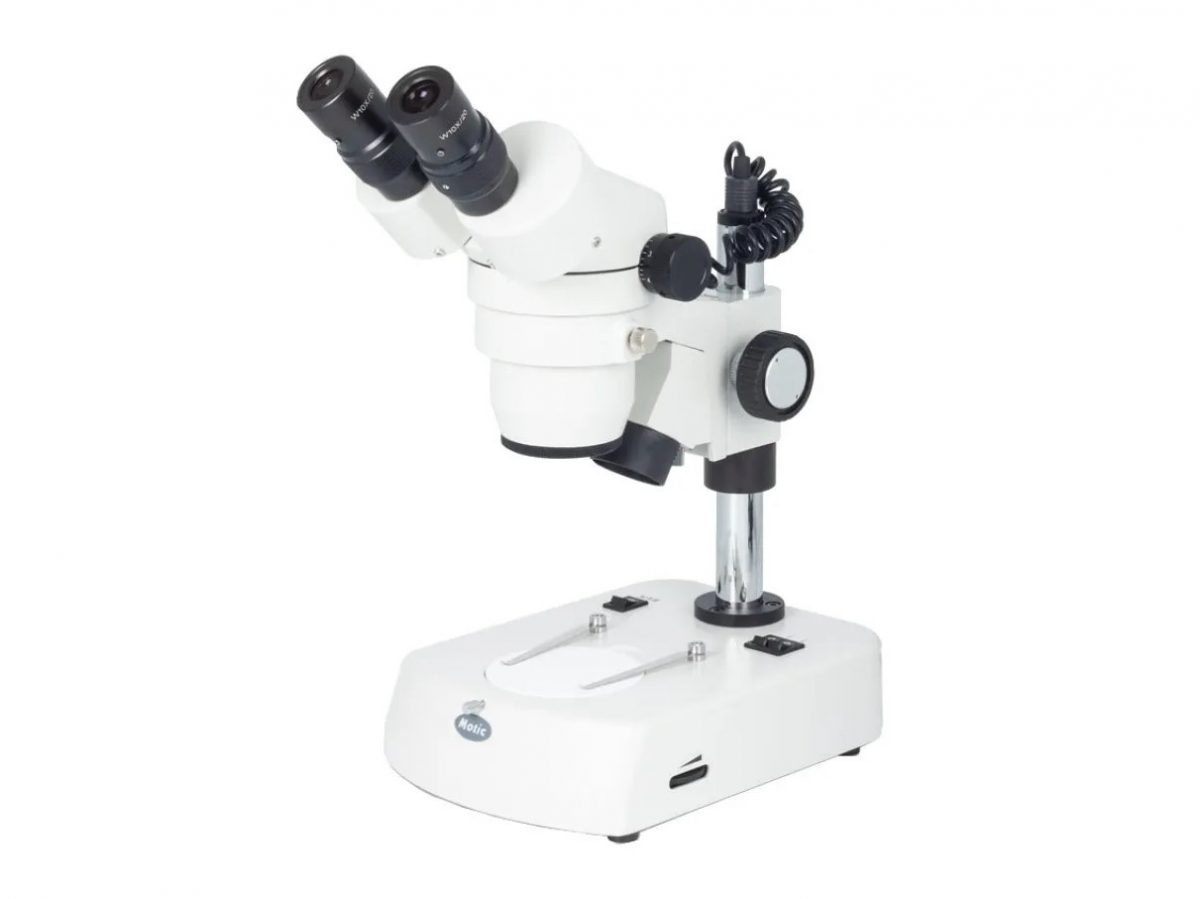
We have recently added the Motic SMZ-140 and -161 series to NHBS’s range of stereo microscopes. Known for their good quality, robust entry-level optics as well as their laboratory standard equipment, Motic Europe has an excellent reputation among industry professionals and hobbyists alike. As such, we were excited to have a look at their mid-range LED model, the SMZ-140-LED. Designed to be as flexible as possible, this series has the advantage of a very wide 10x-40x magnification range, rather than the 20x-40x that most stereomicroscopes offer in this price range, as well as reflected and transmitted LED illumination and fully modular design for further customisation.

How We Tested

The SMZ-140 was tested thoroughly with a variety of different subjects. Specimens used originated from an invertebrate monitoring program close to our South Devon office, along with a variety of botanical subjects selected to test the microscope’s use in different disciplines. The image clarity and brightness across its zoom range were noted, as well as our impressions of the mechanical systems such as zoom, movement focus. The different accessories such as stage plates and options like lighting methods were also used to get as complete a picture of the systems’ utility across as complete a range of applications as possible.

What We Found

First Impressions

The first thing that is apparent about the SMZ-140 is the compact design and packaging. The box that it is supplied in manages to be easily a quarter the size of other models of a similar price and specification, and noticeably lighter too, without sacrificing any protection. This is because the microscope itself is remarkably compact, the base built to centre the weight on a smaller footprint than any other I have seen. This makes a real difference when workspace is limited, or if there is a chance that the microscope might need to be moved to different venues. It is supplied with the head detached from the body but setting it up is a simple and intuitive process that takes no more than a few minutes. Comprehensive instructions are also supplied.

The look of the SMZ-140 is simple but professional. The positioning of the zoom and focusing wheels is intuitive, and both move smoothly without resistance or kick back. The supplied stage plates, one reversible black/white plate for use with the reflected illumination system and one translucent plate to complement the transmitted illumination option, are also robust and resistant to scratching. One slight drawback is the lack of any lens caps, but good-quality dust cover is supplied to protect the workings from any ingress.

The working distance, that is the distance between the head and the staging platform, is 80mm, which allows for easy manipulation of the subject, including dissection where appropriate. The pinions should be sufficient to hold most subjects in place and have an impressive range of movement for use with larger samples.

Eyepieces and Illumination

The eyepieces are comfortable to use, padded with rubber and with an adjustable interpupillary distance. Each one has a +/- 5 diopter adjustment, allowing for easy adjustment to the user’s eyes. The whole head piece can be moved from side to side at the user’s convenience. The zoom wheel moves easily and is mounted on the head, while the larger focusing wheel is placed on the pillar to minimize confusion between the two while the user is looking through the eyepieces.

The standard 10x eyepieces that come supplied with this model can be swapped out for 15x, 20x, or 30x options, and the 1-4x objective lens can be removed and replaced with lower magnification options such as 0.5 times as desired.

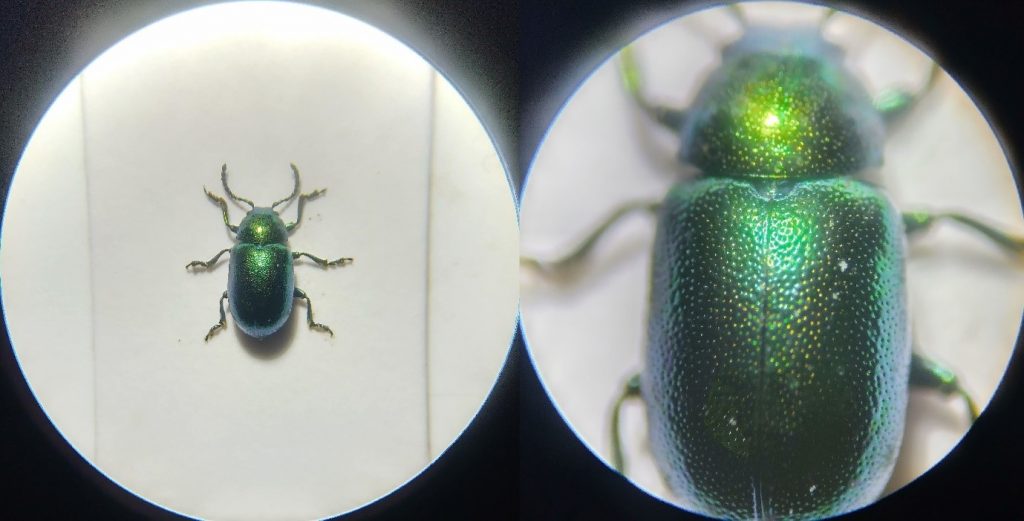
The illumination is bright and can be adjusted at will, allowing for the user to adjust it if they find themselves dazzled or if working with a reflective subject such as a beetle that risks being washed out by a powerful light source. The transmitted and reflected options are activated via separate switches, meaning that both could be used simultaneously if so desired.

The LED bulbs on this model are of use to many researchers as they provide heat-free illumination and will therefore not damage live specimens or dry out those that are at risk of desiccation, such as insects or lichen.
Magnification and Image Quality

In contrast to the standard 20x-40x zoom of most stereomicroscopes in this price range, the SMZ-140 has a range of 10x-40x. As previously stated, this can be increased up to 120x with 30x eyepieces, but for the vast majority of applications the standard range should be perfectly adequate.

The low minimum zoom makes the microscope very useful for larger specimens or jobs that require a wider field of view such as mounting medium sized insects. Motic’s lenses provide a clear, crisp, and bright image even up to the maximum magnification of 40x. The user might struggle with the diagnostic features of very tiny subjects, i.e. those below 1mm, but for the price range the image of the SMZ-140 is among the best I have seen. The keystone effect is noticeable with this model, as it is in most Greenough system stereo microscopes, but is barely perceptible next to the natural variation in focus of three-dimensional samples.

The 20x and 30x click stop feature of the zoom wheel is very useful when working at higher zoom levels, as it allows the user to standardize the magnification at which specimens are examined and makes accurate record keeping easy. The magnification is also indicated on the wheel for visual reference.
Our Opinion

With the SMZ-140-LED, Motic establish themselves as manufacturers of excellent, affordably priced stereo microscopes ideal for almost any use that a naturalist could desire. Among a crowded market of models with very similar specifications, it distinguishes itself through its compact, lightweight design, robust build, and wide zoom range. It is easy to use and provides consistently excellent results, and the modularity of its design along with a good range of accessories allows for simple adaptation to a wide array of jobs.

While some microscopists might prefer to look at more expensive models with wider lens apertures for an even brighter image (such as the SMZ-160 series), or even high-end models that utilize the advanced common mains objective optical system, among models in its price range the 140 certainly stands out. It’s clear that it is designed with flexibility in mind, and as such it is an ideal choice for anyone looking to dive a little deeper into the wonderful world of the tiny.


The SMZ-140-LED can be found here. Our full range of stereo microscopes can be found here. For further information why not check out Insect Microscopy by Andrew Chick.

If you have any questions about our range or would like some advice on the right product for you then please contact us via email at customer.services@nhbs.com or phone on 01803 865913.
The New Environmental Land Management scheme

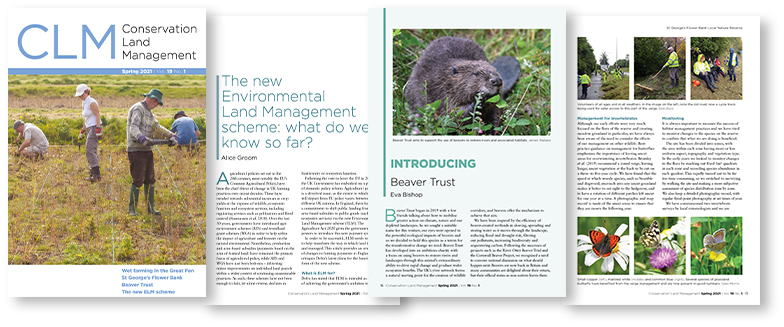
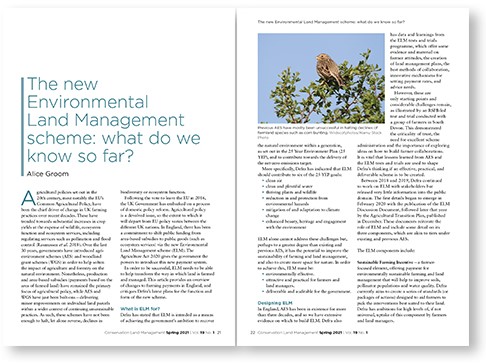
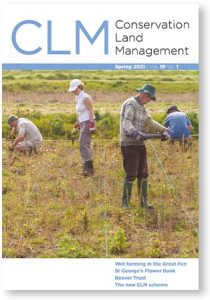
The UK’s departure from the EU offers a number of opportunities for the environment, and in particular for the future of farming in the UK. And so, agricultural policy is undergoing a reform and a new payment scheme, Environmental Land Management (ELM), has been introduced in England. In the latest issue of Conservation Land Management (CLM) Alice Groom, RSPB’s senior policy officer, provides an up to date overview of what we know about ELM so far and the proposed timeline of the seven-year agricultural transition period, and, importantly, highlights the pitfalls and challenges that need to be addressed in order for ELM to be a success. Here you can read a summary of the article.

What is ELM?

Agricultural policy in the UK has previously meant that farmers and landowners receive payments based on the size of farmed land. While agri-environmental schemes have existed, these alone have not been enough to meet their environmental objectives. And so, following the UK’s departure from the EU, the government has introduced the Environmental Land Management scheme (ELM) in England.

This new payment scheme instead pays farmers for delivering public goods – these are ecosystem services that will benefit us all, such as natural flood management and habitat restoration. Defra has said that ELM is a means to meet six of the government’s 25 Year Environment Plan goals, including clean air and water, climate change mitigation, and protection from environmental hazards.

Three-component design

ELM will have three components, and although this design has received support, the finer details are currently lacking. The first, Sustainable Farming Incentive, is envisaged to be the most popular and will provide payments based on environmentally sustainable farming and land management, such as tree and woodland management, integrated pest management and promoting wildlife and biodiversity.

The Local Nature Recovery component is more focused on local-scale nature recovery with the aim to encourage farmers to create and enhance semi-natural habitats, and to use farming methods that keep chemical inputs low. Activities that are likely to receive funding under this component include natural flood management, habitat restoration and species management.

The third component, Landscape Recovery, could provide a means to achieve landscape-scale recovery using wilder approaches to farming. If successful, large expanses of habitat, such as woodland and wetlands, could be restored and large-scale activities such as peatland restoration will help contribute to net-zero emissions targets. Collaboration between landowners is key, and it is still unclear if this component can be achieved across smaller land holdings, or if this is limited to large estates.

Agricultural transition

‘The Agricultural Transition’ is a seven-year transition period in which the previous area-based subsidies will be phased out, and the first ELM National Pilot will begin. The transition begins this year, and the current intention is that ELM will be rolled out in 2024.

Although ELM has great potential to support farmers in a shift towards nature-friendly farming and land management, there is still much that remains a mystery. For instance, Defra is yet to provide information on future regulatory standards, details on how payments will operate, the application process, or what the overall annual budget for ELM will be.

The full version of this article can be found in the Spring 2021 issue, and here Alice Groom takes a closer look at each component to discuss its potential in delivering their environmental goals. Other articles featured in this issue include:

  • Introducing… Beaver Trust
  • Using location-based evidence to prioritise catchment-wide land management
  • St George’s flower bank Local Nature Reserve: thirty years of road verge management by a local community
  • Wet farming in the Great Fen

CLM is published four times a year in March, June, September and December, and is available by subscription only, delivered straight to your door. Subscriptions start from £22 per year. Back issues are also available to purchase individually (subject to availability).

If you are involved in a conservation project and think your experiences could be useful to other practitioners, we would love to hear from you. If you are interested in writing for CLM feel free to contact us – we will be happy to discuss your ideas with you.

HarperCollins: Publisher of the Month

Originally founded in 1819 as Williams Collins & Sons, today HarperCollins is one of the world’s foremost publishers, with an extensive catalogue covering both fiction and non-fiction. Producers of the justly famous New Naturalist series, and the familiar Collins Classic Field Guides, there can be few people interested in wildlife who do not have a few of HarperCollins’ natural history titles somewhere on their bookshelves.

Working with a range of authors from the bestselling and prize-winning to the brilliant debut, HarperCollins has forged a reputation for publishing books that investigate, challenge, and push forward the thinking of the day.

New Naturalist Series

Established in 1945, the iconic New Naturalist series is arguably the most influential natural history series in the world with first editions highly collectable and much sought after. Covering a wide range of subjects and appealing to both professionals and naturalists alike, the series are consistent bestsellers for NHBS.

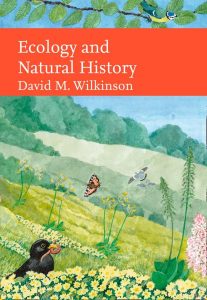
June 2021 sees the arrival of the latest volume in the series, Ecology and Natural History, with Peak District to follow in October and Trees in November.


Nature Writing and Popular Science

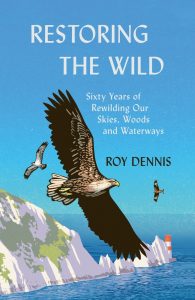
Recent publishing has included some fantastic additions to HarperCollins repertoire of nature writing, including Roy Dennis’ Restoring the Wild, which draws on his life’s work as a field ornithologist and expert in species reintroduction. Read our Q&A with Roy Dennis.

Sarah Gibson’s Swifts and Us and Mary Colwell’s latest book exploring our past, present and future relationship with predators in Britain Beak, Tooth and Claw. Read our Q&A with Mary Colwell.

Due in June from the author of The Seabird’s CryWinner of the 2018 Wainwright Prize for Nature Writing, the highly anticipated The Sea Is Not Made of Water. In addition, from the author of Extraordinary Insects, we look forward to Tapestries of Life, also due to be published in June.


Collins Field Guides

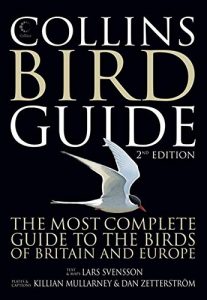
HarperCollins are famous for the distinctive black jackets on their Collins Classic Field Guides. These are consistently popular with naturalists and ecologists throughout Britain. In fact, the Collins Bird Guide is our all-time bestselling book here at NHBS! Covering Europe and the UK’s flora and fauna, these field guides set the benchmark for quality descriptions, illustrations and distribution maps.

In addition to the Classic Field Guides, Collins have a comprehensive range of field guides spanning several series, including: Collins Pocket Guides, Collins Complete Guides and Collins Field Guides.

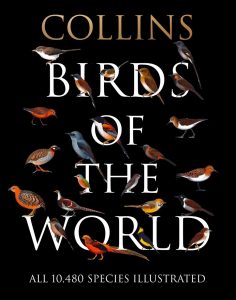
Due in September is Collins Birds of the World – an exciting and all-encompassing new field guide comprising of 25,000 illustrations of 10,000 species on 280 colour plates.


Browse a selection of highlights below


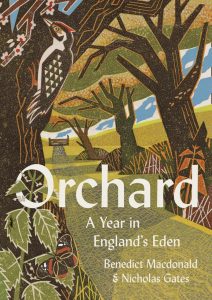
Orchard: A Year in England’s Eden
By: Benedict Macdonald and Nicholas Gates
Paperback | June 2021| £7.99 £9.99

A brilliantly written and informative insight into the ecological niche traditional orchards can provide and the benefit they can have for the larger ecosystems around them.


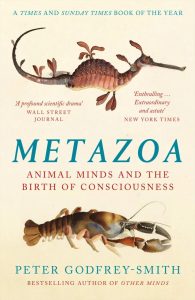
Metazoa: Animal Minds and the Birth of Consciousness 
By: Peter Godfrey-Smith
Paperback | July 2021| £9.99

Combining vivid animal encounters with philosophy and biology, Metazoa reveals the impossibility of separating the evolution of our minds from the evolution of animals themselves.


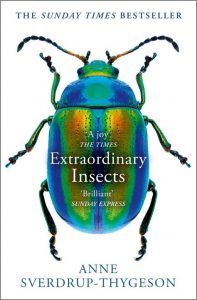
Extraordinary Insects: Weird. Wonderful. Indispensable. The Ones Who Run Our World
By: Anne Sverdrup-Thygeson
Paperback | April 2020| £7.99 £9.99

A journey into the weird, wonderful and truly astonishing lives of the small but mighty creatures who keep the world turning.


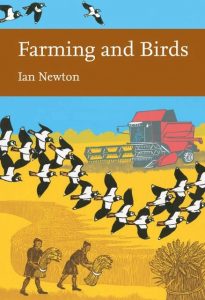
Farming and Birds
By: Ian Newton
Paperback | July 2017| £29.99 £34.99
Hardback | July 2017| £52.99 £64.99

Ian Newton discusses the changes that have occurred in British agriculture over the past seventy years, and the effects they have had on bird populations.


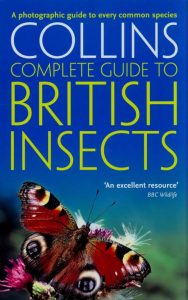
Collins Complete Guide to British Insects: A photographic guide to every common species
By: Michael Chinery
Paperback | April 2009| £13.99 £16.99

A photographic field guide to all the common and some unusual species of insects across Britain that the keen amateur naturalist is likely to spot.


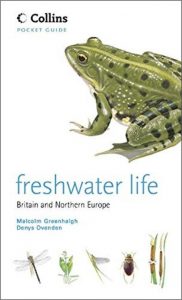
Freshwater Life of Britain and Northern Europe
By: Malcolm Greenhalgh
Paperback | March 2007| £16.99 £19.99

A beautifully illustrated guide to the wide variety of species found in rivers, streams, lakes and ponds in Britain and Europe.


Collins Tree Guide: The Most Complete Field Guide to the Trees of Britain and Europe
By: Owen Johnson
Paperback | April 2006| £15.99 £18.99

Part of the Collins Classic Field Guides series, the Collins Tree Guide is a definitive guide to the trees of Britain and non-Mediterranean Europe.


Browse all HarperCollins books at NHBS 


All prices correct at the time of this article’s publication.


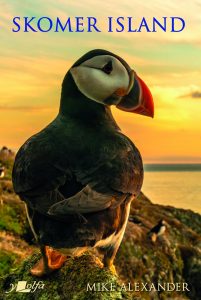
Author Interview with Mike Alexander: Skomer Island

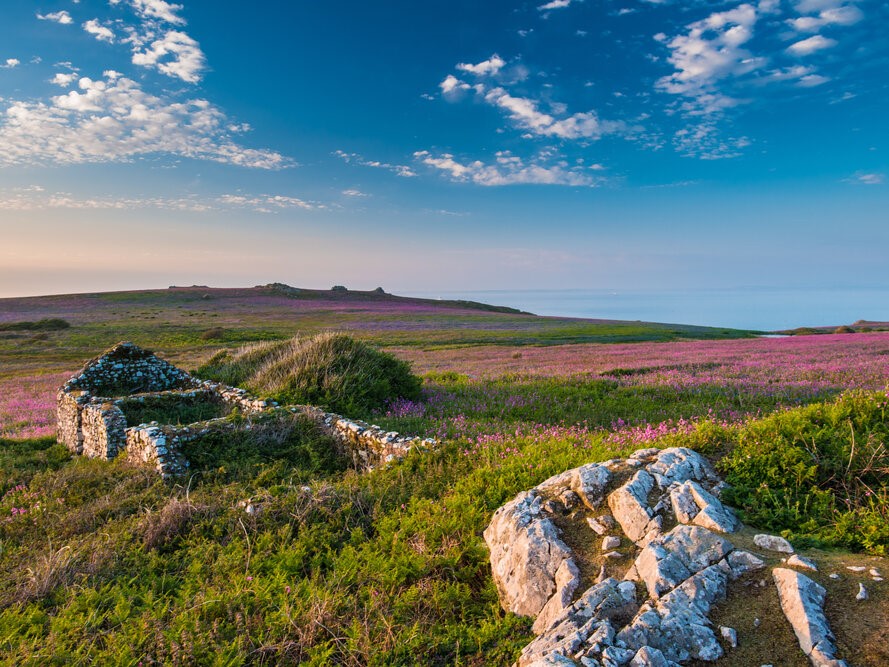
Renowned for its incredible and diverse wildlife, it is no wonder that Skomer Island receives thousands of visitors year upon year. Famous for its thriving populations of seabirds, grey seals and its vast swathes of spring flowers, Skomer is a fantastic example of how carefully managed eco-tourism works alongside conservation.

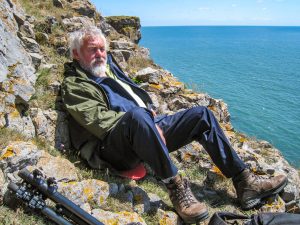
Mike Alexander was Warden of Skomer for ten years, and has had links to the island for over six decades. He is now Chair of the Wildlife Trust of South and West Wales and the Pembrokeshire Islands Conservation Advisory Committee. Illustrated with his own stunning photographs of the flora and fauna, this book is a comprehensive history of the island and its inhabitants.

Could you tell us a bit about your background and where the motivation for your book came from?

I first visited as a schoolboy in 1962, just a couple of years into Skomer’s incarnation as a nature reserve, and it was a day that changed my life forever. The most overwhelming idea that stayed with me from that day was that eventually, whatever it took, I would become warden of Skomer.  I finally fulfilled that long-held childhood dream in the spring of 1976. Following 10 wonderful years on Skomer I moved to North Wales where initially I was responsible for the management of 5 spectacular National Nature Reserves and in 1991, I became responsible for supervising the management of the entire series of NNRs in Wales, a position I held for over twenty years. In 2018 I became the chair of the Pembrokeshire islands conservation advisory committee and so my commitment to Skomer continues.
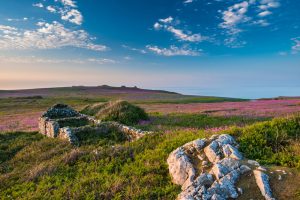
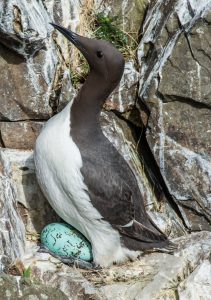
I had long dreamed of writing a book about Skomer, but in truth had little idea of how I might achieve that goal. Skomer is a cultural landscape shaped over thousands of years by people striving to make a living. I wanted to show how the island has evolved in response to changing human values, attitudes and interventions. I also wanted an opportunity to demonstrate what nature conservation means in practice. Reserves like Skomer are the most powerful advocate for nature that we could possibly have. The island gives visitors an almost magical insight into somewhere that transcends our ordinary world, where one close encounter with a puffin may speak more eloquently for conservation than a thousand words ever could.

Previous to the island becoming an NNR in 1959, you mention Skomer’s agricultural history. Could you tell us here a little about the island’s past?

Skomer’s time as a nature reserve spans barely a moment in its history. People have occupied Skomer for millennia, and archaeologist John Evans has described Skomer as possibly unique in the completeness of its archaeological remains. Present day visitors to the island can clearly pick out faint patterns of the distant past: field systems, lynchets, hut circles and more. Until recently, archaeologists and historians believed that apart from rabbit trapping and livestock grazing, the island had been abandoned after the Iron Age. However, new excavations in 2017 revealed the presence of medieval land clearance and ploughing.

During my ten years living on Skomer I became increasingly interested in the people who had lived there before me and most of all, the 19th century inhabitants who had farmed and made their living on the island. The people of the 19th century left the heaviest footprints as theirs was a time when people imposed their will on the island, shaping the land to meet their needs. This was a period of intense intervention and although it began to fade towards the end of the century, it was a time when people had the most impact on the island, its scenery and vegetation. How long will it be before the Victorian farmers’ footprints fade away? We, the later islanders, have become noninterventionists, and observers of nature’s progress. Ours should be the lightest of all footprints, and so perhaps the impact of the 19th century will, for now, be the most enduring of all human influences.

Recent news of Skomer’s thriving populations of seabirds like the puffin and Manx shearwater offer much hope. What major changes do you think are necessary to ensure species recovery and habitat restoration in Britain?

My generation has grown up with an almost subliminal pessimism about the fate of our wildlife to the point where decline seems inevitable and we can only hope to slow the rate of it. To have seen Skomer thrive throughout its time as a nature reserve is contrary to nearly everything I have grown up to believe, and yet it is important to remember that Skomer once had the potential for so much more. We know from photographs taken around the turn of the last century, that there was a minimum island population of around 100,000 Guillemots: four times the present number. The photographs also show the grassy slopes above the cliffs thick with Puffins, where now they only form a thin fringe. Perhaps these things will not be possible again, but it is a vital reminder never to set our sights too low and to hold on to that vision of what the future could be.

Species and habitat recovery will only happen when our policies and legislation are translated into action.  Good intentions alone will achieve nothing. It is quite ironic that despite the enormous growth in public concern and protest about the fate of our natural environment, governments are failing to provide the essential resources. 

The NNRs, along with all other protected areas, will be a central and essential component of any species and habitat recovery or restoration programme. They are the stepping stones, the vital reservoirs and the crucial resources that will enable landscape scale recovery in Britain.

With restricted movement during the Covid-19 pandemic that many are referring to as the ‘anthropause’, people across the globe have noticed changes to their local wildlife. How has the lack of eco-tourism affected the wildlife on Skomer during this time?

Skomer is an extremely fragile island with hundreds of thousands of seabirds. Puffins and Manx Shearwaters nest in shallow burrows, while the cliffs provide homes for thousands of Guillemots, Razorbills and Kittiwakes. As a consequence, all visitors to the island understand that they must keep to the system of marked footpaths at all times. This has made it possible for us to claim with confidence that visitors to Skomer have no impact on the wildlife that they come to enjoy. So apart from overgrown paths, there has been no significant discernible impact.

There are plenty of signs from elsewhere that wildlife has responded positively to the lack of human disturbance.  It may well be that some species will gain a short-term advantage, but I am not convinced that the impact of Covid-19 on wildlife will be anything more than a very minor, and almost irrelevant, hiccup, unless of course we can learn from the experience. We must learn to change our behaviour and realise that we will not survive on this planet if we regard unfettered consumerism as our main purpose in life. 

Do you have any other projects on the horizon you’d like to tell us about?

I will take a break from writing and concentrate on photography.  I was recently elected Chair of the Wildlife Trust of South and West Wales and I am looking forward to devoting much of my time to working for the Trust.

Skomer Island
By: Mike Alexander
Hardback | Due April 2021 | £29.99


All prices correct at the time of this article’s publication.

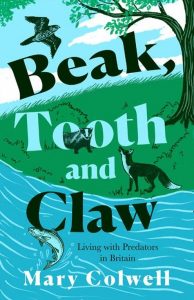
Author Interview with Mary Colwell: Beak, Tooth and Claw

With the recent return of the white-tailed sea eagle to Britain and the mooted return of the Lynx, living with predators is becoming a much more frequent topic of conversation. In Beak, Tooth and Claw, Mary Colwell explores our past and present relationship with predators in the UK, and considers what it might look like in the future.
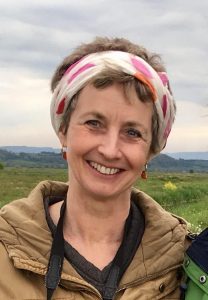
Author of Curlew Moon, Mary Colwell is an award-winning conservationist, writer and producer, and has written for the GuardianBBC Wildlife MagazineCountry Life and many other publications. She has very kindly agreed to answer some of our questions about her latest book.

Could you start by telling us a little bit about your background and how you got into conservation?

I became interested in conservation during my career at the BBC Natural History Unit, when it became clear just how much was going wrong. A lot of my work as a producer was celebrating nature, but it was apparent that the beautiful pictures were covering over a fractured, damaged world. Wild creatures are struggling to make their lives work in our increasingly human-dominated landscapes, and this rich, vibrant planet is thinning out. Over the years the press releases I read, particularly from Ireland, highlighting the decline of curlews were eye-watering. It ate away at me, this relentless destruction, and I decided I had to get more involved. Not so much in the fieldwork and practicality, but in doing what I had been trained to do – tell the stories of the earth and help make the problems accessible and understandable to people like me, non-specialists who care.


Following on from Curlew Moon, what was it that made you decide to write a book about predators?

I was naïve when I first got involved in curlew conservation, I had no idea how enmeshed they are in the biggest conservation issues we face in the 21st century, namely predator control, habitat loss to farming, afforestation and development, climate change, increasing pressure from leisure activities and so on. The predator issue seemed particularly potent in the uplands on grouse moors, but it is a source of contention everywhere. How people view predators is rarely based on science, it is shrouded in cultural attitudes and traditions. I found this interesting, and it also pointed to a way forwards. If conservationists can work with communities within their world view, on the ground projects are far more likely to succeed than trying to impose solutions on people. I don’t have definitive answers, but I explore this in the book.

Carefully managed reintroduction of some of Britain’s predators has already proved hugely beneficial to biodiversity, and may also pose future economic advantages. What lost species would you like to see returned to Britain next?

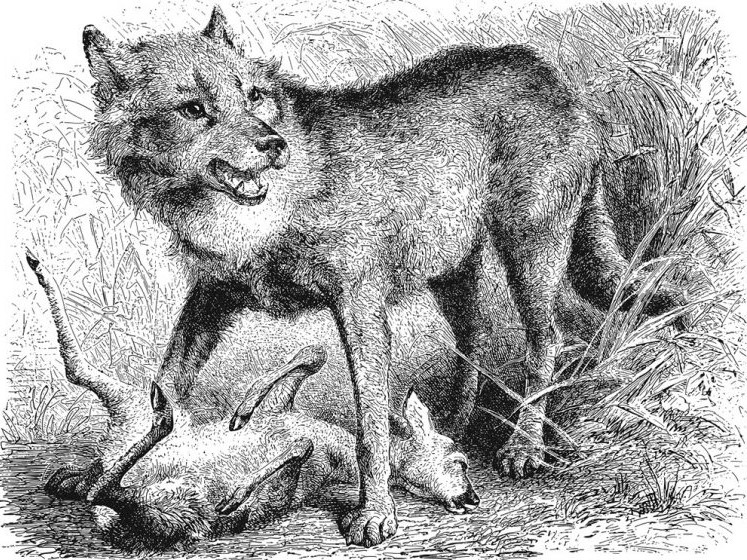
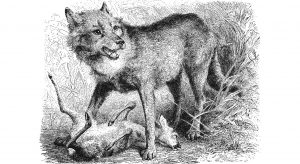
In Chapter 8 I look at reintroductions, and I think what is happening is a very good way to go. Start with wildcat then scale up. The quiet, efficient regulator of woodlands, the lynx next. If we ever find it possible to introduce wolves, it would be incredible, we would live in a very different country, both the physical landscape of Britain, but also the landscapes of our minds would change. We will be wilder in every sense. It won’t be easy, in fact it is probably not possible given the direction of travel and the density of the human population, but it is tantalising to think about. I’m aware, though, that it is easy to glow with excitement about wolves in the wilds of Britain, but living with them on the doorstep will be a challenge for rural communities.

Opposing views on predators and reintroduction projects seem irreconcilable – do you think there is any way both sides of the argument can find common ground?

We will only welcome big predators back into our lives if we feel secure in their presence. As long as they are perceived as a threat to us, both physically and metaphorically, there will be opposition. The solution is to find ways that will assuage fear and highlight the positive aspects of their presence. And there are many positives as well as issues to face honestly and with understanding. There have been centuries of mis-information and vilifying which can’t be unravelled quickly. This is the long game, the gentle, constant discussion of facts and the erosion of fiction. Taking away fear is not easy, but I hope we get to a place where, although it might feel like a scary and difficult step to take, we will all put our hearts behind a new, wilder world.

What’s your vision for the future of conservation and rewilding in the UK? Are you hopeful or pessimistic?

This is the hardest question of all. The future of conservation and the future of rewilding seem, in some ways, like different topics. The future of conservation relies on the pincer movement of sound environmental policies that make it easier for landowners/developers etc to do the right thing, and citizens wanting to have more nature and helping make it happen. We have to incentivise land use that makes wildlife worth preserving and we have to educate people about nature and our role in the natural world – something that has been largely side-lined over the 20th century. We need to create a more nature-literate society, one where people understand the issues and can make informed decisions. Who knows if the government’s 25-year plan and green vision will play out as we all hope, but it is there and it is welcome and we all have a role to play in enabling it.

Rewilding is part of that vision, but it is a catch-all term that has a variety of meanings. I take it as increasing biodiversity across Britain, rather than simply the idea that we should let nature go wild without any human interference. The way we live in the UK has made pure, unadulterated nature a dream, not a reality. There is nowhere that is wild but everywhere could be wilder. Rewilding for me is doing what needs to be done, area by area, bit by bit, to increase the net amount of nature across the UK.

Am I optimistic? On the whole, yes. My experience in starting Curlew Action gives me hope. We are a tiny charity that is only 18 months old, yet the support we have been given is amazing. ‘Ordinary’ people (no one is ordinary!) have supported us in a simple, clear way – they want to show how much they care for nature, and that has been so heartening. Even if many of us are not skilled in the field, we can all play a part in raising awareness and fund raising for conservation efforts to help wildlife.

Always, my advice is – pick something to love and love it. Love never comes alone, it is accompanied by barrow-loads of responsibility and care – so simply saying “I love nature” is not enough. If you love something you will move heaven and earth for it. I think many people will do that if they feel they have permission, despite not being an “expert”, so yes, I am optimistic.

Do you have any projects in the pipeline you’d like to tell us about?

I am so keen to push through the long awaited plan for a GCSE in Natural History. We are just waiting for a final yes from the Department of Education – once we have that we are up and running. So I shall continue to work away at that. I am starting my next book for Bloomsbury on walking the Camino last winter in between lockdowns – a 500-mile pilgrimage across northern Spain. The natural world was a constant companion, and it got me wondering about our relationship with nature over the 1000 years people have walked this track. I am also now Chair of the newly formed, Defra supported, Curlew Recovery Partnership, a roundtable of 9 organisations and an extensive network charged with turning it around for curlews over the next 10 years. With Curlew Action work and other projects constantly ticking away, life is full and fascinating.

Beak, Tooth and Claw
By: Mary Colwell
Hardback | Published April 2021 | £13.99 £16.99

We have a very limited number of bookplates signed by Mary, available while stocks last.

All prices correct at the time of this article’s publication.

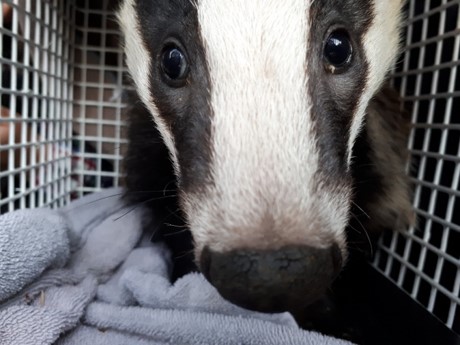
Devon Badger Group: Interview with Chair, Jenny Pike

Formed in 2010, the core aim of the Devon Badger Group is to protect badgers and their habitats. Funded by membership, donations and fundraising events around Devon, they run a free 24/7 helpline for sick or injured badgers and other badger-related issues.

We recently had the opportunity to chat with Jenny Pike, Chair of the Devon Badger Group, about the group’s important work, their successes and challenges, and how Covid-19 has affected their lives over the past year.


Firstly, can you give us a brief introduction to the Devon Badger Group and your role within the group?

My name is Jenny Pike and I am Chair of the Devon Badger Group (DBG). In a nutshell, the purpose of the DBG is to protect badgers and their habitat, record their activity, educate and further the public’s understanding of badgers, and to encourage tolerance, appreciation and respect for all wildlife. We also work with the police and RSPCA, and respond to any activities that could be detrimental to the welfare of badgers.

What do you consider to be the main threats to badgers in the UK?

Sadly there are many threats to badgers and, despite gaining legal protection in 1992, badger persecution is on the increase. In England, one of the biggest threats badgers face is the government licenced badger cull. Since the cull began in England in 2013, a total of 140,991 badgers have been killed, 30,345 of which have been in Devon.
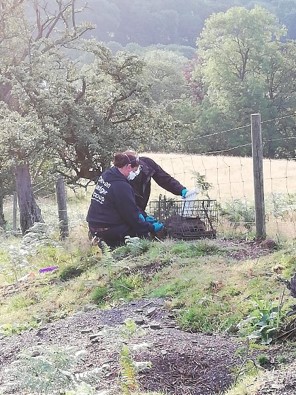
Other serious threats are housing developments where, even if setts are protected with appropriate mitigation measures, a significant amount of foraging ground can be lost. New roads can also impact badgers if appropriate badger tunnels are not installed or are installed in the wrong place. Hunts sometimes block badger setts to prevent foxes escaping down them and, as already mentioned, illegal badger persecution is on the rise along with other forms of organised wildlife crime such as dog fighting.

I am sure everyone will have seen many badgers dead on the side of the road. No one knows exactly how many badgers are killed by vehicles each year – one estimate has it at 50,000.

What are your main goals as a group?

Our main aims are to protect badgers, their setts, and their habitats. But we feel that if we can increase the public’s understanding of badgers and dispel some of the myths, people will feel more encouraged to protect them. Sadly, most people we talk to have never seen a live badger. This is why, whenever we are contacted by members of the public who think they have badgers visiting their gardens, we offer to put up a trail camera so they can actually watch visiting badgers go about their business, which is usually looking for earthworms and other invertebrates. This often has a very positive effect and has changed people’s view of badgers.

What would you consider to be your greatest success as a group?

In 2019, through some very generous grants and donations, the DBG was able to fund two members to train to become licenced lay vaccinators. I was lucky enough to be one of them. Since then, we have worked in collaboration with the Somerset Badger Group to vaccinate badgers in Devon and Somerset, which has allowed us to gain valuable experience. We hope this will continue and expand in the future. 
Covid-19 has caused difficulties and presented issues for all of us. How has the pandemic affected the work that the DBG does, and have there been any unforeseen positive effects?

On the positive side, it is possible that less cars on the road in the first lockdown resulted in fewer badgers being killed or injured. Spring is when cubs are still dependent on their mums and when most road casualties occur, and so this would have had a significant effect on badger cub survival rates if mum survived to successfully wean them.

On the negative side, although we were given permission by Devon and Cornwall Police to continue to rescue injured badgers on animal welfare grounds, we were not able to carry out sett surveys, monitor setts which had been targeted previously, or visit homeowners who had contacted us for advice on badger issues. We were also unable to carry out our regular fundraising activities which, in normal circumstances, not only provides much needed funds, but also gives us an important opportunity to engage with the public and answer their questions. This is something I personally have missed a great deal as there is no substitute for face-to-face communication.

Having said that, we have been able to continue our most important work by keeping in regular contact with our committee and members through electronic communication, Zoom and Teams meetings. This has had an unexpected benefit of not only reducing our carbon footprint, but also allowing us to engage with our members across the whole of the county (internet permitting!).

You mention that you sometimes use trail cameras in some of your work – could you tell us a bit more about this?

We use trail cameras extensively in the DBG and they have been invaluable in proving setts are active in cases of sett disturbance and sett blocking. They have also been used to great effect when showing school children the wonders of a shy nocturnal animal they would never usually see. I have been using a number of cameras recently on a beaver enclosure to ensure the badgers and other wildlife are able to move freely in and out (except the beavers of course!). I also have my own trail camera and I still maintain that it was the best Christmas present ever. I use it all the time for monitoring the wildlife in my own garden in Plymouth.

In May of last year, the government announced that they hope to shift away from culling and towards badger vaccination to help in the fight to eradicate bovine tuberculosis (bTB) in England. What does this mean for the group and will the DBG be involved with badger vaccination programmes?

The Devon Badger Group is opposed to the badger culls but, of course, recognises the distress and hardship bTB causes for farmers, their families and their animals. We sincerely hope that the government honours its commitment to progressing a vaccine which is much more likely to provide real benefits to farmers and their cattle than the current bTB strategy.

Controlling the spread of bTB is a complex issue that will need a raft of measures to tackle, but they must all be backed up by sound scientific evidence. The role badgers play in bTB transmission is still not fully understood: what limited studies have been carried out to determine the prevalence of bTB in badgers have concluded that approximately 4.5% of badgers tested are infected with bTB. It is now accepted that the vast majority of bTB transmission to cattle is from other cattle, but this was previously unclear due to the poor accuracy of the routinely used skin test. This skin test has been found to be around 50-80% accurate, resulting in up to 1 in 5 infected cattle remaining undetected in the herd to pass on the infection.

With this in mind, and the fact that bTB can live in soil and slurry for many months, there is enough doubt on the role badgers play in disease transmission to compel the government to re-evaluate their bTB strategy for the benefit of farmers and the whole farming industry.

We welcome the government’s commitment to replace badger culling with the more humane badger vaccination and we hope to be involved in any future badger vaccination initiatives. We would be very happy to work with and support Defra and other organisations in delivering on this new initiative until a more effective cattle vaccine can be deployed.

It is obvious that you are very passionate about badgers and love them dearly. What is your favourite fact about badgers?     

As large as they are, their main food source is earthworms and they have to delicately pull them out of the ground without snapping them!

How can people help protect badgers and get involved in their local area?

Please keep an eye on your local area, especially if you have any setts near you. If you would like help on identifying signs of badgers, we would be more than happy to help (Covid-19 permitting).

Report any suspicious activity around badger setts to the police and do also let us know. Please also report dead badgers to us – in spring this is important if it is a lactating female with dependent cubs below ground.

Please consider joining the Devon Badger Group. We are a small but active group but have one of the largest and most rural counties in England to cover.

We can be contacted at devonbadgergroup@gmail.com and on our 24/7 helpline number 07710 971988 or I can be contacted direct on 07791 490572.


NHBS In the Field – Song Meter Micro

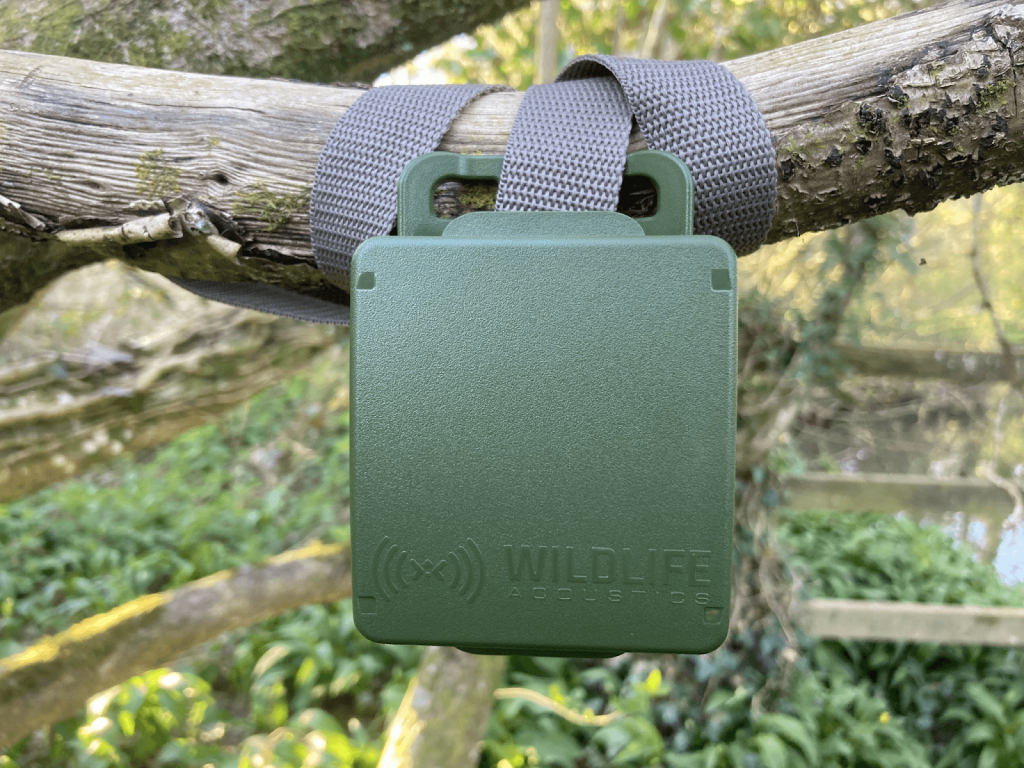
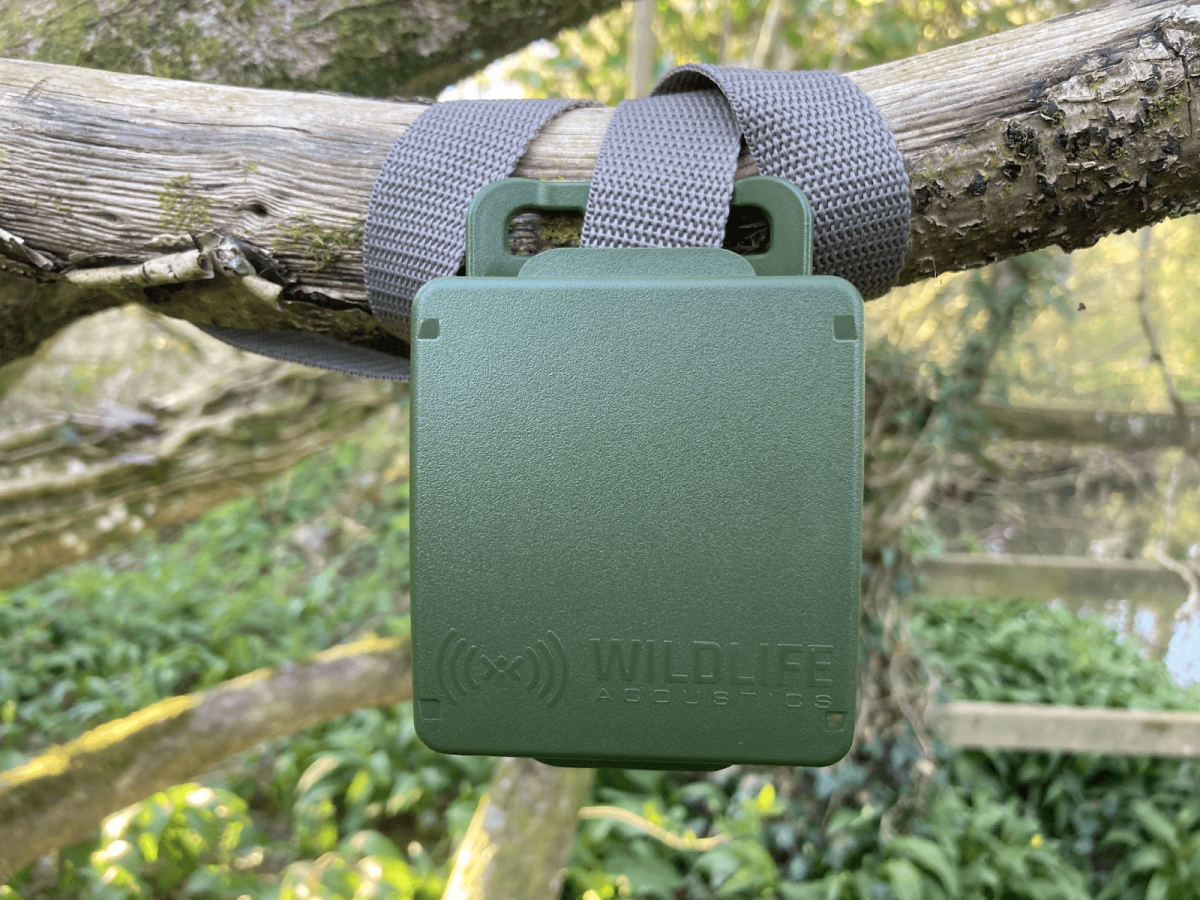
The Song Meter Micro is the latest in Wildlife Acoustics’ passive recorder range. Building on the success of the Song Meter Mini, Wildlife Acoustics have gone one step further and managed to again reduce the size and cost of their fantastic acoustic recorder. These handy pocket sized recorders are now even more accessible to anybody looking to record wildlife.

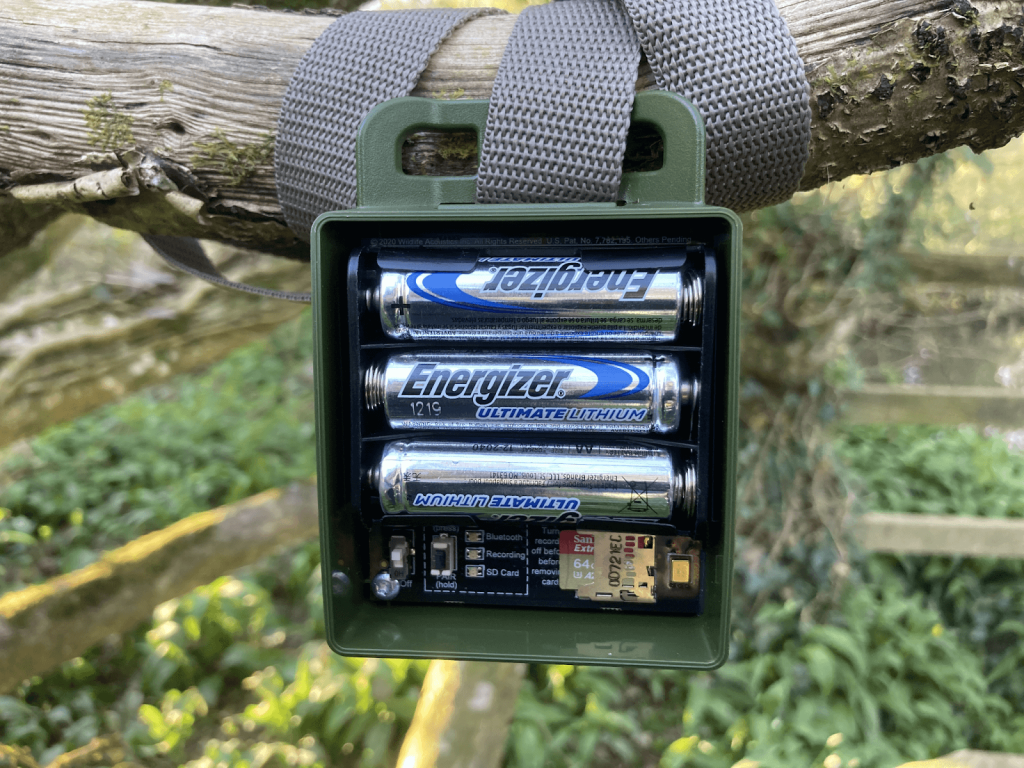
The Micro is certainly a technical achievement. It boasts many of the same excellent features available in the Song Meter Mini while coming in at around half the width, 100g lighter and just over half the price. It utilises the same Bluetooth configuration and, with a complement of three AA Alkaline or NiMH batteries, it can continuously record for up to 150 hours. A full comparison of the differences is available from the manufacturer’s website; however, beyond its much smaller dimensions there are a few key ones to note. Chiefly among these is that it has a single built-in microphone and is unable to take an additional microphone, meaning recordings will always be in mono. Another few considerations are that it utilises microSD cards to store recordings and it is recommended when deploying the detector to always include a small amount of fresh desiccant for humidity control within the casing.

We took a Song Meter Micro and deployed it for several nights in early April to gather some recordings and gauge its overall ease of use.

Setting Up

The Song Meter Micro utilises the exact same configuration system as the Song Meter Mini via the free “Mini Configurator” companion app. This app allows you to easily configure the detector’s recording settings before deployment as well as check the status of the detector while it’s in the field, as long as you’re within range.

When powered on, the Micro emits a constant Bluetooth beacon, and when you are within range of this beacon the Configurator app will automatically detect the recorder and display it in the recorders screen of the app. You can then press the status icon on the app and view the current status of the detector, including SD card capacity, battery life, recording mode and number of recordings taken.

For our tests, we decided to choose a preset recording schedule to capture the dawn chorus. This calculates the sunrise and sunset times using your phone’s location data and sets a schedule accordingly. For more information about setting up your Song Meter Micro, watch our set up video below.

What we found

The Micro was quick and simple to set up within the app and the included quickstart guide and tutorial videos on Wildlife Acoustics’ website were useful if we were unsure of anything. The unit itself doesn’t come with a strap, but has various slots and holes that a cable lock, trail camera strap, rope or screw could fit through. Once mounted, and with batteries/SD card inserted, we could check through the configuration on the app, read off the LEDs to check everything was armed and ready for recording, then snap the lid on and walk away.

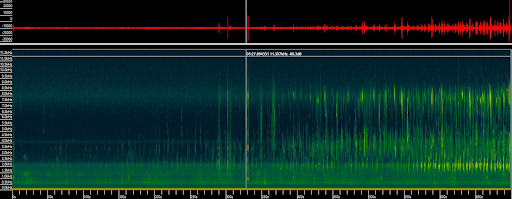
Upon collecting the unit, very little battery had drained. Once back in the office, we removed the microSD card and loaded the recordings into Kaleidoscope to view the sonograms and listen to the recording quality.

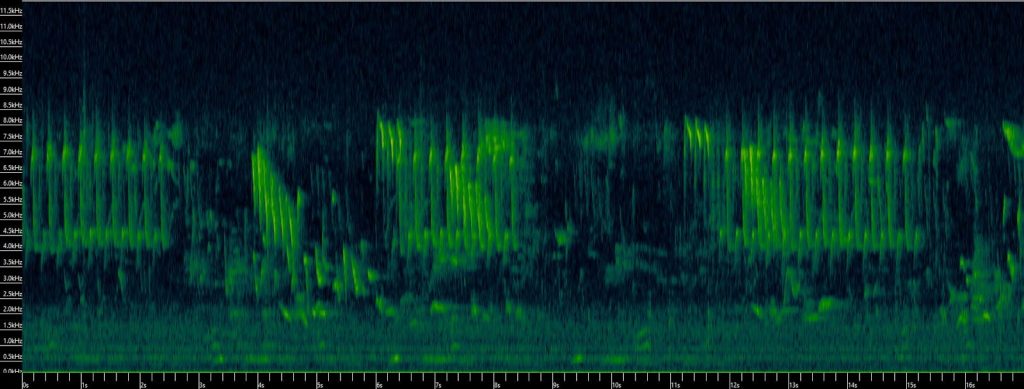
Examples of our recordings can be heard or sonograms viewed below.

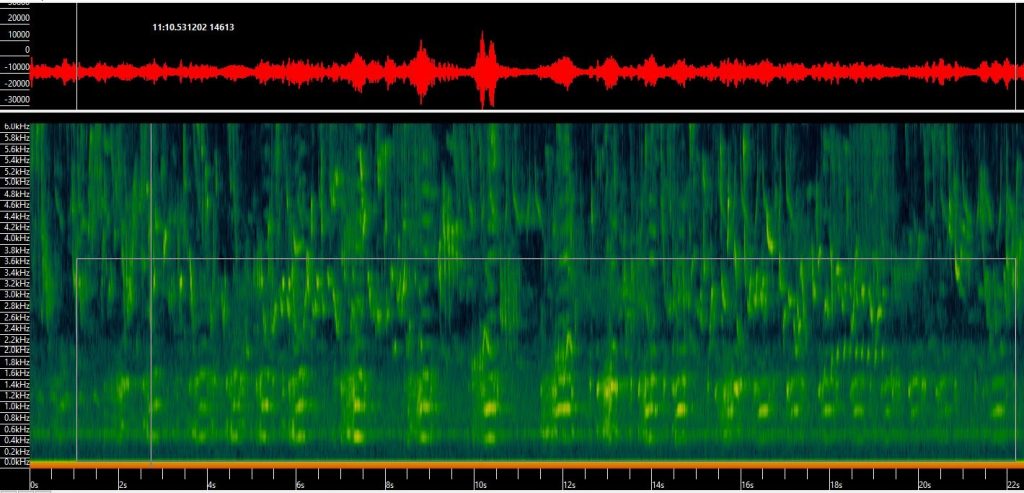
Gradual increase of the dawn chorus
Call patterns recorded at peak chorus
Geese flying overhead and calling over songbirds
Our opinion

The Song Meter Micro is an impressive single channel acoustic recorder for its size and price. It was easy to carry into the field in a rucksack – or even a pocket! The set up was simple using the configurator app and we found the array of scheduling options to be thorough. We especially liked the preset recording schedules which offer several commonly required options that are available at the tap of a button. It was useful to be able to see the status of the recorder using the LED lights within the unit itself, especially when we wanted to check the recorder was armed and ready to record still while our phone was out of charge.

The sound quality was impressive considering the tiny size of the in-built microphone. Bird calls were loud and clear and even the sound of the morning trains could be heard from the train line through the woodland over half a kilometre away. The sonograms above demonstrate the low noise of the recordings and the quality is good enough for both sound and visual analysis.

The Song Meter Micro is an excellent addition to the Song Meter range and is ideal for those looking to start recording or audio monitoring. It is particularly useful for researchers looking for a convenient unit that is suitable for wide-scale deployments in remote locations where size and weight are important factors to consider.

We really enjoyed recording the dawn chorus and hearing our local bird song, which is especially spectacular this time of year. With International Dawn Chorus Day (Sunday 2nd May) fast approaching, we would encourage everyone to set up a recorder or get out early to hear their local dawn chorus for themselves.


The Song Meter Micro is available on the NHBS website.
To view the full range of sound recorders, along with other survey equipment, visit nhbs.com. If you have any questions or would like some advice on choosing the right product then please contact us via email at customer.services@nhbs.com or phone on 01803 865913.


Author Interview with Charles Foster: The Screaming Sky

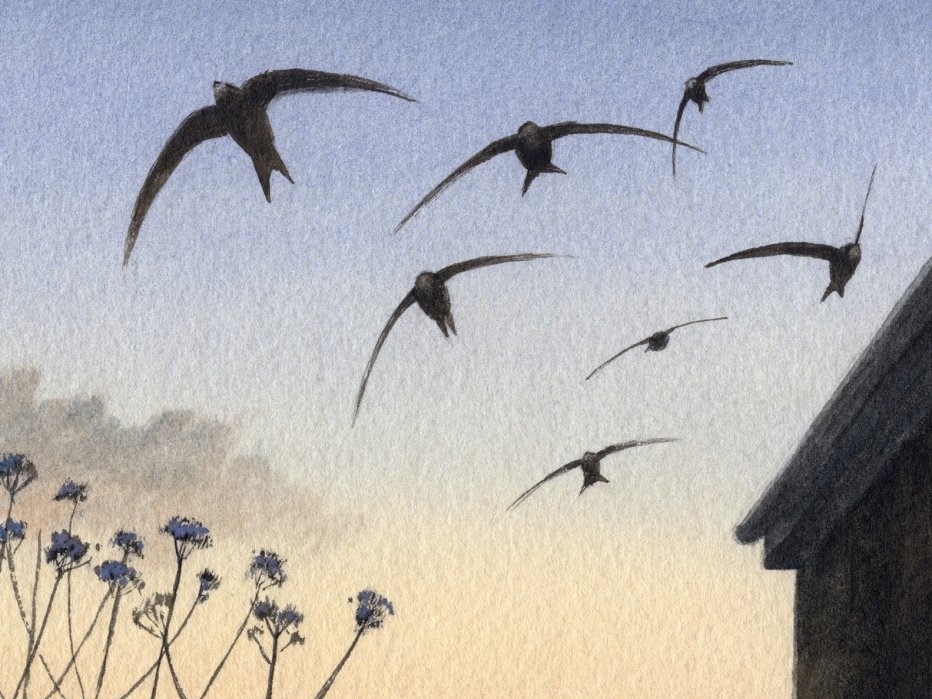
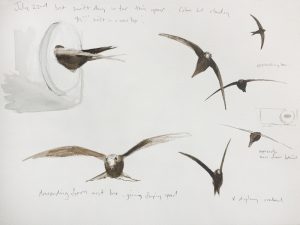
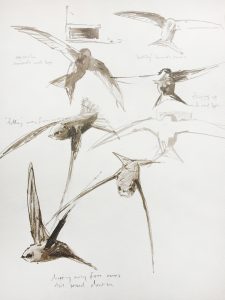
A summer visitor, the common swift appears suddenly with the change in season, swooping overhead with its unmistakeable call. From their travels to Africa, to their short breeding season in the UK, swifts appear to defy gravity with their extraordinary migratory feats, with some in flight for ten months of the year. In The Screaming Sky, Charles Foster follows the swifts across the world, recounting his travels and the lives of these remarkable creatures.

Charles Foster, author of the New York Times bestseller, Being a Beast, is a writer, barrister and a Fellow of Green Templeton College, University of Oxford. With publication of his latest book due soon, Charles has very kindly agreed to answer some of our questions.

Firstly, could you tell us a little bit about your background and how you came to write The Screaming Sky?

I’m originally from Sheffield, and as a small boy I was obsessed with natural history. One summer I was sitting in a field watching and counting the house martins. Suddenly there was something else there: it was a completely different kind of creature, and it inhabited the air while other birds just visited it. I was immediately drunk on its power and its mastery and its swashbucklingness. It could have ended badly: it might have made me worship power. But (that’s another story) I was spared that fate, and instead started to wonder whether I could know anything at all about something as different from me as that. So I followed them in every way that I could: through books that taught me about their biology, through poems that taught me how impossible it is for human language to tie swifts down, by gazing up into summer skies, by playing recordings of their calls when I was missing them like crazy in the winter, and by travelling along their migration routes, hoping to catch up with them in Africa and everywhere en route. How could I not write about birds that have taught me so much about what it means to be alive?

During your travels, were there any encounters that particularly stood out for you?

Three:

  1. Sitting at the foot of a tower in Greece with the swifts diving so near to my head that I could feel the air from their fluttering on my face, knowing that they were about to leave for Africa, and wondering what the bereavement would do to me.
  2. Sitting at the top of a tree in Oxford amongst a group of swifts which were grazing on the aerial plankton being wafted up from the ground. And seeing the grey triangular tongue of a swift as it snapped at a ballooning spider near my ear.
  3. Being asleep under a bush in Africa, and being suddenly awake, knowing that the swifts that I’d been searching for for so long were going to be there. And they were! It wasn’t that I’d heard them coming (swifts are generally thought to be silent in Africa). It wasn’t that I’d been told to expect them: I’d been told that we probably wouldn’t see them at all. So how did it happen? If I told you my speculations you’d think I was mad.

What were the major challenges you faced while writing your book?

I’m a fat, lumpen, middle-aged man. It’s hard to think of any organism that’s less like a swift. And, as I’ve said already, language (which is pretty inadequate at the best of times) fails particularly obviously when it comes to swifts. That’s bad news for a writer on swifts. And then there were snakes and elephants and rabid dogs and torrential diarrhoea and bush fires and soldiers and downright laziness and roads washed away and guilt at leaving the family behind.

Wildlife has suffered a substantial decline over the last few decades, and swifts have been no exception with a loss of over half of the breeding population. Has your recent experience writing The Screaming Sky left you more optimistic or more pessimistic regarding the future of the common swift?

They watched the continents shuffle to their present positions, and the mammals evolve. They’ll be screaming through the sky long after our own race has been and gone.

Do you have any new projects in the pipeline that you’d like to tell us about?

In August a book of mine called Being a Human: Adventures in Forty Thousand Years of Consciousness will be published. It’s an attempt to imagine how it would have felt to be around at three pivotal moments in the history of human consciousness: the Upper Palaeolithic (when modern consciousness ignited), the Neolithic (when we first started to see ourselves as distinct from the wild world, and started to tame ourselves and other animals), and the Enlightenment (when the universe, which had always been seen as alive, was reconceived as a machine – with disastrous consequences). And at the moment I’m writing a book called The Siege – to be published in 2022 – which is a collection of stories illustrating the challenges of living alongside you and me if you’re a wild thing with all your senses switched on.

The Screaming Sky
By: Charles Foster

Author interview with Roy Dennis: Restoring the Wild

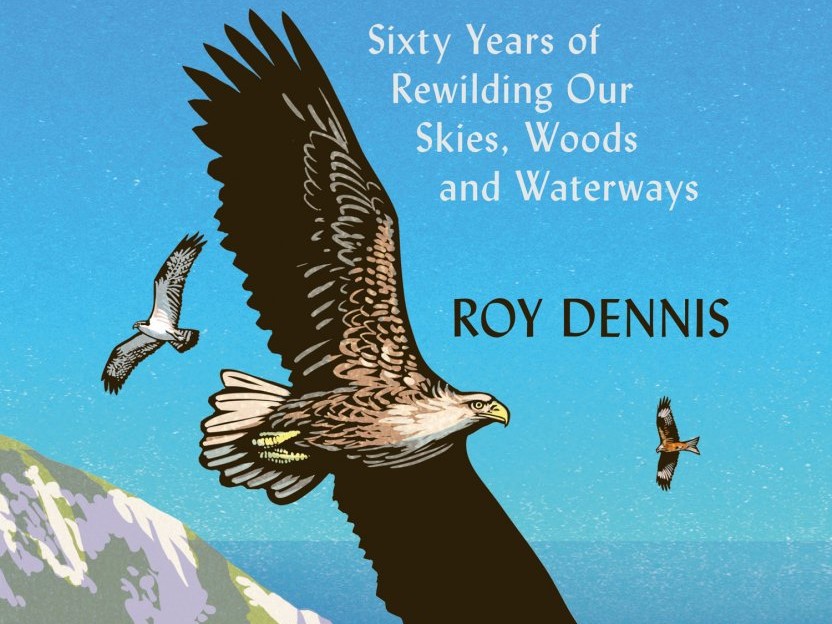
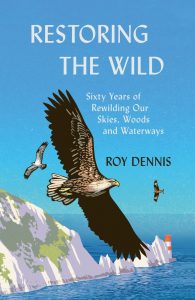
Reintroducing lost species has had a huge part to play in restoring natural processes and enriching biodiversity in Britain. In Restoring the Wild, Roy Dennis MBE documents the painstaking journey to reintroduce some of Britain’s lost apex predators, and the subsequent enormous benefits to our ecosystem.

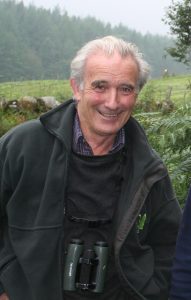
Leading up to the book’s publication, Roy kindly agreed to answer some questions.


As is made clear from the title of your book, you have a long and amazing history of involvement with conservation projects. Could you begin by sharing what inspired you to pursue a career as a field ornithologist and wildlife consultant?

It really started as a youngster keen on wildlife and living in the Hampshire countryside. Becoming really good at birds and bird ringing which led to a summer job as an assistant warden at Lundy Bird Observatory, instead of going to work at Harwell Atomic Research Station. The following year I was a field ornithologist at the prestigious Fair Isle Bird Observatory, which was fantastic training. There I met George Waterston, the famous Scottish ornithologist, who persuaded me to join him the following year wardening the ospreys at Loch Garten. There I made so many friends in wildlife conservation and became totally convinced that my life was going to be about birds and conservation, restoring species and subsequently ecological restoration.

Of course the obvious aim of a reintroduction project is to bring back a species that has been lost. But in your experience what subsequent benefits are there to reintroductions?

I think in a very damaged world reintroduction projects show there is a chance to bring species back and give people hope. Some species are more important than others from an ecological point of view with beavers being the ecosystem engineer par excellence. My book explains the many advantages of restoring beavers. Other species such as red kites and white-tailed eagle are iconic species, which demonstrate that rare birds can live in the general countryside, not only in nature reserves. Then people can see and enjoy them on the way to work, school or the shops. My whole ethos has been to make rare birds more common and secure for the future.

According to the latest 2019 State of Nature report, about 162 species have thought to have become extinct since the 1500s. How is it decided what species should be prioritised for reintroduction?

It’s more a question of our ability to successfully restore a species, is there enough habitat and food, can we find birds to translocate and what is the likelihood of success. I think the most important action is to take action and not be bogged down by procedures.

You spoke in your book about the opposition to reintroduction projects – what would your response be to address these concerns and opposing views?

The opposition can come from many quarters but the most important thing is to listen to all the concerns and address them. It’s essential to know the species on its home patch and to be able to present a clear message. Usually people’s concerns can be allayed; for example I write in my book about making a special recce to the Netherlands to speak to the experts about white-tailed eagles and agriculture, so that we could give considered views before starting the Isle of Wight project. We have had complaints from some birders that the translocated ospreys at Rutland Water or the sea eagles are not ‘real’ birds and they cannot count them on their lists. But they forget capercaillies were brought back from Scandinavia long ago. But the recent sea eagles flying in southern England have shown that birders just love to know they are back, and hopefully will breed in England again.

In the final chapter of your book you look forward to focus on newer projects, such as White-tailed Eagle reintroductions on the Isle of Wight and the South Coast Osprey Project. But what else would you like to see reintroduced to Britain in the near future?

In my last chapter of the book I’m really talking about handing over the baton to others to take projects forward. I’m very fortunate that Tim Mackrill joined me a few years ago and I love working with our small team. We are always assessing possible projects but would rather do it in a quiet way, really get to know the species on mainland Europe and talk to all the people that are likely to be involved before we go public with an idea.

White-tailed Eagles, Ospreys, Red Kites and Goldeneyes are a few of the species you have helped to successfully restore to Britain. What has been your personal highlight and why?

“What is your favourite?” is a question I’ve been asked all my life. But I do not have one – or rather it is the one we are working with at the time. I can recall personal highlights like the first osprey breeding pair at Rutland Water, seeing the young white-tailed eagles fly free on the Isle of Wight was exciting just like when I released the first young sea eagle on Fair Isle in 1968. Seeing red kites, the length and breadth of Scotland and England has been special, made more so when you see them soaring over motorways. During lockdown it’s been marvellous to hear from so many people who have seen a sea eagle fly high over them as they sit in their garden. Bringing wonder back.

The Roy Dennis Wildlife Foundation has achieved a great deal over the years since it was formed in 1995, not just in the UK but across Europe too. Can you share what the Foundation has planned for the future?

We want to carry on with our work with wildlife conservation, there are still many things to do and the return of the Lynx is high in my thoughts. We have others in mind for the future so keep an eye on our website and see what’s coming next. You will get a great insight to how these projects evolve and work in Restoring the Wild.

Restoring the Wild: Sixty Years of Rewilding Our Skies, Woods and Waterways
By: Roy Dennis
Hardback | Due April 2021 | £16.99 £18.99


All prices correct at the time of this article’s publication.

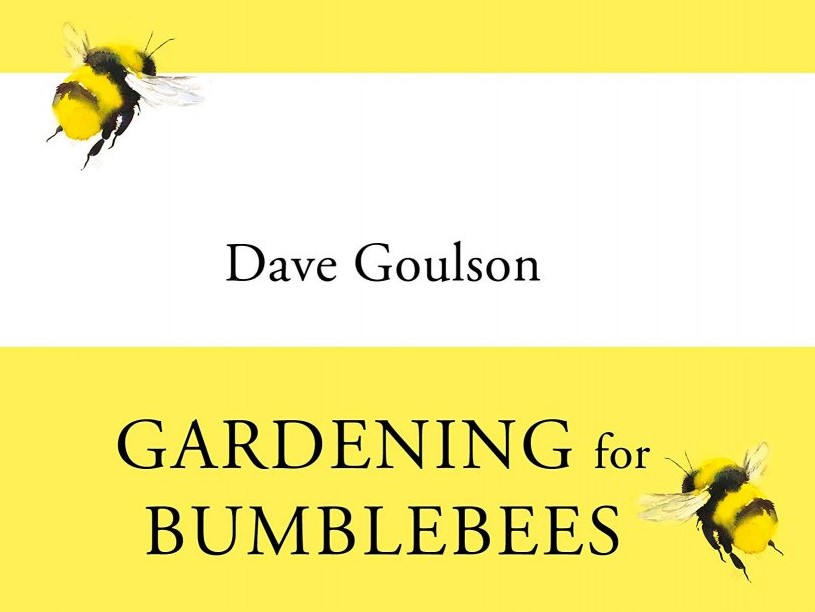
Author Interview with Dave Goulson: Gardening for Bumblebees

From the Sunday Times bestselling author of The Garden Jungle and A Sting in the Tale comes the much anticipated Gardening for Bumblebees. Part identification guide, part instruction handbook, Gardening for Bumblebees is packed full of information and ideas on how to create pollinator-friendly spaces for all types of garden.
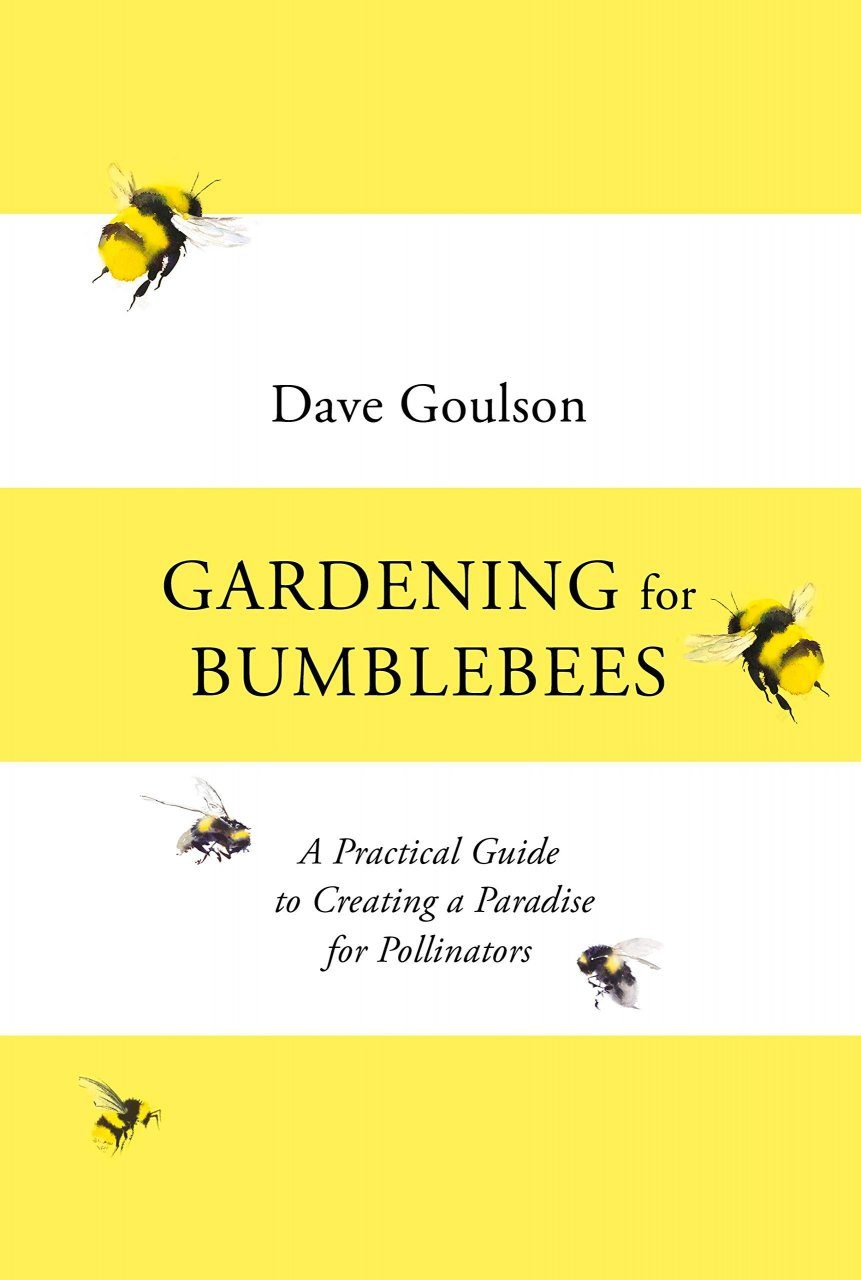
As well as an award-winning author, Dave is also a Professor of Biology at the University of Sussex and founder of the Bumblebee Conservation Trust. We have recently had the opportunity to ask him some questions about his latest book.

Could you start by telling us how you came to write Gardening for Bumblebees, and how it differs from your previous book, The Garden Jungle?

Gardening for Bumblebees is a practical, full colour, nuts-and-bolts guide to encouraging bumblebees and other pollinators in the garden, including detailed sections on choosing the best flowers, creating meadow areas, building bee hotels, propagating plants yourself, organic pest control, and more. I hope that it will inspire people, and provide them with all the knowledge they need to turn their garden into a haven for wildlife.

In your book you mention several citizen science projects, such as BeeWatch and BeeWalk, both run by The Bumblebee Conservation Trust. What is the aim of these projects, and how are they beneficial?

If we are to effectively look after our bumblebees and other wild insects we need to know where they are, and how their populations are changing over time. Then we can target conservation efforts to the species and places that most need them, and see whether the things we are doing to help are actually working. Members of the public – “citizen scientists” – have an enormously important role to play here. The UK Butterfly Monitoring Scheme is a great long-running example, whereby the efforts of thousands of unpaid volunteers now provide a really accurate picture of how our butterfly populations have changed since the 1970s.

Your book is filled with fascinating facts about bees that I previously did not know. In your opinion, what have you found to be the most surprising discovery in regard to bees?

I first became hooked on studying bumblebees when I noticed how a bee in a patch of flowers will often fly up to a flower but then veer off without landing. I wondered what was wrong with these flowers. It took five years of research to find out that they were sniffing the flowers for the faint smelly footprint of a recent bee visitor – which would indicate that the flower is likely to be empty. Bees use lots of clever tricks like this to help them gather nectar and pollen efficiently. They are remarkably clever!

You mention in your book your fascination with bees from an early age. How do you think we can best encourage environmental awareness in young people?

We need to make sure that young people have regular opportunities to interact with nature, so they do not grow up regarding insects as alien, unfamiliar, and scary. I’d love to see every school having access to wild greenspace, and more support to help teachers themselves learn about nature so that they can enthuse the children. I’d also pair every school with a nature friendly farm, and provide support so that the children could visit the farm at least once or twice a year, to understand the connections between growing food and nature.

There has been much public concern regarding bees, pollination, and the future of our crops. With the increase in publicity and information on how we can make simple changes to help secure the bumblebee population, do you feel hopeful for the future?

It is great to see the growing public appetite for making gardens more wildlife friendly, and councils also reducing mowing and introducing meadow areas to parks. However, to really make a difference we need farming, which covers 70% of the UK, to move away from the current highly intensive approach, which is reliant on many pesticides. The new Agriculture Bill and Environmental Land Management Scheme might, if done properly, provide a mechanism for positive change.

Alongside the Buzz Club, a citizen science project that is focused on garden wildlife, do you have any other projects on the horizon you’d like to tell us about?

I have another book out in August 2021, Silent Earth. It is a blunt assessment of the dire plight of insects globally, but with suggestions as to how we could halt and reverse their declines. I hope it will help to persuade people that we are in a time of crisis, and that we need radical change.

Gardening for Bumblebees
By: Dave Goulson
Hardback | April 2021 | £13.99 £16.99

An inspiring practical guide to creating pollinator-friendly spaces for all types of garden, no matter how large or small your patch is.


Discover other titles by Dave Goulson below.


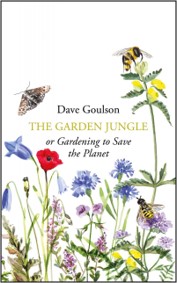
The Garden Jungle

Paperback | £9.99

“An upbeat book about the wonders of the ecosystem in every garden.”
– The Times, summer reads of 2019


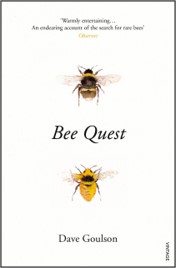
Bee Quest

Paperback | £7.99 £9.99

“Dave Goulson […] has perfected the art of turning the entomologist’s technical expertise into easy-reading everyman’s prose. He also laces his stories with rich helpings of wit and humour.”
–  Mark Cocker, Spectator


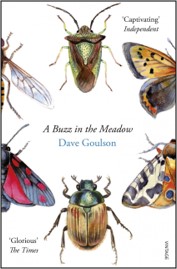
A Buzz in the Meadow

Paperback | £7.99 £9.99

“Buy this book, give it as a present. It is required reading for being a human in the 21st century.”
– Matthew Cobb, professor of zoology at the University of Manchester, New Scientist


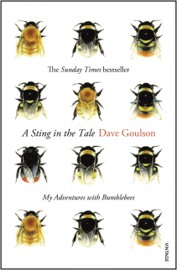
A Sting in the Tale

Paperback | £7.99 £9.99

“Goulson has plenty of wondrous biological stories to tell, as well as the tale of his own struggle to return the short-haired bumblebee to Britain.”
– Patrick Barkham, The Guardian


All prices correct at the time of this article’s publication.