The NHBS Moth Trap is a highly portable option for moth trapping, tested and approved by Butterfly Conservation.
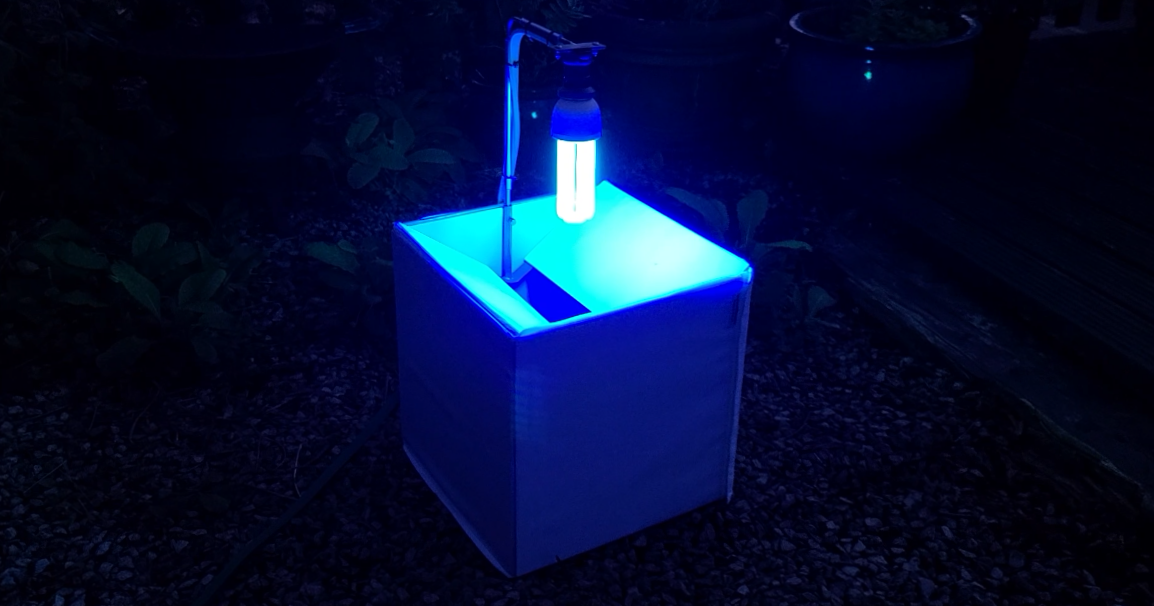
Its easy, flat-pack design features a collapsible frame made from lightweight panels covered in a light coloured nylon, which is easily assembled with Velcro. A single, stainless steel V frame holds the trap’s bulb carrier, secured with a single screw, and supports two top panels that prevent the moths escaping. The trap features a single 20W, shatter-resistant blacklight bulb (included) that is mains powered and is supplied with a 4.5m power lead connecting to a standard UK plug.
Fully assembled, the NHBS moth trap measures approximately 30cm wide x 30cm deep x 50cm tall and weighs around 2kg, making it significantly lighter and much more portable than many moth traps. For convenient transport and storage, it also comes with a carry bag housing all the components.
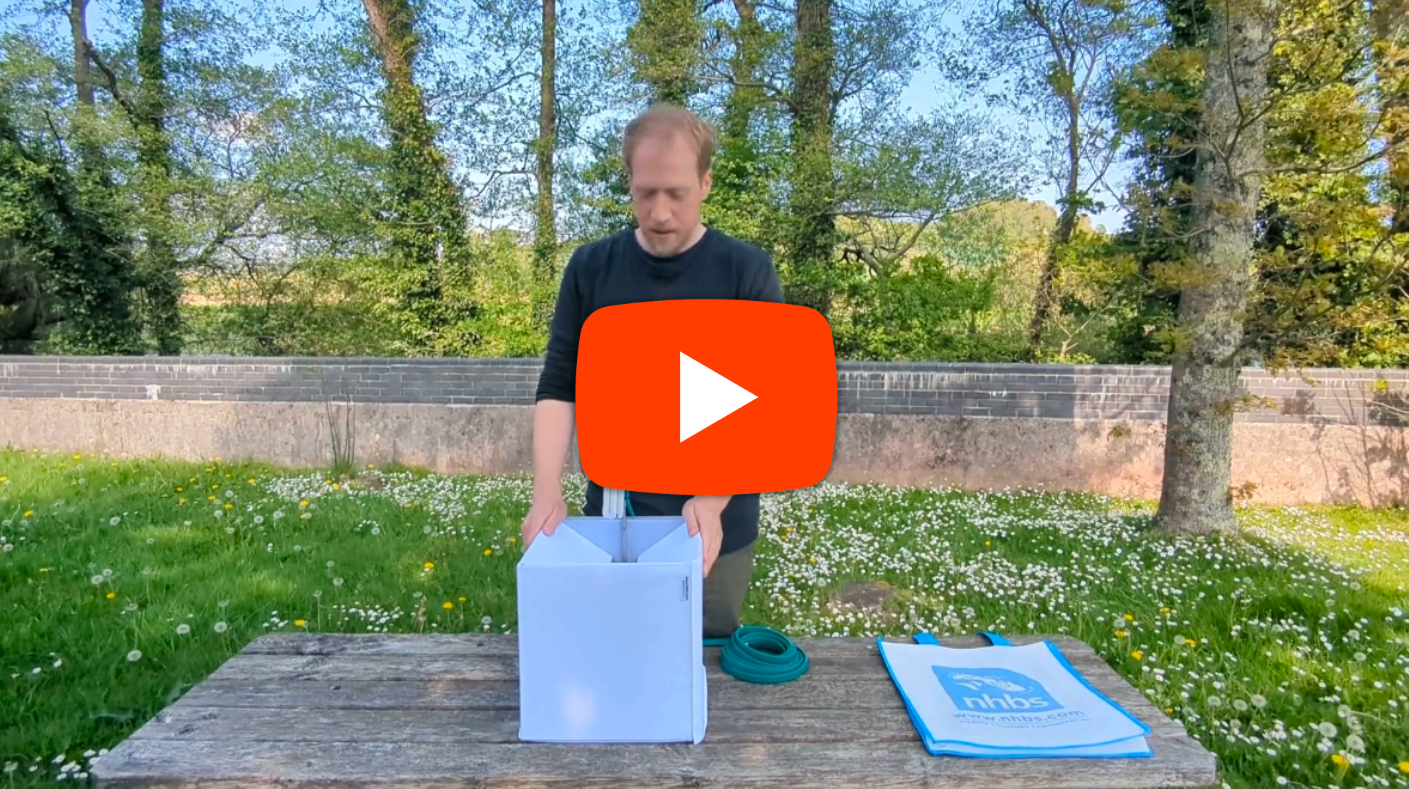
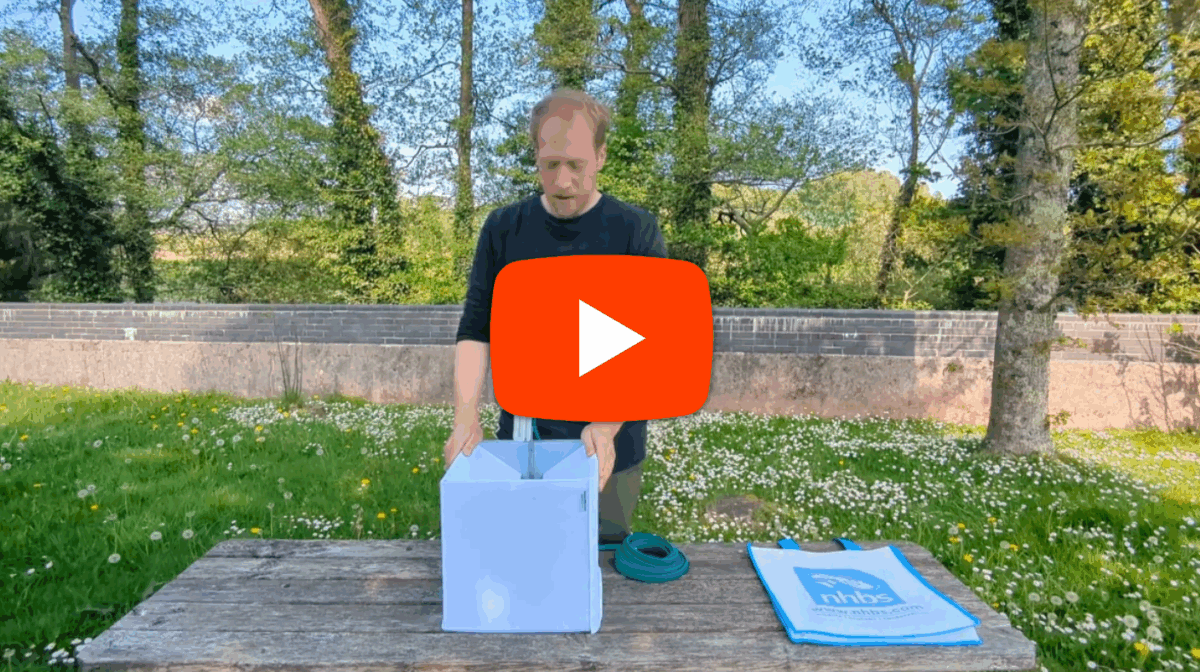
Learn how to quickly set up your Moth Trap with our video guide below!
Our Findings
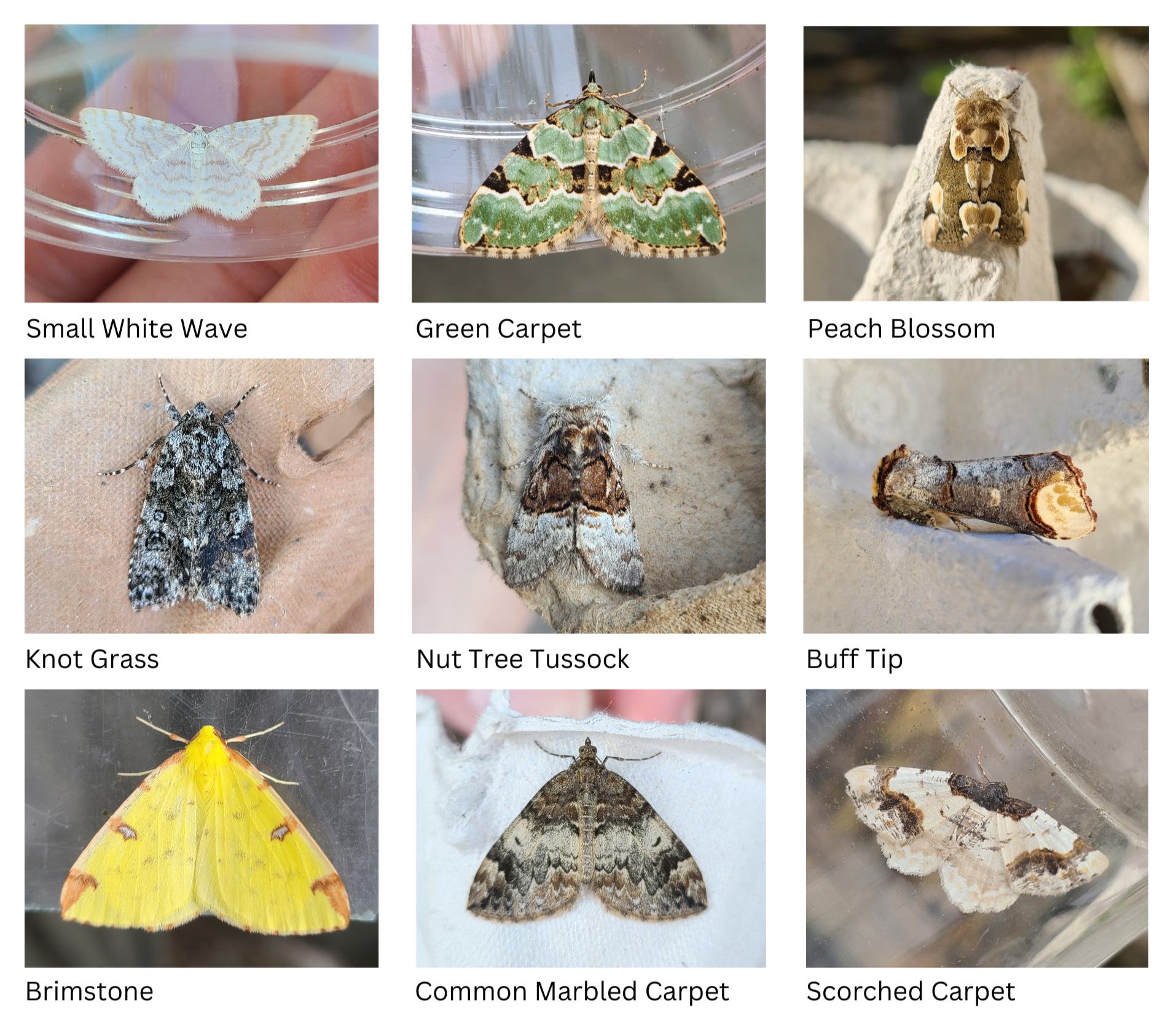
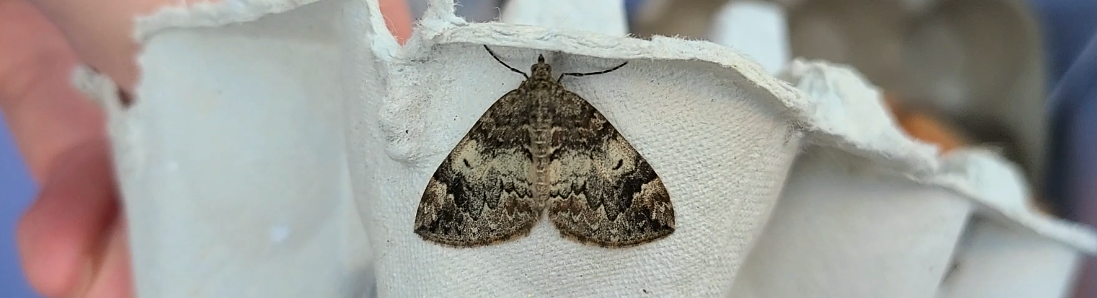
NHBS colleagues Oli and Dan recently took our moth trap into their gardens and caught a beautiful range of species, including a Buff Tip, Peach Blossom and Scorched Carpet.
Additional Kits
Our moth trap is also available in two kits:
Moth Trap Starter Kit
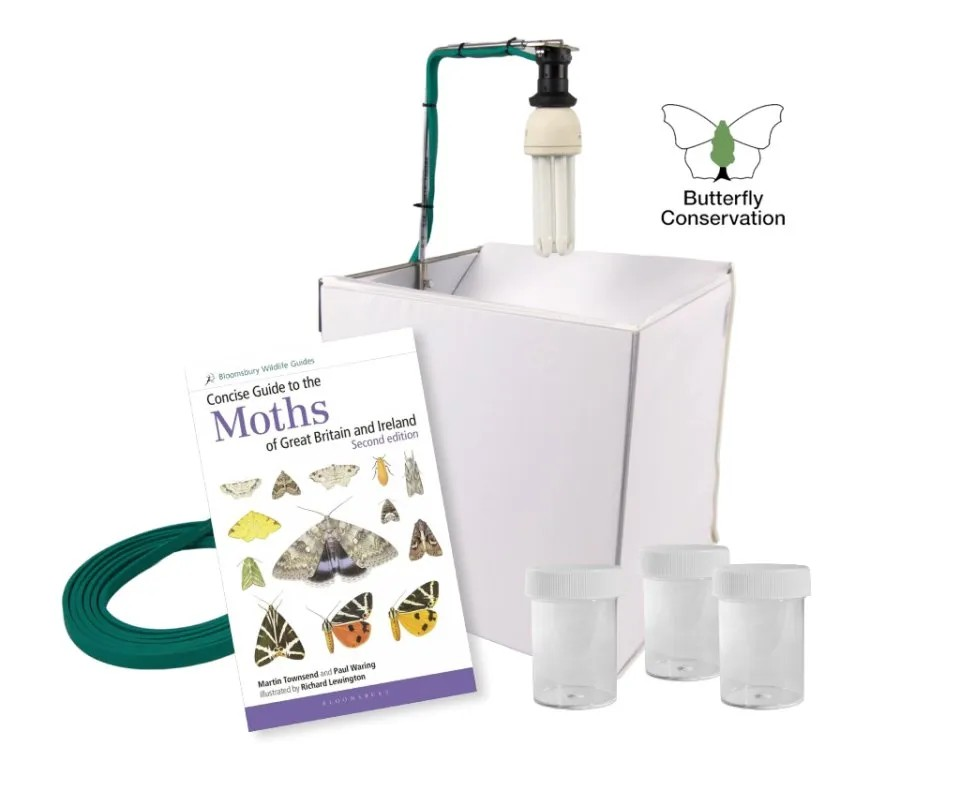
The Starter Kit includes the trap and all its components, as well as three 60ml collecting pots, perfect for holding specimens, and a copy of the Concise Guide to the Moths of Great Britain and Ireland to aid successful species identification.
Moth Trap with Inverter Kit
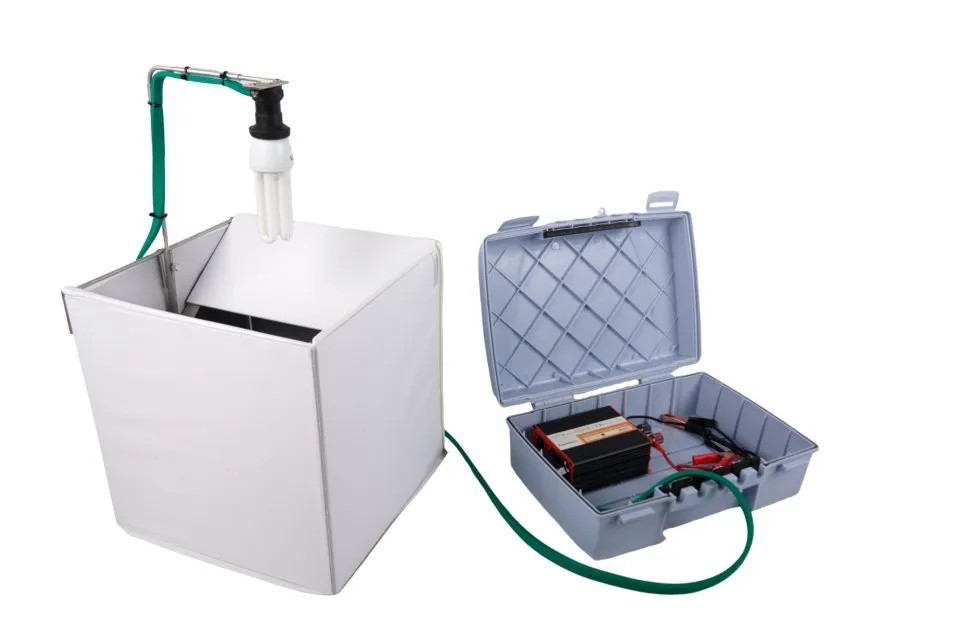
The NHBS Moth Trap with Inverter Kit comes with an inverter and waterproof battery enclosure, giving you the flexibility to use the trap in any location without having to rely on mains electricity.
Find out more and order your trap today at nhbs.com
If you have any questions about our Moth Trap or would like some advice on the right product for you then please contact us via email at customer.services@nhbs.com or phone on 01803 865913.
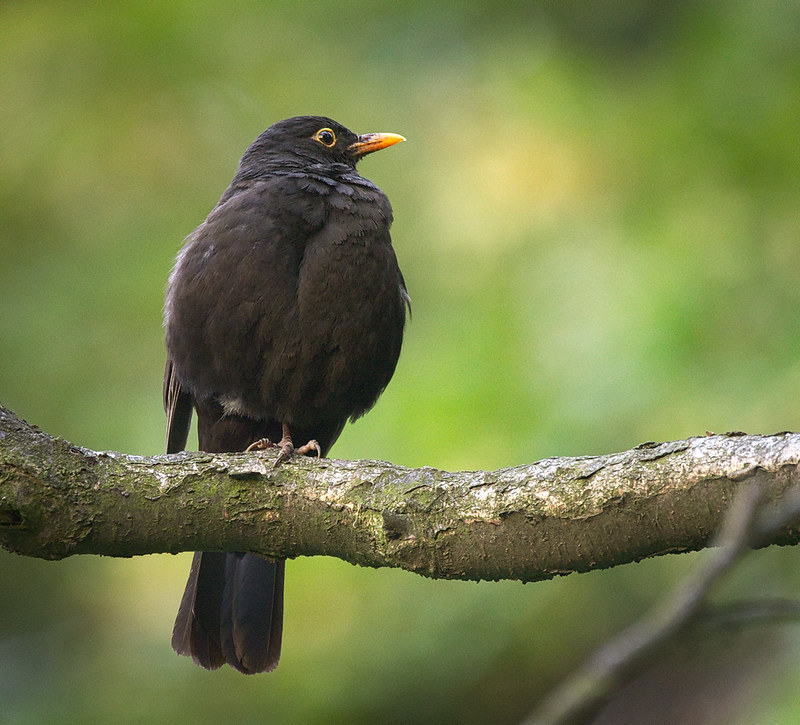
A mosquito-borne disease has spread to the UK and is now affecting wild bird populations. The deadly Usutu virus was first detected in southern Africa over half a century ago and spread to the UK in 2020. Blackbirds are specifically susceptible to the virus, with mass die-offs occurring as a result of the disease across Europe, and it has recently spread across the UK as far as Dorset and Cambridgeshire. Scientists are now monitoring the spread of the Usutu virus amid concerns that climate change may turn Europe into a breeding ground for its host species, mosquitoes, therefore exacerbating the reach of the disease.
Male blackbird (Turdus merula) perched on a branch by hedera.baltica, via flickr.
Scientists warn about numerous new threats affecting bee populations. A study from the University of Reading has highlighted that war zones, microplastic and air pollution are posing some of the greatest threats to our pollinators. An increase in worldwide conflict has forced countries to grow a smaller variety of agricultural crops, leaving pollinators without a diverse range of food sources throughout the year, whilst investigations into air pollution has revealed that is affecting the survival, reproduction and growth of our key pollinator species. Researchers also tested 315 honey bee colonies and found traces of microplastic contamination within most hives. Professor Simon Potts, the lead author of this report, stated that identifying these news threats and finding ways to protect pollinators early is the key to preventing further population decline.
Extinction risk
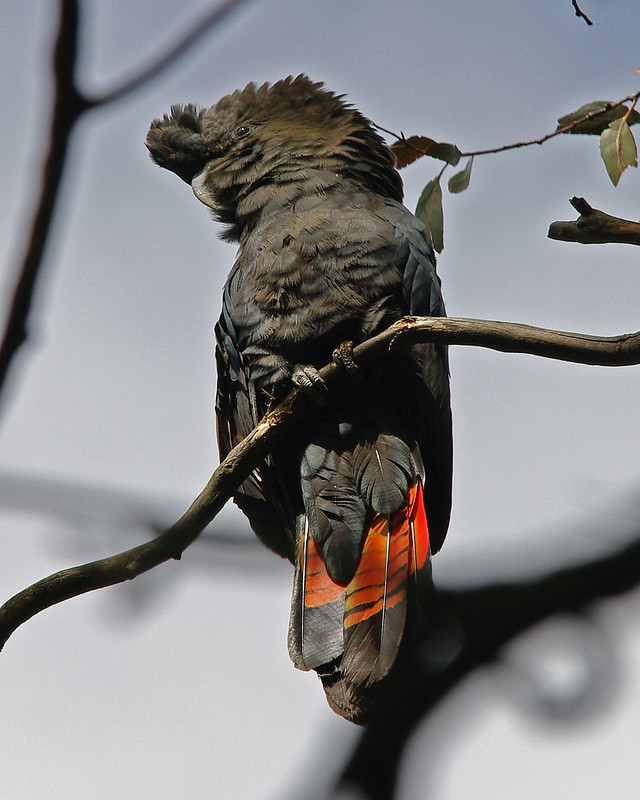
‘Vulnerable’ cockatoo species facing further habitat loss due to bushfires. Conservationists have warned that the planned burning of 13,000 hectares of forest in East Gippsland, Australia, may jeopardise declining Glossy Black Cockatoos populations. 64% of this species habitat was burned in the 2019-2020 black summer bushfires, resulting in the population becoming wholly dependent on the 48,000 hectares of unburnt coastal forest around Lake Tyers. Glossy Black Cockatoos feed almost exclusively on the cones of black sheoak trees, which are often subject to planned burning programmes. Australia’s biodiversity, wildlife, and habitat are currently under threat from bushfires, prompting ecologists and nature campaigners to highlight the urgent need for careful management, especially with Victoria’s cockatoo population now estimated at a mere 250.
Welsh Celtic rainforests under threat. A 2024 survey investigating the ecology of Welsh rainforests has revealed that only 22% of the temperate rainforests found in this area are in ‘good’ condition, with many others under threat due non-native species, storms and inappropriate grazing of livestock. These rare habitats are only found in isolated areas across the world, including the Woodland Trust’s Coed Felenrhyd near Gwynedd, however it is vital that the remaining 33,024 hectares of rainforest left in Wales are protected. Natural Resources Wales manage seven Celtic rainforest reserves in the Meirionnydd area, and have now stated that these ‘exceptionally important sites’ need conservation and landscape scale management to ensure their preservation.
Climate change
The worlds coastlines are still in danger even if climate targets are met. Even if the world achieves the ambitious goal of limiting global warming to 1.5°C, researchers project that sea levels are still likely to rise by several meters. New investigations into how ice sheets respond to future climate changes suggest that even with stabilized global warming, this rise may not slow down. A major concern is that melting could accelerate past a viable ‘tipping point’ due to intensified warming from human activity, though scientists are yet to pinpoint this critical threshold. The consequences for coastal communities would be catastrophic, as approximately 230 million people currently live within one meter of high tide lines.
NHBS is proud to celebrate its 40th anniversary, marking four decades of supporting those who work to understand, protect, and conserve the naturalenvironment.
History of NHBS
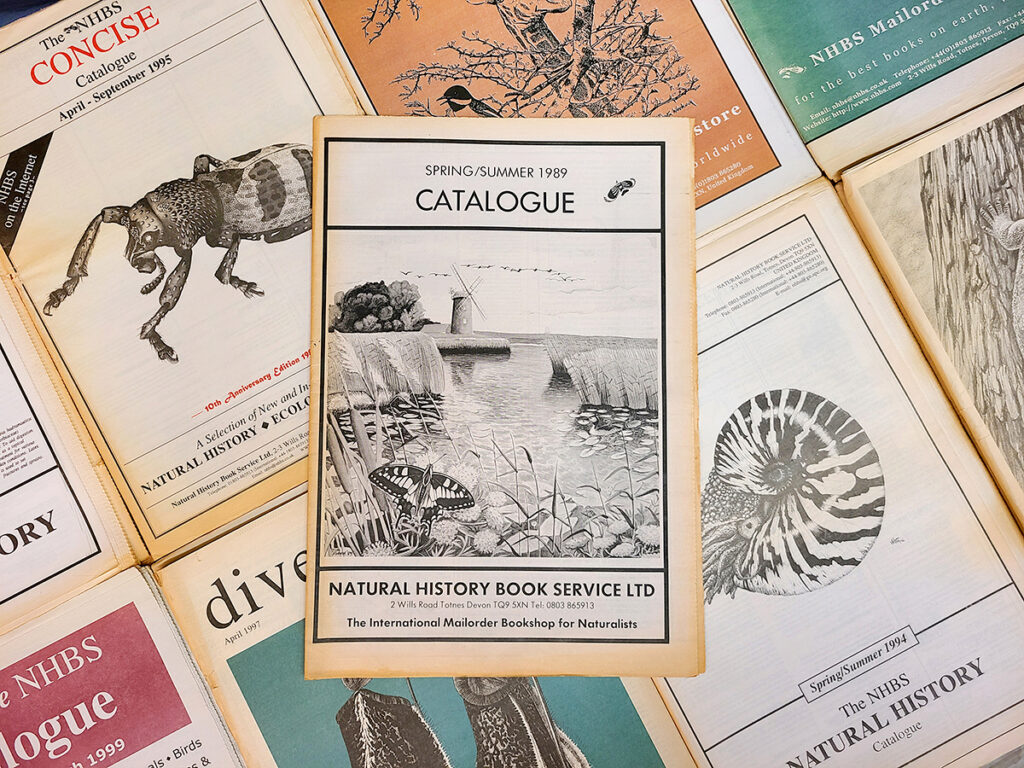
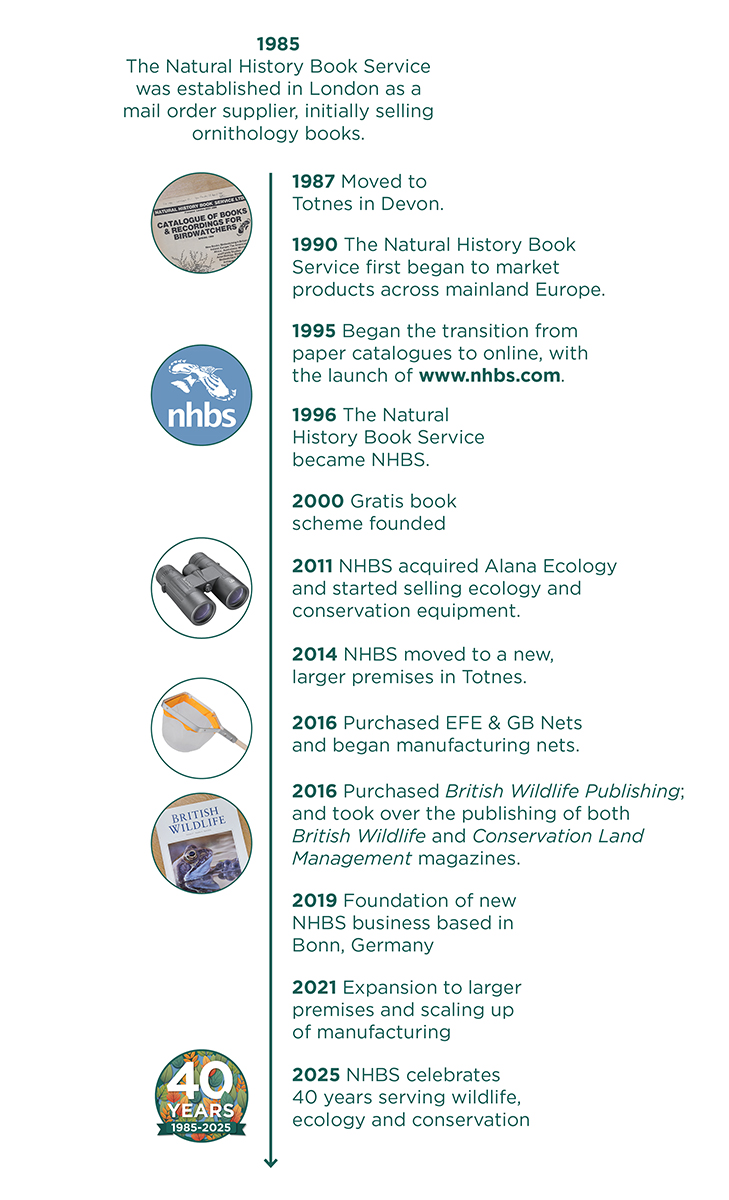
Founded by Bernard Mercer in 1985 as the Natural History Book Service, NHBS began as a mail-order supplier of ornithology books based in London. Our first catalogue was hand-crafted on a state-of-the-art electronic typewriter! Within two years, we evolved into a comprehensive natural history bookstore, committed to supplying all in-print literature on both natural history and science. Shortly after, we relocated to Totnes in Devon, and we have remained here on the edge of the River Dart ever since.
By the late 1980s, in response to customer demand, NHBS expanded its subject range to include habitat and species conservation, climate change, environmental assessment and more. In May 1995, we ventured online with the launch of our first website, and as digital communication grew, our website and email newsletters became increasingly important, leading to our final newspaper catalogue in 2005.
At the start of the new millennium, NHBS began expanding its range to include products such as bat detectors, trail cameras and moth traps,having recognised the growing demand for nature-based equipment. Today, we offer a comprehensive range of books and practical equipment for ecologists, researchers, educational professionals, and wildlife enthusiasts alike.
“Celebrating 40 years is a testament to the dedication and passion of our team and the unwavering support of our customers. We are committed to continuing our mission to provide the best resources and tools for those who strive to protect and understand our natural world.”
Bernard Mercer – Founder and owner
NHBS Around the World
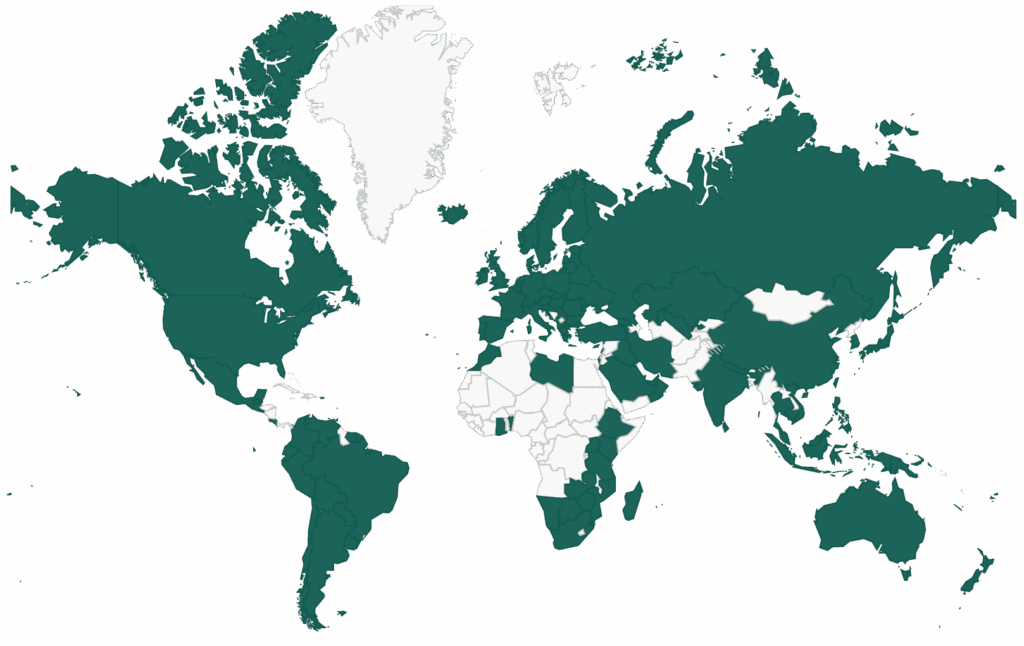
NHBS’s global customer base has led to us sending products to even the most remote corners of the world.These include the Black River in Mauritius, Ascension Island, Benbecula in the Hebrides and Mount Athos in Greece.Our parcels have reached over 140 countries, supporting researchers, educators, and conservationists wherever they are based.
NHBS parcel distribution
The NHBS Mission
Since we began in the 1980s, our core purpose has been to support individuals and organisations working to understand, protect, and conserve the natural environment.
Forty years on, this continues to drive us, shaping our decisions and inspiring our ongoing work in the conservation world.
We’re have collaborated with a wide range of leading NGOs such as Butterfly Conservation, The Riverfly Partnership and Buglife, and to date, we have donated over £35,000 to support their vital work. In 1999 we also developed the Gratis Book Scheme, which was launched alongside the British Ecological Society and successfully delivered hundreds of books free of charge to students living in developing countries.
Thank you and Looking Ahead
As we reflect on the past 40 years, we’re grateful for our valued customers and the countless individuals and organisations we’ve had the privilege of supporting. We are proud to have forged close partnerships with many conservation organisations who share our values – the Mammal Society, Butterfly Conservation, Bat Conservation Trust and CIEEM, to name just a few, and we look forward to working together to better British conservation.
Looking ahead, we are excited about the future of NHBS and the continued pursuit to fulfil our mission to empower and support those working in conservation.
Thank you for being part of our journey and we look forward to the next 40 years!
The NHBS team
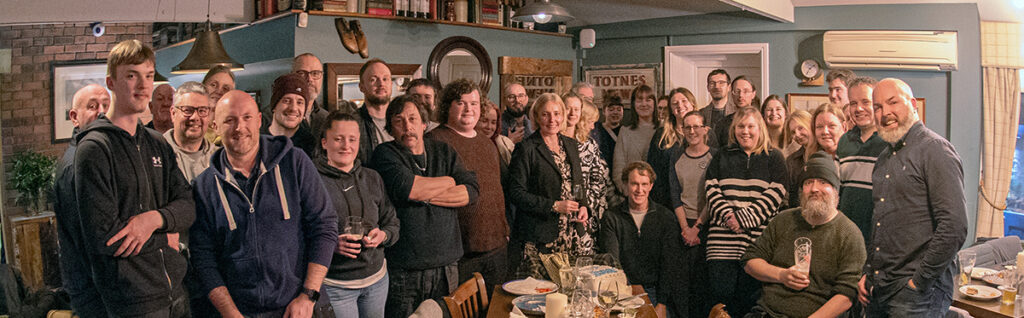
The NHBS team at our recent 40th anniversary celebration
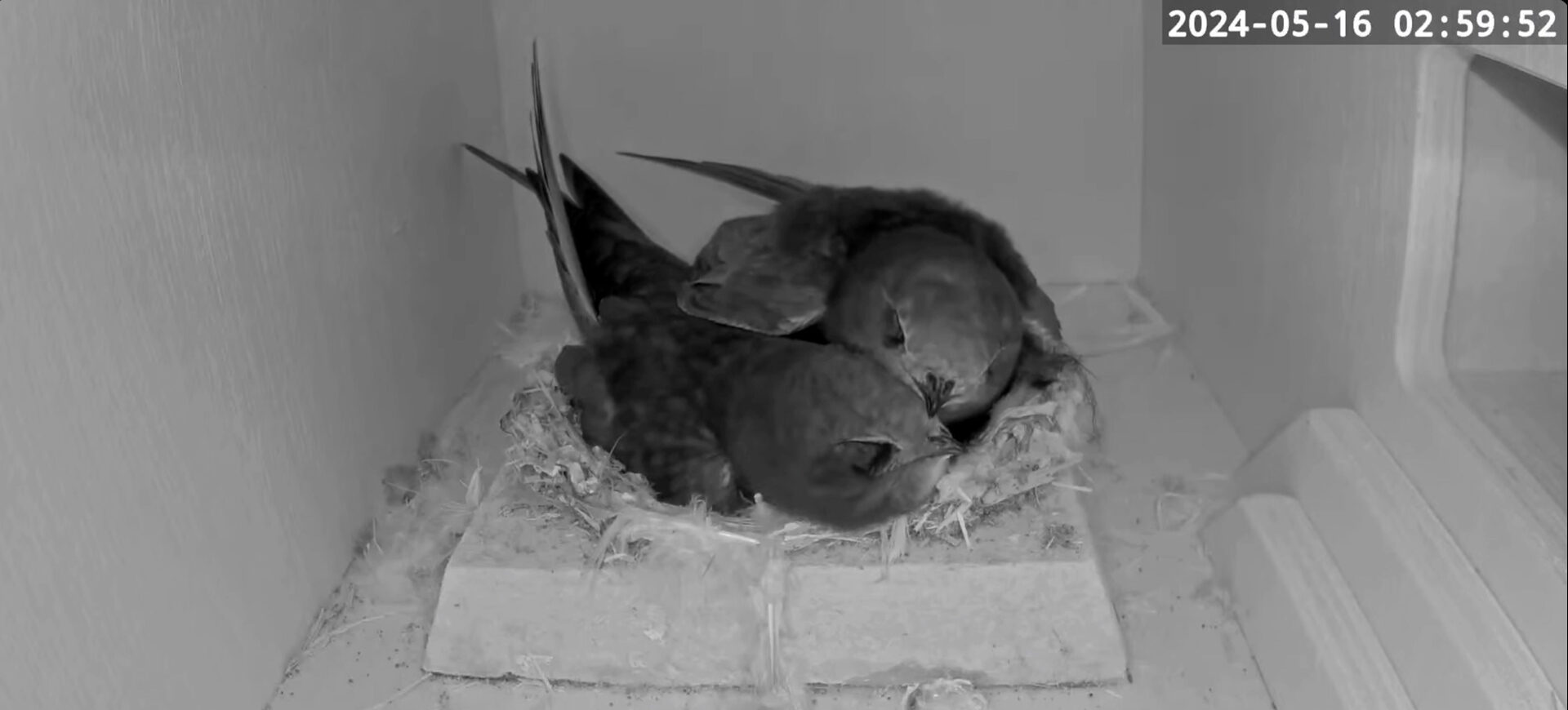
Placed on the IUCN Red List in 2021, Swifts are now recognised as one of Britain’s most endangered bird species, having suffered a staggering population decline of around 60% in just 25 years. These incredible birds return to the same nesting site each year after migrating from a summer in Africa, however due to urban development and land use changes, their natural nesting sites are rapidly disappearing, which is accelerating their already concerning population decline.
Suzanne and RSPB Community Engagement Officer Roshni Parmar-Hill on installation day.
In 2024, over 40 residents of two neighbouring streets in Swinton, Salford decided to take action and create their own ‘Swift Street.’ This community-led project saw the creation and installation of over 100 specialist nest boxes, providing essential nesting spaces for their local swift colony. The Swift Street initiative is part of a wider effort to transform Manchester into a Swift City and ensure the long-term survival of these endangered birds.
In this blog, resident Suzanne Pendleton and RSPB Community Engagement Officer Roshni Parmar-Hill tell us about their journey to create the largest Swift Street in the north-west of England.
My Swift Street Experience – Suzanne Pendleton
My name is Suzanne Pendleton, and I am a mum to two girls, Molly and Tess. I have lived in Houghton Lane in Swinton, Salford with them and my hubby for 30 years, and have been involved in the Greater Manchester Swift Street initiative since August 2024.
During lockdown, I started to value spending more and more time in our little garden as so many people did, and whilst I was outside, I spotted a number of birds zooming around, screaming and flying over our house. At first I wasn’t quite sure what they were, so I asked my friend Kathleen and she enlightened me that they were Swifts! Swifts are migratory birds, so when summer ended they left Swinton and headed back to Africa, but every year I eagerly anticipate their return.
Over time, my understanding of this species grew, and I learnt of their declining population numbers – whilst also developing a stiff neck constantly looking up to the sky to watch their incredible manoeuvres! I am privileged to live in a friendly community on Houghton Lane, so I messaged our community group and asked if anyone knew about our Swift population, or where they may be nesting. Initially we were unsuccessful in locating their nesting sites, however we struck gold in Spring 2024 with the help of the Swift Mapper appand discovered we had four nest sites on Houghton Lane and its surrounding roads.
In this time, I’d also discovered that there was another small colony located less that 1/4 mile away, and a resident of this local road got in touch to tell us that Roshni from the RSPB had been to visit their colony and help establish their Swift Street – she then asked if we would be interested in developing our own Swift Street on Houghton Lane. I think we are so privileged that these incredible urban birds choose to nest on our lane, and as their nesting sites are often threatened by redevelopment, having the means to install boxes provides us with a wonderful opportunity to support them.
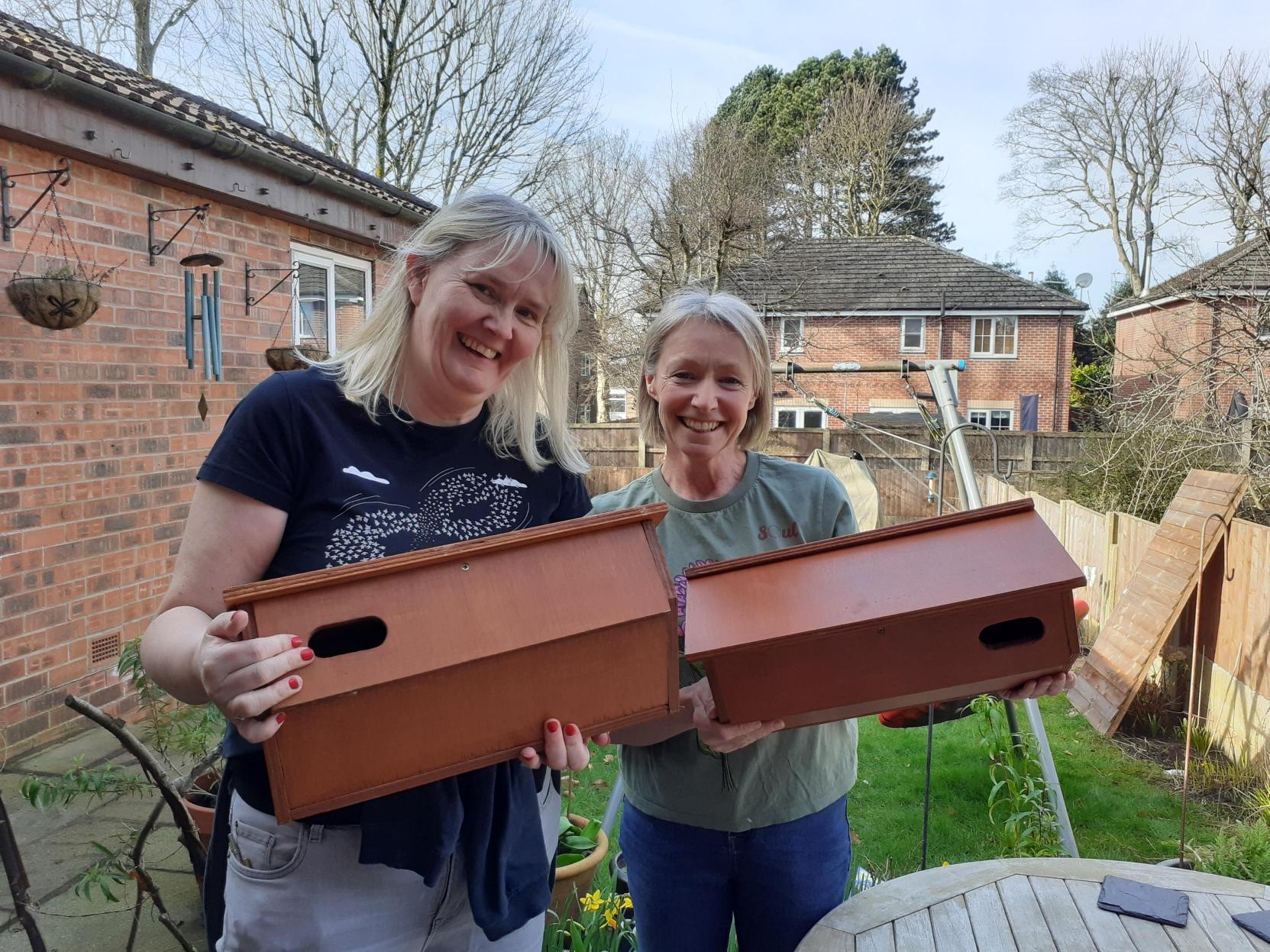
Residents Suzanne Pendleton and Kathleen Sides holding up the Swift boxes made by The Skills Company, Trafford.
This project has been a whole-community effort, superbly guided by the wonderful Roshni. With her incredible support and guidance, we used our community group to share the news of the development and launch of our own Swift Street, and we were overwhelmed by the local response. So many families were keen to support our Swift population, and we received requests for over 80 boxes. In January, we were blessed with some bright days, which allowed us to visit each home that had requested a Swift box and advise the families in selecting a suitable aspect and position for their box. As we chatted to more residents about the project I grew in confidence talking about Swifts, and increased my own knowledge too.
Roshni also gathered support from a local college who built our Swift boxes, whilst a local resident, Haldis, made our nest cups. Roshni and several Swift Ambassadors (volunteers who work alongside communities to raise awareness of Swifts and encourage positive action to protect them) then visited our Girl Guiding group to lead some Swift-themed activities which captivated the girls’ interest. They loved learning about the species and contributing to the project by painting our boxes with bird-friendly materials recommended by the RSPB. Saturday 8th March was our first installation day, and local roofer Ryan put up 25 boxes. Since then, we have now installed over 80 along the street, and we are ready for the first wave of our Swift populations to return!
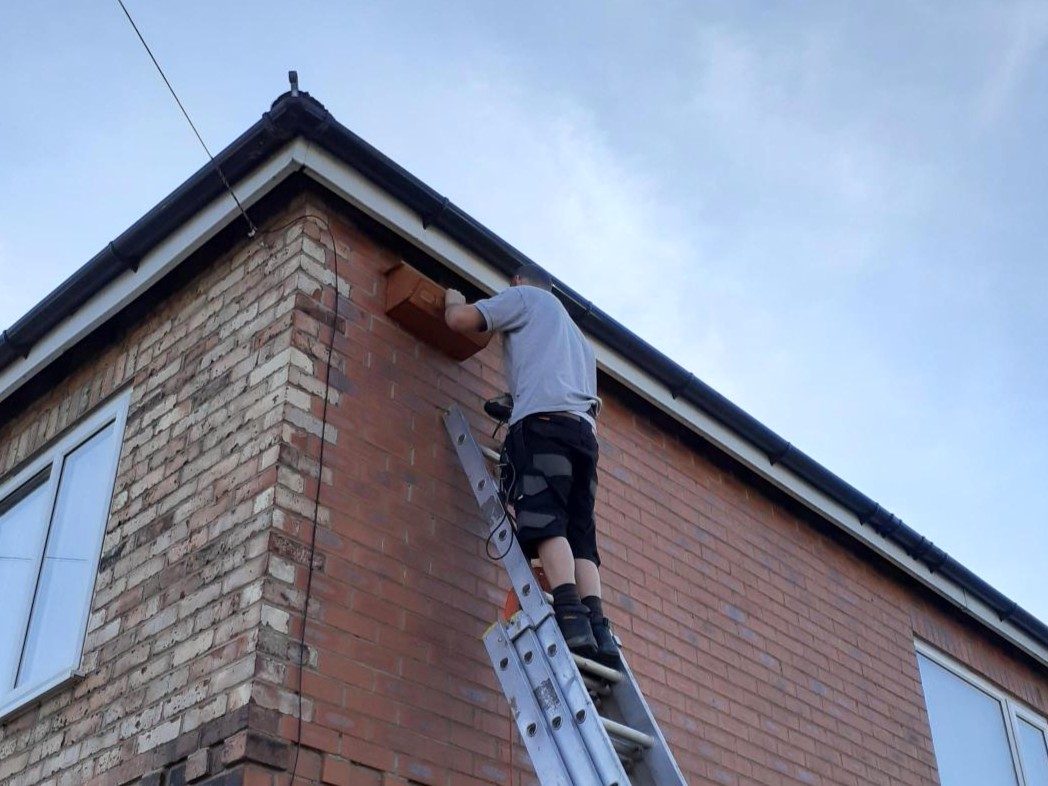
Ryan Cawdron installing boxes on Houghton Lane.
It’s been an absolute honour to be involved in this project, and I feel so lucky that our community can do something practical to support our local Swifts.
RSPB Community Engagement Officer – Roshni Parmar-Hill
I’ve been so privileged to work alongside individuals as passionate and energetic as Suzanne whilst bringing the Swinton Swift Street project to life. This truly is a community endeavour – proving that, to misquote a famous phrase ‘it takes a village to save a Swift’. From Suzanne’s tireless recruitment of her neighbours’ support along her street, and the hard work of her Girl Guide pack painting and waterproofing the nest boxes, to the students of independent skills provider The SkillCentre in Trafford who constructed the boxes, it’s been a joy to see so many people pull together to take positive action for nature.
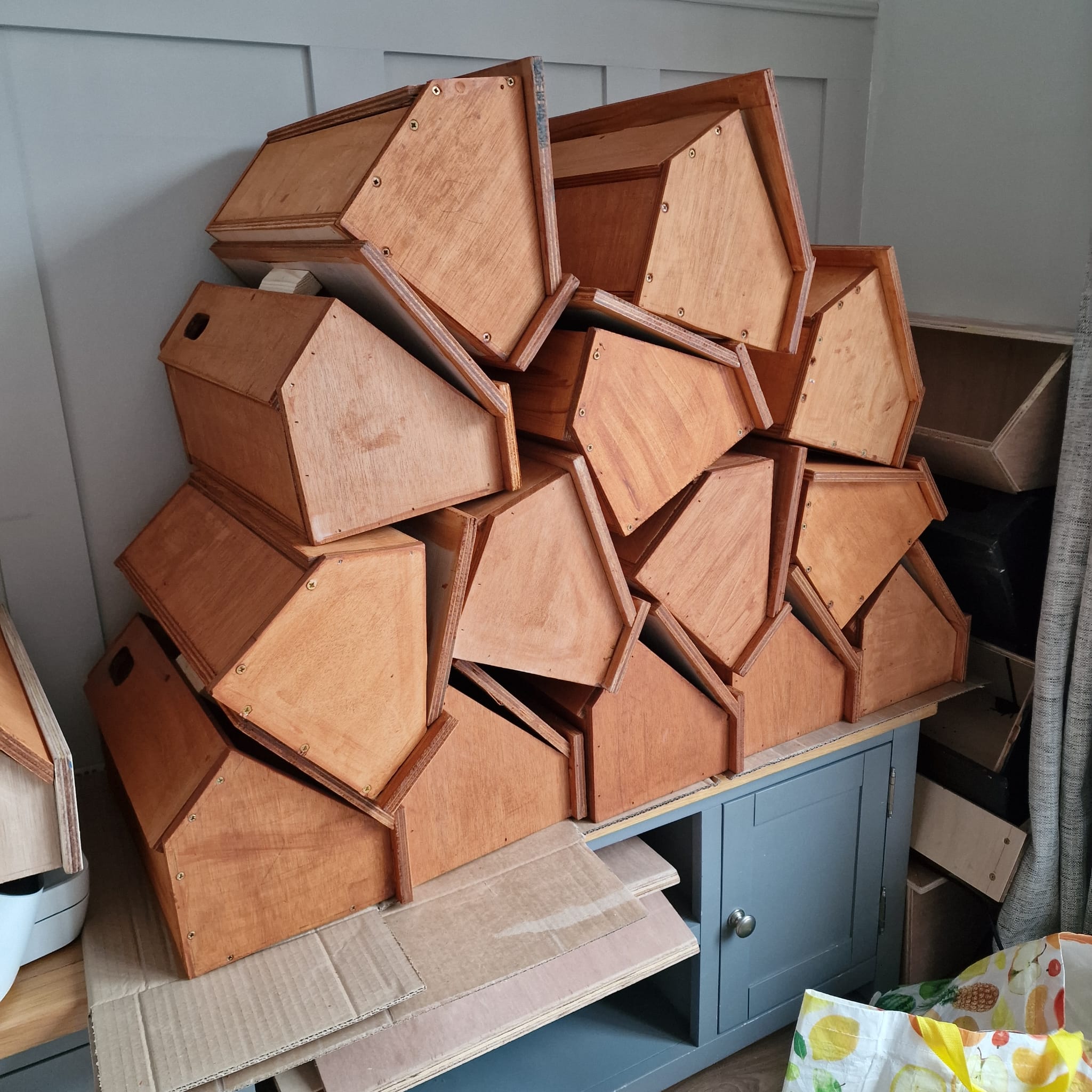
Swift boxes being carefully stored at Haldis Corry’s house (a Swift Champion who lives nearby)
The screaming calls of migratory Swifts are what first drew Suzanne to this species and fostered her connection. If we want to keep welcoming them back screeching overhead every summer, then they need our help now more than ever to create and protect safe nesting habitats. This incredible species travels a whopping 3400 miles to reach the UK from East Africa every year – crossing 25 countries over the course of 4 weeks in their journey to reach us. Swifts spend most of their time in the air – feeding, sleeping and even mating all whilst in flight! – only landing to nest, which is where Suzanne and her neighbours come in.
Swifts return to the exact same nesting spot every year, but increasingly these nesting sites have been hit by property renovations and the removal of old buildings. This has contributed to a 62% decline in Swift numbers between 1995 and 2020, and the species have now been added to the UK’s Red List of Birds, meaning its amongst our most endangered. However, with the installation of over 80 nest boxes on Suzanne’s street, we intend to grow another new urban Swift colony and build on wider ongoing work to develop Manchester into a Swift City. This project is supported by the expansion of our network of brilliant ‘Swift Champions’ who are leading the development of nesting sites at scale, manufacturing swift boxes and raising people’s awareness and engagement of the project and species through walks, talks and workshops.
Roshni and Seamus making Swift Egg cups on a cold January day.
As Suzanne and her neighbours now prepare for a special Swift Homecoming Street Party to officially declare it a Swift Street and welcome their bird’s home, all eyes will be fixed on the skies for a glimpse of the street’s feathered residents moving into their new addresses…
Orchidaceae, a family boasting over 28,000 species worldwide, are renowned for their intricate beauty and fascinating adaptations. These perennial plants exhibit a remarkable diversity of forms, even within species, with flowers featuring three sepals and three petals, one of which often forms a distinctive lower lip (the labellum) which is an important identification feature. They rely on diverse pollination methods, often involving intricate relationships with insects and fungi, and are highly specialised to survive in specific habitats.
The UK is home to 57 native orchid species, ranging from common meadow flowers to prized rarities. This blog explores a group of these British orchids and provides information on both their identifying characteristics and distribution in the UK.
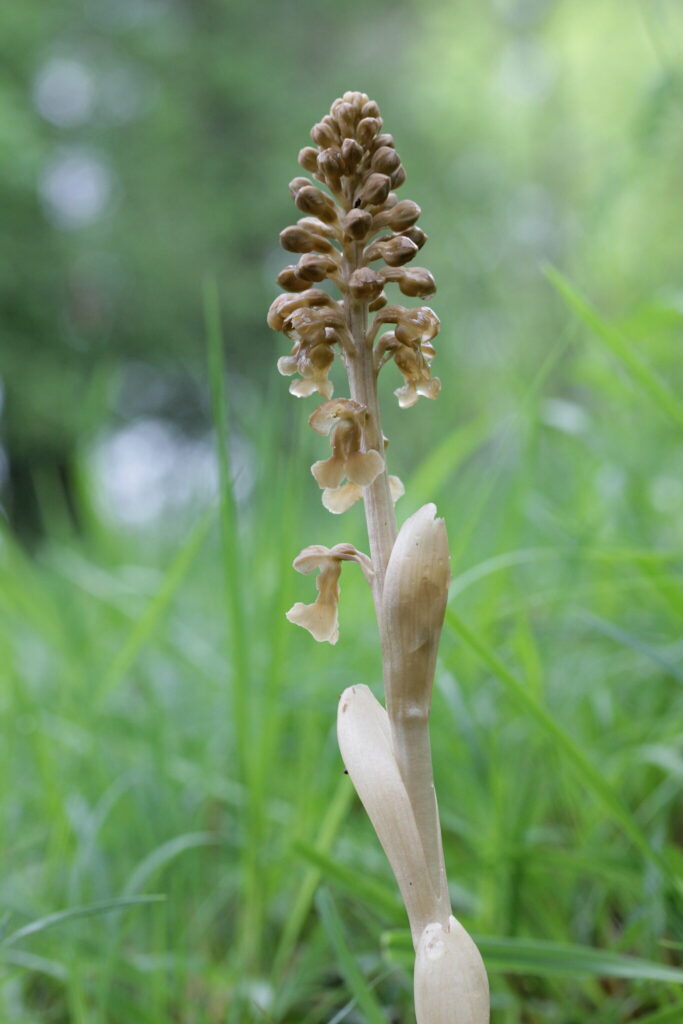
Identification: Bird’s-nest Orchids are incredibly distinctive and are named for their unique root system that resembles a bird’s nest. They have no leaves, and do not have chlorophyll, so they rely on nutrients provided by mycorrhizal fungi in the soil.
The cylindrical spike grows up to 50cm in height and can carry up to 100 yellow-brown flowers that smell like honey. The sepals and upper petals are short and form a fan-shaped hood at the top of the flower. At the base is a broad, long lobe that is forked in the middle, and at the base of this lip is a shallow cup of nectar which is used to attract small insects for fertilisation.
Distribution: This species has a scattered distribution throughout the UK but is locally common in southern England and Northern Ireland. Bird’s-nest Orchids can be found in mature woodland, especially those with beech and Yew, in southern England and typically flower from early May to late June.
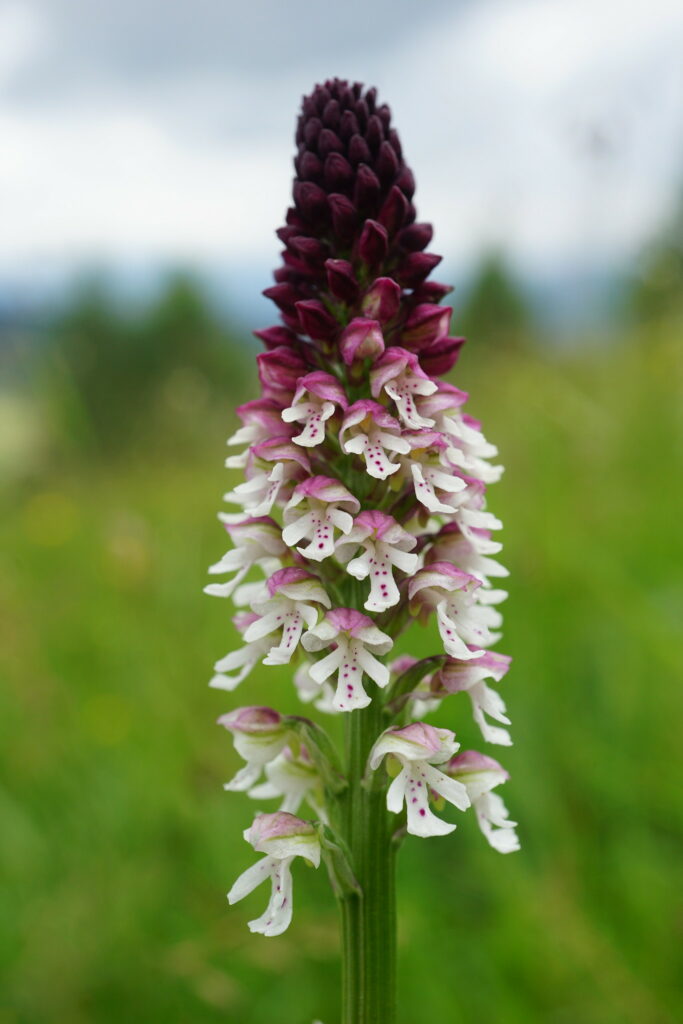
Identification: This distinctive orchid has two variations: early flowering and late flowering forms, which exhibit subtle differences in flower colour. This orchid is conical to cylindrical in shape and features densely packed, deep-purple flower buds. These flowers have dark purple-red sepals and pale petals, including a four lobed white lip with red-purple spots.
Early Flowering Form: Grows up to 10cm tall, with a closely packed flower spike bearing up to 50 small flowers. The sepals and upper petals form a tight, darkly coloured hood, which appears red-brown when the flowers first open and quickly fades as the bud matures. It has a long white lip with two rounded side lobes, and a bluntly forked central lobe. Early flowering forms have a strong, sweet scent and are pollinated by flies.
Late Flowering Form: Typically found between 8 and 15cm in height. Late flowering form flowers have shorter, blunter lobes and the red colouring on the hood remains strong even with maturity. The edges of the lip are usually flushed with colour, which can spread over the whole lip in some cases.
Distribution: Formerly widespread throughout the UK but has undergone declines in the north and midlands. It is now found in a few localities, mainly in southern England, on chalk and limestone grassland and meadows. Early flowering forms bloom mid May to mid June. Later flowering forms bloom late June to early August.
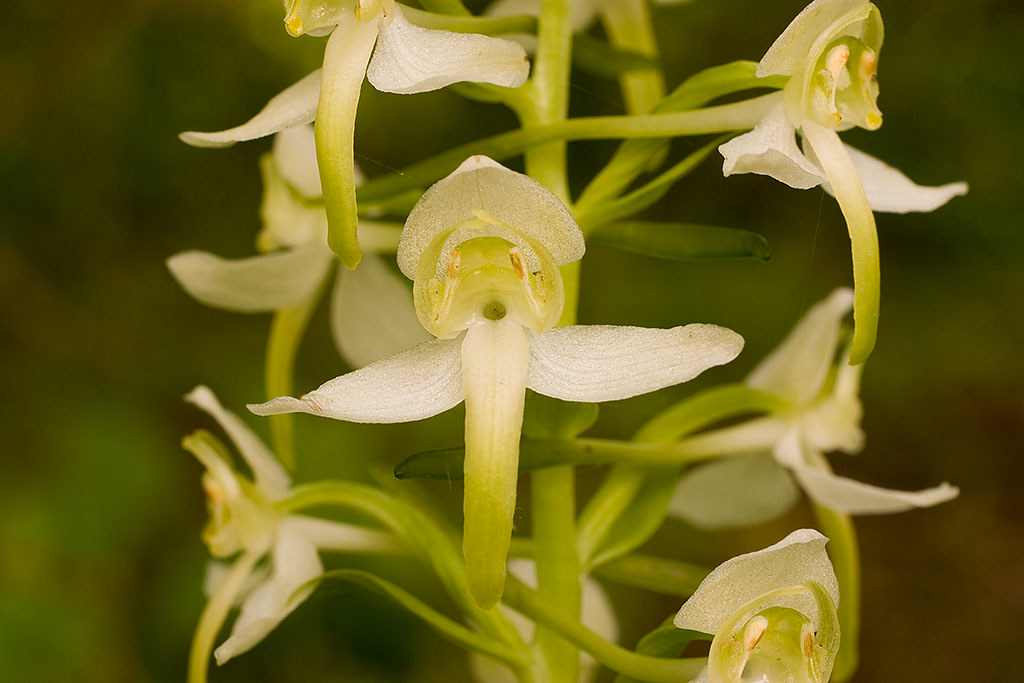
Identification: Greater Butterfly Orchids can grow up to 60cm in height. The plant consists of a tall spike of up to 40 greenish-white flowers in a loose cluster. The overall flower structure is similar to Lesser Butterfly Orchids and has ovate lateral sepals with a wavy edge like the wings of a butterfly. The upper sepal and petals form a broad, green-white hood and a long, translucent lip has a green tip. At the base of the stem, there are two large, shiny leaves that are blue green in colour and elliptical in shape.
Distribution: Widespread throughout the UK, but most common in southern England. Found in meadows, open scrub, grassland and ancient woodland on chalk grassland or calcareous soil. Flowers from late May to late July, where they emit a powerful scent at night and are pollinated by moths.
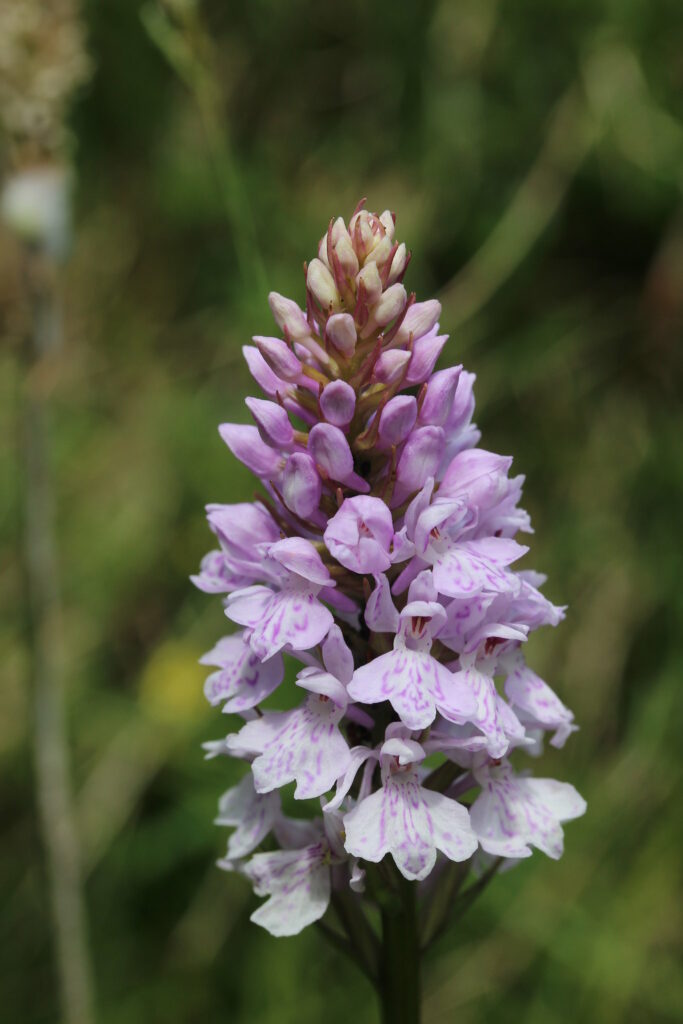
Identification: Up to 70cm in height, the spike is either pyramidal or cylindrical in shape and can host up to 70 flowers at a time, all various shades of pink, purple and on occasion, white.
The flowers are slightly scented and are pollinated by a range of insects but are particularly attractive to day-flying moths. They have a three lobed lip with a larger, more triangular central lobe that is marked with a pattern of dark pink spots and stripes. The lateral sepals are spreading, and dorsal sepals and upper petals form a loose hood at the top of the flower. All petals and sepals are marked with dark pink lines and dots. It has spotted, narrow basal leaves that form a rosette at ground level.
Distribution: One of the most common and widespread orchids in the UK, but is absent from much of Cornwall, Devon and northern Scotland. They can be found in a range of habitats, including woodland, dry grassland, wet meadows, marshes, man-made road verges and railway embankments. Common-spotted Orchids can be found in flower from mid-May to early August.
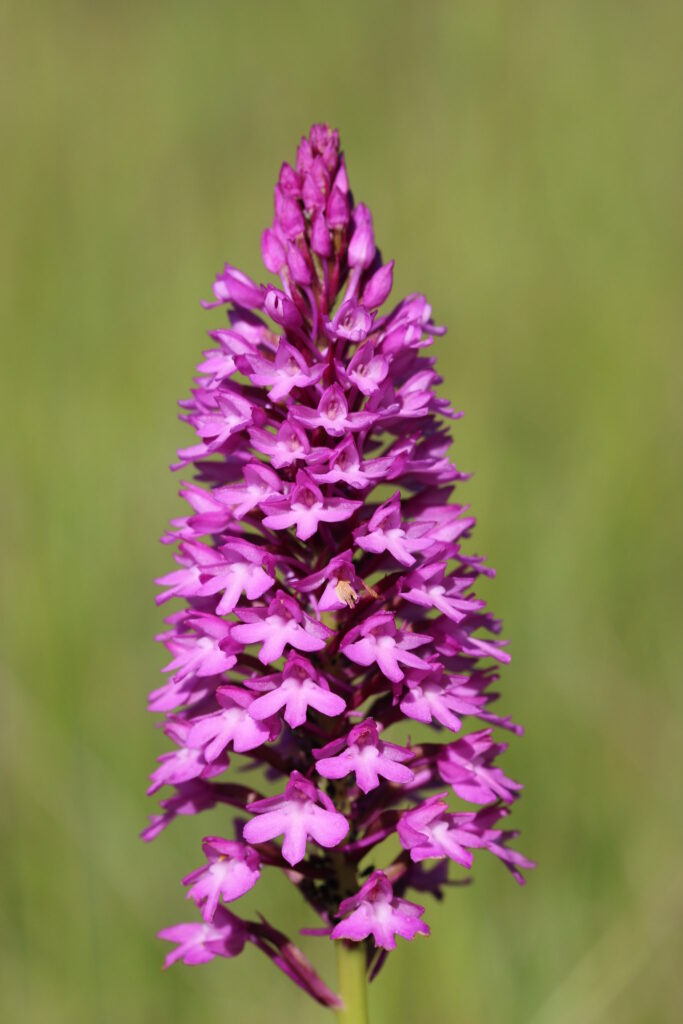
Identification: This species is named for the pyramid shape of its flower spike during early growth stages, before it matures into an elongated, cylindrical shape. The flower spike grows up to 60cm in height and is densely flowered with up to 100 flowers at a time. These can be pale pink, to reddish pink in colour and have a sweet vanilla-like scent. The lower lip is divided into three lobes, which can vary in shape, and the sepals and upper petals form a tight hood over the flower. Pyramidal Orchids have up to four grey-green, narrow basal leaves.
Distribution: Common and widespread in England and Wales. It can be found on grassland and sand dunes on chalk and limestone soils, and grows well on human-made habitats, including road verges and roundabouts.
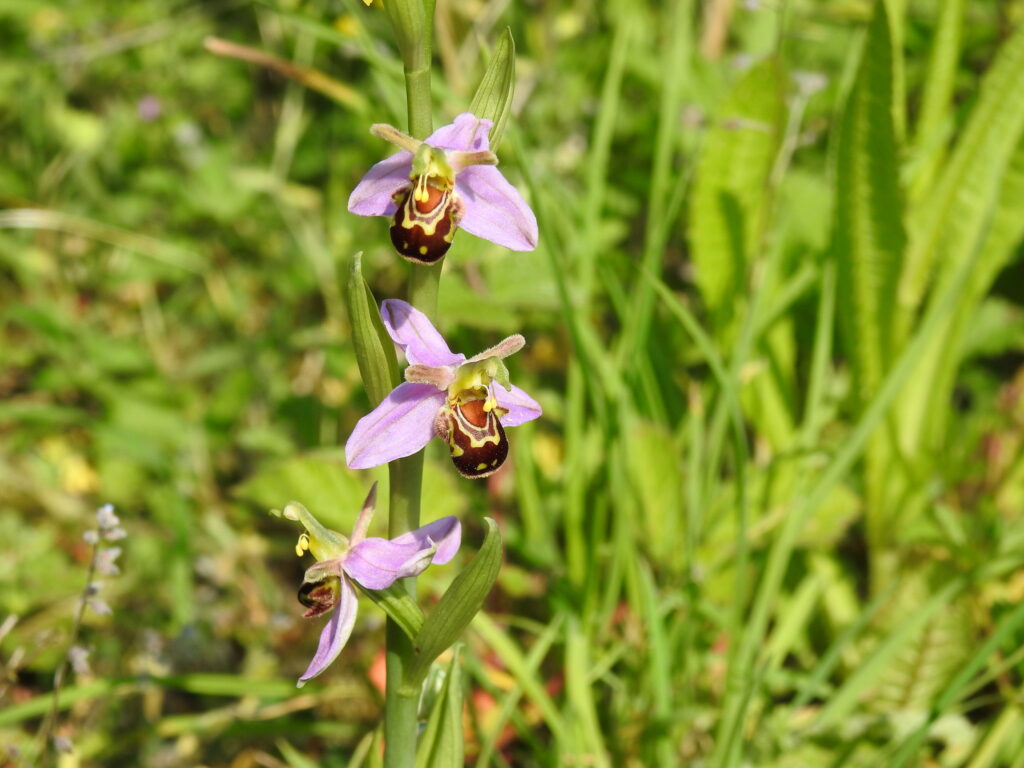
Identification: These distinctive plants have a flower that resembles the body of a bumblebee – a pattern that has since lost significance in the UK, so this species relies on self-pollination.
It grows between 10-50cm in height, and each plant can develop up to seven good-sized flowers. At the base of the stem, there is a rosette of five to six grey green basal leaves – these sit at ground level and have two sheathing leaves that grow upwards on the stem. The distinctive, velvety lip has three lobes – the central section is slightly convex and the side lobes form two small humps. It is rich maroon to purple-brown in colour, with grey and pale-yellow markings. The three wing-like sepals are pink and have a central green vein. Upper petals are brown and cylindrical in shape, forming the antennae of the bee.
Distribution: Found throughout Britain, although scarce in Cornwall, north Devon and Scotland. Bee Orchids can be found on dry chalk and limestone grasslands, calcareous dunes and roadsides or waste ground. Flowers from early June to late July.
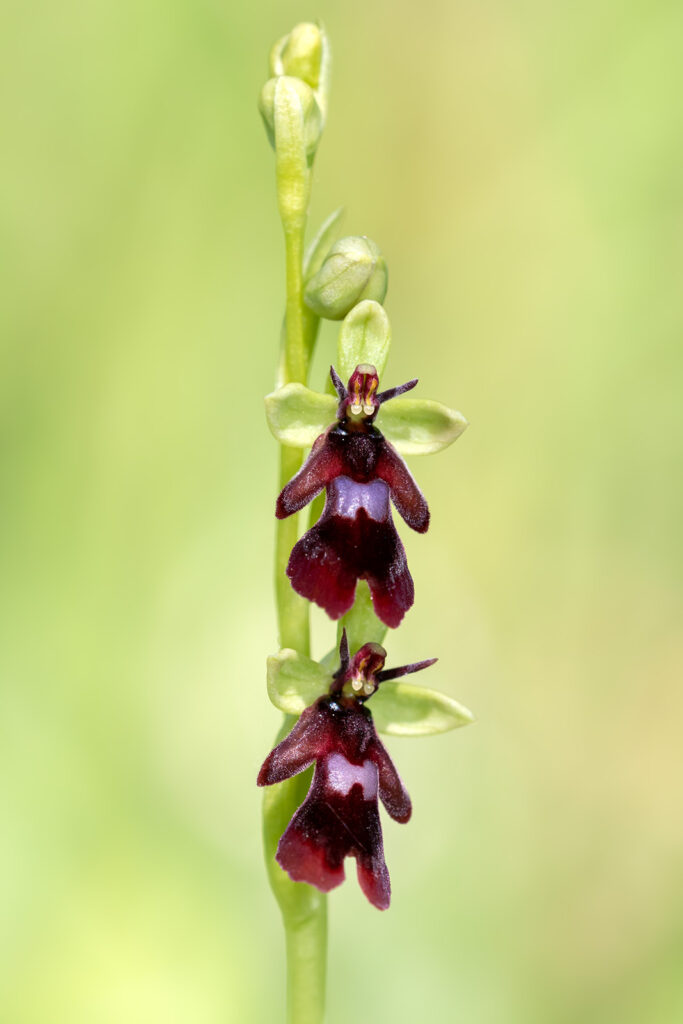
Identification: This fascinating species has evolved to resemble an insect in order to attract pollinators. Fly Orchids can grow up to 60cm in height and can bear up to 15 flowers on a spindly stem. The flower has a velvety texture and is dark purplish brown in colour with an iridescent blue band in the middle of the lip. The lip is long, with two short side lobes, and a central lobe that is notched at the bottom. At the base, there are two coloured patches that resemble eyes, with the same velvety texture. The flower has three sepals that are pointed, yellow green in colour and stiff. The thin upper petals are dark purple or brown and resemble antennae.
Fly Orchids typically have three to four dark green basal leaves, that are shiny on the surface and have blunt tips.
Distribution: Widespread throughout the UK, but populations are declining and are fairly scattered in northern England and north Wales due to habitat loss. Fly Orchids can be found in deciduous open woodland, open scrub, grassland, quarries and roadside banks on chalk and limestone soils, and flowers from May to early June.
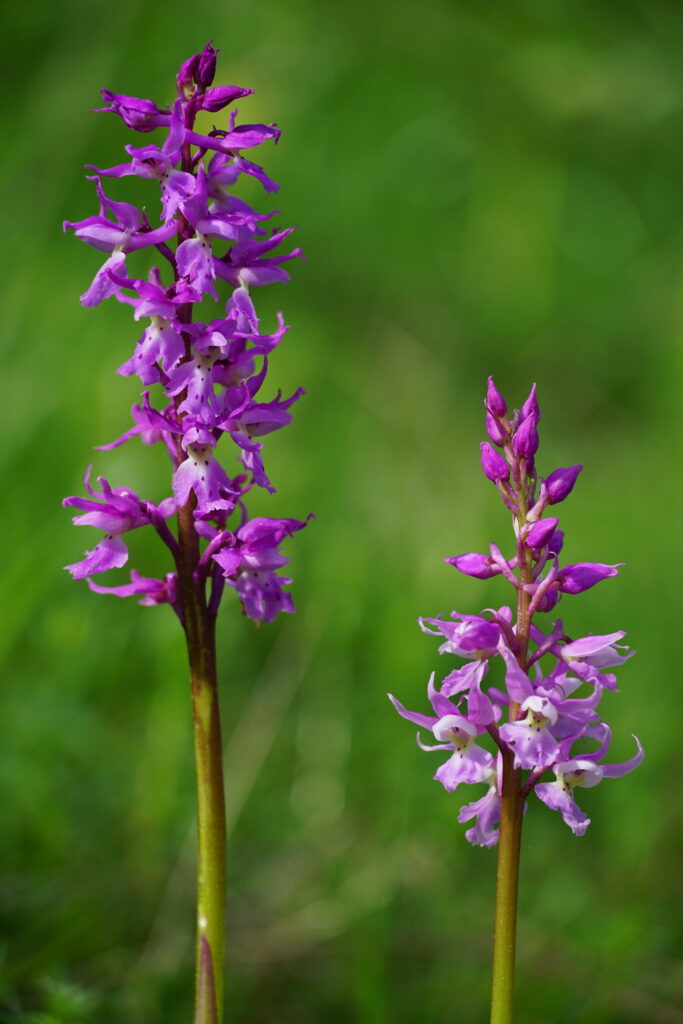
Identification: A distinctive purple flower on a tall spike. Early Purple Orchids can grow up to 60cm in height, and are easily recognisable by their pink-purple flowers and spotted leaves. The flower spike is oval or cylindrical, carries up to fifty flowers at once on a dense cone-shaped cluster, and has darkly spotted, glossy basal leaves that form a rosette on the ground.
Their sepals spread upwards, and the lip is broad with three lobes and lightly crinkled edges. The centre of this broad lip is paler in colour, and features darker coloured spots over the surface. Upper petals and sepals form a hood at the top of the flower, which has a sweet honey-like scent, that quickly turns unpleasant (likened to tomcat urine) as the flower matures. Flowers do not produce nectar and are pollinated by a variety of bees.
Distribution: Early Purple Orchids can be found throughout the UK, with very scattered groups or complete absence in some regions due to habitat loss and agricultural management. These orchids are found mainly on chalk and limestone soils, in woodland, grassland, rocky cliffs, road verges and embankments. Flowers first appear in spring, typically from early April to early June.
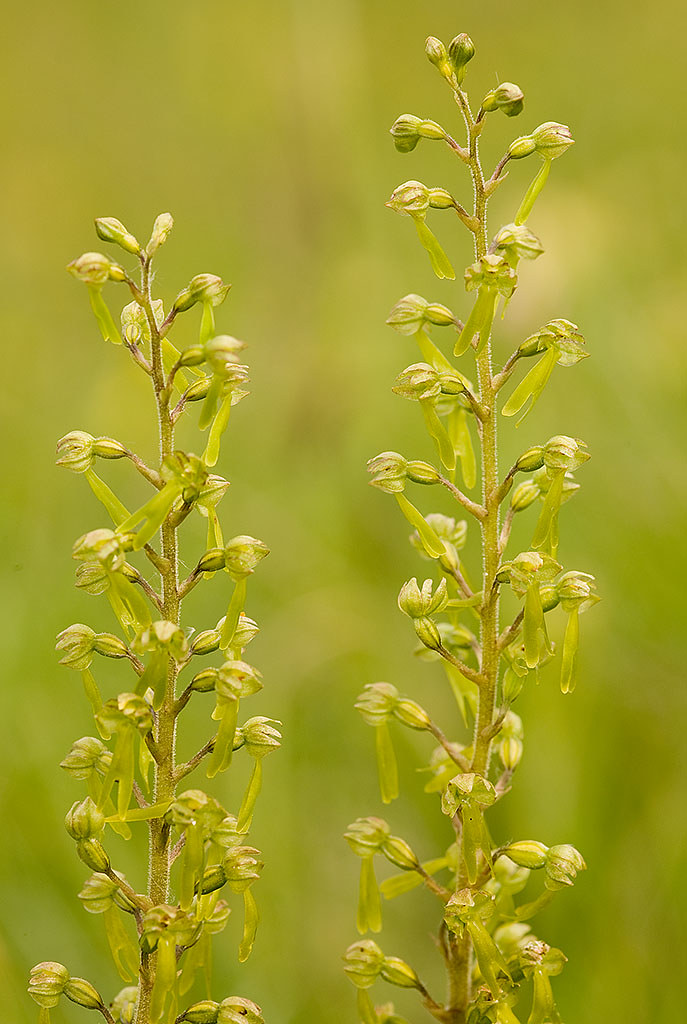
Identification: Common Twayblades can be readily identified by a pair of broad, round or egg-shaped basal leaves that are flush to the ground. The hairy flower spike can grow up to 50cm in height and contains up to 100 clustered, green flowers that are likened to small people – the upper petals and sepals form a hood over a long, yellowish-green forked lip which resemble legs. They have a slightly musky scent and are pollinated by small insects including wasps, beetles and sawflies.
Distribution: Common and widely distributed throughout the UK. Common Twayblades can be found on grassland, deciduous woodland, dune slacks, road verges and chalky soils. Flowers from late April to early August.
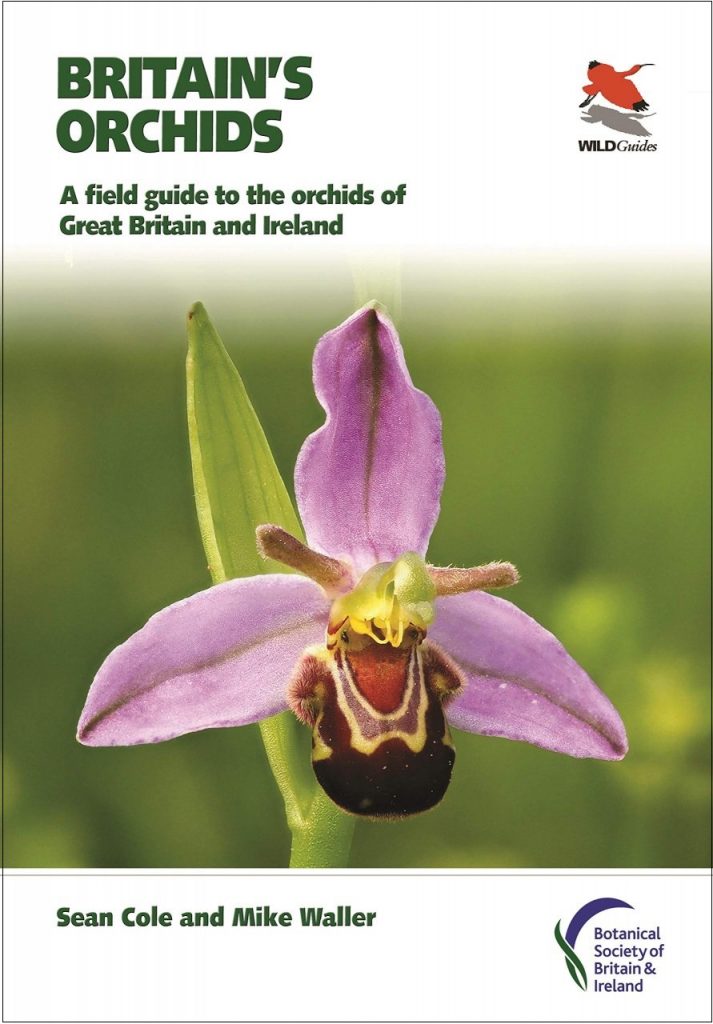
A magnificent work combining close to 100 illustrative plates with over 1,000 colour photos to cover all orchid species, subspecies and varieties, as well as hybrids, at all stages of development.
Presents the first comprehensive overview of all named orchid taxa from Europe, North Africa and the Middle East, covering etymology, flowering period, habitat, geographical distribution and more for each taxon.
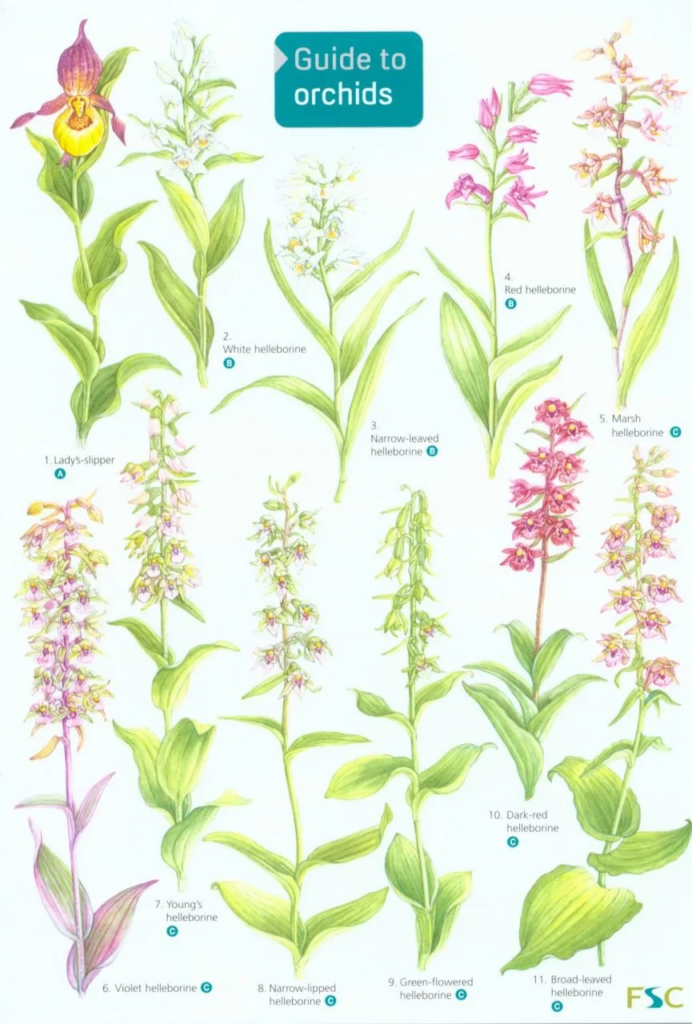
With colour paintings covering 69 species, subspecies and hybrids, this 12-panel chart covers all the orchids that are likely to be seen in Great Britain (including the Channel Islands) and Ireland.
I recently had the opportunity to run a group workshop at the 2025 Biological Recorders Conference for Cornwall and Isles of Scilly – a fantastic day dedicated to celebrating the vital wildlife recording efforts in Cornwall. Held at the University of Exeter’s Penryn Campus, the event brought together a diverse group – from those just starting their wildlife observation journey to seasoned experts, all sharing a genuine passion for the county’s natural wonders. It was inspiring to network with fellow enthusiasts, and the range of workshops and insights into the latest projects was truly exciting.
This year’s focus, ‘Data for the Future: Recording Nature in a Changing World’ was particularly thought-provoking. The conference explored the recent shifts in recording methods, including the increasing adoption of structured monitoring, the exciting technology used in recording and the value of traditional techniques. It was a valuable day, and I’m looking forward to sharing some of my key takeaways from the event.
Key highlights
It was great to connect with so many people with unique and varied interests. I spent most of my morning meeting lots of likeminded people who are interested in biological recording, chatting all things equipment and answering lots of questions about the kit.Throughout the day, I attended some interesting talks from a number of researchers and organisations. My highlights are as follows:
Pollinator Responses to Urban Green Environments – Oliver Poole, University of Exeter
Oliver’s research focussed on planting green spaces, and whether green spaces are working for both pollinators and people. His research wanted to find out what delivers the most benefits to these groups, and interestingly, his results showed that a mix of native and ornamental plants had the best scores for pollinators and people.
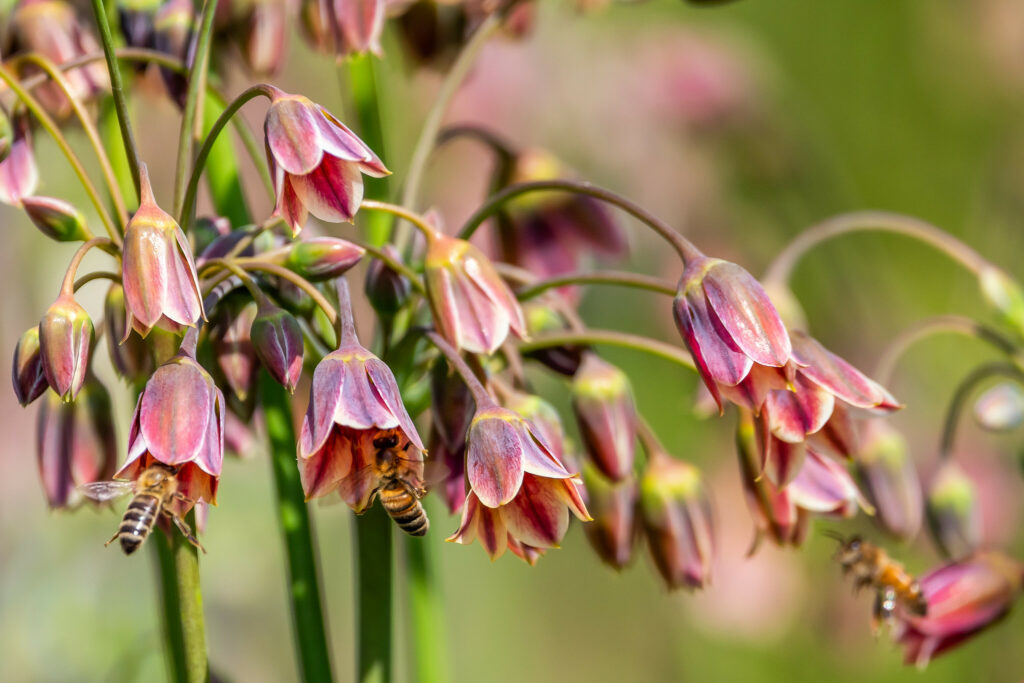
Image by PapaPiper via Flickr
Sea Bass Monitoring, Robin Bradley
This talk centred on the work of a volunteer group, who record data on juvenile bass in the Fal, Helford and Camel estuaries to analyse the strength of each successive year class. Their valuable data has now been validated and added to a larger dataset that will contribute to work across Europe. I particularly enjoyed the wider message of this talk, which emphasised the importance and value of community and citizen science in the wildlife space.
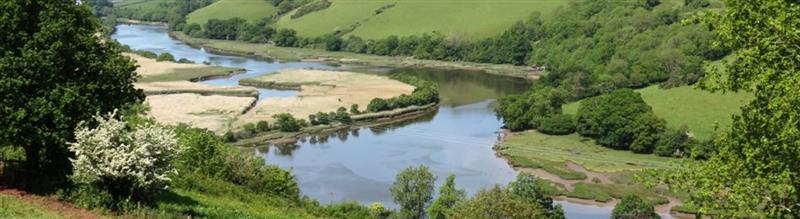
Camel estuary by Rob Hodgkins via Flickr
Tor to Shore – Recording Opportunities, Dr Gwen Maggs
Another interesting talk discussing the Tor to Shore project, an expansive undertaking from Cornwall Wildlife Trust to create a Local Nature Recovery Network spanning across land and sea. The talk discussed the project, and the work on the Trust’s farm, linking to lowlands, an expanding sand dune system, and into the sea with seagrass and maerl habitats.
Data for the Future: Hardware in the Field
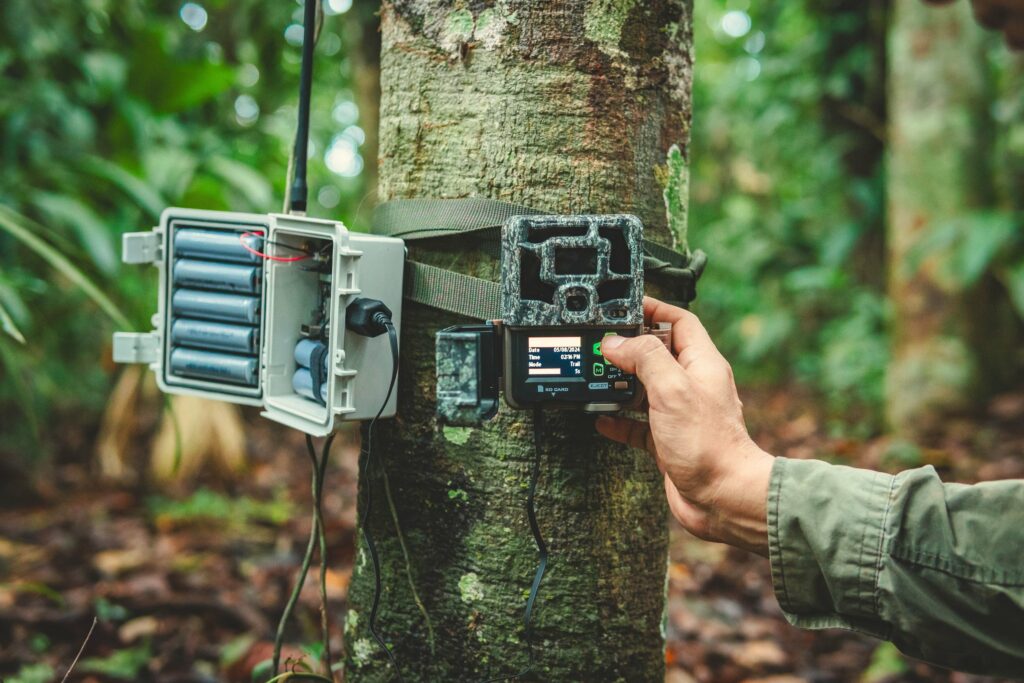
I had the opportunity to speak in a group workshop, where I demonstrated some wildlife recording kit and discussed the different types of hardware that can be used for a range of monitoring. It was great to demonstrate the capabilities of wildlife equipment and their applications in the field, and I was able to cover a wide range of monitoring including traditional methods, acoustics, telemetry, video and thermal imaging.
I started with a focus on traditional monitoring, before moving on to advancements in the sector and its technology across a range of habitats and environments. I covered a range of equipment, from bat detectors and camera traps to thermal imaging and our upcoming NEWTCAM. It was great to receive such interest in the kit, and with wildlife technology becoming more and more accessible, it is a great opportunity to share the latest technology to wildlife recorders in the South-west.
It was great to meet so many likeminded individuals interested in biological recording and I particularly enjoyed the emphasis, and appreciation of, citizen science and the value that community can bring to conservation. Overall, it was an inspiring day, and I look forward to attending next year’s conference!
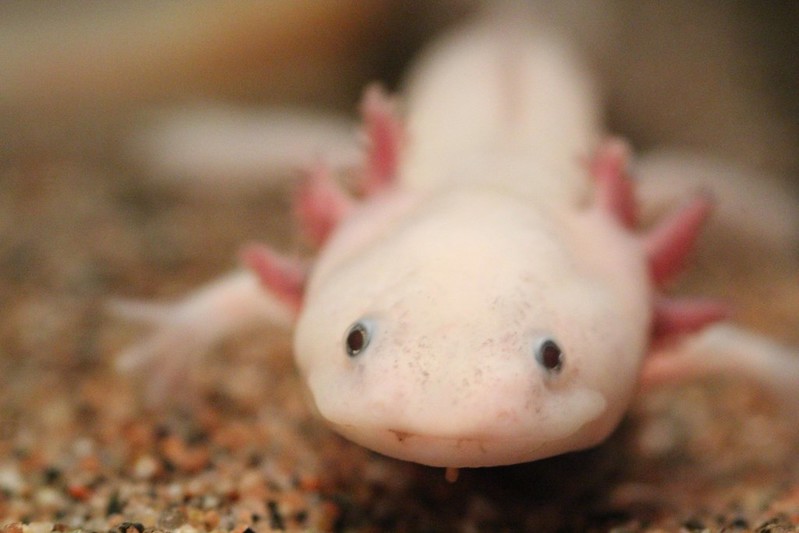
Captive-bred axolotls have successfully adapted to the wild, offering hope for the future of this critically endangered species who have been on the verge of extinction for nearly two decades. In an attempt to trial their reintroduction, scientists have recently conducted a study involving the release and monitoring of 18 captive-bred axolotls into Lake Xochimilco and its neighbouring artificial wetland. Volunteers tracked their movements for roughly 40 days, and the results of this study have revealed that not only have all 18 individuals survived, but those that were recaptured for monitoring have gained weight, suggesting they have successfully adopted natural hunting behaviours. Whilst this study has revealed that species reintroduction is a viable option, ecologist Luis Zambrano has stated the team’s first priority is to improve habitat conditions for axolotl’s already living in the wild.
The only breeding pair of Ospey in southern England have laid four eggs for a second year running. The Osprey reintroduction programme began in Poole Harbour in 2017, and in 2022 female CJ7 and male 022 became the first nesting pair recorded on the south coast of England in 180 years. With the eggs expected to hatch at the end of the month, the Birds of Poole Harbour group have stated that a repeat of all four eggs successfully hatching would be a very promising outcome for their recolonisation, however every hatchling should be celebrated.
Science and Environment
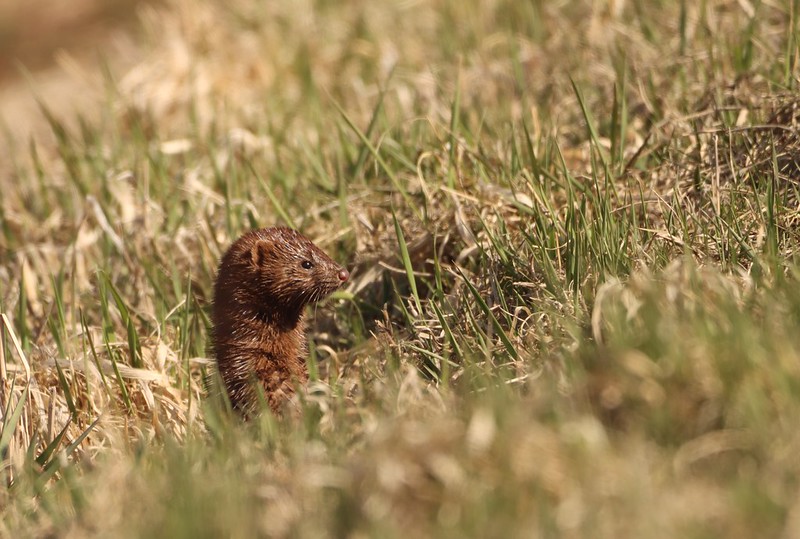
A government grant from the Nature Restoration Fund is set to facilitate the eradication of American mink from the Outer Hebrides. Over 2,000 individuals have been captured since the Hebridean Mink Project began in 2001, and in 2018 it was thought that their population had been reduced to a level that was no longer functional. However, data has revealed that 20-30 mink are still trapped annually. The Scottish Government’s grant will enable the installation of more traps, ensuring the eradication of this invasive species from the islands and supporting the recovery of ground-nesting birds and other native wildlife.
American Mink Huron Wetland Management District South Dakota by USFWS Mountain-Prairie, via flickr.
Policy
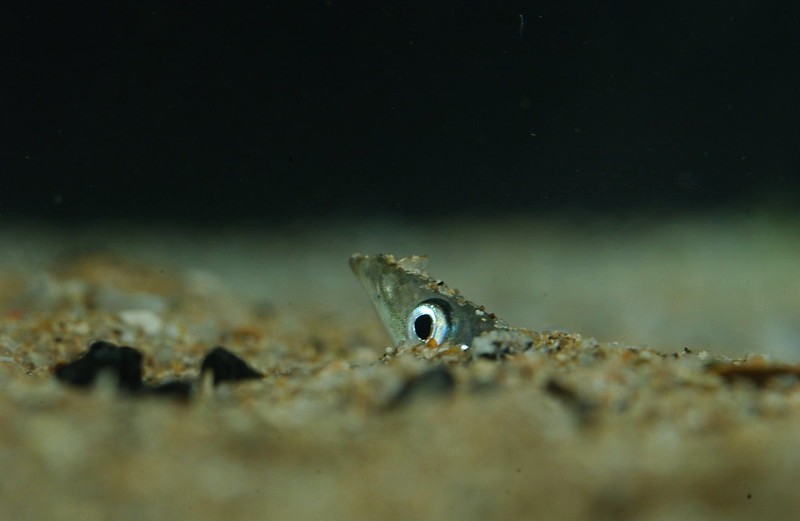
Sandeel fishing ban remains in place in the North Sea. Sandeels are a vital source of food for a wide variety of the UK’s marine life and coastal sea birds, and in early 2024 English and Scottish authorities implemented trawling bans due to concerns about declining populations. The EU have now challenged this ban, arguing that the motion was ‘discriminatory,’ ‘disproportionate’ and could threaten commercial sandeel fishing in Denmark. Several key organisations including the RSPB and DEFRA have since advocated for the measure to remain in place, and judges have ruled that there is no legal obligation to reverse this order.
Sandeel in seabed by Crown Marine Scotland, via flickr.
Housing developers in England may be able to build on protected green spaces without needing to replace nature lost locally.The proposed Planning and Infrastructure bill could allow developers to pay into a fund for off-site habitat creation, potentially outside the local area, or even in a different county. While the Labour government aims to streamline development to meet housing targets, concerns are growing that this could harm poorer rural communities and lead to a “cash to trash nature” system, undermining local access to nature and potentially ignoring crucial environmental protection.
Pollution
UK is falling behind on its commitment to reduce microplastic pollution. Scientists have revealed that these pollutants continue to infiltrate our food sources, ecosystems and bodies. Researchers are now warning that the UK is falling behind both Europe and the US in the introduction of enforceable targets on microplastic in wastewater and drinking water. As a result of this, they are now encouraging ministers to develop a comprehensive approach to reduce plastic pollution, whilst also providing funding for vital research into safe microplastic exposure thresholds.
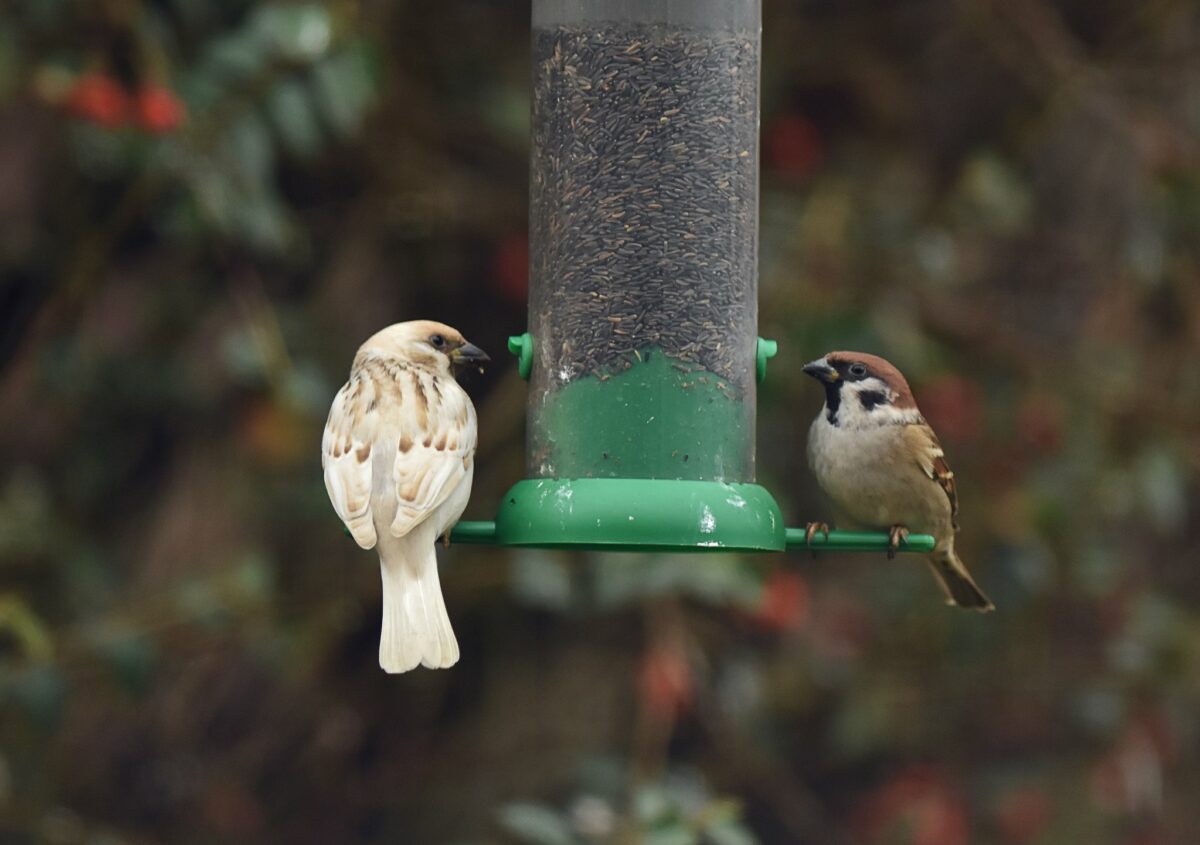
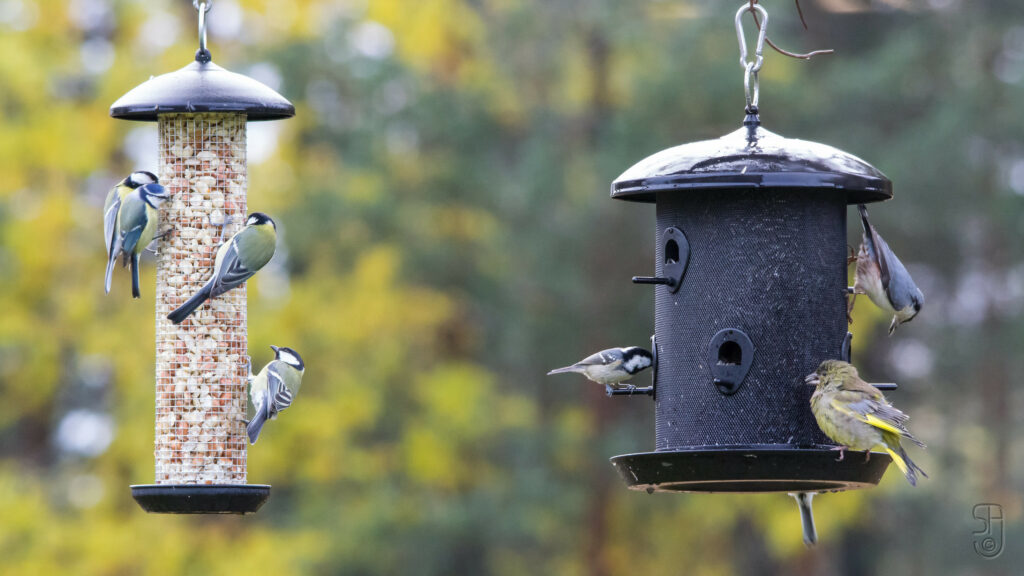
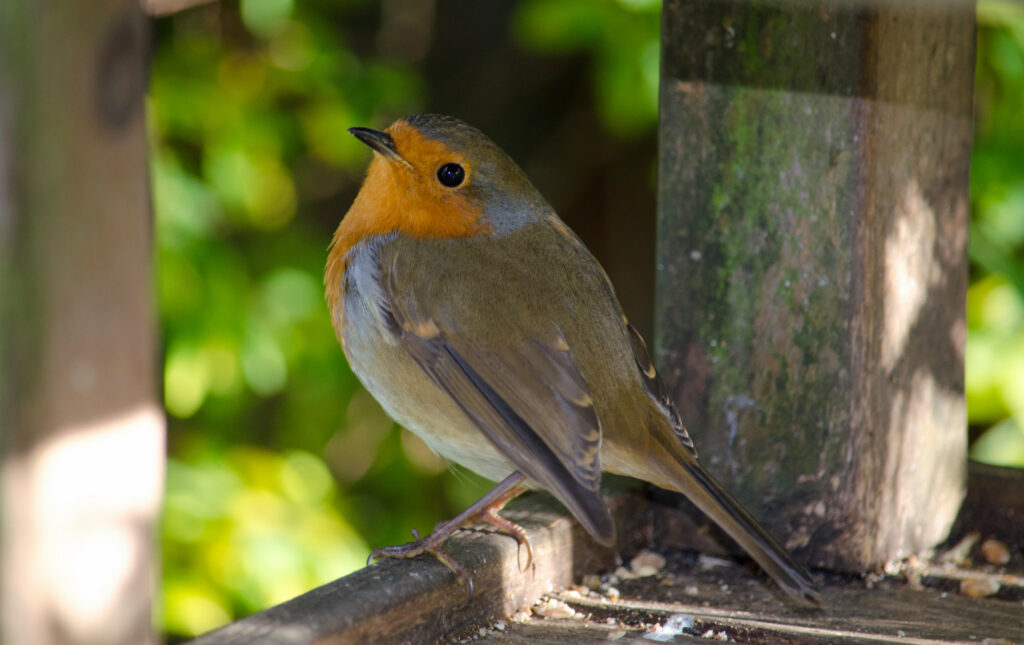
A bird table is a great way to provide supplementary food sources to local bird species, especially during harsh winter months, and offers a delightful window into the lives of our local birdlife. This added food source can have significant positive impacts on the overall health, condition, and breeding success of bird populations in the UK, but with this support comes the responsibility of ensuring a clean and healthy feeding environment. Feeders can quickly become breeding grounds for harmful bacteria, encouraging the spread of diseases such as avian trichomoniasis and avian influenza, so it is important to understand how to keep them clean.
In this blog, we detail how to clean and maintain garden bird tables and feeders throughout the year, and highlight the importance of good hygiene for bird conservation in the UK.
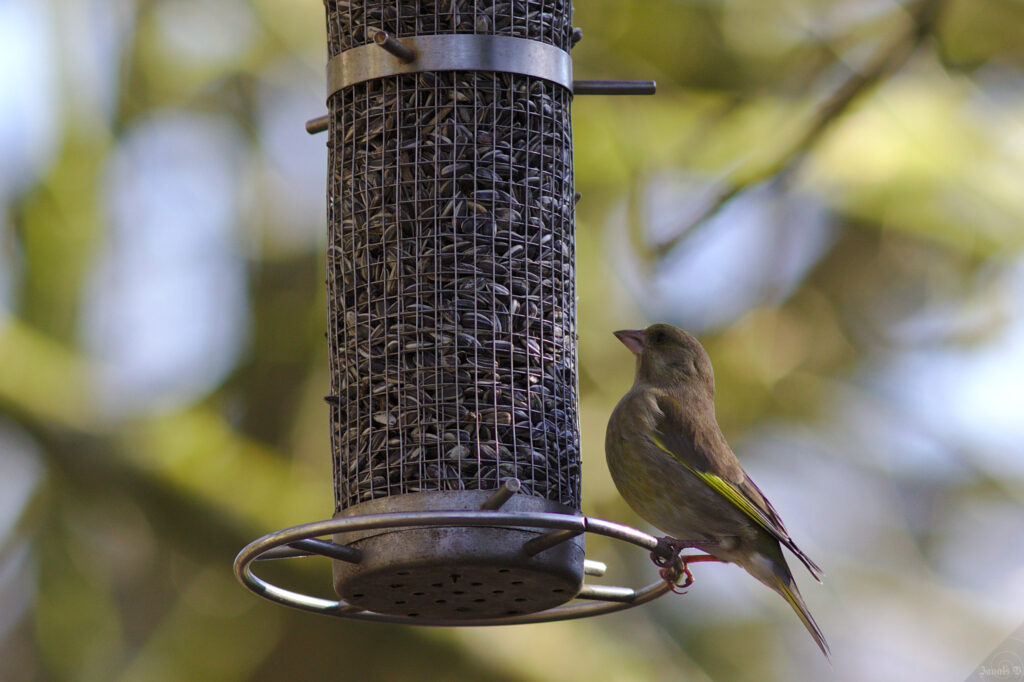
Maintaining good bird table hygiene to mitigate the spread of disease is of growing importance. British birds are under significant pressure from habitat loss, land use change and increasing urbanisation across the country – and conditions like avian trichomoniasis, a contagious disease partly responsible for widespread declines of Greenfinches in the UK, can be easily spread through contaminated food dropped by infected birds. Proper bird table hygiene can not only mitigate the spread of disease, but can also minimise the attraction of pest species like mice and rats, which pose a risk to human health through the transmission of zoonotic diseases.
Disease prevention extends beyond simple cleaning – positioning bird tables away from perching or roosting areas minimizes contamination from falling debris or excess faeces, andprioritizing designs that attract smaller songbirds can also reduce the concentration of larger, messier species like pigeons. Replacing older tables, which typically have a lifespan of around five years, also ensures that damaged or difficult-to-clean surfaces don’t become persistent reservoirs for pathogens.
Daily maintenance is essential to prevent the accumulation of harmful bacteria and mould:
Dispose of any uneaten food on bird tables– seed mixes and mealworms in particular should be disposed of after 24 hours
Check over the suet balls or birdseed in your feeder to ensure that it is safe to eat
Thoroughly sweep the table surface or wipe over the feeder pegs to remove debris, droppings and loose food
Monthly
A monthly deep-clean is important to prevent disease transmission in your garden, especially during wetter, colder months:
Disassemble any removable parts for a separate, more thorough cleaning
Scrub each part with a stiff brush and a solution of soapy water or diluted bleach to eliminate harmful bacterial or fungal growth, ensuring that any cracks and crevices are thoroughly cleaned
Rinse all components with clean water to remove any residual cleaning agents
Allow the parts to air dry completely in the sun before reassembling and refilling with food
End of season
At the end of the season, a comprehensive ‘full service’ of your bird table or feeder should be undertaken:
Thoroughly inspect the table or feeder for damages and repairs – whether this be splintered wood,cracks and splits,or loose screws. Repair or replace as needed
Consider repainting or treating table wood with a wildlife-friendly, non-toxic wood preservative or paint to safeguard against weathering and decay
Ensuring your bird feeder is in a good state of repair minimises the risk of injury by garden birds and ensures that the table can be easily cleaned to minimise any bacterial or fungal growth.
Well-maintained bird tables and feeders can directly impact the health and well-being of our local avian populations. By implementing a routine of daily, monthly, and end-of-season cleaning, you can minimise the risk of disease transmission and provide a safe feeding environment for local birds.
For further reading on how to care for local birds in your garden, click here.
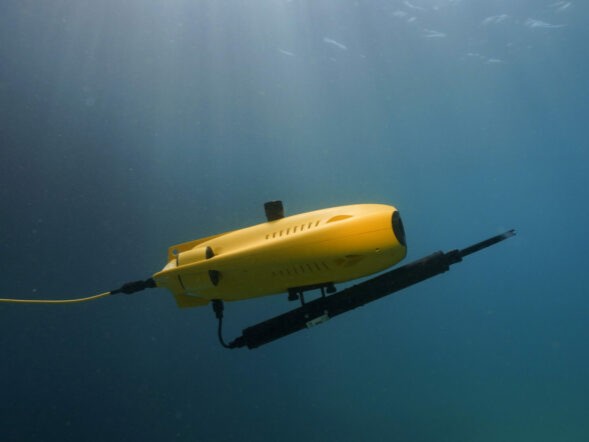
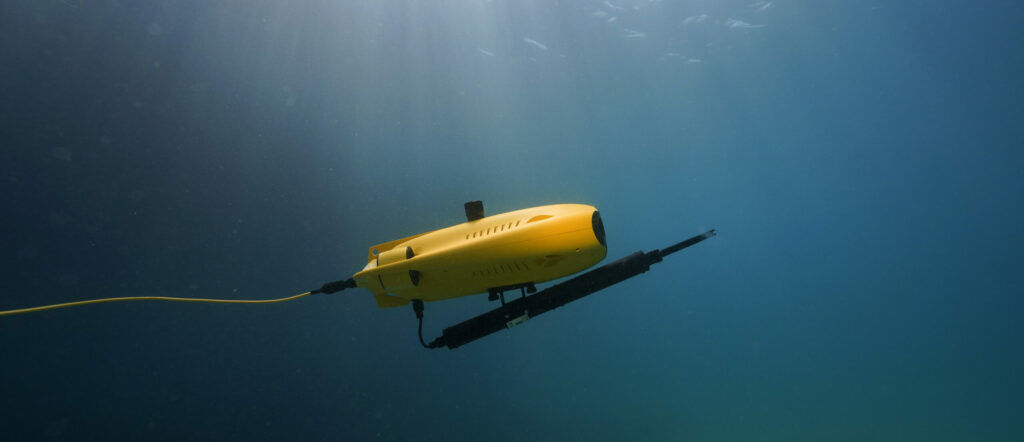
CHASING’s range of underwater drones (also known as Remotely Operated Underwater Vehicles – ROUVs) includes high-end consumer and heavy duty industrial-grade models. The drones capture high resolution underwater images and video, allowing unobtrusive, accessible monitoring, surveying or exploration of aquatic spaces. With technological applications ranging from reef monitoring and marine ecological assessments to aquacultural inspection and general exploration, these innovative devices are a powerful tool for efficient data collection and observation.
Underwater drones can alleviate health and safety concerns, save time, money, resources and the need for specialist personnel. By providing high-resolution imagery and precise manoeuvrability, this technology allows for the safe, efficient observation and sampling of aquatic environments whilst minimising harm or disturbance.
In this blog, we introduce you to CHASING’s underwater drones – the Gladius Mini S, the M2 S, M2 PRO and the M2 PRO MAX.
Consumer Models
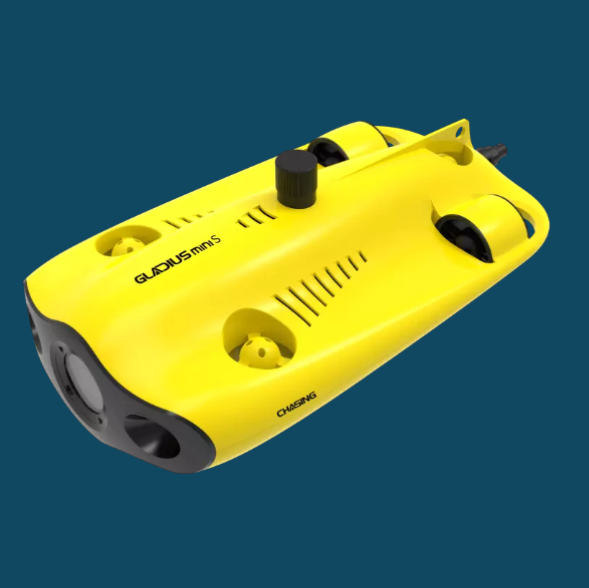
Gladius Mini S
The Gladius Mini S is a highly portable consumer-grade drone for underwater exploration. Quick to deploy, with a maximum operating time of around four hours, the Gladius Mini S requires little preparation to get started and can be operated by one person– simply attach the tether, controller and accessories, and connect your mobile phone to the CHASING app. The Gladius can operate in temperatures between –10 and +45°C, and at depths up to 100m. High-quality video and still images are captured with the 4K image stabilised camera and powerful integrated lights, producing excellent underwater imagery. The Gladius Mini S has one mounting point, which can support accessories such as the grabber claw and underwater GoPro mount.
The Gladius Mini S is available in four packs: Standard pack with a 100m tether, Standard pack with a 200m tether, Flash pack containing grabber claw B and a 100m tether, and a Flash pack containing grabber claw B and a 200m tether.
An upper-end consumer-grade drone
100m max operating depth
Five thrusters
100m or 200m tether included (dependant on package)
One mounting point
We also recently tested the Gladius Mini S in Plymouth Sound, watch our short video to see it in action.
Industrial Models
Alongside the consumer model, there are a number of industrial-grade drones that are better suited for larger scale projects – the CHASING M2 S, M2 PRO and the M2 PRO MAX. The main advantage of these models is the use of interchangeable batteries, additional accessories and an increased tether length for longer sessions. Each industrial model benefits from a 4K camera, up to 4 hours run time, 150° field of view, e-reel compatibility, and powerful vectored thrusters allowing for precise movement. Here, we explore these models a little further, outlining the differences between each drone and their benefits.
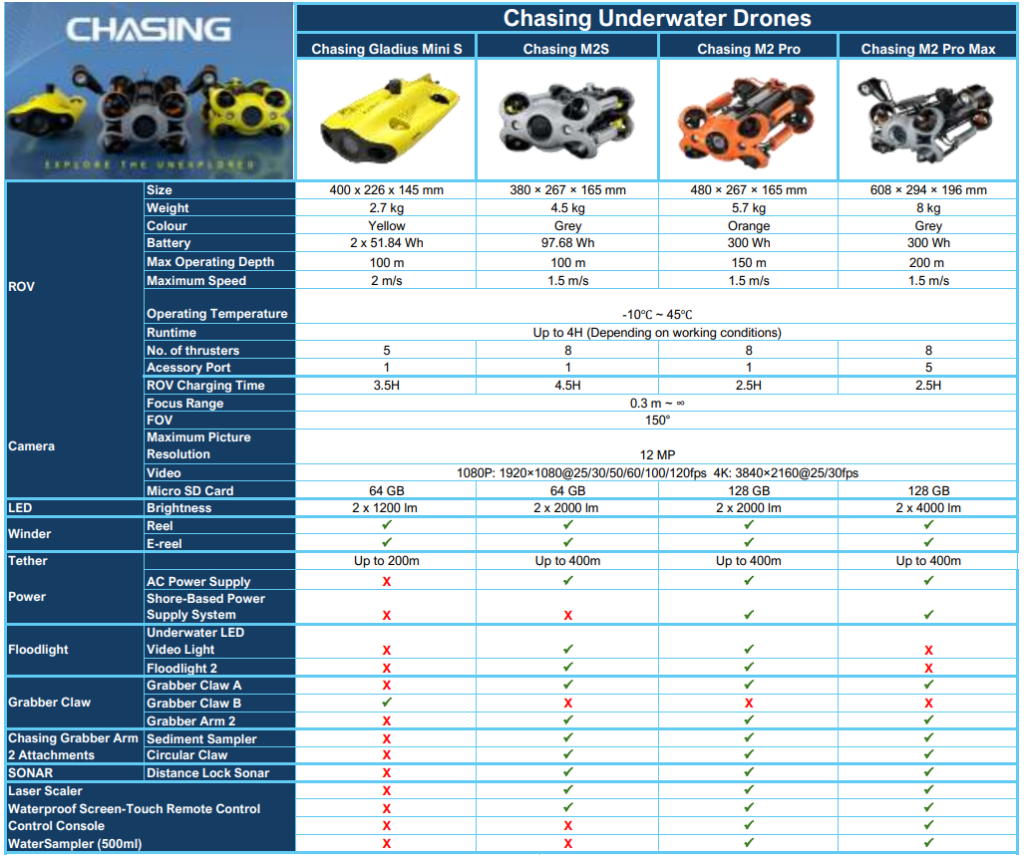
Find a summary of the M2 series specifications below:
CHASING M2 S
Marking the first step up from consumer models, the CHASING M2 S benefits from eight thrusters for maximum stability and a high response speed. The unit features multiple accessory ports that are suitable for grabber arms, distance lock sonars, laser scalers and floodlights, as well as third-party accessories such as GoPro cameras. With the ability to swap batteries, and a greater range of compatible accessories, the M2 S is equipped for longer sessions with increased capabilities. An upgraded colour restoration algorithm improves the image transparency, clarity, colour, layering and noise on the M2 S, and live feed can be streamed onto multiple devices.
This model is available in three packages, each with varied tether lengths, accessories and spare parts.
An entry-level industrial drone
100m max operating depth
8 thrusters
200m tether included
One mounting point
More compatible accessories than consumer models*
*To view thefull range of compatible accessories please see the abovetable.
CHASING M2 PRO
The M2 PRO has an increased operating depth and is compatible with more accessories than previous models. It is the first model that is compatible with the Shore-based Power Supply System (SPSS), allowing for unrestricted power supply to enable 24/7 operation. It is also the first to accommodate the control console – a professional platform designed to control the drone, AC power, external lights and other accessories. The M2 PRO can operate at depths of 150m and is designed to house larger batteries to accommodate an increase in drone size and accessory power.
The M2 PRO is available in two packages: Professional and Advanced.
A mid-range industrial drone
150m max operating depth
8 thrusters
200m tether included
One mounting point
Compatible with the Shore-based Power Supply System and the control console
An increased range of compatible accessories
CHASING M2 PRO MAX
The M2 PRO MAX is the most advanced model in our CHASING range, presenting a top-of-the-line industrial drone for NGO’s, researchers, government bodies and enterprise users. This upper-level model has five mounting points to attach an assortment of around 20 compatible accessories, including water samplers, sonar and sediment samplers. Eight powerful thrusters propel this drone to depths of up to 200m with 360° movement. For improved image clarity, the M2 PRO MAX has offset LED’s, helping to solve interference by the reflection of matter in front of the camera lens.
The M2 Pro Max is available in two packages: Professional and Advanced.
Top-of-the-line industrial drone
200m max operating depth
Eight thrusters
200m tether included
Five mounting points
Compatible with the Shore-based Power Supply System and the control console
Over 20 compatible accessories
Applications
Underwater drones, or ROUVs, provide an alternative, accessible tool for ecological and scientific research. Their applications extend far beyond observation, enabling researchers to conduct detailed ecosystem health evaluations, monitor invasive or threatened species, and perform habitat inspections – all with the capability to collect samples for off-site analysis. From assessing the source of underwater pollution, to conducting biodiversity surveys, these drones provide high-resolution imagery and real-time data, facilitating well-evidenced conservation action. Their ability to perform targeted water and physical sampling allows for detailed analysis of aquatic environments, which can reveal insights into aquatic biodiversity and ecosystem health.
Outside of its ecological applications, this technology has potential in search and rescue operations, item recovery, hull and dock inspection and energy facility inspection.
Find the CHASING range and accessories on the NHBS website here. Check out our latest YouTube video of the Gladius Mini S in action here.
If you have any questions about our range or would like some advice on the right product for you then please contact us via email at customer.services@nhbs.com or phone on 01803 865913.
Invasive ferret populations are now under control on Rathlin Island. A five-year, £4.5 million project was launched in 2021 to remove the species from Rathlin after conservationists raised concerns about their impact on resident ground-nesting bird populations, including puffins, razorbills, kittiwakes and fulmars. The impact of ferrets includes predation on eggs and chicks, as well as adult birds, with one ferret having killed 27 adults in only a few days. The team behind this project deployed traps to capture the predators and have successfully controlled their numbers, whilst attempts to reduce brown rat populations have been ongoing since September last year.
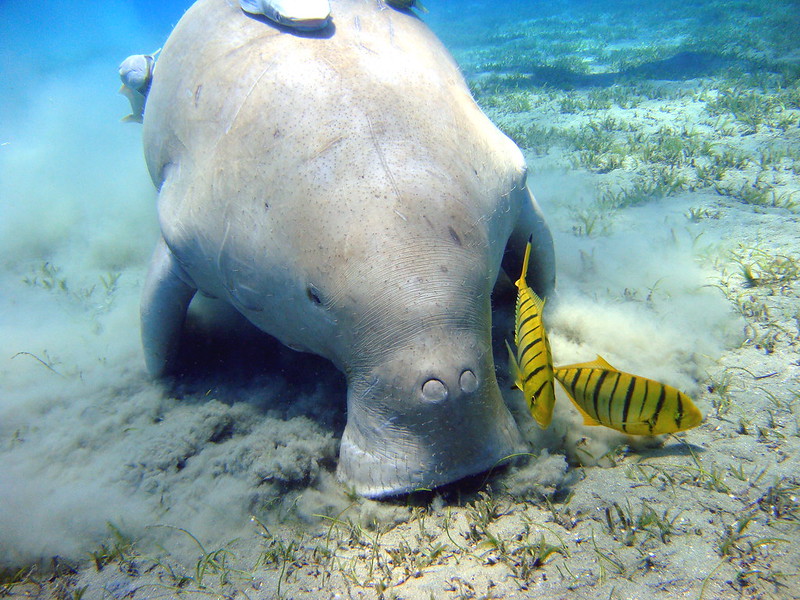
Diminishing sea-grass beds in Thailand are driving Dugong population decline. The alarming increase in emaciated dugong deaths along Thailand’s Andaman coast prompted scientists to investigate the reasons behind their decreasing populations. Last year’s losses were more than double the annual average recorded between 2019 and 2022, and research has revealed that at least 40% of these deaths were likely due to starvation as a result of seagrass die-off; the species primary food-source. As a result of this, Dugongs need to venture into deeper waters to find food, where they can be killed by boat strikes and fishing bycatch. Marine Ecologist Petch Manopawitr stated that if mortality rates continue, Dugong are likely to be extinct in just a few years.
Butterfly Conservation have renewed the lease on a vital nature reserve on the South Downs. Magdalen Hill Down, owned by The Church of England, has been managed by Butterfly Conservation for three decades, during which they have transformed it from scrub and farmland into one of Hampshire’s richest chalk grasslands. It is now one of the top ten sites in the country for butterflies and is home to over 30 different species, including the Adonis Blue, Green Hairstreak and crimson Cinnabar. Official figures released last week revealed that 2024 was one of the worst years on record for UK butterfly populations, so it is as vital as ever to provide these habitats. The renewed agreement with the Church Commissioners collates two previous leases and allows Butterfly Conservation to continue its conservation work across the 46-hectare site.
Environment
Northern Ireland’s richest nature sites require urgent action. The Office for Environmental Protection has revealed that thelaws put in place to identify and manage protected sites in Northern Ireland is falling short. As a result, the condition of these priority conservation sites is deteriorating, with the number of sites in ‘favourable condition’ having declined from 61.7% in 2008 to just 51.5% in 2024. The report concluded that improving the protection and preservation of nature requires better implementation of existing laws for priority conservation sites, as the legal framework itself is not the primary issue.
A recent report by the British Ecological Society has evaluated the impacts of regenerative agriculture. The study determined that while regenerative practices can enhance soil health and biodiversity, these practices alone are unlikely to be sufficient. Instead, the research indicates that they are most effective when integrated within a comprehensive system that prioritizes minimizing soil disturbance and bare soil, increasing farm diversity, incorporating livestock, and utilising nature-based methods in place of synthetic inputs. Although the report’s authors emphasise that a whole-system approach yields the most significant benefits, they also encourage farmers to adopt even a few of these practices.
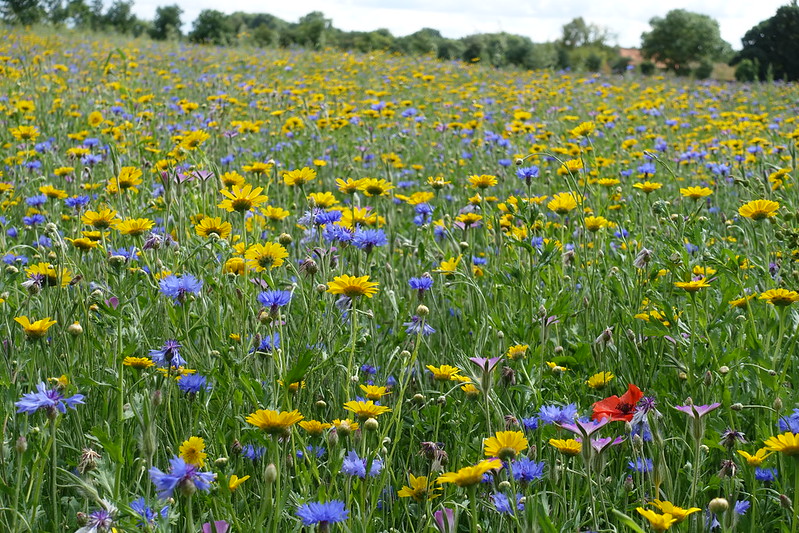
Over 125,000 wildflowers have been sown across Cumbria in two years thanks to Cumbria Wildlife Trust. With the help of thousands of volunteers, they have also restored 159 acres of grasslands, eight acres of hay meadows, and planted 16,000 plants in a variety of sites around Kendal and Milnthorpe. It is hoped that the restoration of these rich habitats will support a wealth of pollinating insects and increase the areas biodiversity.
Conservationists raise concerns about the proposed budget cuts for the Darwin Plus fund. The UK’s Overseas Territories are home to over 32,216 native species, which represents 90% of all British biodiversity, including the rare Wilkins’ Bunting and endangered St Helena Plover. Many of the conservation projects undertaken across these sites have only been possible due to the government’s Darwin Plus scheme, which commits £10 million annually to support a host of critical conservation projects in these territories. The UK government is set to decide on the future of this vital funding as part of their summer Spending Review, and leading UK charities are urgently highlighting that any cuts to Darwin Plus would have catastrophic effects on the future of the flora and fauna found in these unique habitats.
 The NHBS Moth Trap is a highly portable option for moth trapping, tested and approved by Butterfly Conservation.