Author Q&A with Jeremy Biggs & Penny Williams: Ponds, Pools and Puddles

Ponds, pools and puddles are a common sight in our landscape and play a very important part in sustaining wildlife. In Volume 148 of the New Naturalist Series, the authors provide a comprehensive survey of the variety of plants and animal life for which they are a habitat, and discusses the way in which they are used, their importance, and compares their major variations in life cycles. Ponds, Pools and Puddles makes an invaluable contribution to raising awareness of these popular, yet frequently underrated freshwater habitats and gives them the attention they rightly deserve.

Jeremy Biggs and Penny Williams work for Freshwater Habitats Trust, a wildlife conservation charity focused on reversing the decline in freshwater biodiversity. They have been involved in numerous research projects, publications and conferences on the ecology and management of ponds and other freshwater habitats.

We recently had the opportunity to talk to Jeremy and Penny about how they became interested in ponds, whether they think technological advances will play an important role in future pond research and more.
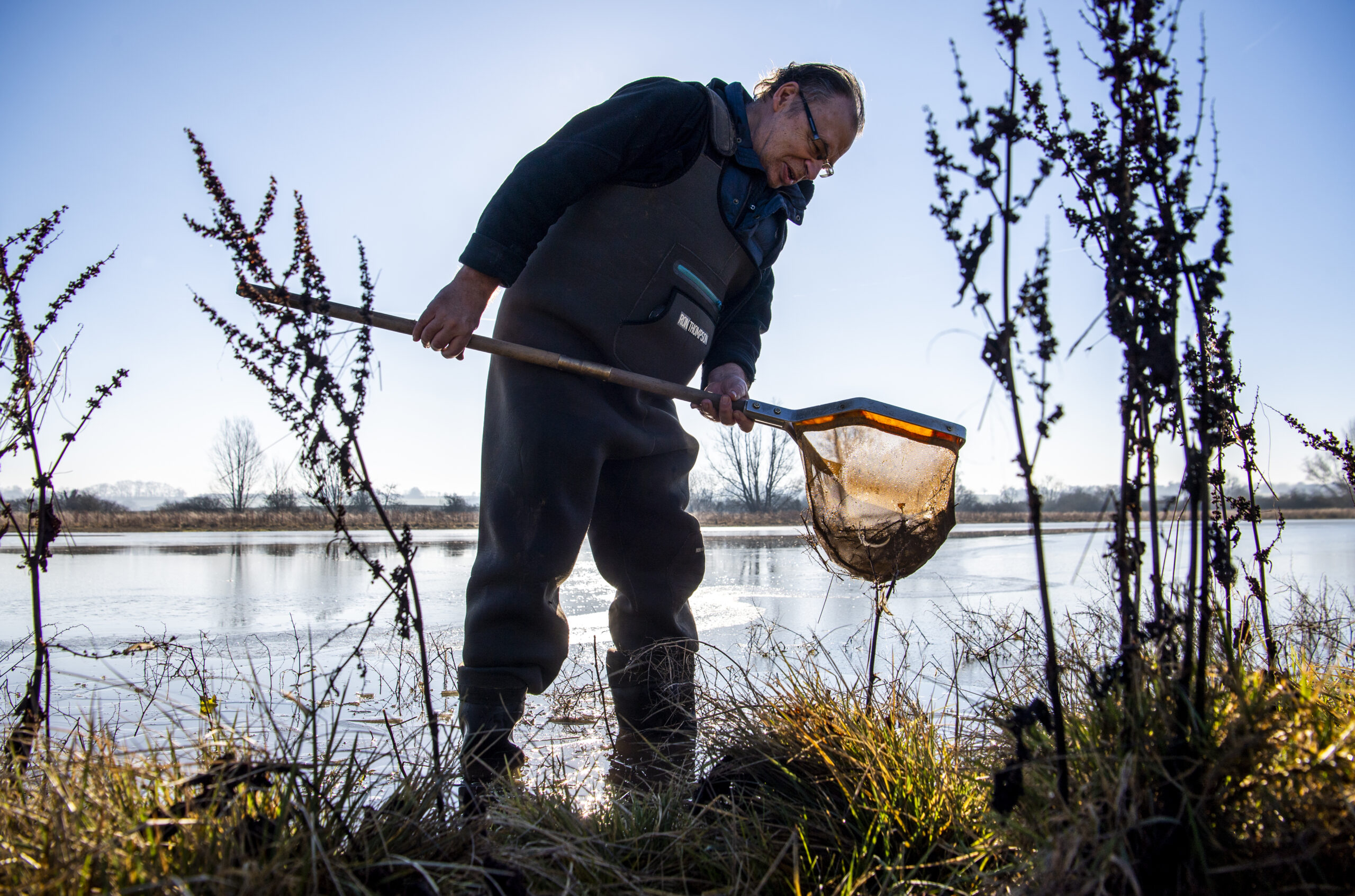

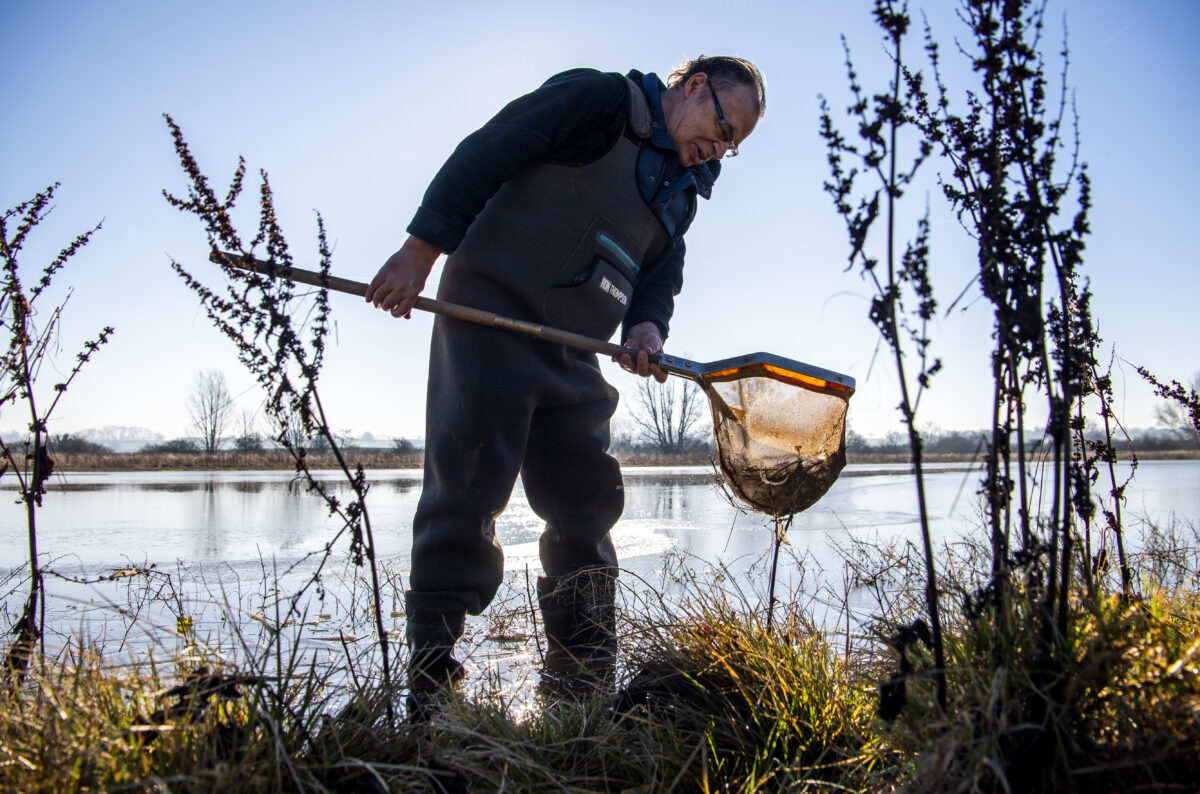
Jeremy Biggs wearing wellies on the side of a large pond looking at something he has caught in a net on a sunny day with clear, blue skies.
Jeremy Biggs

Can you tell us how you both became interested in ponds and pond life?

P: I had a wonderful early experience at primary school: we had a trip to a local pond in Southborough, Kent and caught a Three-spined Stickleback. The teacher brought a couple back to a classroom tank and I watched in amazement as the beautiful azure blue and orange male made a nest and fanned the eggs with his tail.

J: I was interested in wildlife from my teens, particularly birds, but it was at university (Royal Holloway, University of London) that my interest in freshwater was awakened. Crucial for me was an inspirational teacher – the late Dr Nan Duncan – who ran one of the best courses there was on freshwater biology.

I found your definition of a pond interesting as there appears to be so many ways of deciding what constitutes a pond. Can you talk us through the process that you went through to decide on the parameters for your definition?

P: After working on ponds for a couple of years it became clear that we needed an easy-to-use definition, particularly to deal with the inevitable question: is it a pond or a lake? It also had to include temporary ponds, which were hardly recognised in the UK at the time. So, at Freshwater Habitats Trust we went for an area-based definition because that’s easy to measure. We set 2 ha as the pond/lake cut off, as this seemed to best capture the difference between the two. The ‘wet for at least four months of the year’ is included as this is roughly the time needed for ponds to develop a wetland plant community. That means that you should be able go to a basin that’s wet or dry at any time of year and tell if it is a pond. In practice, the lower limit is a little flexible: we use 1m² to include tiny pools and garden ponds, but for practical reasons use 25m² for national counts of ponds where it’s impractical to count every little countryside puddle.
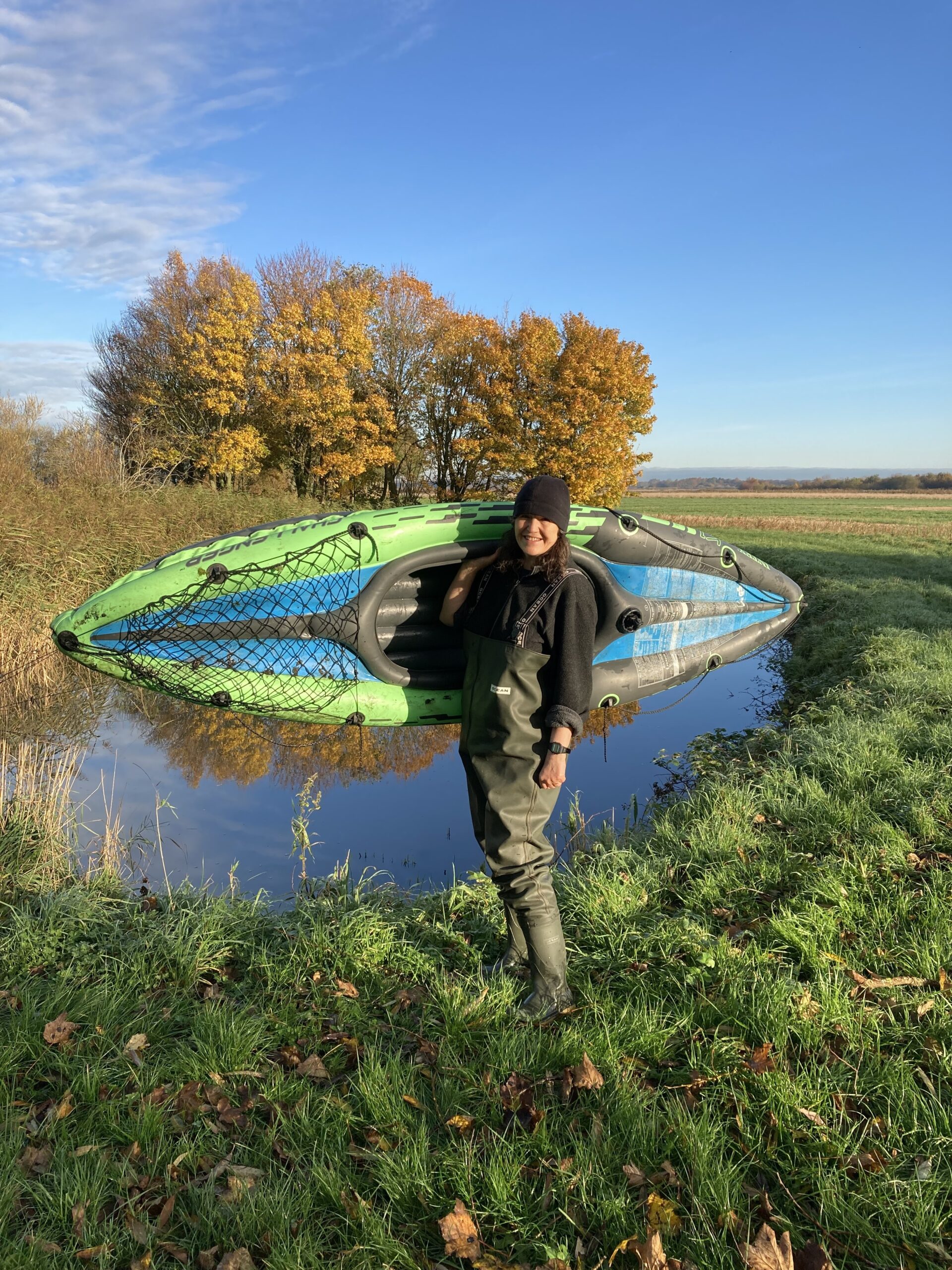
Penny Williams carrying an inflatable kayak by a pond on a sunny day with blue skies.
Penny Williams

It’s clear that the first national pond survey paved the way for gaining a more in-depth understanding of pond classifications, species, ecological preferences and more. What do you think the next step is in gaining an even greater understanding of ponds, and do you think modern, technological research methods will play a big part in this?

P: Current policy, legislation and general awareness of the importance of ponds now lags way behind our knowledge of pond ecology – so although there is still an enormous amount more to find out about pond biology, I think the greatest need is for knowledge that shows the importance and value of ponds for protecting freshwater biodiversity. For example, we need evidence about how high-quality pond creation and restoration can be used, at a landscape scale, to maintain healthy freshwater metapopulations, prevent extinctions and enable the spread of species that may be increasingly isolated by pollution and climate change. This is a real focus for Freshwater Habitats Trust, where we’ve been championing the importance of small waterbodies – and ponds in particular – for more than three decades.

Modern technology will undoubtedly play a part in this: DNA, and eDNA in particular, may be a game changer, although we are some way off from using it for the purpose that I would love: routine monitoring of all waterbodies (rather than just rivers) to get a real understanding of what is happening to freshwater biodiversity in our landscapes and how we can best address that.

New technologies are always exciting but, to be honest, I think the main thing we need at the moment is publicity, publicity, publicity. Widespread knowledge and appreciation at all levels of how wonderful these little waterbodies are.

J: More than a particular technological solution, what we really need is funding for ‘National Pond Survey 2’, led from a conservation perspective and, as we’ve been doing for the last 30 years, generating and testing the ideas that Ponds, Pools and Puddles summarises. There’s so much to learn here: are ponds still declining in quality? What’s the effect of pond management? How do ponds, lakes, streams, wetlands and rivers interact? What about the microbiota which we know next to nothing about (that is something eDNA will help with)? How is climate change affecting ponds?

It was fascinating to learn that there is a much greater variety of species found in ponds in comparison to river communities. How important do you think ponds are in the recovery of nationally scarce or Red Data Book species?

J: The very wide variety of nationally scarce and Red Data Book species found in ponds means that ponds are absolutely vital for the recovery of these species. The special virtue of ponds is that, with their small catchment, we can still find large numbers of very high-quality ponds in the landscape, or create new, near pristine, clean water ponds in areas protected from pollution. This is all much more difficult for streams, rivers and many lakes with their much bigger catchments. There’s no doubt that creating and restoring networks of clean water ponds could put many of our Red Listed freshwater species on an upward trajectory. Indeed, this is one of the aims of Freshwater Habitats Trust’s vision to build the Freshwater Network: to reverse the decline in freshwater biodiversity. This will see us creating a network of wilder, wetter, cleaner, more connected freshwater habitats, and ponds play a big part in this concept.
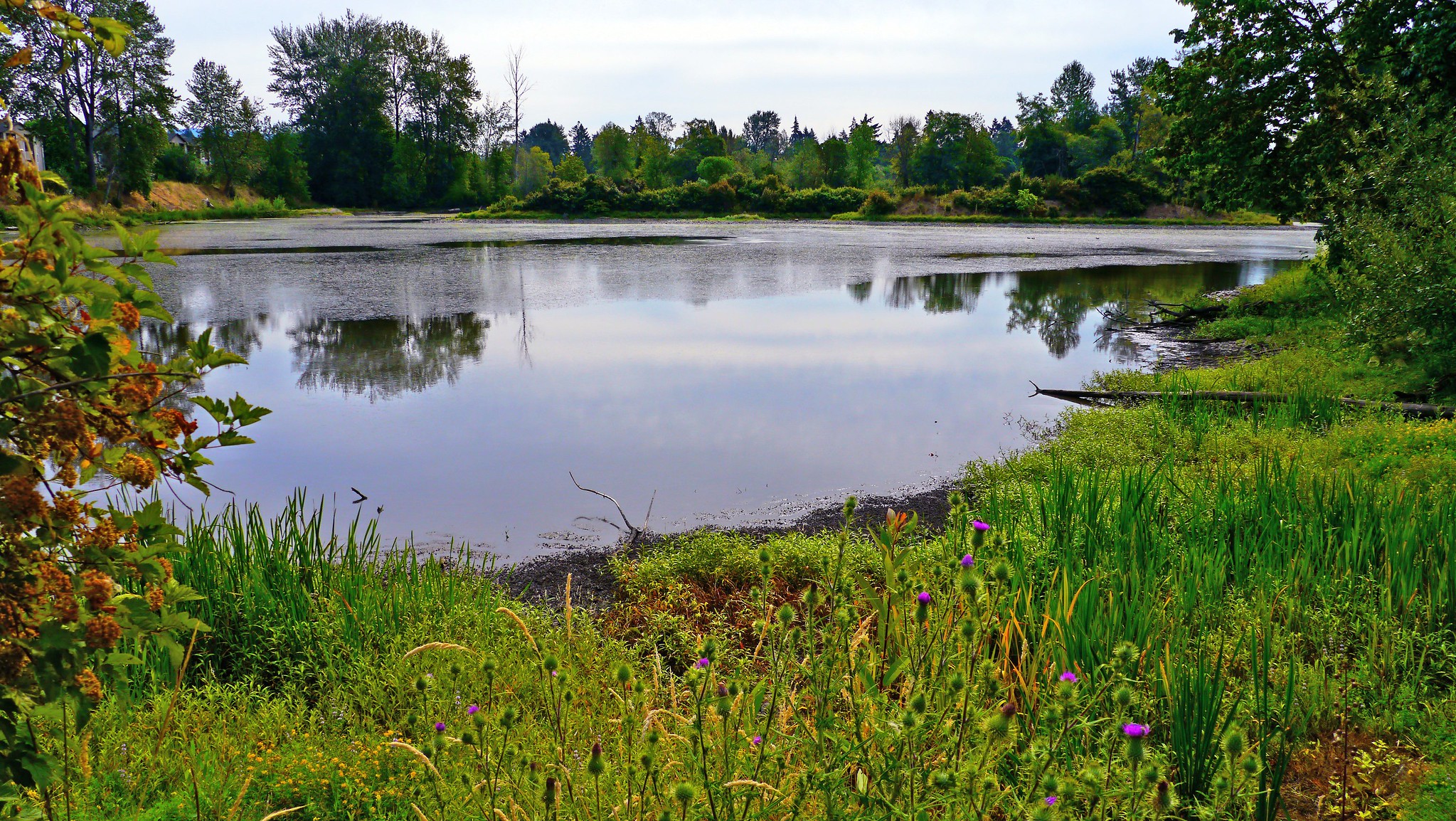
Delta Pond in Eugene, Oregon surrounded by trees, plants and flowers on the shoreline.
Delta Pond in Eugene, Oregon by Rick Obst, via flickr.

To what extent do you expect climate change to affect the ecological formation and chemical makeup of natural ponds in the future?

P: The effects of climate change on ponds are undoubtedly going to be complex, varied, unexpected and unpredictable. For example, in the Water Friendly Farming project, where we’ve been monitoring the same ponds for over a decade, a clear (but not predicted) result is that shallow ponds are being rapidly encroached by marginal wetland vegetation in dry years, and this vegetation persists so that open water is being lost. However, the effect differs: where ponds are grazed this has been beneficial, sometimes enabling uncommon plants like Orange Foxtail (Alopecurus aequalis) to spread to lovely new poached drawdown zones. In other cases, it has been sad to see little ponds with water buttercups be replaced by just wetland grasses like Sweet-grasses (Glyceria spp) and Creeping Bent (Agrostis stolonifera).

J: Climate change is going to have a big impact, but the effects are going to very difficult to predict. Ponds are so varied, it’s inevitable that their responses will be too. It’s possible to make sweeping generalisations (pollution impacts get worse, many temporary ponds disappear) but there’s a good chance these will wrong. It’ll be crucial to have a good set of observations of what is actually happening to ponds. In the meantime, the priority should be to use ponds to put as much clean water as we can back into the landscape.

What is the most interesting finding that you have come across while researching ponds, pools and puddles?

P: For me it’s undoubtedly been the opportunity to riff on my geological background and delve into the ancient natural processes that shaped ponds in the past – and which still has so much to teach us about ponds (and other freshwaters) today. For example, I love the fact that almost all of today’s wetland plants evolved in landscapes that had already been shaped by grazing and poaching processes for over 200 million years – no wonder many wetland plants benefit from grazing and the presence of muddy ground! And, at a time when many people (including scientists and policymakers) still undervalue ponds as man-made artificial features, some of world’s best-preserved evidence of early life in terrestrial landscapes (the Devonian Rhynie cherts in Scotland which are c400 my) reveal an environment that is full of ponds with the fairy shrimps and tadpole shrimps swimming amongst stoneworts.

J: For me, it’s been the chance to bring together so much information that we simply haven’t had a chance to publish anywhere else. With the amount of time it takes to publish research, we are extremely selective about what we write up in papers. Only the most important results ever make it into print. It’s also allowed us to look at groups we don’t work on so much ourselves (such as the microalgae) and see how these reinforce many of the ideas about ponds from the more obvious bigger plants and animals. It’s also nice to get into the book the truth that many of our biggest and most famous wetlands, like the Coto Donana in Spain, are actually massive pond complexes comprised of over 3,000 temporary ponds!
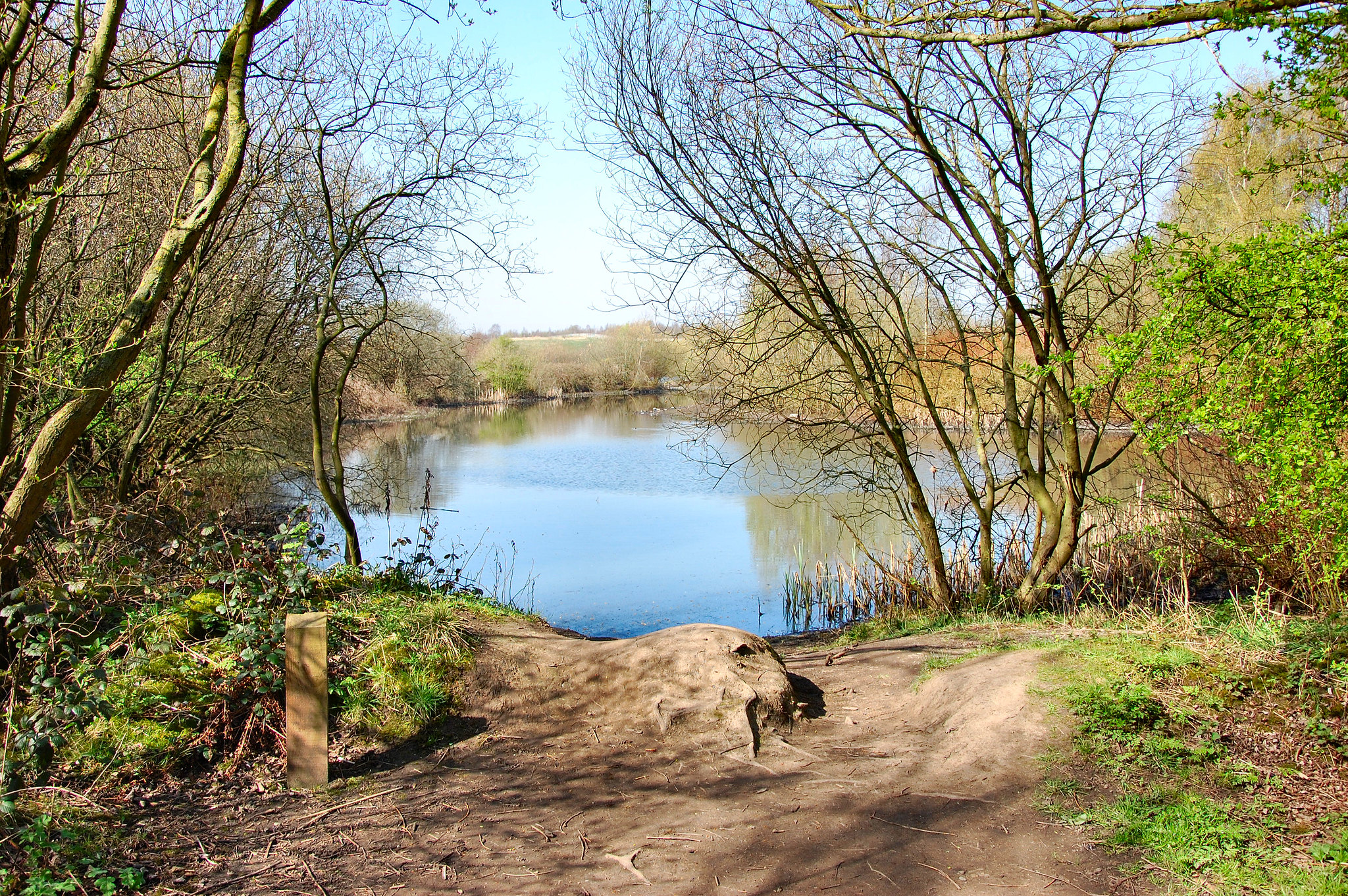
Pennington Flash Pond through the Trees.
Pennington Flash Pond through the Trees by Ronald Saunders, via flickr.

Are either of you working on any other projects that we can hear about?

J: Freshwater Habitats Trust is really busy at the moment! Amongst other things we are:

– Launching the Freshwater Network: this is our plan to restore freshwater biodiversity taking account of freshwaters, including the critically important small (standing and flowing) that make up most of the water environment but have been largely overlooked for 100 years.

– Developing the network in key regions to protect and restore freshwater biodiversity in some of our most important freshwater landscapes like the New Forest, The Brecks, in the catchment of the R. Thames and in the Yorkshire Lowlands.

– Working with colleagues in Europe and South America looking at pond biodiversity, ecosystem services and climate change as part of the EU Horizon 2020 PONDERFUL project.

– Beginning research on the value of pond buffer zones in a project for Natural England and assessing the role that eDNA can play.

– Creating thousands of new ponds with Amphibian and Reptile Conservation as part of the Newt Conservation Partnership – created for Great Crested Newts but with much wider benefits for wildlife and, critically, monitoring the effects so we can tell whether it’s really making a difference.

– Continuing catchment research which looks at all of the water environment. Fortunately more and more people are realising that in every landscape, small waters are a lifeblood.

– and so many others….
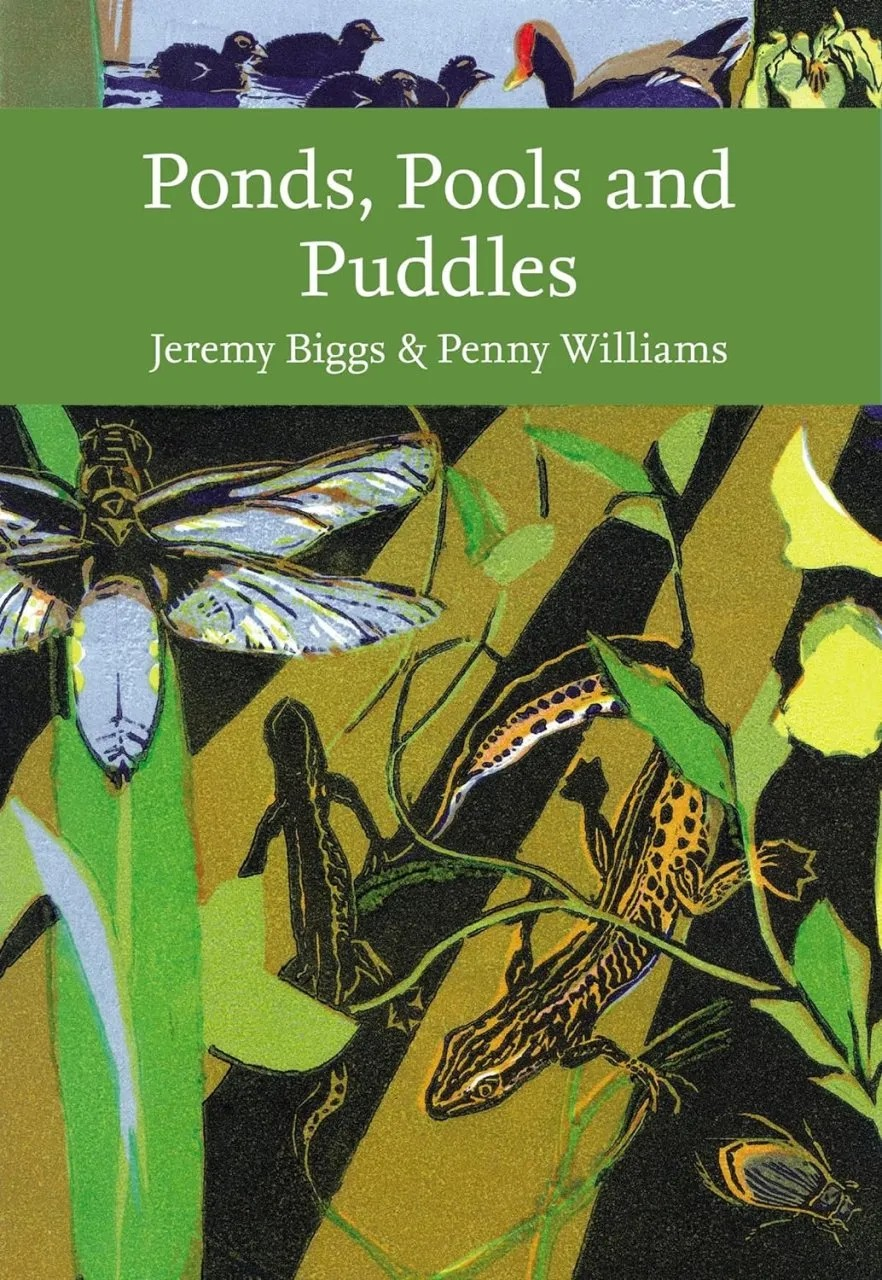


Ponds, Pools and Puddles is available to order from our online bookstore here.
This week in biodiversity news – 18th March 2024

Climate 

The price of bananas is set to rise permanently as a result of climate change, according to experts. This follows a noticeable absence of the much-loved fruit in several UK supermarkets within the past few weeks due to sea storms. Senior economist at the UN’s Food and Agricultural Organisation states that increasing temperatures are compounding the impacts of fast spreading diseases, including the Fusarium Wilt TR4 infection, which continues to pose an enormous threat to supply chains. Once a banana plantation has been infected with the virus, it kills the trees, therefore halting production. The infection is very difficult to eradicate once present. Increases in more extreme weather conditions, such as widescale flooding and strong winds, allow the virus to spread more easily and may be why it has now been detected across four continents. 

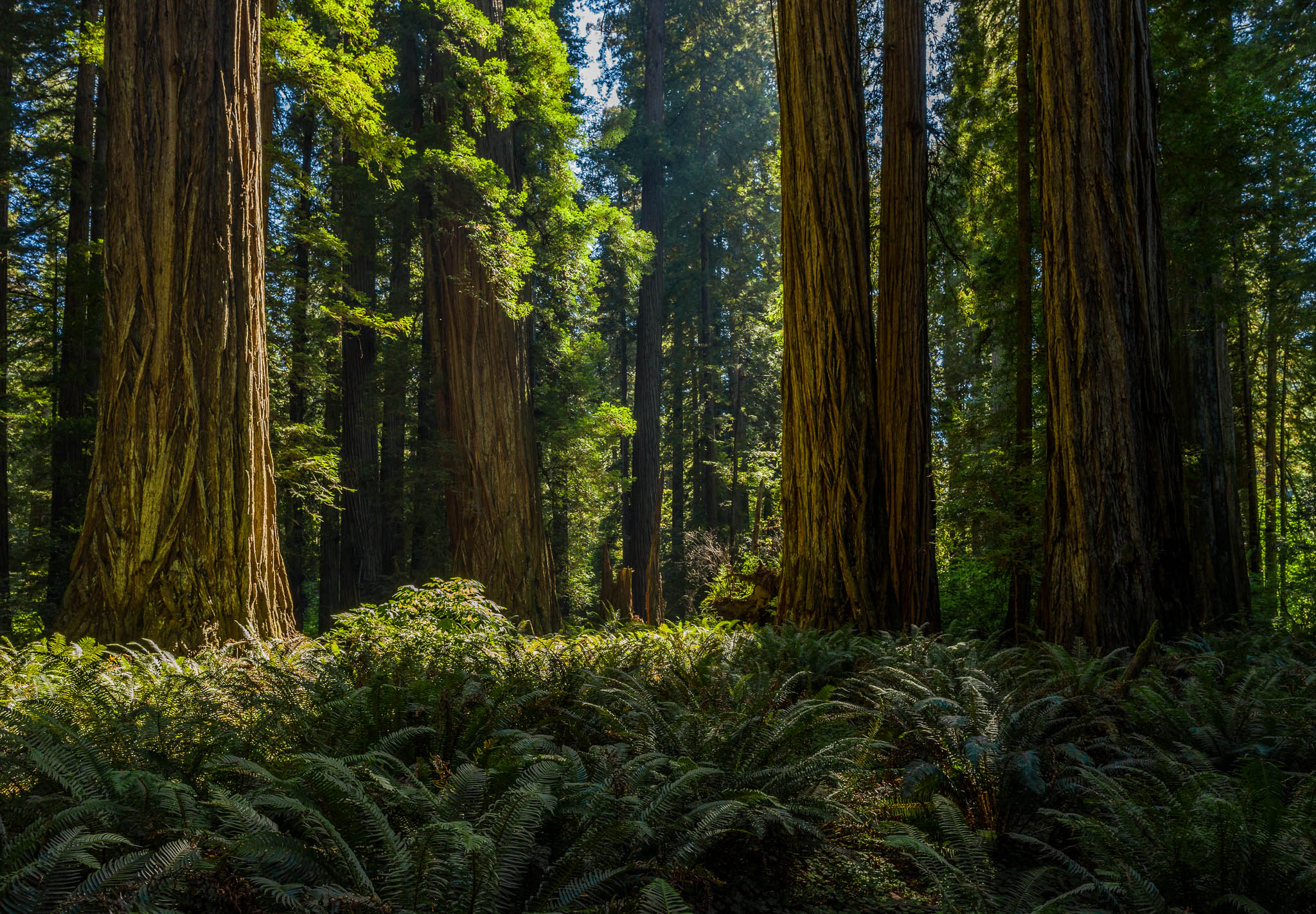
Ground level image of Redwood Trees with the sun shining on the bark and ferns covering the ground.
Redwoods.jpg by David Wood, via flickr.

The world’s largest species of tree is thriving in the UK due to the moist climate, and now outnumbers those in their native home of California. A study into Giant Redwoods (Sequoiadendron giganteum) has revealed that those imported to the UK around 160 years ago are growing at a similar rate to those in the US. However, as these trees are still young, they are 39% smaller than their American counterparts. Due to their sheer size, it has also been revealed that they store large quantities of carbon dioxide, with those measuring 45m tall in Wakehurst storing between 10-15 tonnes of carbon per tree. Whilst the trees are flourishing in the UK climate, there is little chance of them invading native forests as they require very specific conditions to seed. 

Environment 

An African project aiming to replace barren lands with wildlife-rich, biodiverse forests has restored more than 41,000 hectares of woodland in ten years. Trees for Future (TREES) is an organisation that aims to restore landscapes in developing communities, while also combating poverty. Following the launch of their mass reforestation campaign in 2015, they have worked with locals to plant tens of millions of trees across nine African countries. They also intend to create 230,000 jobs by 2030 via their ambitious initiative. Working with thousands of smallholder farmers for a duration of four years, they provide training, tools, seeds and grants to allow locals to plant biodiverse woodland and create environments that are self-sustainable for both communities and nature. 

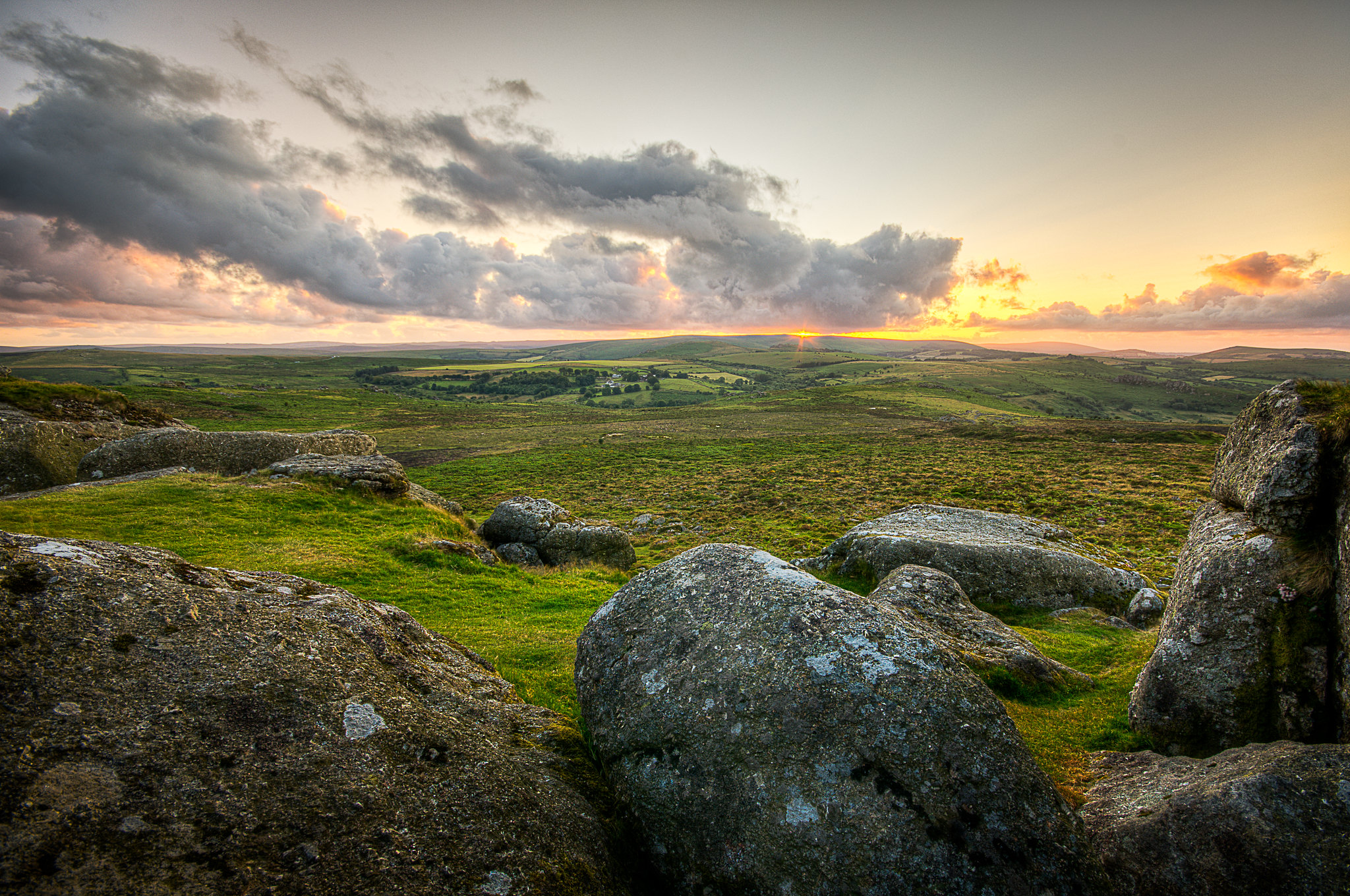
Dartmoor sunset taken from behind some rocks looking over Dartmoor's heathland with clouds in the sky and the sun setting behind them.
Dartmoor sunset by Simon Vogt, via flickr.

The government has pledged a £25m scheme to restore critically endangered habitats for England’s fastest-declining wildlife. In light of the recent announcement of the EU’s first nature law to restore 30% of degraded ecosystems by 2030, this government funding will help improve over 3,300 hectares of land, including 49 hectares of wetland around chalk river habitats in south-east England. The ‘species survival fund’ will also support schools, farmers and landowners across mid-Cornwall to ensure woodland, heathland and acidic grassland restoration across the moors, and help to create vital nature corridors across the Medlock Valley, with the collective aim of restoring nature and supporting iconic species such as Water Voles, waxcaps and rare Great-crested Newts. 

Science 

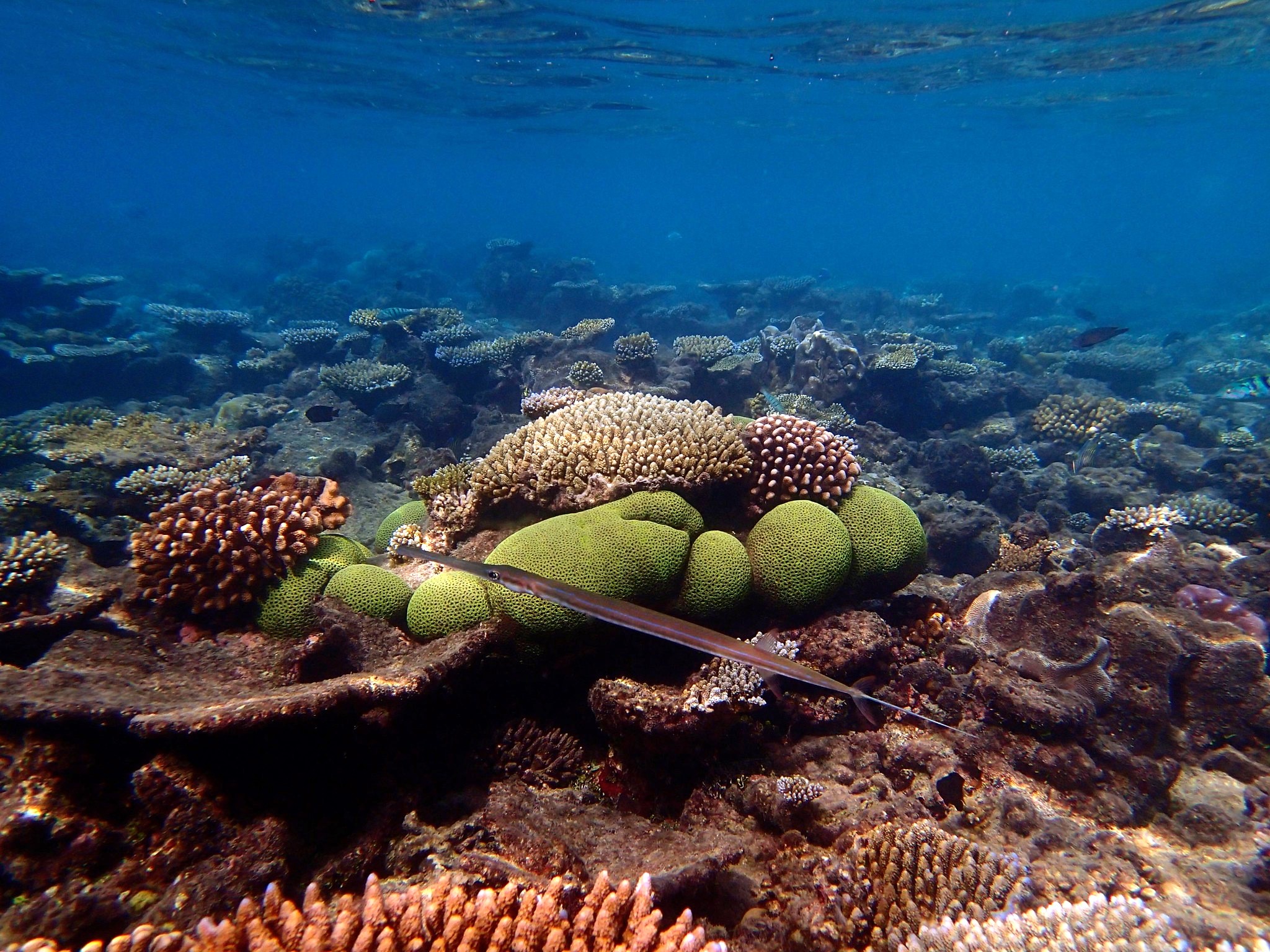
According to a new study, playing healthy reef sounds through underwater speakers could save damaged coral reefs. Fifty percent of the worlds coral reefs have been lost since the 1950s. However, scientists working in the Caribbean have revealed that simulating healthy coral reef environments through soundscape recordings may be the key to recovery. Working across three reefs, each at different stages of degradation, the team of scientists installed speakers at all three sites, but only played recordings taken from a thriving reef at one: Salt Pond reef. Results showed that, on average, 1.7 times more coral larvae settled there than on the other two sites. The rate of settlement decreased further away from the speakers, suggesting that the sounds played an important role in larval retention. Research is now underway to understand whether other coral species respond in the same way, and to find out whether the corals thrive after settling. 

Bulbous green coral in a healthy coral reef with a red pointed fish swimming in the foreground.
More bulbous green coral by Ed Ralph, via flickr.

Pollution 

Air pollution levels throughout Europe have continually decreased over the last 20 years, despite increasing threats of climate change. Research conducted by the Barcelona Institute for Global Health studied 1,400 regions across 35 countries and have concluded that the two main forms of overall suspended particulate matter (PM2.5 and PM10) and nitrogen dioxide (NO2) have been falling annually throughout this period. PM10 has decreased annually by 2.72%, while PM2.5 dropped by 2.45% and NO2 levels reduced by 1.72%. Even so, according to the WHO, 98% of Europeans are living in areas with unhealthy levels of PM2.5. These tiny pollution particles are known to cause an array of health problems, and are estimated to be linked to over 400,000 premature deaths a year across Europe.

The NHBS Guide to UK Snail Identification

Snails are a common feature in our gardens and parks. You may have particularly noticed them if you have a vegetable or plant patch, as they feed on the leaves, flowers and fruits of many of our food plants. There are over 40,000 species of land snail, although only around 120 occur in Britain.  

There are several useful features for identifying the correct species. The overall shape, in terms of the ratio of height to breadth, is important, as species can vary between a wide, round, flattened shape to tall and thin. The shape, colouration and thickness of the mouth of the shell can often be used to discern between visually similar species. Shell colour and pattern of the shell can help. However, this can be varied between individuals of the same species. Empty shells can also have a different appearance than those with the snail inside. Other useful features can include the direction and number of whorls, shell thickness, surface sheen and texture. 

Very little equipment is needed for identifying snails, but a hand lens can help for smaller specimens, particularly when counting whorls or looking at shell textures. Specimen pots or trays can help you to safely store species while you study them, and forceps are useful for collecting and moving smaller, more delicate species.   

Garden Snail (Cornu aspersum)

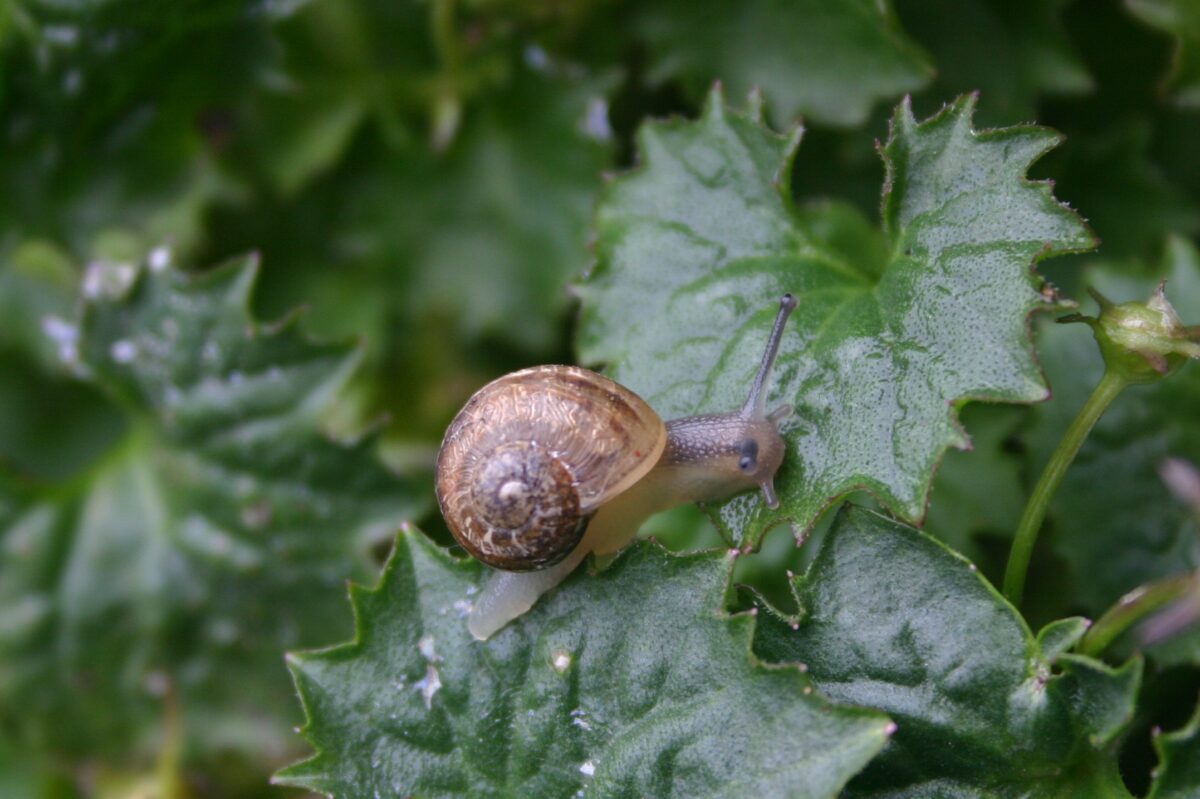
Garden Snail on a leaf in a garden.
Snail in our garden by Les Pounder, via flickr.

Distribution: Common throughout lowland Britain. 

What to look for: This is a well-known species that most people will have seen in their gardens or local green spaces. The garden snail has a thick shell, with a mottled brown, red, and yellow colouration. Its shell aperture is large and has a thickened white lip. It has around 4.5–5 whorls and its thick shell has a rough, wrinkled surface. The umbilicus, the depression or hole at the centre of shell whorls, often on the underside, is completely sealed by the lip. 

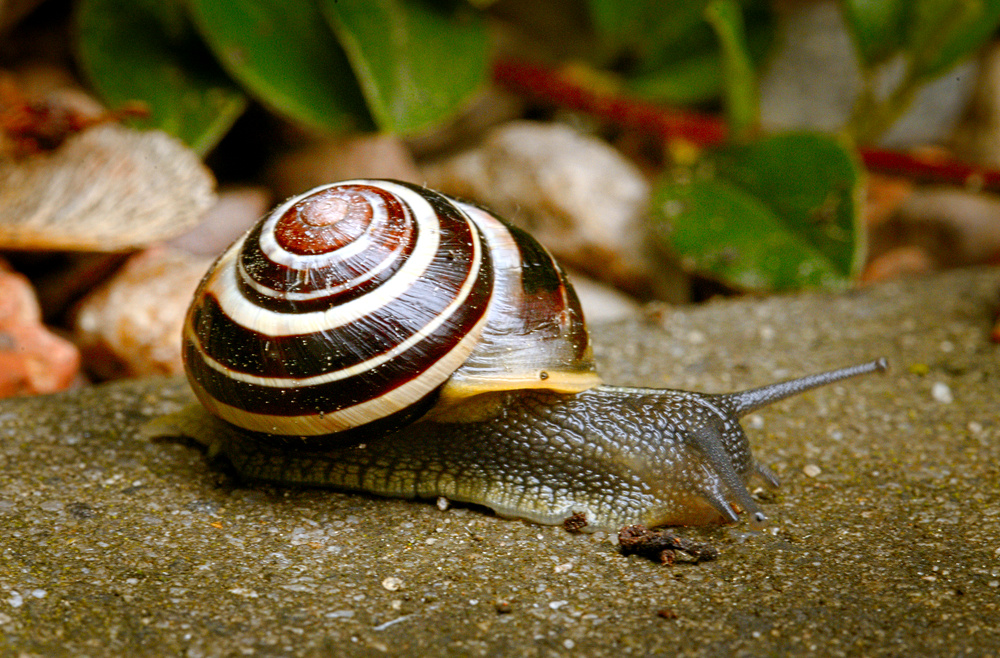
White-lipped Snail (Cepaea hortensis)

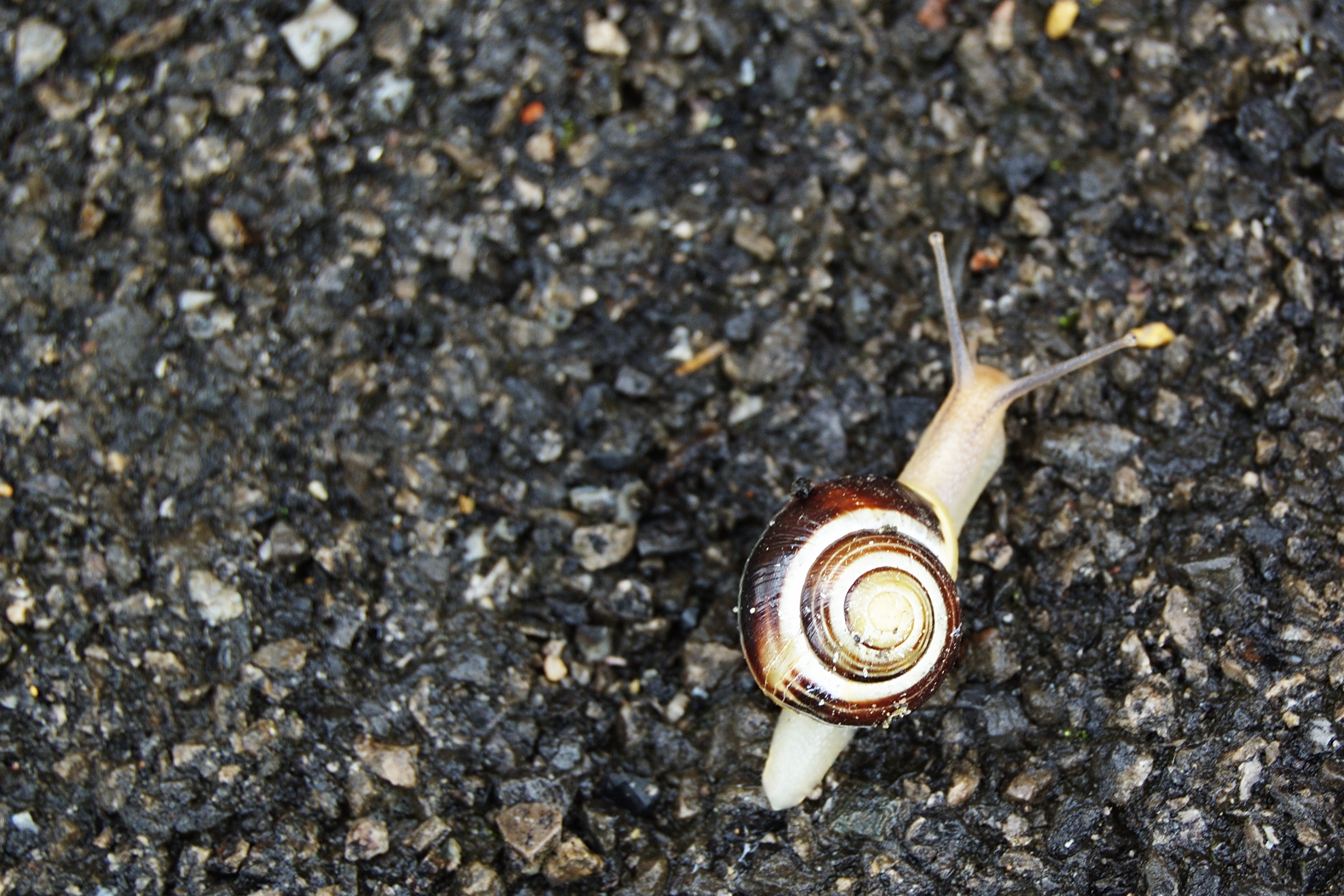
White-lipped snail on concrete by hedera.baltica.
White-lipped snail by hedera.baltica, via flickr.

Distribution: Widespread across Britain, but mainly found in coastal areas in Scotland. 

What to look for: This species has a glossy, smooth shell that is usually a yellow colour. However, individuals can be pink, brown or red. The number and presence of dark spiral bands can vary but there is no more than five. This species most often has an obvious white lip around the shell aperture.  

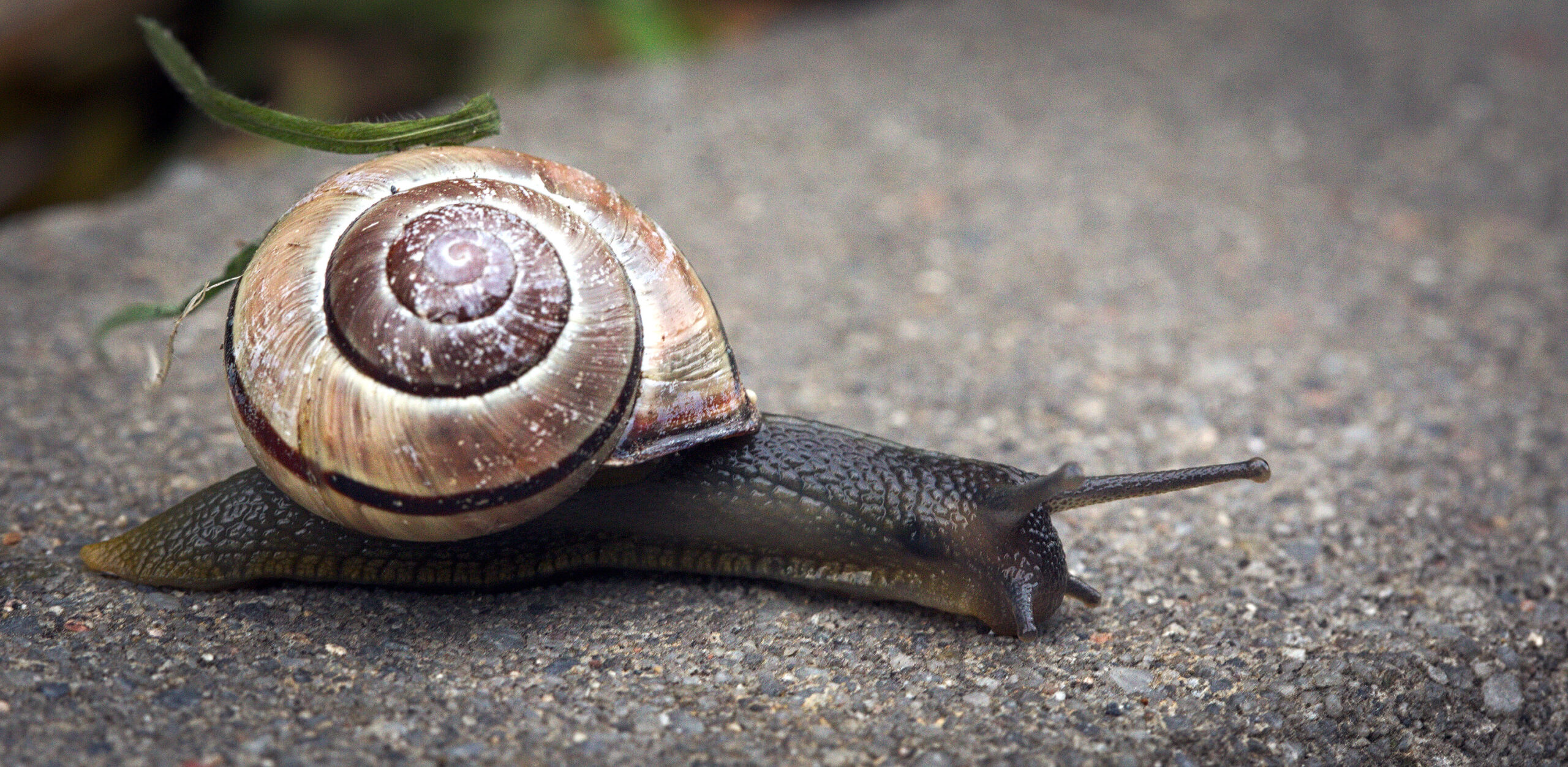
Brown-lipped Snail (Cepaea nemoralis) 

Brown-lipped snail travelling across a concrete pavement.
Brown-lipped snail by hedera.baltica, via flickr.

Distribution: Widespread across Britain apart from the northern parts of Scotland. 

What to look for: The colouration of this snail is widely variable and can be yellow, brown or pink. The presence of the banded patterning is also variable and they can have up to five bands across their shells. Their shells have between 4.5–5.5 whorls, with a semi-glossy surface. There is usually a dark rim to the lip of the shell aperture.   

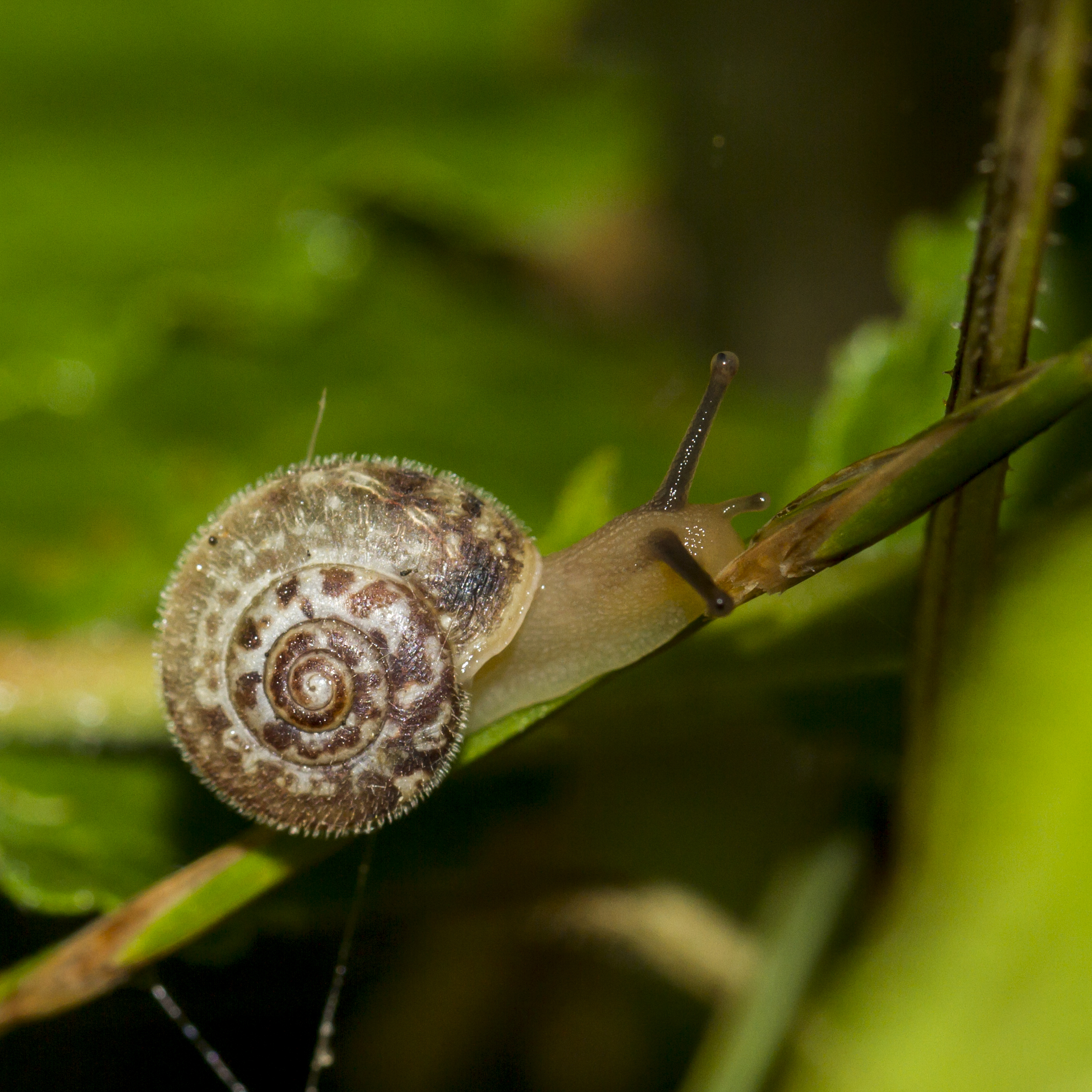
Hairy Snail (Trochulus hispidus) 

Trochulus hispidus - Hairy Snail climbing up a branch.
Trochulus hispidus – Hairy Snail by Nikk, via flickr.

Distribution: Widespread throughout Britain. 

What to look for: This snail can vary in colour from cream to brown. It sometimes has a light band around the shell aperture. The shell is quite flat and densely covered in short hairs, which can be worn away over time. These hairs have been found to help the snail to adhere better to wet surfaces.  

Copse Snail (Arianta arbustorum) 

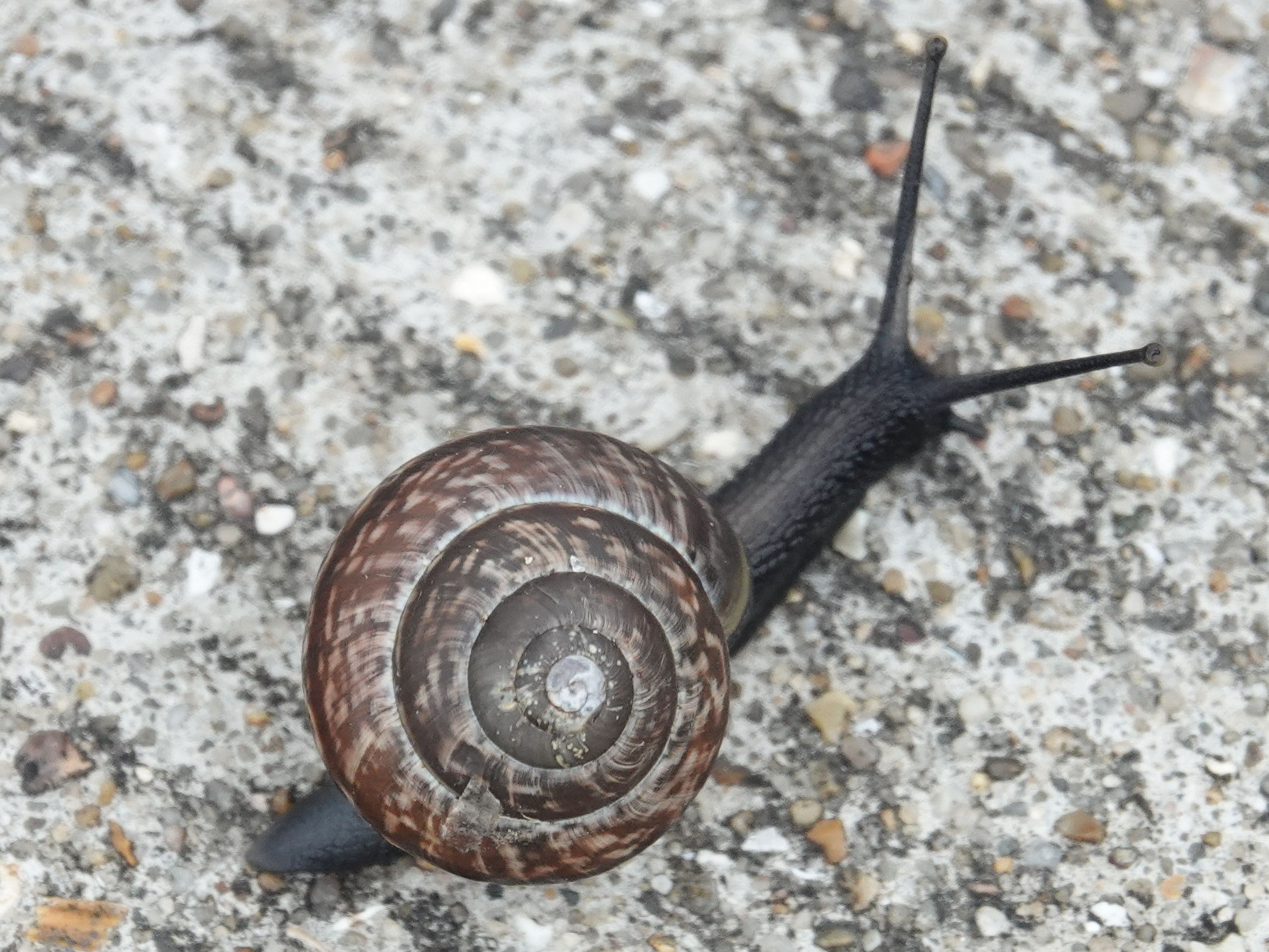
Heesterslak - Arianta arbustorum snail on concrete.
Heesterslak – Arianta arbustorum by Gertjan van Noord, via flickr.

Distribution: Widespread. 

What to look for: This species can grow up to 19mm. Its shell is a mottled brown with a thin band around the circumference, although its colour pattern can be highly variable. Its body is very dark and the shell aperture is a ‘C’ shape, often with a paler inside lip that can be bone-white. The shell has between 5–6 whorls and the umbilicus is a small crescent-shaped slit.  

Kentish Snail (Monacha cantiana) 

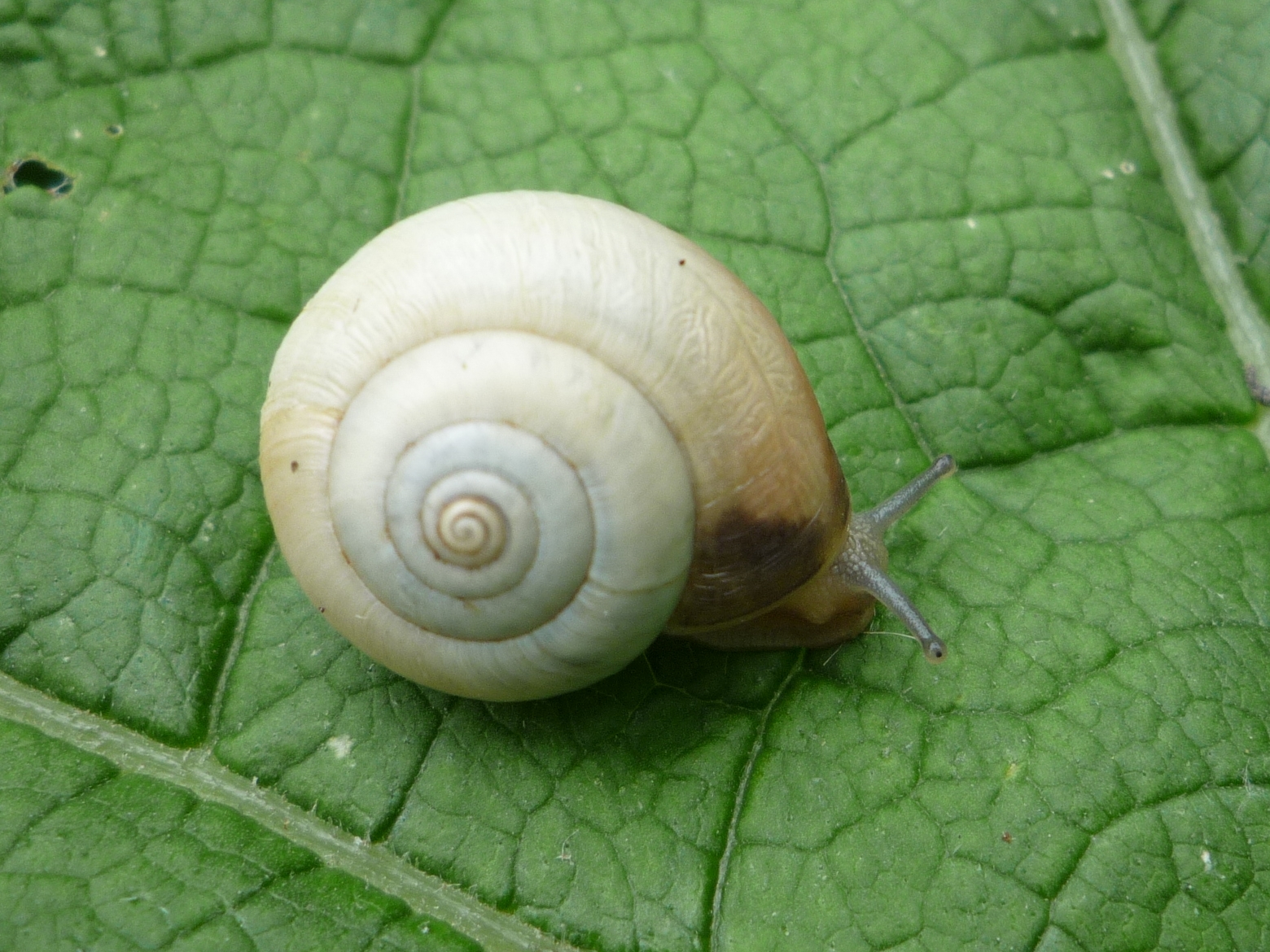
Kentish Snail (Monacha cantiana) on a green leaf.
Kentish Snail (Monacha cantiana) by Peter O’Connor, via flickr.

Distribution: Widespread across England, less common in Wales and Scotland. 

What to look for: This non-native species has a creamy shell with dark mottling. It often has a pale band around its circumference and a relatively small umbilicus. The body of the snail is a pale brown, with a darker skirting and sometimes darker tentacles.  

Striped Snail (Cernuella virgata) 

Snail at Walkley, Sheffield, crawling across stones.
Snail at Walkley, Sheffield by Tim Parkinson, via flickr.

Distribution: Widespread.  

What to look for: Also known as the vineyard snail, this snail has a pale shell, usually with dark spiral bands. The shell colouration and the number of markings are variable. It is an uncommon species, usually found in calcareous grassland, sand dunes and coastal grasslands.  

Pointed Snail (Cochlicella acuta) 

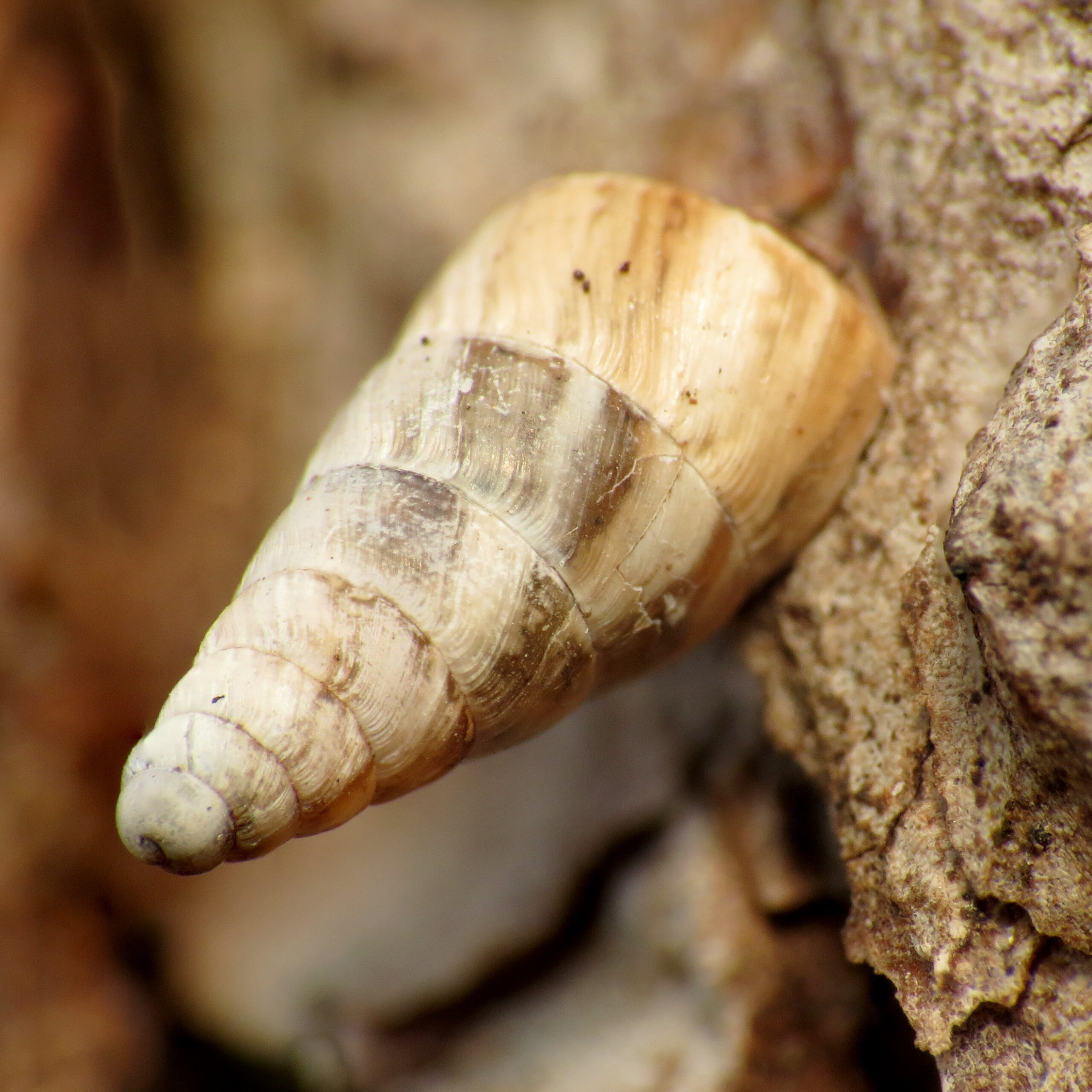
Pointed Snail attached to a tree.
Pointed Snail by Katja Schulz, via flickr.

Distribution: Found mainly in Wales, Ireland, and south and west England, it also occurs on some islands off of Scotland. 

What to look for: It has an elongated conical shell that tapers to a blunt tip. This shell varies in colour and markings but is usually a pale cream or off-white. It may have several bands of dark brown or black or be streaked with brown. 

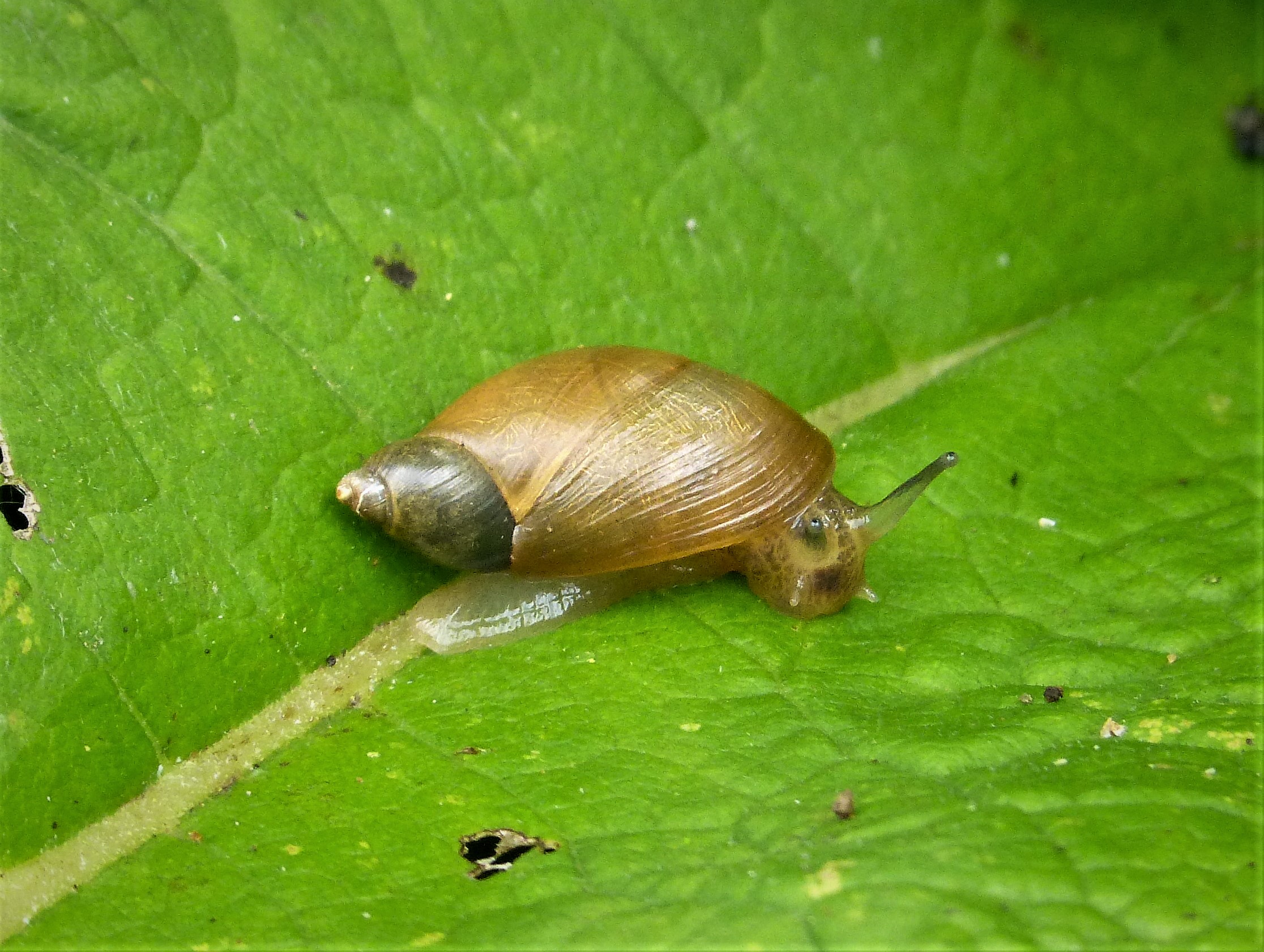
Amber Snail (Succinea putris) 

Succinea putris, large Amber Snail, on the fold of a green leaf.
Succinea putris. Large Amber Snail by gailhampshire, via flickr.

Distribution: Widespread throughout England and Wales, less common in Scotland. 

What to look for: Between 15–22mm tall and 7–12mm wide, the shell of this species can range from very light amber to a darker orange-brown in colour. Its shell also has a very large final whorl. The body of this snail is a pale colour with two dark lines running along the top of its head, extending along its tentacles to its eyes. 


The NHBS Guide to UK Slug Identification

Slug is the common name for gastropod molluscs that have little to no shell. Descended from snails, they usually have a vestigial shell that is internalised, but some have either none at all or a very reduced one, such as the shelled slug (Testacella scutulum), which has a fingernail-like shell over its rear end. There are over 30 species of slug in the UK. 

As they do not have full-sized shells, they’re prone to desiccation, so many species are most active during and after wet weather and spend drier times hidden in damp places such as under man-made structures, tree bark, leaf litter and rocks. They play an essential role in the ecosystem, similarly to snails, by eating decaying matter such as plant material and fungi, aiding nutrient cycling.  

A small number of slugs are considered serious pests to agriculture and horticulture, eating foliage, fruits, and vegetables. This gave rise to the widespread use of toxic slug killing chemicals, which often impacted other non-target species. Recently, however, the use of iron phosphate baits has emerged, as they are less harmful to other wildlife.  

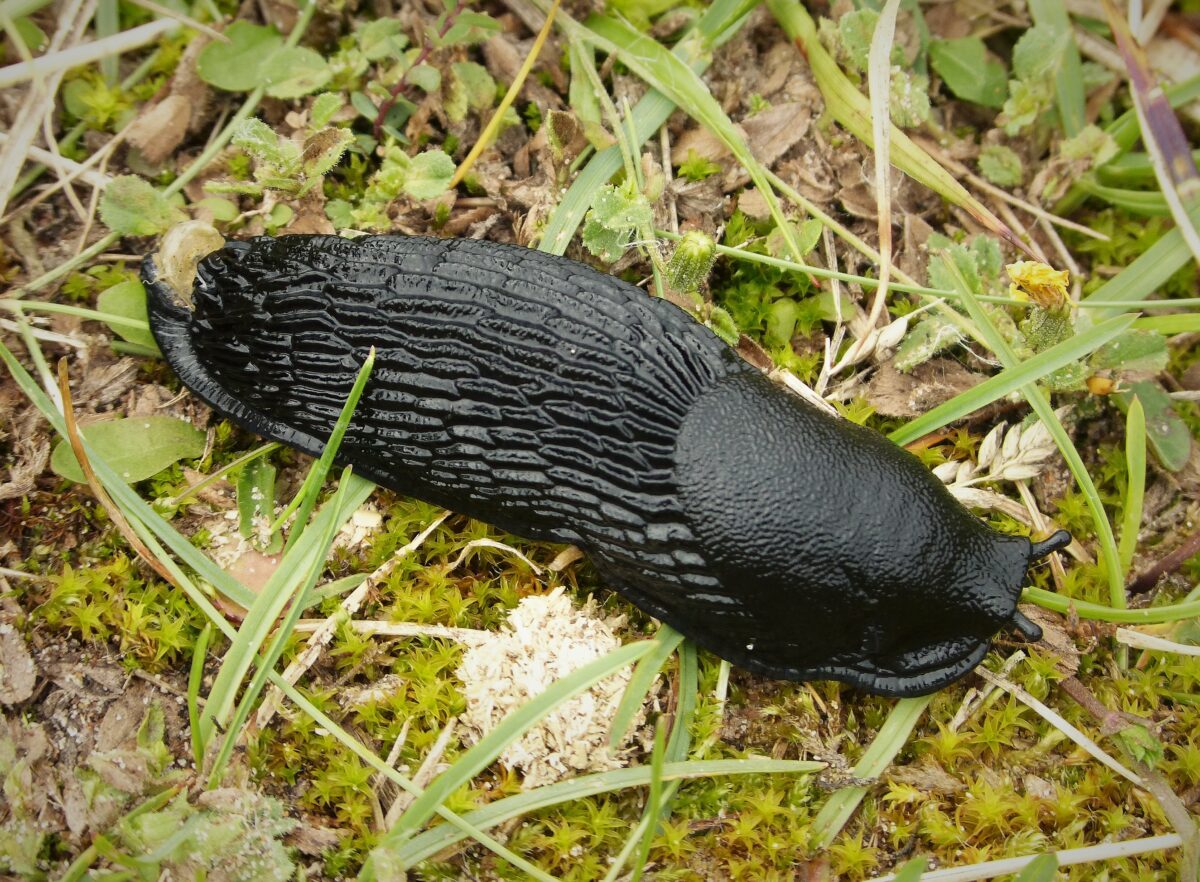
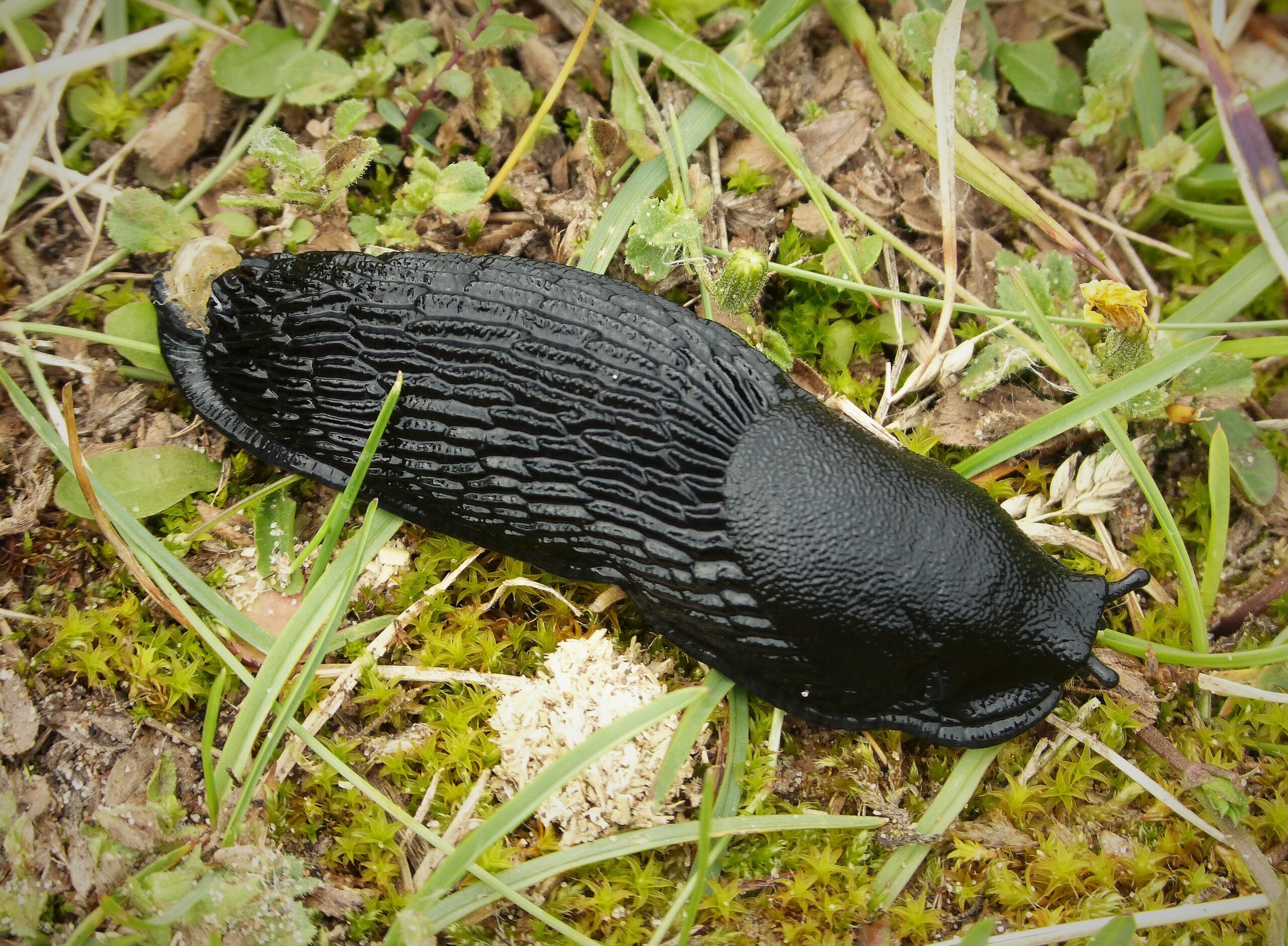
Black Slug (Arion ater) 

Arion ater. Large Black Slug, on grass.
Arion ater, Large Black Slug by gailhampshire, via flickr.

Distribution: Extremely common and widespread throughout Britain. 

What to look for: These species are large and vary widely in colour, including black, brown, grey, orange, reddish and green. It has long, coarse tubercles, the raised areas between the grooves on its skin, found on its side and back. Black slugs also have a pneumostome, a breathing hole, on the right side of their mantle, a protective structure of calcareous granules, through which they breathe.  

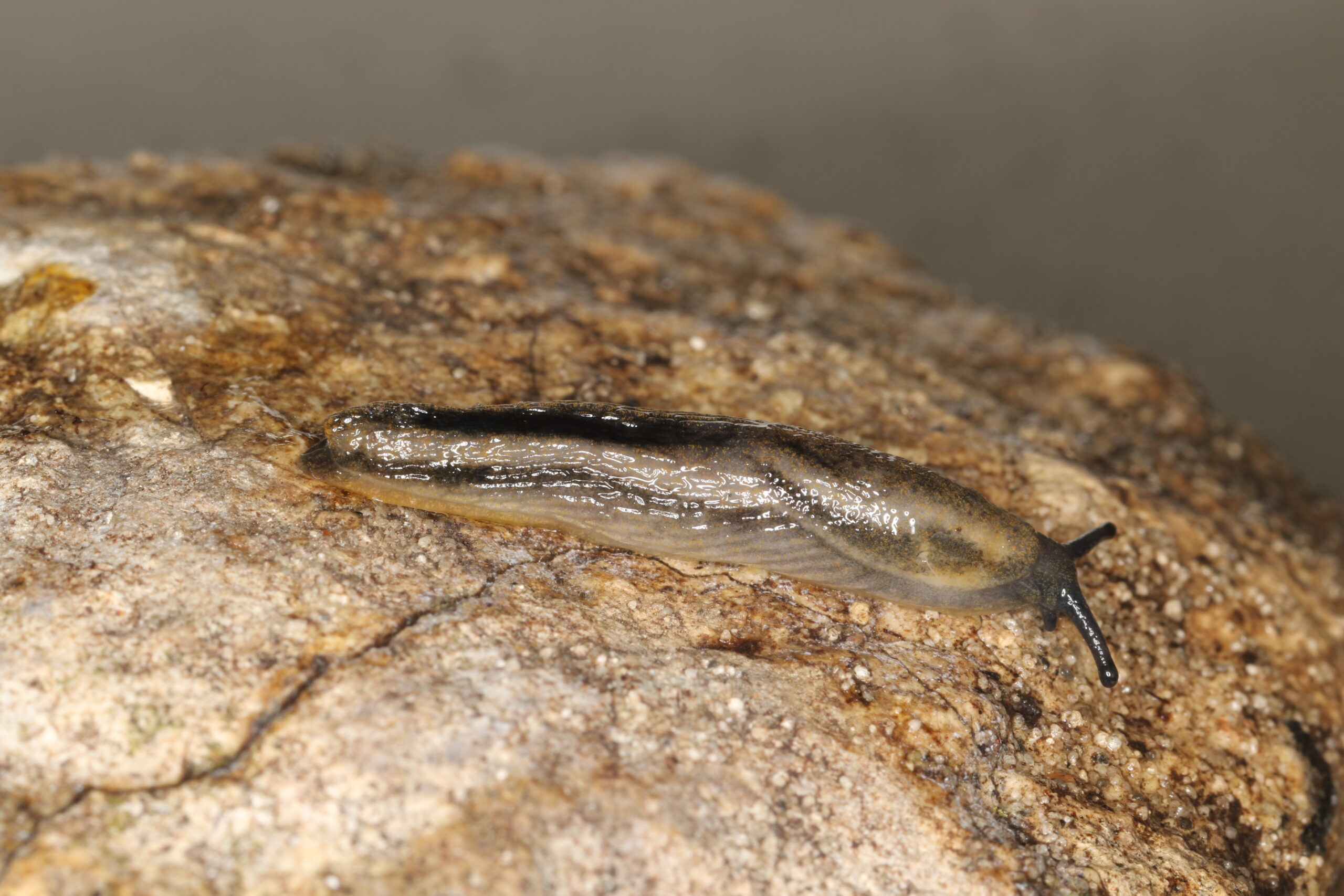
Common Garden slug (Arion distinctus) 

Arion distinctus on a rock.
Arion distinctus by Donald Hobern, via flickr.

Distribution: Widespread.  

What to look for: A dark or bluish-grey with dark lateral stripes and a pale yellow or orange sole (underside), with a characteristic yellow-orange mucus and no keel. This species also has tiny gold speckles on its tubercles, which are best seen through a hand lens. 

Netted slug (Deroceras reticulatum) 

Netted Slug - Deroceras reticulatum sliding down a leaf.
Netted Slug – Deroceras reticulatum by AJC1, via flickr.

Distribution: Widespread. 

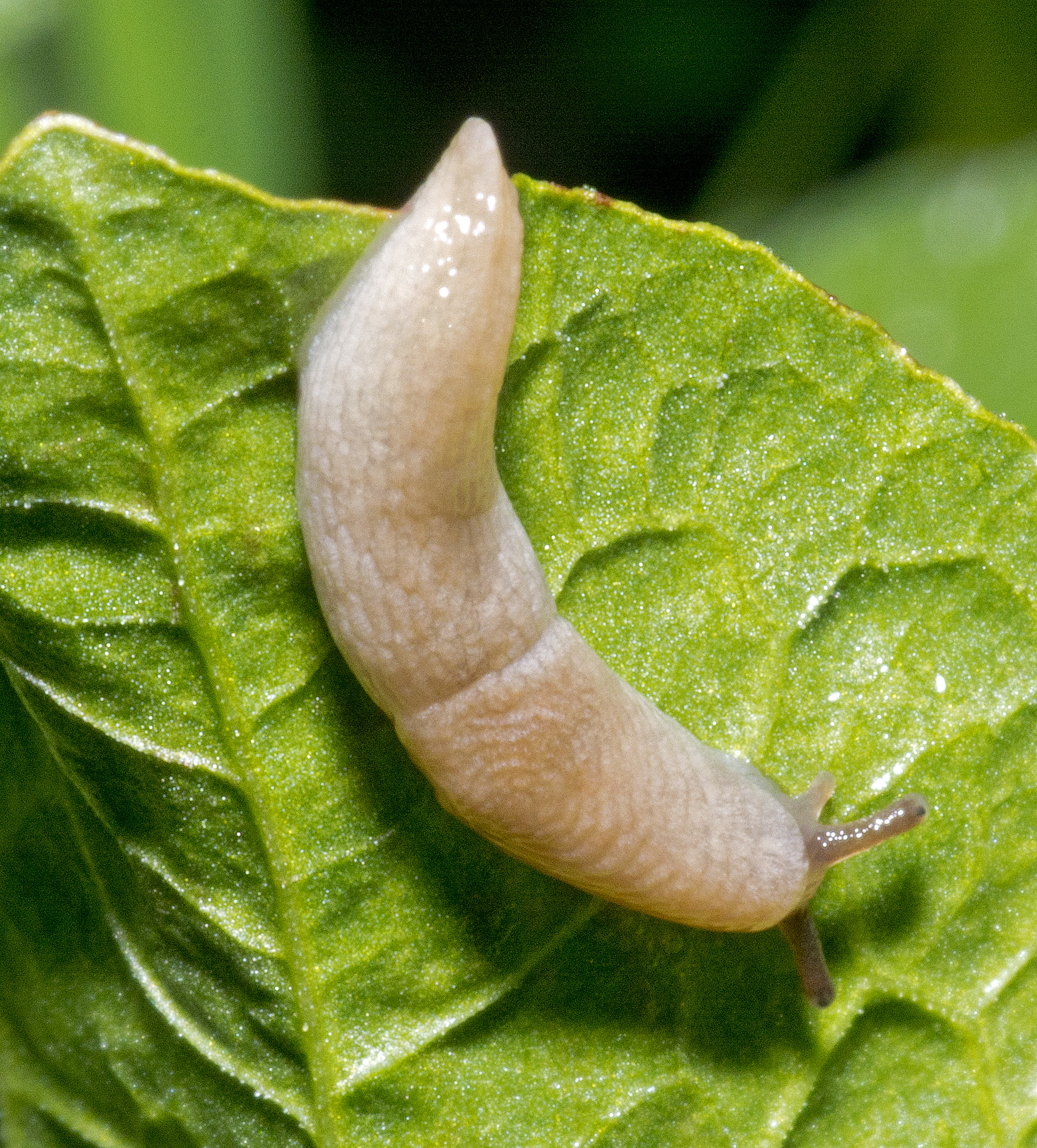
What to look for: This may be the most common slug across the UK. It is a pale, off-white colour, with a keel at the tip of its tail and a mantle that is roughly half the length of its body. It has a chunky build and the tubercles are pale than the rest of its skin, giving it a netted appearance.  

Western Dusky slug (Arion subfuscus) 

Slug sliding across a leaf from left to right.
Slug by Rob Mitchell, via flickr.

Distribution: Widespread, but less common in East Anglia. 

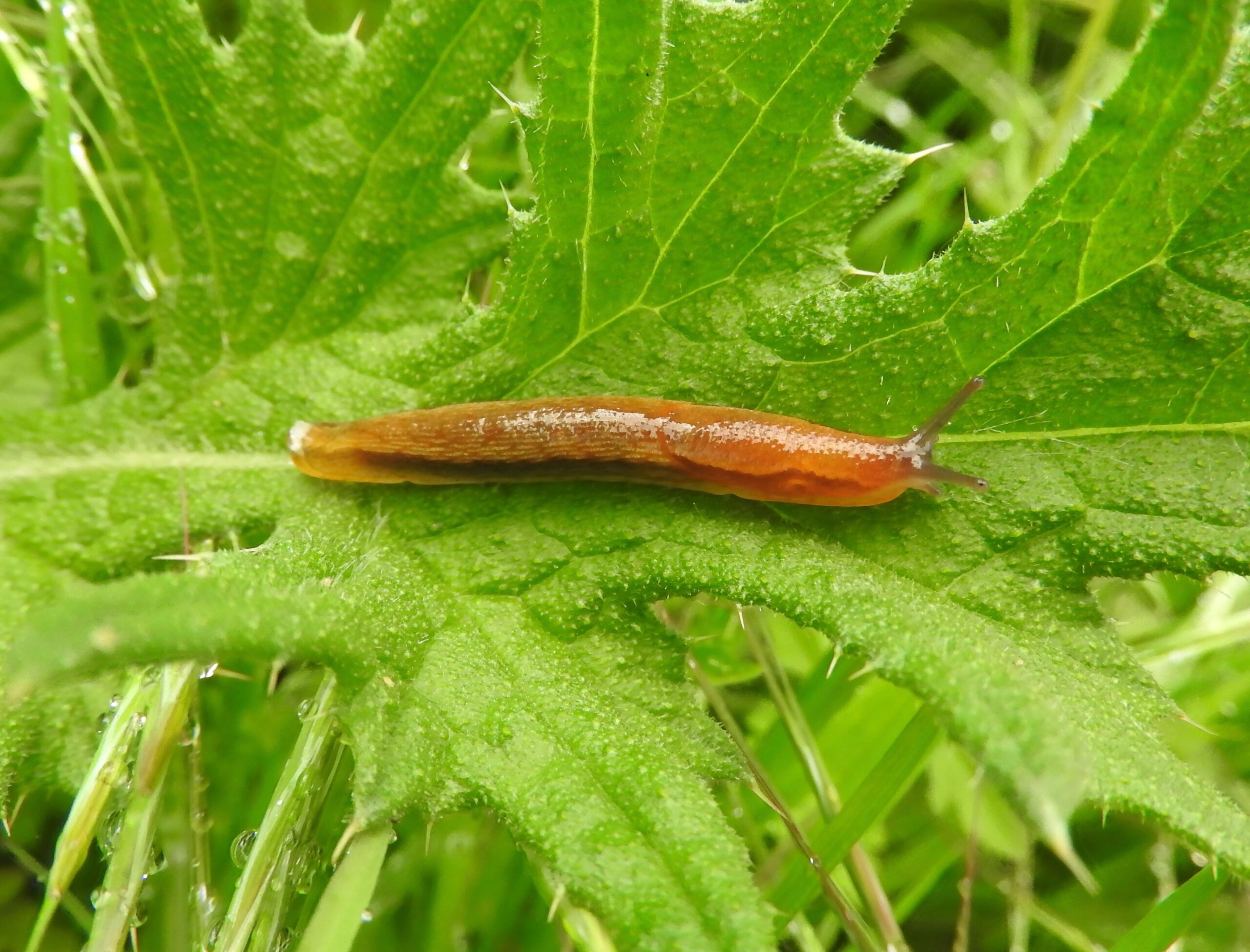
What to look for: The dusky slug has various colour forms of yellow and brown. An important feature is the orange body mucus which stains on contact with your skin. It also usually has two dark lateral stripes and a pale sole with a fringe that blends in with the body.  

Hedgehog slug (Arion intermedius) 

Hedgehog Slug (Arion intermedius) crawling along some mud.
Hedgehog Slug (Arion intermedius) by Richard Ash, via flickr.

Distribution: Widespread but not common. 

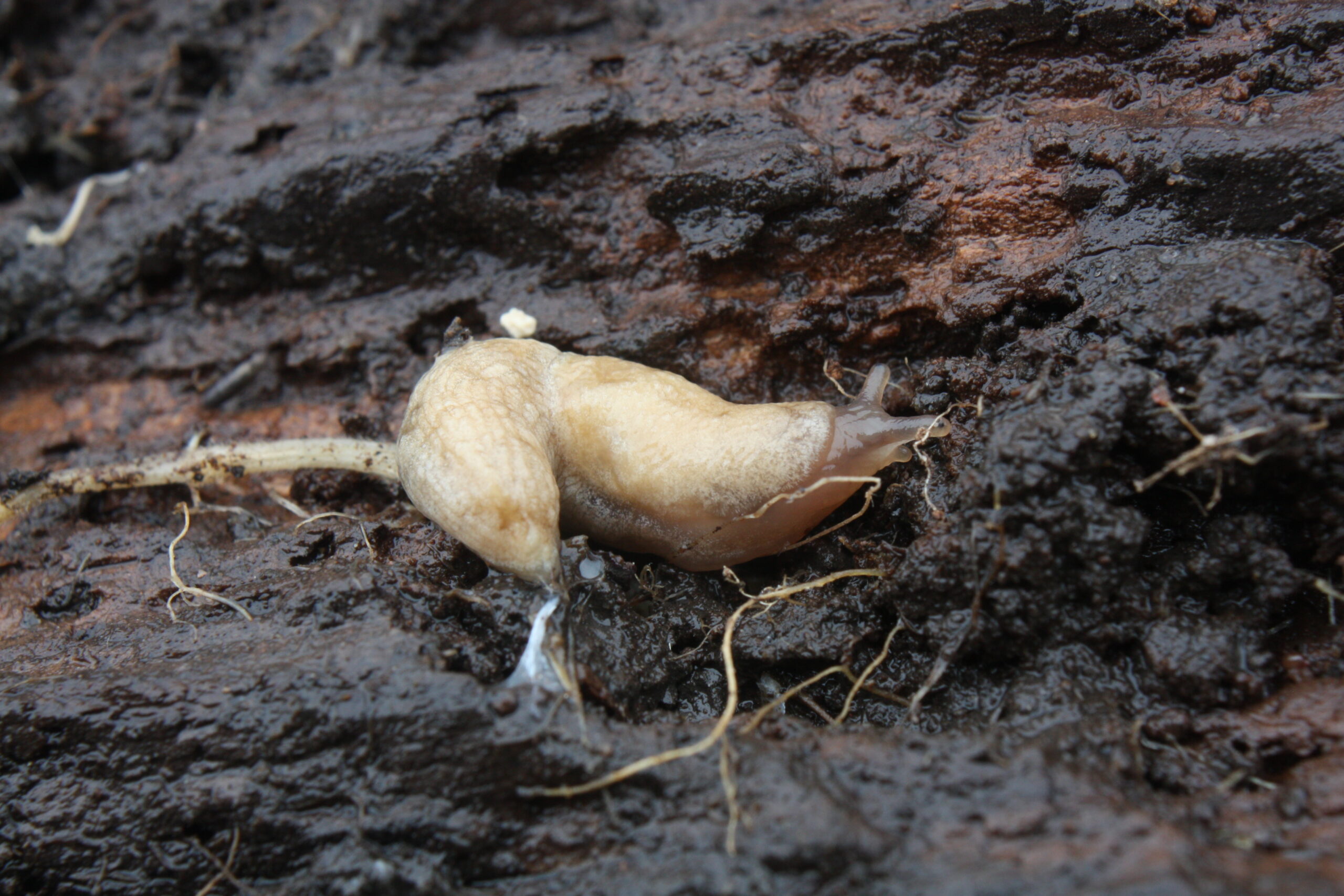
What to look for: This is a small slug, at only 1522mm when extended, and is usually pale brown with a darker lateral stripe along its body to the mantle. Its sole is pale yellow and it has coarse tubercles that can contract to ragged points, giving it the reason for its name.  

Leopard slug (Limax maximus) 

Leopard slug on a marble stone.
Leopard slug by David J, via flickr.

Distribution: Widespread. 

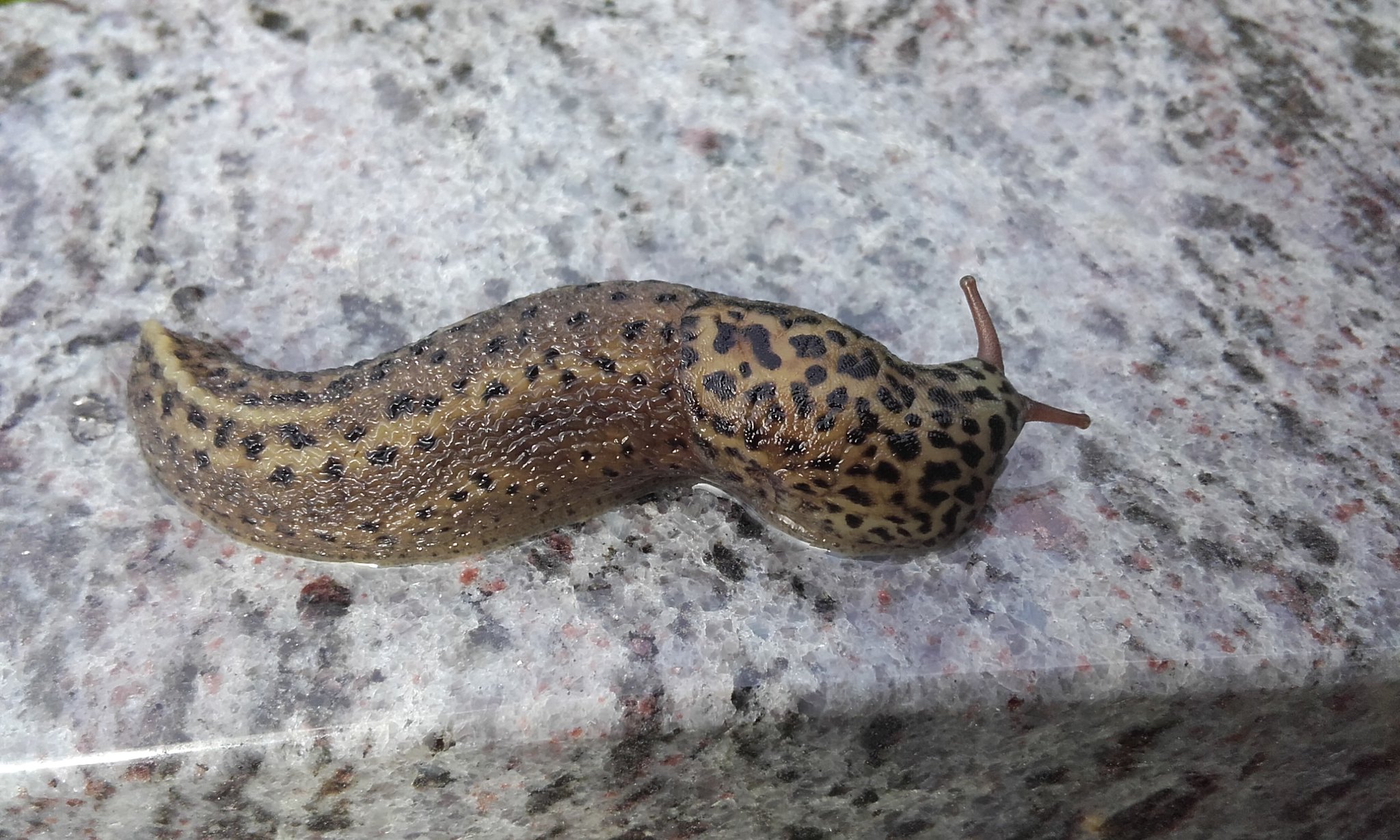
What to look for: The appearance of the leopard slug is quite variable but it usually has a pale background and distinctive dark spots and markings that resemble leopard spots. The markings on its back are usually arranged in three longitudinal bands and it has a pale sole.   

Yellow slug (Limax flavus) 

Yellow Slug (Limax flavus) in a back garden.
Yellow Slug (Limax flavus) by Peter O’Connor, via flickr.

Distribution: Found mainly in England and Wales. 

What to look for: The yellow slug is usually a bright, lemon yellow with darker markings, with blue tentacles and a yellow line along the keel which extends from the tail to approximately halfway along its body. This central line can sometimes be broken into dashes.  

Green Cellar Slug / Irish Yellow Slug (Limacus maculatus) 

Irish Yellow Slug (Limacus maculatus).
Irish Yellow Slug (Limacus maculatus) with slug mites by Peter O’Connor aka anemoneprojectors, via Wikimedia Commons.

Distribution: Introduced population with a spreading range across the UK, less common in Scotland. 

What to look for: This species can vary from green to dull yellow with dark markings, grey tentacles and a colourless to orange slime. It can also occasionally have a yellow stripe at the tail end that doesn’t reach more than halfway along its body.  


Recommended Reading: 

Slugs of Britain and Ireland: Identification, Understanding and Control   Paperback | Feb 2014

This richly illustrated guide provides a comprehensive, picture-based identification charts and species accounts for 46 slug and semi-slug species known in Britain and Ireland.


Slugs and Snails Hardback | December 2016

In this long-awaited New Naturalist volume, Robert Cameron introduces gastropods, sharing the comprehensive natural history of slugs and snails of the British Isles specifically.


Opticron Hand Lens 23mm 10x Magnification 

Perfect for fieldwork, this general-purpose hand lens is ideal for observing insects.


180ml Collecting Pot
Sterile, screw-on sampling containers ideal for viewing insects in the field.


This week in biodiversity news – 4th March 2024

Rediscoveries and Recovery 

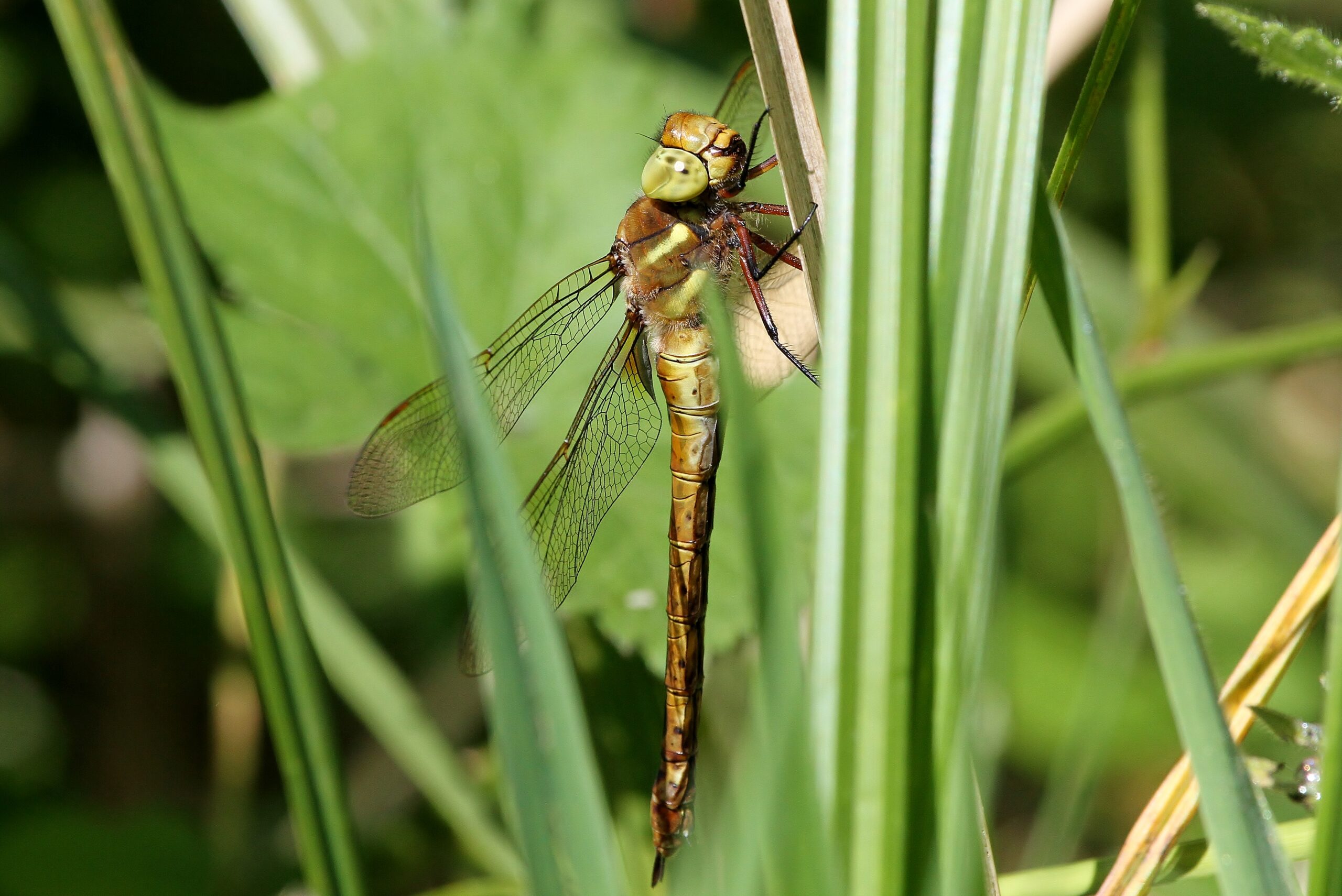
The Norfolk hawker dragonfly is no longer extinct, with the species set to be taken off the British Red List of endangered species after a large-scale population surge. Since its extinction in the Cambridgeshire Fens in the 1890s, the Norfolk Hawker’s small population has been restricted to the Norfolk Broads. However, in recent years they have been found in Kent, Hertfordshire, Sussex, Dorset and Devon due to an increase in suitable habitats across Britain resulting from climate breakdown. This has been the driving force behind the species recovery, however, the gaps in the current population distribution need filling to ensure the Norfolk Hawker’s long-term survival.? 

Norfolk Hawker Dragonfly perched on a plant in the sun.
Norfolk Hawker by Jo Garbutt, via flickr.

A breeding population of an incredibly rare species of turtle has been discovered in India. The Cantor’s Giant Softshell Turtle is native to south and south-east Asia and has been classed as critically endangered. The discovery of a breeding female on the banks of the Chandragiri River in Kerala, however, provides hope for this illusive species. The study was led by a group of international conservationists who worked alongside local communities to record the first documentation of a female nest, and subsequently rescue the eggs from flooding. The hatchings have since been released into the river, and the team are now working closely with the local community to set up a hatchery and nursery near the original nesting site.?

Climate 

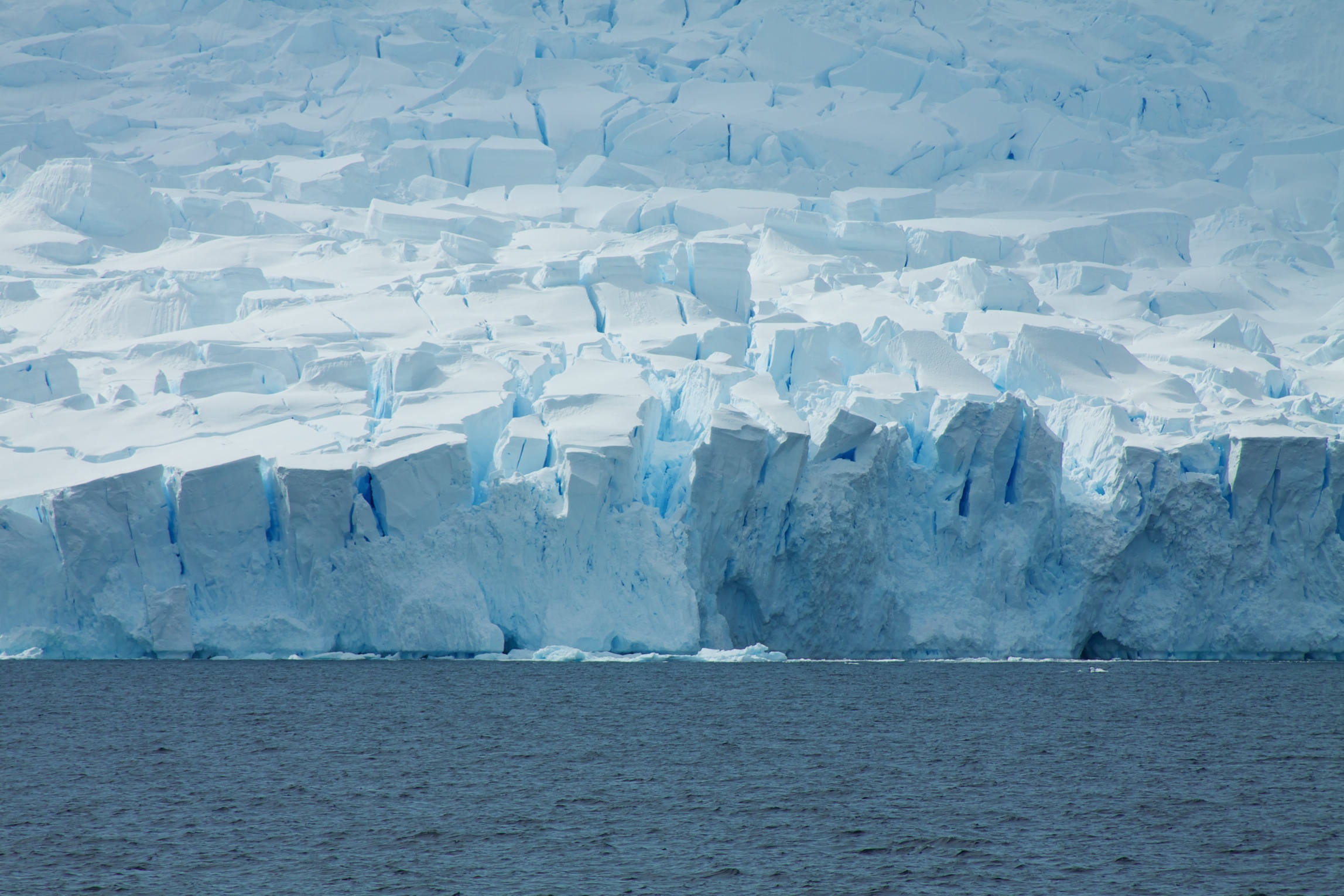
Since 2000, more than a third of Antarctica’s glacier anchors have reduced in size. These anchors, or “pinning points,” are important braking mechanisms that hold the glaciers in place and subsequently reduce the rate of ice detachment from the continent. New research conducted by the University of Edinburgh suggests that an increase in global sea temperatures is causing these points to thin at a much faster rate than previously estimated. Since 2000, 37% of pinning points have either shrunk or completely disappeared, and, as a result, the glacier’s braking force is weakening.? 

Amazing shapes and deep blue tumbled down the huge glaciers that lined the shores.
Antarctica 162 – dramatic landscape by McKay Savage, via flickr.

The UK has had the wettest February on record, according to the Met Office. Between December 2023 and January 2024, the UK experienced 90% of the total expected winter rainfall. This increase in wet weather continued throughout February with some areas of the UK seeing two and a half times their normal rainfall for this month alone. These adverse weather conditions, a result of climate change, is having detrimental effects on farmers due to increased crop flooding, with some farms in Lincolnshire having been underwater since October. 

Science and Environment 

A 12mm long, transparent fish has been found to make a sound as loud as a pneumatic drill. Scientists in Berlin were studying the Danionella cerebrum in their lab when they began hearing strange clicking noises coming from the male fish in the tank. Upon investigation, they discovered that this miniscule species can make a sound of 108 decibels when measured at a distance of one metre away – this is roughly equivalent to the noise made by a bulldozer and is likely to be the volume at which other fish hear the sound. This noise is created by the contraction and release of the fish’s swim bladder, and it is one of the loudest noises ever discovered in a fish of this size.?

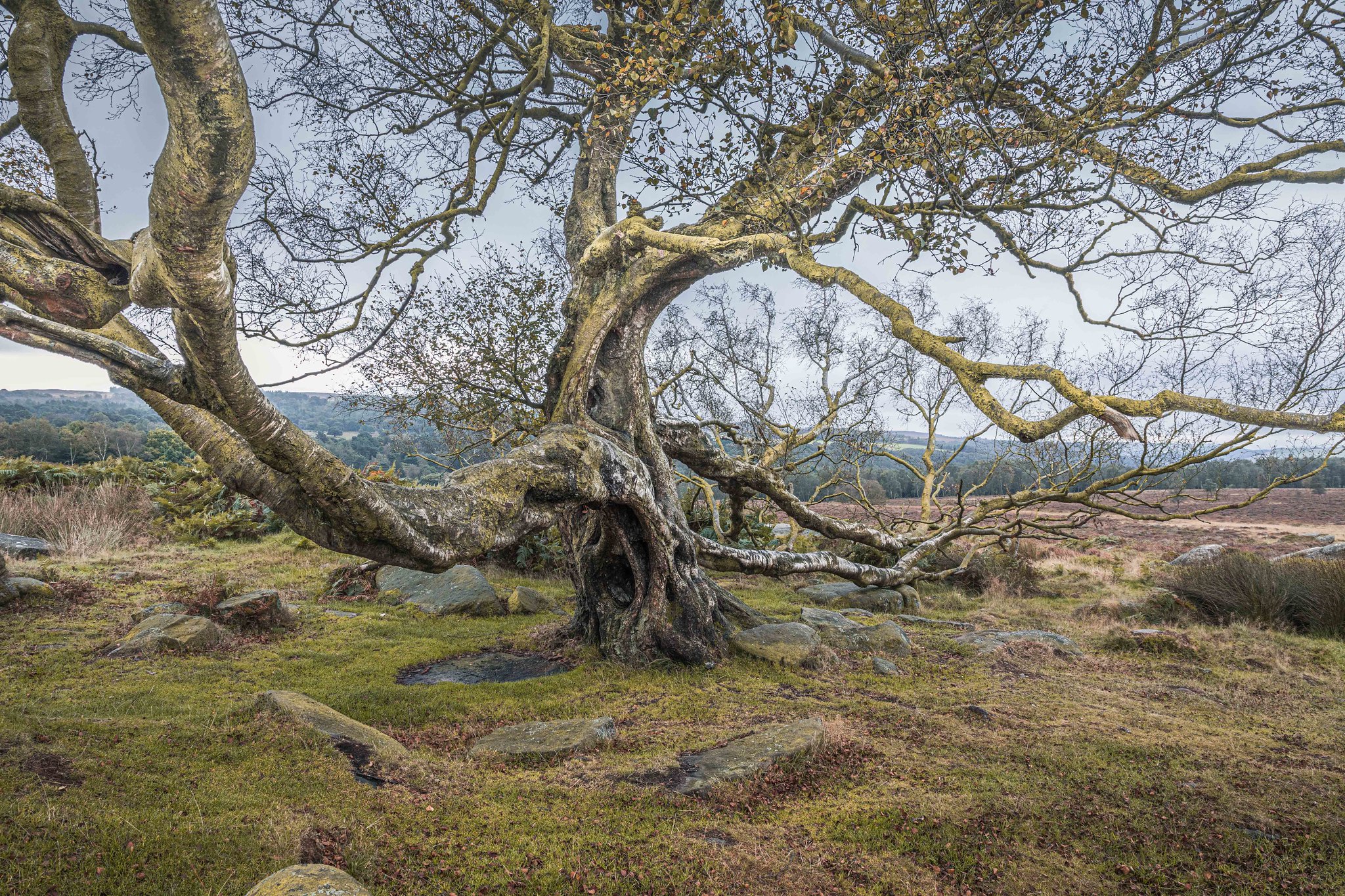
Ancient trees play an irreplaceable role in supporting forest life, according to experts. The results from a recent study in the Spanish Pyrenees show that ancient trees no longer exert energy on reproduction, and instead prioritise stress tolerance, durability and slower growth. It has also been revealed that, over time, sections of older trees die and decay, which allows them to host more diverse and greater quantities of different species than younger trees, as juveniles don’t possess the unique physical and physiological features to support them. Although the number of old growth trees continue to decline worldwide, researchers Munne-Bosch and Pasques hope their report will highlight the importance of our ancient trees’ ecological role.? 

Old, twisted Silver Birch tree near Owler Tor in the Peak District.
Silver Birch by Steve Batch 61, via flickr.

Policy 

The government are expected to announce a move to 100% badger culling under exceptional circumstances in the coming weeks. The current policy on badger culling aims to reduce badger numbers by 70% in each cull area, however the government may increase the target to 100% in certain circumstances, subject to consultation, as of January 2026. The Government had previously stated that the cull would end in 2025 and be replaced by increased badger vaccinations, however some fear that the new 100% cull policy may become standard practice instead.

Parliament has implemented the first EU nature law to restore 30% of the EU’s degraded ecosystems by 2030. This comes into effect after recent findings reveal that over 80% of all European habitats are in poor shape, and aims to ensure the restoration of 60% of these environments by 2040, and 90% by 2050. The EU has pledged that once these ecosystems are restored, they will ensure that the area does not significantly deteriorate once more in a bid to aid the long-term recovery of damaged natural areas. 

Author Q&A with Hugh Warwick: Cull of the Wild

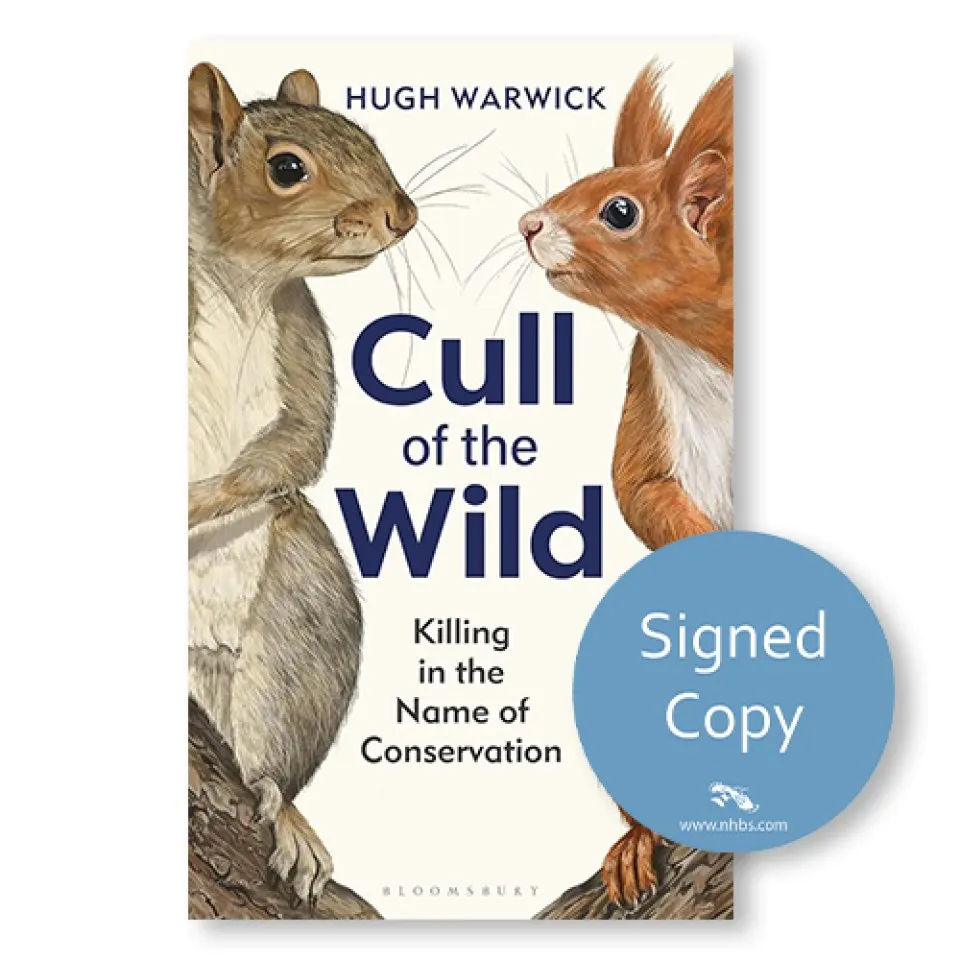
Cull of the Wild cover showing a red squirrel on the right facing a grey squirrel on the left, with a blue sticker on the cover saying 'signed copies.'In Cull of the Wild, author Hugh Warwick investigates the ethical and practical challenges of managing invasive species to increase biodiversity. He explores the complicated history of species control over time, while also combining scientific theory and subtle humour, to explain the many issues conservationists face when trying to protect native species from their non-native rivals.

Hugh Warwick, author of Cull of the Wild, in a black and white photo wearing a shirt and gilet.Hugh Warwick is an ecologist, conservationist and writer who specialises in the study of hedgehogs. He has published three books focusing on this species, however he recently expanded his field of study to include invasive species while writing Cull of the Wild. He has previously written for BBC Wildlife, New Scientist, The Guardian and The Daily Telegraph, is the spokesperson for the Hedgehog Preservation Society, runs courses on both hedgehog conservation, and lectures in creative writing.

Hugh recently took the time to talk to us about his book, including what inspired him to write Cull of the Wild, how he hopes his book will help future conservation methods, and more.


Firstly, what inspired you to write a book on the culling of invasive species?

The very first independent field work I did in 1986 – for the 3rd year project of my degree – took me to North Ronaldsay. My supervisor had a friend who was both the GP and the bird warden on this island, the most northerly in Orkney. He had noted that there seemed to be a correlation between the increase in number of imported hedgehogs (that was the postman’s fault!) and the decrease in breeding success of ground nesting birds – in particular the Arctic Terns. My work was to try and find out how many hedgehogs there were. This turned out to be around 500 – not the 10,000 the Daily Express had reported! The bird observatory organised an airlift to remove the hedgehogs after I had gone and I returned in 1991 to repeat the survey. Since then I have found the collision of ecological study with human concerns really fascinating.  

This led me to become involved, rather inevitably, in the Uist hedgehog saga, where the RSPB and Nature Scotland were killing the hedgehogs for the very same reason they had been airlifted from North Ronaldsay. I quickly shifted from reporting on the story for BBC Radio 4, to joining the campaign against the cull, and then doing the research that helped stop it. But while all this was happening, I met a researcher from New Zealand who was telling me that they were killing hedgehogs over there (in the 1860s we sent a load of hogs over to help the colonialists feel more at home) I could see no reason not to kill those hedgehogs.  

That apparent contradiction has been spinning in my head ever since and was the springboard for this book.  

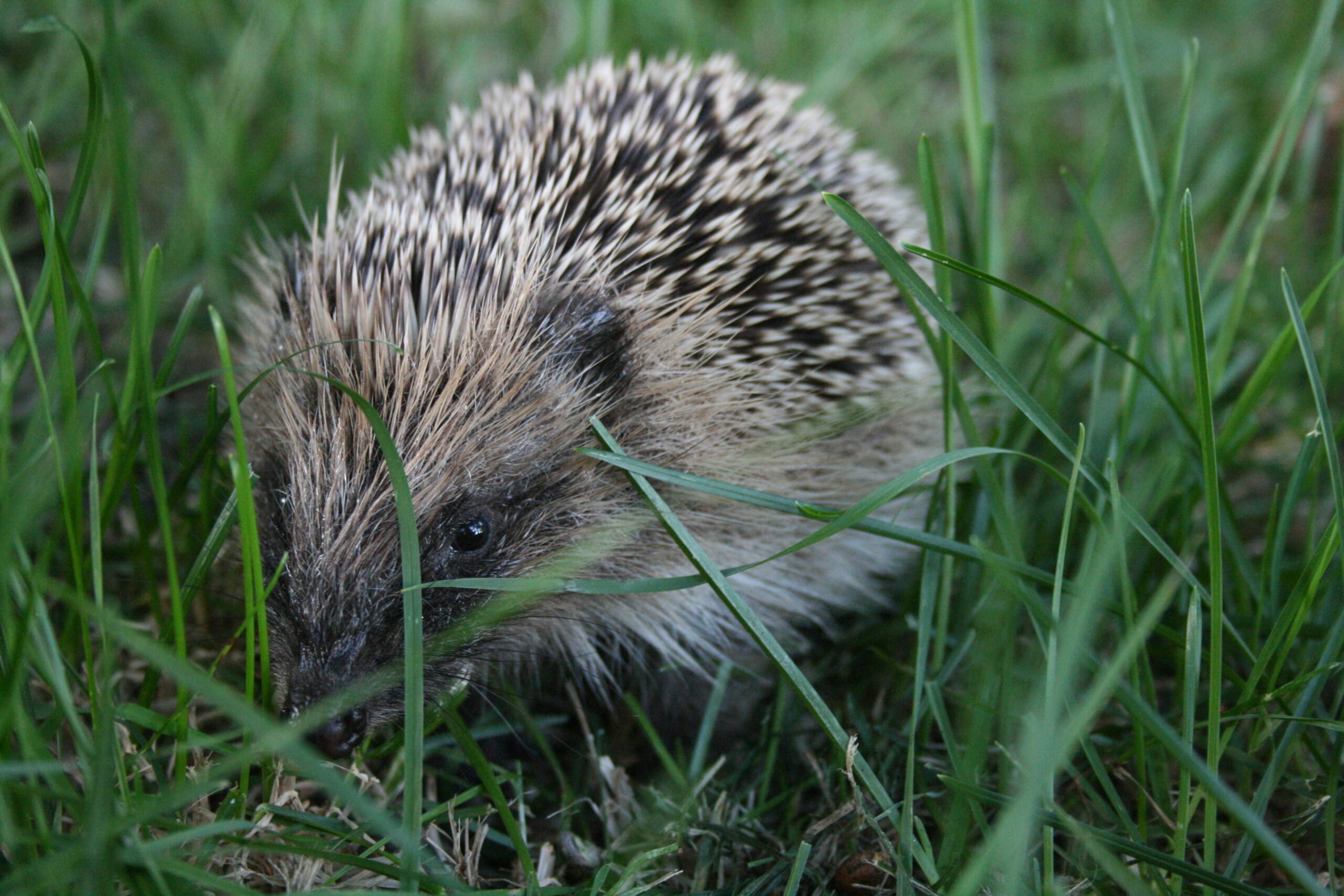
Close up photograph of a New Zealand Hedgehog walking through long grass.
New Zealand: Hedgehog, by Eli Duke via flickr.

How did you find researching such differing opinions on the subject, and have your preconceived opinions changed over the course of writing this book? 

I found this book so very different from all the others I have written. Previous outings have always been with people who are just really pleased to talk – to share their enthusiasm for Beavers or Water Voles or owls. This was the first time where I felt like the initial communication was almost like a job interview – assessing whether I was suitable to talk to. Some people simply refused to talk, others were cagey. I guess I was quite naïve! 

The journey of the book is basically one where my head and my heart are in constant debate. I lay out my ‘bunny-hugging’ prejudices at the start. I suppose I was hoping to find that all instances where animals were being killed could be dealt with in other ways.  

One of the biggest lessons I learnt, though, was about how people, even ones with whom you have fundamental differences of opinion, share so much common ground. But you will never see that common ground if you charge in at the difference! I love that one of my potentially conflicting interviews ended up with the biggest argument being over who recorded the best version of Sibelius’ 5th Symphony! 

In Chapter 1, you discussed that animals are shown to be continually developing to become more like humans – problem solving, making and using tools etc. Do you think this gradual form of humanisation may lead to more equal ‘rights’ between animal species and humans in relation to killing for conservation?

I would not look at this as humanisation – that is slipping back into the human exceptionalism that got us into this mess. Currently the degrees of cruelty we deliver to wildlife is arbitrary, based in large part on language and on the names we give them, even different members of the same species. 

We need to recognise that these animals being killed experience pain, joy, fear and hope. If the realisation that different species have the capacity to do human-like things is enough to get this recognised, then that is some progress.  

I have been gently eased away from the concept of ‘rights’ for animals and towards a desire to see cruelty minimised. Rights are important and I see their value – but here, I feel the best outcomes will emerge from a utilitarian desire to maximise good and minimise bad. Though that requires we have the idea that these animals, most of whom are simply in the wrong place at the wrong time, are individuals and can suffer.  

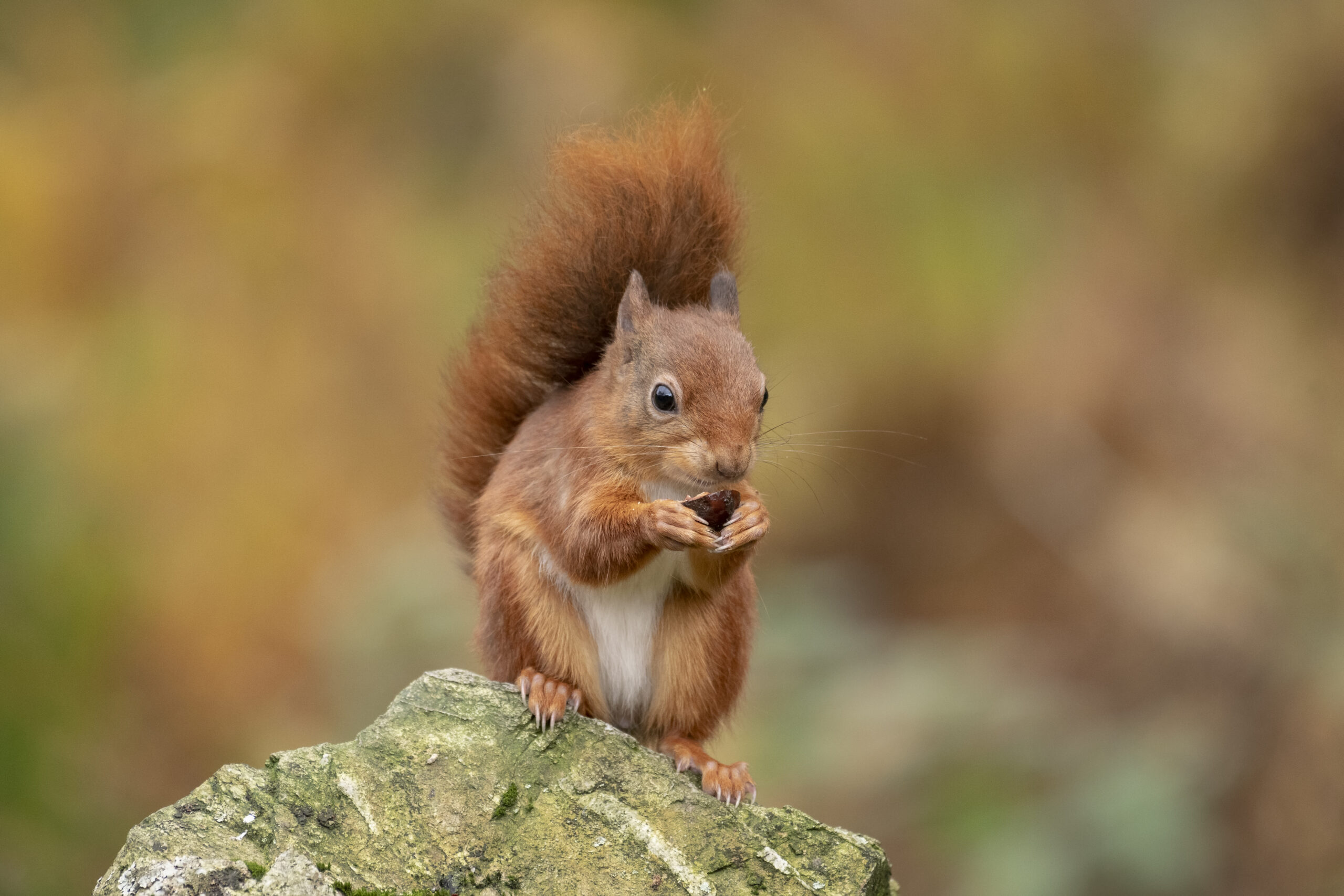
A close up of a Red Squirrel stood on its hind legs on a rock eating a nut it's holding in it's front paws.
Red Squirrel, by Caroline Legg via flickr.

You must have visited many places and spoken to many different people about different species while you were writing this book. Were there any particularly memorable moments or experiences that that have stayed with you?

I did not get to some of the places in this book – time, Covid, money and a desire to minimise flying all conspired to keep the exotic interviews on Zoom. But the adventures I did have were all special.  

Heading out along the coastline of South Ronaldsay, Orkney, with Spud – the most handsome labrador I have ever met – was magical. The wind blew, the surf crumped in from the Atlantic, and Spud, well, he followed his nose and we followed him as he tracked down evidence of Stoats.  

The Stoat story is so important – it is about speed and trying catch this problem early – they were only found in 2011. But more than the practical, it is also about the buy-in of the local population. If the public are not onside, the conservationists can give up now. So it is about education and communication as much as it is about deciding which traps to use and where to site them. 

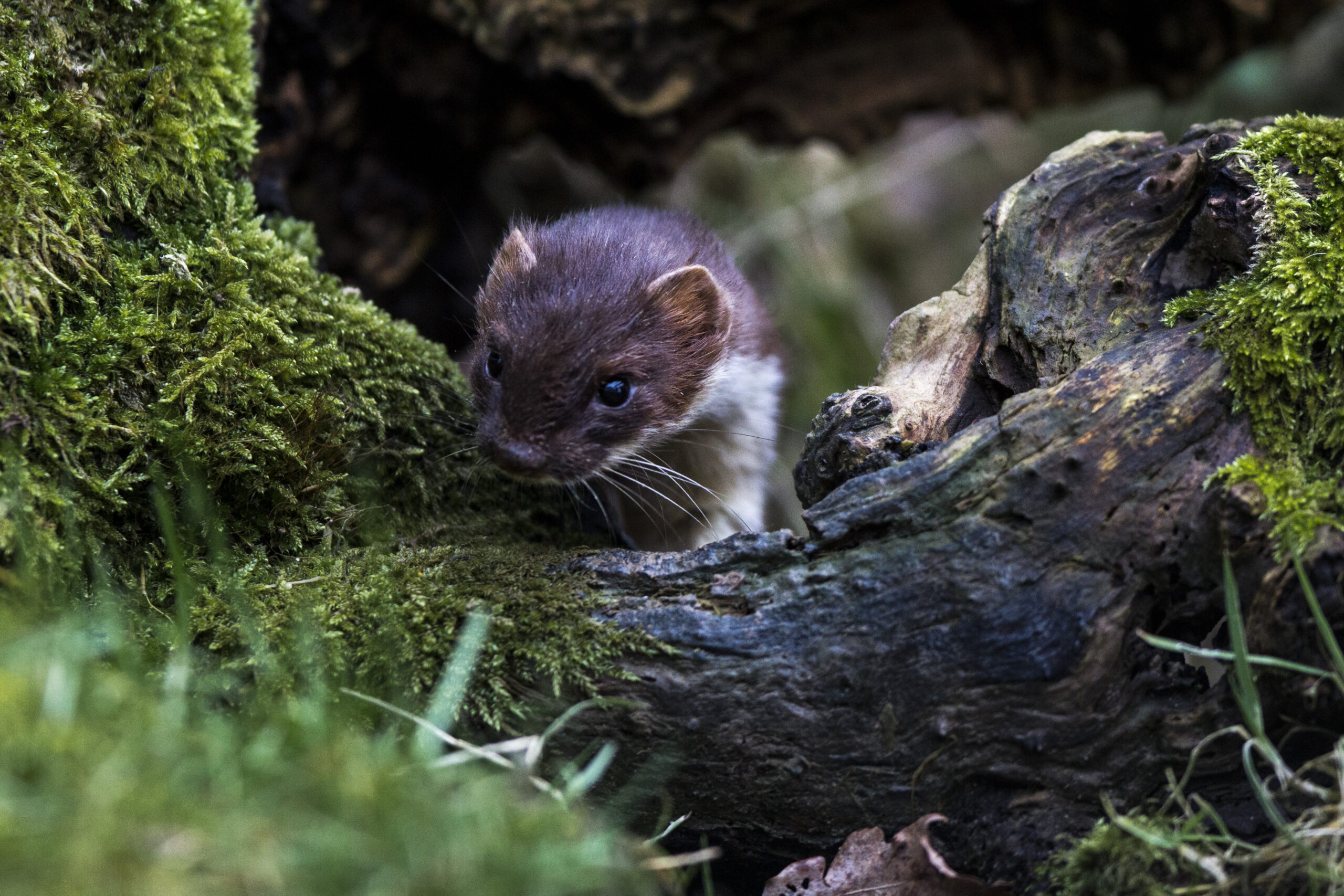
A close up of a stoat climbing over a dark, wet, mossy log.
Stoat (Mustela erminsea) by big-ashb, via flickr.

In what way do you hope that Cull of the Wild will help future animal conservation efforts?

The overarching message I hope people get from Cull of the Wild is that ecology is both fascinating and VERY challenging when it is part of a conflict. Ecology is not given the level of respect that it should receive. It is always sidelined – economics and politics hog the headlines – yet both of those are but subsets of the wider ecosystem. Without a healthy ecosystem we are on a downward slope to disaster. So, I hope that people will read this book, maybe because they are outraged at the killing, and will then come away realising that ecology is very complex and should be treated with great respect.  

I also hope that this book will convince people who hold very firm opinions – opinions that are often amplified by the bubbles in which we tend to linger – that people with differing views may well share many of the same values as themselves. And that to begin discussion at the common ground is the foundation of progress. Argument should not be about winning, but about making things better. Remember, it is quite possible that some of the things you know are wrong. A friend of mine turned up at a conference recently with a t-shirt saying ‘Don’t believe everything you think’. We should be humble enough to recognise we might be wrong.  

Are you currently working on any other projects that you can tell us about?

As I write this, the lovely people at the publishers Graffeg are hoping I will stop promoting Cull of the Wild and finish the two books I owe them: one on bats and the other on nocturnal nature. I have another narrative nonfiction brewing – about as different to this book as imaginable. Something which will hopefully bring laughter into our love of nature. 


Cull of the Wild cover showing a red squirrel on the right facing a grey squirrel on the left, with a blue sticker on the cover saying 'signed copies.'

Cull of the Wild is available to order from our online bookstore.

This week in biodiversity news – 19th February 2024

Climate Crisis 

A new study reveals the Amazon rainforest’s worst drought on record in over half a century, with human-caused climate change acting as the driving force behind these weather extremes. The Amazon rainforest plays an important role in the removal of CO2 from the atmosphere, and accounts for around 10% of the world’s species. However, scientists suggest the Amazon could soon reach a “tipping point”, with droughts such as these expected every 13 years if global temperatures increase by a further 2°C. 

Conservation

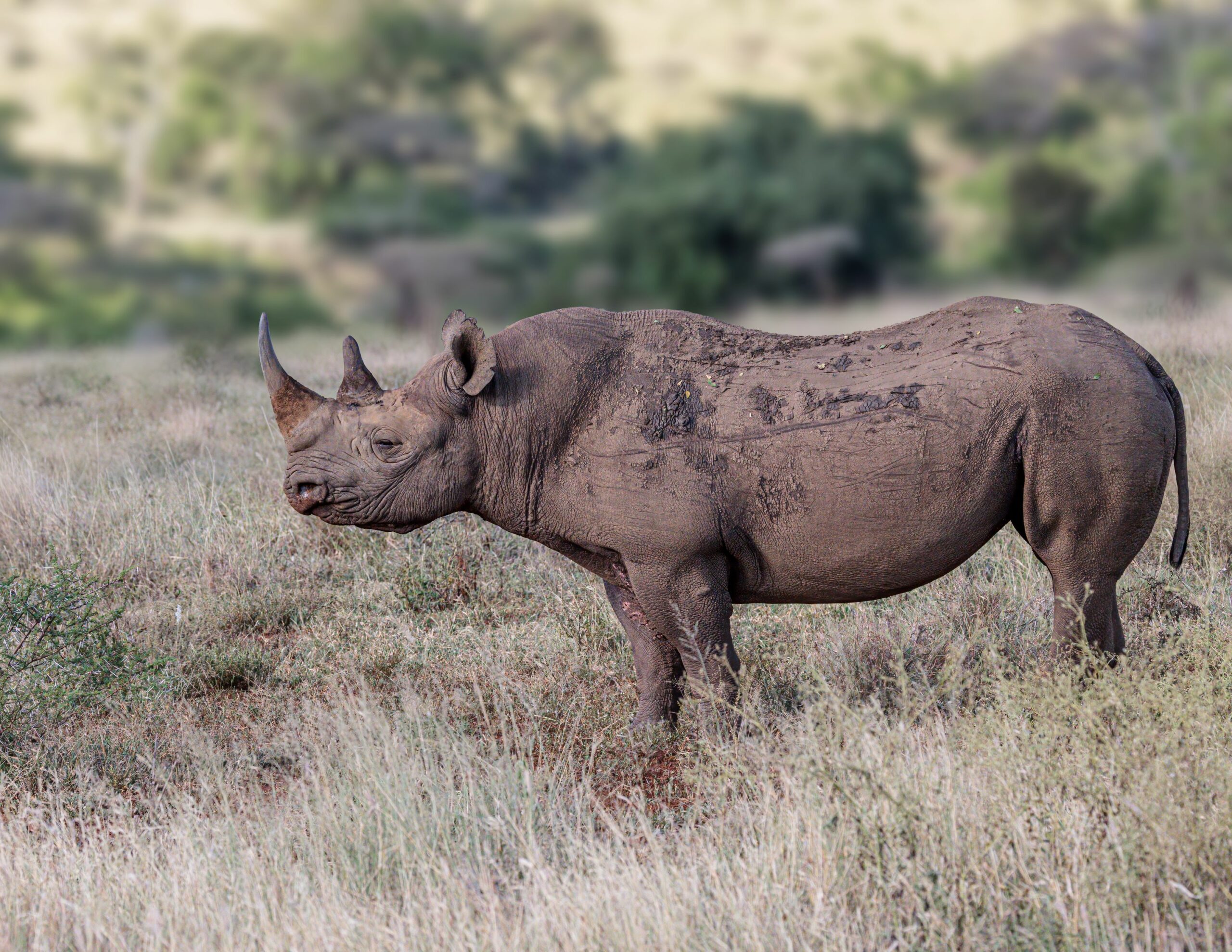
Black Rhinos have returned to Kenya’s Loisaba Conservancy as species recovers following local extinction 50 years ago. This translocation project, the result of a collaboration between Loisaba Conservancy and Kenya Wildlife Service, was prompted by the news that Kenya’s 16 Black Rhino sanctuaries are rapidly running out of space due to a boost in population numbers. Twenty-one of these critically endangered Black Rhinos were released into a specially created fenced sanctuary that covers nearly half of Loisaba’s total area, marking an important moment in the long-term future of Black Rhino populations in Kenya. 

Black Rhinoceros stood in a plain full of grass.
Black Rhinoceros, by Andy Morffew via Flickr.

Hedgehog populations are on the rise according to BBC Gardeners’ World survey. Previous reports have found that since 2000, the number of hedgehogs has fallen by 30%-75% depending on the area due to increased habitat loss, fragmentation, pesticides, and a reduction in food sources. However, the annual hedgehog survey highlighted a 33% increase in sightings, up from 31% in 2022, which has been aided by the instillation of ‘hedgehog highways,’ and nationwide rewilding efforts. CEO of the British Hedgehog Preservation Society, Fay Vass, stated that urban populations are still lower than they should be, however these results provide cautious optimism for the future of hedgehogs. 

Environment 

Hailed as one of the world’s most ambitious environmental policies, Biodiversity Net Gain came into effect in England on the 12th February 2024. It is now mandatory for all new developments in England to deliver at least a 10% net gain in biodiversity or habitat on all new sites. In light of the government target of building 300,000 new homes a year by the mid-2020s, it is hoped that the scheme will minimise or mitigate the environmental effects of these new developments. 

Iceland may be entering a new volcanic era, with increasing volcanic activity reported across the island. The most recent short-lived eruption on the Reykjanes peninsular marks the third since December 2023, and the sixth since 2021. Researchers think this wave of volcanic activity may be following a pattern that could last for decades, or even centuries. Scientists are trying to work out how to predict future eruptions by tracking ground inflations as magma rises, from which they can estimate when the magma will break the surface.

Litli-Hrútur - Volcanic Eruption in Iceland July 2023. Litli-Hrútur – Volcanic Eruption in Iceland July 2023, by Anthony Quaintano via Flickr.

Science and discoveries

The latest strain of bird flu has decreased Great Skua populations by 75% and Northern Gannet populations by 25% in the past 2 years alone, says the RSPB and British Trust for Ornithology (BTO). According to a recent report, the H5N1 strain has been noted as one of the biggest conservation threats facing numerous seabird species across both UK and Europe. The latest Seabird Count survey, published in November 2023 – which did not take into account the effects of bird flu – found that almost 62% of seabird populations were already in decline across the UK due to other factors such as fishing and offshore wind developments. 

The most vulnerable migratory species are at risk due to increased human activity, with one in five threatened with extinction according to the UN. Despite the signing of the Convention on the Conservation of Migratory Species of Wild Animals over 40 years ago, researchers suggest that more focus has been placed on preventing illegal animal trading rather than upholding the law on illegal killing. The report recommends that countries need to establish key biodiversity areas on the migration pathways of endangered species, reduce infrastructure obstructing migration routes, create corridors of protected land, and restore 30% of degraded marine and land areas. 

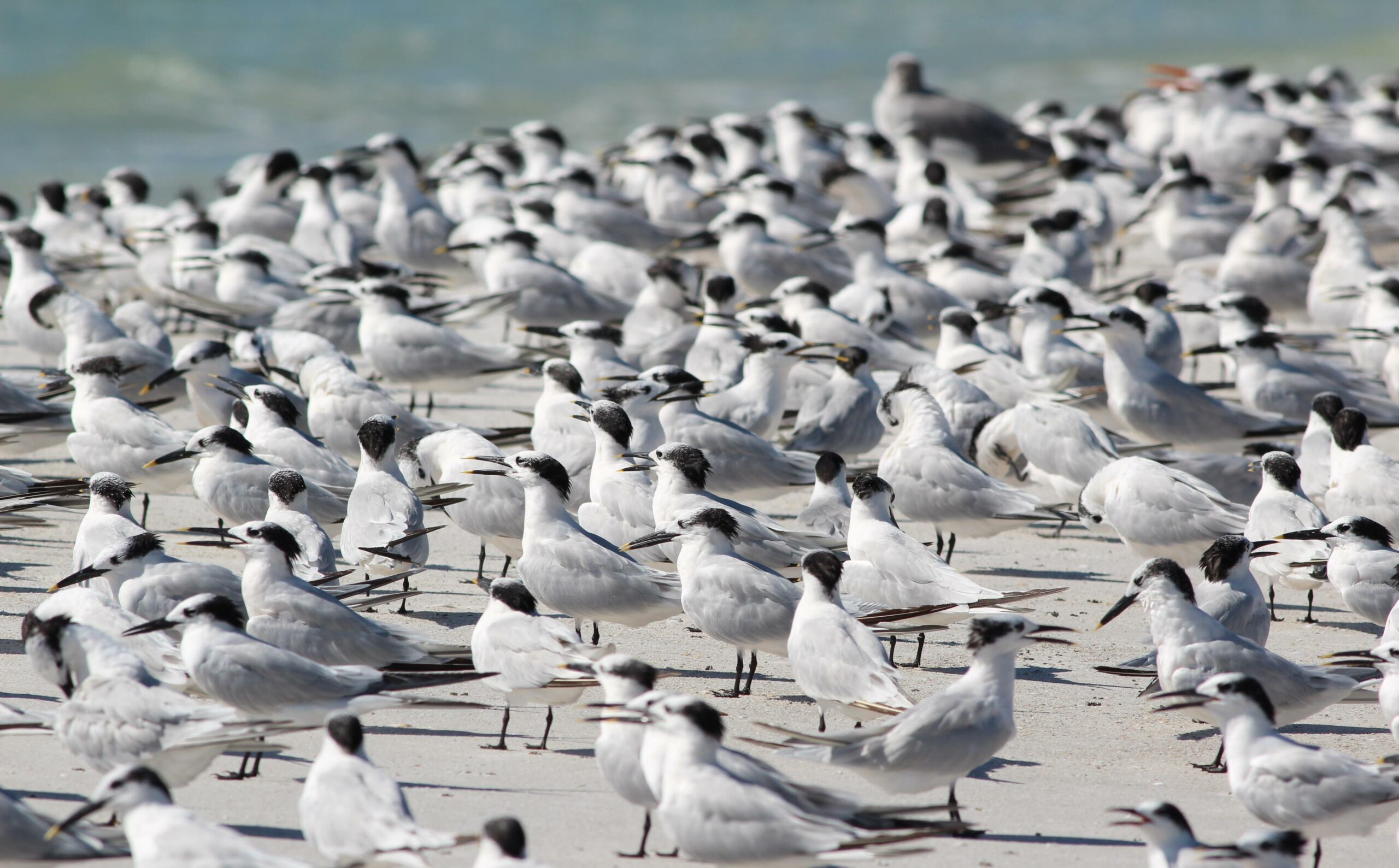
Sandwich Terns stood on a beach in a colony looking out to sea.
Sandwich Terns, by Gary Leavens via Flickr.

NHBS manufacturing – a year in review

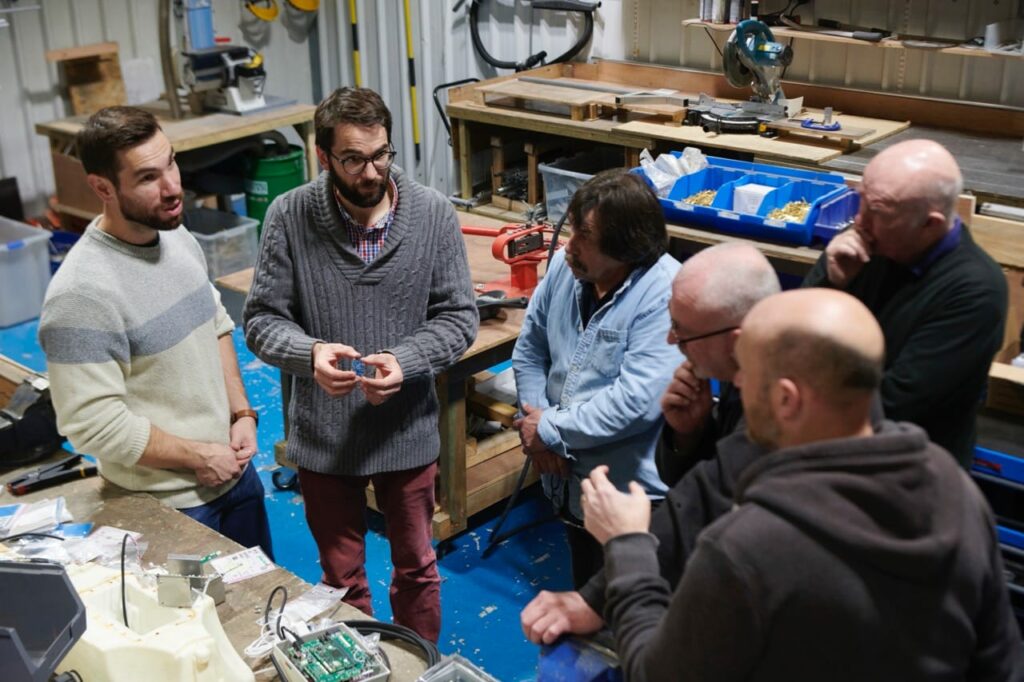
2023 proved to be a pivotal year for the NHBS manufacturing team, one in which we enjoyed new and continued partnerships with key organisations, overhauled the NHBS Harp Trap with the aid of leading UK ecologists, and continued to refine our existing products. 

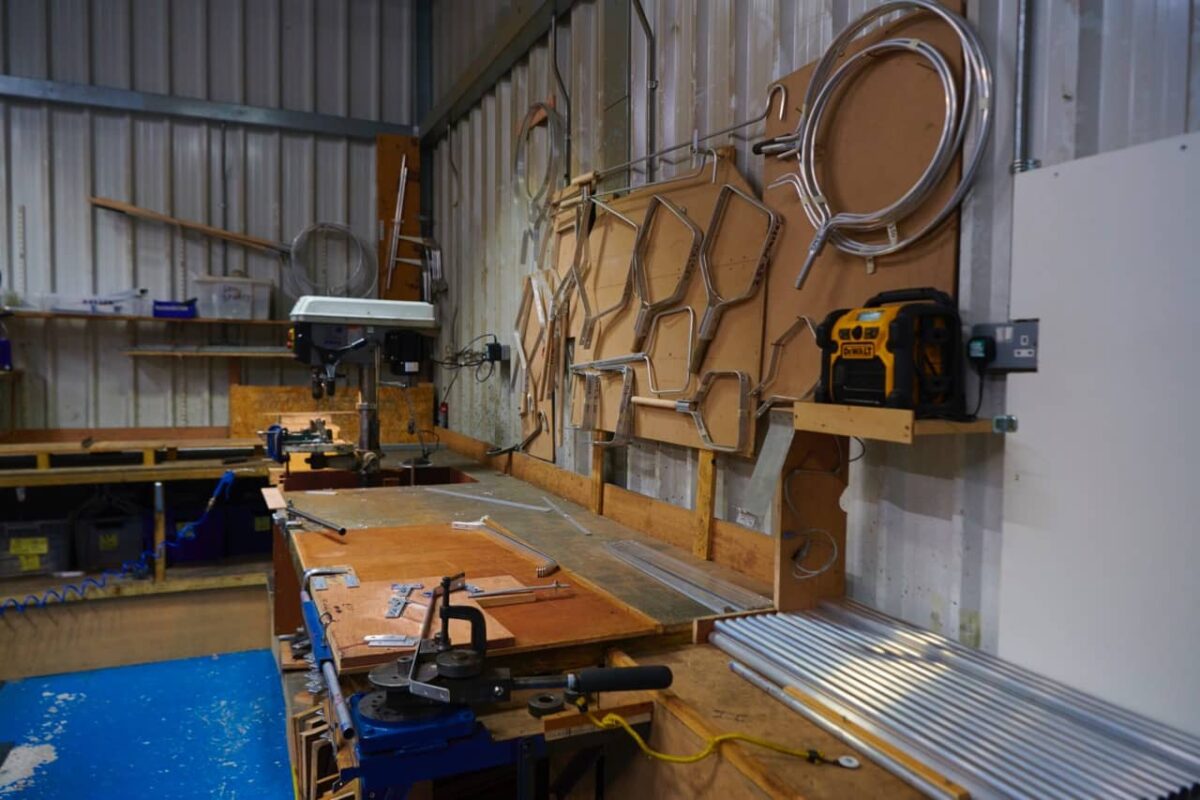
A glimpse into the manufacturing workshop at the NHBS offices in Totnes, Devon.

Fine tuning the NHBS Moth Trap 

Since its introduction in late 2019, the NHBS Moth Trap has been a consistent favourite with hobbyists and professionals alike. However, a manufacturing team consistently motivated to improve our products and with an ear to the ground for customer feedback resulted in an evolution of the trap in 2023. The new design is more robust, lighter and more cost-effective.  

By changing the design of the lamp support, our manufacturing team were able to reduce the amount of steel used, saving on both weight and cost. We also upgraded the material used for the moth trap panels to a more rigid and environmentally friendly material, constructed from 70% recycled plastic. Finally, our team developed a system that allows the NHBS Moth Trap to run off a 12V battery using an inverter kit. A full night’s trapping is now possible using a single battery. 

The NHBS Moth Trap was designed in consultation with Butterfly Conservation. NHBS is proud to support the excellent work they carry out with each sale of the trap. 

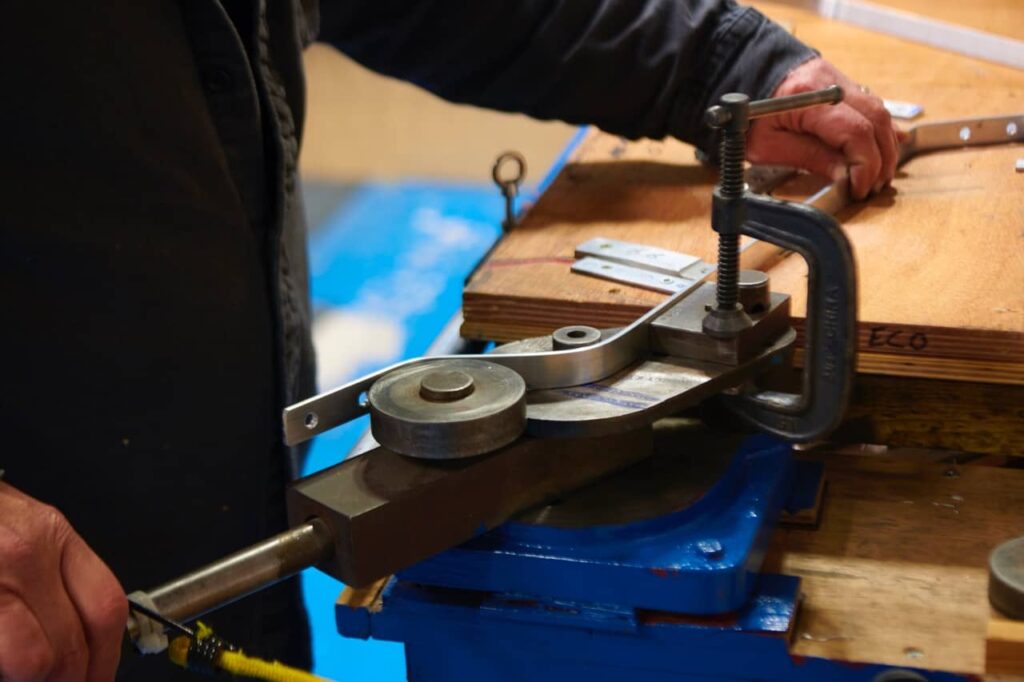
A Professional Hand Net frame in progress.

Nets for every occasion 

There is a sense of pride in the development of the iconic orange banded nets that NHBS produce. Without knowing it, you may have seen them in action on prime-time television shows including Springwatch and the BBC flagship series Earth that featured Chris Packham using an NHBS plankton net in the first episode.  

Our bestselling Professional Hand Net also forms a key part of the Riverfly Partnership approved survey kit. Our relationship with the Riverfly Partnership dates back to when NHBS originally acquired EFE & GB Nets in 2016, and we are pleased to further support the Partnership by making a donation to them with each sale of the kit. You can find out more about the great work the Riverfly Partnership are doing in our previous blog and on their website. 

Conservation research and monitoring 

At NHBS we are experienced in working with our customers to either develop or improve equipment for use in monitoring wildlife. Where necessary we seek out experts who can examine the design of the product and give feedback on improvements; not only to meet project requirements, but also to ensure the design is sympathetic to the wildlife that are subject to the equipment’s use.  

Early in 2023, we wanted to overhaul our Three Bank Harp Trap and so reached out to respected and experienced ecologist Neil Middleton of Batability. Neil and his team gave crucial feedback on the trap’s existing design and highlighted areas where improvements could be made. This allowed our manufacturing team to refine the design so that it maximised the safety of the bats that were caught, as well as making it easier for ecologists to use. By listening to the experts and users and making their recommended changes to the design, we now have a product that we are exceptionally proud of. 

A visiting team from LIST collaborate with NHBS engineers on the exciting NEWTCAM project.

NHBS manufacturing in 2024 

This year promises to be full of exciting developments, including the NEWTCAM project that NHBS is working on in collaboration with the Luxembourg Institute of Science and Technology (LIST).  As well as providing a novel approach to monitoring amphibians, NEWTCAM represents a very different type of technology for our manufacturing team, giving them a chance to learn valuable skills which can be utilised in future products. The first units are currently in production and will be made available to early users for field testing from spring 2024. 

At NHBS we are committed to finding the best materials and are constantly working to improve the sustainability of the production methods we use. If you have a project or product you think we could help with, please do not hesitate to get in touch using our contact form. 

Made in Britain Logo

We are also pleased to announce that we have been awarded the use of the Made in Britain logo for all product manufactured in our NHBS workshop in Devon.

Made in Britain logo showing the Union Jack flag and grey text saying 'Made in Britain'.


This week in biodiversity news – 5th February 2024

Climate crisis

The UK has approved 24 new North Sea oil and gas licenses in the face of significant criticism. The move angered many environmental campaigners and MPs who labelled the decision as “grossly irresponsible”. The government defended the move stating that the oil would be imported from overseas if it wasn’t extracted from the North Sea. Environmentalists have argued that granting the licenses will do relatively little to improve the UK’s energy security and undermines Britain’s move towards net zero emissions.

Oil drilling platforms in the North Sea by chumlee10 via Flickr.
Conservation

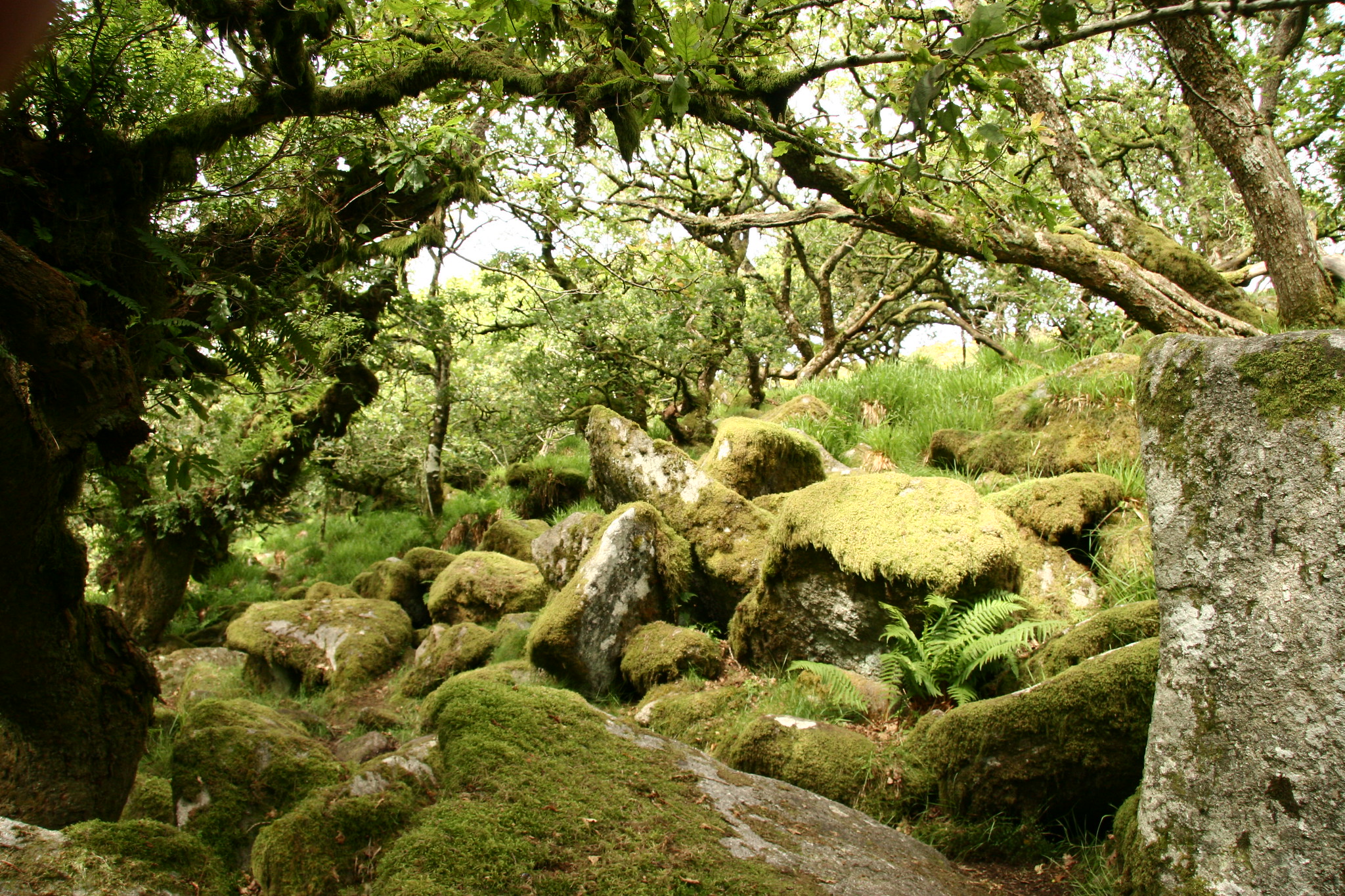
The National Trust has committed to recreating lost rainforests by planting 100,000 trees in North Devon. Temperate rainforests once covered vast swathes of western Britain, but the rare habitat declined due to historic deforestation and continues to face threats from air pollution, invasive species and diseases. It is now one of the most endangered habitats in the UK covering only 1% of Britain’s landmass mostly in Cumbria, Devon, Cornwall, North and West Wales and the West of Scotland. Exceptionally heavy rainfall and high humidity levels allow moisture-loving plants like mosses and lichens to thrive in these areas and the restored rainforest will be a haven for rare specialist plants that depend on this habitat.

Wistmans Wood, Dartmoor, Devon.
Wistmans Wood, Dartmoor, Devon by Steve Knight via Flickr.
Environment

Toxic run-off from roads has been found not to be monitored, according to the BBC. Rivers close to major roads have been tested by campaigners and have been found to contain a cocktail of chemicals and particles from the roads. National Highways has a statutory responsibility to make sure that discharges from its network do not cause pollution and the Environment Agency is responsible for monitoring water pollution in England. However, in response to a freedom of information request, the agency said that it did not regularly monitory run-off. Oil, chemicals and wear from tyres are washed down drains in heavy rain and subsequently flow into rivers and streams causing damage to sensitive aquatic ecosystems.

The government remains largely off track to meet its environmental targets, according to the Office for Environmental Protection (OEP). The OEP’s annual progress report concludes that while some progress has been made, the government is largely off track to meet both targets and legal obligations and that the government must speed up its efforts and implement policies quickly to bridge the gap.

Extinction risk

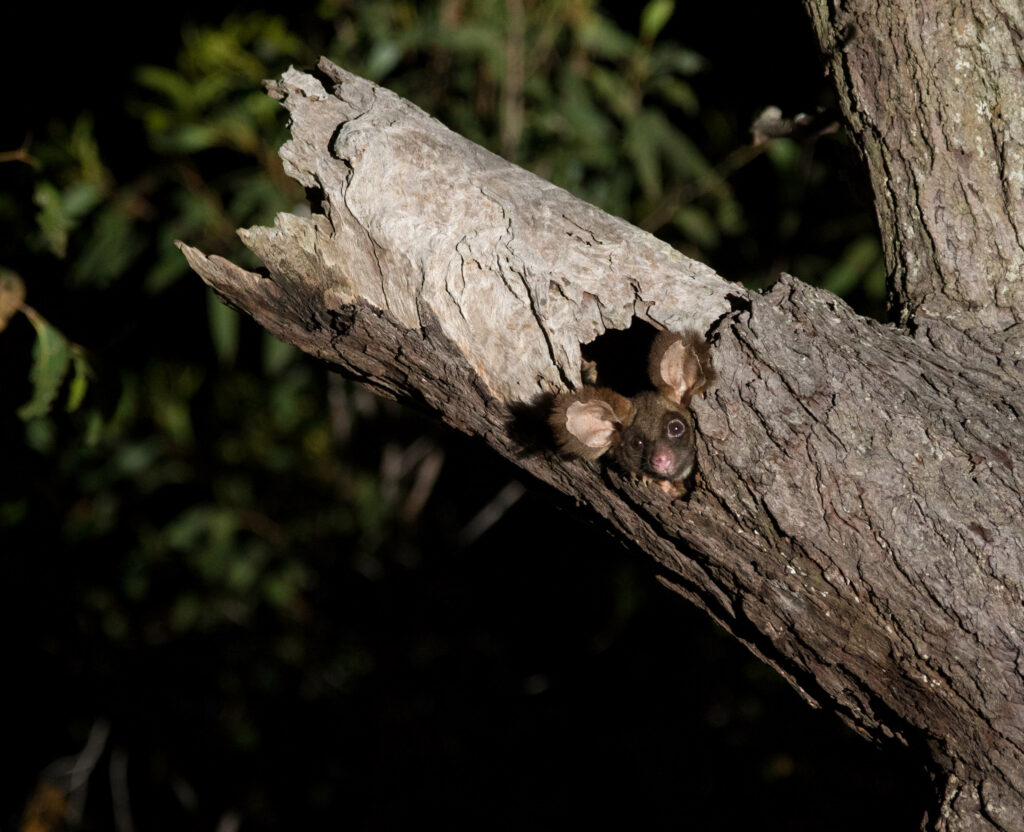
The Greater Glider is on course for extinction due to a controversial decision by the Australia’s New South Wales environmental watchdog, according to experts. The Environment Protection Authority (EPA) told stakeholders that it was scrapping measures that required a government-owned forestry corporation to search for Glider dens which currently have to be given a 50-metre logging exclusion zone. Experts have told the EPA in no uncertain terms that they are effectively locking in the Glider’s extinction. Greater Gliders rely on between six and 20 den trees for its habitat which is already under significant pressure due to summer bushfires and logging activity.

Great Glider in its den by Victorian National Parks Association via Flickr.
Science and discoveries

A new map has revealed that England’s hedges would wrap around the Earth ten times if lined up end to end. The map is the most comprehensive to date revealing a total of 390,000 km of hedgerows. Researchers from the Centre for Ecology and Hydrology used Lidar (Light Detection and Ranging) remote sensing data. They found that the South West of England boasted the largest share of hedges accounting for 24% of England’s total with Cornwall leading at the county level. Around half of Britain’s hedges were lost in the post-war period, and while losses have slowed since the 1990s, major threats to Britain’s hedgerows remain.

The birth of a Great White Shark may have been captured on video for the first time. Wildlife filmmaker Carlos Gauna and UC Riverside biology doctoral student Phillip Sternes were filming California’s coastal waters with their drone when they spotted something unusual. By enlarging the images from their video footage and putting it in slow motion, they realised a white layer was being shed from the body of a shark. They believe it was a newborn white shark shedding its embryonic layer.

The Big Garden Birdwatch: NHBS Staff Results 2024

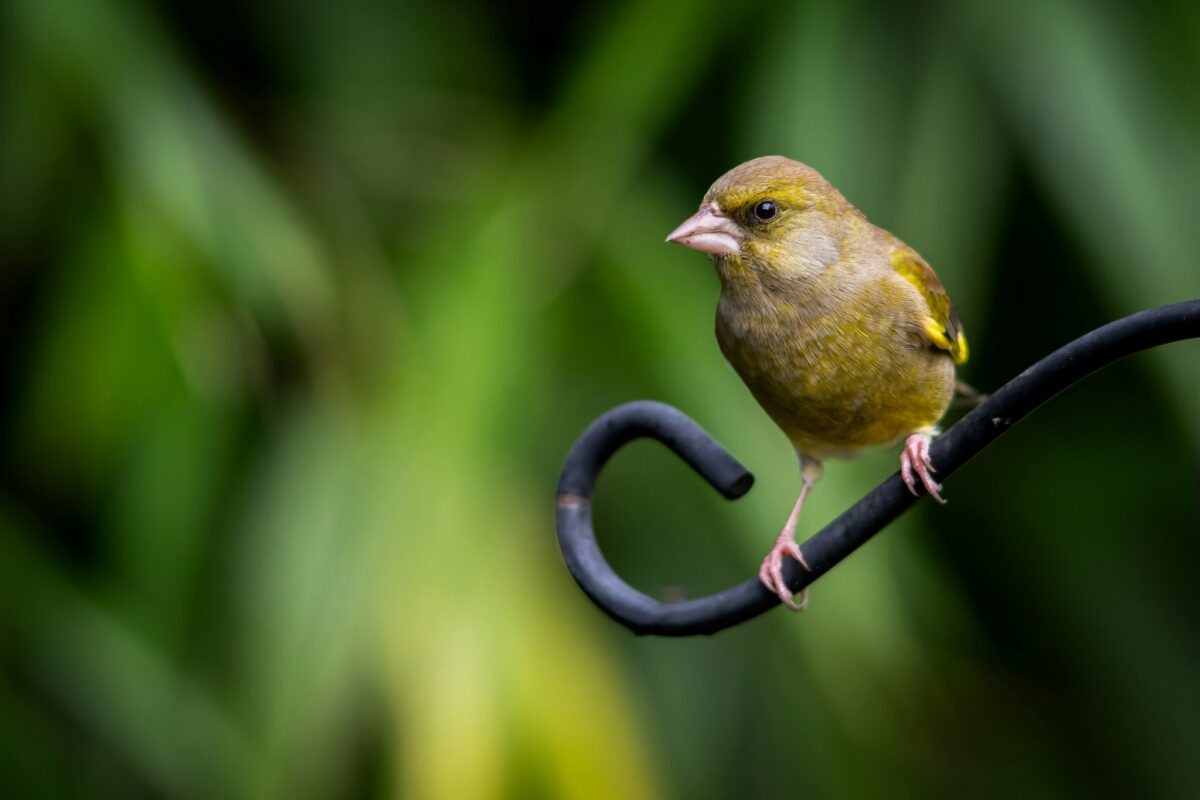
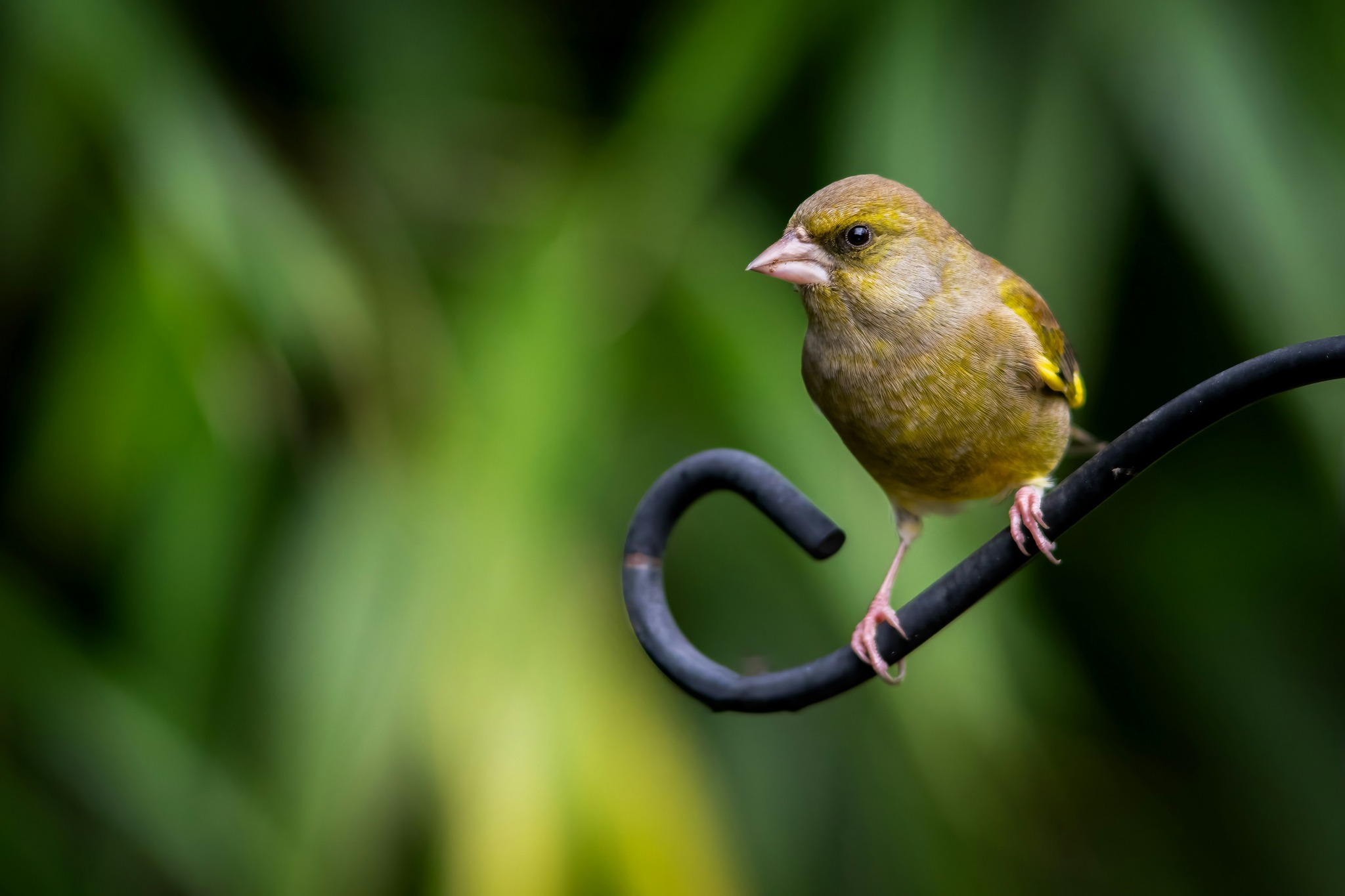
Greenfinch perched on a piece of metal.

The RSPB’s 45th Big Garden Birdwatch took place between Friday 26th and Sunday 28th January 2024. This annual event is one of the largest citizen science wildlife surveys in the UK and helps us gain an understanding of how our garden bird populations are changing in abundance and distribution over time.  Over half a million people took part in last year’s event, recording a total of 9.1 million birds. House Sparrows took first place, despite a gradual 57% decrease in sightings since the first Birdwatch Count in 1979. They were closely followed by the Blue Tit and Starling. 

Although the Big Garden Birdwatch has finished, there is still time to submit your results on the RSPB website by the 18th February, or by post before the 13th February. Even if you didn’t see anything, it still counts! 

With birds being faced with an increasing number of challenges each year, it’s more important than ever to make your garden and outdoor space wildlife friendly. This can include installing bird feeders or tables which provide an important food source throughout the winter months when natural food sources are scarce., You can also provide clean, fresh drinking water in shallow containers such as bird baths or saucers, and install nest boxes for breeding in the spring. Also, don’t forget to regularly clean and maintain your feeders and baths as this helps stop the spread of disease. Head over to the RSPB website to find out more about how you can help your garden birds. 

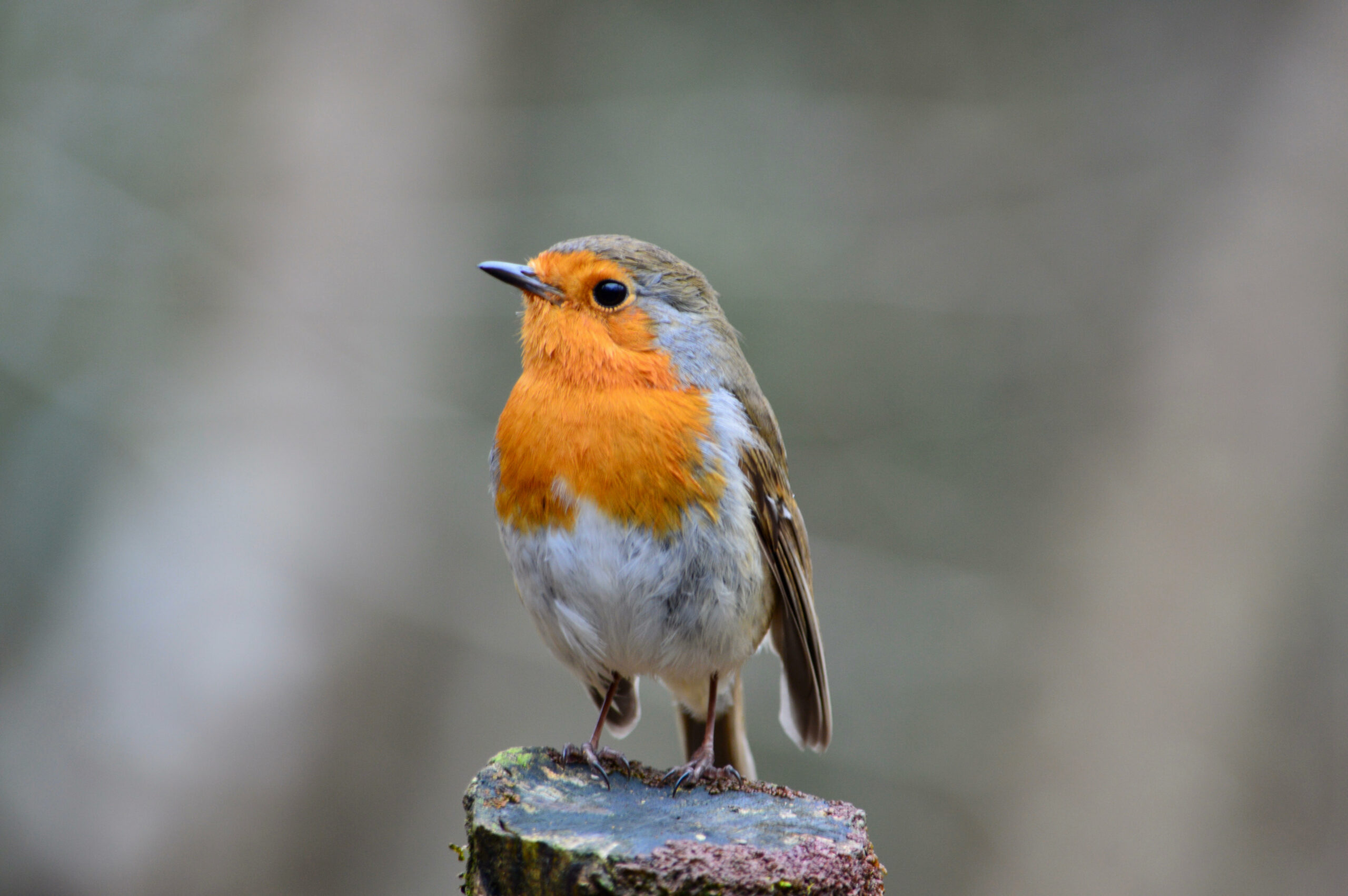
A robin stood on top of a wet wooden fencepost.
Robin – Catherine Mitson

Results

As usual, many of our staff took part in this year’s Big Garden Birdwatch from their gardens or local parks across Devon, and we recorded a total of 129 birds and 22 different species. Compared to last years results, there was a 31% increase in sightings, while an additional nine species were spotted in this year’s count. The most sighted bird was the Carrion Crow, closely followed by the Blue Tit and Magpie. In comparison, the county’s top birds were the House Sparrow, Blue Tit and Starling.

Sabine took part in the event from her garden and spotted: 

3 Carrion Crow 

2 Wood Pigeon  

1 Robin  

2 Magpie  

1 Blackbird  

1 Song Thrush  

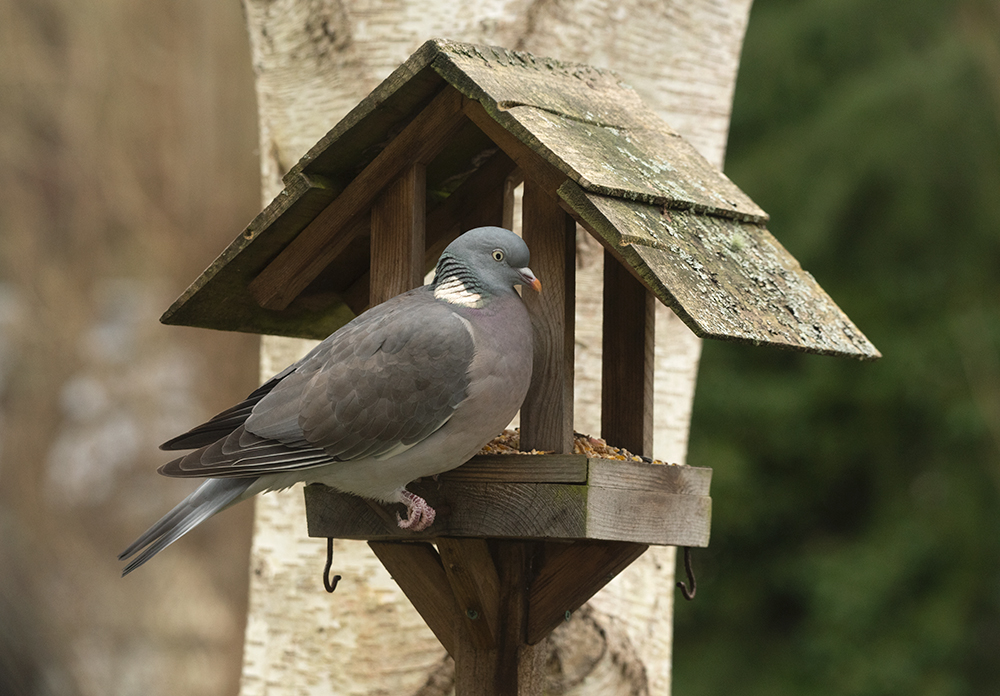
Common Wood Pigeon sat on a small wooden bird feeder house by a Silver Birch tree.
Wood Pigeon – Oli Haines

Oli took part in the event from his garden and spotted: 

3 Blackbirds 

2 Woodpigeon  

3 Jackdaw  

2 Blue tits 

1 Dunnock 

1 Great tit 

1 Robin 

1 Magpie 

1 Goldfinch


Adam took part in the event from his garden and spotted: 

2 Blackbirds 

6 Blue Tits 

1 Chaffinch 

2 Great Tits 

4 House Sparrow 

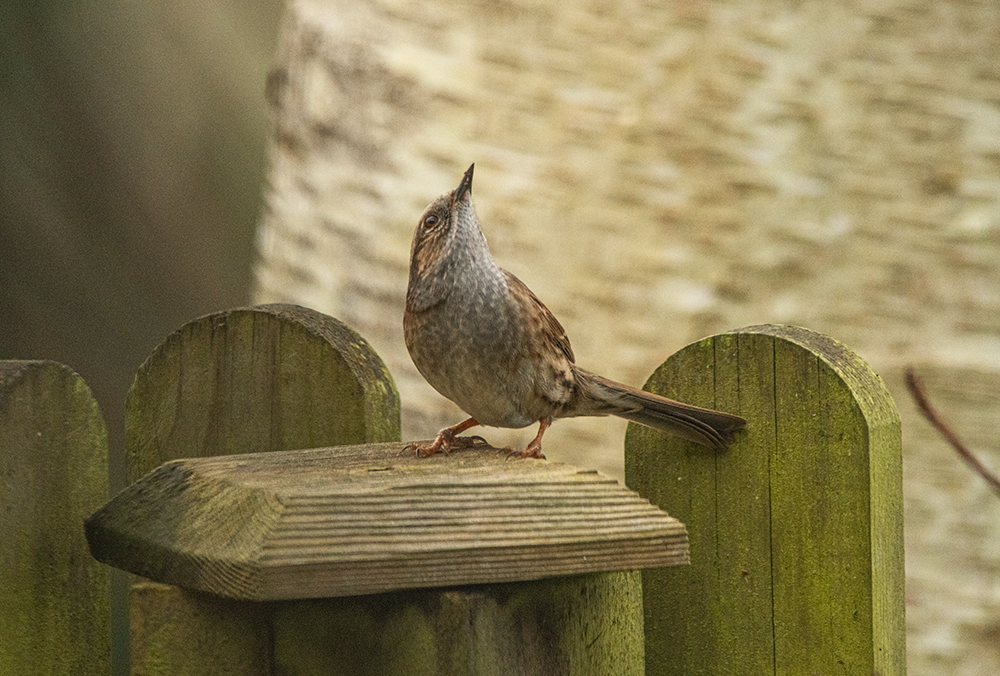
Photograph of a Dunnock sat on a wooden fencepost in a garden looking up at the sky about to fly off.
Dunnock – Oli Haines

Catherine took part in the event from her garden and spotted:  

2 Collared Dove 

2 Jackdaw 

4 Starling 

1 Woodpigeon 


Mark took part in the event from his local park and spotted: 

5 Parakeets  

12 Crows  

4 Magpies  

10 Herring Gull

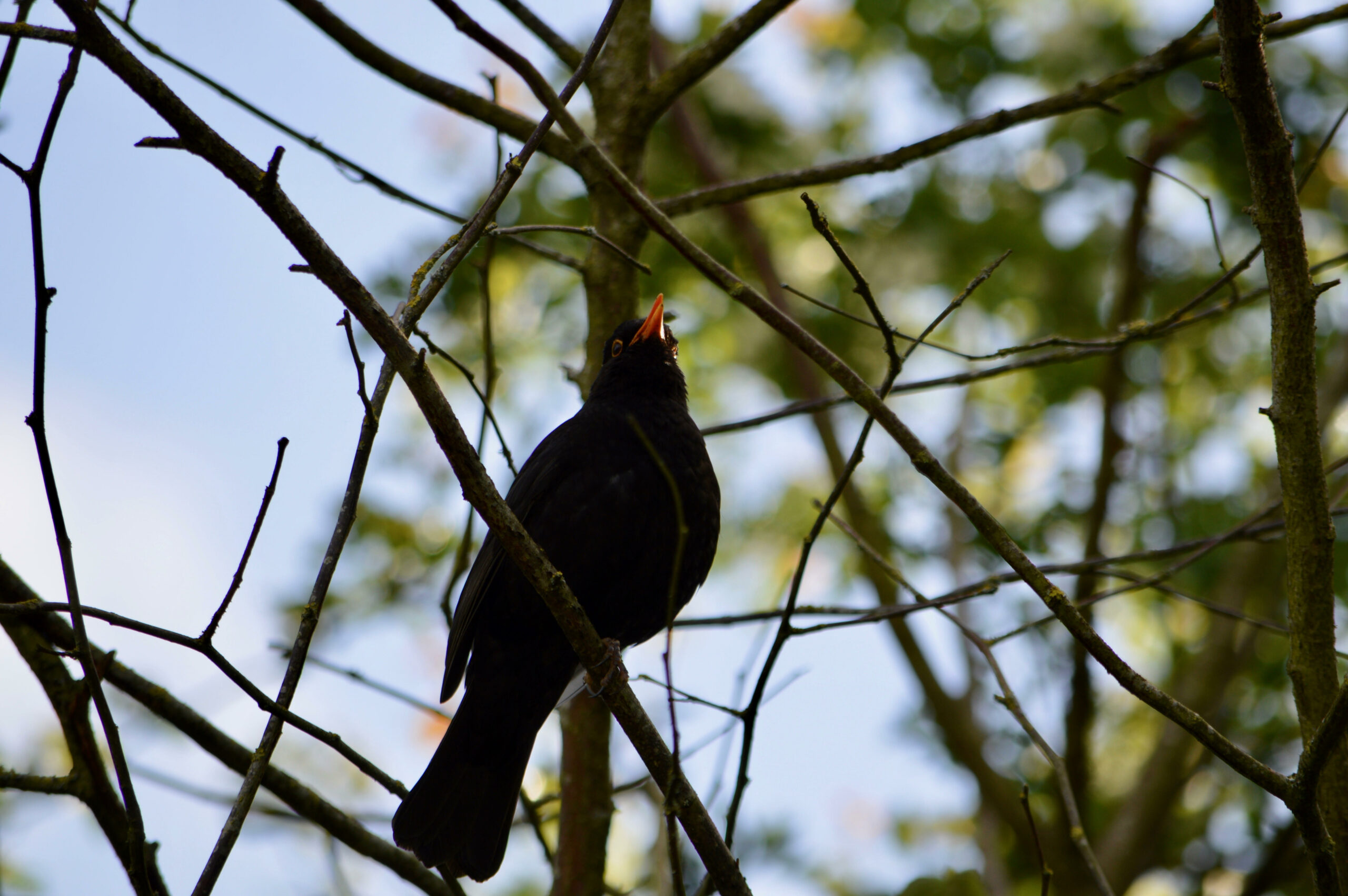
Blackbird stood on a branch with trees and blue sky behind it.
Blackbird – Catherine Mitson

Elle took part in the event from her garden and spotted: 

2 Blue Tits 

1 Dunnock  

1 Grey Wagtail 

2 Wood Pigeon 

1 Magpie  

1 Great Tit 


Mal took part in the event from her local park and spotted: 

3 Carrion Crow 

1 Buzzard 


Daniel took part in the event from his garden and spotted: 

10 Chaffinch

7 Blue Tits

5 Long Tailed Tits

4 House Sparrow

3 Great Tits

2 Goldfinch

1 Coal Tit

1 Blackbird

1 Wren

1 Dunnock

1 Robin 

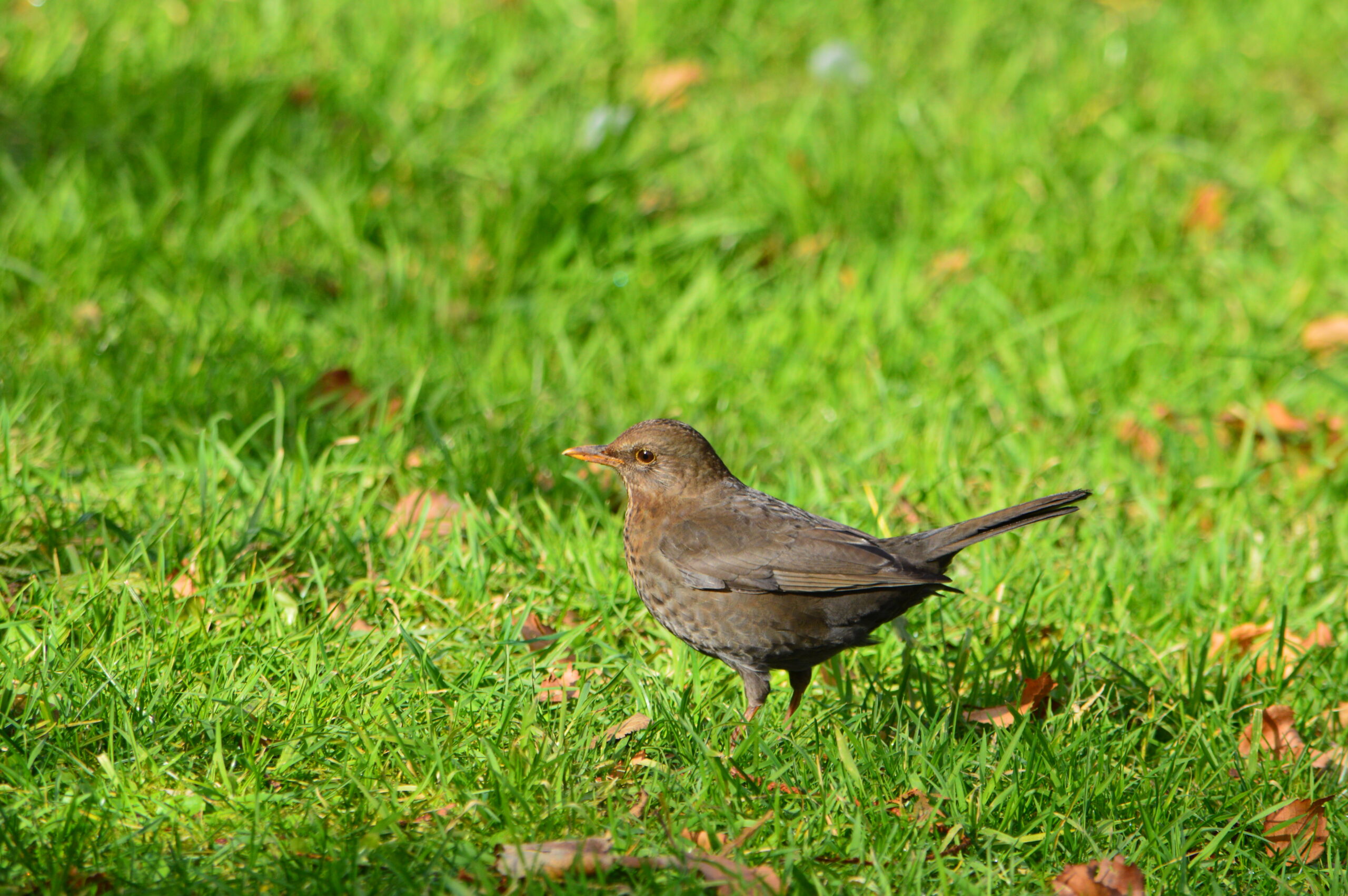
Female Blackbird stood on grass covered in leaves.
Blackbird – Catherine Mitson

We’d also love to hear what you spotted if you took part – let us know in the comments below.


The RSPB: 

For more information on UK garden birds, identification guides, the 2024 Big Garden Birdwatch, past results and more, please visit the RSPB website.