Universities are hallowed seats of learning and University Presses their beacons. Princeton University Press embrace the highest standards of publishing as embodied in the work of their authors from Albert Einstein in their earliest years to the present.
Princeton University Press pride themselves on bringing scholarly ideas to the world; they publish an acclaimed list by eminent authors in subjects that are core interests for NHBS customers. So, during February and March 2018, it is our great pleasure to offer 25% off all Princeton University Press books, available on our website and distributed in the UK.
Our current top-ten Princeton University Press titles:
Far From Land
Hardback | Due February 2018 £18.95£24.95
WILDGuides produce a series of definitive yet simple-to-use photographic guides to Britain’s wildlife. They also publish field and visitor guides to a wide range of wildlife hot-spots around the world. More recently they have embarked upon a series of photographic guides to the bird families of the world.
To complement the Princeton University Press promotion, NHBS are offering 25% or more off all WILDGuide titles until the end of March 2018.
We caught up with the authors, Keith Betton and Mark Avery, to ask them some questions about this insightful, humorous, thought-provoking and thoroughly unique approach to getting to the core of what makes birders tick.
Many of the interviewees’ route into birding was roaming the countryside near their homes during their childhood, often in rural locations. With parents now reluctant to let their children stray and wild spaces less common, do you think this presents a problem and if so, what is the best route now for children to discover and connect with the natural world?
Keith: I do see this as a problem for many young people who want to experience nature. Also, it is now more complicated for schools to organise nature rambles because of the health and safety checks that need to be made. There are still great local groups organised by RSPB Wildlife Explorers and some of the Wildlife Trusts – but just going out on your own is no longer an easy option.
Mark: It is a bit of a problem – but arguably the problem is in the parents’ heads. Looking back, I think I was a bit too cautious with my children and I was a lot less cautious than many parents. It is to do with what is normal – when I was a kid I headed out into the countryside all day and apart from a few bruises and grazes never came to any harm, but very few children get that delicious freedom these days.
I was encouraged that so many birders end up working in wildlife/conservation. What do you think inspires a young birder to move into conservation and not just focus on birds?
Keith: This is more a question for Mark I think. But they need to have passion for the bigger picture of conservation and not be thinking about earning much money.
Mark: Doing something that you feel is worthwhile and working with kindred spirits is a great way to spend your working life. You spend a lot of time at work – why not get a real kick out of it!
As the title suggests, all the interviewees were using binoculars and telescopes from quite an early age. I had binoculars from an early age (ostensibly for plane-spotting) but preferred to use my normal sight. Is it possible to be a birder without binoculars? Can you think of the gains and losses from using the naked eye instead of magnification?
Keith: The likes of Gilbert White in the 1700s made do without binoculars as they had not been invented, but today they are easy to obtain and don’t have to cost a fortune. Using all of your senses to detect nature is important, but unless you can see the details of the plumage you are missing out on so much.
Mark: Ears are important too. I’ve sometimes recorded how many species I detect and identify by sound before sight and it’s usually about 40% of them on a walk around my local area. Being attuned to nature comes with time. I have been walking down a busy noisy street in London and heard a bird call way above my head (often a Grey Wagtail – a bird with a loud simple flight call) and looked up to see it. No-one else paid it any attention of course. If I’d seen anyone else looking up I’d have known they were birders.
There is lots of travelling in this book; I’m going to avoid the obvious question regarding carbon footprint and concentrate on the positive. Jon Hornbuckle’s alarmingly dangerous travel adventures also resulted in him helping protect endangered birds and forests in Peru. What are the benefits travelling birders can bring to the birding and conservation movements?
Keith: If there were no people watching birds and wildlife in many of the world’s national parks then I think a significant number would be turned over to agriculture. If we all travelled everywhere the world’s carbon emissions would increase to the extent that climate change would accelerate further. But if birders travel to conservation areas then the local people have a reason to want those areas to be saved.
Mark: No, the obvious question is the best one. Why do nature lovers travel so much when they know it harms nature? Beats me!
In the ‘Last Thoughts’ chapter of the book you mention that the demographic for birders is rather mature and mainly men. You claim this gender balance is improving and bearing that in mind, what do you think a similar book to yours would look like in twenty years time?
Keith: While the gender imbalance is shifting I doubt it will ever reach 50/50, so such a book would probably still contain more accounts from males than females. The average age in both of our books was around 50-60, and partly that’s because you want to talk about what people have done in the past – and older people have more stories to tell. But it would be good to move that average age down a bit!
Mark: I think the differences in birding and nature conservation in 20 years’ time will be more interesting than the gender of who is talking about them. But I hope and expect a more even gender balance.
There was often some discussion about ‘boots on the ground’ verses ‘reports and research’ approach to birds and conservation. What are your thought about the right balance between meetings, media and marketing strategies verses getting your hands dirty in ‘the field’?
Keith: You need both – but the danger is that too much money can be devoted to discussing a conservation plan and then not enough to make the plan happen. One of my biggest concerns is the obsession with safety audits before even a simple action. I was really struck by Roy Dennis’s account of being at an Osprey nest tree that was at risk of falling down and just needed a few nails and strips of timber to keep it in place. None of the staff sent to inspect it could fix the tree as there had not been a full safety audit, so Roy just climbed up and did it himself. That’s boots on the ground (well boots on the tree actually!).
Mark: Conservation needs both. I started as a scientist working in the field – and loved it. But if you work for an organisation, and you rise up the hierarchy, you are going to spend more time wearing a tie, sitting in meetings and less in the rain with sore feet. We really do need people with a wide variety of skills to change the world. I do think though, well I would wouldn’t I, that having some senior people who have come through the ranks and know what it is like out in the field and at the base of the organisation is a good thing?
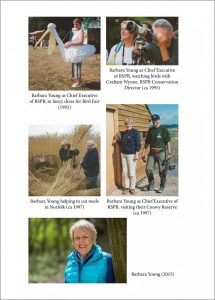
I really enjoyed Barbara Young’s interview, she had so much energy and conviction. I imagine her strident views and no-nonsense approach shook a few people up and she was convinced that nature conservation is a political issue. Do you agree – should nature conservation be more political, should birders and anglers for example see common ground, put differences aside and be a stronger political voice – should they even back a political party which shares their values or is that too far a step? If it is too far a step, how do you think the voice of birders and conservationists can be heard in the modern media blizzard that everyone is subjected to?
Keith: I’ll let Mark answer
Mark: Nature conservation is self-evidently political because it depends on altering people’s behaviour (and often they don’t want to change). You can’t increase Skylark numbers much without influencing hundreds or thousands of farmers. It’s difficult to talk to them all and persuade them to farm differently, but a change in incentives or legal requirements can get to lots of them. And that’s politics! Whether you use a stick or a carrot is politics. I don’t for a moment claim that birdwatchers must be political, but nature conservationists have to influence politics to have much impact. And the organisations to which we pay our subscriptions have to do a better job, as came out in a couple of interviews, at making that case. I don’t think that birders and anglers have completely overlapping views, but they do have partly overlapping needs – and that’s why they should work closer together on some issues (even if they fight like cats on others).
I can see why searching for rarities would be so addictive and many of the interviewees are very keen on recording them: what rarities do you expect to see turning up on these shores and which birds might go from rare to common in the UK over the next ten years?
Keith: Already in the last ten years my main birding area (Hampshire) has lost Yellow Wagtail and Tree Sparrow as a breeding species, and soon we may lose Willow Tit and Wood Warbler. We are likely to gain Great White Egret and Cattle Egret as breeders in the next ten years. As for real vagrants I think we’ll just keep getting a few new ones, although species that are declining in Europe (such as Aquatic Warbler) will turn up much less often.
Mark: Experience shows that we aren’t very good at getting these guesses right! Pass!
My final question maybe should have been my first, but can you tell me what inspired you to start interviewing birders in the first place?
Keith: It struck me that some of the real trailblazers of ornithology (such as Phil Hollom) were not going to be able to share their stories for much longer and so I sat down and got him to tell me about his life. Mark had a similar idea and came up with the idea for Behind the Binoculars. He wanted to interview me for the book. I agreed, and as it was still an early idea I suggested some other people who might be interesting to interview. In the end we realised we both had lots of ideas, and we agreed to work as a team.
Mark: They are interesting – sometimes peculiar, sometimes inspirational but interesting all the same.
About the authors
Keith Betton is a keen world birder, having seen over 8,000 species in over 100 countries. In the UK he is heavily involved in bird monitoring, where he is a County Recorder. He has been a Council member of both the RSPB and the BTO, currently Vice President of the latter.
Dr Mark Avery, many moons ago, worked for the RSPB and for 13 years was its Conservation Director. He is now a writer, blogger and environmental campaigner and is prominent in the discussions over the future of driven grouse shooting in the UK.
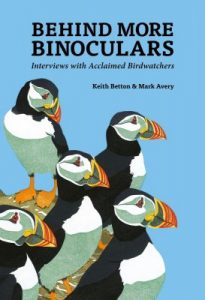
Behind More Binoculars: Interviews with Acclaimed Birdwatchers is available to order from NHBS
Signed Copies Available
NHBS attended the recent BTO Conference and Keith has kindly signed some stock of Behind More Binoculars; we have a very limited stock, so should you order, please state ‘signed copy’ in the comments and we will do our best. If you want to catch up on the first volume of interviews we currently have a special offer on the hardback edition.
From all of us at NHBS, we wish you plenty of happy and successful birding adventures in 2018.
During November 2017, we are offering 20% off University of Chicago Press titles
If universities are hallowed seats of learning, then University Presses surely are their beacons – beaming out knowledge and understanding, keeping the barbarians at bay! And of the world’s University presses, Chicago University Press is in the vanguard, with a long (since 1892) and illustrious list in subjects that are core interests for NHBS customers: ecology, evolutionary biology, palaeontology, earth history, conservation, history of natural history, forests, marine ecosystems, and zoology.
So, during November 2017, it is our great pleasure to offer 20% off all Chicago UP titles published before November 2017 and distributed in the UK. You can browse the full list of titles at nhbs.com. If you don’t find what you are looking for – but know it is published by Chicago UP – then send an email to customer.services@nhbs.com and we will be glad to source it for you, at 20% off, during November 2017.
Foraging was my first introduction to the natural world.
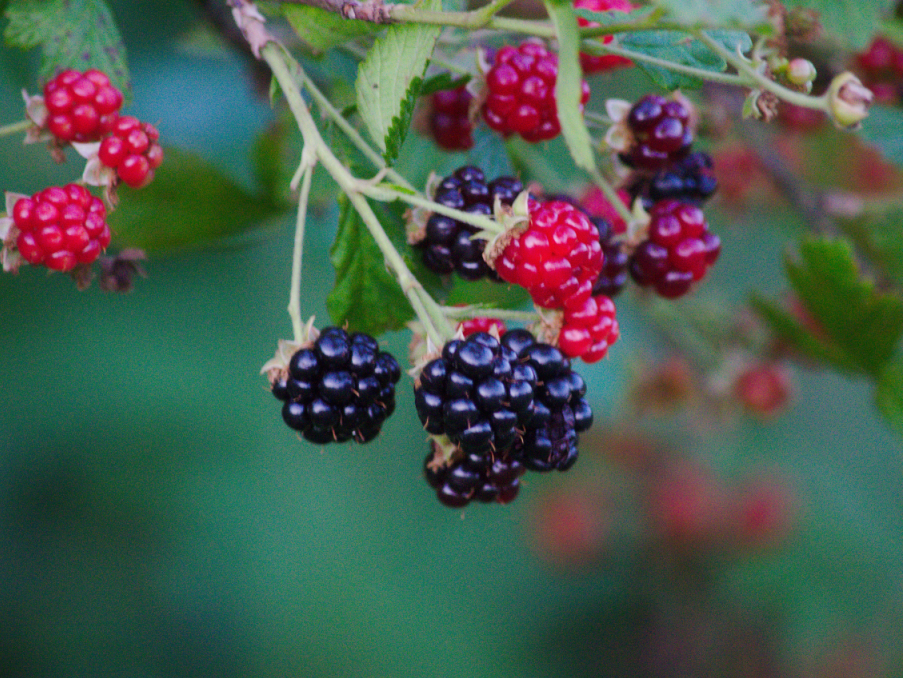
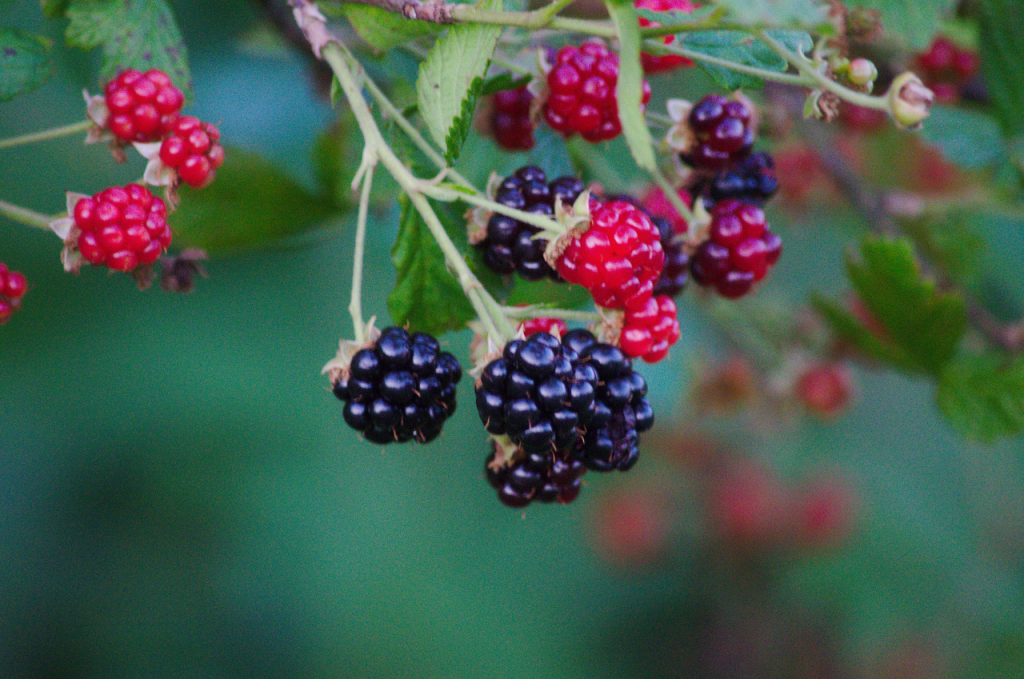
While sounding slightly trite, this statement is non-the-less true. I grew up in a town, like most of us do, and before I started foraging for nothing more exciting than blackberries I didn’t pay much attention to ‘nature.’
So, what did foraging teach me about the natural world that climbing trees and making dens couldn’t? Simply the realisation that blossoms provide pollen to pollinators such as bees, enabling the trees and shrubs to produce fruit. Eureka! So, that’s what bees are for! Then there are the seasons: not just for influencing the contents of the wardrobe, seasons were the on/off or pause for everything. I began to get excited, I discovered wild mushrooms, I was twelve and I’ve been foraging ever since.
Are we foraging too much?
Foraging is quite a controversial issue. There are lots of passionate arguments for and against it and a quick browse of the subject on the internet will tell you more. Like many, I am concerned that professional foragers can damage the natural environment. It seems logical that stripping out all the mushrooms or sea kale from a small area will damage that environment in some way. Surely foragers just need to abide by good practice, it’s the practitioner’s actions not the practice itself that can cause problems. Then there is the notion of sustaining oneself with ‘wild food.’ At best this notion is romantic, more likely delusional. My love of foraging is wholly based on getting outdoors and learning about nature – foraging is not an alternative to going to the shops.
Is it dangerous?
Firstly, you do need a book, especially if you are foraging for mushrooms; mis-identification can and does have dire consequences. You need to be careful and acquire knowledge with experience. You discover a sought-after Boletus edulis, considered the king of all mushrooms and totally delicious (I can vouch that they are). However, before you enjoy your gourmet mushroom, make sure the stem doesn’t turn blue when cut, otherwise you’re eating Boletus erythropus and are in for an unpleasant stomach ache. More serious consequences can occur from eating the morbidly named destroying angel, Amanita bisporigera, or the death cap, Amanita phalloides. Please be very familiar with both before you eat wild mushrooms. A book will suffice as a identification checklist, but the best way is to find a specimen and take note of all its pertinent features, cross-referencing with more than one book if possible. Once you can confidently identify a destroying angel or a death cap, you can be confident the mushroom you are planning to eat isn’t one of them.
Away from the more well documented mushroom poisoning, you might find yourself spending your evening taking the tiny stalks out of every single elderberry in the clusters you’ve picked – the leaves, twigs, branches, stalks, seeds, and roots of Sambucus plants can contain a cyanidin glycoside, so it’s best to be safe. Oh, and you need to cook the berries too. You don’t have to take risks though, as the Woodland Trust has planted many community orchards in towns, resulting in enough blackberry and apple jam to last you a whole year.
Which books should I use?
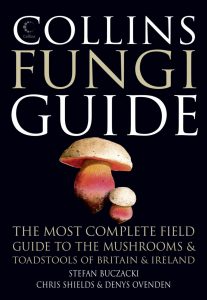
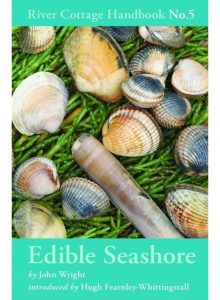
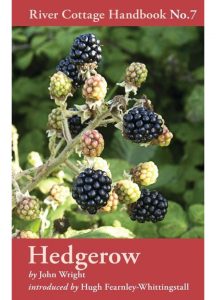
There are lots of books available and we have compiled a short list here for you to browse. In no particular order, the following contain interesting and practical information on foraging:
Being outside in all weathers, learning about nature, connecting with the natural world, acquiring more and more knowledge and experience: whether you are in town, country or even the city there will be plants growing everywhere that you can eat. It’s fun, slightly dangerous and can give children their first and lasting experience of connecting with nature. It did that for me and has stayed, and will stay with me all my life.
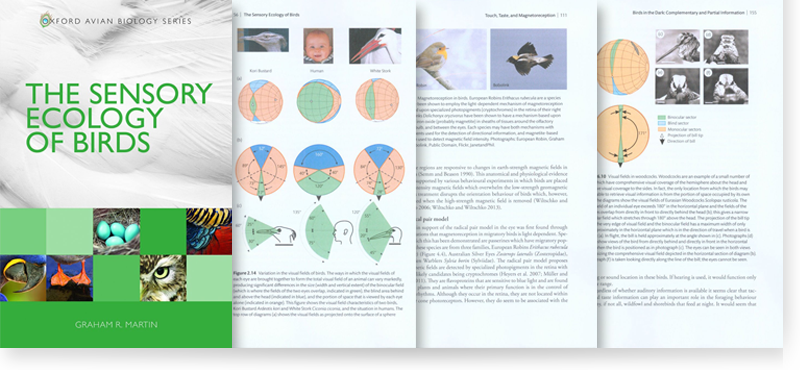
The Sensory Ecology of Birds is a fascinating new work that explores the sensory world of birds from an evolutionary and ecological perspective. The author Professor Graham Martin gives us some insights into his inspiration, the incredible diversity of avian sensory adaptations, and how studying sensory ecology can help in developing practical conservation solutions.
Professor Graham Martin – Author of The Sensory Ecology of Birds
How did you first become interested in bird senses?
Through owls. As a child I used to listen to tawny owls calling all through the night in a nearby wood and I wanted to know what they were doing and how they did it. My father took me round the woods at night and that experience led me to wanting to know more about the eyesight of owls.
What inspired you to write the book and what kind of readers do you think would find it useful?
I have been studying bird senses all of my working career. Nearly 50 years ago I started to get paid for looking into bird senses; it has been a strange and exciting way to spend my time. After such a long time of investigating the senses of so many different birds I wanted to bring it all together, to provide an overview that will help people understand birds from a new perspective. I think anyone interested in birds will enjoy the book and find it useful. No matter which group of species intrigues you most, this book will enable you to see them from a new perspective. Understanding bird senses really does challenge what we think birds are and how they go about their lives.
Sensory ecology is a relatively new field of research; could you explain a little about what it is and what makes it particularly relevant today?
Sensory Ecology is basically the study of the information that birds have at their disposal to guide their behaviour, to guide the key tasks that they perform every day to survive in different types of habitats. Different habitats present different challenges and to carry out tasks animals need different sorts of information. Birds have at their disposal a wide range of different sensory information, they are not just reliant upon vision. However, each species tends to be specialised for the gaining of certain types of information. Just as each species differs in its general ecology, each species also has a unique suite of information available to them. Sensory ecology is also a comparative science. It compares the information that different species use and tries to determine general principles that apply to the conduct of particular behaviours in different places. For example how different birds cope with activity at night or underwater.
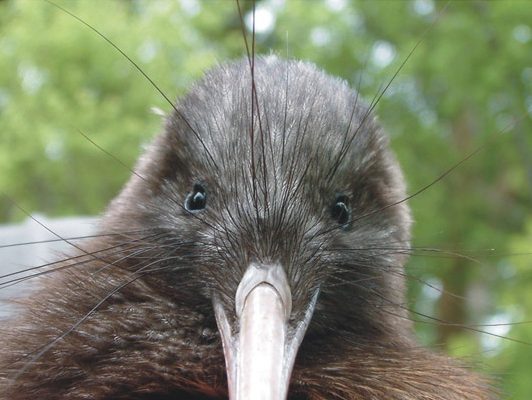
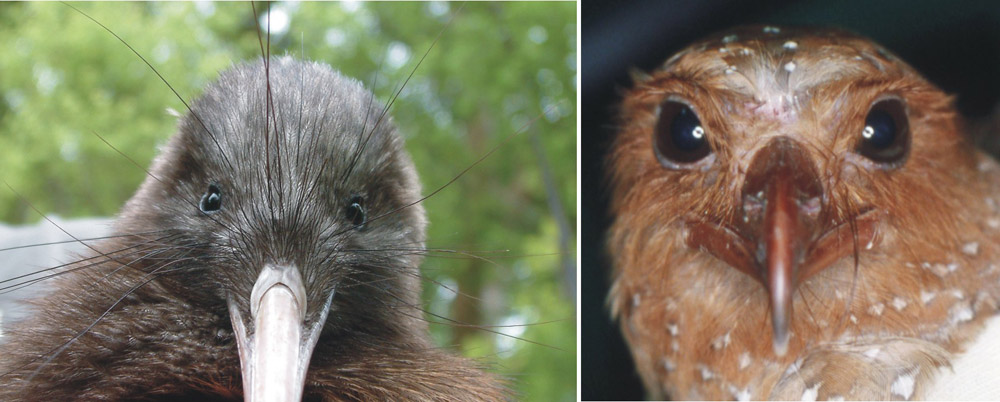
Sensory adaptations to overcome the challenges of being nocturnal in two species, the Kiwi (Apteryx mantelli) and Oilbird (Steatornis caripensis) – photo credit: Graham Martin
Sensory Ecology also looks at why evolution has favoured particular solutions to particular problems. I think the major result of this kind of approach is that it certainly challenges our assumptions about what birds are and also what humans are. We do not readily realise that our view of the world is very much shaped by the information that our senses provide. We are rather peculiar and specialised in the information that we use to guide our everyday behaviours. My hope is that people will come to understand the world through birds’ senses, to get a real “bird’s eye view”. In doing so we can understand why birds fall victim to collisions with obvious structures such as powerlines, wind turbines, motor vehicles, glass panes, fences, etc. We can then work out what to do to mitigate these problems that humans have thrown in birds’ way.
An understanding of how a species perceives its environment can be very useful in designing practical conservation measures. Could you give us some examples?
Yes, I have been involved in trying to understand why flying birds apparently fail to detect wind turbines and power lines, or diving birds fail to detect gill nets. These investigations have led to a number of ideas about what is actually happening when birds interact with these structures and what we can do to increase the chances that birds will detect and avoid them.
How do you think that studying avian sensory ecology can enhance our understanding of our own sensory capabilities and interaction with the world?
It gives a fresh perspective on how specialised and limited our own view of the world is. We make so many assumptions that the world is really as we experience it, but we experience the world in a very specialised way. Sensory ecology provides lots of new information and facts about how other animals interact with the world, what governs their behaviour, but equally importantly sensory ecology questions very soundly our understanding of “reality”, what is the world really like as opposed to what we, as just one species, think it is like. This is quite challenging but also exhilarating. We really are prisoners of our own senses, and so are all other animals. Sensory ecology gives us the opportunity to understand the world as perceived by other animals, not just how we think the world is. That is really important since it injects a little humility into how we think about the way we exploit the world.
Could you give us some insight into how birds can use different senses in combination to refine their interpretation of the world around them?
Owls provide a good example. Their vision is highly sensitive but not sufficiently sensitive to cope with all light levels that occur in woodland at night, so owls also rely heavily upon information from hearing to detect and locate moving prey. The nocturnal behaviour of owls requires these two key sources of information but even these are not enough. To make sense of the information that they have available to them the woodland owls need to be highly familiar with the place in which they live, hence their high degree of allegiance to particular sites. Other birds, such as ducks, parrots and ibises rely heavily upon the sense of touch to find food items. The degree to which this information is used has a knock on effect on how much the birds can see about them. So a duck that can feed exclusively using touch, such as a mallard, can see all around them, while a duck that needs to use vision in its foraging cannot see all around. This in turn has implications for the amount of time birds can spend foraging as opposed to looking around them, vigilant for predators. In many birds the sense of smell is now seen as a key source of information which governs not just foraging, but also social interactions.
Are there interesting examples of species that are specialists in one particular sense?
Usually birds rely upon at least two main senses that have become highly specialised and which are used in a complementary manner. For example, in ibises it might be touch and vision, in kiwi it is smell and touch, in some of the waders it is touch and taste, but in other waders touch and hearing.
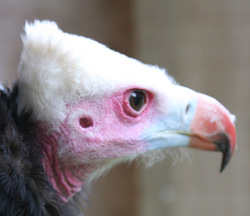
White-headed vulture – photo credit: Graham Martin
Probably the most obvious single sense specialisations are found among aerial predators such as eagles and falcons, they seem to be highly dependent upon vision to detect prey at a distance and then lock on to it during pursuit. However, we really don’t know anything about other aspects of their senses and there is a lot left to learn about them.
Can you tell us about any species that you have studied that you find particularly fascinating?
Oilbirds; they are really challenging to our assumptions about what birds are, how they live and what information they have available to them.
Oilbird (Steatornis caripensis) – photo credit: Graham Martin
Oilbirds are the most nocturnal of all birds, roosting and breeding deep in caves where no light penetrates, emerging only after dusk and then flying over the tropical rain forest canopy to find fruit. But they are a form of nightjar! In the complete darkness of caves they use echolocation to orient themselves and calls to locate mates. When searching for food in the canopy they use their sense of smell to detect ripe fruits, they have long touch sensitive bristles around the mouth. And their eyes have sensitivity close to the theoretical limits possible in vertebrate eyes. They seem to rely upon partial information from each of these senses, and use them in combination or in complementary ways. They really are marvellous, but in truth the senses of any birds, and how they are used, are fascinating and intriguing, it is a matter of delving deep enough, and asking the right questions.
In what kind of direction do you think future sensory ecology research is headed?
We now have available a lot of techniques to find out about the senses of birds, from behavioural studies, to physiology and anatomy. Armed with these techniques, and also with ways of thinking and measuring the perceptual challenges of different tasks and different environments, there are so many questions to investigate. We have some fascinating findings but we have only just scratched the surface with regard to species and it does seems clear that senses can be very finely tuned to different tasks. I like to compare the diversity of the bills that we find in birds with the same diversity in the senses in those species.
Every bill tells a story about form and function, about evolution, ecology and behaviour. The senses of birds show the same degree of diversity and tuning. So to me sensory ecology is a wide open field with lot of questions to investigate. To appreciate the world from a bird’s perspective will, of course, give us a much better understanding of how to mitigate the problems that humans have posed to birds by shaping the world for our own convenience.
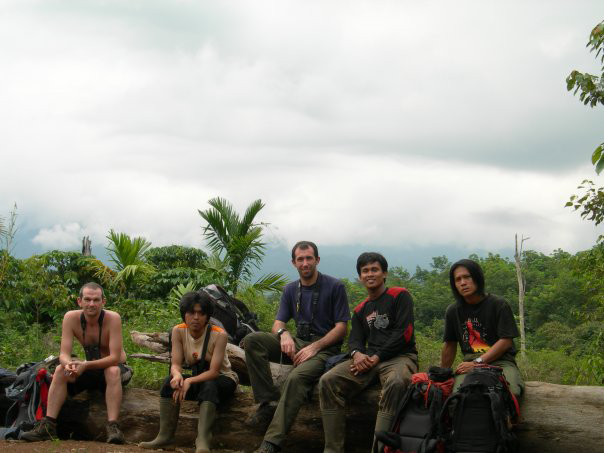
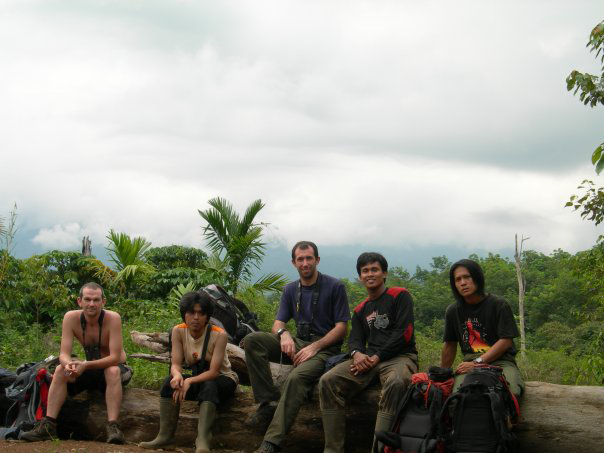
Authors James Eaton (centre) and Nick Brickle (far left) with field staff from FFI on the trail of Sumatran Ground Cuckoo near Kerinci Seblat National Park in Sumatra
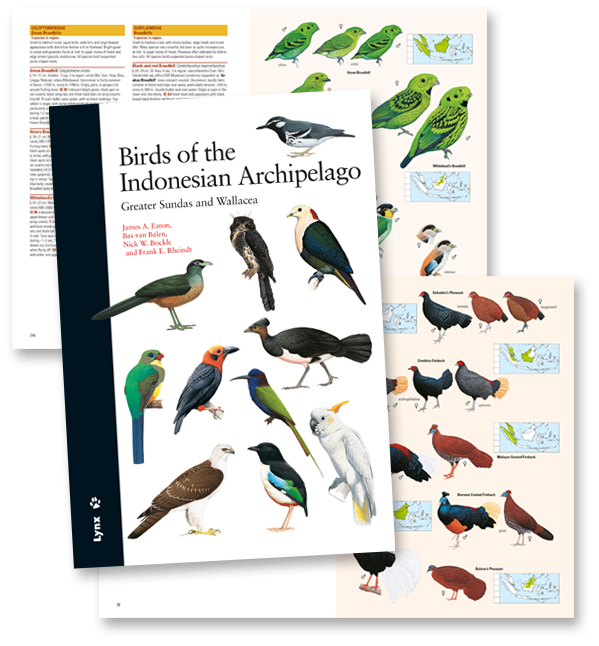
Birds of the Indonesian Archipelago: Greater Sundas and Wallacea is a new field guide dedicated to this major region which contains a massive 13% of the world’s avian biodiversity. Featuring over 2,500 illustrations, it describes all 1,417 bird species known to occur in the region.
Co-authors James Eaton and Nick Brickle share some of their birding insights and in-depth knowledge of the region’s avifauna in this interview with NHBS.
Could you tell us a little about how you became interested in birding and what drew you to this region in particular?
James – My Grandmother gave me a copy of Benson’s Observer’s Book of Birds when I was six, and, wanting to see some of the birds in the illustrations in real life, my father agreed to take me to the local nature reserve to look for them, and from that point on it became an obsession!
Nick – Similar story. I got hooked before I was 10 years old, partly thanks to Choughs, Peregrines and my dad’s old binoculars on family holidays to Pembrokeshire. Ten years later and I found myself surveying White-winged Ducks in Sumatra and never looked back.
What inspired you to create a field guide that covers the entire Indonesian Archipelago? It must have been quite a challenge to cover such a diverse region.
All four of us are pretty obsessed with the region’s birds, both as a hobby and professionally, and all of us have travelled pretty widely in the region over many years. During this time the region has gone from having no bird field guide at all, to having a variety of books covering different parts of it; some now already long out of print. We all decided it was time to put our passion into a project that could do justice to the spectacular diversity to be found here, and so agreed to work together to create the new guide.
Could you explain a little about the unique biogeography of the region which makes it such a biodiversity hotspot?
Hard to sum it up in a sentence! It’s a fantastic combination of Asian and Australasian bird families, spread across 1000s of islands, with Wallace’s famous line running down the middle, and spectacular endemism throughout. For more, read the biogeographical history section in the introduction to the field guide!
Who is your target audience for the book?
Anyone with an interest in the birds of the region! Visiting and resident birdwatchers are the obvious user, but given that it includes over 13% of the world’s birds, anyone with an interest in birds should enjoy it. In due course we also hope to produce an Indonesian language version of the guide, so as to make it more accessible to the growing number of local birdwatchers.
For someone visiting the area for the first time, what are some of the most exciting sites, and the key species that you recommend looking out for?
Where to start! Within Indonesia, the best places for an introduction are probably the mountains and forests of West Java, which are easy to visit from Jakarta, and where many of the most sought after Javan endemics can be seen; or perhaps North Sulawesi, where a trip to see hornbills, endemic kingfishers and Maleo can be combined with beaches and diving; or Bali, where one of Indonesia’s rarest and most spectacular birds – the Bali Starling – can be seen with a short trip from the beach resorts.
Another choice for an easy introduction is the Malaysian state of Sabah in the north of Borneo. Here many spectacular and endemic birds can be seen from the comfort of first-rate hotels, including Great Argus and the completely unique Bristlehead. After that, the opportunities are limitless!
How do you kit yourself out for a birdwatching trip to the region, and can you recommend a great birding gadget or app?
At the simplest, you don’t need much more than a pair of binoculars (and maybe a rain coat or umbrella!). Beyond that it depends a bit on where you are going and what you’d like to see: a telescope can be useful, but is rarely essential, sound playback or recording equipment can be very useful, a camera if you like to take photos, camping equipment if you plan to visit very remote regions. If you plan to explore off the beaten track (and there are lots of parts of the region that qualify as this!) then a phone and google maps can be a surprisingly useful way to look for patches of forest, and then all you need to do is try and make your way towards them!
Do you have any favourites among the species in the guide? Are there any that proved particularly elusive or challenging to observe?
James – Difficult question, can I give two answers? One would be Helmeted Hornbill. Such an iconic bird that symbolises the region’s rainforests. You know when you hear the bird’s incredible mechanical laughing call you are in the rainforest, but equally you are reminded how it is disappearing from many areas due to illegal hunting for its casque. Another would be Bornean Ground Cuckoo. Once a mysterious bird, largely unknown due to its shy nature, feeding on the rainforest floor, but now as our understanding of the species has grown it is possible to see it. Nothing gets the adrenalin pumping quite as much as looking for this species.
Nick – Too many to choose from! For me it would have to be something that walks on the ground… pretty much any pitta, pheasant or partridge is a candidate. Maybe Banded Pitta (any of the three species…)? Or the spectacular Ivory breasted Pitta? Then of course there is Rail Babbler… Actually, more often than not my favourite is the last new species that I have seen, or the next new one that I want to see!
With so many endemic species, there must be some that fill very specific ecological niches?
Endemism is very high in the region, and many species are only found within very small ranges, such as Boano Monarch on an island only 20km wide, or Sangihe Island, only 40km long at its widest point, and with five endemic bird species. Damar Flycatcher too, found in the dark understorey of a tiny island that requires two days’ boat travel from the nearest city. Kinabalu Grasshopper Warbler is only found on the top of two mountain tops in Borneo. When it comes to specific niches, however, small island endemics are often the opposite, in that they often expand their niche due to the absence of competitors. Birds filling very specific niches are probably more a feature of the large islands groups like Borneo and Sumatra, where the overall diversity is much greater.
It is quite well publicised that one of the biggest threats to the conservation of all Indonesian species is rapid deforestation to create palm oil plantations. Are there other threats to bird species which also need to be highlighted?
Deforestation is a big issue. There has been a huge loss of forest over the last decades, but vast areas still remain, and their value is finally starting to be more widely recognised. Hunting for the captive bird trade also remains a huge threat, particularly to those species most desired as pets, such as songbirds and parrots. Local and international groups are working hard to try and reduce this trade, in particular the public demand, but there is still much work to be done to change attitudes.
How can the international community help to support conservation efforts?
As birdwatchers one of the simplest and best things you can do is to visit the region and go birdwatching! Coming here, spending time, spending money, staying in local hotels, eating local food, using local guides, all serves to create a value to the forests and the wildlife that lives in them. This is not lost on local people or the regional governments. Beyond that think carefully about the products you buy from the region, to make sure they come from sustainable and fair sources. If you have money invested make sure that is not going to support destructive or exploitative practices in the region. Finally, support a good cause! There are many, many local NGOs established and emerging in Indonesia and the wider region, all working and lobbying hard to protect the region’s forest and wildlife. Your support will help them achieve this.
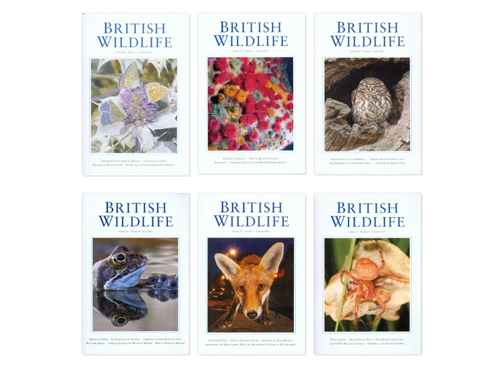
British Wildlife, the magazine for the modern naturalist, is now published by NHBS.
Since its launch in 1989, British Wildlife has established its position as the leading natural history magazine in the UK, providing essential reading for both enthusiasts and professional naturalists and wildlife conservationists.
Published bi-monthly, and only available by subscription, each issue has 84 information-packed pages. Written by top experts, the articles provide a unique opportunity for naturalists and wildlife conservationists to keep abreast of new discoveries and the latest trends.
The magazine was published until 2013 by British Wildlife Publishing, and after brief periods with Osprey Publishing and Bloomsbury Publishing, has now found a permanent home with NHBS. We also publish Conservation Land Management, a quarterly magazine for land managers.
Annual subscriptions for six issues start at £25. Gift Subscriptions are available.
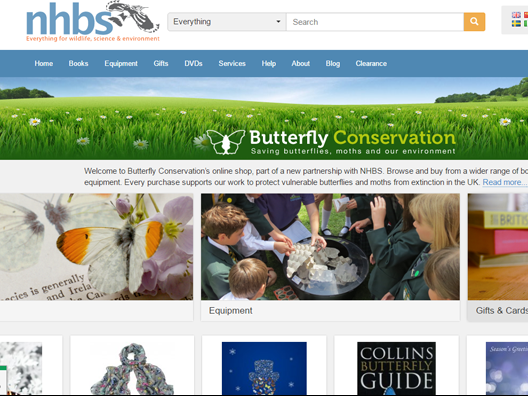
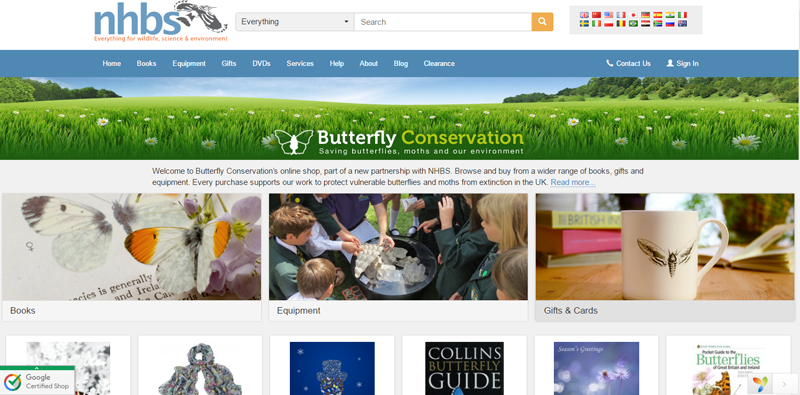
Butterfly Conservation and NHBS have recently launched the new Butterfly Conservation online shop in partnership. You can browse and buy from a fantastic range of books, gifts and equipment. Every sale raises funds to support conservation work to protect vulnerable butterflies and moths across the UK.
The brand new Butterfly Conservation shop, hosted by NHBS
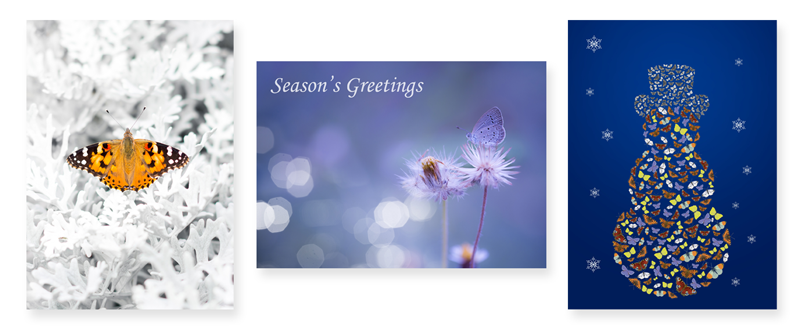
The popular Butterfly Conservation Christmas Cards are available now. Spread some festive cheer this Christmas and help protect butterflies and moths at the same time. All the cards are printed on FSC recycled card and are blank inside so you can add your own greeting.
Butterfly Conservation 2016 Christmas Cards
About the Butterfly Conservation and NHBS partnership
Butterfly Conservation is the UK charity dedicated to saving butterflies and moths. Butterflies and moths are key indicators of the health of our environment. They connect us to nature and contribute to our wellbeing. With over 30 nature reserves across the United Kingdom, Butterfly Conservation works in many ways to conserve butterflies and moths and improve their habitats, creating a better environment for us all.
Butterfly Conservation:
“NHBS offer the world’s largest selection of wildlife, science and conservation books, and have expanded their range to include ecology and biodiversity survey equipment and gifts. They have a fantastic reputation for customer service and quality items, and we are thrilled to be able to offer our members and supporters the chance to purchase a wider selection of items whilst still being able to raise vital funds for our conservation work.”
NHBS have worked with Redfern Natural History Productions for many years now and we were delighted to help out with this special project when Stewart McPherson approached us about it.
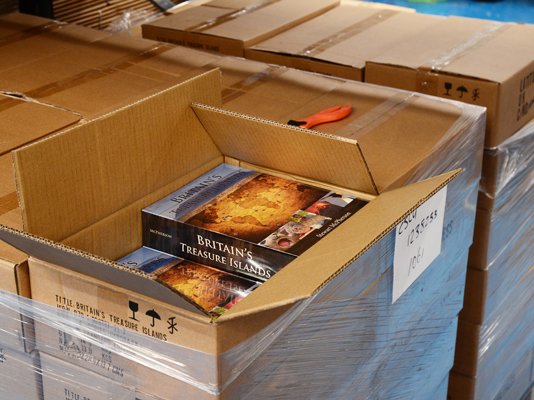
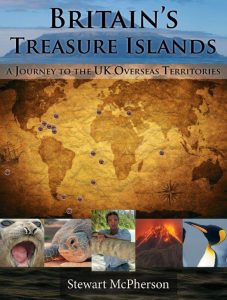
Thanks to the very generous sponsorship of Lord Ashcroft, Redfern were recently able to donate one copy of Stewart McPherson’s latest book Britain’s Treasure Islands: A Journey to the UK Overseas Territories to every secondary school in the UK and across the overseas territories. At NHBS we organised the packing and delivery of each of these books, which in total was 5250 copies.
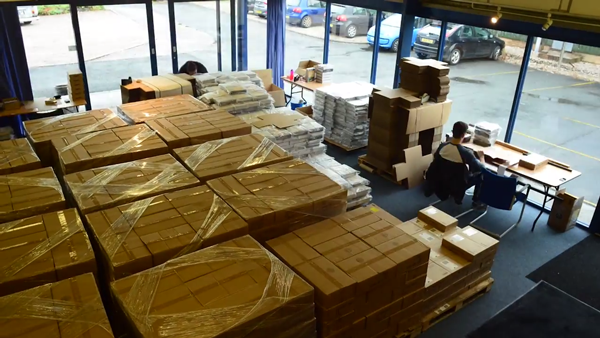
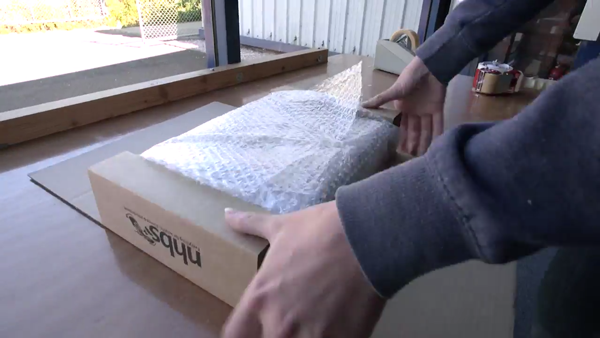
The dedicated packing station at NHBS
The UK Overseas Territories are home to thousands of species of animals and plants in habitats ranging from coral reefs to tropical rainforests, polar landscapes and deserts.
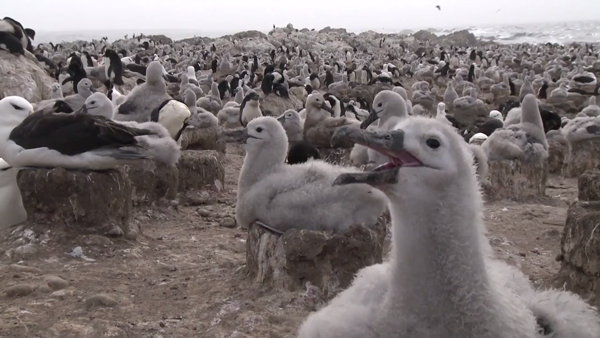
Albatross: still from YouTube video “Shipping 5350 books – one copy for every secondary school in the UK” – see below
In Britain’s Treasure Islands (aired as a three-part documentary on BBC4 in April, with the book accompanying the series), Stewart McPherson showcases this incredible variety of wildlife, explores the human culture and history of the islands, and documents his adventures in these remarkable lands.
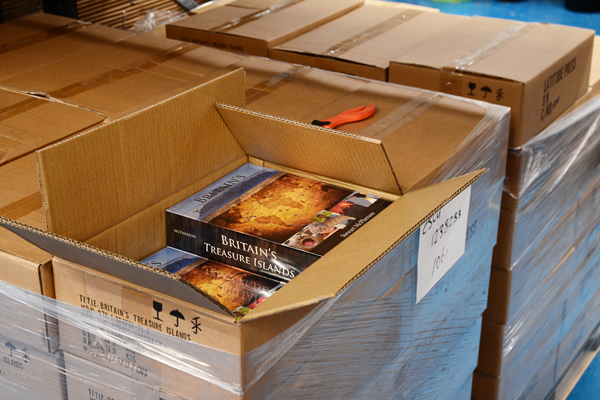
Britain’s Treasure Islands freshly unwrapped in the NHBS warehouse
This is a monumental work of over 700 pages, with more than 1,150 full colour images and 17 specially-commissioned gatefold maps on parchment paper showing the geography of each territory.
To send a copy of this wonderful book to every school, NHBS received 47 pallets of books directly from the printers, used seven pallets of specially designed cardboard boxes and 6039 metres of bubble wrap!
Unloading the pallets – all 47 of them!
Eventually when all the books were packed the couriers took away 53 pallets of books from NHBS’ warehouse in Totnes, Devon over the course of a week.
One down, five thousand to go…
The packing process took six people three and a half weeks to complete! You can watch the video below for a behind the scenes look at how this all happened.
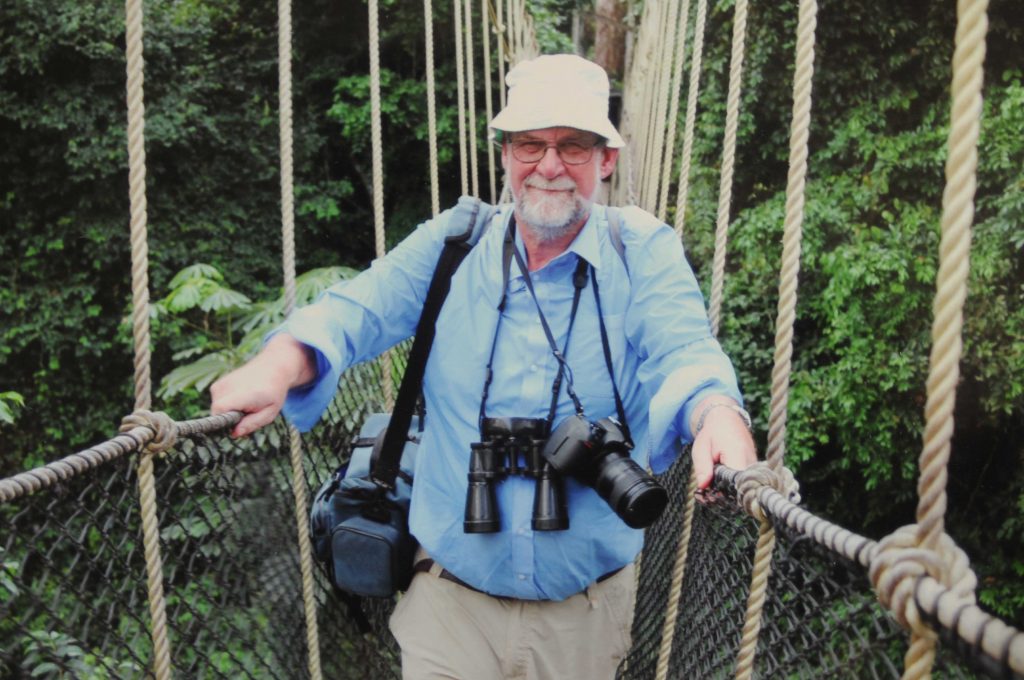
Between book writing, Michael Scott spends a lot of each year as a speaker on cruise ships – here he is exploring the Kakum National Park in Ghana.
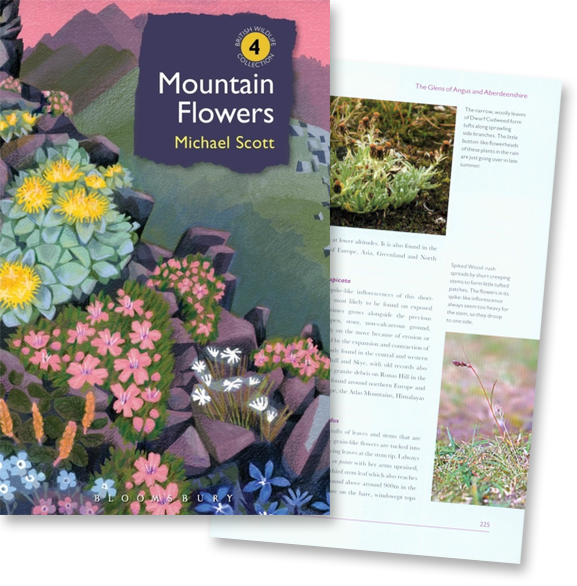
Michael Scott is a nature writer and cruise ship speaker who has had an interest in botany since his undergraduate studies at Aberdeen University. His latest book, Mountain Flowers, is an extensive and engrossing survey of Britain’s montane flora. Michael expands on the story of Diapensia (see below) in the August 2016 issue of British Wildlife.
Tell us about the book and who might find it interesting.
I suppose it’s aimed mostly at people who already have some general interest in the wild flowers of Britain. Perhaps they already know something about the flora of lowland areas but don’t quite know where to begin seeking out the more elusive species that grow at higher altitudes in the British mountains. The book describes the key places to visit and some of the characteristic species at each site. It also describes the ecological requirements of each species, and I’d really hope that will encourage people to explore more widely in the mountains and hopefully make new discoveries there.
Many of the mountain areas of Britain are stunningly beautiful, and I would be thrilled if people who love mountains were also encouraged to read the book and discover more about these wonderful wild areas and about the colourful plants that grow beneath their feet as they hike the fells or ‘bag their Munros’. I’ve tried to select photos for the book that are as attractive and compelling as possible to inspire readers to explore and investigate – or just to act as a wonderful souvenir of holidays in Snowdonia, the Lake District, the Scottish Highlands or wherever.
I best sum up my objective for the book at the end of chapter one: “If I can persuade a few… hillwalkers to slow their relentless pace, to look around them as they climb, to venture off the beaten path and explore an interesting-looking crag or delve into the watery runnels that seep from the tops – in other words, to enjoy seeing a hill, rather than just conquering it – then this book will have been truly worthwhile.”
How did you first become interested in botany?
I grew up near Edinburgh Zoo and from an early age spent all my spare time in the zoo getting to know the animals. By the age of 8, I’d decided I wanted to be a zoologist when I grew up – which I thought meant going around the world looking at zoos! That enthusiasm never waned, and I went to Aberdeen University to study zoology. In first year we also had to study botany, and I found that new and fascinating. I knew that plants lay at the foot of all food chains, and therefore that plants were key to how the natural world worked, so I switched over to doing my degree in botany. I was lucky that the university had a field station at Bettyhill on the north coast of Scotland, and some of the first plants I got to know there were montane species growing at unusually low altitudes in the relative sub-arctic climate of the far north. Then, in Honours year, we had an amazing field trip to Obergurgl in the Alps, and I have been hooked on mountain flowers ever since.
You are now lucky enough to spend a lot of your time as a quest speaker on cruise ships around the world; how might you go about getting passengers interested in Britain’s mountain flowers?
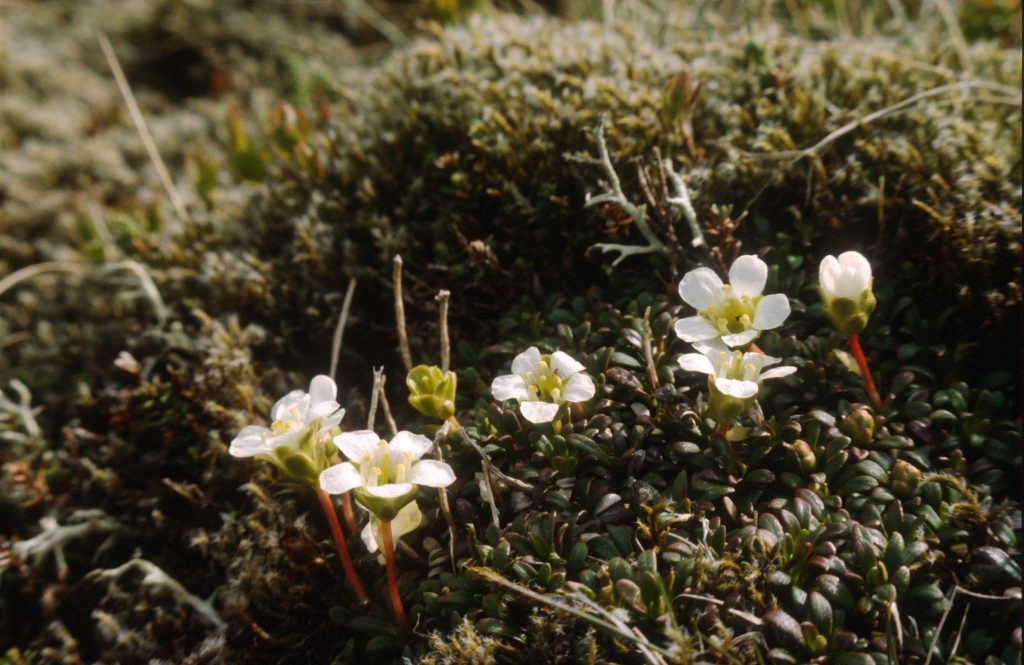
It’s funny that you should ask that, because I’m just about to go off on a cruise to Nova Scotia in Canada, and on one of the four days when we sail back across the Atlantic to Liverpool I’m planning a talk called The Lure of Mountain Flowers. I think I’m going to start that with the story of a birdwatcher called Charles Tebbutt, who is best known for his book on the birds of (distinctly unmountainous!) Huntingdonshire. In July 1951, he was walking on a rugged hillside in Inverness-shire, when he spotted a plant at his feet that he didn’t recognise. He collected a few samples of the flowers and leaves, which he sent to various botanic gardens and he was promptly told, with some excitement, that he had discovered a rather handsome flower called Diapensia* which had never previously been recorded in Britain.
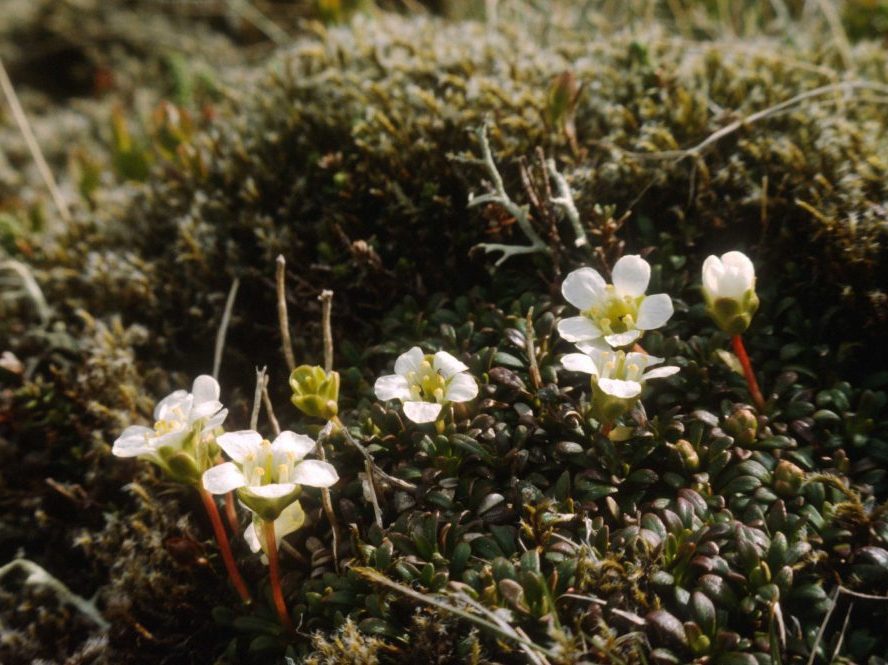
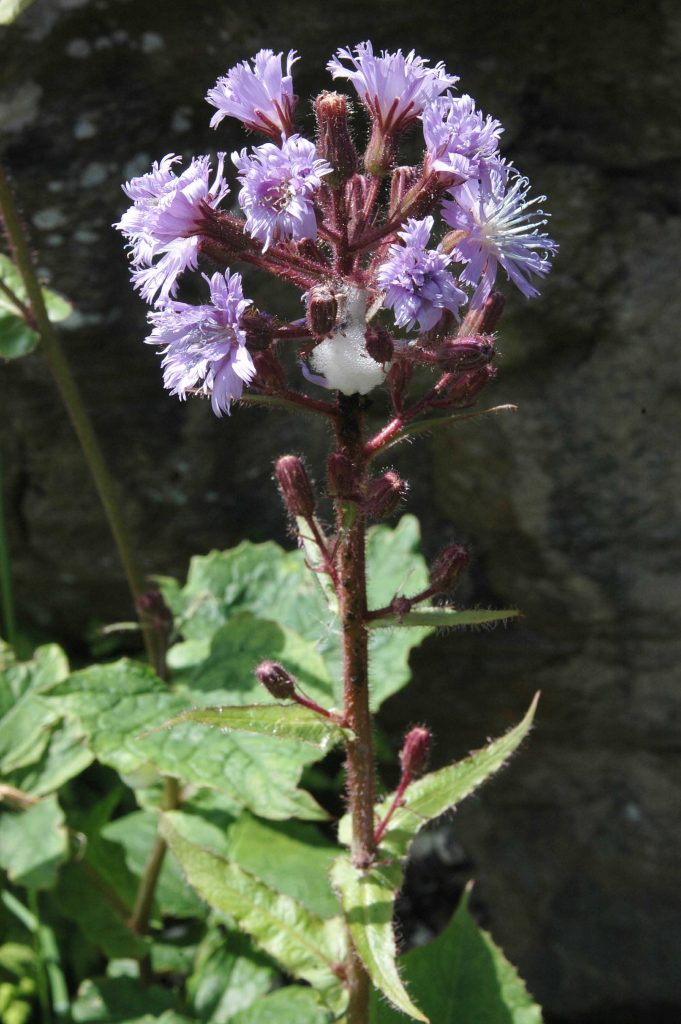
Diapensia on its remote hillside in the west Highlands of Scotland. Photo: Michael Scott
That may be 60 years ago now, but I think it shows that there might still be exciting discoveries to be made in the British mountains – and that you don’t need to be a professional botanist to make them! I’ll then go on to a series of beautiful scenic photographs, just to remind folk how beautiful our mountains are, then I’ll show some of our most attractive mountain plants to prove just how much they add to the allure of the hills. That will lead into the mystery stories behind these plants: I’ll speculate why Diapensia is still only known from that single, rather unremarkable hillside and what that might have to do with Norwegian commandos. I’ll tell the story of two attractive little plants that cling to survival in Snowdonia, and why a relative of the garden pinks is known from only two very different sites, one a crag in Lake District and the other a hillside of shattered rocks in Angus. There are plenty of ‘ripping yarns’ from mountain botany to interest cruise ship passengers – and I hope they will also inspire readers of my book.
(* Incidentally, I apologise to any keen botanists reading this who, like me, know many plants better by their scientific names. As in the book, I’m not quoting scientific names here because I don’t want to scare off readers who aren’t botanists – and those of us who are botanists probably have plenty of books in which we can check the scientific names if we need them).
What distinguishes a mountain flower and how many such species occur in Britain?
That’s a really good question. Many of them are species which also grow in the Alpine regions of central Europe or in the Arctic regions of the far north, so they are categorised broadly as ‘arctic-alpines’ – a term that will be familiar to most gardeners. But Britain lies in a special position off the west coast of Europe and its climate is tempered by winds that come off the Atlantic. As a result, many alpine species grow here at dramatically lower altitudes than where they occur in the Alps, and some arctic species also grow here, far south of their normal latitudes. Several species meet on the mountain cliffs of the Lake District or the southern Highlands of Scotland that grow together nowhere else in the world (which makes these especially important conservation sites in an international perspective). I also list in the book several species that grow in Britain at their northernmost or their southernmost sites in the world.
So, although I could define a mountain plant as one that grows typically above, say, 1,500 feet, that doesn’t always work in Britain because many of these come down almost to sea-level on the wind-battered north coast of Scotland or on the Western and Northern Isles – and that’s what makes British mountain botanising so intriguing. In fact, I almost reverse the argument in the book. I have selected 152 species that I regard as typically montane, then, for the purposes of the book, I define mountains as places where these plants grow – and these range from unexpected places like The Lizard in Cornwall, right up to the island of Unst in Shetland.
Tell us more about the unique conditions in the UK and their effect on mountain flower distribution.
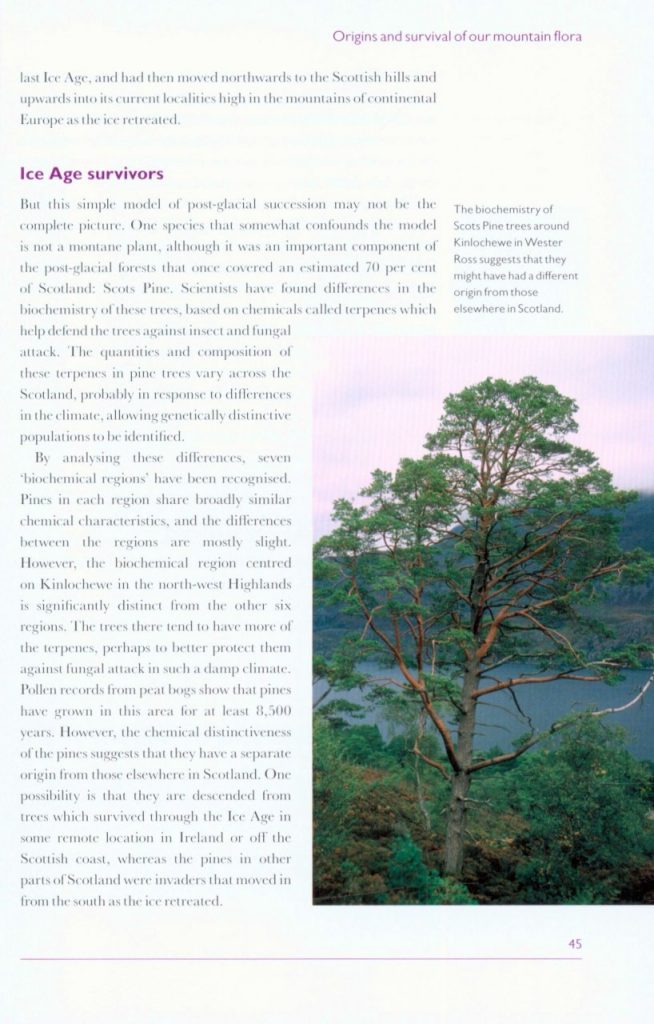
The important thing to recognise is that many of our montane species have been clinging to survival on remote mountain ledges since just after the end of the last Ice Age. They survive there because of the chance juxtaposition of the right kind of rock and soil and a local microclimate that mimics the conditions to which they are adapted elsewhere in the high mountains of Europe or the high Arctic. It is vitally important that we try to understand why they survive there and continue to monitor their populations, because these are the plants that will give us the first warning of changes that are likely to happen on a much bigger scale in the Alps and the Arctic because of climate change. They are vital “miners’ canaries” for what lies ahead – plus I think Britain would be infinitely the poorer were we to lose them from our hills.
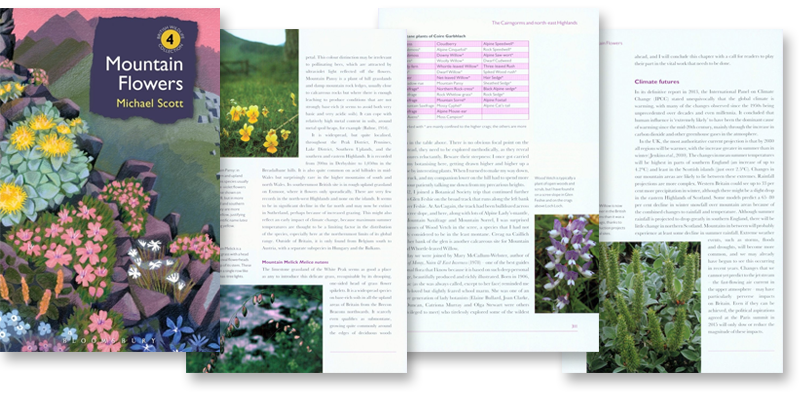
Page detail from Mountain Flowers
How have 21st century developments in botanical research affected our understanding of mountain flower ecology?
Hmm… In the strictest sense of botanical research, the latest genetic studies have sometimes made life a bit more difficult, especially for ageing botanists like me! It has changed our understanding of the relationships between species which in turn has led to a lot of changes in scientific names and how species fit into our concepts of plant families. It has also shown that one or two of what we thought were good mountain species are actually just variants of much commoner species, highly adapted to the mountain environment.
What has increased hugely over the 60 years since the last major account of British mountain flowers was published is our knowledge of the distribution of our mountain flowers, thanks to the hard work of hundreds of botanists in recording schemes masterminded by the Botanical Society of Britain & Ireland (BSBI). The BSBI published increasingly comprehensive atlases showing the distribution of our native plants in 1962 and in 2002, and recorders are now hard at work gathering data for the next Atlas 2020 project, due to be completed in three years’ time, while, all round the country, enthusiastic botanists have compiled and published detailed accounts of the plants of their local counties or areas. I was given privileged access to the BSBI’s online databases in compiling the information in my book, and I am hugely grateful for that.
What I now want is for readers to prove me wrong! From the BSBI databases, I have tried to note the northernmost and the southernmost sites from where the key montane species have been recorded, and the highest and lowest altitudes at which they have been found, but I am sure keen readers could find new records beyond these extremes – and report them, I hope, to their local botanical recorder. I have reported on sites from which certain species appear to have died out, and I would be thrilled if that encouraged readers to go out and re-find the plants there.
What is the biggest conservation threat to mountain flowers in the UK?
I imagine most informed readers of the NHBS newsletter would expect me to say climate change was the biggest threat to mountain plants, and, in the long term, there is no doubt that climate change is a huge threat. But, as I have tried to show in the book, the impact of climate change on the mountain environment in the short to middle term is difficult to predict with any certainty and may not immediately be as disastrous as we fear.
What is beyond doubt is that, if we are to give montane plants any chance of adapting to the changes ahead, we need to get much better at managing our hills and mountains. Overgrazing by red deer is a huge problem across most of Scotland. The regular burning of moorland areas that are managed for the sport shooting of red grouse or to produce a ‘spring bite’ for sheep tends to encourage a few resilient species at the expense of many other, more delicate plants. Yet some mountain habitats also benefit from restricted amounts of grazing, and if continuing financial challenges lead to further declines of extensive sheep farming in the uplands that could become a big problem too. The challenge lies in getting the right balance between these conflicting priorities – and I’m afraid the decision by the people of England and Wales to leave the European Union (the EU has been a huge help in establishing conservation priorities in Britain) is not going to make that any easier.
Tell us about some specific species you find particularly interesting and that feature in the book.
Alpine Sowthistle of (legal) Scottish origin, growing in the author’s garden in Scotland. Photo: Michael Scott
In the book I have selected 18 species, most of which are rarities, whose distribution and survival particularly intrigues me. I call them “Three-star Mountain Enigmas” for reasons I explain in the book and I give an extended account of each of them. For some of these species, I hope to shed insight, based on the scientific researches of dedicated mountain botanists; for others, I can only pose questions, in the hope of inspiring someone to find an answer. And there are plenty of puzzles in our mountains. Why, for example, is Alpine Rockcress found only in a single corrie in Scotland, when it grows almost as a weed in disturbed ground in the Alps and Arctic? Why (and how) is Iceland Purslane dispersed all the way from Iceland to Tierra del Fuego, yet in Britain it only grows on gravelly slopes on the Isles of Skye and Mull?
In the book, I suggest that Alpine Sowthistle is restricted to tiny populations on just four remote cliffs in the eastern Highlands of Scotland because humans have almost completely destroyed the mountain woods in which it once grew (and where it still flourishes in the Alps and Scandinavia), and I show how the 2001 outbreak of Foot-and-mouth Disease revealed how Marsh Saxifrage and Alpine Foxtail grass are actually much commoner than we ever realised.
For someone interested in a bit of amateur research, where are some of the best spots for finding mountain flowers?
I’d always say that the best place to start is the montane site that is nearest to home, whether that’s the Brecon Beacons, the Peak District, the Pentland Hills or wherever – they’re all covered in the book. Then you can make regular visits through the spring and summer to find each of the local species in full flower and follow them through the season to catch them in seed too (there are some species which you can only identify with certainty if you can find their fruits as well as their flowers) – although I should add that, by the time you read this, it is probably a bit late in the year already for mountain plants, so buy the book and start planning for next year!
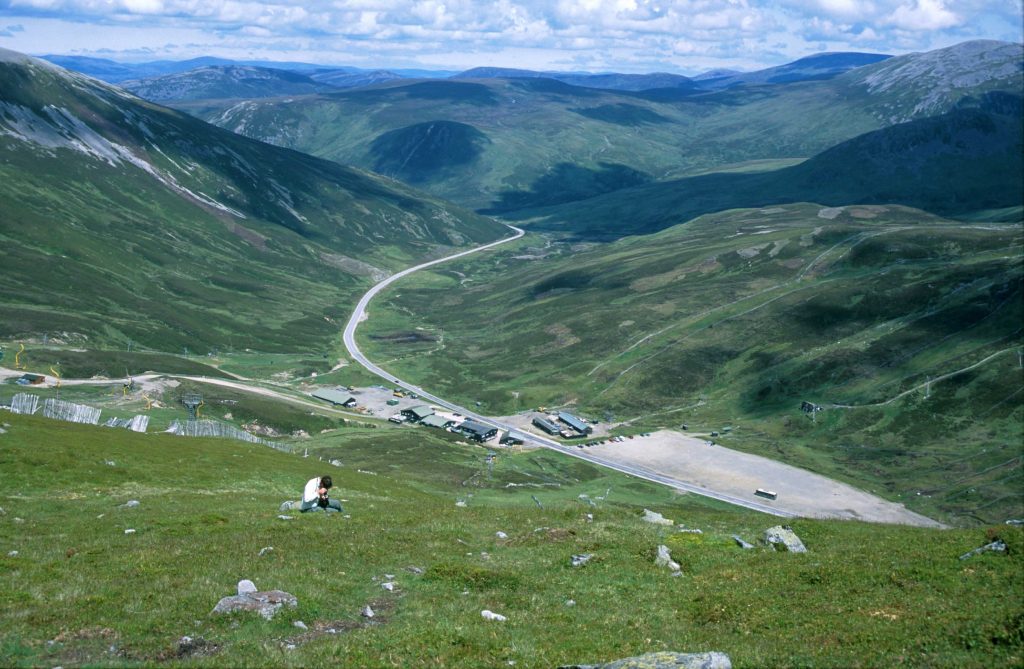
Once you have got to know the commoner montane species for your local patch, you can perhaps plan a holiday further afield to one of the real mountain hotspots, like Snowdonia or Upper Teesdale, the Breadalbane hills of Perthshire or the Cairngorm Mountains of Inverness-shire. One spot that I particularly recommend in the book is the area around the Glenshee Ski Area, south of Braemar in Aberdeenshire. The A93 road from Blairgowrie to Braemar rises here to 670m (around 2,200 feet), so montane species grow right beside the car park, but the area is already so well-used by skiers that you needn’t worry too much about damaging the vegetation – and there are some really special plants for plant explorers to find.
The slopes of the Glenshee Ski Area south of Braemar on the Perthshire/Aberdeenshire boundary are one of the most accessible sites to see a good range of Britain’s montane flora. Photo: Michael Scott
It is currently the school summer holiday period – any tips for getting kids interested in botany?
Another great question. Kids like action, and it’s the perfect time of year to show plants in action. Find the different kinds of fruits that plants produce and see how they are dispersed. Find the winged fruits (called samaras) of a sycamore tree or the ‘keys’ of an ash tree and work out how they spread. Who can get their fruit to travel furthest? Find some dandelion ‘clocks’. Don’t just see how may blows it takes to remove all the seeds from the ‘clock’; instead try to follow one of the seeds on its little parachute and find out how far it travels. If you can find a patch of Rosebay Willowherb, investigate how it spreads its seeds. If a riverside near you has been invaded by Himalayan Balsam (aka Policeman’s Helmet); see if you can work out how its explosive fruits have made it a successful ‘Alien Invader’ (in this case from India, not from Outer Space). How do the wild relatives of garden peas and strawberries spread – and what about potatoes? If you want to get really yucky, you might want to ask kids why they think tomato plants sometimes start growing beside sewage treatment plants!
If you have a boggy area nearby, see if you can find Common Butterwort growing there and investigate how its sticky leaves trap little insects which the plant then dissolves and absorbs to get the nutrients it needs to grow. Even better, see if you can find Common Sundew whose leaves are covered in red hairs which curve over to trap little insects caught by the sticky surface of the leaves. Then go online to discover how Venus Flytraps, Pitcher Plants and other insectivorous plants trap their prey – there are some great websites aimed at youngsters about these plants.


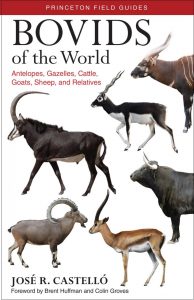 Bovids of the World: Antelopes, Gazelles, Cattle, Goats, Sheep, and Relatives
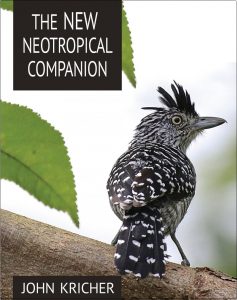 The New Neotropical Companion



 Britain’s Spiders: A Field Guide
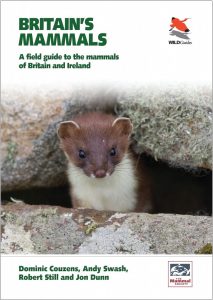 Britain’s Mammals: A Field Guide to the Mammals of Britain and Ireland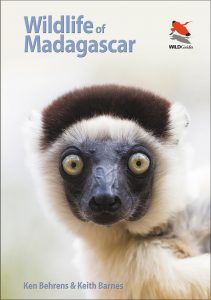
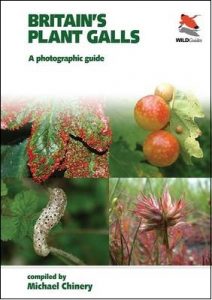
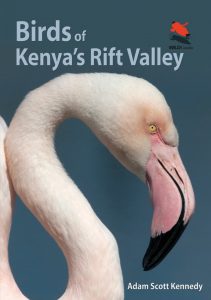 Birds of Kenya’s Rift Valley
 Keith Betton is a keen world birder, having seen over 8,000 species in over 100 countries. In the UK he is heavily involved in bird monitoring, where he is a County Recorder. He has been a Council member of both the RSPB and the BTO, currently Vice President of the latter.