Half of the wetlands in Europe, the continental US and China have been lost in the past 300 years, according to a new study. Researchers found that some areas, including the UK, Ireland and Germany, have lost more than 75%. In total, an area the size of India has disappeared globally. More than 60% of these losses were driven by drainage for growing crops on uplands. Other reasons included the conversion to paddy fields, the creation of urban areas and peat extraction.
According to a report by The Wildlife Trusts, HS2 Ltd is “undervaluing” the amount of damage it is doing to the environment while overvaluing the benefits of its compensation measures. Phase 1, covering 140 miles between London and the West Midlands, will cause 7.9 times more nature loss than accounted for, with Phase 2a causing around 3.6 times more. The report found watercourses, ponds and trees that have been missed out from the data produced by the firm, along with problems with how nature is being valued. Well-established, tree-lined and species-rich hedgerows were given lower nature value than the new hedgerows that HS2 Ltd is going to plant.
Erosion of beaches along the south-east coast of Australia is having a significant effect on local biodiversity. Some beaches in the area are becoming increasingly vulnerable to coastal erosion caused by successive years of La Niña events. A study monitoring the shoreline between Noosa’s Main Beach and Coolum found that the shoreline has retreated by about 20 metres, while the sand dunes have receded between 7 and 10m and have been vertically eroded by 2–3m.
Extinction Risk
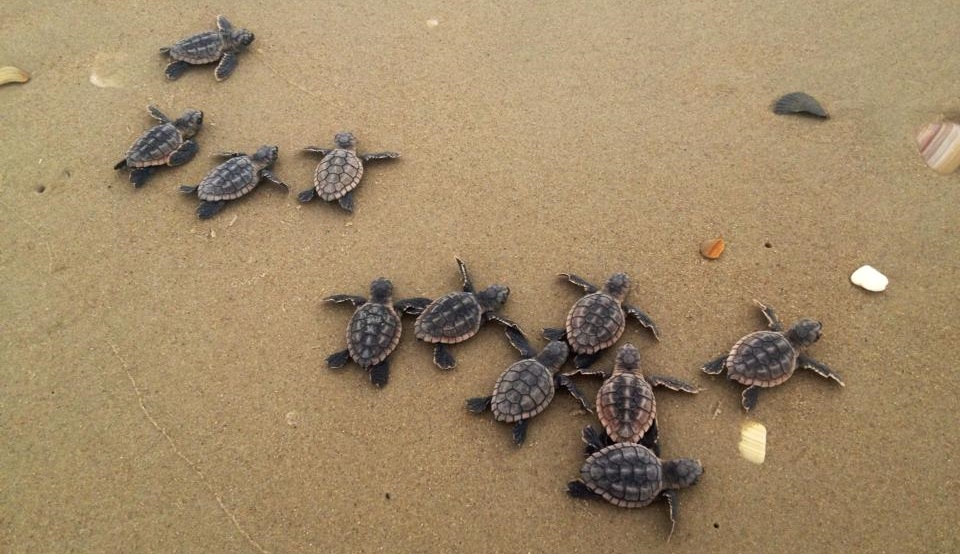
Sea turtles are under threat from warming seas and hotter beaches, according to new research. Australian scientists have suggested that marine turtles are unlikely to be able to change their nesting behaviour enough to mitigate the effects of higher sea surface temperatures. As the sex ratio of turtle hatchlings is determined by the temperature of the nests, warmer beaches will yield more females, impacting population dynamics. Higher temperatures have also been linked to lower hatchling success rates.
Sea turtles by Dawn Childs/USGS via NPS Climate Change Response via Flickr
The lynx is facing extinction in France, as the population is down to 150 adults at most. DNA tests have shown that the cats’ genetic diversity is so low that they will become locally extinct within the next 30 years unless there is urgent intervention. The species is under pressure from habitat loss, inbreeding, poaching and traffic collisions. The tests have shown that the population has a level of diversity equivalent to only 38 animals, and there are now calls to either introduce more lynxes from healthier groups or replace poached lynxes and exchange orphaned lynx cubs being cared for at wildlife rescue centres in various regions.
Pollution
Emissions of the five most harmful air pollutants dropped in 2018 across the European Union, including nitrogen oxides and ammonia. The new European Environment Agency report for 1990-2018 showed an overall trend of steady but slow progress by EU member states in reducing emissions of the main air pollutants present in Europe. The five most harmful air pollutants dropped between 1.6-6.7% between 2017 and 2018.
Policy
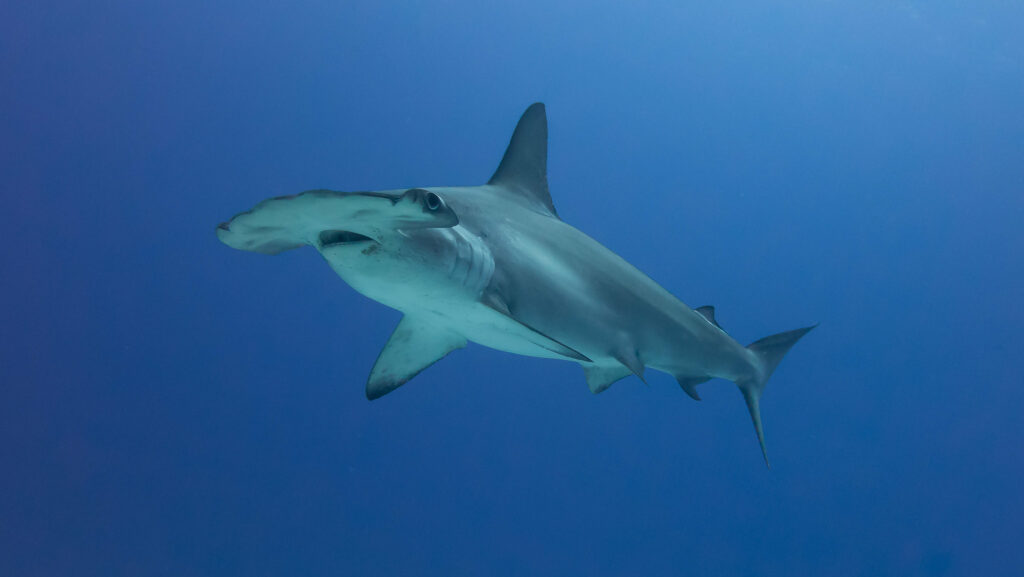
Costa Rica has announced an all-out ban on hammerhead shark fishing. Including smooth hammerhead, scalloped hammerhead and great hammerhead, this executive decree prohibits the capture, transportation, storage or sale of hammerhead sharks or their byproducts. Experts are saying this should have occurred in 2013 when hammerhead sharks were listed under CITES, as the animals were hunted for their fins and populations have declined by around 90% since then.
Scalloped Hammerhead Shark by Kris-Mikael Krister via Flickr
New discoveries
A new silent frog species has been described, found in Tanzania’s Ukaguru Mountains. Researchers discovered this species during an expedition in search of another species, the Churamiti maridadi tree toad. While frogs usually use sound to attract a mate, the males of this new species have tiny spines on their throats. Nearly 25% of all vertebrates in the Ukaguru Mountains are found nowhere else, meaning conservation of the area is essential.
NHBS is working with the Luxembourg Institute of Science and Technology (LIST), as part of the Camphibian Project, to help develop a novel approach that will improve amphibian monitoring using NEWTCAM, an underwater camera device. The Camphibian Project continues to improve and test the NEWTCAM to assess its value for biodiversity monitoring.
The problem
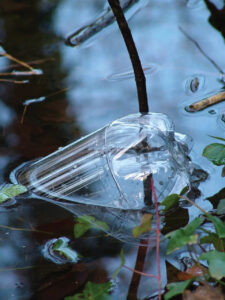
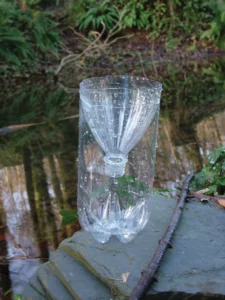
Amphibian species are facing global decline, due to a range of factors including climate change, habitat loss, infectious disease, and environmental contamination. As an important species group showing steep declines worldwide, amphibians are frequently used as biodiversity indicators, but our ability to document changes in amphibian population sizes and community structures is limited. Current methods for surveying and monitoring newts, such as eDNA, bottle trapping, netting and torching, are either unable to produce accurate population size estimates or very invasive, frequently risking the health of individuals. Furthermore, these methods can be weather dependant, as certain conditions, such as heavy rain or temperatures above or below optimal levels lead to surveys being called off. Reliable survey and monitoring methods are essential for assessing changes in populations and ecological communities, data which feed into environmental research and policy support.
The concept
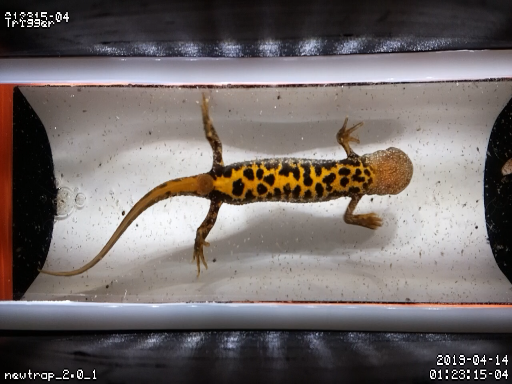
The automation of field observations has been improved in recent years with the development of camera traps, but to date there has been no viable aquatic camera trap. The NEWTCAM (originally developed as the Newtrap) is an open underwater tunnel with an integrated camera and lighting system that automatically captures high resolution time series of standardised images of aquatic animals. The NEWTCAM can be left unattended in the water for several days because the animals are free to enter and exit the NEWTCAM and are not captured or handled in any way, greatly improving survey effort, detection rates, and reducing stress on the animals.
In common with all camera traps the NEWTCAM produces 1000s of images and/or videos. These are managed with the NEWTCAM Manager (a separate web application) which supports all the steps of image processing by:
Enabling the centralisation of data from multiple NEWTCAM devices, survey sites, projects, and even organisations.
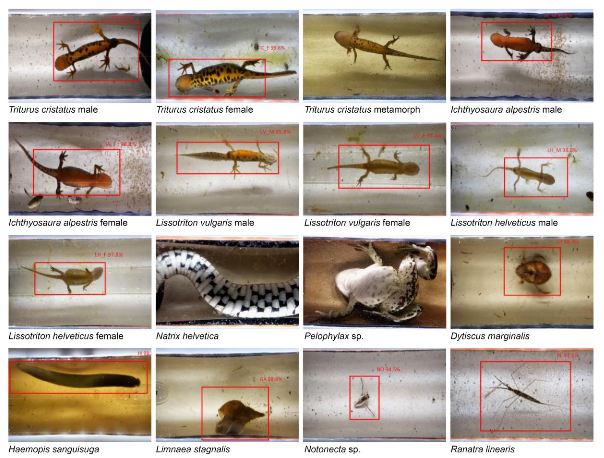
The annotation of images and videos by species, stage, gender, and behaviour. The data can then be used as a reference image library to train a new AI algorithm or processed with an appropriate existing identification algorithm (for more information see RCNN).
In future, existing AI algorithms (e.g. for newts in North Western Europe) will be integrated into NEWTCAM Manager, enabling the analysis of data sets.
Standardisation
The NEWTCAM takes standardised images from a predetermined angle, for example the underside of a newt (or other target species), from which the species, sex, development stage, body measurements, and individual identification (if individual variation exists, such as the irregular pattern of dark spots on the underside of great crested newts) can be determined. This data can then be used to provide important information about the presence, population size and dynamics of the species or communities of interest.
Benefits when compared to traditional survey methods:
Reduced disturbance to sensitive habitats because the NEWTCAM is placed in situ once, but can then record data for weeks or months.
Zero handling of individuals because the NEWTCAM is an open tunnel that allows individuals to enter and exit at will.
Reduced number of site visits compared to bottle trapping, netting, and torching.
Easy deployment in the field meaning that more sites can be surveyed over a longer period and with a higher temporal resolution than when using standard methods.
Standardised field observations – the NEWTCAM will enable the development of improved AI-based processing methods and their centralisation to produce well-formatted databases for large-scale and global change studies because the cameras produce images with the same size, resolution, background, specimen position and illumination.
The potential to provide accurate population estimates through the identification of individuals (where individuating marking exist).
Greater freedom to place the NEWTCAM at different sites and depths throughout the water body.
Surveys can be carried out in adverse weather conditions including heat waves and heavy rain.
The orientation of the NEWTCAM can be changed so that different target species can be filmed from different angles.
The Camphibian Project
The Camphibian Project – has two main aims, to improve the functionality, durability and versatility of the NEWTCAM and to assess its value as a user-friendly freshwater wildlife monitoring method.
These aims will be accomplished through a programme of technological development work at LISTs laboratories and the NHBS workshop followed by a series of field experiments conducted by LIST and early user field trials. These experiments will assess:
Whether NEWTCAM offers a reliable and robust approach for detecting and estimating the population size and dynamics of a wide range of amphibian species.
The NEWTCAMs ability to detect a range of different species and life stages in a wide variety of habitats.
Whether the data produced by the NEWTCAM is sufficient to produce reliable population estimates for species with individuating patterns at the larval stage.
As the NEWTCAM is developed, there will be opportunities for ecologists to test the equipment and the NEWTCAM will be displayed at conferences and events (details to be confirmed). If you would like to find out more, please sign up to our mailing list.
NHBS is providing funding alongside Fonds National de la Recherche Luxembourg, and LIST (Luxembourg Institute of Science and Technology).
Globally there are over 1,400 different species of bat and the UK inhabits 18 of these bat species. Although UK bat species do not create their own roost sites, they will roost in trees and occupy spaces that are created by other animals or decaying trees. But due to the removal of trees and suitable habitat, bats will now often favour human-made roosting sites. The addition of available roost sites is an important way to help prevent the ever-declining UK bat populations.
When choosing which bat box fits your needs, there are a few things to consider – the design of the bat box, the material, and the mounting and installation method. These features can be determined by identifying the target bat species alongside the location and habitat you wish to situate the bat box.
Bat box design
There are several types of bat box design and these can be split into crevice, cavity and hybrid boxes, as well as hibernation, maternity and heated boxes.
Crevice boxes provide a narrower roost space for species that naturally prefer smaller roosts, such as Brandts, Natterers and Pipistrelles, whereas cavity boxes offer a more spacious roost space favoured in general by the larger bat species such as the Greater and Lesser Horseshoe, Barbastelle and Brown Long-eared. Some boxes are designed to be hybrid boxes, meaning they can accommodate both cavity and crevice bat species.
Hibernation and maternity boxes are similar in their design to provide a warm and safe roosting space. Both boxes tend to be well insulated and larger in size with multiple internal chambers, especially important for maternity boxes that accommodate breeding colonies. There are also heated bat boxes; in these, the temperature is controlled by an external thermostat and can aid with mitigation schemes for the loss of bat maternity sites.
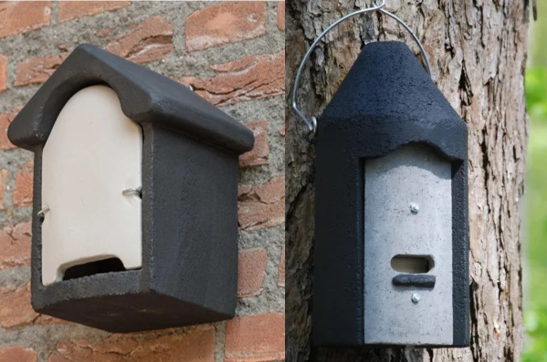
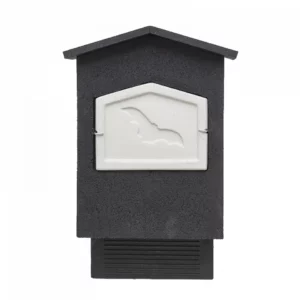
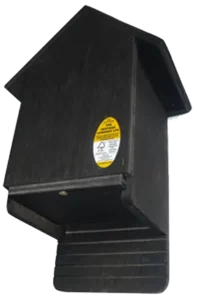
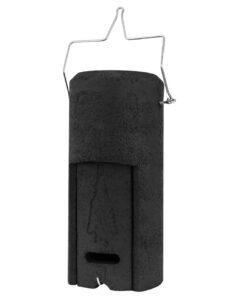
Bat boxes can be made from a number of different materials; these vary in longevity, durability and often price. The most common materials are wood (often timber); a wood and concrete blend, sometimes known as woodstone or woodcrete; eco-plastic; and concrete. Below is a brief description of each alongside one of our best sellers.
Wooden bat boxes
Lightweight
Suitable for externally mounting on both trees and buildings
Less robust and shorter longevity than woodstone/woodcrete boxes
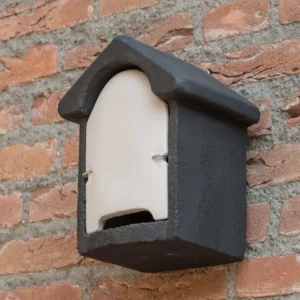
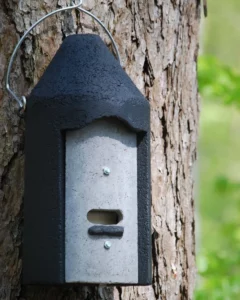
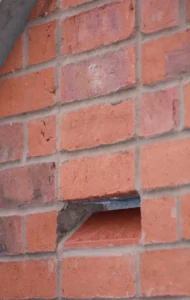
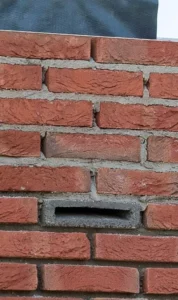
Bat boxes fall into externally mounted or integrated boxes. Mounted boxes can be fixed to trees, fences or buildings, and integrated boxes are built directly into the brickwork of a building.
Externally mounted boxes can vary in size and material, and often they are wooden or woodstone/woodcrete. When choosing an externally mounted bat box, it is important to consider the weight of the box and the surface you are mounting the box to. Some are lighter and ideal for mounting on trees, while some are more durable and can be fixed to buildings.
All bat boxes should be positioned in an open and sunny location (ideally boxes should have 6-8 hours of direct sunlight), around 3-6 metres high (the higher the better). It is important to avoid placing these close to any artificial lights such as streetlamps or security lights. External mounted boxes can be attached via a hanger or fixing bracket and it is best to fix using aluminium nails.
Integrated bat boxes are self-contained concrete roosts. They are popular with new housing developments as they are unobtrusive and often aesthetically pleasing. The boxes can be built flush to the wall or beneath a rendered surface, and each box has an entry point that must be left exposed for the bats to access the box. Some boxes are plain for rendering or can be custom faced with a chosen brick type which adds to their discreteness.
There are also pole-mounted bat boxes (sometimes known as rocket boxes). These bat boxes are helpful alternatives in areas where there is nowhere to mount the bat box. An additional benefit is that they ensure that the bat box gains maximum sunlight in shaded areas.
Lastly, there are bat roost access titles and bricks. These are designed to provide bats with access points within roof or ridge tiles. Some bats will roost in the confined spaces beneath the tiles and others will use the open roof space to roost.
We supply a wide range of bat boxes, and we hope this Buyer’s Guide is informative and provides a useful breakdown of the different types available to help you decide which bat boxes best suits your needs.
If you have any questions about our range or would like some advice on the right product for you then please contact us via email at customer.services@nhbs.com or phone on 01803 865913.
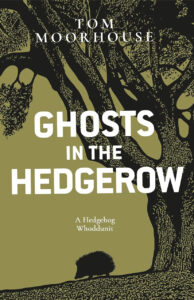
Ghosts in the Hedgerow is the new book by conservation research scientist Dr Tom Moorhouse. His previous book, Elegy for a River, was a heartfelt tribute to UK rivers and included many wonderful tales of his fieldwork adventures beside rivers, fens, lakes and more. He discussed the threats currently facing these habitats and their occupants, the conservation work currently taking place and what he believes is needed to repair the degradation that has occurred. Ghosts in the Hedgerow follows a similar format but instead looks at Britain’s favourite mammal – the hedgehog.
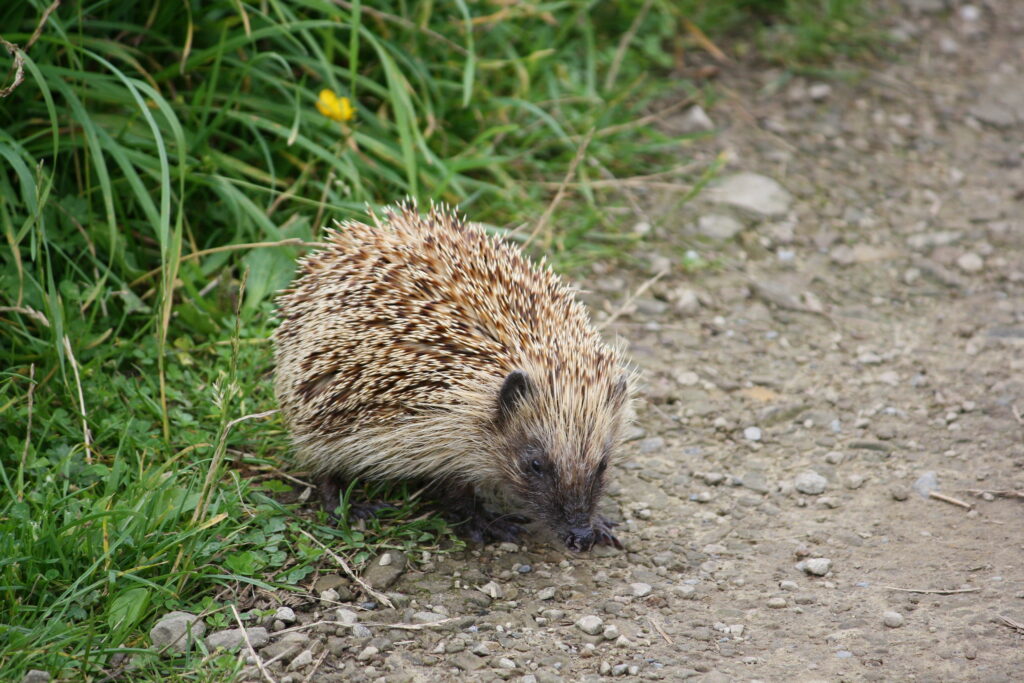
Moorhouse presents the full story of the hedgehogs’ plight in the face of humanity, following three years of conservation research focusing on the species. This book opens with a classic fictional murder mystery scene: the guests are gathered around a detective who announces that a murder has occurred, the murder of a hedgehog. This tongue-in-cheek opening with its amusing if perhaps stereotypical cast of characters makes the data-dense introductory chapter easy to read. Snippets of this continue throughout as welcome breaks to the often sombre topics covered. The book is split into five more sections, the first four covering each main ‘suspect’ in the decline of hedgehogs: cars, agriculture, modern gardens, and the badger – a species which is also the focus of conservation efforts. The final section ‘A Murderer Unmasked’ and the afterword ‘One Final Word’ presents Moorhouse’s solution.
The second chapter, ‘Driven to Destruction’, highlights the main obstacle behind identifying the significant causes of hedgehog decline and developing an effective solution: the lack of accurate population estimates. It is generally quoted that there were around 36 million individuals in the 1950s. But it is worth noting that this number was based on one ‘survey’ where ten hedgehogs were seen in ten acres on a single walk, thus estimating a population density of one hedgehog per non-urban acre in Great Britain, regardless of habitat type (excluding upland areas where hedgehogs are known to be scarce). Current estimations of the overall population are based on various smaller surveys of hedgehogs within certain habitats, with that data extrapolated based on the amount of these habitats in the UK. But due to the small number of these habitat surveys and their short study time, each current population estimate has limited reliability. Without accurate and reliable population estimates, the true impact of the various threats is unclear, and the implemention and monitoring of conservation efforts can be jeopardised.
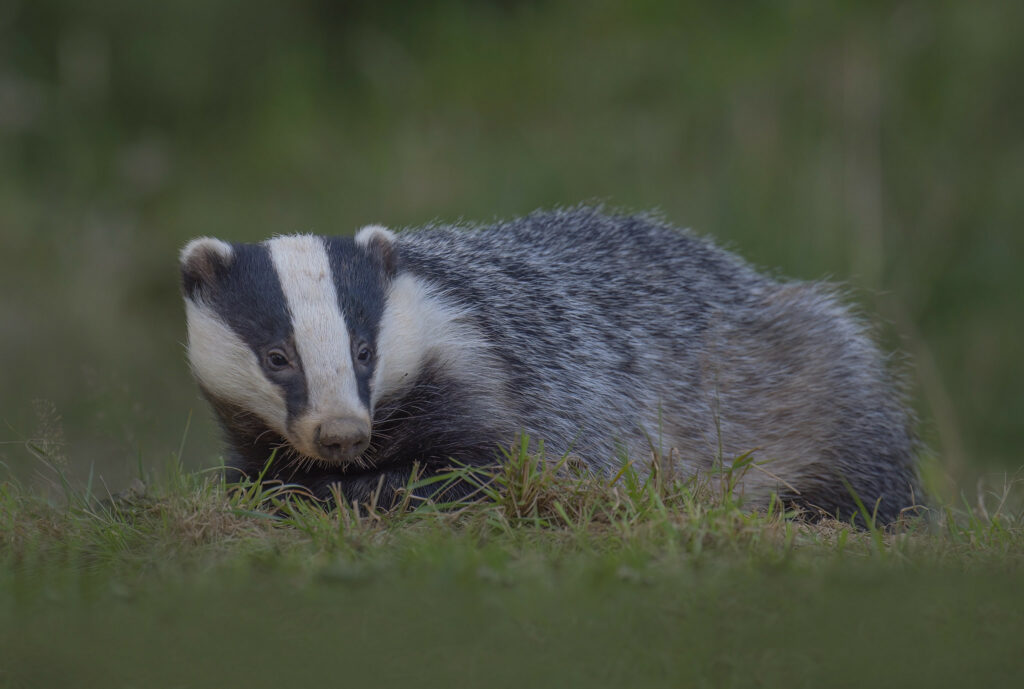
Moorhouse also highlights another issue with hedgehog conservation, or with conservation in general, in chapter three, ‘The Tale of Tommy Brock’, – trade-offs. No conservation effort occurs in a vacuum, just as no species lives in a vacuum. Any efforts made for one species will likely have an impact on another, whether that be positive or negative. Badgers have faced decades of persecution, often being the scapegoat of many agricultural issues. Their populations had declined so much that they were considered uncommon, until the 1980s when concerted efforts were made to protect them. Badgers are now one of the most protected species in the UK and their numbers are up 50-80% (depending on the survey data). Ghosts in the Hedgerow discusses one of the potential environmental trade-offs of this conservation success – the impact on hedgehogs, one of the badgers’ prey items. Hedgehogs tend to avoid badgers, so they are increasingly pushed out of more and more areas as badger numbers increase. This story is not as simple as it first seems, however, as badgers are found not to be the most important factor when studies examined hedgehog densities. Additionally, as Moorhouse points out, badgers and hedgehogs have coexisted for thousands of years; while they may be contributing towards hedgehog decline, it is unlikely that they are the root cause.
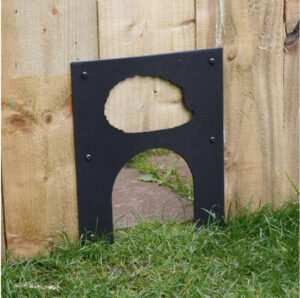
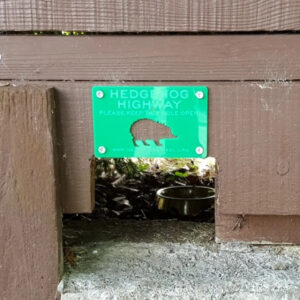
Throughout the book, Moorhouse takes these complicated factors and picks them apart, examining the reliability of the data and challenging baseless assumptions. He discusses the impact of hedgerow removal in the 1930s and 40s, the emerging threat of automatic lawnmowers, the problem of enclosed gardens and the reluctance of landowners to cut holes into fences for ‘hedgehog highways’. He includes injuries caused by strimmers, the impact of slug pellet overuse, the massive loss of invertebrate biomass and diversity, and the increasing impacts of agricultural conversion and intensification, and urban expansion. Each one of these stressors may have been survivable on its own if it weren’t for the others. Therefore, it is not one ‘murderer’ but the synergistic interaction between a combination of stressors creating a cumulative effect on hedgehog populations. Moorhouse refers to it as ‘death by a thousand cuts’.
The final sections of Ghosts in the Hedgerow, chapter six ‘A Murderer Unmasked’ and the afterword ‘One Final Word’, is where Moorhouse presents his solution. The important part of any conservation proposal is to make sure, as Moorhouse puts it, it doesn’t result in a “trade-off in human lives”. Moorhouse suggests small lifestyle changes, for instance reducing your meat intake, particularly beef as its production is a major cause of biodiversity loss and global emissions; purchasing food from farms that use less environmentally harmful chemicals or practices; writing to MPs about local ventures such as planting street trees and traffic reductions; recording hedgehog sightings; and allowing your garden to become wilder and more accessible. The book ends on a final word, a collation of advice from several well-known and passionate hedgehog lovers, experts and authors, including David Wembridge, Hugh Warwick and Pat Morris. He believes that these small-scale personal changes, alongside more large-scale governmental and policy changes, such as more environmentally friendly regulations for new building developments, more sustainably managed public green spaces and serious reductions in consumption and food waste, might give hedgehogs the best possible opportunity to thrive.
Ghosts in the Hedgerow is a funny but serious, light-hearted but uncomfortably honest lament for the plight of our favourite mammal and a strong call for widespread conservation to be implemented. It is a well-researched and compelling read, filled with footnotes, puns and anecdotes that bring this topic to life. This truly is the perfect read for anyone who loves hedgehogs, wants to be more wildlife friendly, or is just interested in the complicated problems of conservation efforts in Britain.
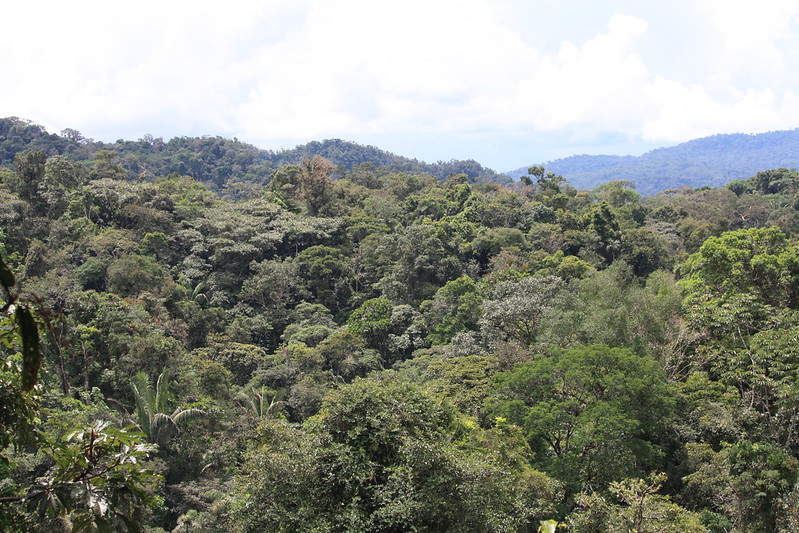
Human activity has degraded more than a third of the Amazon rainforest. New research has shown that up to 38% of the forest has been affected by human actions, with the four key disturbances being fire, selective logging (including illegal practices), extreme drought and edge effects (the changes that occur in areas next to deforested areas). The level of degradation is far greater than previously understood and not only has consequences for the climate crisis and biodiversity loss but also Indigenous and non-Indigenous communities.
England’s coast faces multiple threats from dredging, sewage and pollution. The Environment Agency has warned that dredging will likely increase around the coast, with pollution and sewage adding pressures to coastal ecosystems. In 2021, three quarters of shellfish waters around England failed to meet aspirational standards for environmental protection, with dredging and pollution coming under increased scrutiny following mass die-offs of crabs and lobsters. The findings from the EA report published last week suggest that dredging was unlikely to be the cause but this has been criticised by some scientists. There are now calls for stronger targets to cut pollution, a ban on destructive fishing in marine protected areas, and stricter penalties for sewage discharges.
The UK government has allowed ’emergency’ use of a banned bee-harming pesticide for the third year in a row, just days after the EU tightens protections against emergency deregulations. The neonicotinoid thiamethoxam is lethal to bees, and the authorisation comes just a month after the UK government advocated for a global reduction target at COP15. UK guidance states that emergency applications should not be granted more than once and the UK Expert Committee on Pesticides once again advised against allowing thiamethoxam to be used, but was again ignored by the government.
A new study has found plastic in the scat of fishing cats living near Colombo, Sri Lanka. The plastics varied in size from microplastics to larger macroplastics and were believed to have been ingested via their prey. Only six of the 276 samples taken were found to contain plastics but this is still a concern for the vulnerable species. Further research is needed to assess any potential health impacts on the species.
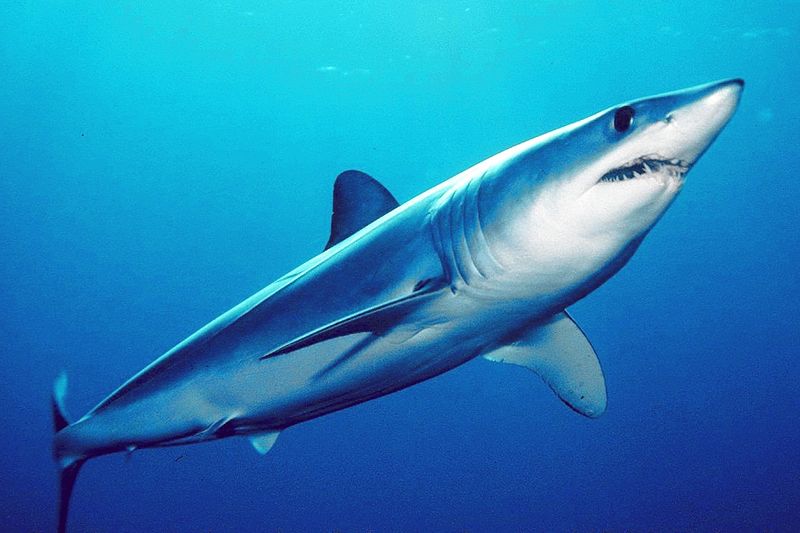
An investigation has found that endangered sharks are being sold as ‘flake’ in South Australian fish and chip shops. According to the study, less than a third of servings meet seafood labelling standards. Out of 96 fish and chip shops and 10 fresh fish retailers, only 29 servings were actually gummy shark, one of only two shark species that Australian Fish Names Standard says can be sold as flake in Australia. Three servings were narrownose smooth-hound, a critically endangered shark; two were the endangered shortfin mako; one was smooth hammerhead, considered vulnerable; 19 were the critically endangered school shark; and 15 servings were whiskery shark.
Gillnets in Bangladesh are a major threat to both the Ganga River dolphin and the Irrawaddy dolphin. Entanglement in nets, along with boat propeller strikes, killed 130 Ganga River dolphins between 2007 and 2016. Since 2002, the manufacture, marketing, import, hoarding, carrying, possession or use of any kind of gillnet is prohibited but they are still widely used by fishers due to their effectiveness at catching large numbers of fish. There are currently only 2,000 Ganga River dolphins and 6,000 Irrawaddy dolphins left in Bangladesh.
Research
A study has suggested that reaching net zero greenhouse gas emissions in England and Wales by 2050 could lead to an extra 2 million years of life. Many of the proposed policies in the UK will reduce harmful environmental factors such as air pollution, as well as encouraging healthier behaviours such as a balanced diet and exercise. These policies, if implemented, would result in significant reductions in mortality across English and Welsh populations. Retrofitting homes with insulation, reducing red meat consumption, replacing car journeys with walking or cycling, and reducing air pollution could also lead to people living with fewer health conditions.
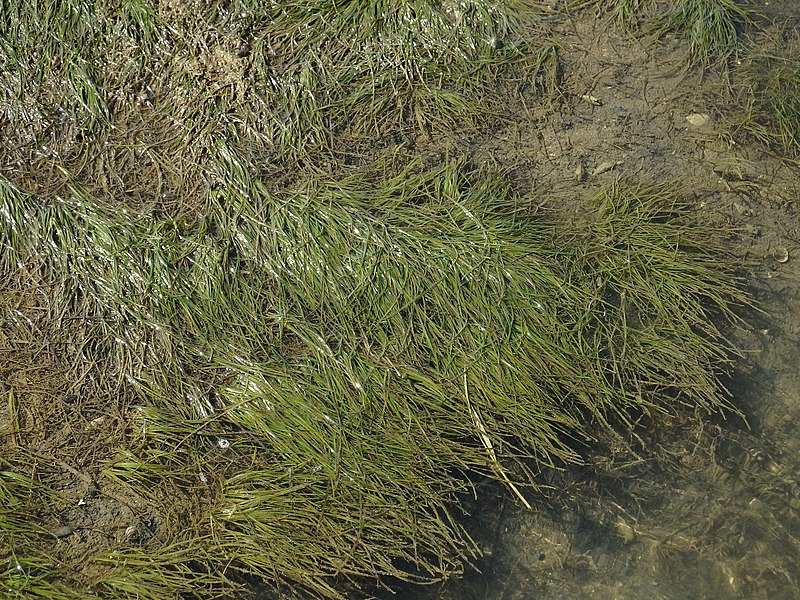
Seagrass restoration trails have begun in Cornwall. The first round of planting for the project, taking place in the River Fal, has been completed, and is the first attempt by Cornwall Wildlife Trust to restore seagrass meadows. A group of volunteers spent more than 120 hours collecting over 4,000 seeds last summer and planting them. It is hoped that this project will expand to an area 10 times the size used in the first round of trails.
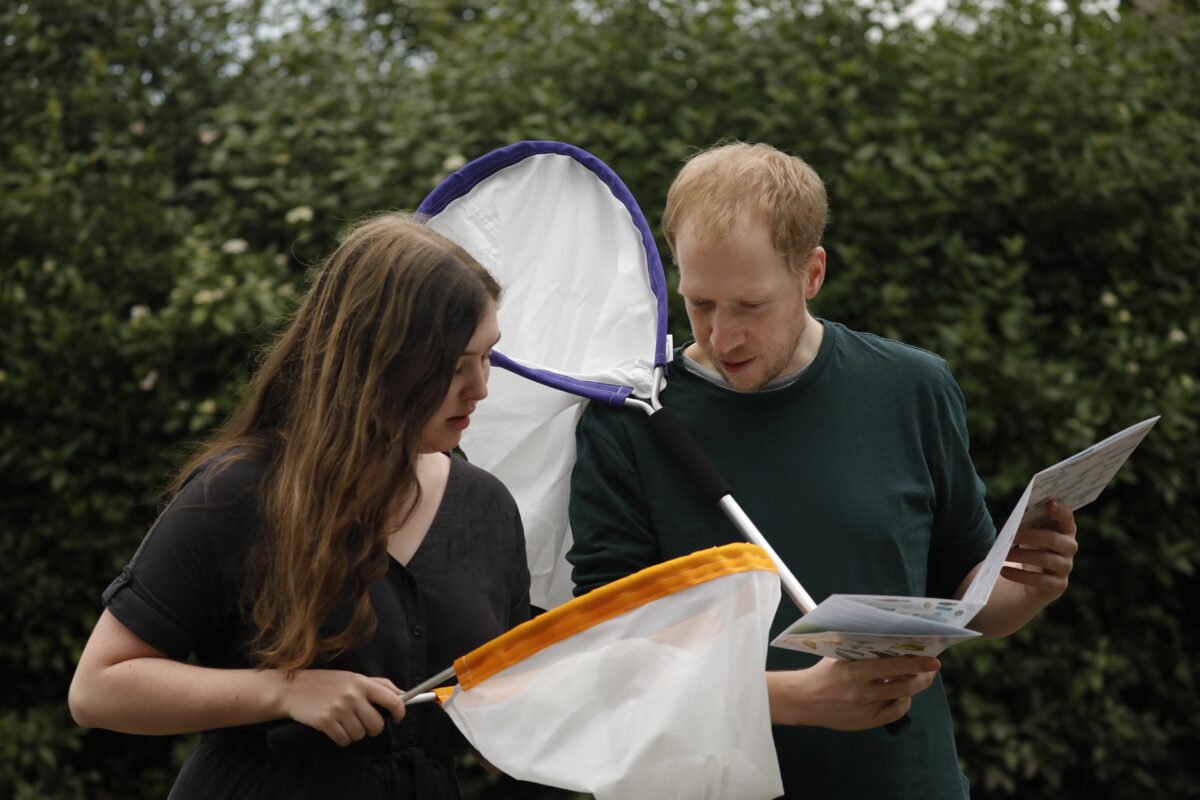
Insect nets are one of the most iconic tools of the entomologist’s kit bag. Around since at least the 1840s, the earliest forms would not have been dissimilar in design or use to those still widely used today. They are, most basically, a deep net bag made of material that is robust but gentle enough not to damage the captured insect, designed to be swept across grass or other vegetation or to catch flying insects as they are spotted. That said, in the last 180 or so years a number of different designs have arisen, making it hard for the aspiring entomologist to choose where to begin.
Sweep nets and butterfly nets – what’s the difference?
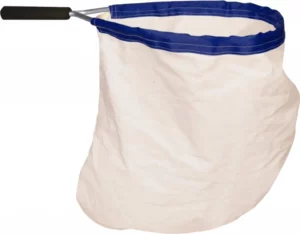
Standard Sweep Net
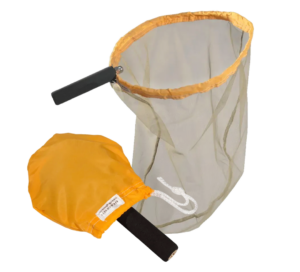
As the name may imply, the main difference between a sweep net and a butterfly net is the group that they are designed to catch, and by extension the way in which they are used. Sweep nets are designed to sample a wide range of insects, from flies to beetles, and are usually swept across the tops of vegetation such as long grass before inspection. Because they often come into contact with woody plants and the like, the frame is reinforced and the net material must be reasonably robust to prevent tearing. This has the drawback of making it a little heavy and coarse, and thereby potentially damaging to the wings of very delicate insects like butterflies.
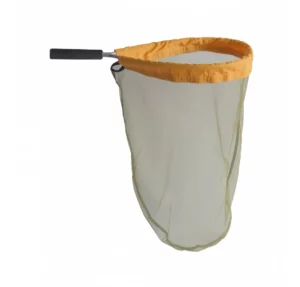
Lightweight Butterfly Net
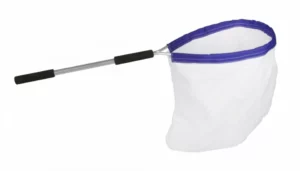
Butterfly nets, on the other hand, have bags that are made from a much lighter, finer material that is less likely to damage delicate invertebrates. This makes them suitable for a few groups, including craneflies, but most notably Lepidoptera (butterflies and moths). Of course, the finer mesh is more delicate and likely to be torn by vegetation or powerful insects such as crickets and large beetles.
For the purpose of this buyer’s guide, the term ‘insect net’ will be used when referring to principles that are true of both butterfly and sweep nets.
Key features
Many entomologists relish the challenge of finding a remote, hitherto unexplored site, far away from the beaten path, with undisturbed habitats where anything might be hiding. The equipment we carry, however, can quickly mount up – an insect net, spare bags, pooter, beating tray, collecting tubes, notebooks, camera, not to mention lunch – and can weigh a lot. Many entomologists, therefore, begin with lightweight, compact gear that can be easily transported.
In our opinion, the qualities that determine a desirable insect net are weight and balance, as these will determine how comfortable the user is during long sampling sessions, and the aperture of the frame, as a larger opening means more air passes through, allowing larger sample sizes. But there is always a trade-off. Lighter frames are easier to carry but are less robust. Telescoping handles are portable but are generally made of metal and therefore heavier than a wooden alternative. Larger apertures, though better for sample size, are much more unwieldy than smaller counterparts. The trick to finding a net that really works for you is finding a balance between all these factors.
Frame shape
Professional Sweep Net
The ‘head’ of an insect net can be designed in a few different ways; different shapes can maximise the area sampled, and foldable and crushable designs can improve portability. Most entry level nets have a frame that is a simple loop of metal – this keeps them lightweight and cost effective, but limits the size that they can practically be.
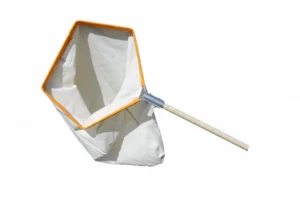
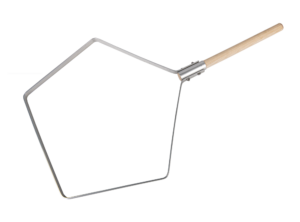
Beyond entry level, sweep and insect nets tend to adopt more complex designs, but they are generally split into three categories: fixed, folding, and crushable frames. Fixed frames are built using the same principle as simpler nets, but often have a pentagonal shape. This increases the overall aperture size without making the net much bigger, allowing for larger samples. Folding frames are usually roughly triangular, and can be folded to make transport easy.
Professional Sweep Net – Frame Only
Finally, some butterfly nets are made with a crushable frame. The loop is made of a thin strip of metal that can be twisted around on itself, allowing the net to be stored in a small stuff bag. These are extremely portable, but over the course of use tend to become a bit warped. Crushable frames are generally only used for butterfly nets, as the metal is too lightweight to be robust enough for sweeping across vegetation.
Handle design
Spring Frame Butterfly Net
When it comes to nets, there are a few considerations to bear in mind. Early insect nets, for example, tended to have quite long handles. But is this necessary? Sweep netting in particular is often carried out at waist height, within easy reach as you walk through a meadow. Not only is it unnecessary in many cases, it is often counterproductive. The longer the handle, the less control you have over the path the end takes, after all. You can extend your arm to reach an insect that is further away, but it is much harder to accurately catch an insect that is too close for your net. A longer handle will also cause wrist strain more quickly, as the weight of the bag and frame cause the net to become poorly balanced. Most basic nets – particularly sweep nets – are therefore given a short handle to stay light, well balanced and portable.
Long-handled Standard Sweep Net
That said, a longer handle can still be of use. You may want to sample from trees above head-height, for example, or target a group that is very visual and likely to flee before you get close enough for a short-handled net. One such group is Lepidoptera, and for this reason some butterfly enthusiasts prefer butterfly nets with a longer handle. You’ll see long-handled nets used for catching flying invertebrates referred to as ‘aerial nets’ in some literature.
A good option for either net type is a telescopic handle. This allows the user to decide what length is best for them, and affords some flexibility for activities, such as sweeping around trees. They tend to be heavier and less well balanced than non-telescopic alternatives though, and can be prone to breaking over longer periods of heavy use.
Our full range of sweep nets can be found here. Our range of butterfly nets can be found here.
If you have any questions about our range or would like some advice on the right product for you then please contact us via email at customer.services@nhbs.com or phone on 01803 865913.
Global NGOs are joining forces to accelerate the campaign to end plastic pollution. The World Economic Forum’s Global Plastic Action Partnership (GPAP), the Ellen MacArthur Foundation’s Plastics Initiative and waste charity WRAP are planning to work together to deliver a circular economy for plastics. This supports international negotiations to deliver a new Plastics Treaty, which began last November and aims to crack down on plastic waste by mid-2025.
Citizen science
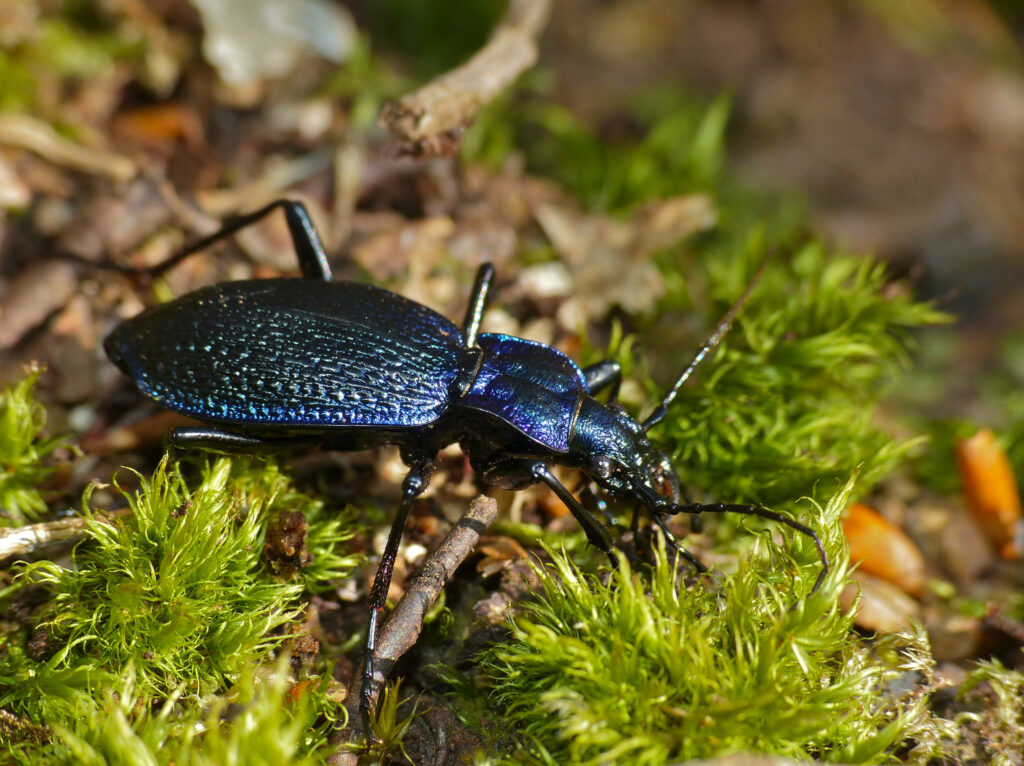
Buglife, a conservation charity, is appealing for the public’s help to find a rare beetle in the woodlands of Devon and Cornwall. The blue ground beetle (Carabus intricatus) has only been seen at 15 sites across the south-west of England and south Wales. The species was identified at two new sites on Dartmoor in 2022 but the charity would like people to help find out if it is living in more locations. Buglife is asking for people to take pictures if they think they have spotted the beetle, and to send them to the Dartmoor Blue Ground Beetle project online.
The blue ground beetle by Berard DUPONT via Flickr
Research
A chemical that is used in the production of toilet paper and ‘forever chemicals’ has been found in the bodies of orcas. A team of scientists have analysed tissue samples from six southern resident orcas and six Bigg’s whales that were stranded along the coast of British Columbia from 2006 to 2018. The team, made up of scientists from The Institute for the Ocean and Fisheries, British Columbia Ministry of Agriculture and Food, and Fisheries and Oceans Canada, found that the chemical accounted for 46% of the total pollutants identified. This toxic substance can interact with the nervous system and influence cognitive function.
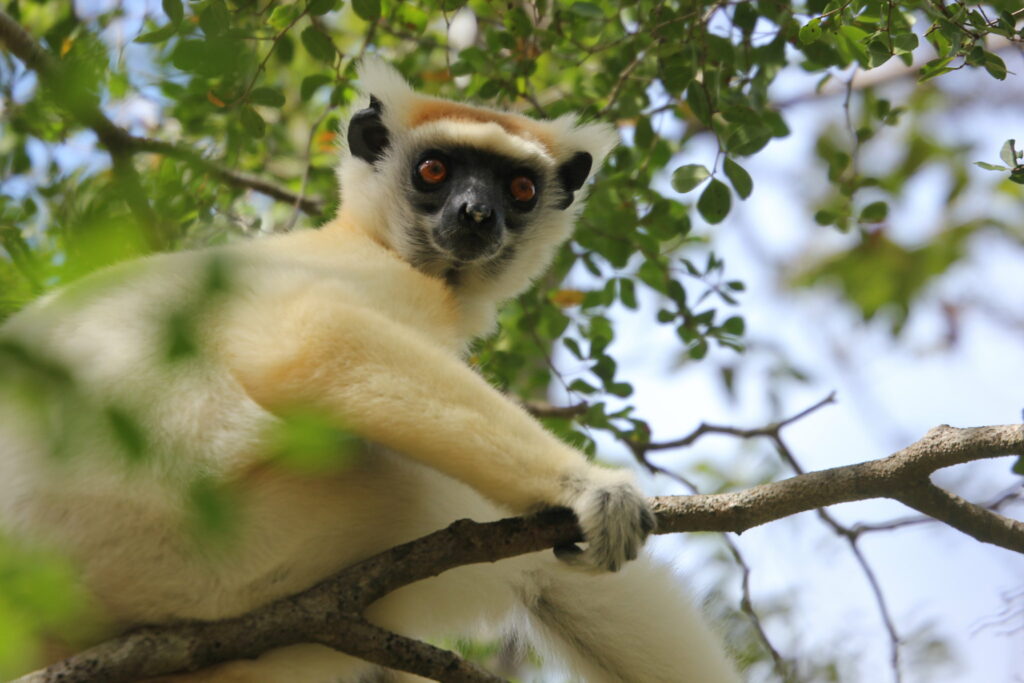
The golden-crowned sifaka, a critically endangered mammal found in northeast Madagascar. Image by Alex Chiang via Flickr.
Conservation
Beavers are set to be released into Hampshire for the first time in 400 years. A pair will be released at Ewhurst Park estate near Basingstoke, which is being restored for nature and sustainable food production. Beavers were given legal protection in England in 2021, formally recognising them as native wildlife. This keystone species will help to create new wetlands on the estate, which will provide new habitats for dozens of bird and insect species.
Over 5,000 fish from endangered species have been released into the Mekong and Tonle Sap rivers in Cambodia. The ceremony was held by the Cambodian government and the Wonders of the Mekong project at the Chaktomuk River in Phnom Penh, which is connected to both of the larger rivers. The species released included Mekong giant catfish (Pangasianodon gigas), giant barbs (Catlocarpio siamensis) and striped catfish (Pangasianodon hypophthalmus). It is hoped that they will reproduce and increase the rare fish populations in both rivers.
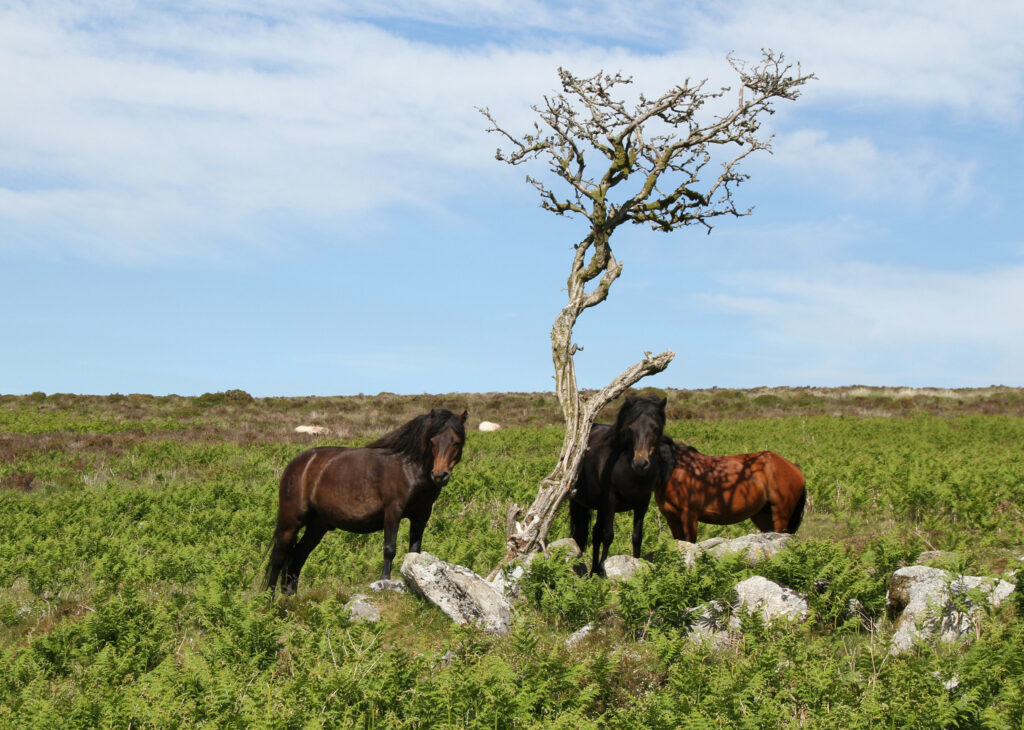
A new herd of Dartmoor ponies have been brought in to boost the population on Thetford heathland in Norfolk. Fifteen ponies have joined the 119 others that currently live in the area and will help to deliver conservation grazing programmes across the nature reserves, including East Wretham Heath. These selective grazers will create a rich variety of different heights and species of vegetation, helping birds such as nightjars and stone curlews.
Extinction risks
The scientists who led the research into the mass die-off of crabs and lobsters along the north-east coast of England say they have not been questioned by the panel investigating the disaster. The review panel is due to send its findings to ministers this week, but they have also been excluded from examining government processes as part of its inquiry. This is raising questions about the potential limitations and reliability of the forthcoming results.
Queensland, Australia, has been urged to end its shark nets and drum lines programme, as scientists call these lethal methods “ineffective” and inhumane. In 2019, Humane Society International won a legal challenge to stop the use of lethal drum lines in the Great Barrier Reef park, but as of 1st December 2022, the Queensland government has only spent $505,000 on replacing the old drum lines with ‘Smart’ catch-and-alert ones. Last year, 15 humpback whales were caught in shark nets, as Queensland does not remove them during whale migration season.
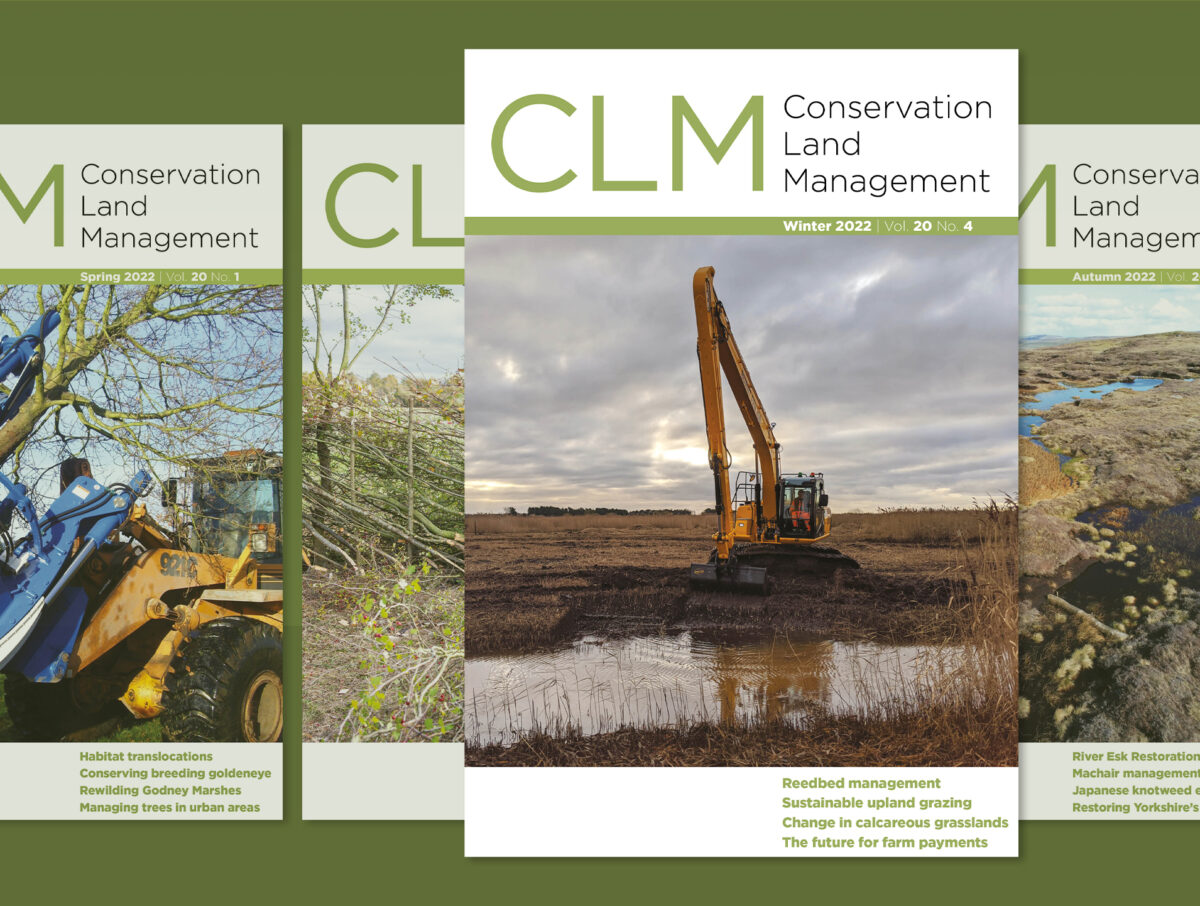
The Winter issue of Conservation Land Management magazine (CLM) landed on our readers’ doormats in December, marking the end of volume 20. Read on to discover what featured in the most recent issue, and some highlights of articles across the entire volume.
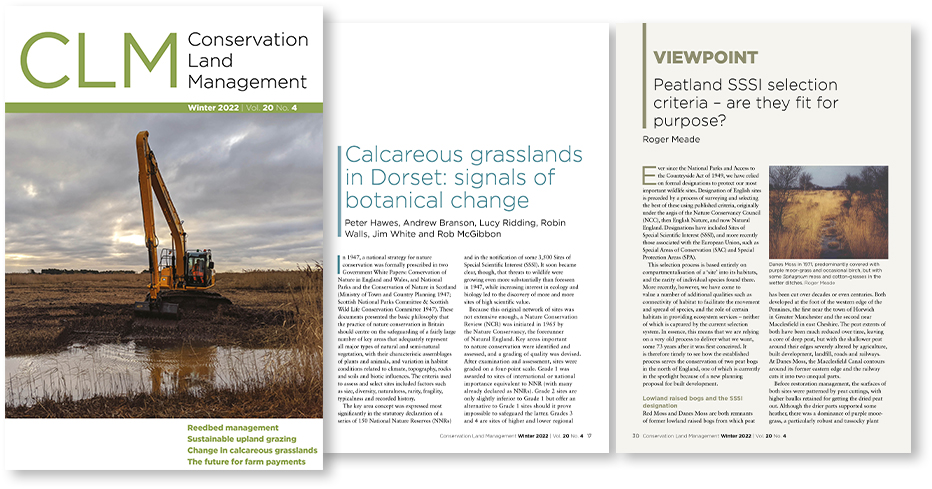
The Winter 2022 issue of CLM
Reedbed restoration has benefited a large number of species, the bittern being a classic example; by 1997, ‘booming’ (territorial) males of this species had declined to 11, but this has now increased to over 200. Various techniques and machinery are used to manage reedbed habitats, and in this article Graham White and Steve Hughes provide an overview of the different methods and key strategic issues, such as what to do with cuttings, that need to be considered for the future.
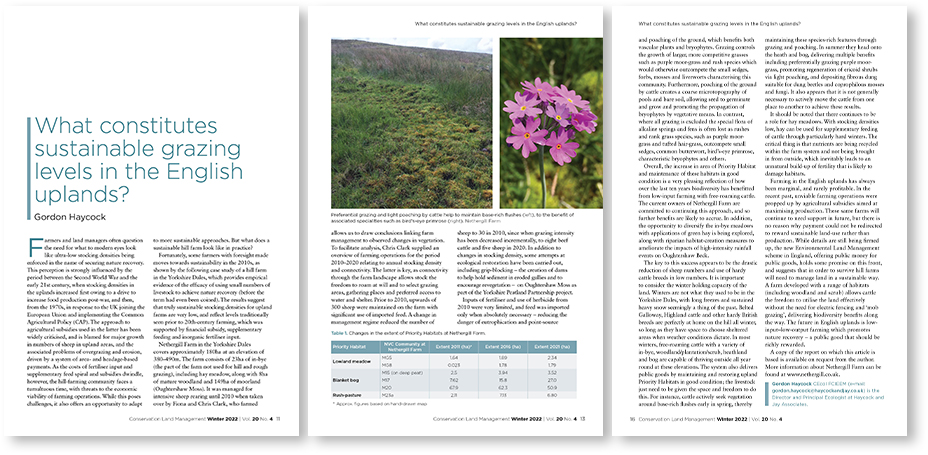
Up until 2010, Nethergill Farm, in the Yorkshire Dales, was managed for intensive sheep rearing. Now under new owners, the current management ethos is to promote biodiversity. Gordon Haycock describes how, in addition to other ecological restoration work, a change to reduce sheep stocking densities and introduce free-roaming cattle across the farm has benefited biodiversity and increased the area of Priority Habitats, such as blanket bog and lowland meadow.
In 1965, the Nature Conservation Review was initiated by the Nature Conservancy, with the aim to identify and assess areas important to nature conservation in the UK. In the 1960s/70s, as part of the review, 26 calcareous grasslands in Dorset were surveyed, and in 2018/19, nearly half a century later, six of these were surveyed again. Peter Hawes et al. compare the results of the two surveys, with the aim of determining if the vegetation had markedly changed during the time between surveys, and discuss the gains and losses that have been made.
During the recent political turmoil in the UK, there were rumours that England’s new agri-environment scheme, Environmental Land Management (ELM), would be scrapped in favour of a return to area-based payments. Thankfully, the future of ELM is now looking more certain, but there are still many unanswered questions surrounding the details. In light of this, Alice Groom provides the latest on farming policy development in England, and also in Wales, Northern Ireland and Scotland.
The selection process behind the formal designation of Sites of Special Scientific Interest (SSSIs) in England is based entirely on the compartmentalisation of a site based on the habitat types within it and the rarity of the species found there. Lacking from this process, however, is consideration of habitat connectivity and the ecosystem services that these habitats provide. In the context of two peat bogs in the north of England, one of which is currently threatened by development, Roger Meade asks if the current selection process is up to scratch.
Highlights from volume 20
This volume has included some fantastic articles, from conservation efforts tailored to specific species to wider management approaches and techniques. Below is a selection of articles from 2022:
Spring 20.1
· Habitat translocations: risks, advantages and key considerations – John Box explains the possible risks and potential benefits of habitat translocations, and sets out the key considerations of this approach.
·Conserving breeding goldeneye in Scotland through nestbox construction – Peter Cosgrove et al. share their observations and lessons learnt from constructing and installing nestboxes for the rare goldeneye duck along the River Spey.
· Environmental DNA for ecologists – Dr Helen Rees provides an overview of eDNA analysis and demonstrates how ecologists can use this technique in conservation.
Summer 20.2
· A guide to conservation land management and greenhouse gas emissions – Malcolm Ausden and Rob Field describe how different habitats and their maintenance impact the climate, and highlight the management practices that provide the greatest climate benefits.
· Viewpoint: Dams without beavers: could Beaver Dam Analogues yield benefits in the UK? While we wait for beavers to become more widespread in the UK, Richard Fleming argues that we need to replicate the benefits of natural beaver dams through the use of Beaver Dam Analogues.
Autumn 20.3
· Eleven years of manual eradication of Japanese knotweed – Claire Malone-Lee reflects on 11 years of manual control of Japanese knotweed in Aston’s Eyot nature reserve, in east Oxford, and demonstrates that it is possible, particularly on small sites or where knotweed is not overly dominant, to successfully eradicate this troublesome invasive without the use of herbicides.
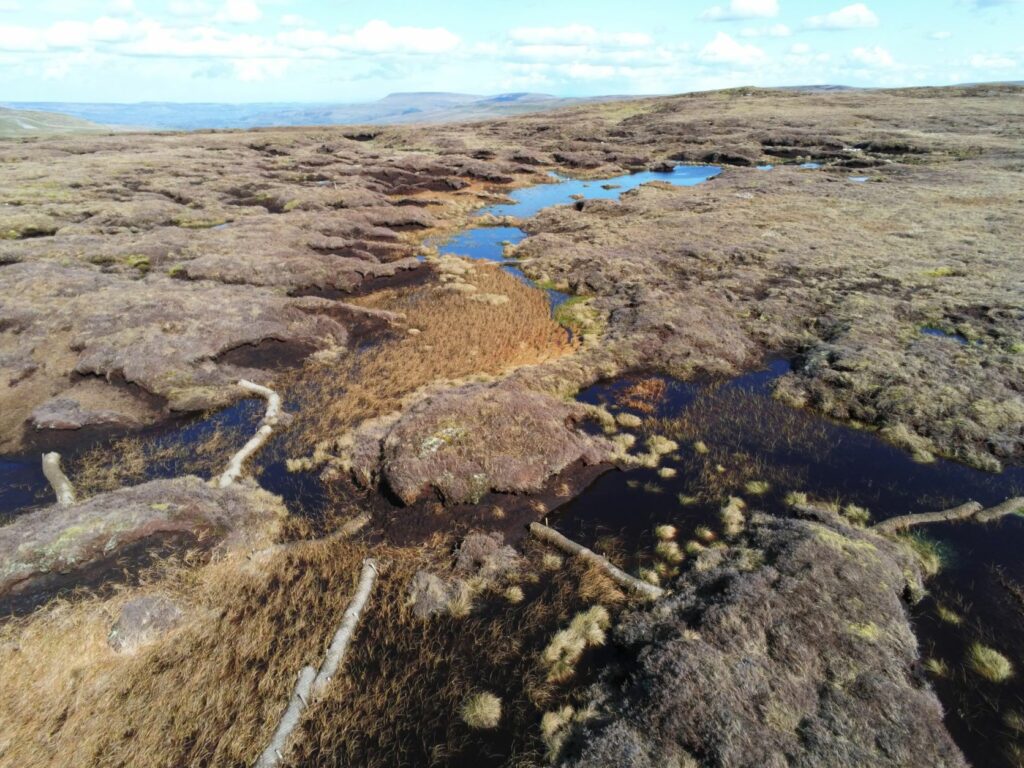
· Time to rewet, replant and restore Yorkshire’s peatlands – Jenny Sharman describes the work of the Yorkshire Peatland Partnership and the process of peatland restoration in Yorkshire where signs of recovery have quickly become apparent.
Three years after peatland restoration began. Jenny Sharman/YPP
Twenty years of CLM
The end of volume 20 is an important milestone for CLM, marking its 20th year in print. Throughout this time, the magazine has strived to showcase innovative conservation projects, novel management techniques and personal experiences and insights of those working on the ground. Volume 21 is set to feature all of this and more, including a brand new series on habitat management for invertebrates and a look at some of the restoration approaches used in marine conservation.
CLM is published four times a year in March, June, September and December, and is available by subscription only, delivered straight to your door. Subscriptions start from £22 per year. If you would like to read any of these articles, back issuesare also available to purchase individually (subject to availability).
If you are involved in a conservation project and think your experiences could be useful to other practitioners, we would love to hear from you. Feel free tocontact us if you are interested in writing for CLM– we will be happy to discuss your ideas with you.
UK wildlife was ‘devastated’ by extreme weather in the UK. The National Trust’s annual audit revealed that 2022 was a dire year for animals, including amphibians, mammals, birds and insects. Due to strong storms, heatwaves and cold snaps, many species and habitats were effected. The wildfires during the hot summer destroyed many heathland areas in Cornwall, Devon and Dorset, impacting rare species such as sand lizards and smooth snakes. This potential ‘new norm’ of extreme weather is creating major challenges for UK biodiversity.
2022 will be the warmest year on record in the UK, according to the Met Office. Provisional figures hint that the annual average temperature from last year will exceed the previous record set in 2014. The 10 warmest years on record have all occurred since 2003, with temperature trends showing that the UK is hotter since we began burning fossil fuels and releasing greenhouse gases into the atmosphere. This new record is showing that climate change is having a real impact.
Unseasonably warm weather is expected this January, with at least eight countries across Europe experiencing record high temperatures. The warmest January day on record was recorded in Poland, Denmark, the Czech Republic, the Netherlands, Belarus, Lithuania and Latvia. The Czech Republic saw temperatures of 19.6°C, compared with the usual average of 3°C.
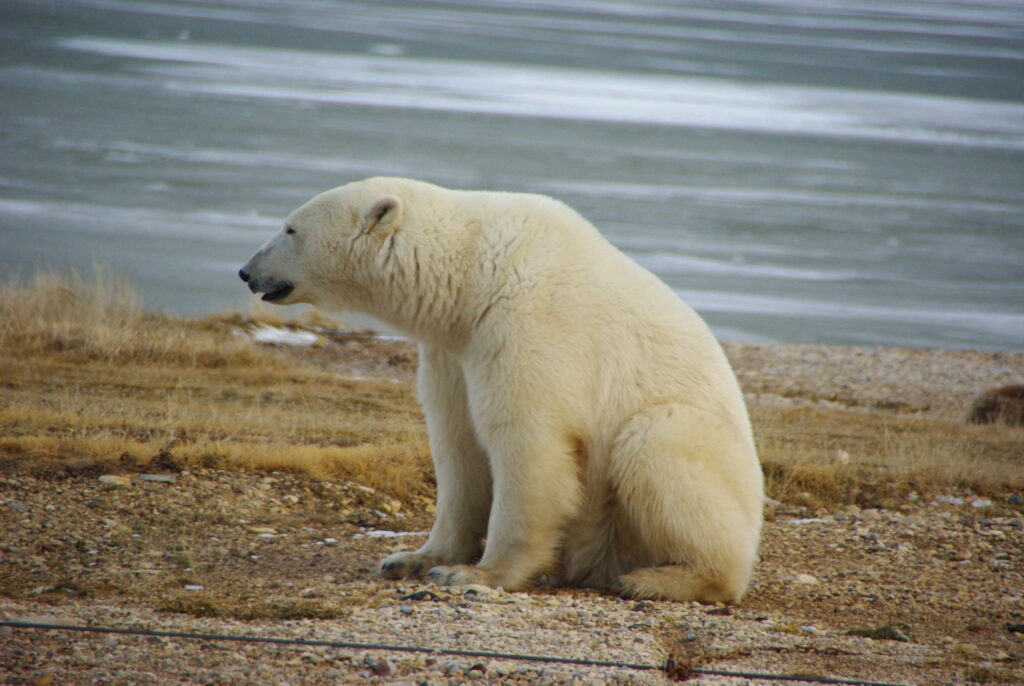
Polar bears are vanishing from the ‘polar bear capital of the world’ in Canada. The western Hudson Bay is considered a stronghold for this species but government research is showing that there has been a dramatic decline in numbers. Every five years, researchers count the number of bears in the area and extrapolate population trends, with the last count in 2021 estimating 618 bears, down from 842 five years earlier. The reveal showed significant declines in adult females and subadult bears between 2011 and 2021, possibly due to displacements to neighbouring regions or hunting. The bears’ sea-ice habitat has also been disappearing, with the far north of the world warming up to four times faster than the rest of the planet.
New discoveries
A pink coloured variant of the Monotropastrum humile plant, native to East and Southeast Asia, has been discovered to actually be a new species. A 20-year study determined how exactly these plants different, with specimens collected throughout Japan, Taiwan and Vietnam. Originially, there was thought to be only one species in this genus in the world, so this new discovery has deepened our understanding of the plants in the Monotropastrum genus. As this newly recognised species is rare and therefore presumably endangered, the information from this study will hopefully be used to inform conservation efforts.
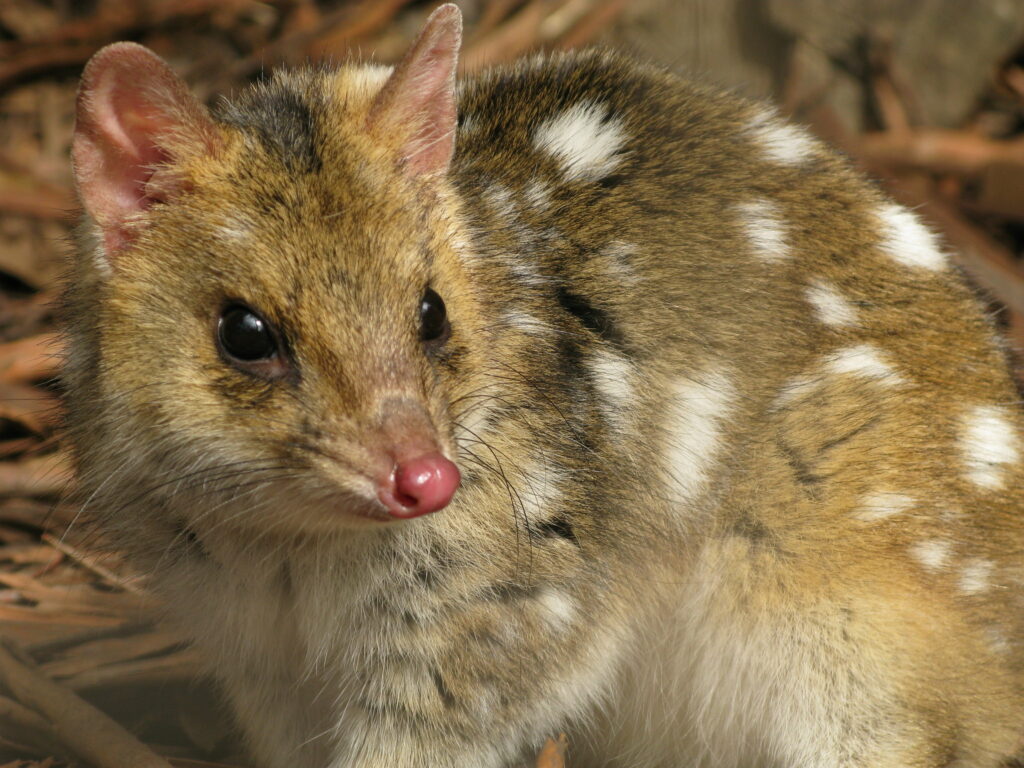
Eastern quolls have been released into the Australian bush in New South Wales, over sixty years after they were declared extinct on the mainland. The 10 individuals were released into a NSW nature reserve, bolstering an insurance population of quolls. The Barrington population is the largest on the mainland and was established through the Tasmanian Quoll Program. Special fences have been erected to keep out cats, foxes and pigs, as feral invasive predators are thought to have been the cause of the initial population decimation.
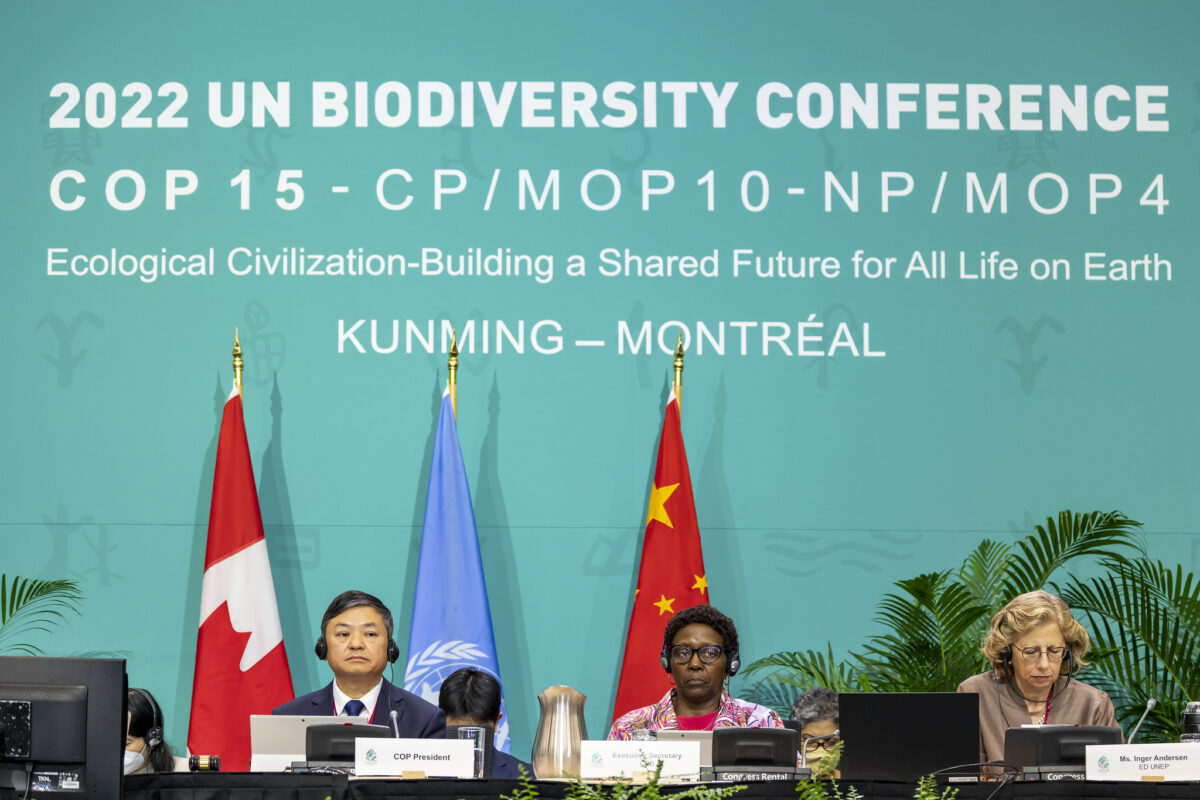
COP15, the UN Biodiversity Conference, took place between 7th and 19th December 2022. This event set out to convene world governments to agree to a new set of goals for nature over the next decade. This will create a framework that sets out an ambitious plan to implement broad-based action to change society’s relationship with biodiversity, ensuring that humanity can live in harmony with nature by 2050. COP15 has been touted as the key turning point in the fight to protect biodiversity, and a vital opportunity for countries to make change.
Biodiversity is declining globally, with the WWF Living Planet Report reporting that trends in the population abundance of mammals, fish, reptiles, birds and amphibians have revealed that populations have declined by an average of 69% between 1970 and 2018. Habitat conversion for people and livestock, hunting, exploitation, the intensification of agricultural practices, and the impacts of climate change such as temperature increase, changes to rainfall patterns and increased extreme weather events are among the wide range of challenges wildlife currently faces. Regionally, Latin America and The Caribbean have experienced the worst decline, at 94%. This global decline is set to worsen if no changes are made.
The main aim of COP15 was to reach a set of goals and targets that would create a comprehensive and equitable framework agreed upon by world governments. These clear targets need to address over-exploitation, pollution, fragmentation and unsustainable agricultural practices, and be matched by the resources needed for implementation. There also needed to be a plan that safeguarded the rights of indigenous peoples, recognising their contributions as stewards of nature. Finally, the finance for biodiversity needed to be addressed, particularly relating to the alignment of financial flows with nature to push finances towards sustainable investments and away from environmentally harmful ones.
The Deal
An agreement was reached on Monday 19th December 2022. Almost 200 countries agreed to the new set of goals and targets that aim to “halt and reverse” biodiversity loss by the end of the decade. Six items were adopted at COP15:
the Kunming-Montreal Global Biodiversity Framework (GBF)
A monitoring framework for the Kunming-Montreal GBF
Mechanisms for planning, monitoring, reporting and review
Capacity-building, development, technical and scientific cooperation
Resource mobilisation
Digital sequence information on genetic resources.
It is hoped that measurable targets within the Kunming-Montreal GBF, and a mechanism for implementation, will ensure it will succeed where previous targets have not. There are 23 global targets within this GBF for 2030, with 10 ‘milestones’, including ensuring that at least 30% of land and water considered important for biodiversity are protected before the end of the decade. Currently, only 17% of terrestrial and 10% of marine areas are protected.
The key targets also include increasing financial resources from all sources, not just governments, to at least $200 billion per year towards supporting biodiversity by 2030; reducing, redirecting or reforming environmentally harmful incentives by $500 billion per year; and reducing the nutrients lost to the environment by at least 50%, pesticides by at least two thirds and eliminating plastic waste from entering the environment entirely.
The digital sequence information target refers to genetic sequence data, derived from the natural world. This is used in medicine and science, for vaccines, biofuels, crop improvements and further research. The target would require that the benefits arising from this information be shared fairly and equitably.
Are they effective?
Many are labelling the goal of taking urgent measures by 2030 as a strong call to action, with many 2030 milestones listed in the final agreement, including reducing extinction risk by 20%. This would then be reduced tenfold by 2050. This, however, would mean many species are still likely to go extinct during this time, particularly specialist species that occupy narrow niches, as these are more likely to be impacted than generalist species that can survive in a wider variety of environmental conditions. Reducing the diversity of species within an ecosystem can reduce its resilience against other stressors, such as the impacts of climate change, disease and habitat degradation. This is known as biotic homogenisation, where ecological communities become increasingly similar due to a combination of the extinction of native species and the invasion of non-native species.
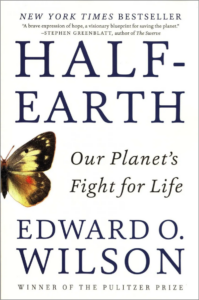
The target of protecting 30% of land and sea by 2030 is hailed by many as the main success of the conference. This large increase in protected areas, especially with the requested focus on areas of particular importance for biodiversity and ecosystem functions and services, will have a significant impact on biodiversity loss. However, some are describing the milestone of conserving at least 30% of land and sea by 2030 as a ‘floor, not a ceiling’, suggesting that 50% is an important step to the long-term survival of both biodiversity and humanity. This is the key aspect of the Half-Earth concept, developed by biologist E. O. Wilson, which states that the only solution to the upcoming ‘Sixth Extinction’ is to increase natural reserves to cover half the surface of the earth.
Additionally, there is no target for increasing species population abundance by 2030, with details on enlarging the area of natural ecosystems by at least 5% being removed after earlier drafts. While many of the other targets will most likely lead to an increase in species population abundance, and perhaps even in increasing the area of natural ecosystems, the lack of a set target makes it harder to hold governments to account.
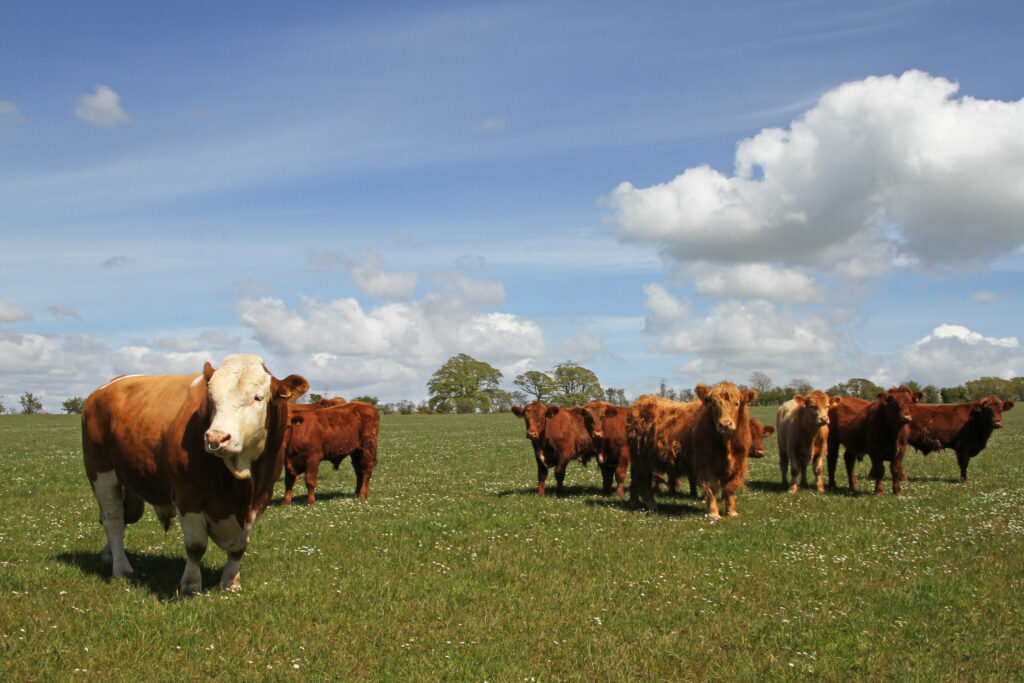
Another item that has notably been missed is the issue of dietary consumption, beyond reducing general overconsumption. Research has shown the consumption of meat, particularly beef, is specifically linked to biodiversity loss, with 30% of biodiversity loss linked to livestock production. Reduction of meat consumption is not mentioned in the text of the COP15 agreement, despite research suggesting that beef consumption needs to fall by 90% in western countries to prevent the future impacts of climate change.
Research has also shown that over £1.48tn ($1.8tn) of environmentally harmful subsidies are being paid each year, going towards high-emission cattle production, deforestation and pollution. One of the Aichi biodiversity targets, discussed later in this article, was to remove these subsidies, which governments failed to achieve by 2020. This new target, which requires governments to redirect or reduce these subsidies by at least £416bn ($500bn) per year is a major opportunity, and is recognised as another major outcome of this agreement. However, this still leaves over £1tn ($1.3tn) in environmentally harmful subsidies each year, continuing to put pressure on global biodiversity.
Additonally, the COP15 agreement calls for businesses to assess and disclose how they impact and are impacted by nature loss, but it is not mandatory, which weakens this target. This is unlikely to effectively hold large corporations to account, though societal pressure may play a role in encouraging many countries and financial firms towards disclosures.
This all suggests that, while meeting these targets will put the world on the right track towards halting and reversing biodiversity loss, there is still much more that is needed to be done to create a ‘nature-positive’, more harmonious future. These targets need to be a starting point rather than an end goal.
Can we rely on these promises?
The previous strategic plan for biodiversity for the 2011-2020 period included the Aichi Biodiversity Targets, agreed upon at COP10 in 2010. However, by 2020, the Global Biodiversity Outlook 5 Report by the UN showed that the world failed to meet any of the targets. There were 20 targets agreed upon, which were separated into 6o elements, to aid in monitoring overall progress. In 2020, only seven of these elements were achieved, with 38 showing progress and 13 with no progress at all. Two had unknown progress. This resulted in six Aichi targets being partially achieved, such as those on protected areas and invasive species. This failure to meet the previous set of targets does not bode well for any confidence in the seriousness of the commitment of world governments to meet these new ones.
The new financial targets, widely hailed as one of the main successes of COP15 will make a huge difference in halting and reversing biodiversity loss but only if they are actually achieved. In 2009, developed countries committed to supplying $100 billion per year by 2020 to help vulnerable countries impacted by climate change. However, these rich nations failed to meet the long-standing pledge. Instead, $83.3 billion was provided in 2020, $16.7 billion short of the target. The Organisation for Economic Co-operation and Development (OECD) suggested that the $100 billion target would not be met until 2023, using U.N. data processed with a two-year delay. This, again, casts doubt on whether developed countries can be relied upon to follow through with the financial commitments agreed upon at these events.
The other main success of COP15, the goal to protect 30% of land and sea for nature by 2030, also has a failing precedent. In the UK in 2020, the Prime Minister at the time, Boris Johnson, committed to protecting 30% of the UK’s land and sea for nature by 2030. However, so far, according to the 2022 Progress Report on 30×30 in England by Wildlife and Countryside Link, only 3.22% of England’s land is effectively protected and managed by nature, compared to 3% in 2021. There was more progress in protecting English waters, with 8% effectively protected for nature, compared to 4% in 2021. With very little progress being made and the continued threats of deregulatory proposals to reform or repeal the strongest laws for nature, this calls into question whether the UK will remain committed to these new global goals. Additionally, the newly published environmental targets from The Department for Environment, Food and Rural Affairs (Defra) are being criticised as a ‘job half-done’ as the goals to ensure greater biodiversity in 2042 than in 2022, and at least 10% more than in 2030, do not go far enough.
However, a proposed EU Nature Restoration Law might be the first step towards achieving these new targets. Should this law successfully make its way through the European Parliament, it would signal that these countries are willing to make the necessary policy changes to stop biodiversity loss. The new law aims to set specific timetables for restoring degraded habitats such as rivers, wetlands, fields and forests. It would cover 1.6 million square miles across the 27 member countries. As the EU’s current environmental laws don’t explicitly state how, when or who needs to restore these areas, this new law is a much-needed addition to ensure proper implementation of conservation. The final vote is expected to take place in June.
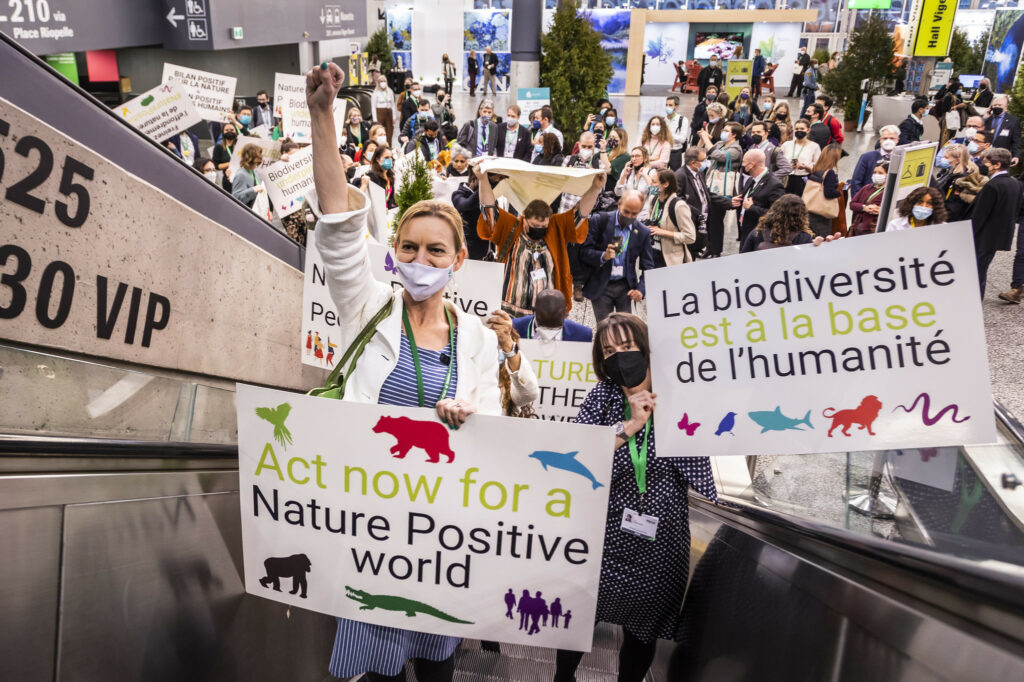
Protest at COP15. Image by UN Biodiversity via Flickr
Ultimately, world governments and global businesses have made similar pledges before and failed to follow through. Often, while the agreements contain targets that would make significant progress against biodiversity loss, there is a lack of strict regulation of adherence and adoption of policies that would allow for progress towards these targets. While there have been some initial steps that suggest a real commitment to achieving these targets, the next few months and years will be a key time for world governments to prove that they are willing to make the necessary changes.




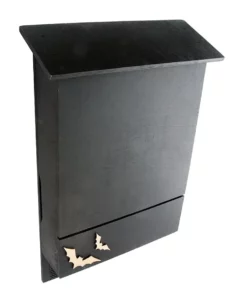

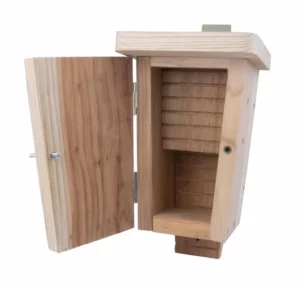 Wooden bat boxes
 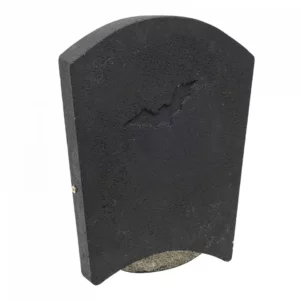 Woodstone and woodcrete bat boxes
 Eco-plastic bat boxes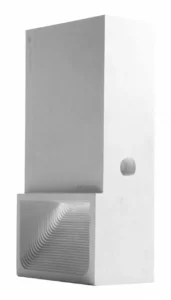


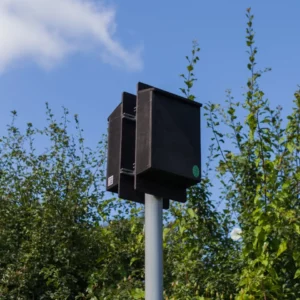 There are also pole-mounted bat boxes (sometimes known as rocket boxes). These bat boxes are helpful alternatives in areas where there is nowhere to mount the bat box. An additional benefit is that they ensure that the bat box gains maximum sunlight in shaded areas.
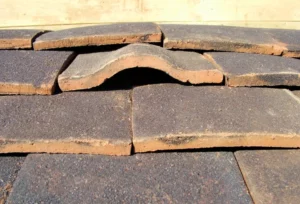 Lastly, there are bat roost access titles and bricks. These are designed to provide bats with access points within roof or ridge tiles. Some bats will roost in the confined spaces beneath the tiles and others will use the open roof space to roost.