
Collecting visual evidence of bats at roost entrances

Aim
Recording bats and their behaviour around roost entrances can be extremely useful for a number of reasons: as evidence to present to a client, to demonstrate or test for a change in behaviour during or after mitigation, and as a back-up system to record the presence of the quieter bats like the brown long-eared. We tested two night vision systems at a lesser horseshoe maternity roost.
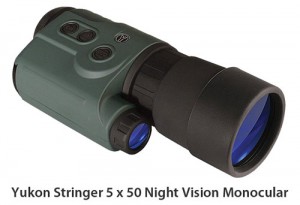

Yukon Stringer 5 x 50 Night Vision MonocularPulsar Quantum S Series Thermal Imaging Scope

Methods

We set up two very different night vision video recorders on tripods near the entrance of a large lesser horseshoe roost near Totnes, Devon. The first was the Yukon Stringer 5 x 50 Night Vision Monocular, a very reasonably priced Generation One night vision device with a built-in video recorder. The second was the Pulsar Quantum HD38S Thermal Imaging Scope, a thermal imaging camera with a 30 Hz refresh rate coupled with a Yukon MPR Mobile Player / Recorder. Both were used to film bats as they emerged from the roost entrance and as they flew around the garage within which the roost entrance is sited.

Results
The two videos below demonstrate close-up and distance footage from both the Yukon Stringer and the Pulsar Quantum:
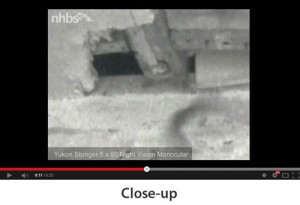
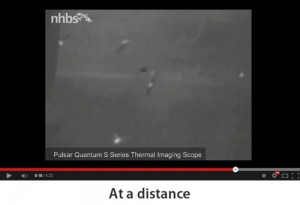
Video: Surveying a bat maternity roost - Close upVideo: Surveying a bat maternity roost - At a distance

Discussion

Image Quality: The Pulsar Quantum produced some very high quality video that was clear and easy to interpret. The results from the Yukon Stringer are slightly less clear but are still of sufficiently high quality for most purposes.

Usability: The Yukon Stringer does have a much narrower depth of field and due to the fixed zoom it proved very hard to get any decent footage of the bats flying around within the garage space.

Battery Life: The only drawback was the short battery life of both the Quantum and the Yukon MPR Mobile Recorder. To get round this we used the EPS5 External Battery on the Pulsar Quantum and changed the batteries of the Yukon MPR regularly – not the ideal solution but the cheapest way we know of to get some really impressive thermal imaging video.

Six eponymous bird name facts

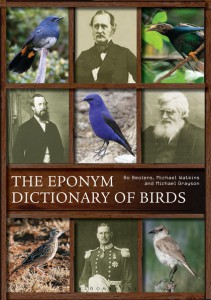
The Eponym Dictionary of BirdsThis month sees the publication of Bo Beolens’, Michael Watkins’ and Michael Grayson’s The Eponym Dictionary of Birds – a major publication with over 4,000 entries to fascinate the curious-minded birder. Each entry explains the biography behind the people commemorated in bird names, from lesser-known but dedicated collectors to officers, dignitaries and royals. Such as:

Passerini’s Tanager and Salmon’s Jacamar

Professor Carlo Passerini (1793-1857), an Italian entomologist and an early enthusiast of scientific photography, and Colonel Thomas Knight Salmon (1840-1878), a British railway engineer whose lung disease forced him into retirement and to opening a naturalist’s shop, are perfect examples of the hundreds of entries concerning those dedicated relative unknowns whose efforts have added rich threads to the natural history of birds and beyond. Salmon’s health deteriorated and he travelled to Colombia for the better climate where he spent seven years. He died in England leaving a collection of 3,500 bird skins.

Adelie Penguin

This entry exemplifies a theme of dedicating the naming to one’s spouse, in this instance Adelie Dumont d’Urville (1798-1842), the wife of Admiral Jules-Sebastien-Cesar Dumont d’Urville, who first found this penguin. Various places in and around Antarctica were similarly honoured, including the Adelie Coast.

It is not only the eponymous common names that are included. So many latin names contain dedications too, for instance:

The Red-headed ParrotfinchErythrura cyaneovirens gaughrani was named after American waterpolo player Dr James ‘Jim’ Alan Gaughran – who, apart from appearing at the 1956 Olympic Games and acting as head coach of Stanford University’s waterpolo team from 1969-1973 – was with duPont on the 1970 expedition to Western Samoa during which the parrotfinch holotype was collected.

Dig around and it won’t be long before you discover some familiar territory:

Lewis’s Woodpecker is named after Captain Merriweather Lewis (1774-1809), one half of famous explorers, Lewis and Clarke. Their expedition of over 4,000 miles across the North American continent was rich in discoveries, not least the collection of the holotype of this woodpecker. It was collected in near Helena, Montana, and is now in Harvard, perhaps the only bird specimen left from the expedition.

Finally, it must be worth mentioning that the Great Egret has been known as Queen Victoria’s Egret. Victoria was opposed to the feather trade and ordered her regiments to stop wearing plumes in their uniform, giving her a royal place in bird conservation.

The Eponym Dictionary of Birds