Book review: What an Owl Knows

***** A hoot of a book
Leon Vlieger, NHBS Catalogue Editor

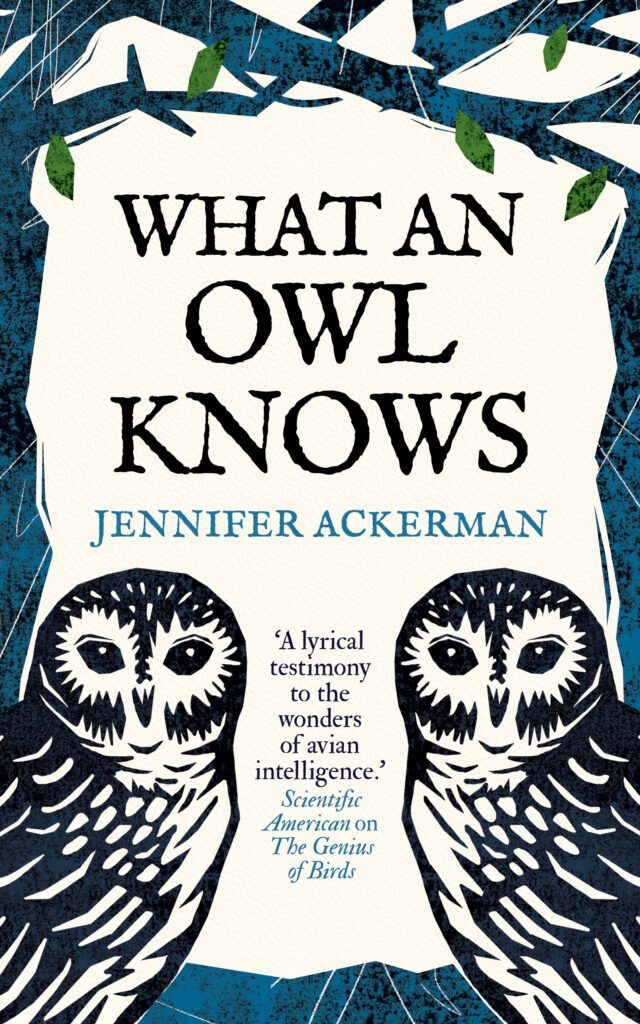
Owls are one of the most enigmatic groups of raptors, in part because there is so much we still do not understand about them compared to other birds. Nature writer Jennifer Ackerman previously wrote the critically acclaimed The Genius of Birds. In What an Owl Knows, she reveals the creature that hides under that puffy exterior, peeling back the feathers layer by layer to show our current scientific understanding of owls. She has interviewed scores of scientists and owl aficionados as part of her background research, making this as much a book about owls as about the people who study and love them. A captivating and in places touching science narrative, this book is a hoot from beginning to end.

Owls are everywhere in the human imagination and, Ackerman argues, have always been: “We evolved in their presence; lived for tens of thousands of years elbow to wing in the same woods, open lands, caves, and rock shelters; came into our own self-awareness surrounded by them; and wove them into our stories and art” (p. 235). For all that, their nocturnal lifestyle makes them hard to study and they have long been—and in many places still are—wrapped in superstition. Ackerman dedicates a chapter to such beliefs and the harms that frequently flow from them. Fortunately, the tide is turning. Thanks to the tireless efforts of a dedicated cadre of scientists, conservationists, and numerous volunteers, a far more fascinating creature emerges from the contradictory tangle of ideas that humans have held about owls.

A red thread that has been subtly woven through this book is the importance of understanding animals on their terms. Ed Yong’s An Immense World is one recent example of this welcome trend amongst science writers and Ackerman appropriately starts with a chapter on owl sensory biology. What is it like to be an owl? Though this question can never be fully answered, that should not stop us from trying our hardest. Vision and hearing are obviously important to owls but the book has plenty of surprises up its sleeve once you start digging into the details: from the magnificent facial disk that acts somewhat like a parabolic reflector to gather sound, a hearing system that does not seem to age, to the fact that owls can see ultraviolet light. At night. With rod rather than cone cells (like pretty much every other bird).

The same question motivates research on owl vocalisations as “a hoot is not just a hoot” (p. 81). Owls utter a profusion of yaps, squawks and warbles and Ackerman paints a lively portrait in words. Barn owls have “a raspy hiss that sounds like a fan belt going out on your car” (p. 82), while the tiny Flammulated Owl breaks the link between body size and vocal pitch, sounding like “a big bird trapped in a small body” (p. 82, quoting ornithologist Brian Linkhart). These sounds can reveal an awful lot about the individual owl and its relationship with other owls in the landscape. Ackerman criticises some of the research on owl intelligence. They cannot pass the string-pulling test, a common test in ethological research in which an animal has to pull on a rope to reel in food that is out of reach. The idea is that it tests an animal’s understanding of cause and effect. But is this a fair test or does it “point to the limitations of our definitions and measures of intelligence” (p. 261)?

The most intimate insights have come from rescued owls that can no longer be returned to the wild. Many researchers have ended up caring for an individual and becoming intimately familiar with them. Gail Buhl, a leading authority on training rehabilitated captive owls, here explains five important things that she has learned. One particularly poignant observation is that owls might appear calm and stoic around humans, but having paid close attention to their body language, Buhl concludes that “they’re experiencing the same stress as other raptors, but they’re internalising it” (p. 228). This has major consequences for how even well-intended trainers and rehabbers ought to behave around owls. “We need to treat them not as mini-humans in feathers, but as their own entity” (p. 231), Ackerman writes, before throwing in a beautiful quote from naturalist Henry Beston. In his words, wild animals “are not brethren, they are not underlings; they are other nations, caught with ourselves in the net of life and time” (pp. 231–232).

Following on directly from her last book on bird behaviour, there are fascinating chapters here on the behaviour of owls: their courtship and breeding, their parental behaviour, their roosting, and their migration. Yes, many owls are migratory and some species can cover surprising distances. Ackerman makes a fantastic case for the value of long-term monitoring programmes to establish reliable population estimates. This is vital data for conservation efforts and is often missing. And sometimes what we think we know is wrong, as in the case of the Snowy Owl. Where initial estimates put the global population at some 200,000 birds, satellite tracking has revealed that they are actually a single population moving around the whole Arctic Circle, resulting in duplicate counts. Revised estimates now put the figure at a mere 30,000 birds.

Ackerman relies on the input of numerous scientists and volunteers. As such, this is as much a book about the people who study owls. I was delighted to hear more from Jonathan Slaght (his book Owls of the Eastern Ice is magnificent). Other stories tug on the heartstrings and none more so than that of Marjon Savelsberg. A Dutch musician trained in baroque music, her dreams came crashing down when she was diagnosed with a heart condition that consigned her to a mobility scooter. When she stumbled on the website of the Dutch Little Owl Working Group, she quickly became one of their most active volunteers, revealing a skilled ear for analysing owl calls. Suddenly, she had a new career and a new group of appreciative ecologist colleagues: “[I] realised I was still a musician. All the skills that I learned, all the talent I have, I can still use, just in a different way” (p. 105). It is a powerful story of redemption-by-owl.

Ackerman carefully balances these two facets: the scientific insights that she has carefully distilled from research papers and interviews, and the personal stories of those who study and love owls. As a result, What an Owl Knows is compulsively readable and readily accessible for those who lack a scientific background in ornithology.


You might also be interested in reading our Q&A with Jennifer Ackerman in which we discuss owls’ reputation for wisdom, the incredible research that is shedding more light on their lives, and the mysteries that still remain.
 

Book review: Otherlands

***** A spine-tingling debut
Leon Vlieger, NHBS Catalogue Editor

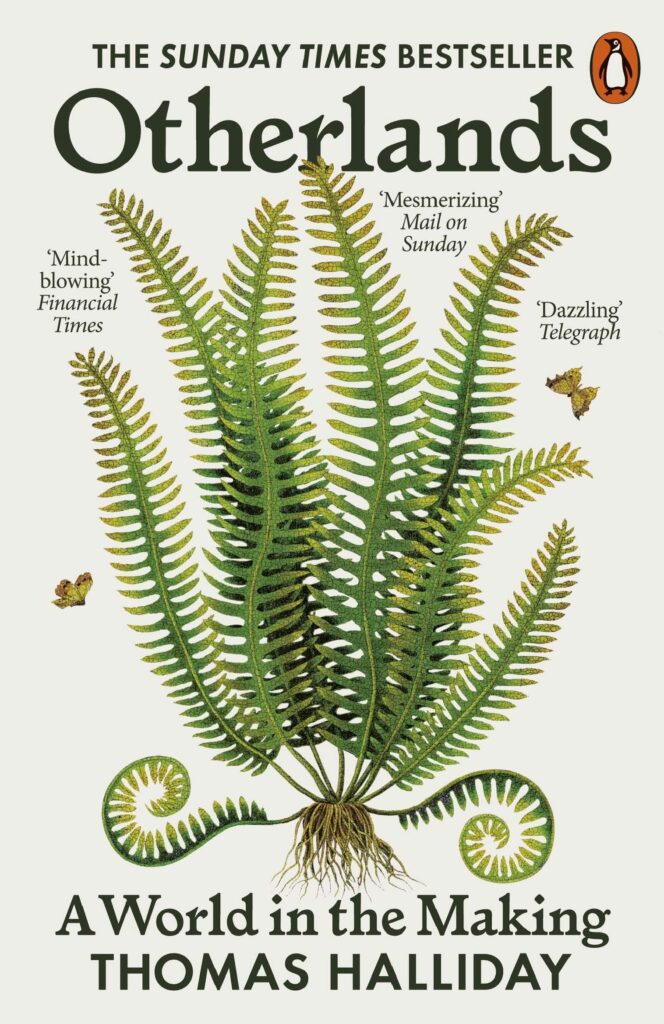
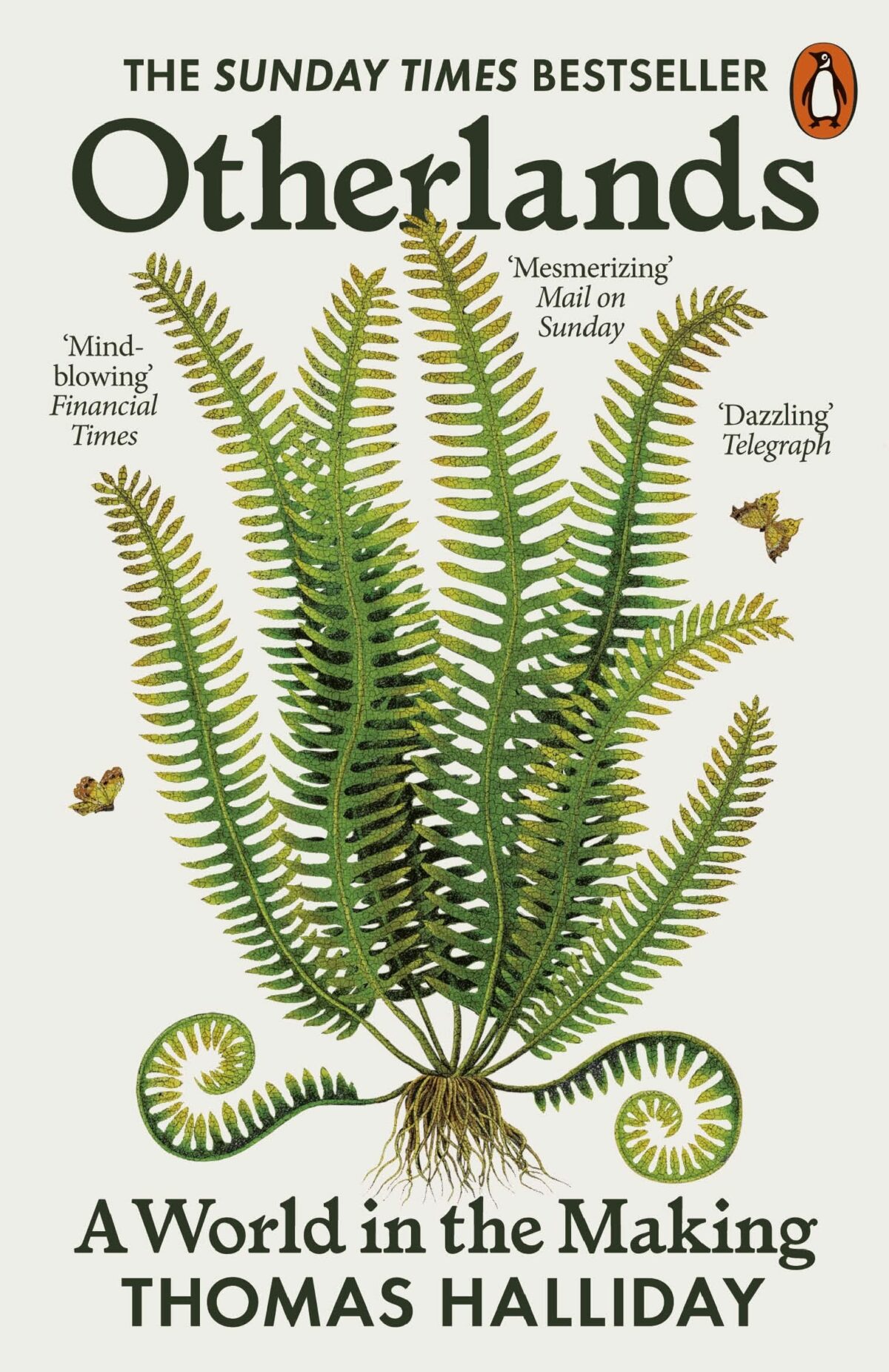
Our planet has been many different worlds over its 4.5-billion-year history. Imagining what they were like is hard – with our limited lifespan, deep time eludes us by its very nature. Otherlands, the debut of Scottish palaeontologist Thomas Halliday, presents you with a series of past worlds. Though this is a non-fiction book thoroughly grounded in fact, it is the quality of the narrative that stands out. Beyond imaginative metaphors to describe extinct lifeforms, some of his reflections on deep time, taxonomy, and evolution are simply spine-tingling.

The 16 chapters in Otherlands, each accompanied by a gorgeous illustration from Beth Zaiken, step back in time by millions or even tens of millions of years to visit a place on Earth and describe its ecosystems and organisms. Halliday includes well-known sites such as end-Cretaceous Hell Creek (66 million years ago, or mya) or Lagerstätten such as the Cambrian Chengjiang biota in China (520 mya). Far more interesting are the little-known eras and places such as the Italian promontory of Gargano during the Miocene Messinian Salinity Crisis (5.3 mya), the sweltering warmth of Seymour Island in Antarctica during the Palaeocene-Eocene Thermal Maximum (41 mya), or the underwater life around the Silurian Yaman-Kasy vent in Russia (435 mya).

Stylistically, Otherlands is a narrative non-fiction book. What that means is that, though everything is grounded in fact, Halliday does not get lost in the details. Where competing hypotheses exist he picks one and runs with it, rather than detailing the academic debates and different schools of thought. It is a stylistic choice that I can get behind given the quality of the writing that follows.

Because make no mistake, Halliday knows how to craft captivating prose. He won the Hugh Miller Writing Competition in 2018 and the John C. Marsden Medal from the Linnean Society for the best doctoral thesis in biology in 2016. Reading Otherlands, it is easy to see why. I do not know what they feed Scottish palaeontologists, but I was reminded of Elsa Panciroli’s Beasts Before Us. Let me back up my enthusiasm with some quotes that can only touch on a fraction of what is on offer.

There are the obvious imaginative metaphors to describe animals. The Triassic gliding reptile Sharovipteryx mirabilis (225 mya) is imagined looking rather inelegant once landed “with its membrane retracting and limbs thrown all directions like a collapsing deckchair” (p. 159), while the Ediacaran sedentary animal Dorothy’s Rope (550 mya) resembles upright towers “composed of bulges like knotted rope, as if Gaudi had designed an industrial town” (p. 277). Other descriptions are more poetic. Basilosaurids, the first fully aquatic whale ancestors in the Eocene (41 mya), have yet to evolve the melon organ. They “can listen to the music of the oceans, but they have not yet learned to sing” (p. 86).

Particularly powerful are his reflections on deep time. A recurrent theme in this book is that of impermanence: “gatherings of species in time and space may give the illusion of stability, but these communities can only last as long as the conditions that help to create them persist” (p. 18). Some ecosystems never return. The long-lived Jurassic crinoid colonies (155 mya) that made a home on floating logs blown into the sea during storms disappeared when the evolution of shipworms made “this way of life impossible, something that can and will never be replicated in quite the same way again; wood just doesn’t float for as long as it used to” (p. 151). And while the world feels old in our day, it is easy to forget the world was already old in the deep past. The mountains of the Triassic (225 mya) “are built from the deep sea”, within which can be seen “the coils and shapes of the long-extinct creatures of the Carboniferous seas, well over 100 million years old even now” (p. 158).

What made my hair stand on end were Halliday’s reflections on phylogenetics, the evolutionary relationships between animals. I love how he drowns scientific concepts in poetic language. Take the Paleocene Baioconodon (66 mya). Beyond one of the earliest placental mammals, we do not really know what it was. “Their anatomy is too non-committal, too similar to and yet too distinct from too many living orders to be placed with confidence. […] They are an unspecialised, Platonic placental, a lump of living clay from which all others are stretched, pinched and pulled into shape” (p. 105). We cannot even describe its young as kits or calves: “it does not yet make sense to talk of cattle or dogs, of monkeys or horses. None of these groups exist yet […] names lose tangibility in the depths of the past, and our language has no description for the young of common ancestors” (p. 104). You start to see why Halliday wrote his way backwards from the present. He makes a similar observation about the Ediacaran biota. Alien to us, “they are aberrant only from a modern perspective” (p. 282). Our confusion is partially because “we are trying to define them the only way we can: on the basis of those few survivors to have found paths to the present”, while the dead-end branches “by the simple fact of having not survived, forfeit a common name” (p. 283).

Similarly spine-tingling are his explanations of evolutionary processes. Species names are artificial designations for a continuous phenomenon. The way palaeontologists deal with this can be compared to rivers. Just as a river can split and its two branches be called by two names from that point in space forward, so can a species that spatially separates be called by two names from that point in time forward. And why did so many higher taxa appear during the Cambrian explosion? One idea is that, once in place, fundamentals cannot be changed easily: “evolution today can only be played within the constraints set by the past”. Another idea is that “there is nothing intrinsically impossible about a new body plan developing today, were it not for the existence of others”. Gould wrote of filling the ecological barrel and Halliday puts it thus: “establishing the basic roles within an ecosystem is like adding large rocks into a barrel […] evolutionary processes […] adding in finer and finer divisions of ecological processes, pebbles and sand falling into the barrel between the gaps left by the larger stones, structures built on other structures” (p. 258). Not only does this ring true, but it is also truly beautiful language.

Otherlands is an exceptional debut that can be savoured like a fine wine. I found myself reciting passages to anyone within earshot. Beyond a fascinating tour of extinct lifeforms, Halliday’s carefully crafted yet poetic descriptions of scientific concepts are a masterclass in spellbinding science communication.


You might also be interested in our Q&A with Otherlands author Thomas Halliday where we discuss the book and the process of writing it, our endless fascination with dinosaurs and the lessons we might learn from studies of deep time.

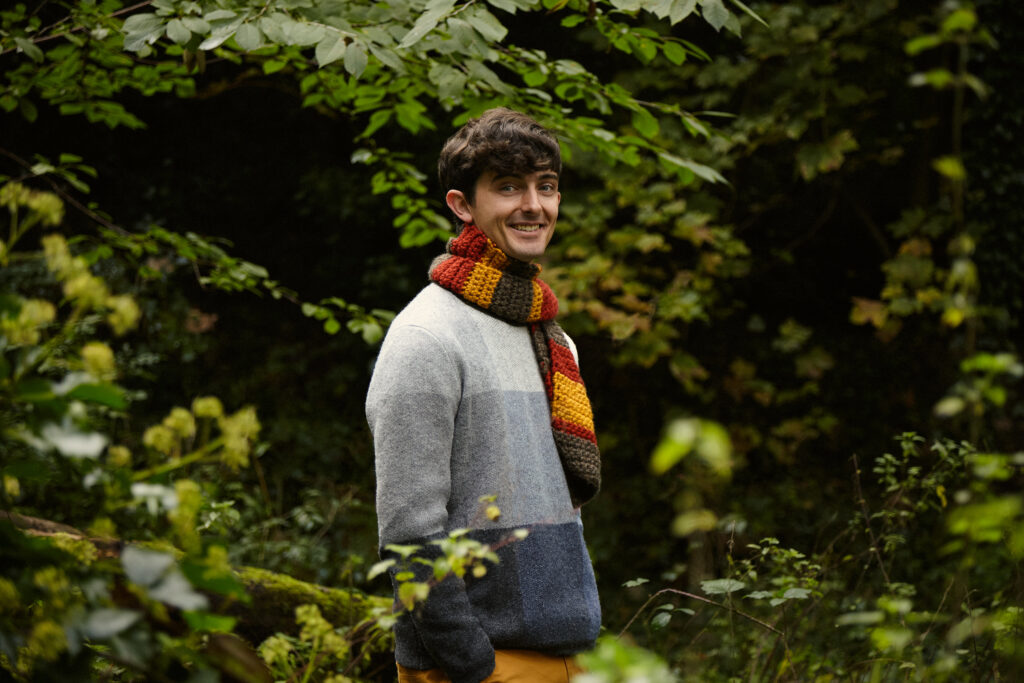
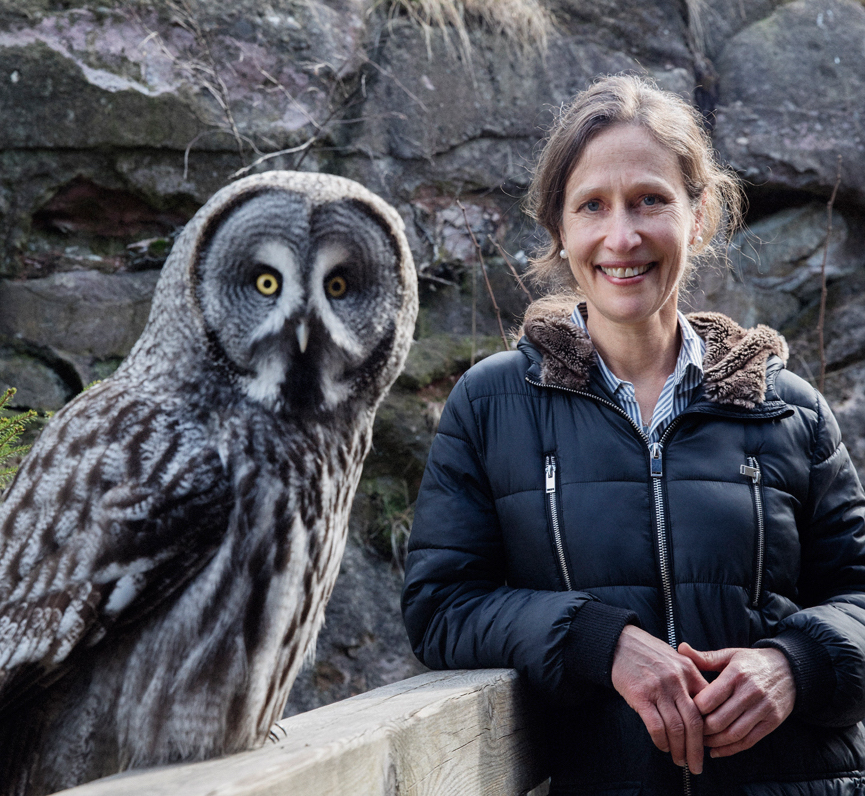
Thomas Halliday. Credit: Desiree Adams ,Penguin Random House