NatureBureau: Publisher of the Month

NatureBureau are the NHBS Publisher of the Month for May.

Publishing under the imprint of Pisces Publications, they are renowned for beautifully designed, internationally important handbooks and atlases as well as highly localised UK field guides.

Find out more about NatureBureau’s distinguished list of past publications, as well as their upcoming books in this post.

High Standards in Design
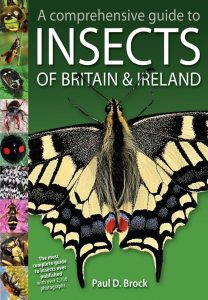
NatureBureau’s creative director, Peter Creed; a keen amateur naturalist and photographer with a background in art, was disappointed with the design of many wildlife books and set about creating a new standard in wildlife publishing.  The ground-breaking A Comprehensive Guide to Insects of Britain & Ireland (2014) bore witness to Peter’s endeavours and set a new benchmark in style and content.

As well as exceptional production standards, NatureBureau’s well researched and informative content keeps them in high regard with natural history and wildlife enthusiasts, and their books have become treasured and well-used additions to many libraries.

Local, National and International Guides
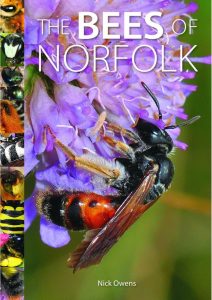
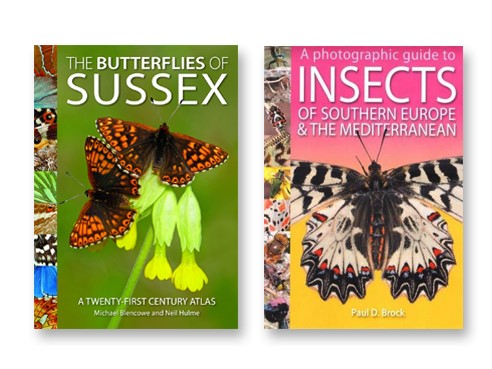
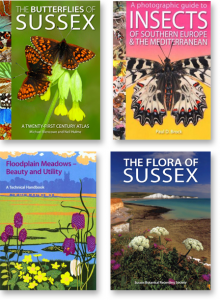
Working with authors who are passionate about the flora and fauna of their own county, NatureBureau have produced a range of local interest hardbacks, all illustrated with beautiful photography. In 2017 they published both The Butterflies of Sussex and The Bees of Norfolk, followed in 2018 by The Flora of Sussex.
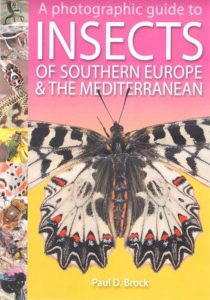
They recently partnered their bestselling A Comprehensive Guide to Insects of Britain & Ireland with A Photographic Guide to Insects of Southern Europe & the Mediterranean. Both books are currently on offer, for a limited time, in our Spring Sale.

Pocket Guides

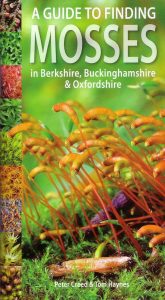
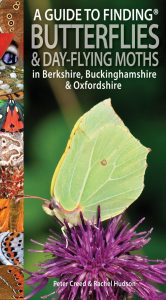
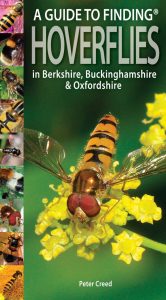
Their popular series of photographic pocket guides for beginners use non-technical language and include high-quality photos to make identification in the field as simple as possible. Just published for summer 2018 is A Guide to Finding Bees in Berkshire, Buckinghamshire and Oxfordshire.
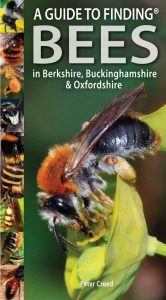



Celebrating 30 years

As NatureBureau approach their 30th year, they are continuing to expand their range of titles by publishing  The Nature of the Malverns: An Ancient Landscape Steeped in Wildlife and Oxfordshire’s Threatened Plants: A Register of Rare and Scarce Species.

Other books currently in preparation* and expected over the next few years include:

Atlas of Britain & Ireland’s Larger Moths (for Butterfly Conservation) – in preparation for publication early 2019
Life cycles of the British and Irish Butterflies (author Peter Eeles) – in preparation for publishing late 2019/early 2020
The Bumblebee Book (author Nick Owens) – in preparation for publishing in late 2019
Moths of the West Midlands – in preparation for publishing later 2019

Also, building on the success of their two best-selling insect guides, A Comprehensive Guide to Insects of Britain & Ireland [2014] and A Photographic Guide to Insects of Southern Europe and the Mediterranean [2017] NatureBureau are now planning a companion volume of non-insect terrestrial invertebrates: ‘Spiders and Other Mini-Beasts’.

*We have no detailed information regarding titles that are ‘in preparation,’ however, you can place a pre-publication order by contacting customer.services@nhbs.com

NatureBureau also offer ecology services alongside a unique graphic design and print management department for nature-related publications. Their clients range from local wildlife trusts to international NGOs.
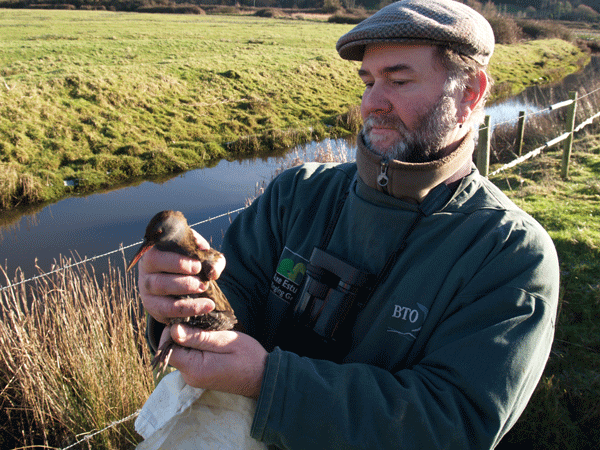
Supplier Interview: Fraser Rush of Third Wheel Ringing Supplies

Fraser-RushTell us a little about your organisation and how you got started.

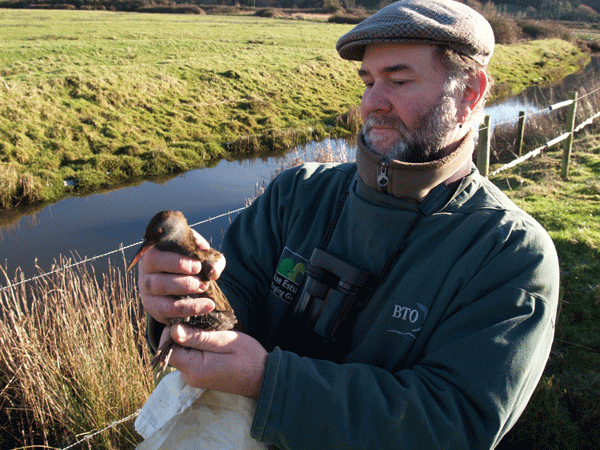
Third Wheel Ringing Supplies has been trading for about two years and comprises myself and my wife, Mary. We make a small range of equipment for ringers, specialising in traps and particularly trying to fill gaps in the market. Traditionally much of this sort of equipment has either been knocked together by ringers themselves or imported (expensively) from Europe or North America.

Our range is still very small, but it is gradually expanding as we develop more products. Product development is very slow however as, with bird safety being so important, any new product has to be extensively tested before it can be offered for sale. Nevertheless a slightly expanded product range should be launched in the coming months. Our manufacturing ethos is based on quality; never knowingly making sub-standard equipment in the quest for cheaper production costs. Hence our products are not the cheapest available, but they might be the best.

The business started when I took voluntary redundancy from my job. Having worked for (among others) The Wildlife Trusts, RSPB and Local Authorities as a nature reserves manager for 30 years, I was ready for a change. I’ve always liked making things and have a good grounding in engineering which, together with my interest in bird ringing, led onto me making various bits of ringing equipment for my own use and thence onto a small business, making equipment for other ringers.

Why Third Wheel? Well, we had to call it something and, having a slight obsession with classic motorcycles, particularly those with sidecars, the name seemed to fit us as a family.

What challenges do you face as an organisation working in the ecology sector?

One of our biggest challenges has been to persuade ringers not to rely so heavily on mist nets all the time. Although mist nets are very effective for many species and situations, they still have their limitations and traps can often be just as effective or, for some species, the only method of capture. Increasing numbers of ringers are starting to appreciate the value of different trap designs and, as traps form the mainstay of our business, we see this as a good thing!

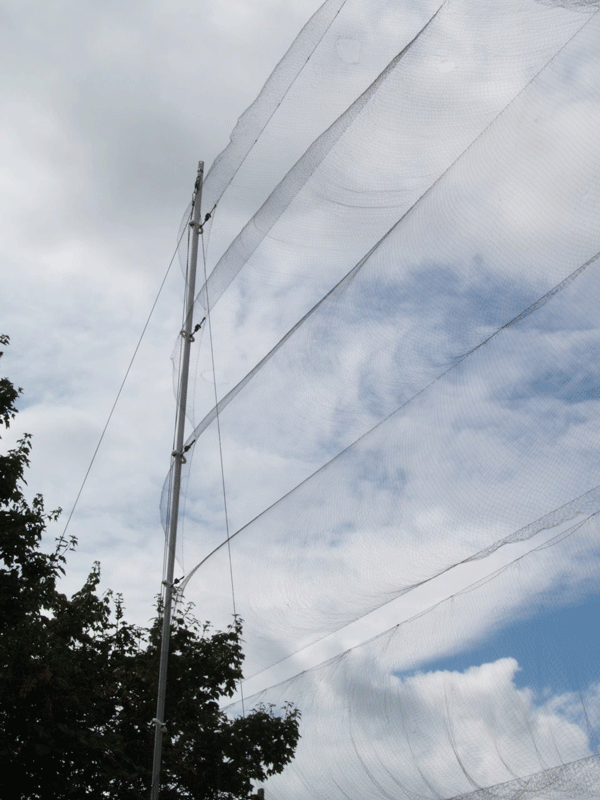
High Flier Mist Net Support System
Third Wheel’s High Flier Mist Net Support System

What do you consider the most important achievement of your organisation in recent years?

On a purely personal level, Third Wheel’s most important achievement has been that, after only two years of trading, it seems to be working as a business. Although I have a passion for what I do, it still has to pay the bills and, for the time being at least, it is doing just that.

It has also been particularly gratifying to have our equipment used to great effect in a number of research projects worldwide. In addition to various projects in Europe, Third Wheel traps are used for chickadee research in Florida, grey jay research in Alaska and snow bunting research in the Canadian Arctic.

Nearer home, highlights have been a customer who caught a dunnock within 7 minutes of the postman delivering one of our traps and another who, on taking delivery of a new prototype, caught 55 linnets on the first morning.

What is your most memorable wildlife encounter?

Having been pursuing wildlife for nearly my whole life, I’ve been lucky enough to have many memorable wildlife encounters, which makes choosing a favourite rather tricky.

I’ve visited Svalbard (what we used to call Spitsbergen) in the High Arctic many times, as a leader of study tours. Here the memorable wildlife moments come thick and fast with polar bear, Arctic fox, beluga whale and countless breeding auks, wildfowl and waders against a stunning scenic backdrop.

On the bird ringing side of things, my best and most memorable ringing sessions have been catches of wigeon, teal and other wintering wildfowl as part of a cannon netting team. Wigeon are amazing little ducks and to ring one in Devon which probably breeds in central Russia is a real privilege.

Supplier interview: Volker Runkel of ecoObs

Volker Runkel of ecoObs

ecoObs are a small German company at the forefront of full spectrum bat call recording and identification. They produce the Batcorder 3, a highly optimised bat detector (each new microphone arrives with its own calibration factor to ensure that comparisons between units are valid) designed to consistently record bat calls of sufficiently high quality to make auto-identification possible. Calls can then be processed using ecoObs software bcAdmin 3.0, bcAnalyse 2.0 and batIdent. These enable the rapid and accurate identification of common bat species, speeding up the identification process by up to 70% and allowing users to focus more time on rare or interesting bat species. We asked ecoObs co-founder and managing director Volker Runkel to introduce the company.

Tell us a little about your company and how you got started

For my PhD thesis I developed a quite basic and rather well working solution for passive monitoring of bats. Already then I saw that automation in data collection as well as analysis was one of the keys to focus on, instead of all raw analysis work. We quickly realized there is a huge demand for such a solution. We then were lucky and found an engineer who partnered up with us and redesigned the hardware so it was power efficient, small and easy to use. The batcorder system was born.

ecoObs Batcorder 3
ecoObs Batcorder 3

What challenges do you face as a company in the ecology/natural history sector?

The sector is rather small and as a hardware producer we for example often have problems acquiring small quantities of parts. In electro-engineering small companies still require some hundred thousand parts while we ask for a mere thousand. Also the demand for devices is highly seasonal – 90% of orders arrive within a few weeks in spring when the bat season starts. On the other end, we have a very vivid and heterogeneous bat worker scene.

What do you consider the most important achievement of your company in recent years?

I think getting the batcorder and the analysis software out in the wild and thus pushing the whole field of passive monitoring and automated bat call identification to where it is now. When we started in 2004 no one believed it would be ever working, and now a rising number of devices and software exists.

What is your most memorable wildlife/natural history encounter?

Spotting and touching an Echidna in the wild!

Browse all ecoObs products