 ***** Epic in scope and majestic in execution
Leon Vlieger, NHBS Catalogue Editor
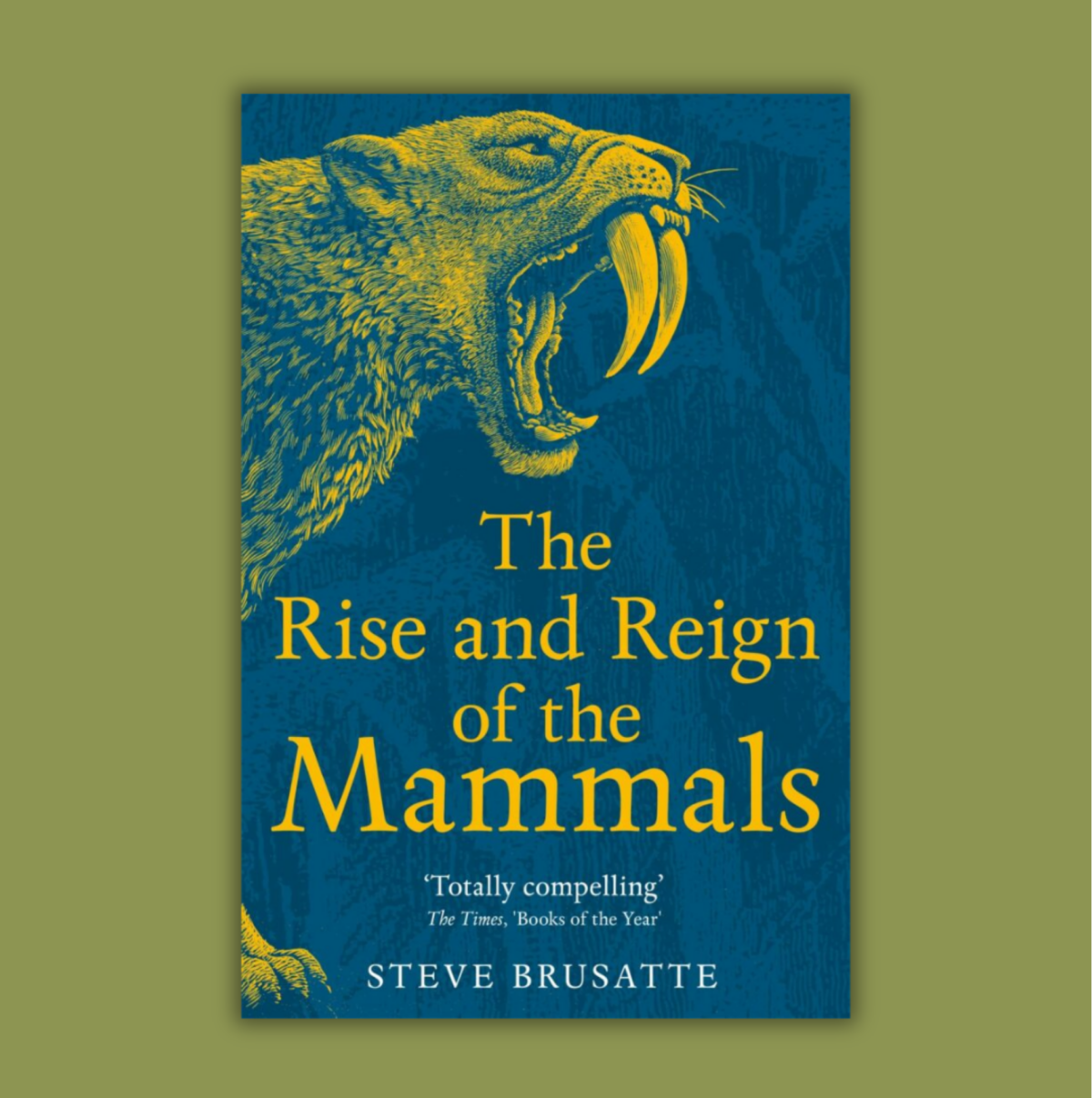
Imagine being a successful dinosaur palaeontologist and landing a professorship before you are 40, authoring a leading dinosaur textbook and a New York Times bestseller on dinosaurs. Imagine achieving all that and then saying: “You know what really floats my boat? Mammals.” After the runaway success of his 2018 book The Rise and Fall of the Dinosaurs, palaeontologist Stephen Brusatte shifted his attention and now presents you with the follow-up, The Rise and Reign of the Mammals. Taking in the full sweep of mammal evolution from the late Carboniferous to today, this book is as epic in scope as it is majestic in execution.
Mammals shared our planet with the dinosaurs throughout their long reign, from the initial split of our amniote common ancestor into synapsids (us) and diapsids (them), to their extinction at the end of the Cretaceous. Over the course of some 100 million years, a parade of lineages evolved—archaic mammals all—piecemeal developing the traits we recognise as mammalian today: pelycosaurs, therapsids, cynodonts, mammaliaformes, docodonts and gliding haramiyidans, multituberculates, and therians who gave rise to today’s placentals, marsupials, and monotremes. However, the above must not be mistaken for a linear march of progress. “[M]ammals were a still unrealised concept, which evolution had yet to assemble” (p. 20). Simultaneously, it does not behove us to call these now-extinct groups evolutionary dead ends. “In their time and place, these mammals were anything but obsolete” (p. 88).
With the extinction of the dinosaurs, the rise of mammals turned into a reign. Isolated on various land masses after the supercontinent Pangaea had fragmented, they were poised for a slow-motion taxonomic starburst that would play out over the next 66 million years. In the northern hemisphere, placental mammals replaced multituberculates and metatherians and rapidly evolved into primates and the odd- and even-toed ungulates. The latter two evolved giants: brontotheres, chalicotheres, and cetaceans.
Brusatte’s strength is to bring to life the above flurry of names. What kind of creatures were they? And how can we deduce this from fossil evidence? Somewhere between chapters 6 and 7, I became awestruck by his narrative as the enormity of the mammalian evolutionary trajectory started to come into full view: bats, elephants, South American native ungulates (origins: uncertain), metatherians migrating to Australia and spawning a spectacular marsupial radiation, grazers diversified as grasses went global, and somewhere at the end, hominins evolving and repeatedly spilling out of Africa, contributing significantly to recent megafauna extinction. What a wild ride!
The macroevolutionary story is fascinating in itself, yet Brusatte makes it even better with some interesting observations of his own. We usually think of the dinosaurs as dominating the mammals, but, he suggests, this went two ways: “While it is true that dinosaurs kept mammals from getting big, mammals did the opposite, which was equally impressive: they kept dinosaurs from becoming small” (p. 95). Furthermore, DNA studies suggest that many modern mammal lineages originated back in the Cretaceous. But where are the fossils? Could some of the poorly understood archaic placentals such as condylarchs, taeniodonts, and pantodonts be the missing fossils that we have not yet been able to link to modern groups because of the lack of signature anatomical features? Excitingly, Brusatte is part of a research consortium that is building a master family tree based on both anatomy and DNA.
As in his last book, Brusatte excels at explaining complex research methods and scientific concepts. One example is Tom Kemp’s concept of correlated progression. Several times during early mammal evolution, a whole suite of anatomical, behavioural, and functional traits were changing together, making it hard to unravel what was driving what. For instance when cynodonts shrunk in size and changed their growth, metabolism, diet, and feeding styles. Then there is the revision of the mammal family tree based on DNA sequencing. The classic tree, championed by zoologist George Gaylord Simpson in 1945, was based on anatomical features. By the early 2000s, DNA-based genealogies suggested that many supposed relationships were actually cases of convergent evolution, resulting in a new classification that reflected geographical patterns rather than anatomy. The new groupings came with some tongue-twisting names: Afrotheria, Xenarthra, Laurasiatheria, and Eurarchontoglires. A final example is tooth morphology, an important diagnostic trait in this story.
What helps with these explanations are some excellent illustrations. B/w photos show amazing fossils, Todd Marshall contributes both decorative chapter headings and explanatory artwork, and Brusatte’s former student Sarah Shelley adds b/w diagrams, illustrating for instance the remarkable changes in jaw bones and how some of these were repurposed to become our inner ear bones! Woven throughout are stories of the people behind the research. Brusatte introduces both young scientists and many past scientists that are not widely known.
In what is surely a hallmark of his love and enthusiasm for the field, Brusatte’s bibliography has again been written as a narrative. It is like a chatty literature review in which he recommends books and papers, indicates where literature has become outdated, adds more technical details or clarifications, discusses where there is active debate and disagreement, and shortly touches on topics that he had to omit from the main narrative. Yes, this takes up more space than a regular reference section, and I am sure it is more time-consuming to write, but it is ever so useful. You could not wish for a better starting point if you wanted to read deeper into the technical literature.
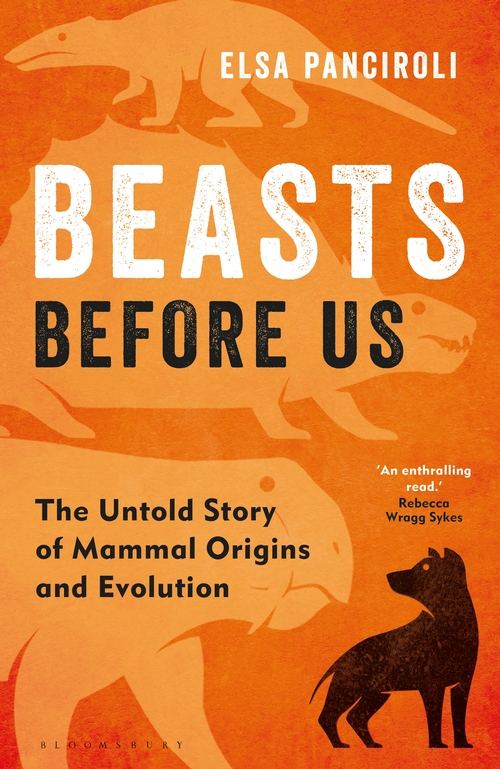
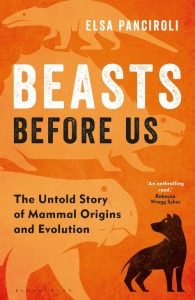
Finally, you might be left wondering how this book compares to Elsa Panciroli’s Beasts Before Us which covered early mammal evolution up to the K–Pg extinction. There is overlap here in more than one way; Brusatte co-supervised her PhD project describing the docodont Borealestes from a Scottish fossil. I was therefore mildly surprised that he does not mention her book. There is some inevitable overlap as both books walk through the same groups, though Brusatte provides a fuller picture by covering mammal evolution up to today. Panciroli’s book stands out for its fantastic writing, though, so you cannot go wrong by reading them both.
The Rise and Reign of the Mammals is a more-than-worthy successor to The Rise and Fall of the Dinosaurs. Brusatte convincingly shows that the evolutionary story of mammals is just as fascinating—if not more so—as that of the dinosaurs.


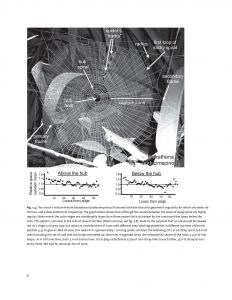 You point out that the majority of published behavioural observations have been of mature females. What do we know about males and immature spiders? Is web construction specifically a female activity? Or have we just not looked hard enough?
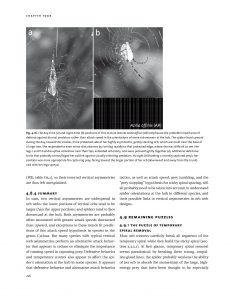 You mention that orb webs are neither the pinnacle of web evolution nor necessarily the optimally designed structures that they are often claimed to be. Most organismal traits are a product of history and contingency as much as natural and sexual selection. I might be asking you to speculate here, but, in your opinion, are there any particular evolutionary thresholds that spiders have not been able to cross that would make a big difference for web construction?
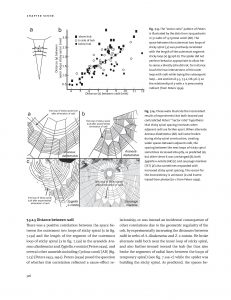 Producing a book of this scope must have been a tremendous job, and you remark that a thorough, book-length review of spider webs had yet to be written, despite more than a century of research on spiders. With the benefit of hindsight, would you embark on such an undertaking again?
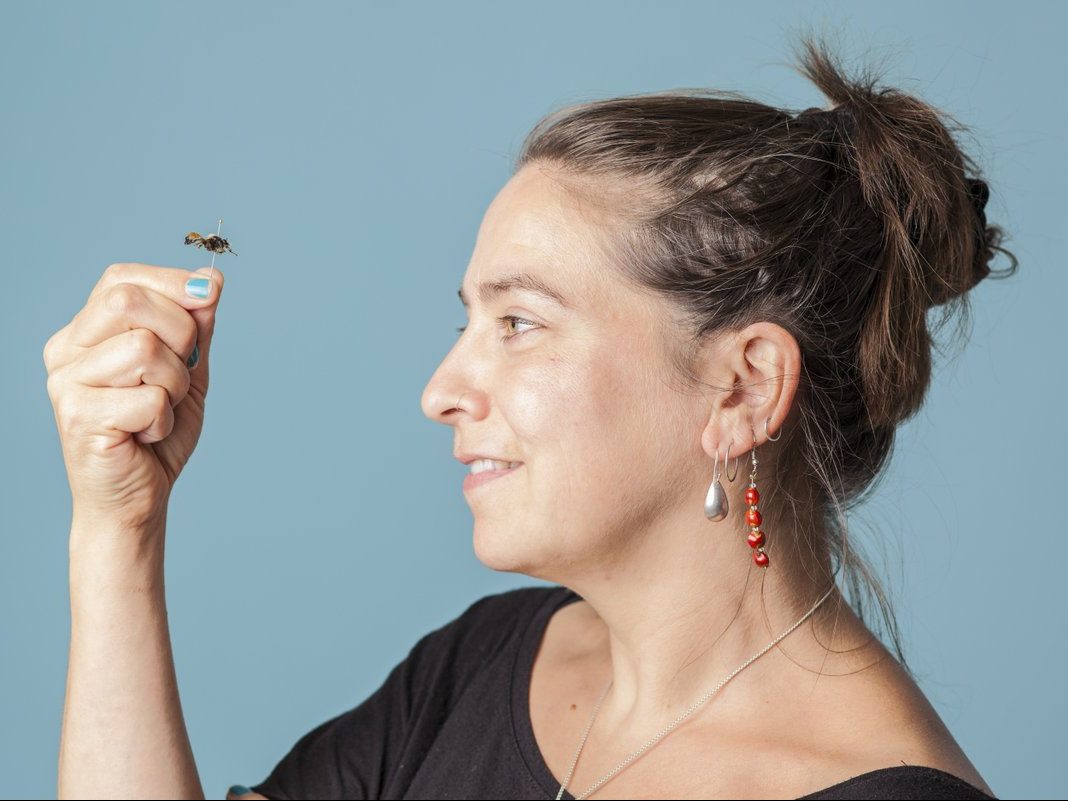

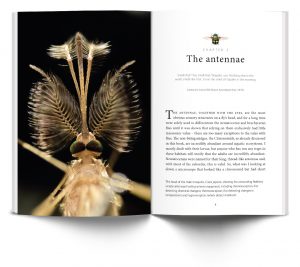 After two decades of researching them, has your own attitude towards them changed?
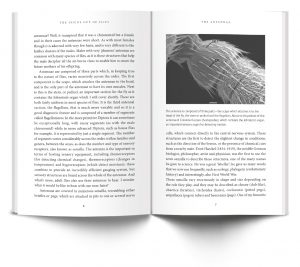 You mention many people seem to think adult flies lack brains, this misconception being fuelled by watching them fly into windows again and again. This may seem like a very mundane question but why, indeed, do they do this?
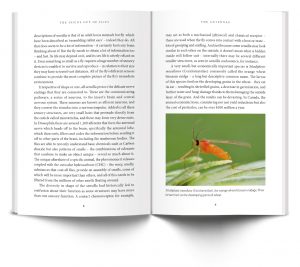 You explain how insect taxonomists use morphological details such as the position and numbers of hairs on their body to define species. I have not been involved in this sort of work myself, but I have always wondered, how stable are such characters? And on how many samples do you base your decisions before you decide they are robust and useful traits? Is there a risk of over-inflating species count because of variation in traits?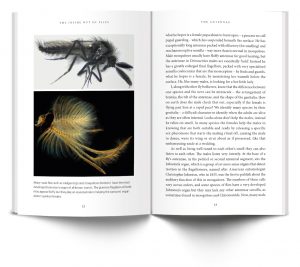
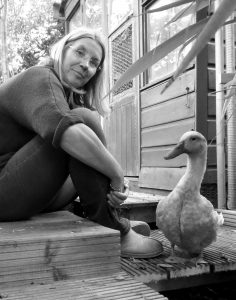

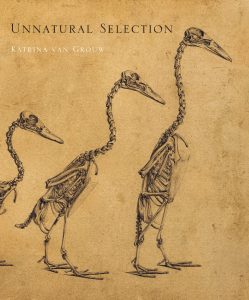 On your website, you write that you always had an interest in natural history, but that your talent in drawing made your teachers push you to pursue an art career, rather than studying biology. Did you ever consider a career as a scientific illustrator, something for which there must have been more of a market back then than there is now? If not, when and how did you decide to start combining your passion for biology with your talent as an artist?
 You worked as curator of the bird skin collection of the London Natural History Museum. How did you end up there after an art degree?
 Your previous book, The Unfeathered Bird, took some 25 years from conception to publication, mostly as you found it very difficult to find a publisher. How did you manage to convince Princeton University Press to publish this book after so many rejections?
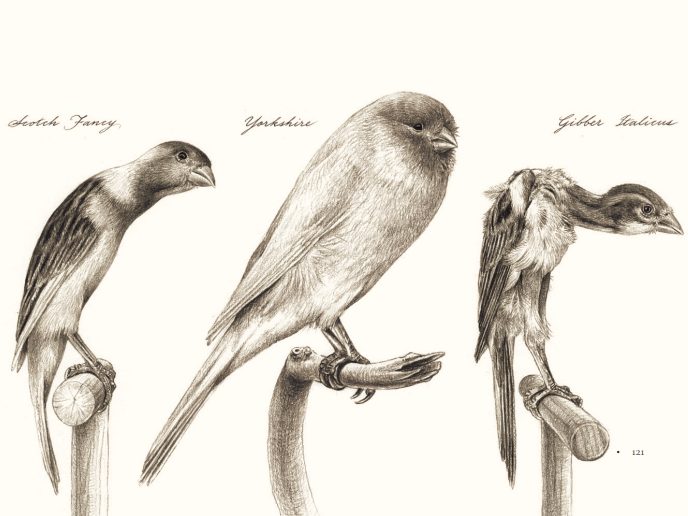
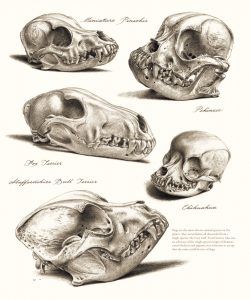
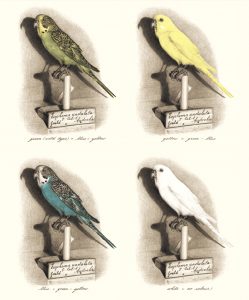
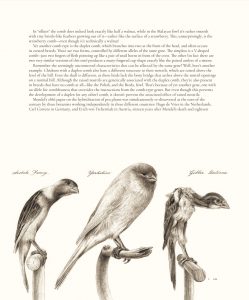 Your response to critics of breeding has been to counter their objection by saying “look at what nature has done to the sword-billed hummingbird!” which I thought was a sharp response. However, an animal welfare advocate might counter this argument by pointing out that natural selection can only push sword-billed hummingbirds so far. If this adaptation – the extension of the bill to retrieve nectar from ever deeper flower corollas – becomes maladaptive it will be selected against. Breeders, however, can select for traits that are maladaptive, because these animals grow up in an artificial environment where they are relieved of the pressures of natural selection. The shortened snouts and breathing problems of short-nosed dog breeds such as boxers come to mind. Obviously, if these traits become too extreme, the animals will not survive until reproductive age, but we can push them into a zone of discomfort and suffering through artificial breeding. What would your response to this be?
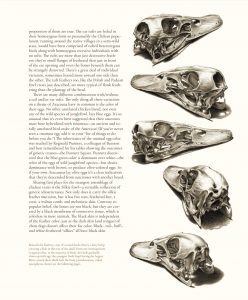 You write that the work on Unnatural Selection took six years of full-time work, around the clock. How long do you typically take to complete an illustration? And how do you manage to support yourself during this period, do you have freelance illustrations assignments on the side?
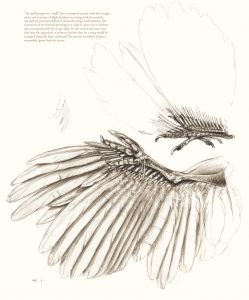 With two books now published by Princeton University Press, you seem to have started a very successful collaboration. How has the reception of this book been so far? Have you received nominations for prizes?
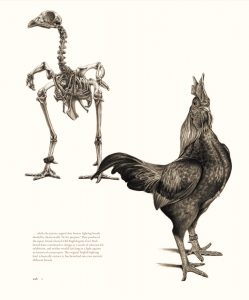 Will you continue to work on more books in the future? And are you already willing to reveal what you are working on next?