In search of Odonata: an interview with ‘Dragonflight’ author Marianne Taylor

National Dragonfly Week is fast approaching, so in our quest for things Odonata-related we interviewed Marianne Taylor – author of Dragonflight: In Search of Britain’s Dragonflies and Damselflies. The book documents the author’s adventures around Britain over two summers, in search of as many species as possible…
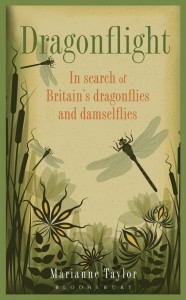
Dragonflight: In Search of Britain's Dragonflies and Damselflies jacket imageAs a keen wildlife watcher from an early age, what drew you in particular to the passion for dragonflies which led to the writing of this book?

I have always enjoyed seeing dragonflies and damselflies when I was out birdwatching, but it wasn’t until I began taking wildlife photographs seriously, in 2009-2010, that I started to really appreciate Odonata. Photography has made me want to look at all wildlife in new ways, and I found the forms of dragons and damsels very appealing. I also quickly developed an interest in taking flight photographs – initially of birds but that quickly expanded to include everything that flies. As relatively large targets, dragonflies make challenging but very satisfying subjects for flight photography. And my geeky need to catalogue all my images correctly forced me to take on the challenge of properly identifying every dragon and damsel that I photographed. Learning about identification went hand-in-hand with learning distribution, behaviour and other aspects of their ecology.

You have spent two summers immersed in dragonfly and damselfly-spotting – and have encountered the majority of established British species.  How has such a dedicated involvement over a set period added to your knowledge of the natural history of your subject? Any surprising discoveries? There must be nothing like prolonged in-the-field focus for gaining an intimate appreciation of their behaviour…

I’d certainly not say I’m any expert, but I have learned a huge amount in the last two years, both from books as I ‘revised’ my subject, and from first-hand observation. I can now answer most questions put to me about Odonata by interested laypeople. What has surprised me most is the complexity of their behaviour, in particular territorial and courtship behaviour. I was also absolutely fascinated to see damselflies apparently ‘mobbing’ large dragonflies – if that’s really what it was, that is a sophisticated response to a  dangerous predator that I would never have expected to see from an insect. I would love to learn more about Odonata intelligence. I am quite convinced that they have some awareness of, and interest in, humans! I would also love to know more about their behaviour prior to adulthood.

Do you have a favourite, or stand-out, Odonata encounter from the book?

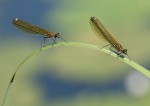
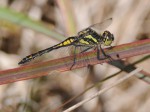
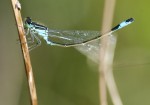
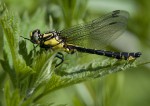
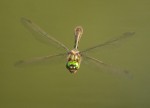
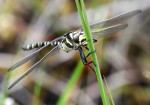
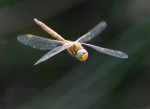
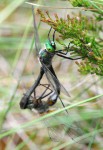
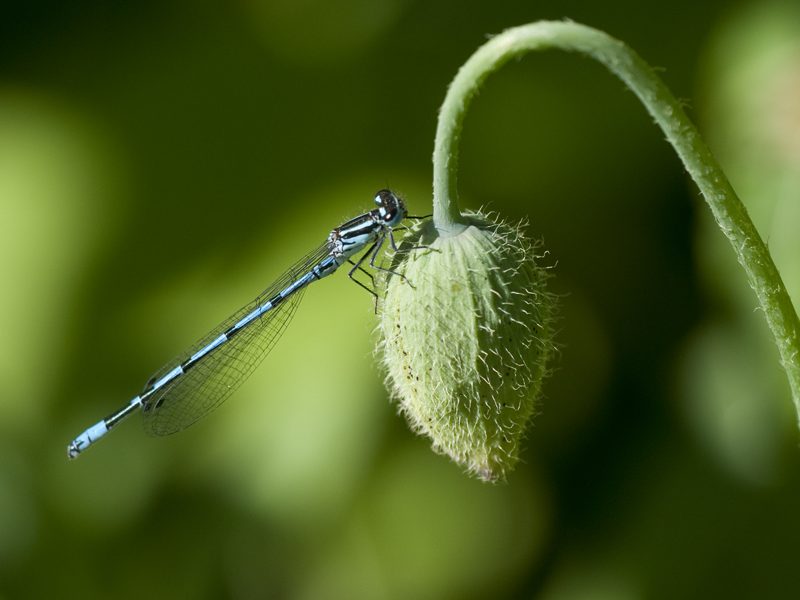
The morning spent at Strumpshaw Fen is what comes to mind – the Norfolk Hawker (see gallery – below) that finally gave itself up after a very long search, quickly followed by the utterly charming female Scarce Chaser that was, hands down, my favourite individual dragonfly from the whole two years. Two new species in the space of half an hour, both of them allowing prolonged and close-range observation. I was also really impressed by the damselflies (I only mentioned one in the book but there were several) which I picked out of spiders’ webs – it was great to have the opportunity to study them very closely and watch how deftly they cleaned the spider silk from themselves before going on their way.

Have you continued your search this year?

I have continued to watch and enjoy Odonata on my local patch and elsewhere when weather has permitted. I was also lucky enough to visit Sri Lanka in April, where I photographed and identified as many of the amazingly diverse local Odonata as I could. I have not sought out any new species in Britain so far this year, but that may be about to change as a new colony of Red-veined Darters has been found not far from home, and I’m hoping to pay them a visit next week. I am also very much hoping that RSPB Rainham Marshes will draw in another Southern Migrant Hawker this summer/autumn and that I’ll get to see it this time!

And finally what would be your top tips for aspiring dragon/damsel enthusiasts who want to encounter more of these magnificent beasts for themselves?

Establish a garden pond – even a small one may well be used by the commoner damsels. Always walk slowly and check low-level waterside vegetation – this is where resting and newly emerged dragons and damsels may be found, and they will let you look at them much more closely than the more mature and lively ones will. Try to spend a couple of hours at least at a site, as most species behave differently at different times of day – for example, many only engage in courtship behaviour during the warmest hours of the day. Remember that the chaser, skimmer and darter dragons in particular are creatures of habit and like to visit the same perching spots again and again, so if you disturb one from its perch, just loiter nearby and it will probably come back. To improve your chances of seeing scarcer species, regularly check the sightings pages at the British Dragonfly Society’s website to check where and when they are being seen. Take photographs! It helps greatly with identification to have a static image you can study at length, and you can get excellent macro images from most point-and-shoot digital cameras these days.

Dragonflight available now from NHBS

Check out our recommended kit and field guides for successful dragonfly-spotting

Visit Marianne Taylor’s photography and wildlife blog, The Wild Side

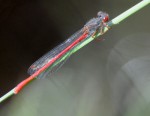
Gallery of images from Dragonflight, taken by Marianne Taylor:
Ladybirds: an interview with Helen Roy, Ecological Entomologist at the BRC

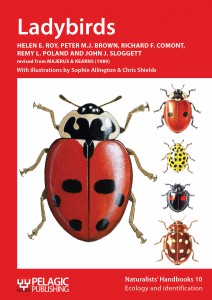
Ladybirds jacket imageHelen Roy, Ecological Entomologist at the Biological Records Centre, is one of a team of authors who have been involved in the revision of this classic Naturalists’ Handbook.

I see from your professional history that throughout most of your career you have been involved in research with ladybirds. What originally drew you to these fascinating insects? Does it stem from a childhood interest?

Ladybirds are fascinating beetles. I can remember, as a small child, observing ladybirds as they emerged from their pupal cases on the vegetables in our garden on the Isle of Wight. Simply magical and I was entranced. Throughout my childhood I pursued my passion for natural history and have been so fortunate to continue to do so through my working life.

What do you feel are the biggest pressures on UK populations of ladybirds at present?

There are many factors that contribute to dynamics of insect populations. In recent decades the effects of environmental change on insect populations has been the focus of my research. It is widely recognised that invasive alien species, climate change and habitat destruction are all major players in the declines of many insects. Ladybirds are no exception. However, there are so many questions that remain unanswered. It is important that we address these questions with robust and rigorous research. We have so much to learn about the many subtle and complex interactions between insects, other organisms and the environment.

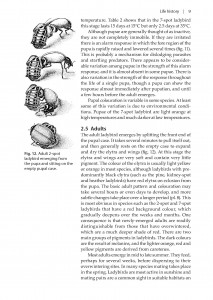
Ladybirds internal imageIn your book you state that winter is a very critical period for ladybirds and, during this time, they survive entirely on their own fat reserves. How severely do you think ladybird populations in the U.K. will have been affected by the very long and cold winter we have recently experienced?

Every year winter conditions result in the death of ladybirds – winter is a tough time for ladybirds in Britain. However, they have many amazing adaptations for surviving the adverse winter conditions. Ladybirds recently began to wake up from winter and I am reassured by the observations I am receiving from people across the country, through the UK Ladybird Survey.

The arrival of the Harlequin ladybird in the U.K. has obviously been a very big concern and has been covered extensively in the media. How serious a threat do you feel this is to our native species and are there any viable steps that could be taken to halt the spread?

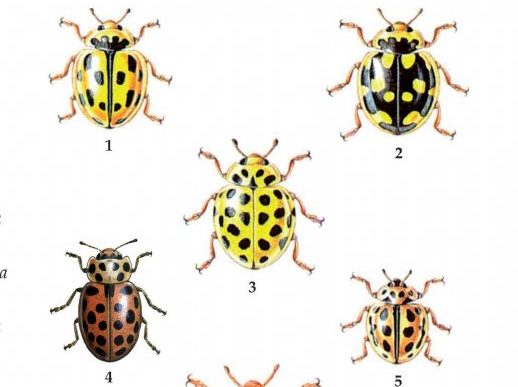
The harlequin ladybird, Harmonia axyrdis, is an invasive alien species which is predicted to cause problems for a number of insects. It is a voracious predator and not only has the potential to outcompete other insects but also eats the other insects. The 2-spot ladybird, Adalia bipunctata, was a widespread and common species during my childhood. Not so now. I worked with a team of scientists, using the observations received through the UK Ladybird Survey from many, many people (an inspiring number of volunteers), to look at how the distribution of native ladybirds is changing in response to the arrival of the harlequin ladybird. A number of species appear to be declining and the 2-spot more than most. Unfortunately there is nothing that can be done about the harlequin ladybird but it will be interesting to continue to monitor this species and its interactions with other species in the coming years. Additionally the harlequin ladybird has demonstrated the effectiveness of people at recording alien species, and with the rate of new arrivals increasing rapidly people can play an extremely important role in surveillance and monitoring. I invite people to submit sightings through a recording form developed for species surveillance (including alien species) at the BRC.

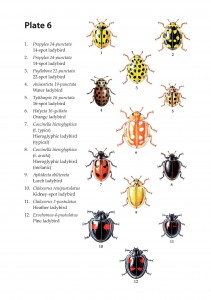
Ladybirds plateFor any amateur naturalists who are interested in ladybirds and wish to get involved or help in some way, what would you suggest is the best way to do this?

I have been utterly inspired by the contributions that people from across the country make to the UK Ladybird Survey, and indeed many other wildlife surveys, by reporting the ladybirds they see wherever they may see them. Biological recording is a wonderful way to get involved with natural history. I often receive detailed observations from people who have been recording ladybirds in a particular location on a regular basis. This information is incredibly useful. Some people have even been recording the parasites they see attacking ladybirds. Natural history studies are fun, rewarding and an invaluable source of information. Professor Mike Majerus wrote the first edition of this book and we open the revised version with his inspiration: “Biological Science must stand on its foundations in basic observations of organisms in the field: what they do, when they do it, why they do it, and how they have come to do it.” Majerus, 1994

Do you have any plans for further books?

I have a passion for writing. As a teenager I contributed to the newsletter of my local natural history society – I enjoyed writing and I hoped that people would enjoy reading what I wrote. Writing, coupled with my love of natural history, remains very important to me. I will definitely be writing another book… perhaps the parasites of ladybirds, which are almost as charismatic as their hosts, would be worthy of attention?

Ladybirds available now

Buy a copy of Ladybirds

Record your ladybird sightings at the UK Ladybird Survey

Pick up your free copy of the new NHBS Ecology & Biodiversity Equipment Catalogue 2013 which includes survey kit for entomologists